By Dio Asahi for Eat Drink Asia.
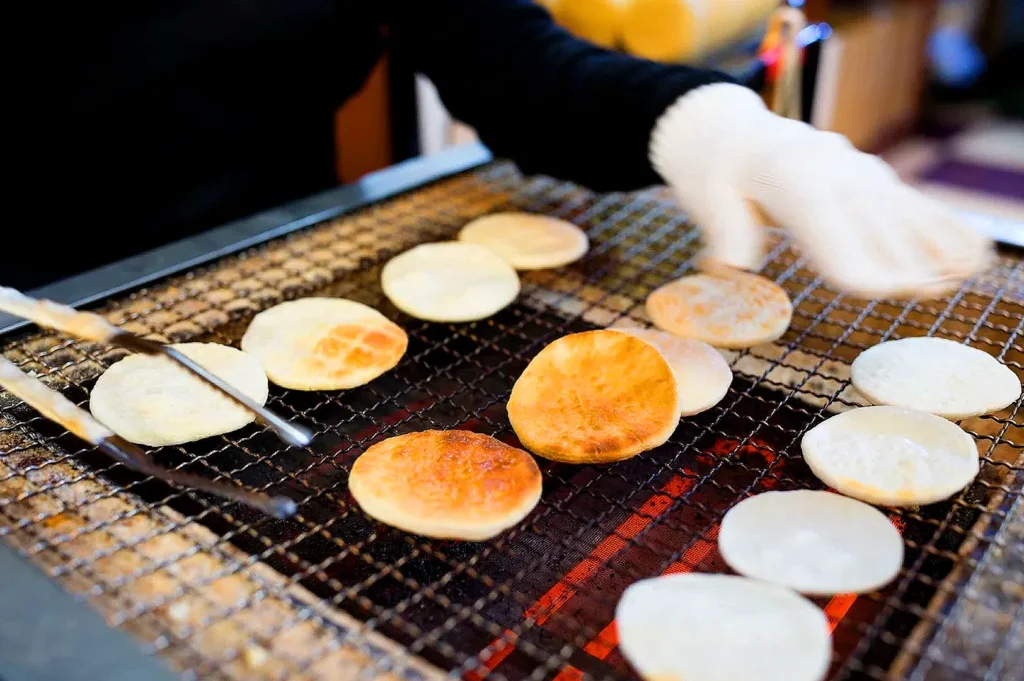
The old man works close to the coals, and the smell reaches me before I see what he’s doing. Soy meeting heat. That dark, caramel-edged smell that tightens something in your chest. His brush moves in short strokes across a rack of rice crackers, back and forth, patient. The coals tick. A cracker shifts on the grill with a small, dry sound. He doesn’t look up. In this narrow Kyoto shopfront, off the main street where the crowds thin out, there is only the fire, the brush, and the slow turn of each disc against the grate.
What he’s making is senbei — sen-bay — the soy-glazed rice cracker that most people now know only from plastic packets. The kind here begins with pressed rice, dried until it’s hard as a coin, then set over charcoal. As it heats, the cracker swells and blisters. That’s when the brush comes in. A soy-based glaze, wiped on in thin layers, not poured. Too much at once and it steams and turns bitter. Applied lightly, in the right window, the sugars in the soy catch the heat and set into a lacquered, savoury skin. He glazes, turns, glazes again. Each pass builds the colour. The timing is everything, and he keeps it in his hands, not on a clock.
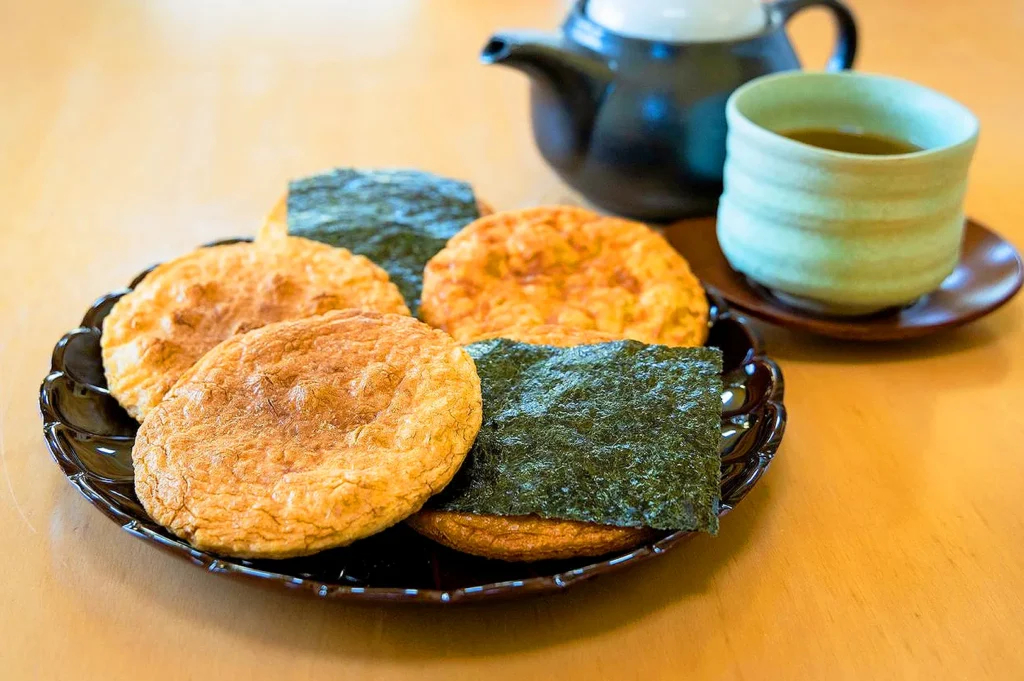
These crackers used to sit in shallow tins on every counter — beside the register, near the tea, offered to a guest before anyone asked. Senbei was the snack you handed to a neighbour, wrapped for a visit, kept for the child who came home from school. Not special-occasion food. Just the food that was always there. In some homes the good ones, the hand-grilled ones, were saved for guests, a small courtesy that said you matter enough for the ones that took time. You can still find that gesture, if you know the quiet shops. Most of us reach for the packet now instead.
The Eat Drink Asia highlight is how ordinary this is, and how easily it slips away. A machine can press and season a thousand crackers before this man finishes a single rack. The packet version isn’t bad. It’s just even — the same colour, the same crunch, edge to edge. His are uneven. One a shade darker where the glaze pooled, another lighter, blistered differently. That unevenness is the tell. It means a hand was there, deciding, in the moment the soy met the fire.
I take one still warm. It cracks loud between my teeth, and the soy is deep, faintly smoky, almost bitter at the edge where the glaze caught hardest.
He nods, once. Goes back to the brush.

Sesame Oil at the End: Finishing, Not Flavoring
Eda Wong | July 24, 2026
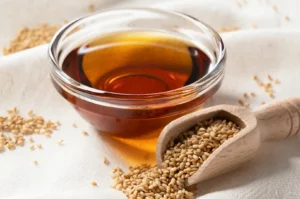
The wok is already off the heat. The greens sit glossy and dark, steam still curling off them. My mother lifts a small bottle, tilts it, and lets a thin line of sesame oil fall across the top. It hisses faintly against the warm leaves, and the smell rises all at once — toasted, nutty,…
-
Long Phung Vietnamese Cuisine, Where the Menu Doesn’t Waste Words: A Good Restaurant Close to Me
Eda Wong | July 23, 2026
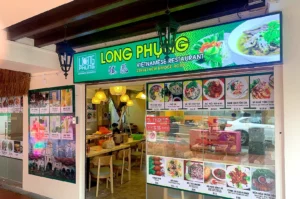
I came in from the rain on a Tuesday, somewhere past 8pm, hungry and a little defeated by the day. The fan was clacking. A queue of three or four people stood near the doorway, dripping. Someone shouted an order toward the kitchen in Vietnamese, and a bowl of pho slid onto a nearby table…
-
The First Squeeze of Calamansi in a Noodle Stall Bowl
Dio Asahi | July 22, 2026
The bowl lands in front of me, broth still trembling from the walk across the stall. Steam rises and fogs the edge of my glasses. To the side sits a small dish of calamansi halves, cut and waiting, their skins slick under the fluorescent light. I pick one up. It gives slightly between my fingers,…
-
Isshin Machi East Coast: Where Comfort Food Turns Addictive
Dio Asahi | July 21, 2026
Let me clear up the first puzzle right away. The name “Isshin Machi” sounds unmistakably Japanese, and I’ll admit I walked in half-expecting ramen and gyoza. What I found instead was a Taiwanese kitchen, plates of lu rou fan, braised beef noodles, and golden fried chicken that trace straight back to the island’s home cooking….

Best Cafe Singapore: A Map of Brunch Plates, Quiet Corners, and Dangerous Pastries
Dio Asahi | July 18, 2026
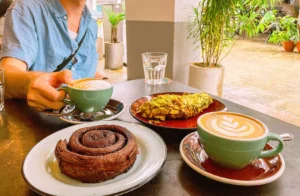
I didn’t set out to make a list. I made a habit. Over the years, cafes became the places I went to think, to wait out the rain, to sit with a coffee I didn’t have to rush. Some I returned to for the food. Others, I returned to for the feeling — the way…
-
Pickled Mustard Greens: The Sour Note in Clear Broth
Eda Wong | July 17, 2026
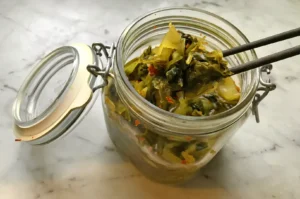
Steam lifts from a bowl of clear pork broth, and a spoonful of chopped pickled greens slides in. The broth shifts at once, its richness suddenly cut by a sharp, clean sourness that sits high and bright on the tongue. The greens have softened in the heat but keep a faint, springy crunch. Someone leans…
-
The Potato Curry That Teaches You How Spices Wake Up: A Beginner’s Indian Cooking Lesson
Eda Wong | July 16, 2026
The first time I made aloo curry on my own, I burned the cumin. I remember standing in my tiny HDB kitchen, watching those little seeds go from golden to black in what felt like one breath, and thinking: this is harder than it looks. But here’s what that bitter, smoky disaster taught me, the…
-
Bamboo Skewers and Smoke: Street Grills in Chiang Mai
Dio Asahi | July 15, 2026
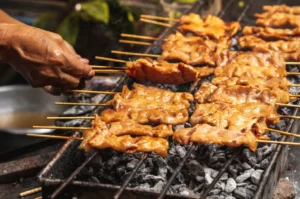
The cart glows at the edge of the lane just as the heat of the day finally loosens. A woman fans the coals with a flattened piece of cardboard, and the embers brighten orange under a row of skewers. Fat slides off the pork, hits the charcoal, and hisses upward in a thin curl of…
-
Chana Masala With Warm Roti, Built for Weeknights: Quick Vegetarian Dinner Recipes Indian
Dio Asahi | July 14, 2026
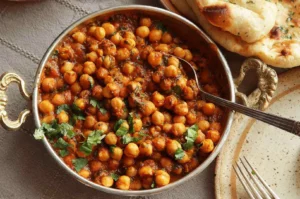
The first time I made chana masala, I started with dried chickpeas at 7:30 on a weeknight, soaking and boiling like the recipe said. By the time the curry was actually done, it was nearly ten and I’d already eaten half a loaf of bread out of sheer hunger. That night taught me something I…
-
One-Pan Chicken Curry With Jeera Rice and Cucumber Raita: Food for Dinner Indian, Made Practical
Eat Drink Asia Team | July 11, 2026
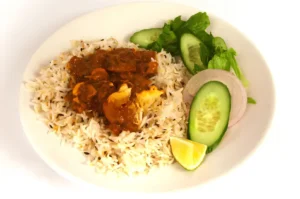
The first time we cooked a full Indian dinner on a weeknight, the curry, rice, and raita felt like three separate tasks—three pans, three timers, and a kitchen full of wonderful smells but chaos. The curry was good, the rice sticky, and the raita watery from being made too early. That night taught us a…