By Eda Wong for Eat Drink Asia.
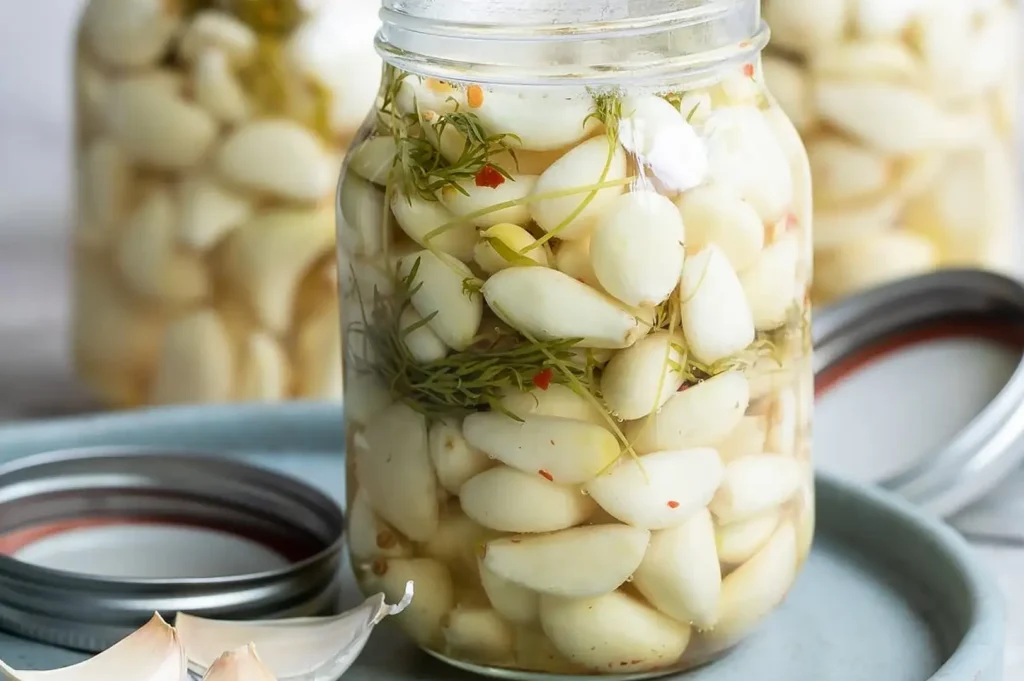
The jar sits on the windowsill of a shophouse kitchen in Bangkok, between a bottle of fish sauce and a tin of mismatched spoons. Morning light comes through it, turning the liquid inside the color of weak tea. Behind me, a pot of rice porridge ticks and bubbles on a low flame.
Auntie Noi unscrews the lid. It gives a small, reluctant sigh. Vinegar reaches me first, sharp and clean, then something sweeter underneath. She lifts out a whole head of garlic with a pair of chopsticks, the papery skin still clinging in places, and sets it on a saucer without a word.
In Thai, it’s called kra-tiam dong (กระเทียมดอง), said roughly “grah-tee-um dong.” It simply means pickled garlic.
It’s one of the quieter staples in Thai food, a cuisine built on balancing sour, sweet, salty and heat.
It begins as ordinary young garlic. The heads are trimmed and the tough outer layers are peeled away. Some cooks leave the heads whole, and others break them into cloves. Then they’re submerged in a brine of vinegar, sugar, and salt, and left alone.
Over days, then weeks, something slow happens. The raw heat leaves the cloves. Their color shifts from chalky white to a pale, almost translucent ivory. The texture stays firm but loses its bite. When you press one between your teeth, it gives a small snap, then softens into something sour, gently sweet, and faintly savory.
The brine changes too. It takes on the garlic’s flavor, and many kitchens treat it as an ingredient of its own, spooned into dressings or stirred into a dipping sauce.
Auntie Noi breaks off two cloves and drops them into my bowl of khao tom, the plain rice porridge. A thin trickle of brine follows. Beside the bowl there’s a fried egg, a few slices of grilled pork, and a dish of salted radish.
Nobody comments on the garlic. It isn’t the point of the meal. It’s simply there, the way rice is there, or the fish sauce bottle.
I’ve come to think a jar like this says something about a household. It means someone planned weeks ahead. It means the kitchen keeps time in a way that goes beyond the next meal. Auntie Noi tells me she gives jars to neighbors, and they come back empty, rinsed, and sometimes holding a few mangoes or a bag of chilies.
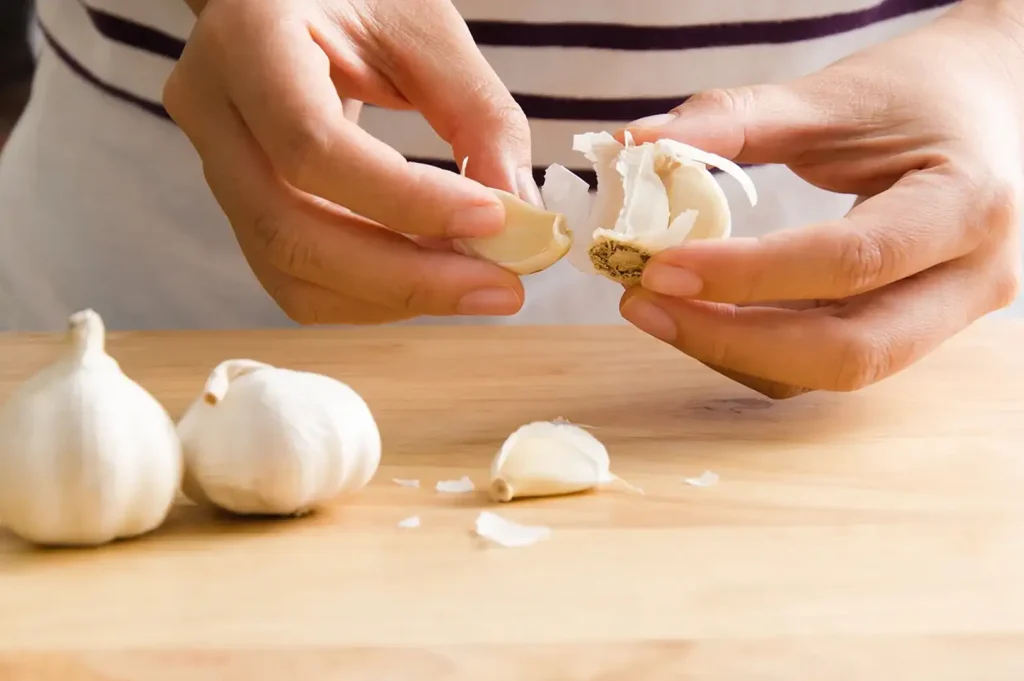
The craft is quiet, but it’s real. She soaks the garlic overnight in salted water first, to draw out some of its harshness. The next day, she boils the vinegar, sugar, and salt together, then lets the brine cool completely before pouring it over. Hot brine, she says, cooks the garlic soft. Her ratio is by eye, a little less sugar than vinegar. A date is written on the lid in marker. She won’t open it for three weeks.
She buys ready-made jars too, when life gets busy. They’re tidy and identical, and often sweeter than hers. She doesn’t look down on them. But the jar on the windowsill is a different thing. It’s garlic that waited, and a kitchen that waited with it.
I finish the porridge slowly. The last clove has soaked up the warmth of the rice, and it tastes softer now, almost like a memory of garlic. Auntie Noi screws the lid back on and returns the jar to the light.
It will keep. That’s the whole idea.

Prawn Mee in Singapore: Bowls Where the Broth Tastes Like Time
Eda Wong | October 24, 2026
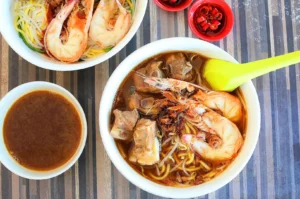
I do not remember the first bowl of prawn mee I ever ate. But I remember the smell: that deep, roasted-shell darkness that fills a coffee shop before you have even sat down. My grandfather used to say you could tell a good prawn noodle stall from the doorway, just by breathing. Over the years,…
-
How to Make Dashimaki Tamago, the Japanese Rolled Omelette That Tastes Like Broth
Eat Drink Asia Team | October 22, 2026
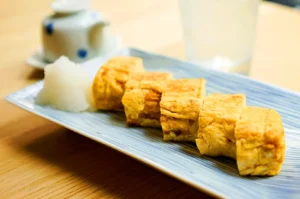
Dashimaki tamago is one of those dishes that looks quieter than it is. At first glance, it is just a rolled egg. Pale, soft, sliced neatly, often served beside steamed rice, miso soup, and grated daikon radish. But once you make it, you realise it is not really about eggs alone. It is about how…
-
The Lunch Hour Slows Down at Gochi-So Shokudo
Dio Asahi | October 21, 2026
By Dio Asahi for Eat Drink Asia. It’s just past noon, and the lifts keep opening. Suits spill out, lanyards swinging, phones already halfway to their ears. But inside Gochi-So Shokudo, tucked into One Raffles Place, something else is happening. People are sitting down. Actually sitting. Chopsticks lifting, shoulders dropping a little, the room warm…
-
Kintamani Singapore Review: Can an All-You-Can-Eat Buffet Still Taste Like Indonesia?
Dio Asahi | October 20, 2026
I walked into Kintamani Singapore with one question in mind. Buffets ask food to wait. Rendang, sambal, grilled meats, and fried seafood all sit under heat while diners circle the spread. That is not necessarily kind to Indonesian dishes built around texture, reduction, chilli, coconut, and freshly cooked aromatics. So I was less interested in…

Pagi Sore Indonesian Restaurant Est 1989 Review: A Second-Generation Kitchen That Still Knows Its Own Voice
Eda Wong | October 17, 2026
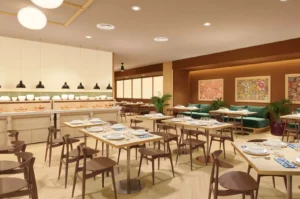
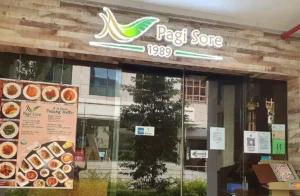
The first thing I noticed at Pagi Sore Indonesian Restaurant was the smell. Not the sharp, showy kind. Something slower: coconut milk, lemongrass, chilli, fried egg, and the deep warmth of spice paste drifting out from a wood-heavy dining room while Far East Square kept moving outside. I walked over on a Wednesday evening, just…
-
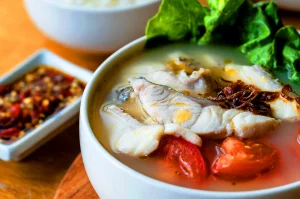
Best Fish Soup in Singapore: Bowls Where the Broth Is the Whole Point
Eat Drink Asia Team | October 15, 2026
I don’t remember when fish soup became my quiet meal. It just did. On days when I couldn’t decide what I wanted, when the weather turned grey, when I needed something warm that asked nothing of me, I’d end up hunched over a bowl, breathing in the steam before the first spoonful. I’ve eaten a…
-
The Clay Stove Heat Beneath a Lao Grilled River Fish
Eda Wong | October 14, 2026
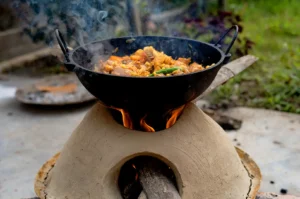
By Eda Wong for Eat Drink Asia It’s late afternoon, and the river is the colour of weak tea. A woman crouches beside a small clay stove at the edge of the bank, feeding it slivers of charcoal. Smoke lifts, thin and grey, and drifts toward the water. On a bamboo skewer, a whole fish…
-
The National Dish of Indonesia Is Not One Plate: Why a Country of Islands Needs Many Icons
Dio Asahi | October 13, 2026
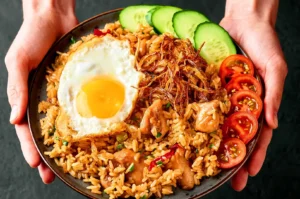
The first time someone asked me for the national dish of Indonesia, I answered nasi goreng without thinking. It seemed obvious: fried rice darkened with kecap manis, often topped with a fried egg, familiar from warungs and late-night street food stalls. That answer is not wrong. It is simply too small. Indonesian food is regional,…
-
Sapporo in a Bowl: Soup Curry by Ki-setsu Comes to Singapore
Eda Wong | October 12, 2026
Ask most Singaporeans to picture Japanese curry and a familiar image probably comes to mind: a plate of rice beneath thick brown gravy, perhaps with a breaded cutlet sliced neatly across the top. It is rich, sweet-edged, comforting and, by now, almost as recognisable as ramen or donburi. Head to the fourth floor of Fortune…
-
Meokja by Jungga Review: The Halal Korean Snack Table That Knows What It’s Doing
Eda Wong | October 10, 2026
I had not planned to eat at Meokja by Jungga. I was walking down North Bridge Road on a Tuesday, somewhere around the awkward hour between lunch and dinner, when I caught the smell of something frying and the low clatter of a kitchen working hard. I looked up, saw the sign, and my feet…