A wok sits over a low flame, and a handful of raw sticky rice slides across its dry surface. No oil, no water—nothing but heat and patience. The grains pale, then blush amber, then deepen toward the color of weak tea. Someone shakes the pan in a slow, even rhythm, listening as much as watching. The kitchen fills with a smell that is part popcorn, part roasted nut, part something older and harder to name. When the rice is ready, it goes into a stone mortar, still warm, and a pestle begins to turn it into coarse, fragrant dust.
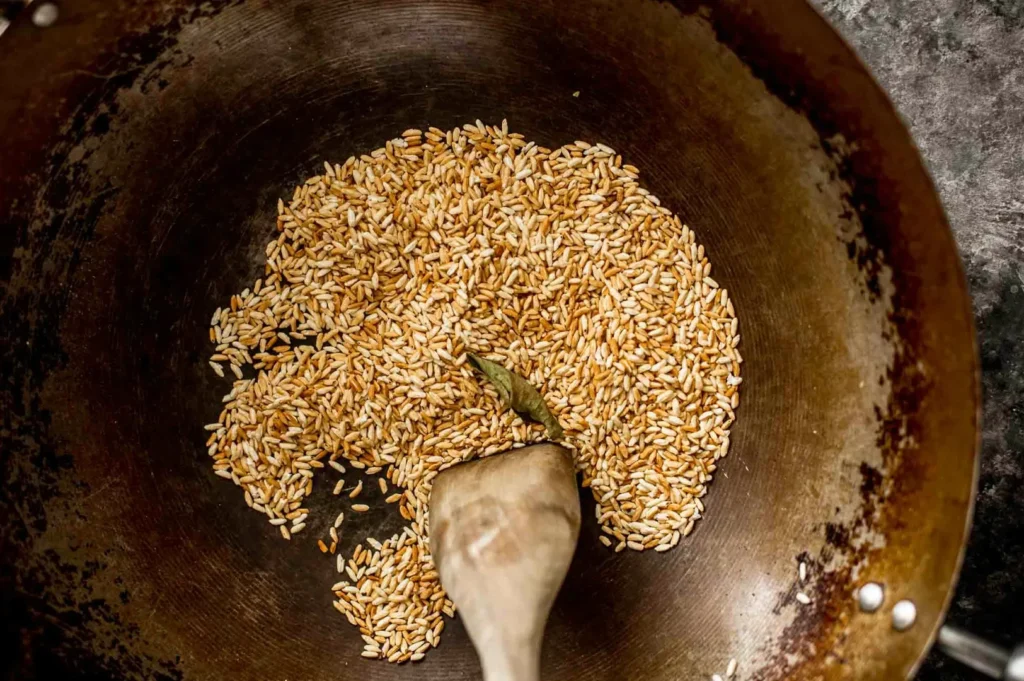
This dust is khâo khua (roughly khao koo-ah): toasted rice powder. In thailand food, it’s the kind of near-invisible seasoning that quietly decides whether a dish feels merely dressed or fully composed. The process is exactly what it sounds like: uncooked glutinous rice, dry-toasted until it browns and smells nutty, then ground while still warm so it keeps its aroma. The result is not flour. It is deliberately coarse, somewhere between fine sand and cracked pepper, with enough grit to register on the tongue.
In a dish like larb, the minced meat salad of the north and northeast, this powder does quiet structural work. It absorbs the loose liquid pooling at the bottom of the bowl, gives the lime and fish sauce something to cling to, and adds a toasted backbone beneath the bright, sour, chili-sharp surface. Without it, larb tastes thinner, wetter, less anchored.
You notice khâo khua most when it is missing. At a shared table, where bowls of larb sit beside sticky rice pressed into balls by hand, the powder is the reason a pinch of salad holds together on your fingers. It explains why the dish feels dry in the deliberate sense—not parched, but composed, each bite clinging rather than running. Cooks make it in small batches because it goes stale, losing the very nuttiness that justified the toasting. A jar kept too long turns flat and dull. So the grinding becomes part of the cooking rhythm itself, done close to the meal, often by whoever is already standing at the mortar pounding chilies.
What feels worth noticing now is how easily this step disappears. Pre-ground rice powder sits on shelves, convenient and consistent, and it works well enough that many never toast their own. But fresh khâo khua carries a depth the packaged kind cannot hold, a warmth that fades within days of grinding. The tension is small but real: a few minutes of attention against a shortcut that costs almost nothing. The powder is nearly invisible in the bowl, yet it decides whether larb sings or merely sits.
I keep returning to that contradiction. The most essential element in the dish is the one you can barely see: a scatter of toasted dust that asks for patience and gives back texture, aroma, and the simple logic of dryness.

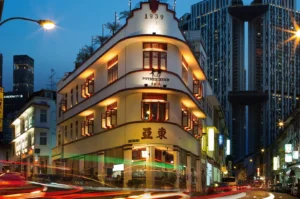
Tong Ah Eating House Review: A Chinatown Breakfast That Still Begins with Kaya Toast
Eda Wong | September 19, 2026
I almost walked past it. I’d been looking for the old triangular building, the red-and-white one you see in every photo of Keong Saik, the one that made Tong Ah feel like a landmark before you’d even ordered anything. But that’s not where it lives anymore. It’s a few doors down now, at 35 Keong…
-
Breakfast at Chinatown Singapore: How Migration Built the City’s Morning Table
Eat Drink Asia Team | September 17, 2026
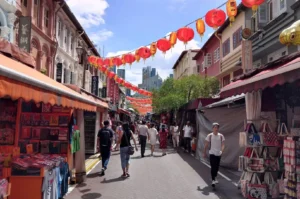
The first time I ate breakfast in Chinatown, I got it wrong. I arrived at eleven, hungry and hopeful, and found the kopi stalls already turning toward lunch. The porridge uncle was packing up. The toast man had switched to slicing char siew. I ate a rushed plate of noodles standing near a pillar, sweating,…
-
The Bitter Leaf Folded Into a Burmese Home Kitchen
Eda Wong | September 16, 2026
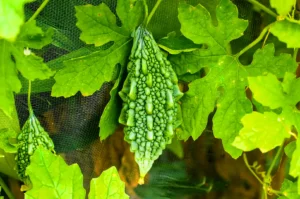
The oil is already hot when she reaches for the leaves. It’s late morning in a kitchen off a quiet lane, and a woman I’ve been watching stands over a blackened wok, tearing bitter gourd leaves by hand into a small heap. The garlic hits the oil first, sharp and loud. Then the leaves go…
-
Best Sushi Singapore: From Premium Japanese Restaurants to Exclusive Deals from Affordable Sushi Trains
Dio Asahi | September 15, 2026
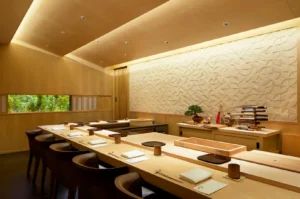
I’ve been eating sushi in this city for years now, from S$1.50 plates rolling past on a belt to omakase counters where the bill made me sit up straight. Somewhere along the way I stopped chasing “the best” and started noticing something else — that good sushi answers a mood, not a ranking. Some nights…
-
Al Mubin Restaurant and the Nasi Goreng Sambal Ayam That Has to Carry the Whole Plate
Eda Wong | September 12, 2026
It was close to eleven at night when I finally sat down. The kind of hour when you’re not really hungry so much as unsettled, when you want something warm in front of you more than you want a proper meal. Al Mubin’s food court at Block 407, Ang Mo Kio Avenue 10, was still…
-
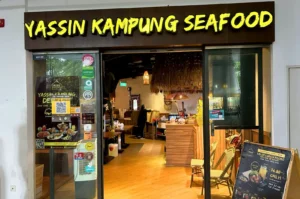
Yassin Kampung Admiralty Review: When Sambal Fried Rice Becomes the Whole Point
Eat Drink Asia Team | September 10, 2026
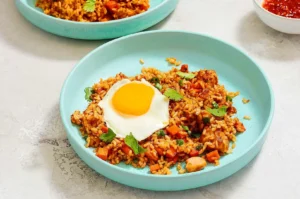
I ordered the sambal fried rice first, before I’d even properly read the menu. That’s usually a mistake at a place like this. Yassin Kampung @ Admiralty is the kind of restaurant that keeps trying to pull your attention elsewhere — toward stingray, toward crab, toward hotplates that arrive still hissing. But I’d come with…
-
The Bamboo Basket Holding Chiang Mai’s Sticky Rice
Dio Asahi | September 9, 2026
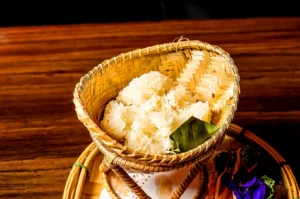
By Dio Asahi for Eat Drink Asia. The lid comes off, and the steam rises first. It’s a warm afternoon in Chiang Mai, and on the table sits a small woven bamboo basket, still holding the heat of the pot it came from. Someone’s grandmother lifts the top and sets it aside without looking. Inside,…
-
Sambal Fried Rice Recipe for People Who Know the Chilli Paste Does the Heavy Lifting
Dio Asahi | September 8, 2026
I used to add the rice too early. The oil would be hot, the sambal barely a minute in, and I’d tip in the cold rice because I was hungry and impatient. Every time, the same result: rice stained red but tasting of nothing much. Sharp. Raw. Flat where it should have been deep. It…
-
Hup Lok at Havelock Road: A Teochew Fish Soup Carrying Memory Forward
Eda Wong | September 8, 2026
The bowl arrives before anything else does. Steam lifts off it in slow ribbons, carrying the smell of ginger and something warmer underneath: the round, boozy note of hua tiao wine settling into fish. I lean in before I even pick up my spoon. The broth is pale gold and cloudy, thick enough that it…
-
Fresh Sashimi Singapore: Places for Clean Cuts, Quiet Counters, and Fish That Still Feels Alive
Eda Wong | September 5, 2026
I didn’t grow up eating raw fish. For years, sashimi felt like something you learned to appreciate rather than something you loved. Cold, foreign, a little intimidating. Then one afternoon, at a quiet counter, a chef placed a single slice of chutoro in front of me and said nothing. I ate it. And I understood….