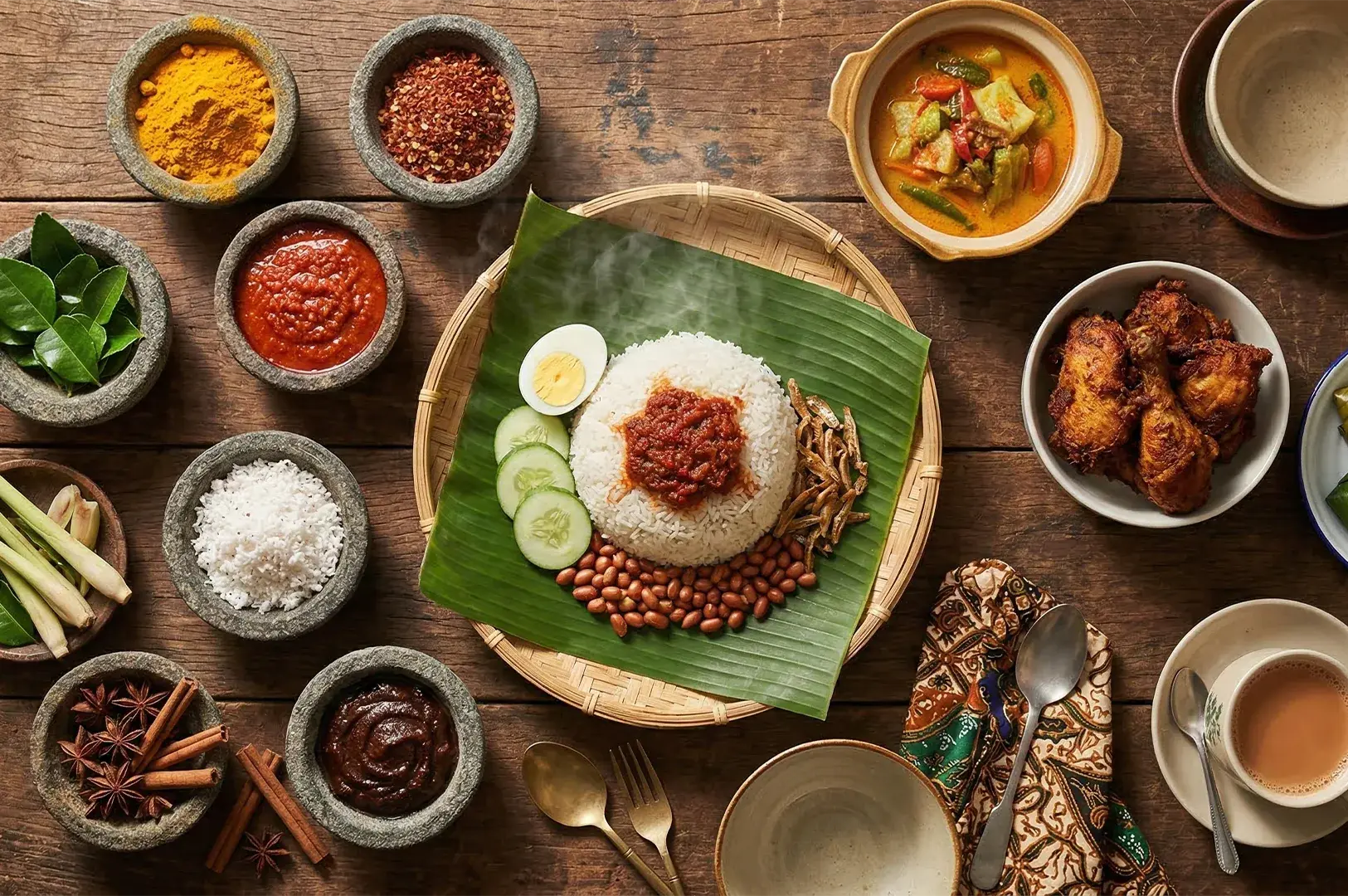
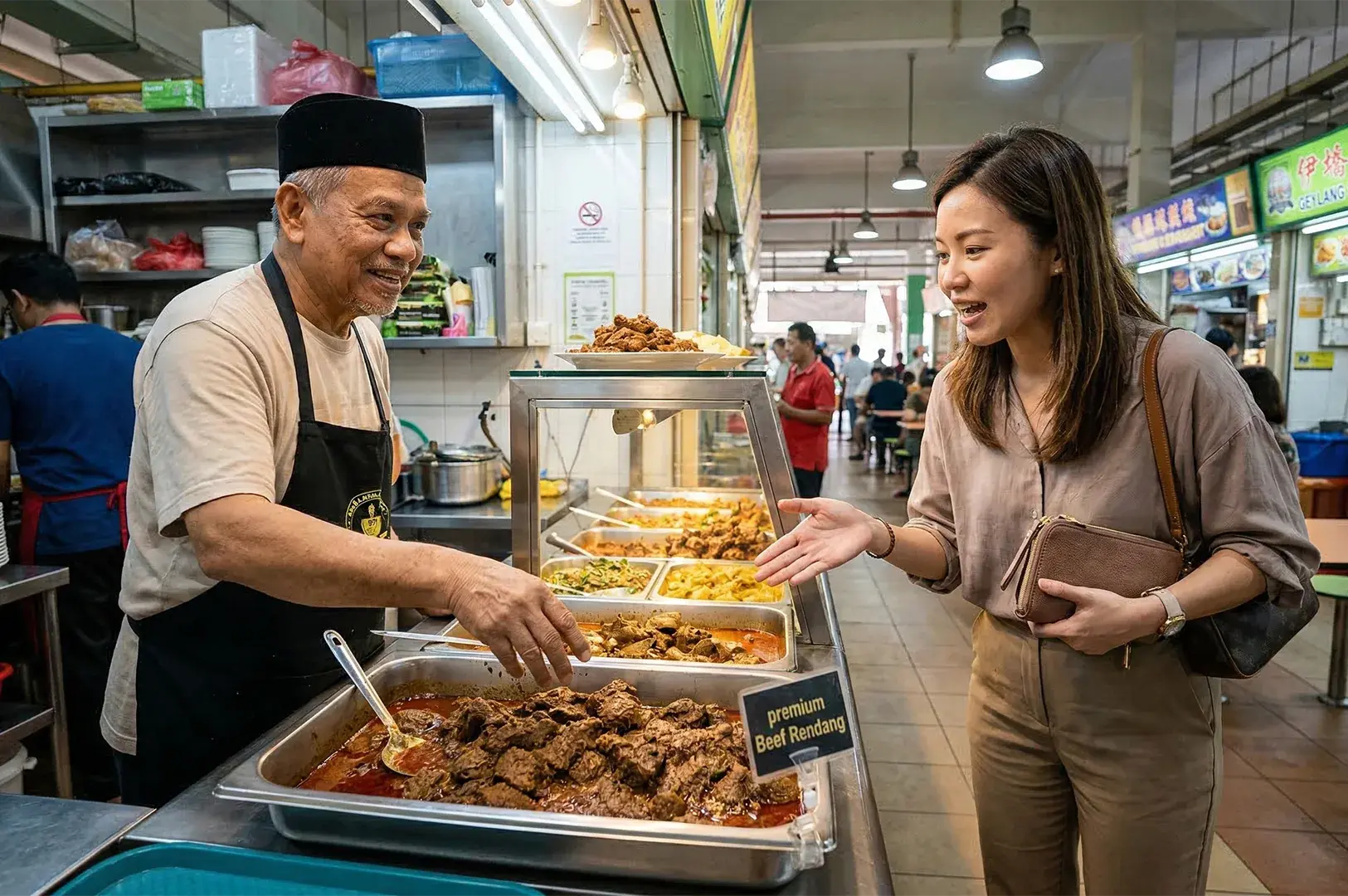
My first time ordering Nasi Padang in Geylang Serai was overwhelming, I randomly picked dishes and was shocked by a $20 bill due to premium beef rendang and squid. That taught me to always ask seafood prices and that Malay food is a complex, modular cuisine.
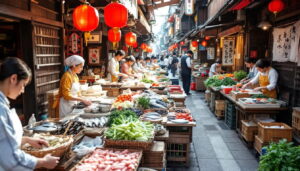
Malay food is everywhere in Singapore, in hawker centres, weddings, and festivities. But do we truly understand it? This guide explores the heart of Malay cuisine, from the importance of lemak (coconut richness) to the difference between Malaysian food and Malay ethnic food, helping you appreciate it beyond just eating satay.
The Foundation: Clearing Up the Confusion in Malay Ethnic Food
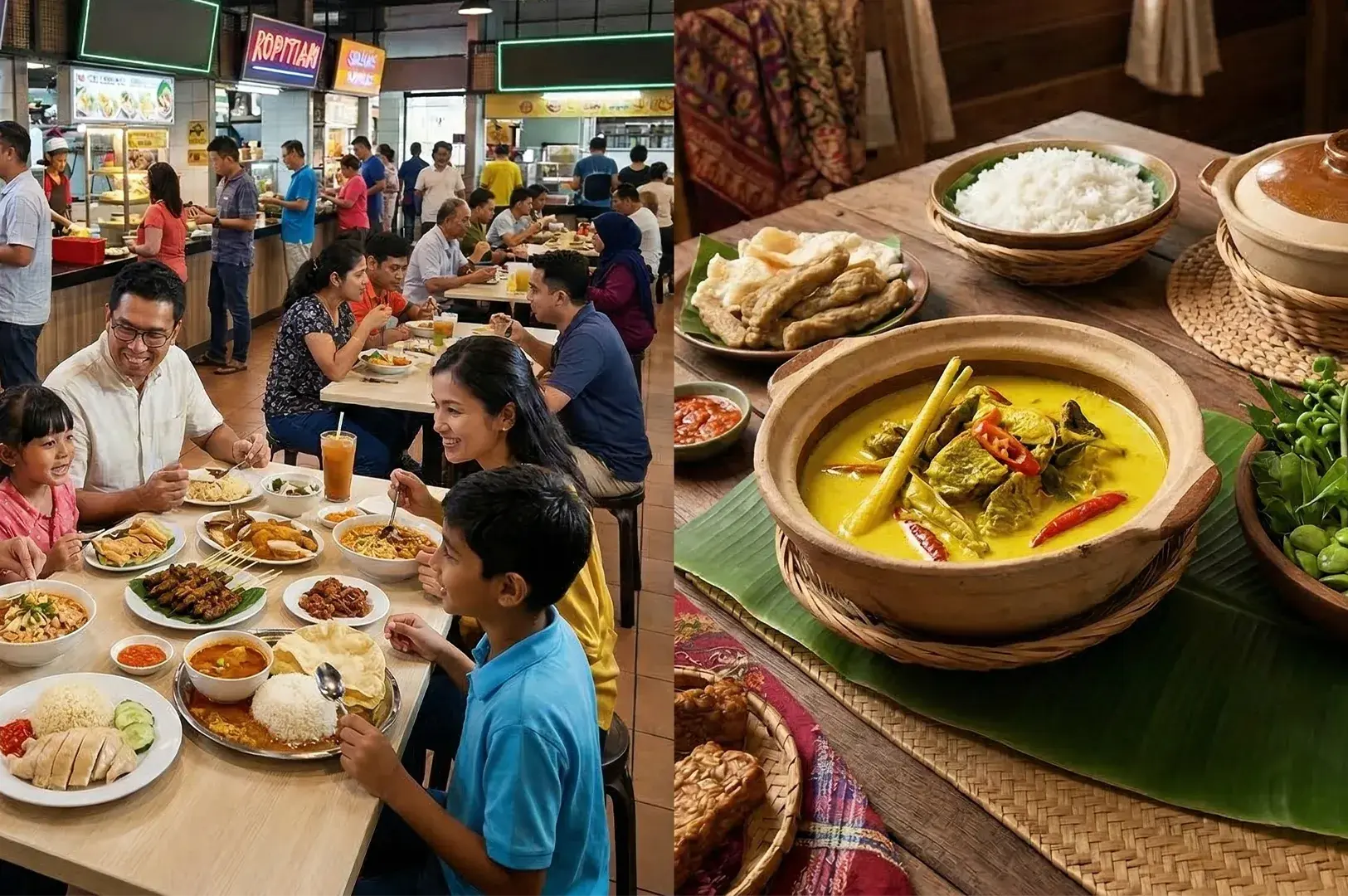
Before we eat, we need to understand what we are eating. One of the biggest questions I get asked is: “What is the difference between Malaysian food and Malay food?”
Think of malaysian food as the nationality, a massive umbrella and a true melting pot that covers malay cuisine, chinese food, indian food, Peranakan, and Indigenous cuisines found in Malaysia. You’ll find everything from the delicate poached chicken of hainanese chicken rice to the rich, spice-laden indian food staples.
Malay ethnic food, on the other hand, refers specifically to the cuisine of the Malay people. It is shaped by Islam (so it’s Halal), the maritime trade of the Nusantara archipelago, and heavy influences from indonesian cuisine and Thailand.
What I Used to Believe About Malay Cuisine
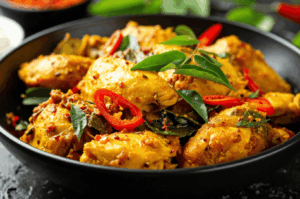
- “It’s just Nasi Lemak and Rendang.” I used to think this too. But traditional malay food is incredibly diverse. Beyond the famous icons, there is Masak Lemak Cili Api (a turmeric-coconut curry that is a creamy coconut sanctuary, brilliantly yellow and spicy), Asam Pedas (a sour and spicy fish curry stew), and Ulam (a refreshing vegetable salad platter of raw herbs eaten with fermented sauces).
- “It’s always heavy and oily.” This is a huge myth. While hawker staples can be rich, traditional kampung (village) cooking is often herb-forward and light. Dishes like Ikan Bakar (grilled meat served smoky and aromatic) or Pais (fish steamed in banana leaf) are light and fragrant, showcasing the delicate balance of traditional malaysian dishes.
- “Malay food in Singapore is the same as Malaysia.” They are siblings, but not twins. In my experience, Singaporean Malay food tends to be slightly sweeter to suit the local palate, often enhanced with palm sugar syrup, and portion sizes here are generally smaller than what you’d find up north in peninsular malaysia.
The Flavor Architecture: Why Malay Cuisine Tastes Like That
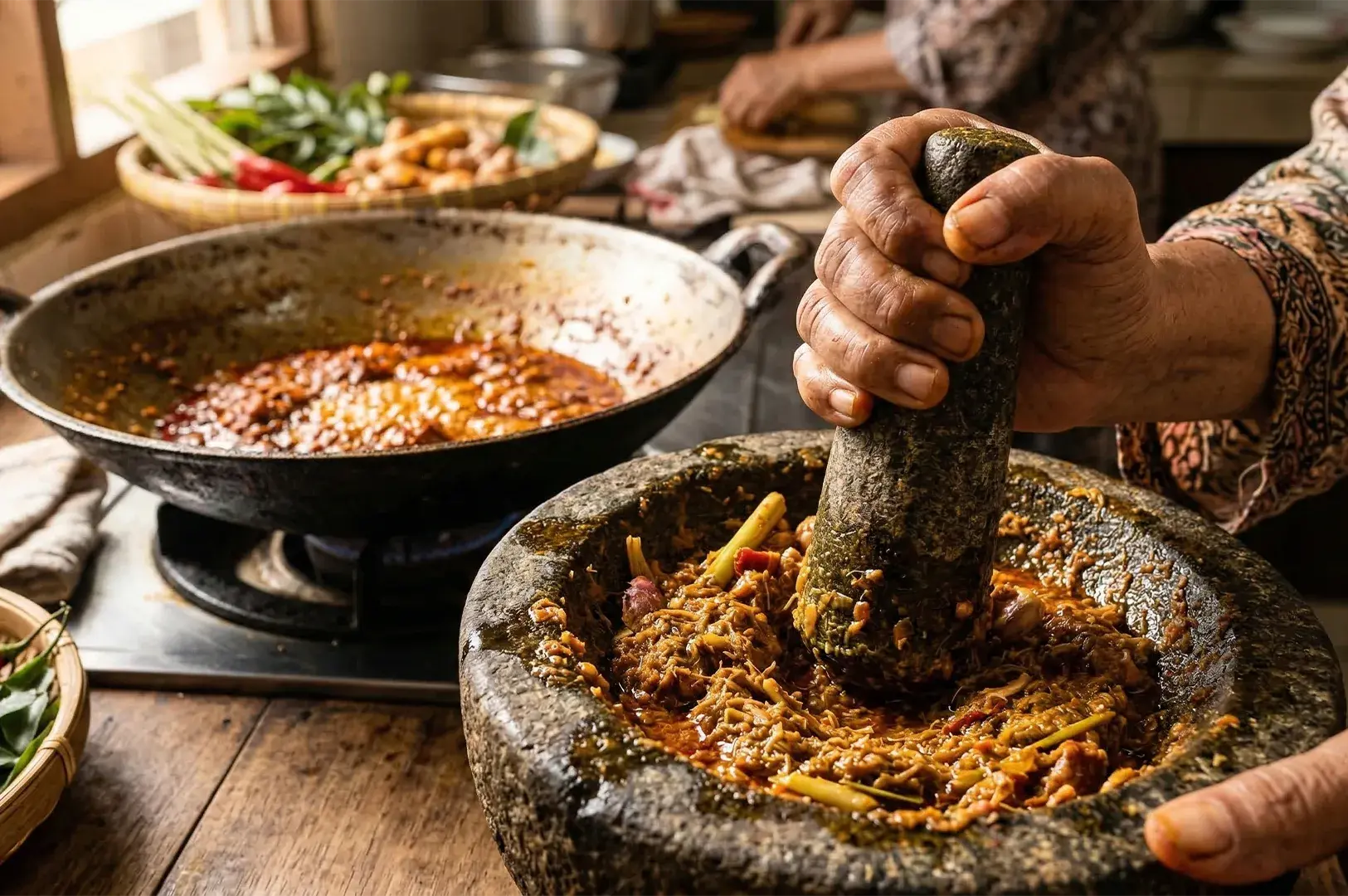
If you want to understand the soul of a Malay kitchen, you need to respect the Rempah, the fragrant curry paste base for almost every curry and stew. It’s a labor of love involving shallots, garlic, lemongrass, galangal, turmeric, and candlenuts. I’ve found that you can taste when a cook has rushed their rempah, the flavor falls flat. A good rempah is sautéed until the oil separates (pecah minyak), releasing a depth of aroma that no bouillon cube can match.
The Holy Trinity of Malay Flavor
- Coconut Milk (Santan): It’s not just for creaminess. It balances the heat of the spicy curries. In a good Masak Lemak, the coconut milk should be rich but not greasy, a perfect coconut cream base.
- Belacan (Shrimp Paste): This funky, pungent block of fermented shrimp paste is the umami bomb of Malay cooking. It smells intense when raw, but once toasted, it adds a savory depth that salt alone cannot achieve.
- Asam (Tamarind/Sourness): This cuts through the richness. The interplay between the fat of the coconut and the sharp sourness of the tamarind is what makes a noodle dish like Mee Siam so addictive.
The Sequence of the Bite: How to Explore Traditional Malay Food in Singapore
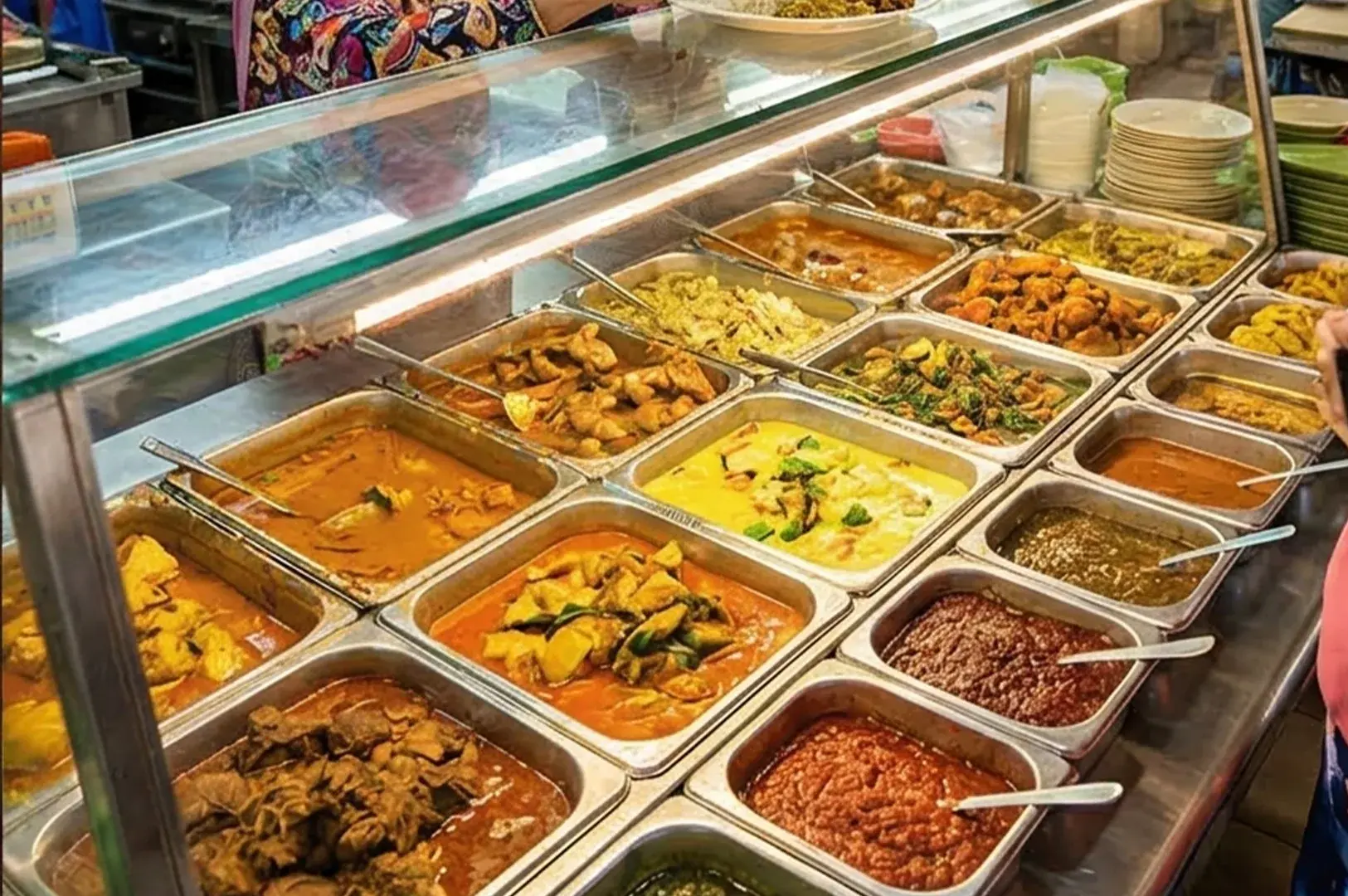
Step 1: Understand the Category of Malay Dishes
You aren’t just “eating Malay food.” In Singapore, you are usually encountering one of these styles:
- Hawker Staples: Fast, plated meals like Mee Rebus (a spicy noodle soup with thick yellow noodles), Soto Ayam (chicken curry soup), or nasi lemak (a fragrant rice dish cooked in coconut milk and malaysia’s national dish).
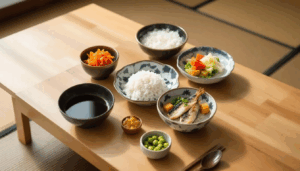
- Nasi Padang: Technically distinct, but deeply integrated into the local malay food scene. This is rice steamed and served with a display of many dishes.
- Kampung Cuisine: Sit-down restaurants serving family-style malay dishes like Nasi Ambeng or Masak Lemak Seafood.
- Kuih Stalls: Dedicated to traditional bite-sized desserts made from rice flour and palm sugar, including Ondeh-Ondeh with green rice flour jelly and palm sugar syrup.
Step 2: Start with Balance
A rookie mistake is ordering three heavy coconut curries on one plate. You will feel “jelak” (cloying) very quickly.
- The Beginner Strategy: Order nasi lemak with fried chicken. It’s familiar and textural. The fragrant rice dish should be accompanied by roasted peanuts, fried anchovies, cucumber slices, and a dollop of spicy chili paste.
- The Adventurous Move: Try Sambal Sotong (squid in chili sauce) or Paru (deep fried beef lung). If you see Tempoyak (fermented durian curry), try it. It’s creamy, funky, and complex.
Step 3: Master the Condiments
Malay food is modular. You customize your bite. Use prawn paste based sambals to add heat, Acar to cleanse the palate, or Peanut sauce typically paired with Satay (skewered and grilled meat).
Navigating the Menu: Pricing and Planning in Kuala Lumpur and Beyond
Singapore is an expensive city, but delicious malaysian foods run the gamut from budget to premium. Here is what you can realistically expect to spend in 2026, whether you are in Geylang or kuala lumpur.
Dish Name | Price Range | Description |
|---|---|---|
Hawker Nasi Lemak | $4 – $7 | Fragrant rice dish cooked in coconut milk, served with roasted peanuts, fried anchovies, cucumber slices, and spicy chili paste. |
Nasi Padang | $8 – $15 | Price increases with premium chicken curry or seafood; a modular rice dish with various side dishes. |
Nasi Ambeng Platter | $40 – $80 | A large shared rice dish featuring fried tofu, rice cake, and many dishes for a group. |
The Surgical Brief: Malay Ethnic Food Timing
- Friday Lunch: The crowds are heaviest around 1 PM. Go earlier or later.
- The Simmer Rule: Dishes like Beef Rendang and Gulai actually taste better after sitting for a few hours.
- Kuih Timing: If you want Ondeh-Ondeh or soft Kueh Lapis, buy them in the morning. I once bought kuih at 6 PM; the coconut had gone stale and the green rice flour jelly was hard. Kuih is a morning game.
Watch out For these Pitfalls
The “Halal” Confusion
Most Malay stalls are Halal, but always check for the MUIS certificate if you are unsure. Some chinese food stalls may serve malay-style dishes but include crispy fried pork lard, which is not Halal.
The “Ordering 5 Dishes” Trap
Don’t treat Nasi Padang like chinese food “Cai Fan.” In malaysian food culture, beef and seafood are premium. Ask the price per dish. I recommend starting with two proteins and one vegetable.
The “White Shirt” Regret
Avoid wearing white. Spicy chili paste and dark soy sauce stains are permanent. I have lost many shirts to a stray splash of fish curry.
Off-the-Menu Intel: The Banana Leaf Rice and More
Banana Leaf Rice
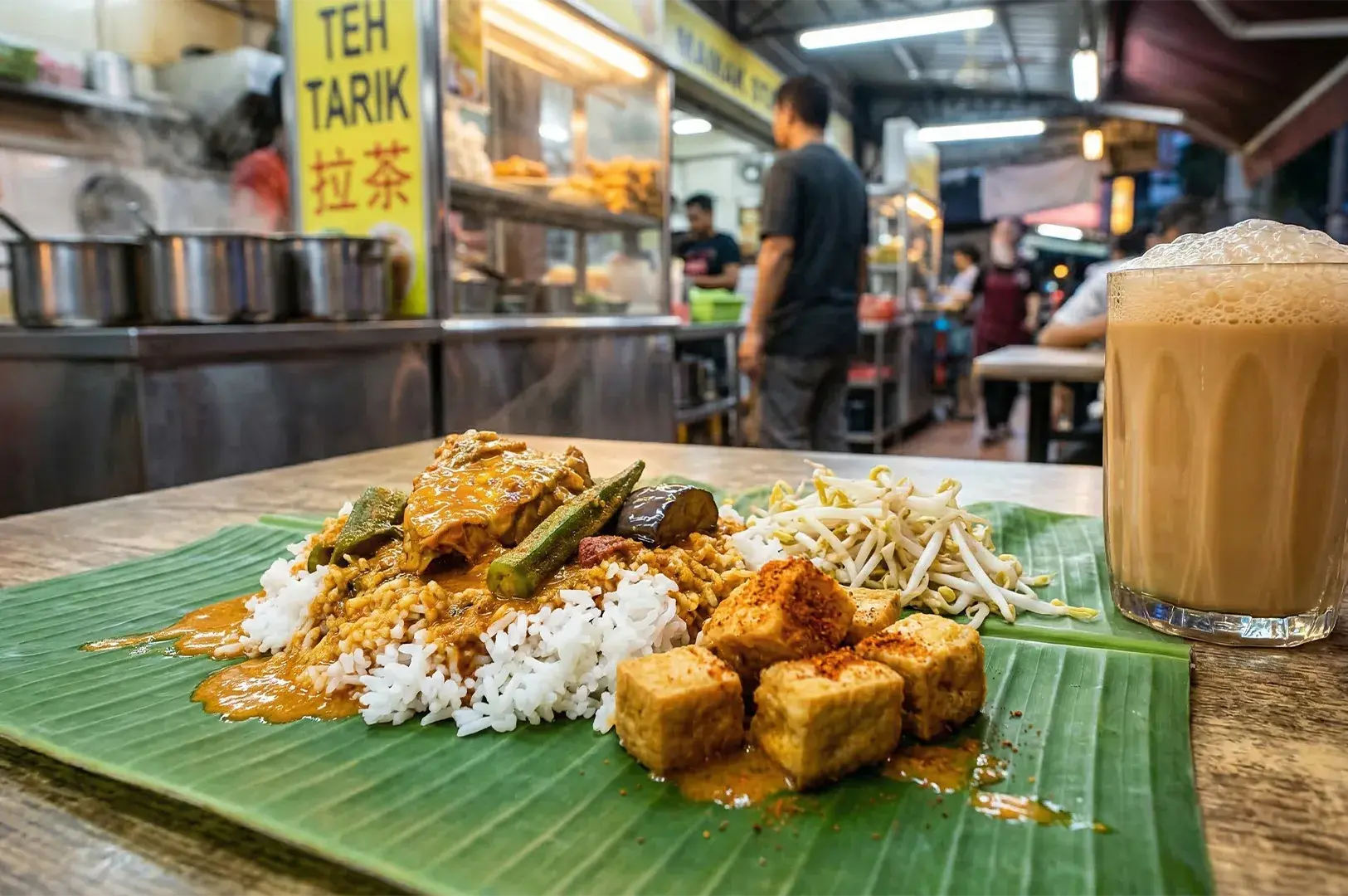
While often associated with indian food, the banana leaf rice experience is a staple of malaysian cuisine. Imagine steamed rice served on a vibrant green banana leaf, drenched in lentil curry (dhal) or fish head curry, and paired with fried tofu and bean sprouts.
Noodle Wonders: Hokkien Mee and Curry Laksa
If you need a break from rice, explore the stir fried noodle dish variety. Hokkien Mee features thick rice noodles or egg noodles braised in thick dark soy sauce with a hint of soy sauce and fish sauce for depth. Alternatively, Curry Laksa provides a coconut based curry soup with thick rice noodles, fish cake, and bean sprouts that creates a delicious food experience.
The Mamak Experience: Roti Canai and Teh Tarik
No trip to kuala lumpur or a Singaporean mamak food stall is complete without roti canai. This flat rice noodles alternative is a flaky flatbread served with lentil curry. Wash it down with Teh Tarik, a pulled tea made with condensed milk, or cool off with shaved ice (ABC).
Key Areas to Explore in Singapore’s Malaysian Food Culture
- Geylang Serai: The cultural heartbeat. Look for aromatic herbs, prawn paste, and delicious food.
- Kampong Glam: Historically the seat of Malay royalty. Perfect for authentic malay ethnic food and nasi goreng (fried rice).
- Bedok & Tampines: Heartlands famous for noodle dish varieties like Mee Rebus and spicy noodle soup.
If you’re looking for the most authentic spots away from the tourist traps, Eat Drink Asia maps out the best cross-border flavors in these neighborhoods.
The Lingering Aftertaste: It’s More Than Just Food
Exploring traditional Malay food is a journey into the history of the region. Every dish of Nasi Dagang tells a story of the East Coast traders; every plate of Nasi Padang connects us to the Minangkabau highlands.
My advice? Be curious. Don’t let the fear of “ordering wrong” stop you. Walk up to that stall in Geylang Serai. Ask the makcik what she recommends. Try the Tempoyak even if it smells strong. Use your hands to eat if you feel brave.
When you engage with the food on this level, you aren’t just filling your stomach. You are participating in a vibrant, living culture that has survived centuries of change. And trust me, once you find your favorite Rendang spot, you’ll never look back.

The Quiet Pursuit of Perfection: Where to Find the Freshest Sashimi in Singapore
Eat Drink Asia Team | December 3, 2025
In Singapore, a city that moves at a dizzying pace, there is a quiet but growing reverence for pursuits that demand patience. Nowhere is this more apparent than in the city’s evolving appreciation for authentic Japanese cuisine. The once-niche world of omakase has entered the mainstream lexicon, and with it, a more discerning palate for…

Understanding Sake Alcohol Content: A Complete Guide to ABV and Flavor
Eda Wong | December 2, 2025
When exploring Japanese sake, many wonder about its grades and complex flavors. Sake’s unique profile offers remarkable versatility, enjoyed in various serving styles and paired with diverse dishes. One fundamental aspect is sake alcohol content. Is sake stronger than wine? How does its alcohol by volume (ABV) compare to beer? The answer is nuanced. Understanding…
-
Japanese Sake: The Complete Guide to Japan’s Traditional Rice Wine
Dio Asahi | November 29, 2025
Japanese Sake: The Complete Guide to Japan’s Traditional Rice Wine While sake has been Japan’s national beverage for over a millennium, its popularity across Asia is at an all-time high. Rooted in Japan’s traditional brewing methods and centuries-old origins. It symbolizes Japan’s cultural heritage and craftsmanship. Understanding this complex brewed alcoholic beverage opens doors to…

Best Japanese Foods in Japan: The Must-Try Dishes
Eda Wong | November 27, 2025
Japan’s culinary world extends far beyond well-known sushi and ramen, revealing a rich variety of regional specialties cherished by locals. While many travelers stick to popular Japanese foods in tourist areas, authentic flavors are best discovered in neighborhood markets, family-run eateries, and seasonal menus reflecting centuries of Japanese cooking tradition. Understanding Japanese cuisine requires more…
-
Japanese Food in Japan: The Ultimate Guide to Authentic Culinary Experiences
Eat Drink Asia Team | November 25, 2025
Experiencing Japanese food in Japan is fundamentally different from eating Japanese cuisine anywhere else. While sushi restaurants and ramen shops have spread globally, the authentic flavors, techniques, and cultural context of Japanese food can only be fully appreciated in its homeland. From meticulously selecting ingredients at peak freshness to centuries-old traditions shaping every meal, eating…
-
Food in Japan: A Complete Guide to Japanese Cuisine and Culinary Culture
Eda Wong | November 22, 2025
The gentle steam rising from a bowl of miso soup carries more than just the earthy aroma of fermented soybeans-it carries centuries of Japanese culture and culinary wisdom. When you eat in Japan, you’re not simply consuming a meal; you’re participating in a ritual that connects you to the seasons, the land, and a philosophy…
-
Ramune Marble Soda: History and Cultural Meaning of Japan’s Iconic Marble Soda
Dio Asahi | November 20, 2025
Among Japan’s beloved fizzy drinks, none evoke nostalgia and uniqueness quite like Ramune marble soda. Instantly recognizable by its quirky Codd neck bottle and glass marble seal, Ramune soda is an essential part of Japanese summer, cherished by generations for its refreshing taste and signature pop sound. This marble soda remains a staple at summer…
-
Hokkaido’s Best Seafood Treasures: Beyond Sushi and Sashimi
Eat Drink Asia Team | November 18, 2025
When visiting Hokkaido, Japan’s northernmost island, food lovers are greeted with some of the most highly regarded seafood specialties in the world. Hokkaido is famous for its abundance of fresh seafood and rich fishing grounds, thanks to the surrounding Sea of Japan, Pacific Ocean, and Sea of Okhotsk. These nutrient-packed waters yield a wide range…
-
The Art of Asian Tea Ceremony Traditions: Ancient Rituals and Cultural Values Across Asia
Dio Asahi | November 15, 2025
A cup of tea, in many parts of Asia, represents far more than a beverage-it is a conduit to ancestral tradition, intellectual pursuit, and the cultivation of mindfulness. Asian tea ceremony traditions turn the act of drinking tea into a sophisticated art form, layered with symbolism, philosophy, and socio-cultural values. Each gesture, from scooping powdered…

The Art of Slow-Cooked Curry Recipes: Time’s Magic in South Asian Cuisine
Eda Wong | November 13, 2025
Step into a South Asian kitchen, and the senses are instantly enveloped by the inviting aroma of food slowly simmering in a sturdy clay pot or heavy vessel. The allure is undeniable: in this space, slow-cooked curry recipes are a celebration of patient tradition, spices, and the richness of South Asian cuisine. Here, time and…