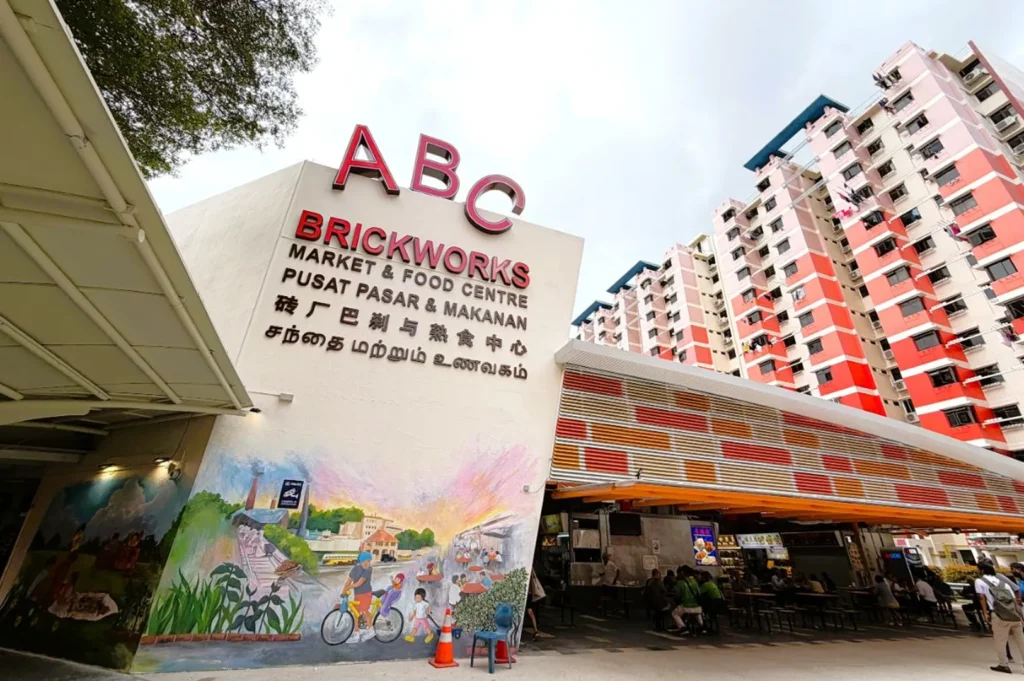
When I first walked past a hawker centre undergoing major renovations, the absolute silence unsettled me. The usual rhythmic scrape of metal spatulas against cast-iron woks was gone, replaced by the hum of construction. It made me realise just how much our culinary journeys are tied to the physical spaces we eat in. Right now, ABC Brickworks Market & Food Centre is experiencing this exact pause, and if you are a fan of its legendary food scene, you might be feeling a bit anxious.
In my experience, whenever a beloved hawker centre boards up for a facelift, panic ripples through the foodie community. Rumours fly about stalls disappearing, recipes changing, and prices skyrocketing. For ABC Brickworks, the anxiety is heavily centred around one specific dish: the iconic Hokkien mee.
If you are wondering what will happen to those glorious, stock-soaked noodles once the dust settles, you are not alone. I have spent years tracking how traditional food spaces evolve, and I want to help you navigate this transition. Here is exactly what you need to expect when the woks finally return to ABC Brickworks, and how you can continue to taste the world in this deeply cherished space.
As we wait for the renovations to be done, you can explore other stalls offering similar dishes and vibes, such as Hong Heng Fried Sotong Prawn Mee:
Is ABC Brickworks Closed Permanently?
Let me clear the air immediately because I have seen the panicked messages online. No, ABC Brickworks Food Centre is not closed permanently. The market and food centre is simply undergoing a scheduled period of repairs and redecoration, temporarily closed from 9 April 2026 to 7 June 2026.
However, there is a very real heartbreak mixed into this temporary closure. The famous Michelin-linked stall, Tiong Bahru Yi Sheng Fried Hokkien Prawn Mee, affectionately known as Yi Sheng Fried Hokkien Prawn Mee, is permanently gone. The owner, an uncle who served up plates packed with wok hei and rich prawn stock for decades, retired after countless hours frying noodles with precision. When I first learned this, I made the mistake of assuming the entire hokkien mee culture at ABC Brickworks Market was dead. I was wrong.
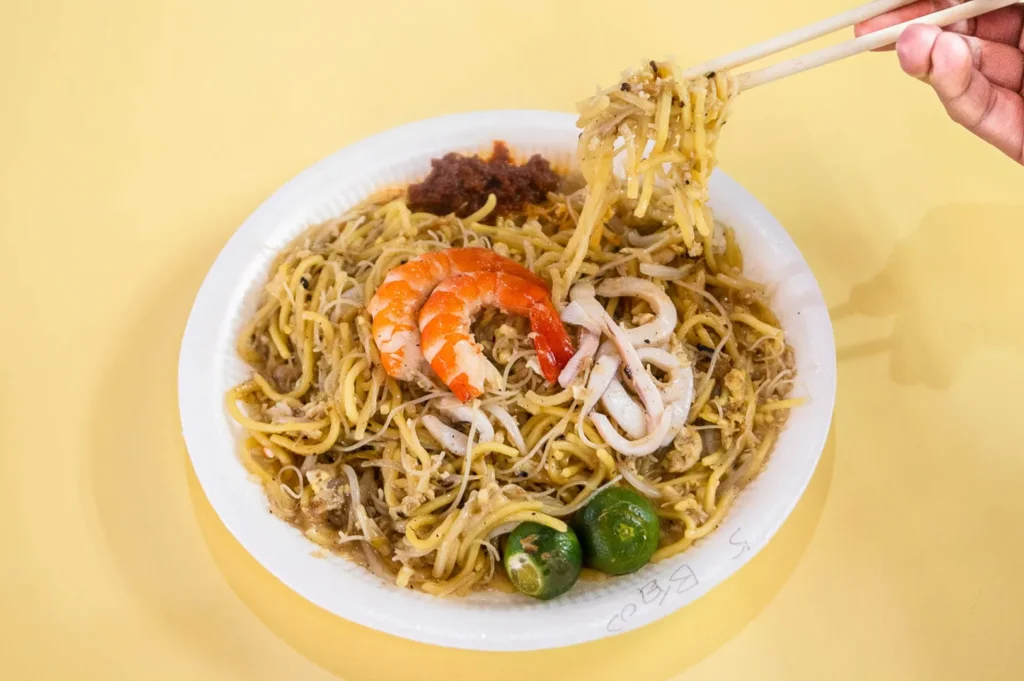
The biggest misconception right now is that the renovation killed the famous stall. It didn’t; time and a well-deserved retirement did. So, when the centre reopens, you must adjust your expectations. Do not go searching for Yi Sheng. Instead, prepare to explore how other skilled hawkers are carrying this trend-setting category forward in the vibrant hawker centre atmosphere of ABC Food Centre.
What to Expect from ABC Hokkien Mee After Renovation
With the old guard stepping down, the question isn’t “Will the famous stall return?” but rather, “Who now defines ABC Brickworks Hokkien Mee?” The post-renovation narrative is a succession story, not a comeback story. For those eager to continue their culinary adventures beyond hawker fare, be sure to explore the best Chinese restaurants in Singapore recommended by Eat Drink Asia for an elevated dining experience.
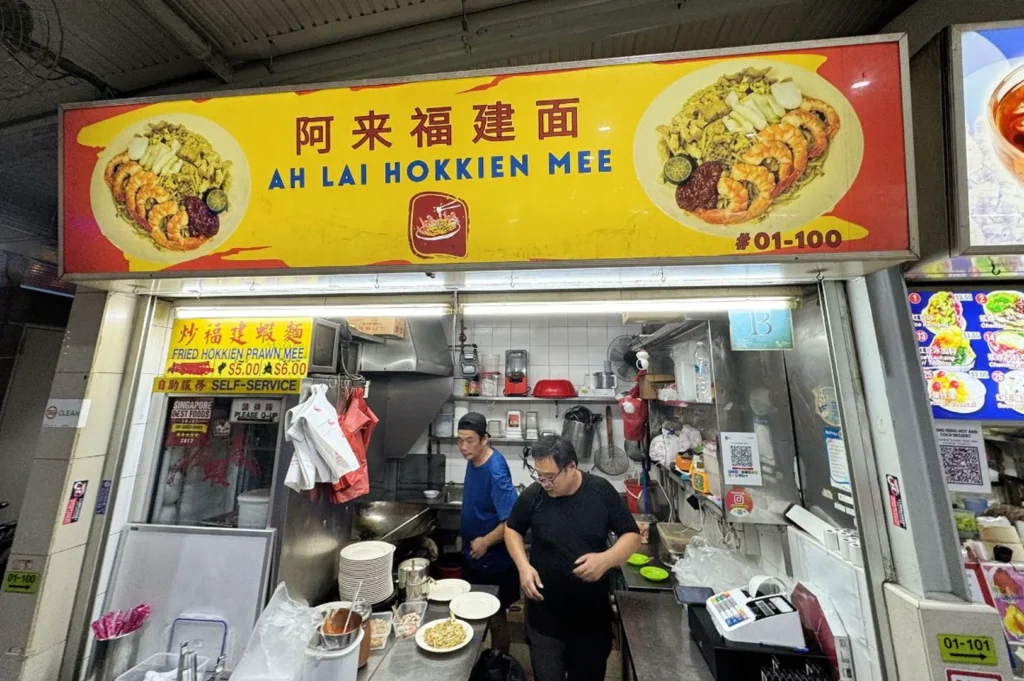
The hokkien mee stall you need to watch is Ah Lai Hokkien Mee, located at #01-100 in ABC Brickworks Food Centre. They moved into the space previously occupied by Havelock Road Blk 50 Fried Hokkien Prawn Mee, and they are serving a completely different interpretation of the dish.
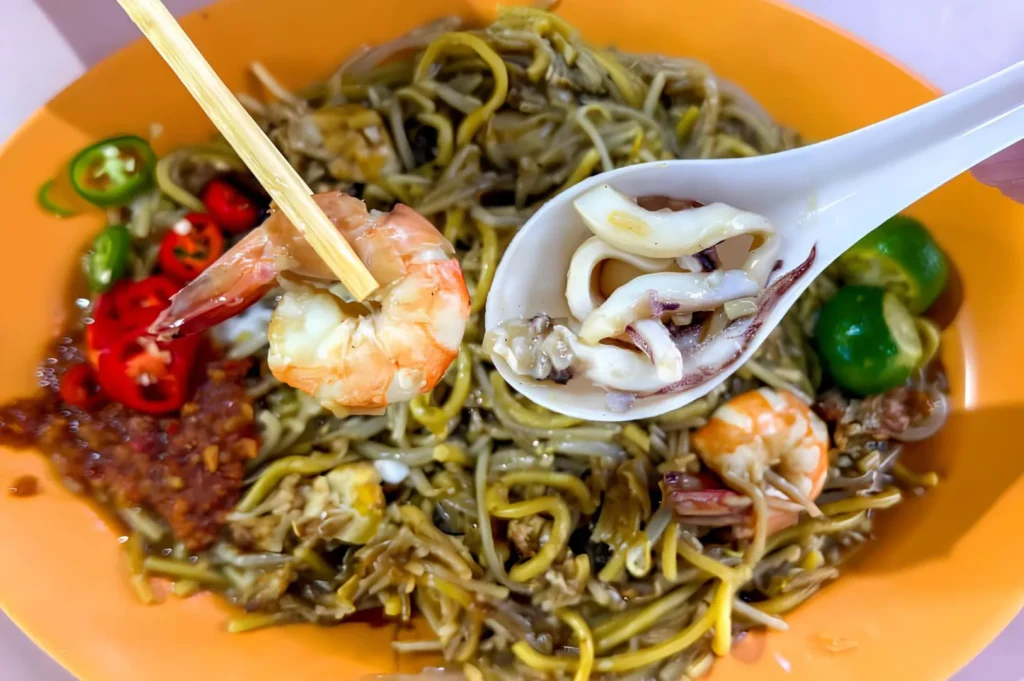
If you are used to a highly charred, dry plate packed with aggressive wok smoke and the signature wok hei, Ah Lai will be an education in a different style. They serve a beautifully wet, creamy, “zhup zhup hokkien mee” version. Their brilliant yellow noodles and thin bee hoon arrive swimming in a deeply aromatic prawn stock and pork broth. The stock absorption here is phenomenal. Instead of just tasting soy sauce or salt, every single bite carries a rich, authentic marine sweetness enhanced by dried shrimp and ikan bilis.
A proper plate of fried hokkien mee is a careful balancing act. When you visit after the renovation, pay attention to the texture: the squid (sotong) should be springy, not rubbery; the prawns plump and fresh; the pork lard and pork belly bits adding a rich, oily fragrance that coats the palate. The house-made sambal chilli, packed with sweet, spicy, and slightly smoky flavours, combined with a squeeze of fresh lime, sharpens the seafood sweetness, cutting through the heavy starch of the noodles.
Flavorful knowledge: A major red flag for any hokkien mee is a watery broth that pools uselessly at the bottom of the plate without clinging to the noodles. If the bee hoon is soggy or the yellow noodles taste heavily alkaline, the wok control is off.
How to Plan Your Visit to ABC Brickworks Food Centre Post-Renovation
When the barricades finally come down in June, the urge to rush back immediately will be strong. I highly recommend taking a more strategic approach to your first post-renovation culinary journey at this iconic hawker centre. Here is a simple, step-by-step guide to doing it right.
1: Verify the reopening dates
While the official centre reopening is slated for 7 June 2026, individual stalls operate on their own timelines. Many older hawkers take extra days to deep-clean their new spaces, set up equipment, and get supplier deliveries sorted. Give the stalls a week to settle back into their rhythm before you visit.
2: Go early to beat the queue
Nostalgia creates massive queues, especially for the fried hokkien mee stalls at ABC Market. If you want to secure a plate without standing in the sweltering heat for an hour, aim for a late morning visit. Arriving between 11:00 am and 11:45 am is the safest window. Once the clock strikes noon, the nearby office crowds and eager neighbourhood residents will overwhelm the food centre.
3: Embrace the hawker centre conditions
While the renovation will improve infrastructure, ABC Brickworks remains a bustling hawker centre in tropical Singapore. Dress in light, breathable clothing. Bring your own tissue packets to “chope” (reserve) your seat—yes, the classic auntie-led chope system will still be in full effect—and have your mobile payment apps or small cash ready.
4: Know what you are paying
Before closure, Ah Lai Hokkien Mee priced their plates at very affordable prices of $5 and $6. While minor price adjustments might occur post-renovation, you can generally expect your meal to sit comfortably within the $5 to $10 range depending on portion sizes. It remains an accessible way to enjoy a tasty, flavourful celebration of local food.
Addressing Your Top Worries About ABC Brickworks Makeover
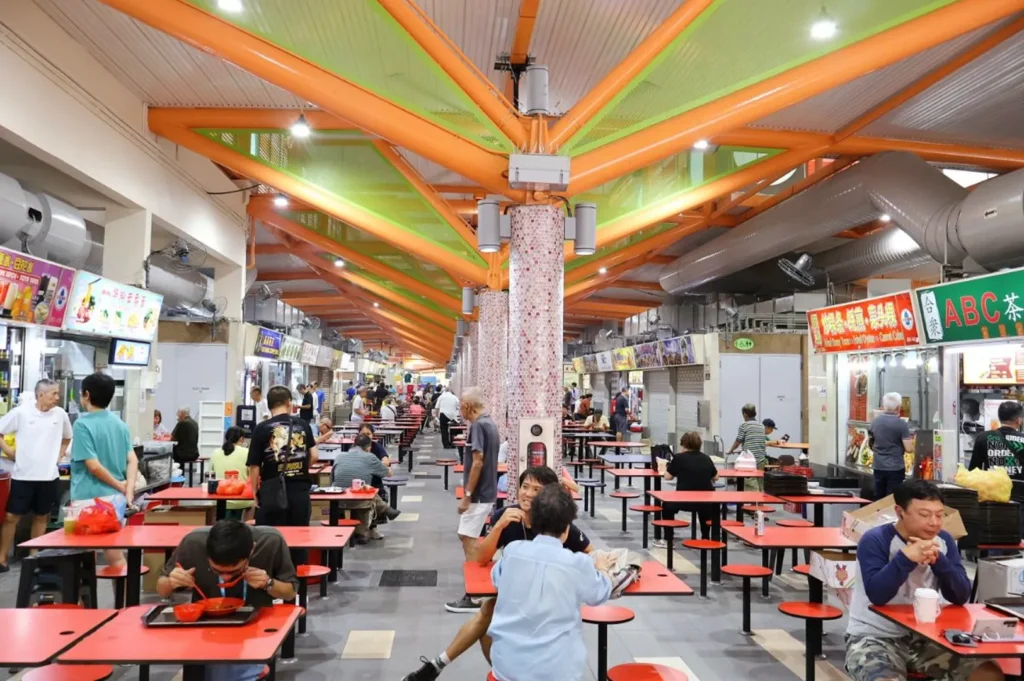
In Singapore, upgrading a beloved hawker centre always triggers cultural tension. Everyone wants cleaner toilets and better airflow, but nobody wants the space to feel like a sterile, generic mall food court.
I understand the fear of losing the grit and soul of ABC Brickworks. It sits proudly in Bukit Merah and carries a wonderfully stubborn, old-school identity. The visual clutter, bright tables, and slightly chaotic layout—these are essential components of our shared experiences.
What the repairs and redecoration will realistically change are the hidden mechanics:
- Significantly better exhaust ventilation, meaning the smoke from the woks won’t trap you in a haze of grease.
- Improved drainage and hygiene standards.
- Fresh floor tiles and brighter lighting.
But the soul of the place? That comes entirely from the people. As long as the aunties eagle-eye empty seats, stall lights glow over steel counters, and hawkers sweat over blazing fires, the authentic character of ABC Brickworks Food Centre will survive.
Everything You Want to Know About Mee at ABC Brickworks
If you are still uncertain about the transition, here are answers to some common questions.
“Will the food taste different after the renovation?”
The environment might feel newer, but established hawkers rely on muscle memory and deeply ingrained recipes. Assuming the same cook is behind the wok, the food should taste exactly as you remember it. Flavour shifts only occur when a stall changes hands or an older cook officially retires, as we saw with Yi Sheng.
“Are prices going to jump massively?”
Hawker centre renovations are government-subsidised to a large degree, so hawkers aren’t hit with massive commercial renovation bills. While slight increments of 50 cents might occur due to inflation, you will not suddenly see a $15 plate of basic fried hokkien mee here.
“How do I deal with the post-renovation crowds?”
Patience is your best tool. The first month after reopening is always chaotic. If you hate crowds, wait until late July to visit. Let the initial wave of social media hype die down, and the centre will return to its comfortable, everyday pace.
Eatdrinkers tip: When exploring new hokkien mee stalls, always order the smaller $5 portion first. It lets you test their wok control, prawn stock flavour, and sambal quality without committing to a massive, heavy plate. If it hits the spot, you know exactly where to return.
Embrace the Succession
ABC Brickworks Hokkien mee after this renovation is not about desperately clinging to a single, retired stall. It is about witnessing a brilliant succession. It is about watching newer plates, like the rich, wet-style noodles at Ah Lai, define what this iconic food centre will taste like for the next decade.
Change in our local food scene is inevitable, but it doesn’t mean we are losing our culinary heritage. It simply means the narrative is evolving. When the woks finally fire up again this June, go in with an open mind. Savour the improved ventilation, embrace the familiar chaos of the lunch crowd, and appreciate the innovative hawkers who are keeping this complex, flavourful tradition alive.
There are incredible hidden gems waiting to be discovered in that freshly painted building. Grab a table, mix in that lime and chilli, and enjoy the start of a brand new era.

An Asian Vegetarian Meal at Herbivore Japanese Vegetarian Restaurant: When Japanese Comfort Food Learns a New Body
Eda Wong | July 30, 2026
I didn’t grow up eating eel. But I grew up watching my grandmother turn one thing into another — gluten into “duck,” beancurd skin into “fish,” mushrooms into something that tasted of the sea without ever touching it. Buddhist vegetarian cooking does that. It doesn’t pretend so much as it remembers, building familiar shapes out…
-
A Table for One, and a Grill That Belongs to You in Yakiniku Like
Dio Asahi | July 29, 2026
The grill glows orange in front of me before the meat arrives. It’s a small thing, set into the counter at my single seat, and it hums faintly under the chatter of the room. No flame. No charcoal. Just a low electric warmth I can feel rising toward my face. A plate comes. Thin slices…
-
Best Buffet Singapore: Where Hotel Buffets Turn Abundance Into Order
Dio Asahi | July 28, 2026
I used to think buffets were about greed. Pile the plate high, go back for thirds, leave feeling like you got your money’s worth. That was the whole game, or so I believed. After years of exploring this city’s hotel buffets, I learned the good ones focus on order. They transform a wall of food…
-
STR TAO Taiwan Cuisine and the Comfort of a Menu That’s Too Big to Be Lazy: Food Places Nearby
Eat Drink Asia Team | July 25, 2026
It was the kind of evening where you don’t want to think too hard about dinner. I’d been walking up East Coast Road, the air still thick from an afternoon shower, when I ducked into a coffeeshop just to sit down. The Bullion Hawker Bar. And tucked among the usual suspects — wanton mee, Hokkien…
-
Sesame Oil at the End: Finishing, Not Flavoring
Eda Wong | July 24, 2026
The wok is already off the heat. The greens sit glossy and dark, steam still curling off them. My mother lifts a small bottle, tilts it, and lets a thin line of sesame oil fall across the top. It hisses faintly against the warm leaves, and the smell rises all at once — toasted, nutty,…
-
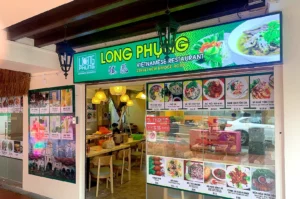
Long Phung Vietnamese Cuisine, Where the Menu Doesn’t Waste Words: A Good Restaurant Close to Me
Eda Wong | July 23, 2026
I came in from the rain on a Tuesday, somewhere past 8pm, hungry and a little defeated by the day. The fan was clacking. A queue of three or four people stood near the doorway, dripping. Someone shouted an order toward the kitchen in Vietnamese, and a bowl of pho slid onto a nearby table…
-
The First Squeeze of Calamansi in a Noodle Stall Bowl
Dio Asahi | July 22, 2026
The bowl lands in front of me, broth still trembling from the walk across the stall. Steam rises and fogs the edge of my glasses. To the side sits a small dish of calamansi halves, cut and waiting, their skins slick under the fluorescent light. I pick one up. It gives slightly between my fingers,…
-
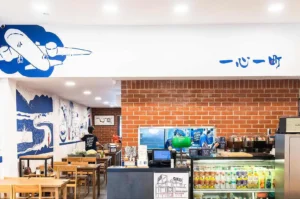
Isshin Machi East Coast: Where Comfort Food Turns Addictive
Dio Asahi | July 21, 2026
Let me clear up the first puzzle right away. The name “Isshin Machi” sounds unmistakably Japanese, and I’ll admit I walked in half-expecting ramen and gyoza. What I found instead was a Taiwanese kitchen, plates of lu rou fan, braised beef noodles, and golden fried chicken that trace straight back to the island’s home cooking….

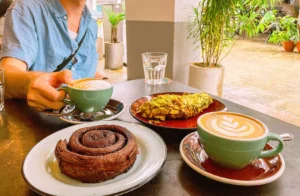
Best Cafe Singapore: A Map of Brunch Plates, Quiet Corners, and Dangerous Pastries
Dio Asahi | July 18, 2026
I didn’t set out to make a list. I made a habit. Over the years, cafes became the places I went to think, to wait out the rain, to sit with a coffee I didn’t have to rush. Some I returned to for the food. Others, I returned to for the feeling — the way…
-
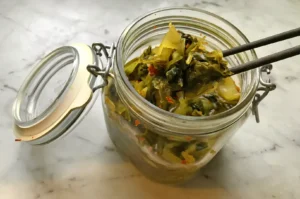
Pickled Mustard Greens: The Sour Note in Clear Broth
Eda Wong | July 17, 2026
Steam lifts from a bowl of clear pork broth, and a spoonful of chopped pickled greens slides in. The broth shifts at once, its richness suddenly cut by a sharp, clean sourness that sits high and bright on the tongue. The greens have softened in the heat but keep a faint, springy crunch. Someone leans…