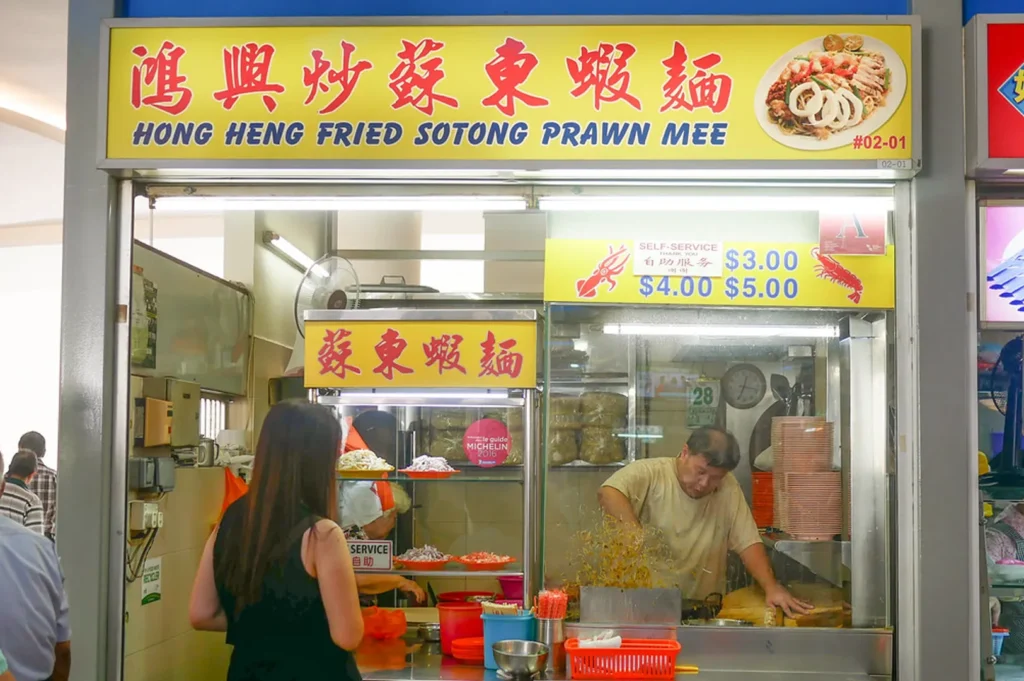
There is something deeply comforting about a hawker centre right before the lunch rush hits. I visited Tiong Bahru Market on a Tuesday around 10:30 am, hoping to beat the infamous queue at Hong Heng Fried Sotong Prawn Mee. Even at that early hour, a line of six people had already formed, waiting quietly under the fluorescent lights.
I’ve spent the last few years documenting traditional food spaces, and this stall is a perfect example of preserved culinary heritage. It holds a Michelin Bib Gourmand, but it doesn’t shout about it. The real draw here isn’t the award; it’s the gentle, deeply savoury aroma of simmering prawn shells that hits you the moment you step off the escalator.
If you’re an urban food enthusiast who loves discovering authentic hidden gems, this plate of noodles is a mandatory stop. But it’s also a dish that asks you to slow down. It isn’t a flashy, fiery wok-tossed spectacle. Instead, it’s a quiet celebration of flavours that demands your full attention.
Here is exactly what it feels like to sit down with a plate of Hong Heng’s famous wet-style Hokkien mee.
Savoring the Ambience: First Encounters at Hong Heng
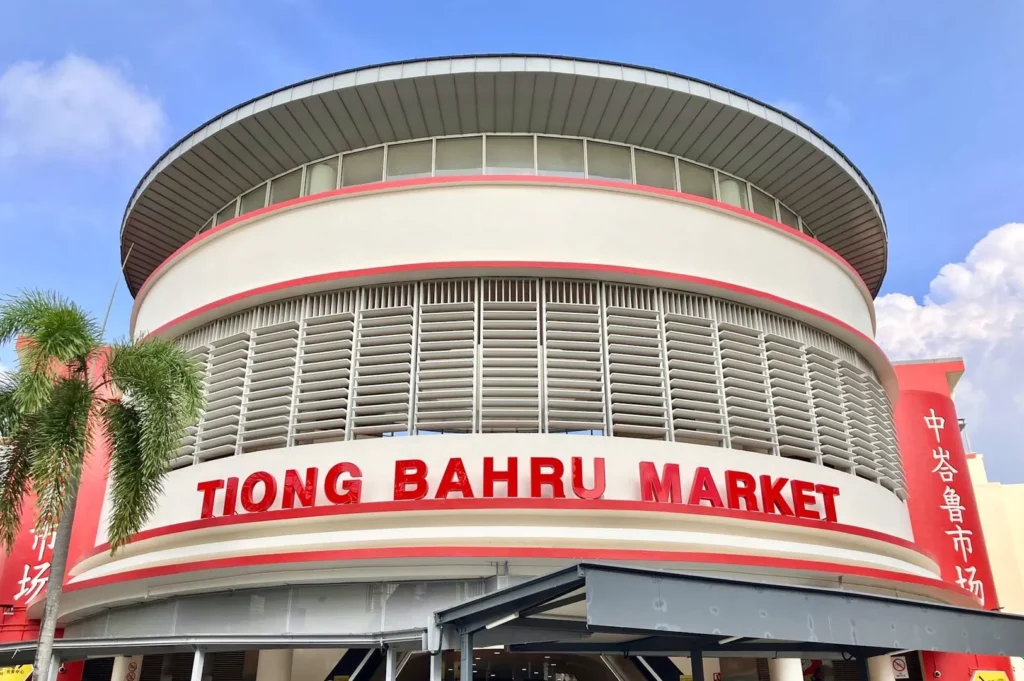
Tiong Bahru Market sits at 30 Seng Poh Road, and its second-floor food centre is a sprawling, bustling hub where hokkien mee stalls like Hong Heng Fried Sotong Prawn Mee shine. The atmosphere is purely functional, designed for high turnover rather than leisurely dining. The tiled floors are slightly slick, the clatter of plastic trays blends with the hum of ceiling fans struggling to push humid air around.
Approaching stall #02-01, the ambient heat from the massive cast-iron wok hits you first. The air is thick with the aroma of garlic, pork lard, and a marine sweetness that signals the presence of fresh prawns and sotong prawn mee cooking in the broth. This sensory cocktail feels wonderfully nostalgic, reminiscent of traditional hokkien fried hokkien noodles prepared with care.
Securing a table here requires some strategy. The tables nearest the stall are high-traffic zones, brushed constantly by patrons joining the queue. I found a slightly wobbly seat near the market’s edge, where a natural breeze offered relief from the heat. For those who appreciate such authentic first encounters, best omakase Singapore is a curated selection of restaurants where you can experience similarly memorable culinary introductions.
A Culinary Tour of Singapore’s Finest
Hong Heng Fried Sotong Prawn Mee is renowned for its quality, tradition, and flavour. This Michelin Bib Gourmand stall serves authentic, home-style wet hokkien mee with a rich prawn broth that infuses every noodle. Fresh seafood, chewy noodles, and balanced sambal and lime elevate this humble dish into a local favourite, preserving a cherished Singapore hawker heritage style.
Hong Heng Fried Sotong Prawn Mee
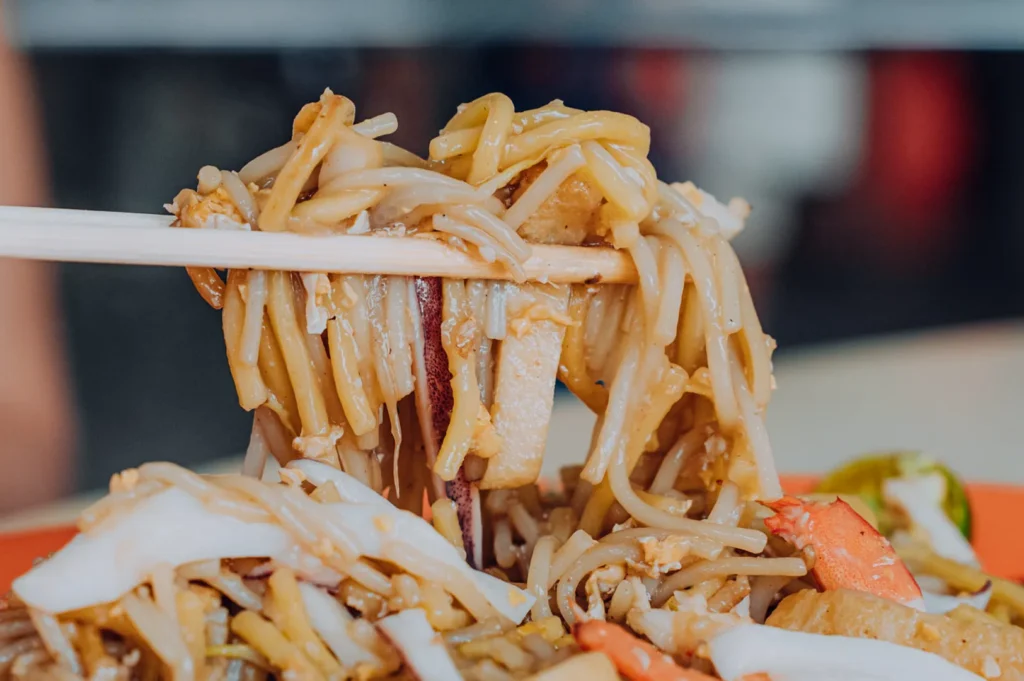
I ordered the signature hong heng fried sotong prawn mee ($5 for the medium portion). When my number was called, I carried back a modest plastic plate, a mound of yellow noodles and thin bee hoon bathed in a thick, light-brown gravy, topped with tender slices of squid, fresh prawns, and a dollop of sambal chilli on the side.
Hong Heng’s style is firmly in the wet hokkien mee camp, a contrast to the dry version favored at some other stalls like Swee Guan or Nam Sing. If you expect a smoky wok hei punch like at Geylang Lor or Kim Keat hokkien mee, this might surprise you. Here, the magic lies in the broth’s deep prawn flavour, completely absorbed into the noodles.
The thick bee hoon and yellow noodles soak up the rich, umami-heavy prawn stock, creating a gooey, soft, and slightly chewy mouthfeel. The gravy clings to every strand, delivering a sweet, seafood-forward depth that comforts rather than overwhelms. There’s a faint alkaline note from the yellow noodles, a hallmark of traditional hokkien prawn mee preparations in Singapore.
Chewy Squid and Fresh Prawns: The Stars of Hong Heng’s Plate
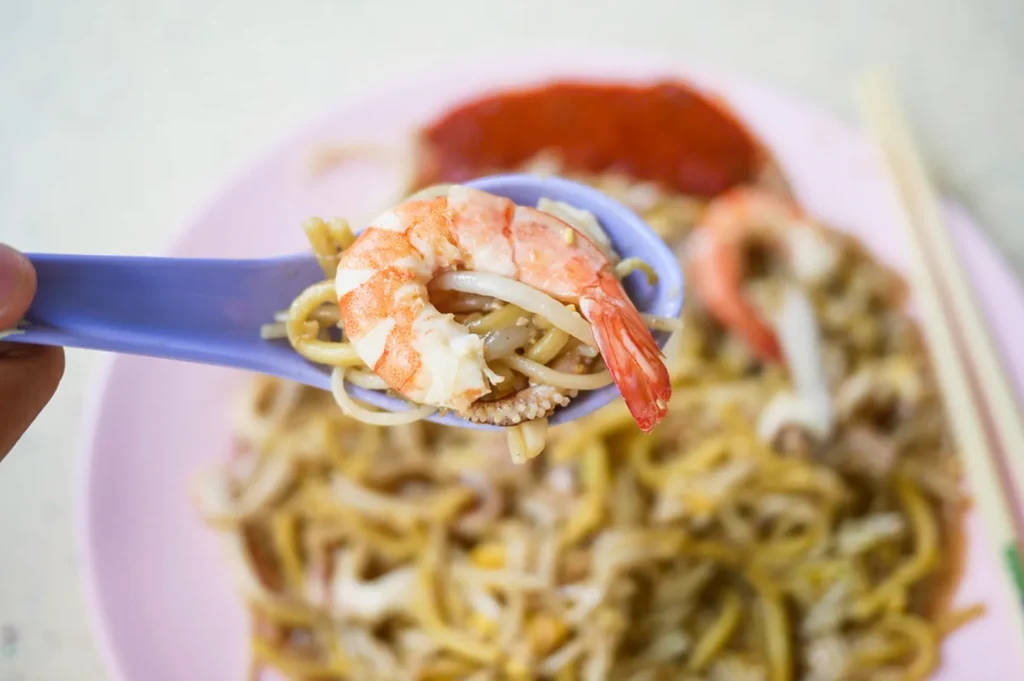
Seafood isn’t a mere garnish here; it’s integrated into the noodle mound. For a $5 plate, the portion of fresh prawns and squid is generous and impressively fresh.
The squid, or fried sotong, is the texture star, cooked just enough to be firm and springy, snapping gently against your teeth without ever turning rubbery. This contrast balances beautifully with the soft noodles.
The prawns arrive peeled except for their tails, making the dish easier to eat without messy shells. Sweet and plump, they soak up the savoury broth’s essence perfectly, enhancing the overall flavour.
The Essential Role of Sambal Chilli and Lime Juice
No plate of hong heng fried sotong prawn mee is complete without the homemade sambal chilli. This sambal isn’t aggressively spicy; it’s a savoury, slightly sweet paste with an earthy heat that complements rather than dominates.
Squeezing fresh lime juice over the sambal and mixing it into the gravy adds a bright acidity that cuts through the richness of the prawn stock and pork lard. This tangy lift balances the heavy coastal flavours, leaving the palate refreshed.
EDA tip: Don’t mix all the sambal chilli into your noodles at once. Instead, dip each bite to keep the spicy contrast alive throughout your meal.
Hawker Service, The Queue, and The Food Centre Experience
Service at Hong Heng is classic hawker efficiency, no table service, no small talk. You queue, order, pay cash, and wait.
The uncle at the wok is mesmerizing, handling massive batches with practiced ease. He ladles prawn stock into the wok, letting it reduce slowly, infusing the noodles with flavour. The queue moves steadily but expect a long wait during peak hours, 20 to 30 minutes is common, especially on Wednesdays or Fridays.
This food centre vibe, with its mix of chatter, clatter, and the scent of garlic and lard, is part of the charm. It’s not air-conditioned, so be prepared for heat and humidity. Visitors might find a similar bustling welcoming atmosphere at places like Cuppage Plaza, where authentic local flavours and Cuppage Plaza food meet lively crowds.
Practical Tips for Visiting Hong Heng Fried Sotong Prawn Mee
- Location: About an 8-10 minute walk from Tiong Bahru MRT station, past heritage flats.
- Hours: Tuesday to Saturday, 10:30 am to 2:30 pm. Closed Mondays and Sundays.
- Pricing: Portions range from $4 to $6, offering excellent value for a Michelin Bib Gourmand stall.
- EDA tip: Arrive early (around 10:45 am) to avoid the long wait and risk of sold-out noodles.
Connecting Hong Heng to Singapore’s Hokkien Mee Culture
Hong Heng’s fried sotong prawn mee represents a cherished style of hokkien mee in Singapore; wet, broth-rich, and prawn-forward, distinct from the dry, smoky wok hei-heavy fried hokkien mee found at stalls like Swee Guan or Nam Sing. This diversity reflects Singapore’s rich hawker heritage, where each stall offers a unique take on the beloved hokkien prawn mee.
For those exploring beyond Tiong Bahru, stalls at Geylang Lorong and Kim Keat offer their own legendary versions, including claypot hokkien mee and plates topped with crispy sio bak, blending textures and flavours in exciting ways.
Whether you prefer the wet or dry version, thick bee hoon or yellow noodles, the best hokkien mee in Singapore is a celebration of fresh prawns, silky eggs, sambal chilli, and the elusive wok hei that brings it all together.
A Taste of Tradition: The Last Word on Hong Heng
Hong Heng Fried Sotong Prawn Mee is a beautiful reminder of why hawker culture matters. It preserves a specific, deeply comforting style of cooking that relies on patience and broth rather than aggressive fire and smoke.
This stall is best suited for diners who love wet-style Hokkien mee, seafood enthusiasts, and anyone eager to explore the historic charm of Tiong Bahru Market. It’s perfect for a solo culinary adventure or a casual lunch with friends who appreciate authentic local flavours.
I’d suggest avoiding it if you despise queuing, need an air-conditioned environment, or firmly believe that Hokkien mee must be dry and packed with heavy wok hei.
But if you are willing to brave the heat and the crowds, you’ll be rewarded with a plate of noodles that feels like a warm hug. The squid turns chewy, the broth turns glossy, and for the fifteen minutes it takes to eat it, the noisy market time turns delightfully quiet.

Tiong Shian Porridge Centre Review: The Soft Counterweight to Chinatown’s Crisp Toast
Dio Asahi | September 22, 2026
I’d spent the morning with kaya toast. Crisp bread, cold butter, the clean snap of it between my teeth. Good, all of it. But by the time I’d walked a few streets over to New Bridge Road, my mouth wanted the opposite. Something warm. Something that gave way instead of shattering. That’s how I ended…
-
Tong Ah Eating House Review: A Chinatown Breakfast That Still Begins with Kaya Toast
Eda Wong | September 19, 2026
I almost walked past it. I’d been looking for the old triangular building, the red-and-white one you see in every photo of Keong Saik, the one that made Tong Ah feel like a landmark before you’d even ordered anything. But that’s not where it lives anymore. It’s a few doors down now, at 35 Keong…
-
Breakfast at Chinatown Singapore: How Migration Built the City’s Morning Table
Eat Drink Asia Team | September 17, 2026
The first time I ate breakfast in Chinatown, I got it wrong. I arrived at eleven, hungry and hopeful, and found the kopi stalls already turning toward lunch. The porridge uncle was packing up. The toast man had switched to slicing char siew. I ate a rushed plate of noodles standing near a pillar, sweating,…
-
The Bitter Leaf Folded Into a Burmese Home Kitchen
Eda Wong | September 16, 2026
The oil is already hot when she reaches for the leaves. It’s late morning in a kitchen off a quiet lane, and a woman I’ve been watching stands over a blackened wok, tearing bitter gourd leaves by hand into a small heap. The garlic hits the oil first, sharp and loud. Then the leaves go…
-
Best Sushi Singapore: From Premium Japanese Restaurants to Exclusive Deals from Affordable Sushi Trains
Dio Asahi | September 15, 2026
I’ve been eating sushi in this city for years now, from S$1.50 plates rolling past on a belt to omakase counters where the bill made me sit up straight. Somewhere along the way I stopped chasing “the best” and started noticing something else — that good sushi answers a mood, not a ranking. Some nights…
-
Al Mubin Restaurant and the Nasi Goreng Sambal Ayam That Has to Carry the Whole Plate
Eda Wong | September 12, 2026
It was close to eleven at night when I finally sat down. The kind of hour when you’re not really hungry so much as unsettled, when you want something warm in front of you more than you want a proper meal. Al Mubin’s food court at Block 407, Ang Mo Kio Avenue 10, was still…
-
Yassin Kampung Admiralty Review: When Sambal Fried Rice Becomes the Whole Point
Eat Drink Asia Team | September 10, 2026
I ordered the sambal fried rice first, before I’d even properly read the menu. That’s usually a mistake at a place like this. Yassin Kampung @ Admiralty is the kind of restaurant that keeps trying to pull your attention elsewhere — toward stingray, toward crab, toward hotplates that arrive still hissing. But I’d come with…
-
The Bamboo Basket Holding Chiang Mai’s Sticky Rice
Dio Asahi | September 9, 2026
By Dio Asahi for Eat Drink Asia. The lid comes off, and the steam rises first. It’s a warm afternoon in Chiang Mai, and on the table sits a small woven bamboo basket, still holding the heat of the pot it came from. Someone’s grandmother lifts the top and sets it aside without looking. Inside,…
-
Sambal Fried Rice Recipe for People Who Know the Chilli Paste Does the Heavy Lifting
Dio Asahi | September 8, 2026
I used to add the rice too early. The oil would be hot, the sambal barely a minute in, and I’d tip in the cold rice because I was hungry and impatient. Every time, the same result: rice stained red but tasting of nothing much. Sharp. Raw. Flat where it should have been deep. It…
-
Hup Lok at Havelock Road: A Teochew Fish Soup Carrying Memory Forward
Eda Wong | September 8, 2026
The bowl arrives before anything else does. Steam lifts off it in slow ribbons, carrying the smell of ginger and something warmer underneath: the round, boozy note of hua tiao wine settling into fish. I lean in before I even pick up my spoon. The broth is pale gold and cloudy, thick enough that it…