The timer started the moment we sat down.
Nobody announced it dramatically. A server simply wrote a time on a small slip of paper and tucked it under the edge of the grill. Ninety minutes. My friend looked at the paper, then at the buffet line, then back at me.
“We should probably move,” she said.
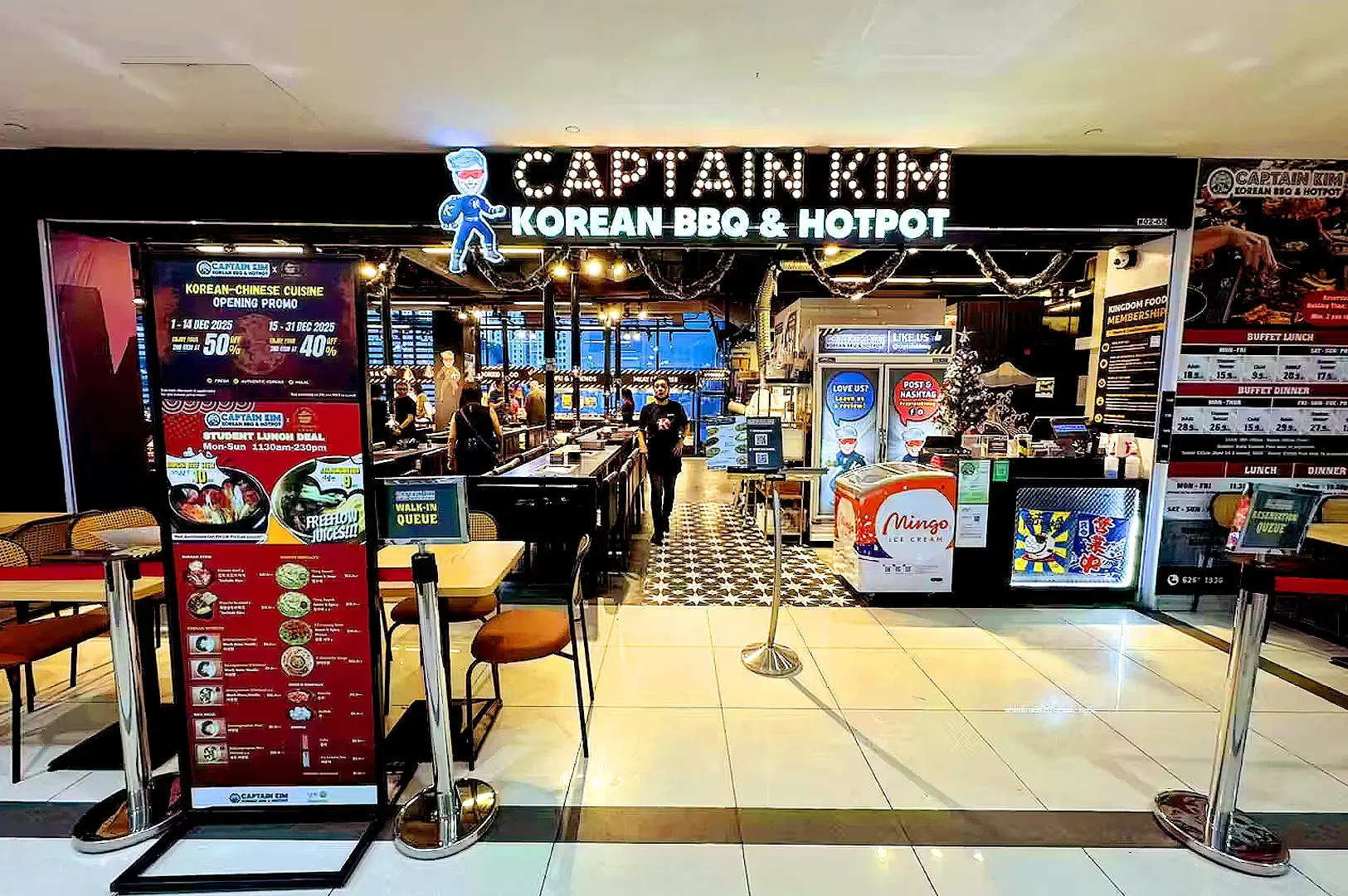
That is the first thing worth knowing about Captain Kim Korean BBQ Hotpot Buffet in Tampines. You do not sink slowly into the meal. You start cooking.
This halal Korean BBQ hotpot spot is practical, busy, and built around movement. It is not the place for a slow, quiet date night. It is a great place for friends, family, students, Muslim diners, and hungry groups who want one table, two ways to cook, and enough variety to keep everyone occupied.
Sizzle and Simmer Feast
We visited on a Wednesday at 11:30am, right when lunch opened. NTUC Income Tampines Junction still felt half awake. A few office workers were waiting for the lift, and a cleaner was mopping near the entrance.
Inside, Captain Kim was already warming up. Every table has two cooking zones: a grill plate on one side and a hotpot well on the other. Within minutes, both were working across the room. Smoke rose from one side, steam from the other, and the air started to smell of garlic, soy, chilli, and sweet marinade catching on hot metal.
How the BBQ Hotpot Buffet Works
Captain Kim Korean BBQ is a halal Korean BBQ and hotpot buffet with more than 60 varieties of meats and ingredients listed by the brand. The format is approachable: pick your raw meat, grill what needs char, simmer what belongs in soup, and use the cooked food station while you wait.
The catch is the clock.
Dining Duration
For weekday lunch, the dining duration is 90 minutes. For dinner, weekends, and public holidays, groups of two or three also get 90 minutes, while groups of four or more get 110 minutes. That sounds generous until your grill is crowded, your soup is still coming to a boil, and someone at the table has gone back for more chicken.
The Best Strategy
On our first round, we made the classic mistake. We took too much raw meat. The grill got crowded, the beef steamed instead of searing, and we lost time waiting for everything to cook.
On the second round, we got smarter:
- One plate of beef
- One plate of chicken
- Hotpot started immediately
- Cooked dishes picked up while the raw food cooked
- Small portions first, second rounds later
That is the rhythm Captain Kim rewards. Treat it less like a lazy buffet and more like a small kitchen shift you run with friends.
Bulgogi Beef: The Grill Benchmark
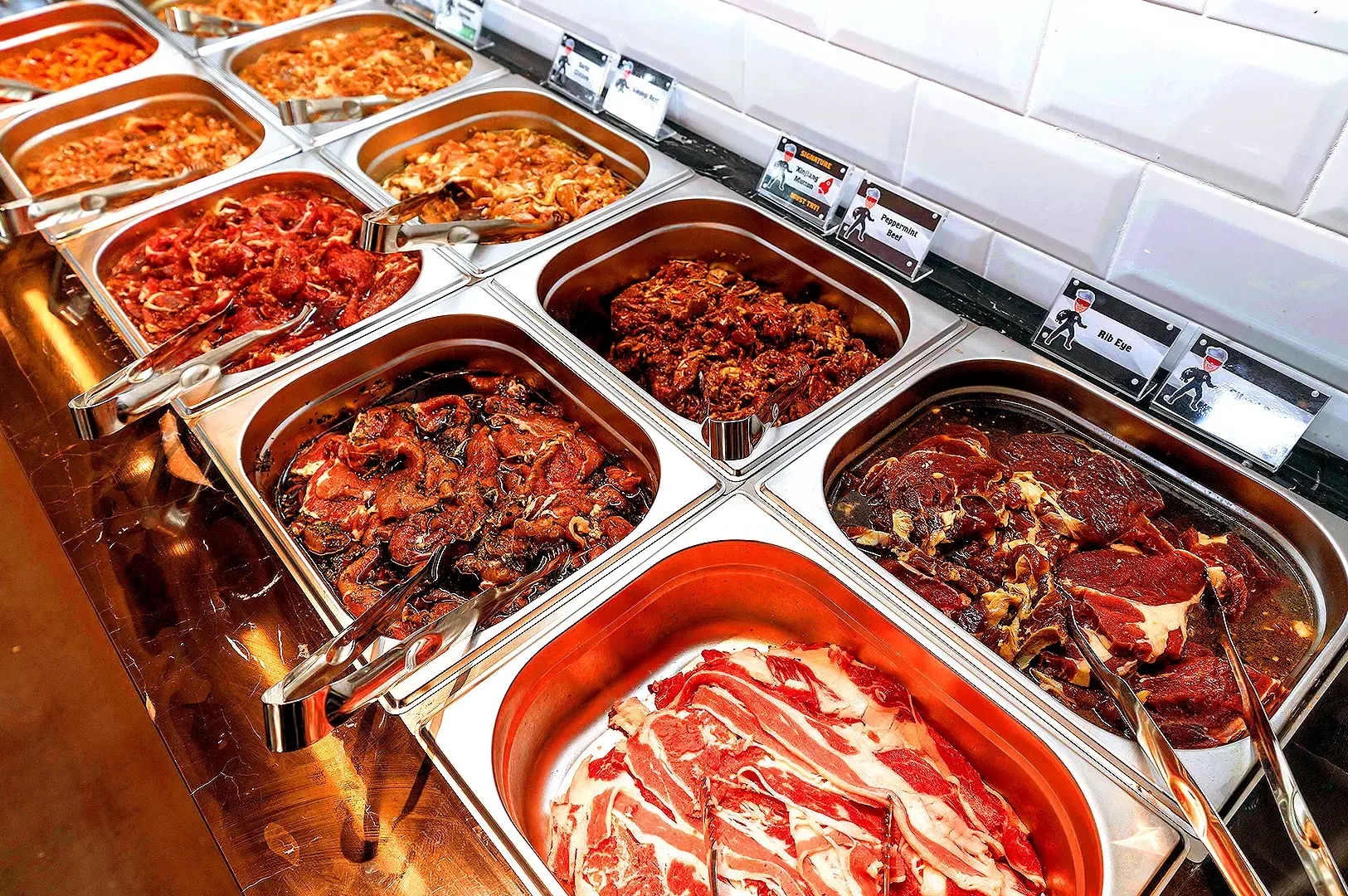
The Bulgogi Beef was the first thing to hit our grill, and it became the dish I judged the buffet by.
The slices were thin and glossy with marinade. When they touched the grill, they hissed sharply, and the edges curled within seconds. The smell came up fast: soy, sugar, garlic, and a little smoke, the kind of aroma that makes the next table look over. The flavour went all the way through. This was not just sauce sitting on the surface. Each bite was sweet and savoury from edge to centre, with a light caramel edge where the marinade met the heat.
Honey Chicken, Coffee Chicken, and Volcano Chicken
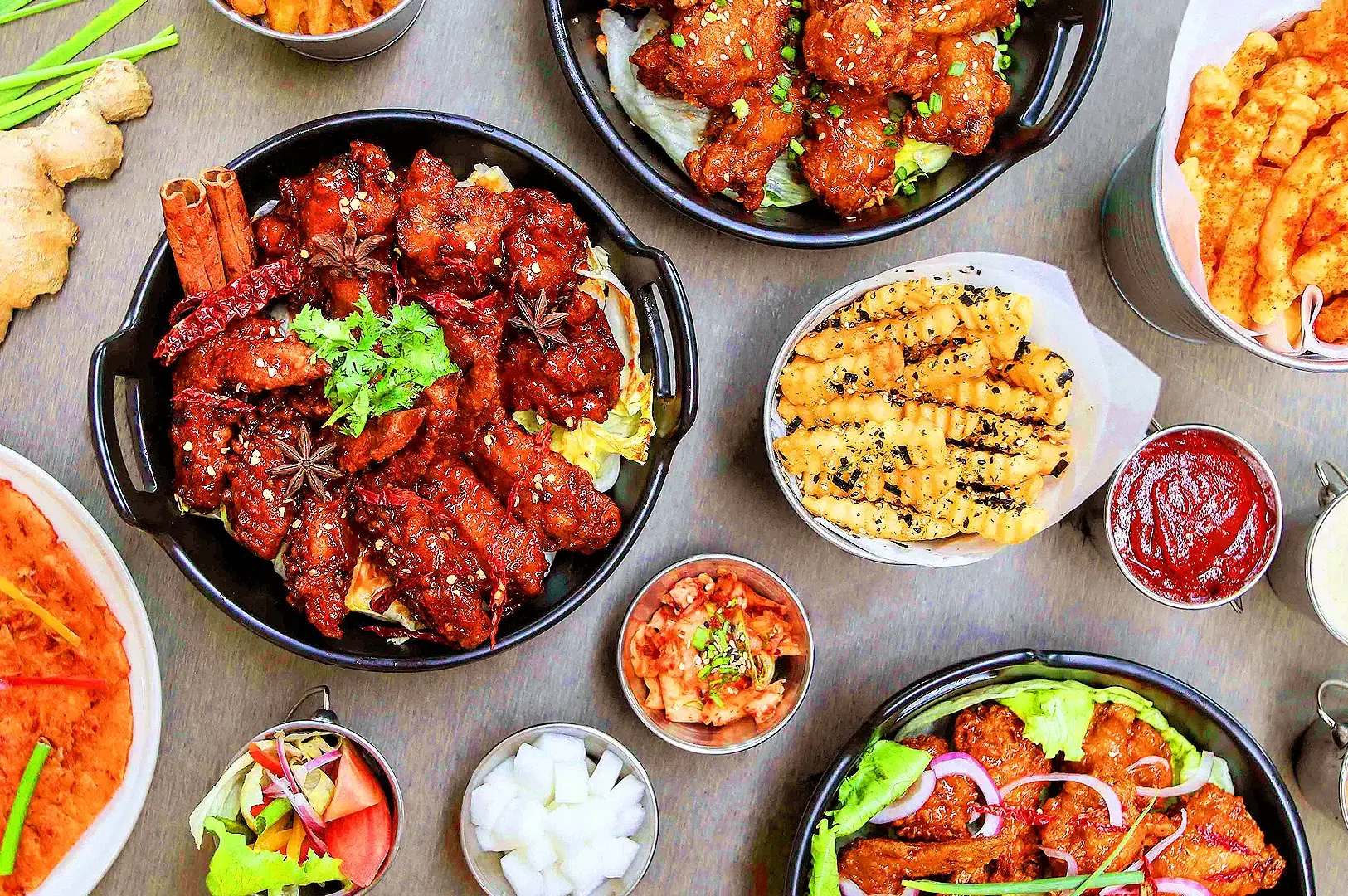
Chicken is where Captain Kim Korean shows more personality.
The Honey Chicken was the easy one. Sweet, mild, and a little fruity, with meat that stayed tender after a full turn on the grill. It is the kind of food you give to a child, or to the friend who says they can handle spice but absolutely cannot.
The Volcano Chicken was louder. Deep red, sticky, and properly hot. The marinade blistered on the grill and released a sharp chilli smell that made my friend cough once, then immediately reach for another piece.
Two Useful Moods
Neither chicken dish is subtle. These marinades are built for immediacy, not regional nuance. But that is not necessarily a flaw. At a mixed table, the honey chicken gives comfort while the volcano chicken gives heat.
Some diners also mention coffee chicken among the cooked or marinated items at Captain Kim. I would treat it as one of those buffet items to check on the day rather than the reason to visit, since buffet line-ups can change. If available, it makes sense beside the sweeter chicken options: darker, roastier, and better for diners who like a more savoury edge.
Army Stew Hotpot: The Other Half of the Table
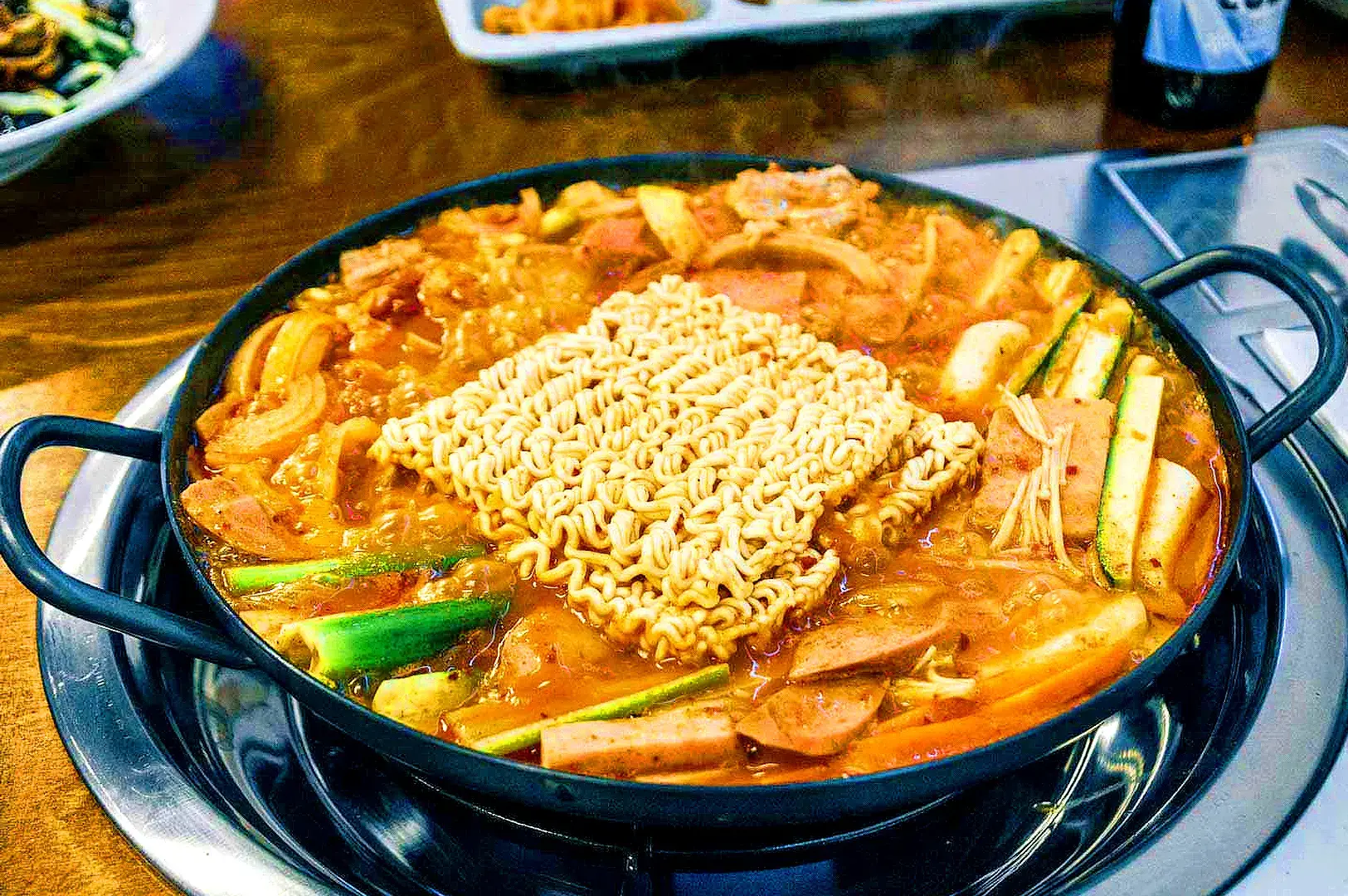
We started with the Army Stew-style base. Into it went chicken sausage, luncheon meat, tofu, mushrooms, cabbage, and a handful of ramyun. Because Captain Kim is halal-certified, the processed meats are halal-compatible versions rather than the pork products used in traditional budae jjigae.
At first, the broth was thin and mildly spicy. Then it changed. The sausage gave up salt, mushrooms added earthiness, noodles drank in the red soup, and the pot became thicker and more comforting.
Eat Drink Asia halal Korean Singapore article explores how substitutions like these change the ingredients without losing the comfort of the stew or the pleasure of the grill.
Cooked Food, Sides, and Dessert
The cooked food station is there to fill the quiet moments while your raw meats cook.
On our visit, there were items like tteokbokki, Korean soy wings, pancake, japchae, ginseng chicken soup, and ice cream. The tteokbokki was chewy and sweet-spicy, good in small portions. The soy wings were sticky and decent, though not especially crisp.
Not Everything Sings
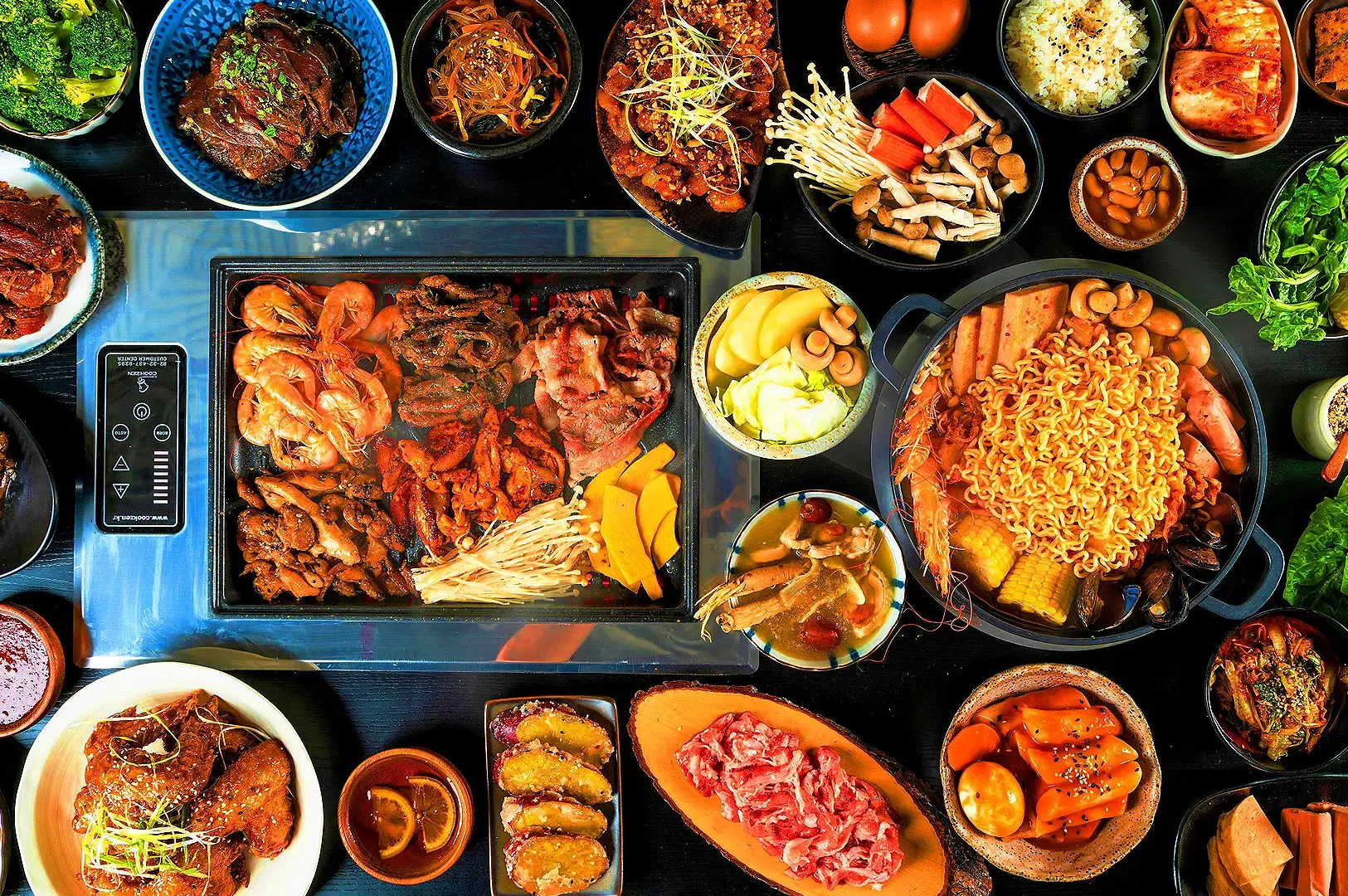
The buffet advertises variety, but not every item is equally worth your time.
The marinated meats were the strongest part of the spread. The chicken and bulgogi were easy to recommend because they cooked quickly and delivered clear flavour. The seafood was more ordinary, and I did not feel pulled back for a second round. When the room filled up, movement also became harder. Walking back from the buffet with two plates meant a lot of sideways shuffling and polite apologies.
That is the buffet bargain. You get value, choice, halal assurance, friendly staff, and the fun of cooking together. In exchange, you accept noise, timing, smoke, and some unevenness across the spread. For the right group, that trade-off is fine. For someone expecting a calm restaurant experience, it may feel like too much work.
If you prefer a buffet where the kitchen handles the cooking, our best buffet Singapore picks explore the alternative offered by hotel dining.
Service and Pacing
Around the 40-minute mark, our grill sheet had blackened badly from the volcano chicken. Before I could wave anyone over, a staff member had already swapped it for a clean one. Later, someone topped up our broth when it had boiled down too far. We did not ask either time.
Warm Staff, Firm Timer
Here is the contradiction: the staff are warm, but the timer is firm. When a session ends, plates start getting cleared. Nobody was rude about it, but nobody pretended the clock was flexible either. Both things are true at once. Captain Kim can feel hospitable and efficient in the same hour.
Navigating your K-BBQ Experience
Captain Kim Tampines is located at 300 Tampines Avenue 5, #01-06 NTUC Income Tampines Junction, Singapore 529653. The brand lists Tampines MRT as the nearest station, about a 5-minute walk from Exit C.
For a Flavor Packed 90-Minute Feast
- Restaurant: Captain Kim Korean BBQ Hotpot Buffet, Tampines
- Address: 300 Tampines Avenue 5, #01-06 NTUC Income Tampines Junction
- Nearest MRT: Tampines MRT, Exit C
- Halal status: Listed by the brand as MUIS halal-certified
- Best for: Families, students, Muslim diners, casual groups
- Less ideal for: Quiet dates, premium beef seekers, slow dinners
- Minimum diners: Current brand listing notes a minimum of 2 paying pax
- Reservations: Recommended for Fridays, weekends, public holidays, promotions, and groups
Current Hours and Timing
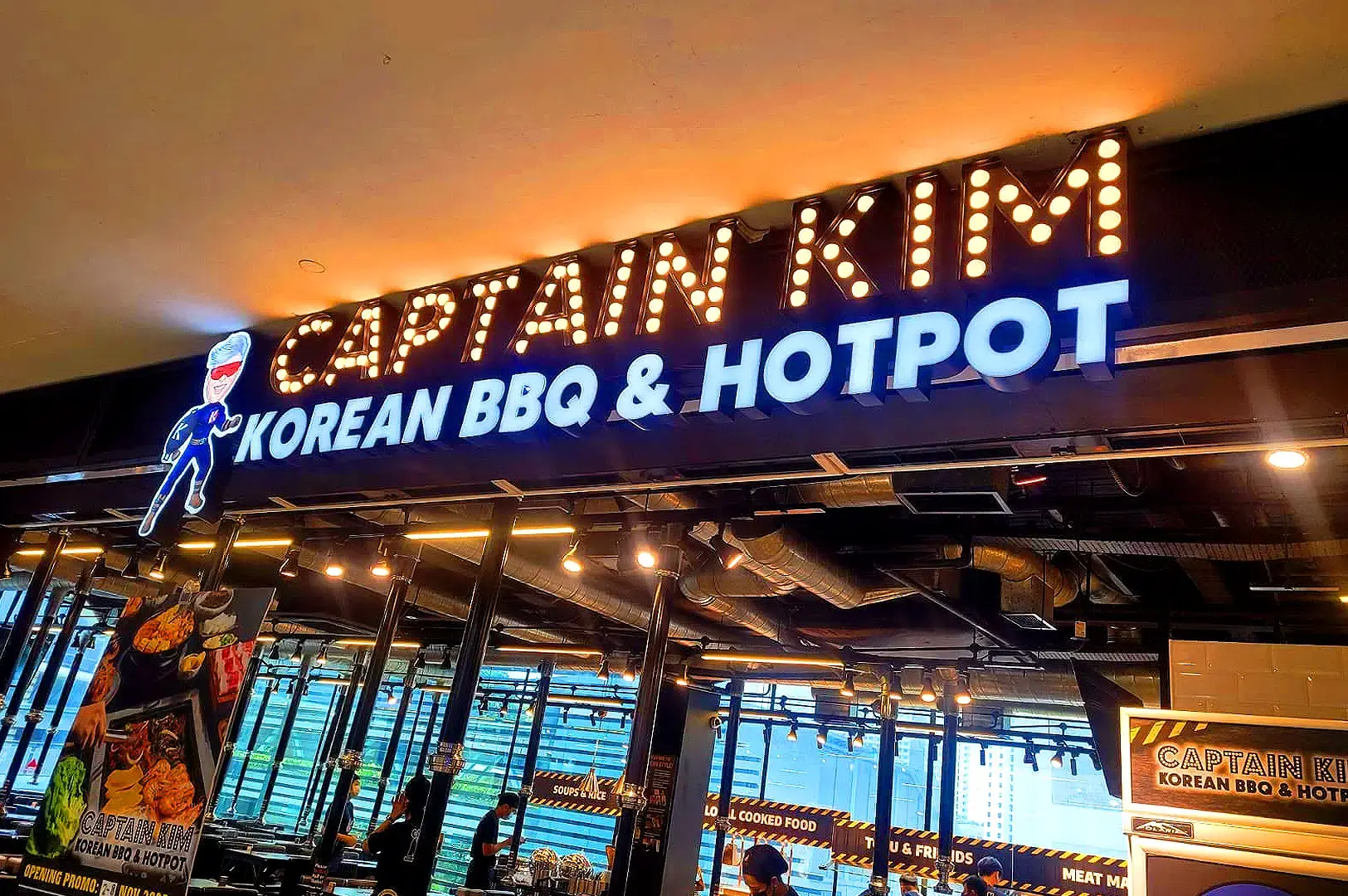
The brand currently lists Tampines operating hours from Monday to Friday as 11:30am to 4pm and 5:30pm to 9:30pm, with Friday closing at 10pm. Weekends and public holidays are listed from 11:30am to 4pm and 4pm to 10pm.
For the best experience, arrive at 11:30am for lunch or at the start of dinner. The buffet looks fresher, the room is calmer, and you do not lose time waiting for a table.
Other Captain Kim Outlets
The review here is for Tampines Junction, but Captain Kim Korean BBQ hotpot also has other Singapore outlets. Current public listings include Junction 10 at #01-24 and Grantral Mall at #02-05/06/07. Details can vary by outlet, so check the correct branch before making reservations.
Is Captain Kim Tampines Worth It?
Captain Kim is not trying to be refined. If you want premium wagyu, specialist Korean BBQ, or a slow dinner where nobody watches the clock, this is not your place.
But if you want a halal Korean BBQ hotpot buffet with clear value, approachable food, good staff, and enough variety for a mixed group, it makes sense. The bulgogi beef was the grill highlight. The honey chicken was easy to like. The volcano chicken brought heat. The hotpot became better as it simmered, especially once we learned what belonged in the broth.
What I will remember most is not one perfect bite. It is the moment the table started working: beef hissing on one side, ramyun softening in red soup on the other, my friend reaching across with tongs before something burned.
By the time the timer ran out, we were full, smoky, and a little amused by how much effort lunch had required.

Traditional Ramyeon: The Soulful Heart of Korean Noodle Culture
Eat Drink Asia Team | January 20, 2026
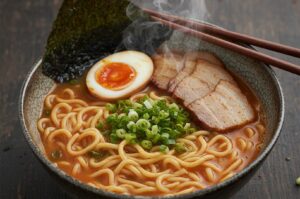
In the bustling culinary landscape of South Korea, few comfort foods can match the satisfaction of a steaming bowl of ramyeon. While outside of Korea, “ramyeon” often brings to mind Korean instant noodles or instant ramen, true ramyeon Korean style refers to the artful, freshly prepared noodle soup enjoyed in homes and at local restaurants…
-
The Heart of the Korean Noodles: History and Texture
Eda Wong | January 17, 2026
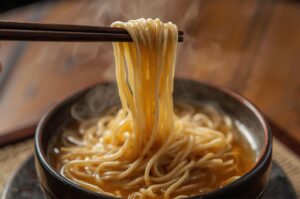
In Korea, a bowl of noodles is far more than a simple dish; it is a cultural anchor that has weathered centuries of change. For generations, the length of the strand has symbolized a long and prosperous life, making Korean noodles a staple at birthdays, weddings, and the milestone 60th birthday celebration known as hwangap….
-
Preserving the ‘Big Bowl’ Tradition with Pen Cai Delivery in the Age of Doorstep Dining
Eat Drink Asia Team | January 15, 2026
Modern Festive Menu: Bringing the Big Bowl Home There is a special, undeniable magic to the Chinese New Year reunion dinner. For many families, Chinese New Year 2026 is another chance to gather loved ones at the table and celebrate with a glorious pen cai—sometimes called the “big bowl feast”—overflowing with premium ingredients and festive…
-
Sencha: Traditions, Flavors, and the Essence of Japanese Tea
Eat Drink Asia Team | January 15, 2026
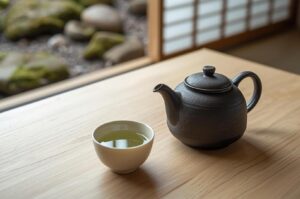
When people around the world think of Japanese tea, images of tranquil tea ceremonies in small rooms or frothy bowls of matcha often come to mind. Yet, the reality of tea drinking in Japan is much broader, woven deeply into the culture and daily habits. For the vast majority, sencha is the beloved tea that…
-
The Best Restaurants Tokyo Are Rarely the Ones You Plan For
Eda Wong | January 12, 2026
Tokyo, Japan’s capital, does not reward urgency. It rewards return. On my first visit, I chased what everyone told me were the best restaurants Tokyo had to offer. I spent weeks highlighting maps, bookmarking digital “must-eat” lists, and refreshing reservation pages until my eyes blurred. I thought that by conquering the top-tier establishments, I would…
-
Japan and Food: Culinary Harmony – The Deep Connection Between Japanese Food and Culture
Eat Drink Asia Team | January 11, 2026
When it comes to Japan and food, the two are intertwined in ways that captivate taste buds and awaken the senses. Japanese cuisine stands as one of the world’s most revered traditions—more than nourishing meals, it is an art reflecting centuries of philosophy and a window into Japanese culture itself. Every bowl of miso soup,…
-
The Verdant Cup: A Celebration of Green Tea in Japan
Eda Wong | January 10, 2026
In Japan, green tea is much more than a beverage. It marks a moment of pause, hospitality, and tradition. The story of green tea in Japan weaves through centuries of culture, artistry, and daily life—bridging ancient rituals like the Japanese tea ceremony to everyday meals enjoyed at home. The origins and beginning of Japanese tea…
-
Japanese Green Tea from Japan: The Story of Matcha
Dio Asahi | January 8, 2026
On a misty April morning in Kyoto, I knelt on tatami in a small tea room outside Uji, Japan. The host, dressed in kimono, moved with quiet skill as she scooped matcha powder into a ceramic bowl. The air was filled with the aroma of aged wood mixed with the grassy scent of high quality…
-
Takoyaki: The Sizzling Heart of Japan Food Culture
Dio Asahi | January 3, 2026
What is Takoyaki and Why Does it Matter in Japanese Food Culture? In the bright heart of Osaka, the sizzle of takoyaki batter signals one of Japan food culture’s most beloved street foods. Lines form at street stalls drawn by the delicious food aromas of sweet-savory sauce and bonito flakes dancing on golden spheres. Takoyaki,…
-
Everything You Need for a Flawless Bubble Tea Cake
Eda Wong | January 1, 2026
The global bubble tea phenomenon has evolved beyond drinks into the world of baking, creating one of the most exciting dessert trends of recent years. Bubble tea cake combines the beloved flavors of milk tea with the satisfying chew of boba pearls, all wrapped up in an adorable bubble tea cake that’s perfect for any…