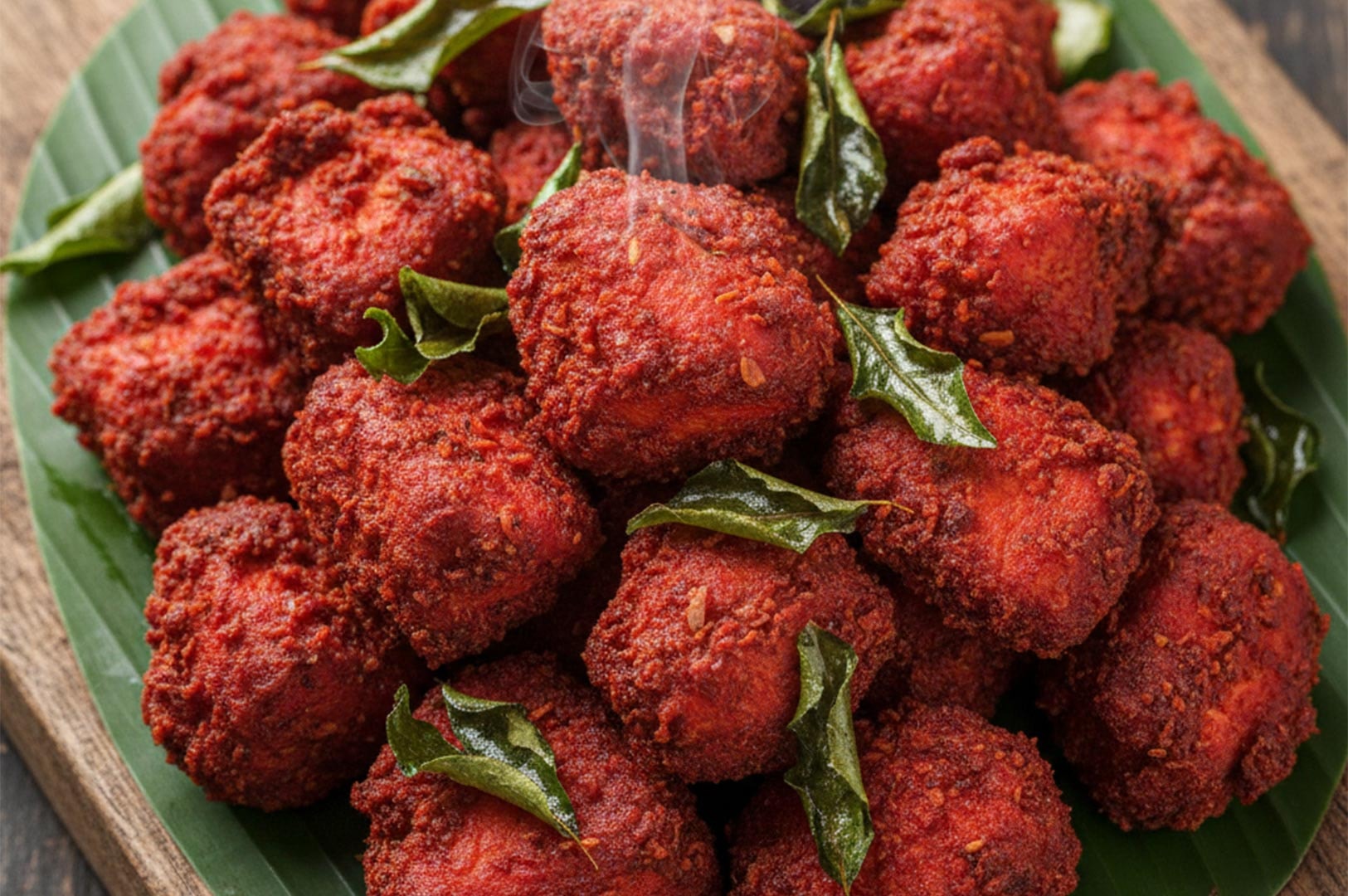
We’ve spent months tracking the ‘shatter-rate’ of chicken across the South, and here’s the truth: most of what you find is a pale, food-colored imitation. The real Chicken 65 isn’t just spicy; it’s an atmospheric experience. It starts with the sharp, herbal snap of curry leaves hitting 180°C oil and ends with a deep, earthy heat that lingers on your fingertips. We believe documenting this dish isn’t just about a recipe, it’s about preserving the high-heat ritual of Chennai’s street corners.
To truly appreciate its complexity, one should look at it as part of a larger culinary mastery, as detailed in our foundational exploration of Mastering the Art of Indian Dishes with Chicken. Understanding how to balance heat, acidity, and texture is what transforms a simple chicken recipe into a legendary experience.
How to Cook Chicken 65
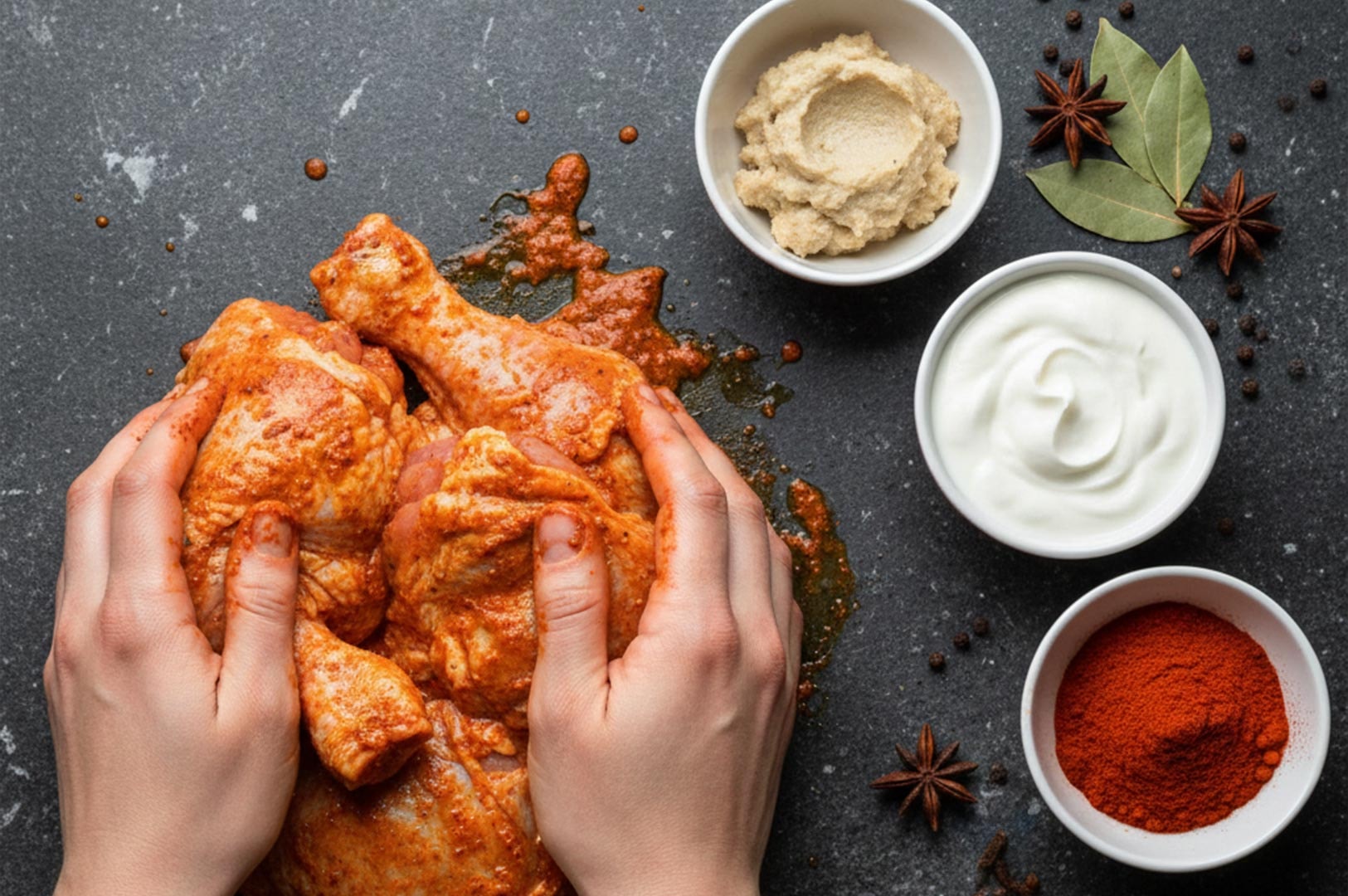
The Marinade (The Soul)
- 500g Chicken thighs (cut into 1-inch “shatter-ready” cubes)
- 2 tbsp Ginger-garlic paste (fresh is non-negotiable)
- 1/2 cup Plain yogurt (full-fat for that tenderizing tang)
- 1 tbsp Lemon juice
- Spices: 1 tsp Turmeric, 2 tsp Kashmiri red chili powder, 1 tsp Garam masala, 1 tsp Salt.
The Crunch Coating
- 3 tbsp Cornstarch (Cornflour)
- 1 tbsp Rice flour (This is the secret to the ‘shatter-rate’)
- 1 Large egg (beaten)
The Tempering (The Atmosphere)
- 2 sprigs Fresh curry leaves (Wait for the crackle)
- 4-6 Green chillies (slit lengthwise)
- 1 tsp Cumin seeds
The Step-by-Step Ritual
- The Deep Soak: Combine your chicken cubes with the marinade ingredients. Lemak Factor: Massage the ginger-garlic and yogurt into the meat until every crevice is coated. Cover and chill for 4 hours.
- The Coating: Just before frying, stir in the beaten egg, cornstarch, and rice flour. It should be a thick, pasty sludge—not a runny batter.
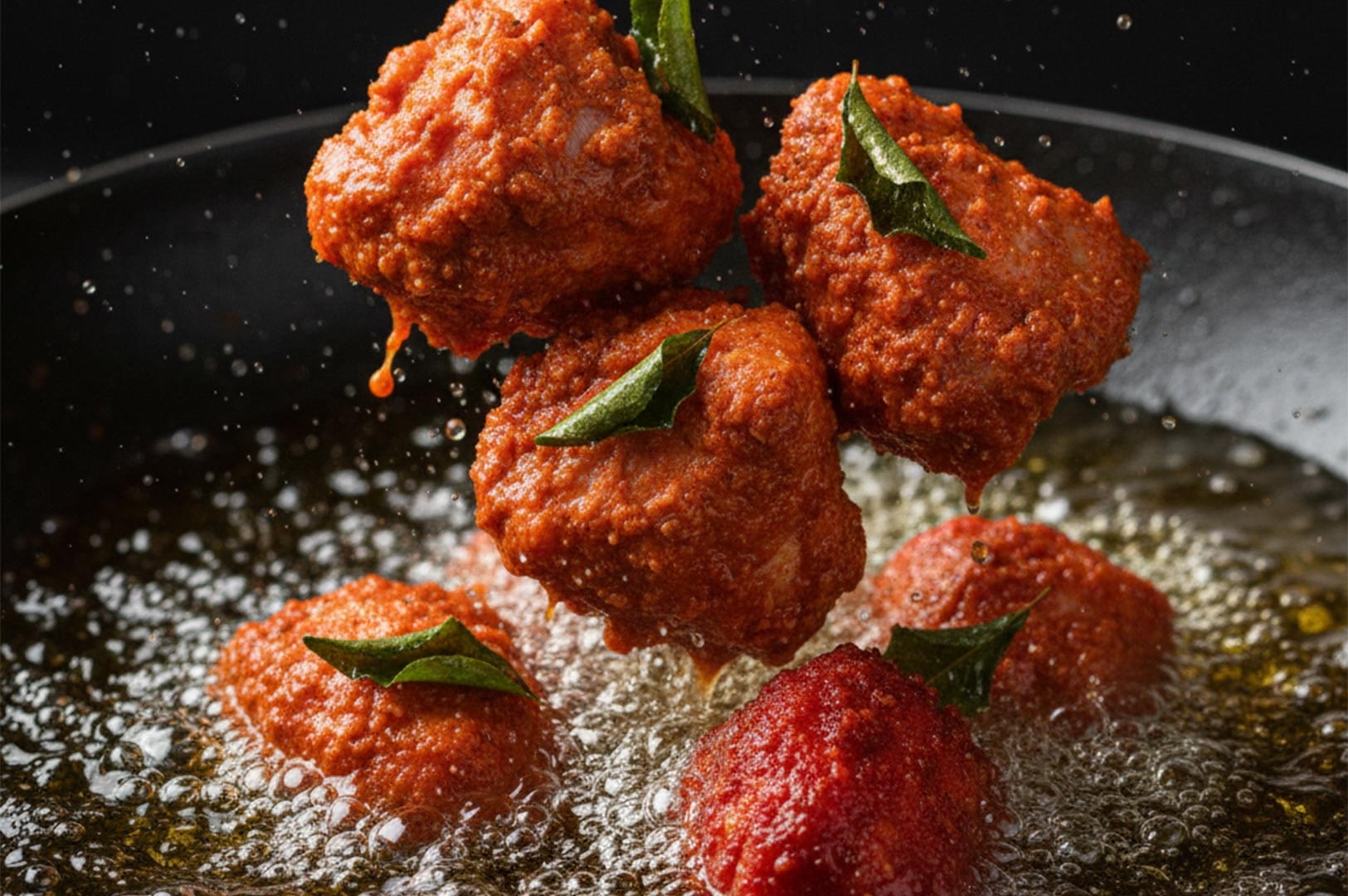
- The First Fry: Heat oil to 180°C. Drop chicken pieces individually so they don’t bond. Fry for 5-6 minutes until deep crimson and crispy. Drain on a wire rack (not paper towels!) to preserve the crunch.
- The Tempering Finish: In a separate skillet, heat 1 tbsp of oil. Toss in cumin seeds, green chillies, and curry leaves. When the leaves turn translucent and “snap,” toss the fried chicken back in for 30 seconds of high-heat adrenaline.
The Cultural Significance of Indian Chicken and Regional Heat
In the global culinary scene, Indian chicken is often synonymous with comfort. Born in the vibrant kitchens of Chennai, this dish was never intended to be a heavy meal; it was designed as a “quick fire” snack to be enjoyed with friends. Unlike a North Indian curry that relies on a slow-cooked onion tomato mixture, Chicken 65 is an exercise in high-heat transformation.
The name itself is legendary in Indian restaurants. Some say it was the 65th menu item at a famous hotel, while others believe it refers to a specific count of spices. Regardless of the myth, the result is a delicious dish, family loved and a staple for anyone serious about Indian recipes. It marks a shift from slow-simmered sauces to the immediate impact of the spice blend and the fry’s crunch.
Myth | Probability | Our Take |
65 Spices | Low | Too complex; the profile is sharp and distinct, not muddied. |
65-Day-Old Bird | Medium | A historical nod to tenderness, though rare in modern prep. |
Item No. 65 | High | Buhari Hotel’s 1965 menu, the most likely ‘Source Code.’ |
Marination Secrets for the Best Indian Chicken Recipes
What distinguishes the best Indian chicken recipes is not just the final temperature, but the intentional layering of flavor through marination. For Chicken 65, the process begins with marinated chicken, typically chicken thighs or thigh meat chosen for their juicy pieces.
To achieve an authentic flavor, the marinade must be robust. It is here that all the spices come into play: turmeric powder for color, cumin seeds for earthiness, and a generous dusting of red chili powder and cayenne pepper for that signature crimson glow. This deep preparation is what allows the dish to be prepared in less than an hour once the actual frying begins, making it a perfect addition to a weekly dinner rotation.
Comparing the Butter Chicken Recipe to Spicy Southern Styles
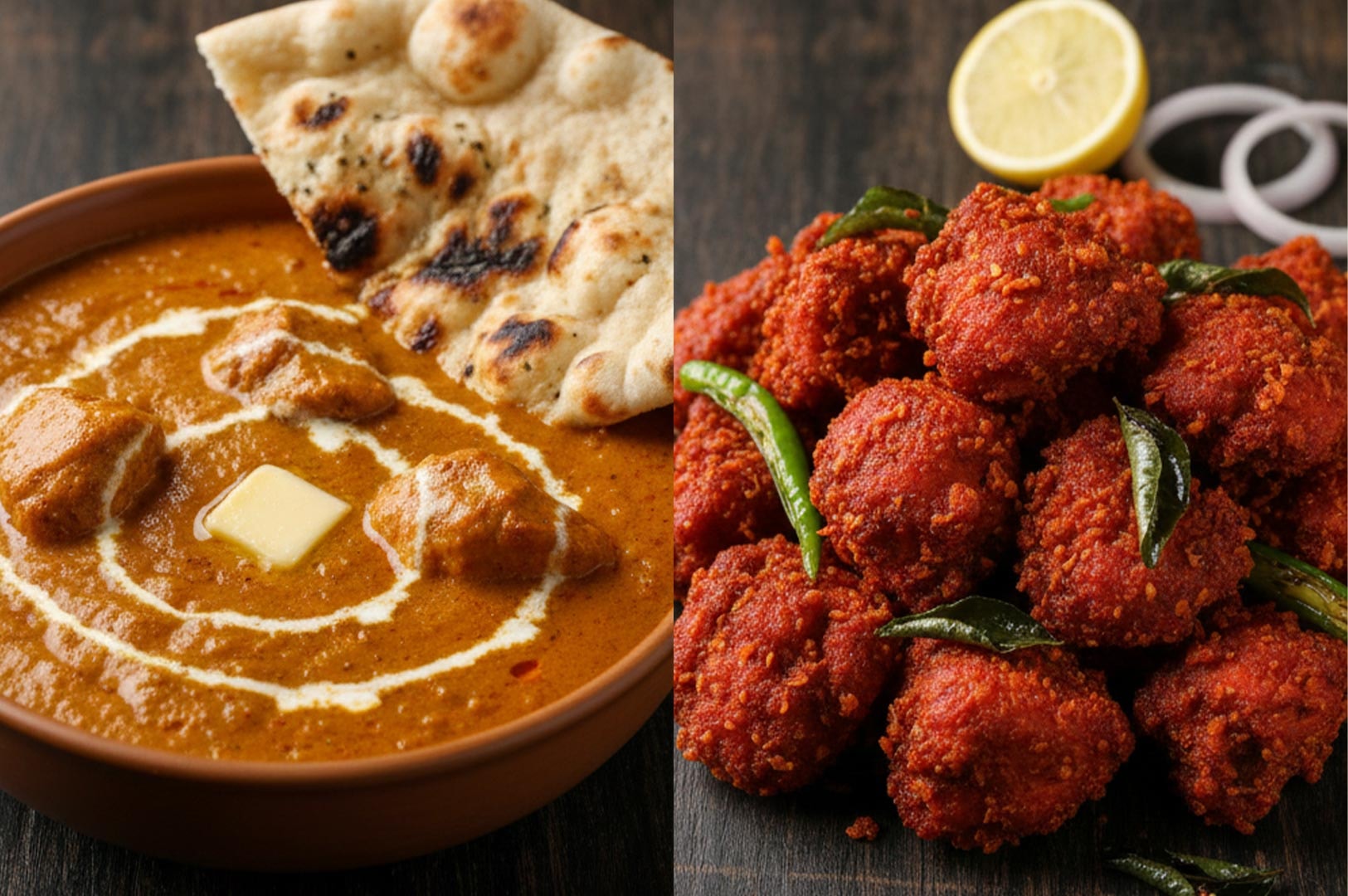
Many people find that they can enjoy both styles in one sitting—the butter chicken providing the rich, soothing base and the Chicken 65 providing the sharp, textural highlights. Even in the most traditional Indian recipes, there is a dialogue between these styles. Some modern variations of Chicken 65 even incorporate a touch of tomato paste or tomato puree in a “gravy style” version, bridging the gap between a dry fry and a traditional chicken curry.
The Role of Garam Masala and Aromatic Tempering
Central to the success of this dish—and indeed most Indian chicken recipes—is the quality of the garam masala. This warm spice mix provides the backbeat of flavor that supports the sharper notes of the chili powder. Unlike turmeric powder, which is added early, garam masala is often used to finish the marinade or the tempering to preserve its volatile oils.
The final “tempering” is where the Indian chicken truly comes alive. In a large skillet, a splash of olive oil is heated to crackle whole spices, fresh garlic, and vibrant curry leaves. As the fried chicken is tossed back into this aromatic hot oil, the leaves release an herbal perfume that distinguishes the dish from a standard chicken curry. It is this layering of aromatic spices that creates a restaurant quality meal in your own kitchen.
Liquid Gold: Incorporating Coconut Milk for Texture
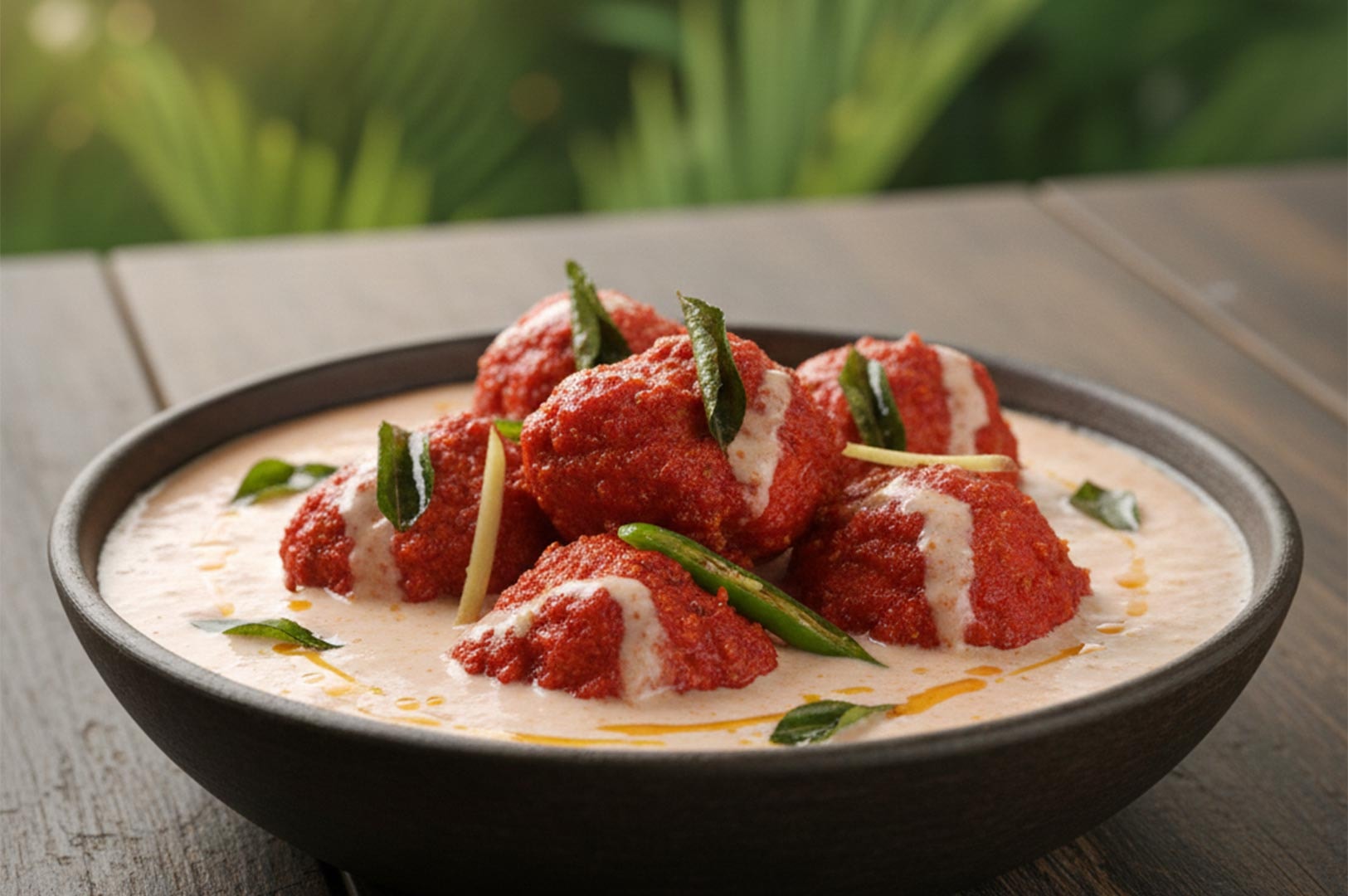
As you move toward the coastal versions of South Indian chicken, you might find chefs who temper the heat with coconut milk. While not part of the original “dry” street-food version, adding creamy coconut milk to a Chicken 65 gravy creates a silken finish that carries the heat of the green chillies more gently across the palate. This evolution shows the flexibility of the chicken recipe; it can adapt to the local ingredients of the region.
The use of coconut milk in a curry sauce creates a different kind of richness than the heavy cream used in a North Indian curry. It provides a tropical lightness that pairs perfectly with the acid of the lemon juice and the pungency of the fresh ginger. For those who find the standard version too fiery, a splash of creamy coconut milk can turn this into a more approachable, yet still bold, homestyle chicken curry.
Modern Kitchen Shortcuts: Using an Instant Pot or Slow Cooker
We recognized the undeniable convenience of the Instant Pot and slow cooker for recreating popular dishes without hours by the stove. Here’s the compromise: while the pressure cooker efficiently infuses the ginger garlic paste and garam masala deep into the chicken, it unfortunately kills the ‘soul’ of that signature crunch that defines Chicken 65. To honor the preservationist standard, we propose a hybrid workflow, steam the chicken first in the Instant Pot to lock in tenderness and flavor, then finish with a quick flash-fry or air-fry. This method keeps the cherished ritual alive while embracing modern convenience.
Using the Instant Pot method to prep the chicken pieces allows the flavors of the ginger garlic paste and garam masala to be forced into the meat under pressure. Similarly, a slow cooker can be used to develop a rich curry base for a gravy-style version, though the signature crunch will always require a final encounter with a large skillet and some hot oil. Regardless of the method, the goal is to ensure the whole spices have had time to release their essence into the meat.
The Importance of Whole Spices in Indian Recipes
One of the biggest mistakes home cooks make when tackling Indian recipes is relying solely on pre-ground powders. To capture authentic flavor, one must use whole spices. When you heat oil in a heavy-bottomed pan and add whole spices like cinnamon, cloves, and cumin seeds, you are performing a fundamental act of Indian cooking: the bloom.
These spices release fat-soluble flavors that ground powders simply cannot match. In the case of Chicken 65, the whole spices used in the tempering provide a textured, rustic feel to the dish. This technique is equally vital when making a homestyle chicken curry or a butter chicken recipe, as it builds the “soul” of the sauce from the ground up.
Serving and Pairing for a Restaurant Quality Meal
- To take your Indian chicken from good to restaurant quality, finish with a handful of fresh cilantro and a bright squeeze of lemon juice. This punch of acid lifts the deep, earthy garam masala flavors perfectly.
- Serve your Chicken 65 alongside fragrant basmati or simple white rice to soak up every spicy drop. Pair with fresh naan or rotis for that classic, comforting combo.
- Add crispy onion rings and tangy lemon wedges to cut through the richness with bold contrast. If the red chili powder gets too fiery, a cooling cucumber raita will bring balance and relief.
Whether you’re hunting for a new dinner rotation or aiming to master authentic Indian chicken recipes, Chicken 65 delivers an unforgettable flavor journey.
Perfect for the preservationist home cook seeking bold flavors with manageable effort.

Yuja Tea: Korea’s Traditional Citron Tea
Dio Asahi | January 27, 2026
The golden, aromatic steam rising from a cup of yuja tea carries centuries of Korean tradition and wellness wisdom. This caffeine-free citrus beverage has warmed Korean hearts through countless winters, offering both comfort and powerful health benefits in every sip. Made from the Korean citron known as yuja fruit, this simple Korean tea represents one…
-
The Global Phenomenon of Korean Instant Noodle: A Cultural and Culinary Journey
Eda Wong | January 24, 2026
In the high-octane streets of South Korea, where the “pali-pali” (hurry-hurry) culture defines the pace of life, one dish stands as the ultimate equalizer of speed and satisfaction: Korean ramyeon. While the world often uses the terms ramen and ramyeon interchangeably, the Korean version is a distinct entity. It is not merely a quick snack…
-
Traditional Ramyeon: The Soulful Heart of Korean Noodle Culture
Eat Drink Asia Team | January 20, 2026
In the bustling culinary landscape of South Korea, few comfort foods can match the satisfaction of a steaming bowl of ramyeon. While outside of Korea, “ramyeon” often brings to mind Korean instant noodles or instant ramen, true ramyeon Korean style refers to the artful, freshly prepared noodle soup enjoyed in homes and at local restaurants…
-
The Heart of the Korean Noodles: History and Texture
Eda Wong | January 17, 2026
In Korea, a bowl of noodles is far more than a simple dish; it is a cultural anchor that has weathered centuries of change. For generations, the length of the strand has symbolized a long and prosperous life, making Korean noodles a staple at birthdays, weddings, and the milestone 60th birthday celebration known as hwangap….
-
Preserving the ‘Big Bowl’ Tradition with Pen Cai Delivery in the Age of Doorstep Dining
Eat Drink Asia Team | January 15, 2026
Modern Festive Menu: Bringing the Big Bowl Home There is a special, undeniable magic to the Chinese New Year reunion dinner. For many families, Chinese New Year 2026 is another chance to gather loved ones at the table and celebrate with a glorious pen cai—sometimes called the “big bowl feast”—overflowing with premium ingredients and festive…
-
Sencha: Traditions, Flavors, and the Essence of Japanese Tea
Eat Drink Asia Team | January 15, 2026
When people around the world think of Japanese tea, images of tranquil tea ceremonies in small rooms or frothy bowls of matcha often come to mind. Yet, the reality of tea drinking in Japan is much broader, woven deeply into the culture and daily habits. For the vast majority, sencha is the beloved tea that…
-
The Best Restaurants Tokyo Are Rarely the Ones You Plan For
Eda Wong | January 12, 2026
Tokyo, Japan’s capital, does not reward urgency. It rewards return. On my first visit, I chased what everyone told me were the best restaurants Tokyo had to offer. I spent weeks highlighting maps, bookmarking digital “must-eat” lists, and refreshing reservation pages until my eyes blurred. I thought that by conquering the top-tier establishments, I would…
-
Japan and Food: Culinary Harmony – The Deep Connection Between Japanese Food and Culture
Eat Drink Asia Team | January 11, 2026
When it comes to Japan and food, the two are intertwined in ways that captivate taste buds and awaken the senses. Japanese cuisine stands as one of the world’s most revered traditions—more than nourishing meals, it is an art reflecting centuries of philosophy and a window into Japanese culture itself. Every bowl of miso soup,…
-
The Verdant Cup: A Celebration of Green Tea in Japan
Eda Wong | January 10, 2026
In Japan, green tea is much more than a beverage. It marks a moment of pause, hospitality, and tradition. The story of green tea in Japan weaves through centuries of culture, artistry, and daily life—bridging ancient rituals like the Japanese tea ceremony to everyday meals enjoyed at home. The origins and beginning of Japanese tea…
-
Japanese Green Tea from Japan: The Story of Matcha
Dio Asahi | January 8, 2026
On a misty April morning in Kyoto, I knelt on tatami in a small tea room outside Uji, Japan. The host, dressed in kimono, moved with quiet skill as she scooped matcha powder into a ceramic bowl. The air was filled with the aroma of aged wood mixed with the grassy scent of high quality…