There’s a container of rice at the back of my fridge most weeks. Cold, a little hard, forgotten from a dinner two nights ago. Some people see that and think of waste. I see the start of something better.
Because leftover rice doesn’t want to be reheated. It wants to be fried. And when it hits a hot wok with garlic, sambal, and a slick of sweet soy, it stops being an afterthought and becomes the whole point of dinner.
Chicken nasi goreng is the meal I make when I’m tired but still want to eat well. It’s fast, it’s forgiving, and it turns fridge scraps into something smoky and savoury-sweet. Faster than delivery, honestly. And it tastes like someone actually cooked for you.
Let me walk you through how I make it.
Ingredients You’ll Need for Indonesian Fried Rice (Nasi Goreng Indonesian)
For 2 servings of this easy nasi goreng recipe, you’ll need:
- 2 cups cooked day-old white long grain rice (preferably jasmine rice or other long grain rice; the drier and cooler, the better for perfect rice grains that separate easily)
- 200g boneless chicken thigh, diced small (stays juicy under high heat)
- 2 eggs (beaten egg or for frying sunny side up)
- 3 garlic cloves, minced (part of the essential spice paste)
- 2 shallots, finely sliced (fried shallots add extra crunch as garnish)
- 1 red chilli or chilli padi, thinly sliced (add chilli to taste for that signature heat)
- 1 to 2 spring onions (green onions), sliced thinly for freshness
- 1 tablespoon kecap manis (the Indonesian sweet soy sauce that gives nasi goreng Indonesian fried its signature caramelized color and flavour)
- 1 teaspoon light soy sauce or dark soy sauce (for extra depth)
- 1 to 2 teaspoons sambal oelek (Indonesian chili paste, available in Asian grocery stores or the Asian aisle of your local supermarket)
- ½ teaspoon toasted belacan or shrimp paste (optional but adds umami and more flavour)
- Vegetable oil (for stir fry and frying eggs)
- For serving: sliced cucumber slices, tomato slices, fried shallots, prawn crackers, extra sambal oelek, and lime wedges
You can find most ingredients in Asian grocery stores or the Asian aisle of local supermarkets. Kecap manis, sambal oelek, and belacan are staples for authentic nasi goreng Indonesian fried rice, and a bottle lasts a long time.
If You’re Missing Something
Missing | Use Instead | What Changes |
|---|---|---|
1 tbsp dark soy sauce + 1–2 tsp brown sugar | Less syrupy, still close | |
Sambal oelek | Chilli paste or chopped fresh chilli | Adjust salt and heat |
Belacan | Fish sauce, dried shrimp, or oyster sauce | Umami shifts, still delicious |
Shallots | Red onion | Slightly sharper flavour |
Deep frying pan or large frying pan | Cook in smaller batches | |
Don’t stress about having everything perfect. This simple recipe celebrates flexibility and the magic of leftover cooked rice transformed by a fragrant spice paste. |
Before You Start: The Role of Day-Old Rice in Nasi Goreng Indonesian Fried
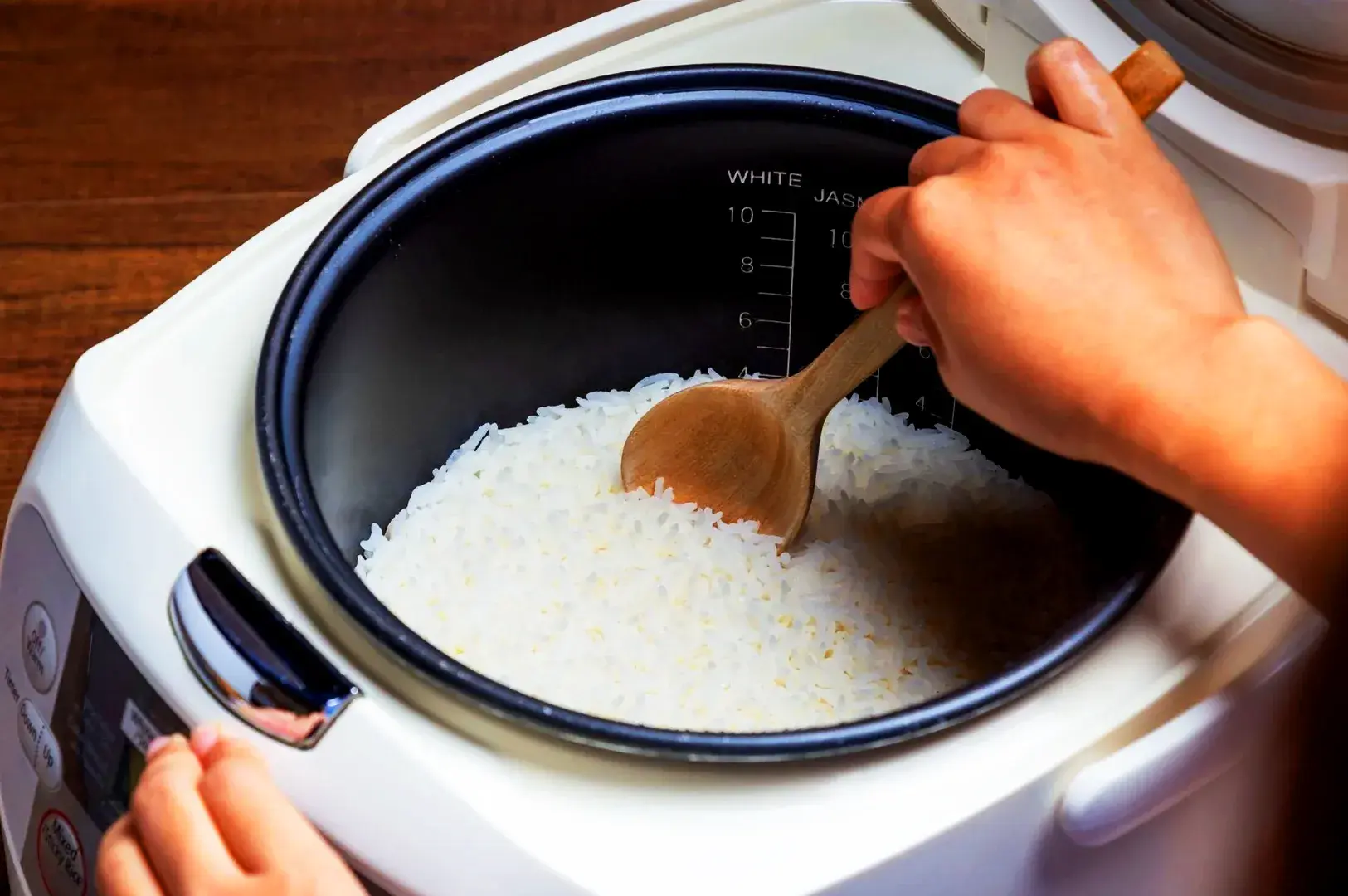
Here’s the one non-negotiable: Use cold, day-old cooked ricefor the best nasi goreng Indonesian fried rice.
Freshly cooked rice holds too much moisture, causing the rice grains to clump and steam rather than fry. When you stir fry day-old rice, the grains separate beautifully, absorbing the sweet, spicy, and smoky flavours without turning soggy or bit dry.
Eatdrinkers tip: No leftover rice? Cook white long grain rice, spread it out on a tray to cool uncovered for about 30 minutes to an hour in the fridge or at room temperature. This dries out the surface and makes it easier to stir fry.
Breaking up the rice clumps before cooking ensures every grain gets coated in the kecap manis and spice paste, giving you that glossy, caramelized finish that makes this dish absolutely delicious.
Step-by-Step Guide to Making the Best Nasi Goreng Indonesian Fried Rice
Prep time: 10–15 minutes
Cook time: 8–12 minutes
Serves: 2
The secret to the best nasi goreng Indonesian fried rice lies in the rhythm of the stir fry and layering of flavours.
- Mix the sauce: In a small bowl, combine kecap manis, light or dark soy sauce, sambal oelek, and belacan if using. This spice paste is the heart of the dish and adds extra flavour.
- Prep the rice: Use a fork or your hands to gently break up the cold cooked rice into loose rice grains.
- Cook the eggs: Heat vegetable oil in a deep frying pan or wok over medium heat. Fry eggs sunny side up with runny yolk or scramble them into the rice later. Set aside.
- Sear the chicken: Heat the pan until hot, add vegetable oil, and add diced chicken thigh in a single layer. Let it sit briefly before stir frying to get a golden sear. Cook until just done, then remove and set aside.
- Fry the aromatics: Add a little more oil if needed, then fry finely chopped shallots, garlic, chilli, and the spice paste until fragrant. Watch the garlic carefully—it can burn quickly.
- Add rice: Add rice to the pan, pressing down gently with your spatula to break up any remaining clumps. Toss and stir fry so every grain gets coated and heated through.
- Add sauce: Pour in the sauce mixture gradually—add half, toss, taste, then add more until the rice turns a glossy brown. This slow caramelization is what makes nasi goreng Indonesian fried rice unique.
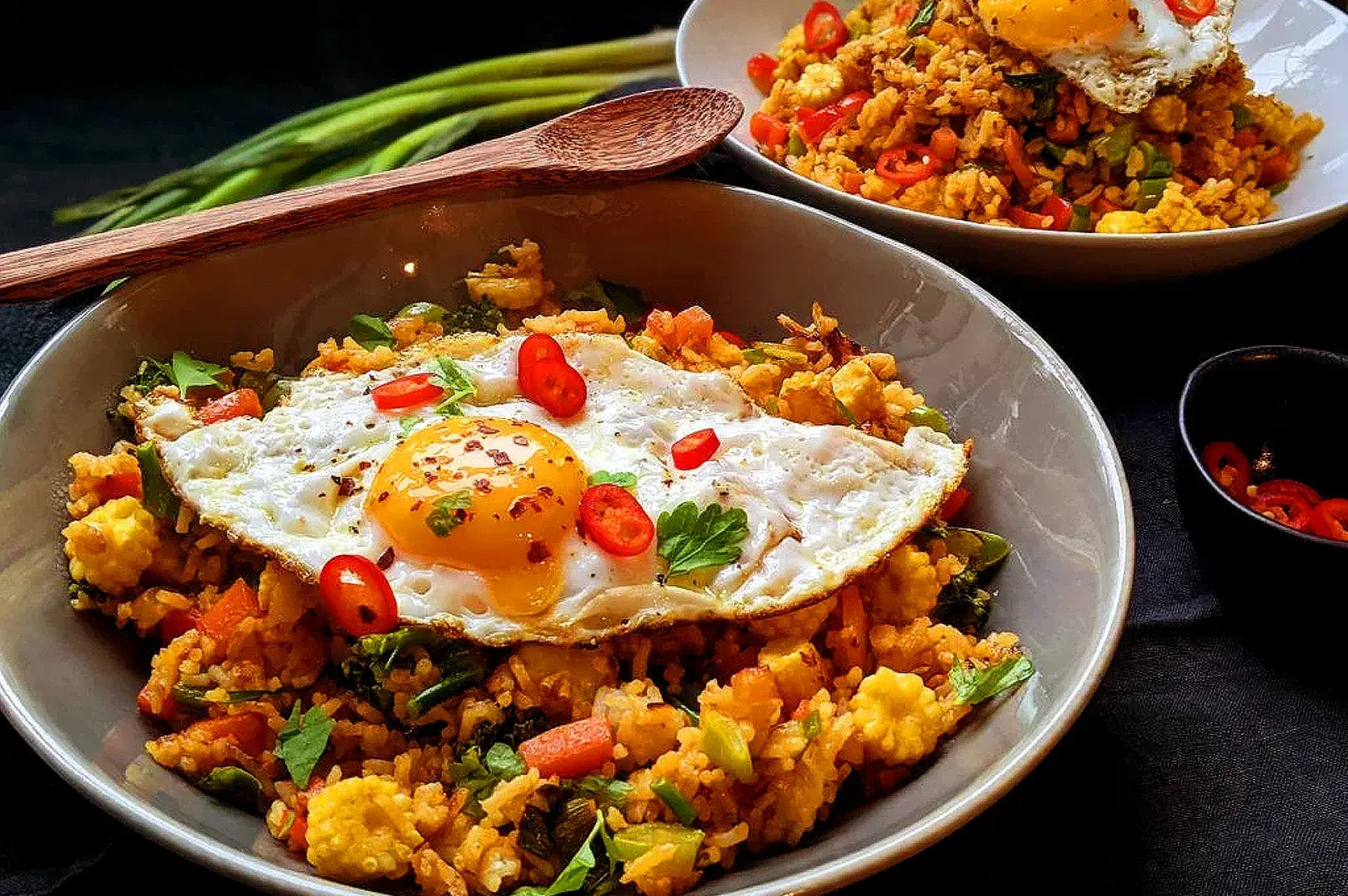
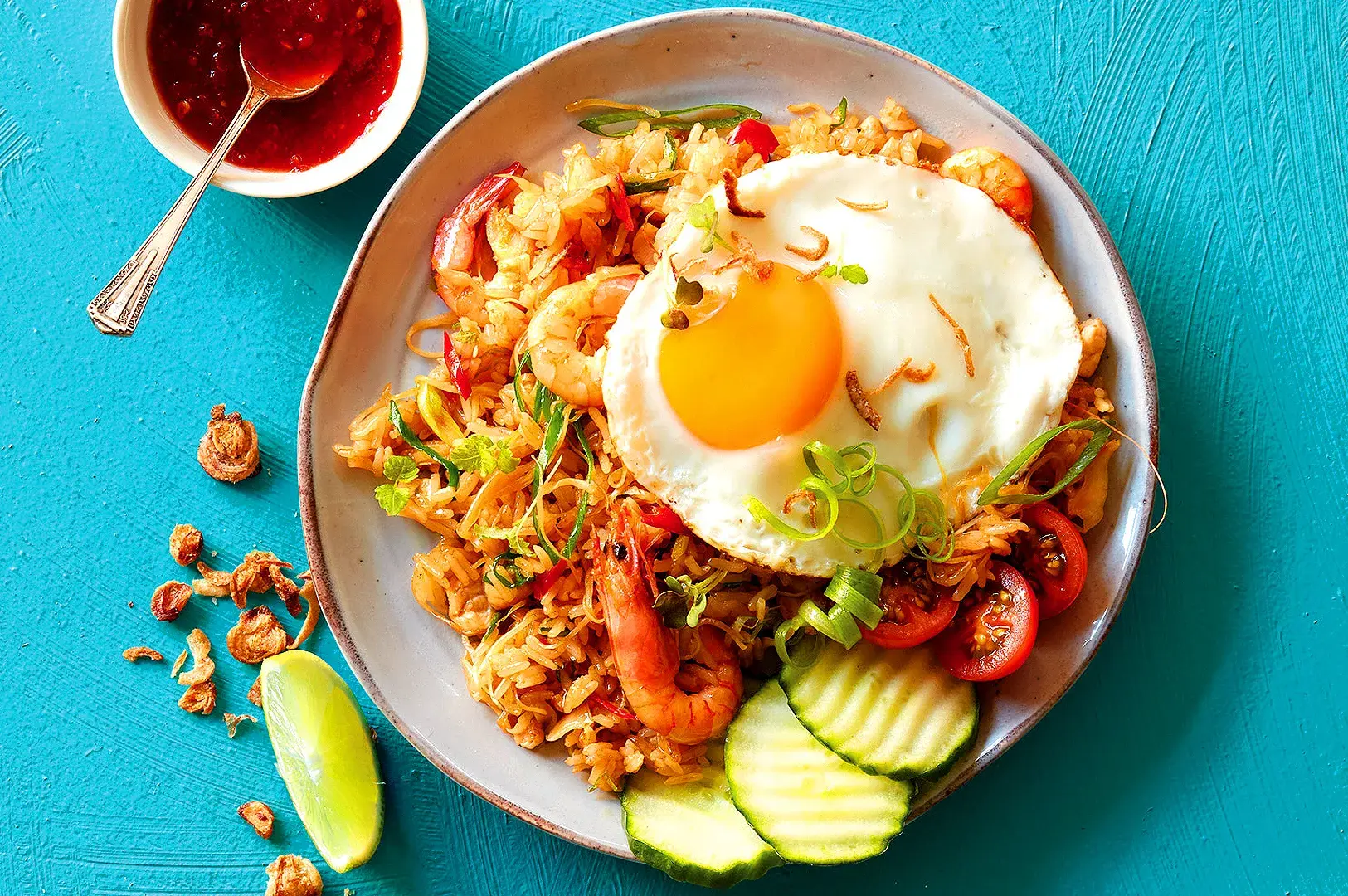
- Finish and serve: Return the chicken to the pan, scatter sliced green onions, and toss briefly. Plate the rice, top with the fried egg, and serve immediately with sliced cucumber slices, tomato slices, fried shallots, prawn crackers, sambal oelek, and lime wedges on the side.
Tips for Authentic Goreng Indonesian Fried Rice Flavour
- Use a well-preheated wok or deep frying pan to achieve that elusive smoky “wok hei” aroma.
- Cook in small batches to avoid crowding, which traps steam and makes the rice bit dry instead of crisp.
- Adding the sauce late in the cooking process helps caramelize the rice grains rather than steaming them.
- Garnish generously with fried shallots for crunch and extra flavour.
- For a gluten free version, make your own kecap manis using tamari and palm sugar.
Serving Suggestions: How to Serve Nasi Goreng Indonesian Style
Nasi goreng Indonesian fried rice is delicious on its own as a main meal, but it also makes a fantastic side dish.
Traditional serving suggestions include:
- A fried egg with runny yolk on top, so the yolk melts into the rice
- Freshly sliced cucumber slices and tomato slices for cooling contrast
- Prawn crackers (kerupuk) for crunch
- Extra sambal oelek or chilli on the side to add heat
- Lime wedges to squeeze over for a bright, tangy finish
These accompaniments balance the rich, sweet, and smoky notes of the fried rice, making every bite super tasty and satisfying, and for those seeking halal options, Eat Drink Asia offers a great guide to halal restaurants in Singapore.
What Makes Nasi Goreng So Special?
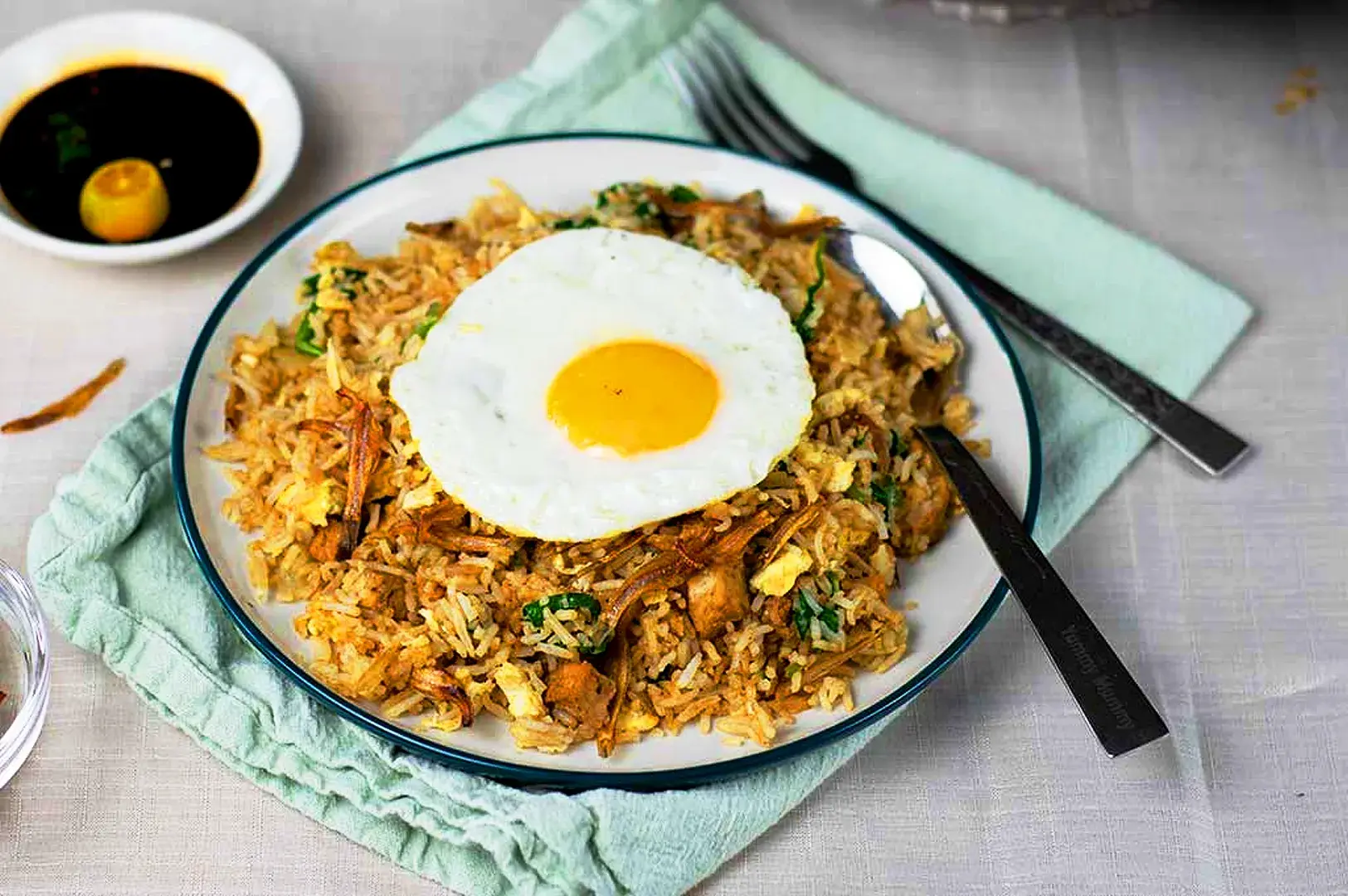
This simple recipe celebrates the heart of Indonesian fried rice — transforming everyday cooked rice into an absolutely delicious, flavour-packed meal. Whether you call it nasi goreng Indonesian style or just fried rice, the magic is in the spice paste, the caramelized rice grains, and the fresh garnishes that bring it all together; just as nasi goreng brings me comfort, so does a warm bowl of Japanese curry. Both dishes tell stories through their rich, layered flavours and humble origins. If you enjoy exploring authentic tastes and the cultural narratives behind them, trying Japanese curry could be a delightful next step in your culinary journey.
Eat, Drink, Cook Your Own at Home
Nasi goreng doesn’t ask you to be precise. It asks you to be a little bold.
Cold rice, a hot pan, some garlic and sweet soy and chilli. Chicken cooked fast enough to stay tender. That’s the whole trick. There’s no single correct version, no test you can fail. The dish has fed families across the region for generations precisely because it works with whatever’s on hand.
So the next time you find that forgotten container of rice at the back of the fridge, don’t sigh at it. Heat the wok. Give it ten minutes and a little nerve.
You’ll be surprised what leftovers can become.

Sesame Oil at the End: Finishing, Not Flavoring
Eda Wong | July 24, 2026
The wok is already off the heat. The greens sit glossy and dark, steam still curling off them. My mother lifts a small bottle, tilts it, and lets a thin line of sesame oil fall across the top. It hisses faintly against the warm leaves, and the smell rises all at once — toasted, nutty,…
-
Long Phung Vietnamese Cuisine, Where the Menu Doesn’t Waste Words: A Good Restaurant Close to Me
Eda Wong | July 23, 2026
I came in from the rain on a Tuesday, somewhere past 8pm, hungry and a little defeated by the day. The fan was clacking. A queue of three or four people stood near the doorway, dripping. Someone shouted an order toward the kitchen in Vietnamese, and a bowl of pho slid onto a nearby table…
-
The First Squeeze of Calamansi in a Noodle Stall Bowl
Dio Asahi | July 22, 2026
The bowl lands in front of me, broth still trembling from the walk across the stall. Steam rises and fogs the edge of my glasses. To the side sits a small dish of calamansi halves, cut and waiting, their skins slick under the fluorescent light. I pick one up. It gives slightly between my fingers,…
-
Isshin Machi East Coast: Where Comfort Food Turns Addictive
Dio Asahi | July 21, 2026
Let me clear up the first puzzle right away. The name “Isshin Machi” sounds unmistakably Japanese, and I’ll admit I walked in half-expecting ramen and gyoza. What I found instead was a Taiwanese kitchen, plates of lu rou fan, braised beef noodles, and golden fried chicken that trace straight back to the island’s home cooking….

Best Cafe Singapore: A Map of Brunch Plates, Quiet Corners, and Dangerous Pastries
Dio Asahi | July 18, 2026
I didn’t set out to make a list. I made a habit. Over the years, cafes became the places I went to think, to wait out the rain, to sit with a coffee I didn’t have to rush. Some I returned to for the food. Others, I returned to for the feeling — the way…
-
Pickled Mustard Greens: The Sour Note in Clear Broth
Eda Wong | July 17, 2026
Steam lifts from a bowl of clear pork broth, and a spoonful of chopped pickled greens slides in. The broth shifts at once, its richness suddenly cut by a sharp, clean sourness that sits high and bright on the tongue. The greens have softened in the heat but keep a faint, springy crunch. Someone leans…
-
The Potato Curry That Teaches You How Spices Wake Up: A Beginner’s Indian Cooking Lesson
Eda Wong | July 16, 2026
The first time I made aloo curry on my own, I burned the cumin. I remember standing in my tiny HDB kitchen, watching those little seeds go from golden to black in what felt like one breath, and thinking: this is harder than it looks. But here’s what that bitter, smoky disaster taught me, the…
-
Bamboo Skewers and Smoke: Street Grills in Chiang Mai
Dio Asahi | July 15, 2026
The cart glows at the edge of the lane just as the heat of the day finally loosens. A woman fans the coals with a flattened piece of cardboard, and the embers brighten orange under a row of skewers. Fat slides off the pork, hits the charcoal, and hisses upward in a thin curl of…
-
Chana Masala With Warm Roti, Built for Weeknights: Quick Vegetarian Dinner Recipes Indian
Dio Asahi | July 14, 2026
The first time I made chana masala, I started with dried chickpeas at 7:30 on a weeknight, soaking and boiling like the recipe said. By the time the curry was actually done, it was nearly ten and I’d already eaten half a loaf of bread out of sheer hunger. That night taught me something I…
-
One-Pan Chicken Curry With Jeera Rice and Cucumber Raita: Food for Dinner Indian, Made Practical
Eat Drink Asia Team | July 11, 2026
The first time we cooked a full Indian dinner on a weeknight, the curry, rice, and raita felt like three separate tasks—three pans, three timers, and a kitchen full of wonderful smells but chaos. The curry was good, the rice sticky, and the raita watery from being made too early. That night taught us a…