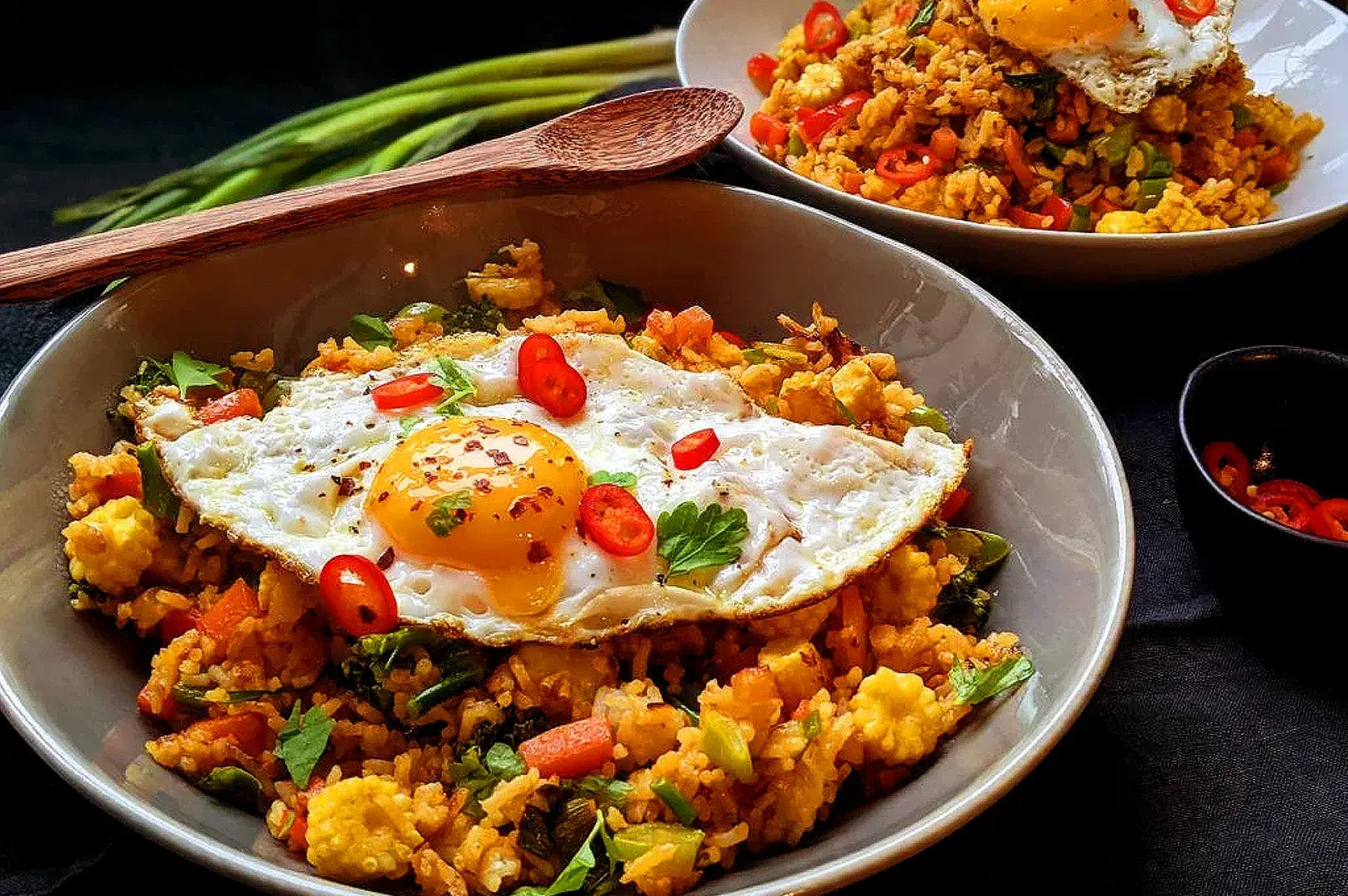
There’s a container of rice at the back of my fridge most weeks. Cold, a little hard, forgotten from a dinner two nights ago. Some people see that and think of waste. I see the start of something better.
Because leftover rice doesn’t want to be reheated. It wants to be fried. And when it hits a hot wok with garlic, sambal, and a slick of sweet soy, it stops being an afterthought and becomes the whole point of dinner.
Chicken nasi goreng is the meal I make when I’m tired but still want to eat well. It’s fast, it’s forgiving, and it turns fridge scraps into something smoky and savoury-sweet. Faster than delivery, honestly. And it tastes like someone actually cooked for you.
Let me walk you through how I make it.
Ingredients You’ll Need for Indonesian Fried Rice (Nasi Goreng Indonesian)
For 2 servings of this easy nasi goreng recipe, you’ll need:
- 2 cups cooked day-old white long grain rice (preferably jasmine rice or other long grain rice; the drier and cooler, the better for perfect rice grains that separate easily)
- 200g boneless chicken thigh, diced small (stays juicy under high heat)
- 2 eggs (beaten egg or for frying sunny side up)
- 3 garlic cloves, minced (part of the essential spice paste)
- 2 shallots, finely sliced (fried shallots add extra crunch as garnish)
- 1 red chilli or chilli padi, thinly sliced (add chilli to taste for that signature heat)
- 1 to 2 spring onions (green onions), sliced thinly for freshness
- 1 tablespoon kecap manis (the Indonesian sweet soy sauce that gives nasi goreng Indonesian fried its signature caramelized color and flavour)
- 1 teaspoon light soy sauce or dark soy sauce (for extra depth)
- 1 to 2 teaspoons sambal oelek (Indonesian chili paste, available in Asian grocery stores or the Asian aisle of your local supermarket)
- ½ teaspoon toasted belacan or shrimp paste (optional but adds umami and more flavour)
- Vegetable oil (for stir fry and frying eggs)
- For serving: sliced cucumber slices, tomato slices, fried shallots, prawn crackers, extra sambal oelek, and lime wedges
You can find most ingredients in Asian grocery stores or the Asian aisle of local supermarkets. Kecap manis, sambal oelek, and belacan are staples for authentic nasi goreng Indonesian fried rice, and a bottle lasts a long time.
If You’re Missing Something
Missing | Use Instead | What Changes |
|---|---|---|
1 tbsp dark soy sauce + 1–2 tsp brown sugar | Less syrupy, still close | |
Sambal oelek | Chilli paste or chopped fresh chilli | Adjust salt and heat |
Belacan | Fish sauce, dried shrimp, or oyster sauce | Umami shifts, still delicious |
Shallots | Red onion | Slightly sharper flavour |
Deep frying pan or large frying pan | Cook in smaller batches | |
Don’t stress about having everything perfect. This simple recipe celebrates flexibility and the magic of leftover cooked rice transformed by a fragrant spice paste. |
Before You Start: The Role of Day-Old Rice in Nasi Goreng Indonesian Fried
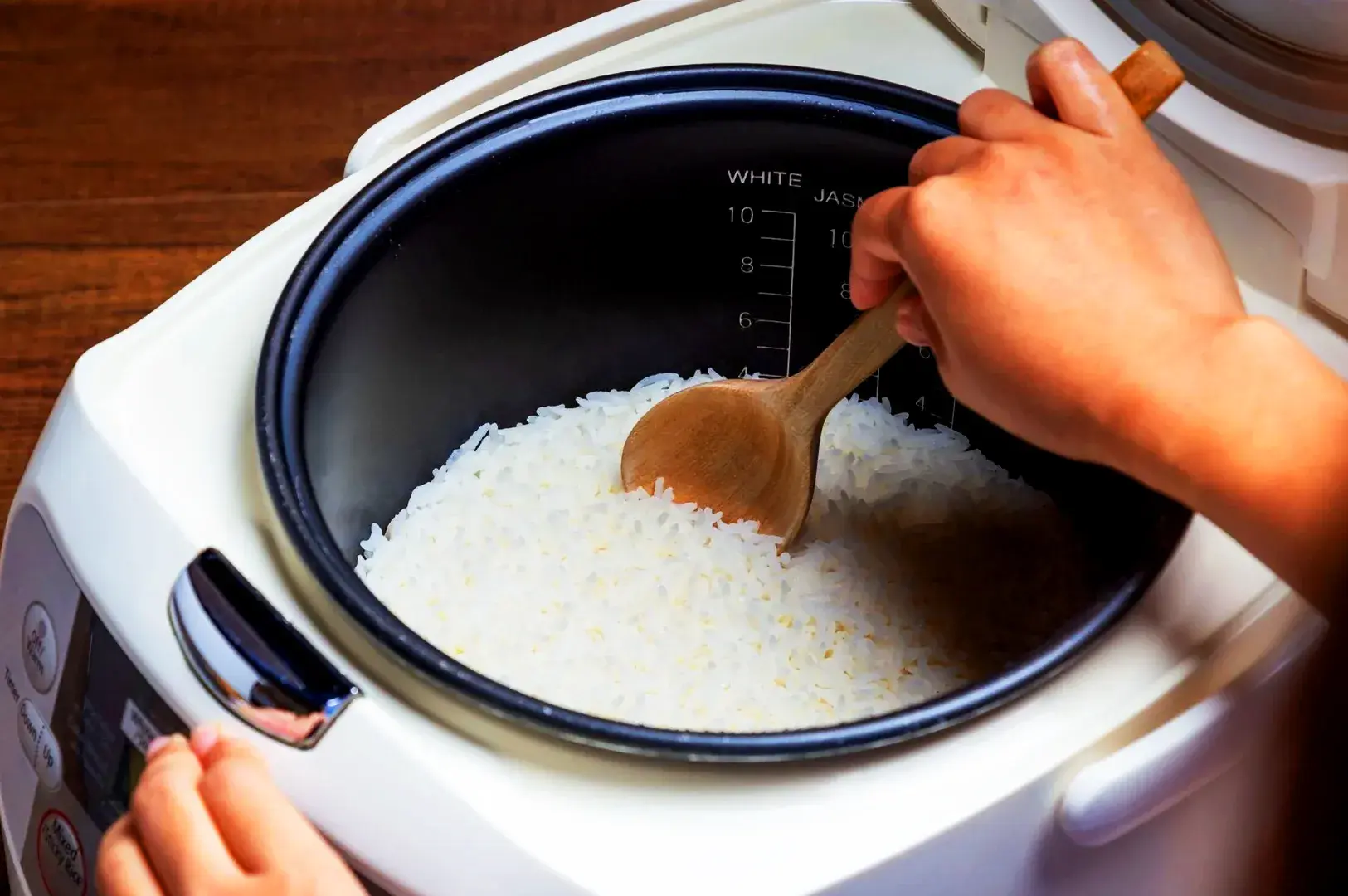
Here’s the one non-negotiable: Use cold, day-old cooked ricefor the best nasi goreng Indonesian fried rice.
Freshly cooked rice holds too much moisture, causing the rice grains to clump and steam rather than fry. When you stir fry day-old rice, the grains separate beautifully, absorbing the sweet, spicy, and smoky flavours without turning soggy or bit dry.
Eatdrinkers tip: No leftover rice? Cook white long grain rice, spread it out on a tray to cool uncovered for about 30 minutes to an hour in the fridge or at room temperature. This dries out the surface and makes it easier to stir fry.
Breaking up the rice clumps before cooking ensures every grain gets coated in the kecap manis and spice paste, giving you that glossy, caramelized finish that makes this dish absolutely delicious.
Step-by-Step Guide to Making the Best Nasi Goreng Indonesian Fried Rice
Prep time: 10–15 minutes
Cook time: 8–12 minutes
Serves: 2
The secret to the best nasi goreng Indonesian fried rice lies in the rhythm of the stir fry and layering of flavours.
- Mix the sauce: In a small bowl, combine kecap manis, light or dark soy sauce, sambal oelek, and belacan if using. This spice paste is the heart of the dish and adds extra flavour.
- Prep the rice: Use a fork or your hands to gently break up the cold cooked rice into loose rice grains.
- Cook the eggs: Heat vegetable oil in a deep frying pan or wok over medium heat. Fry eggs sunny side up with runny yolk or scramble them into the rice later. Set aside.
- Sear the chicken: Heat the pan until hot, add vegetable oil, and add diced chicken thigh in a single layer. Let it sit briefly before stir frying to get a golden sear. Cook until just done, then remove and set aside.
- Fry the aromatics: Add a little more oil if needed, then fry finely chopped shallots, garlic, chilli, and the spice paste until fragrant. Watch the garlic carefully—it can burn quickly.
- Add rice: Add rice to the pan, pressing down gently with your spatula to break up any remaining clumps. Toss and stir fry so every grain gets coated and heated through.
- Add sauce: Pour in the sauce mixture gradually—add half, toss, taste, then add more until the rice turns a glossy brown. This slow caramelization is what makes nasi goreng Indonesian fried rice unique.
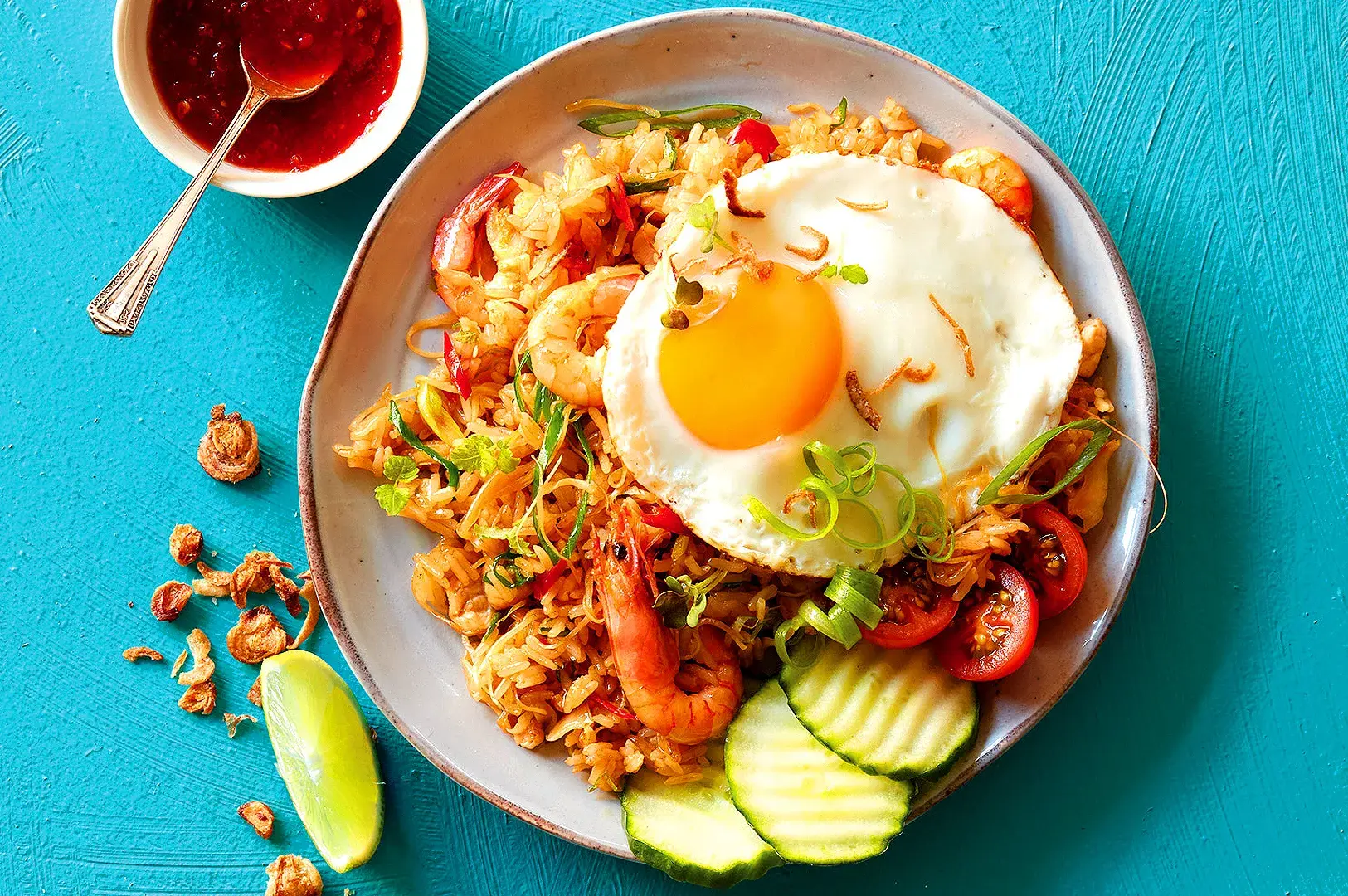
- Finish and serve: Return the chicken to the pan, scatter sliced green onions, and toss briefly. Plate the rice, top with the fried egg, and serve immediately with sliced cucumber slices, tomato slices, fried shallots, prawn crackers, sambal oelek, and lime wedges on the side.
Tips for Authentic Goreng Indonesian Fried Rice Flavour
- Use a well-preheated wok or deep frying pan to achieve that elusive smoky “wok hei” aroma.
- Cook in small batches to avoid crowding, which traps steam and makes the rice bit dry instead of crisp.
- Adding the sauce late in the cooking process helps caramelize the rice grains rather than steaming them.
- Garnish generously with fried shallots for crunch and extra flavour.
- For a gluten free version, make your own kecap manis using tamari and palm sugar.
Serving Suggestions: How to Serve Nasi Goreng Indonesian Style
Nasi goreng Indonesian fried rice is delicious on its own as a main meal, but it also makes a fantastic side dish.
Traditional serving suggestions include:
- A fried egg with runny yolk on top, so the yolk melts into the rice
- Freshly sliced cucumber slices and tomato slices for cooling contrast
- Prawn crackers (kerupuk) for crunch
- Extra sambal oelek or chilli on the side to add heat
- Lime wedges to squeeze over for a bright, tangy finish
These accompaniments balance the rich, sweet, and smoky notes of the fried rice, making every bite super tasty and satisfying, and for those seeking halal options, Eat Drink Asia offers a great guide to halal restaurants in Singapore.
What Makes Nasi Goreng So Special?
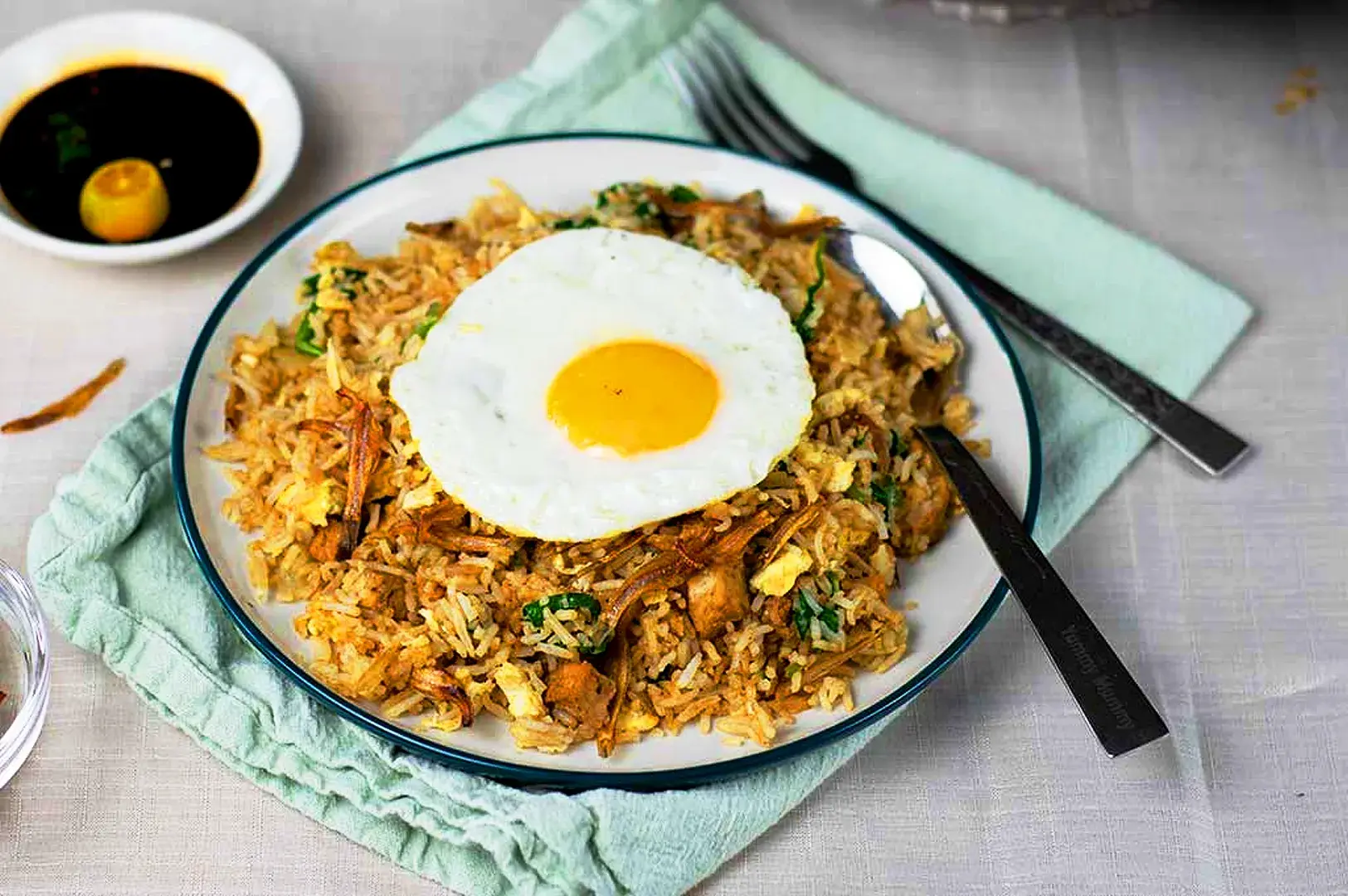
This simple recipe celebrates the heart of Indonesian fried rice — transforming everyday cooked rice into an absolutely delicious, flavour-packed meal. Whether you call it nasi goreng Indonesian style or just fried rice, the magic is in the spice paste, the caramelized rice grains, and the fresh garnishes that bring it all together; just as nasi goreng brings me comfort, so does a warm bowl of Japanese curry. Both dishes tell stories through their rich, layered flavours and humble origins. If you enjoy exploring authentic tastes and the cultural narratives behind them, trying Japanese curry could be a delightful next step in your culinary journey.
Eat, Drink, Cook Your Own at Home
Nasi goreng doesn’t ask you to be precise. It asks you to be a little bold.
Cold rice, a hot pan, some garlic and sweet soy and chilli. Chicken cooked fast enough to stay tender. That’s the whole trick. There’s no single correct version, no test you can fail. The dish has fed families across the region for generations precisely because it works with whatever’s on hand.
So the next time you find that forgotten container of rice at the back of the fridge, don’t sigh at it. Heat the wok. Give it ten minutes and a little nerve.
You’ll be surprised what leftovers can become.

Raffles Place Food Has the Restaurants That Understand the CBD Lunch Rush
Eda Wong | August 8, 2026
I used to think lunch in the CBD was a lost cause. You get an hour, maybe less. The lift takes ten minutes just to reach the ground floor. By the time you’ve queued, ordered, and found a corner to eat in, you’re already checking the clock. For a while, I gave up and just…
-
The Tamarind Sourness Inside a Filipino Sinigang Pot
Eda Wong | August 7, 2026
By Eda Wong for Eat Drink Asia. The pot has been going for a while now, and the whole kitchen knows it. Steam curls up from the surface, carrying that sharp-sour smell that reaches you before anything else. It’s not a gentle aroma. It pricks at the back of your throat a little, makes your…
-
Vegetarian Asian Dishes at The Boneless Kitchen: A Korean Meal Built on Kimchi, Rice, and Restraint
Dio Asahi | August 6, 2026
I didn’t expect to find Korean comfort food in an office building near Tai Seng. But there I was, on a Wednesday a little past 7pm, standing outside The Commerze @ Irving wondering if I’d read the address wrong. This isn’t the part of Singapore you go to for dinner. It’s the part you leave…
-
The Soy Glaze on Kyoto’s Forgotten Rice Crackers
Dio Asahi | August 5, 2026
By Dio Asahi for Eat Drink Asia. The old man works close to the coals, and the smell reaches me before I see what he’s doing. Soy meeting heat. That dark, caramel-edged smell that tightens something in your chest. His brush moves in short strokes across a rack of rice crackers, back and forth, patient….
-
Vegetarian Laksa Without the Usual Seafood Shadow: Asian Vegetarian Recipes Begin With the Broth
Eat Drink Asia Team | August 4, 2026
The first vegetarian laksa I made tasted like coconut soup with chilli, not laksa. I thought I was doing it right, stirring paste into warm coconut milk with tofu puffs. It looked the part but lacked depth. Seafood usually provides that depth, prawn shells, dried shrimp, fish cake sweetness. I learned that depth can’t be…
-
A Bowl Built by Hand at Hi Noodle, Three Floors Below Somerset
Eda Wong | July 31, 2026
The escalator carries me down to Basement 3, past the lunch noise of 313 Somerset, and the air changes somewhere along the way. Less mall, more kitchen. The smell finds me first — chilli, vinegar, something warm and sharp that cuts through the perfume of the shops above. Hi Noodle sits there, plain and bright….
-
An Asian Vegetarian Meal at Herbivore Japanese Vegetarian Restaurant: When Japanese Comfort Food Learns a New Body
Eda Wong | July 30, 2026
I didn’t grow up eating eel. But I grew up watching my grandmother turn one thing into another — gluten into “duck,” beancurd skin into “fish,” mushrooms into something that tasted of the sea without ever touching it. Buddhist vegetarian cooking does that. It doesn’t pretend so much as it remembers, building familiar shapes out…
-
A Table for One, and a Grill That Belongs to You in Yakiniku Like
Dio Asahi | July 29, 2026
The grill glows orange in front of me before the meat arrives. It’s a small thing, set into the counter at my single seat, and it hums faintly under the chatter of the room. No flame. No charcoal. Just a low electric warmth I can feel rising toward my face. A plate comes. Thin slices…
-
Best Buffet Singapore: Where Hotel Buffets Turn Abundance Into Order
Dio Asahi | July 28, 2026
I used to think buffets were about greed. Pile the plate high, go back for thirds, leave feeling like you got your money’s worth. That was the whole game, or so I believed. After years of exploring this city’s hotel buffets, I learned the good ones focus on order. They transform a wall of food…
-
STR TAO Taiwan Cuisine and the Comfort of a Menu That’s Too Big to Be Lazy: Food Places Nearby
Eat Drink Asia Team | July 25, 2026
It was the kind of evening where you don’t want to think too hard about dinner. I’d been walking up East Coast Road, the air still thick from an afternoon shower, when I ducked into a coffeeshop just to sit down. The Bullion Hawker Bar. And tucked among the usual suspects — wanton mee, Hokkien…