By Eda Wong for Eat Drink Asia
It’s late afternoon, and the river is the colour of weak tea.
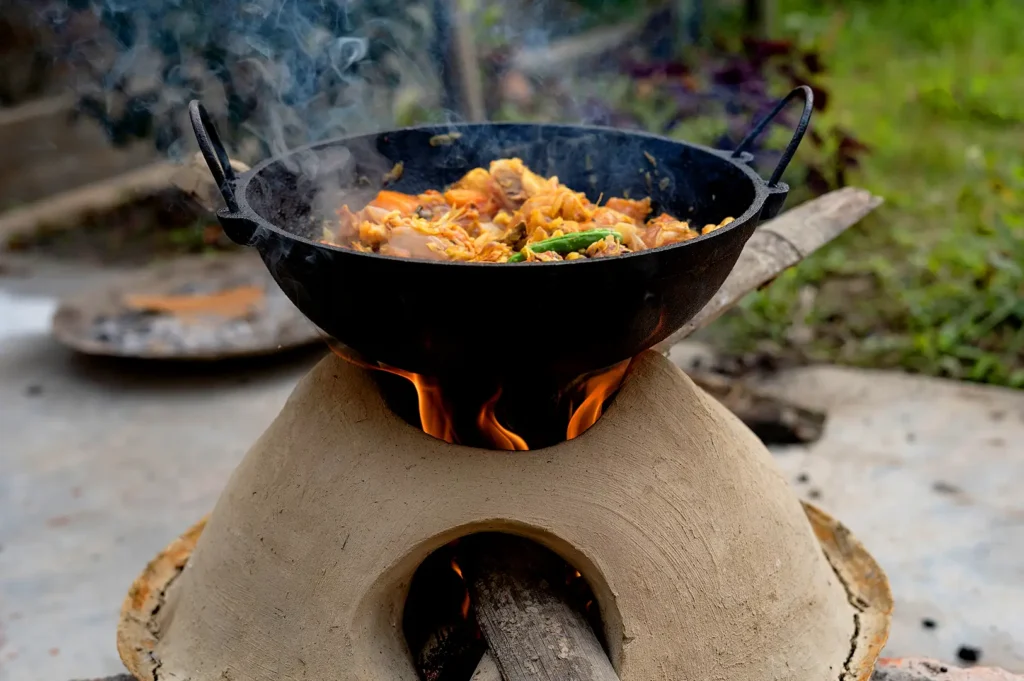
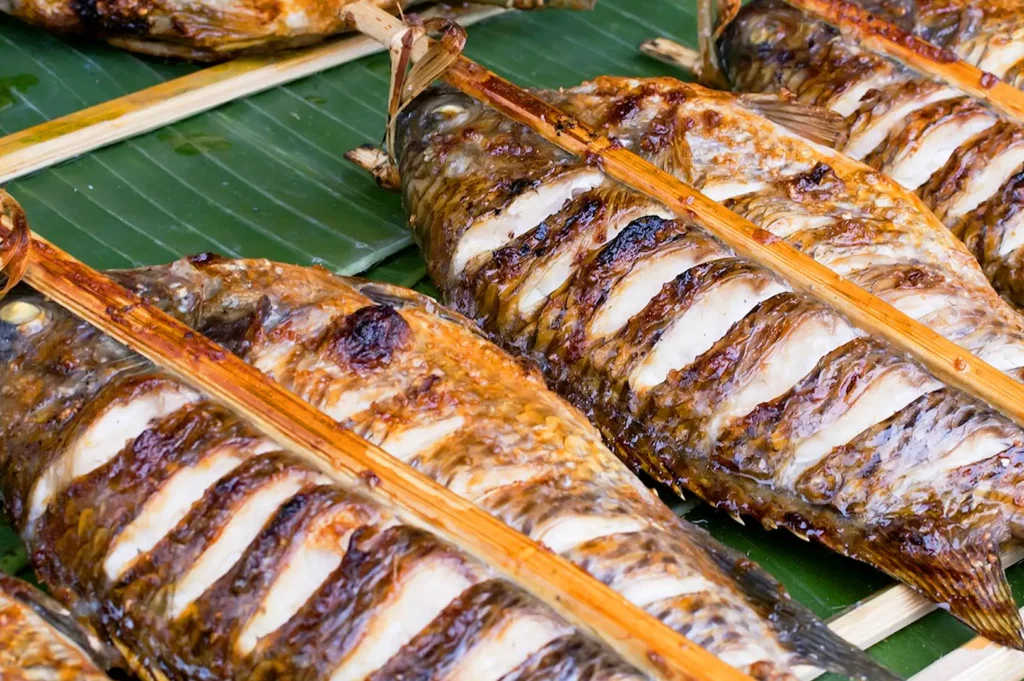
A woman crouches beside a small clay stove at the edge of the bank, feeding it slivers of charcoal. Smoke lifts, thin and grey, and drifts toward the water. On a bamboo skewer, a whole fish leans over the coals, its belly split and stuffed tight with lemongrass. The skin has started to crackle and blister where the heat licks closest. She doesn’t rush it. She turns the skewer a quarter, sits back on her heels, and waits.
The smell reaches me before the fish is done — charcoal, and something green underneath.
This is pa ping (pah ping) — “pa” for fish, “ping” for grilled. It’s a whole river fish, often tilapia or something pulled from the Mekong that morning, packed with lemongrass, dill, spring onion, sometimes a knot of herbs I can’t name. The stalk of lemongrass runs through the body like a spine. Then it’s clamped in a split bamboo skewer, salted on the skin, and set over the clay stove to cook slowly, low and patient.
The clay holds the heat gently. That’s the whole point. Too fierce, and the skin chars before the flesh gives up its water. So the cook works close to the coals, reading the smoke, turning by feel. By the time it’s ready, the skin peels back to steam and soft white flesh, and the lemongrass has perfumed everything from the inside out.
That’s the Eat Drink Asia experience. You eat it by the water, usually. Not alone.
Someone spreads a mat. Someone brings sticky rice in a woven basket, still warm. The fish is set down whole, and hands reach for it together — no plating, no ceremony, just fingers and rice and a dish of jeow, the chilli dip, passed around. The meal stretches. Nobody checks the time. The river keeps moving, and the talk moves with it, slow as the current.
That unhurried thing is what stays with me. This is food that refuses to be quick.
Because it would be so easy to make it quick now. A gas flame. A pre-cut fillet. A minute a side. And plenty of kitchens do — I understand why. But the clay stove asks for something the gas flame doesn’t: your attention, held over coals, for as long as the fish needs. The smoke, the crackle, the herb-thick steam — none of it survives the shortcut. What you’d save in minutes, you’d lose in everything else.
I think that’s why the woman by the river didn’t hurry.
She wasn’t cooking dinner. She was keeping something.
The fish came off the skewer. The skin gave way. And for a while, by the tea-coloured water, there was nothing to do but eat, and sit, and let the afternoon go where it wanted.

The Sizzle of the Wok: An Exploration of Fried Bee Hoon Across Southeast Asia
Eat Drink Asia Team | February 7, 2026
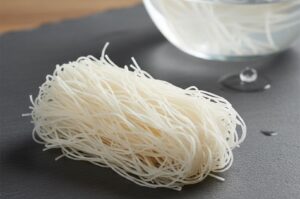
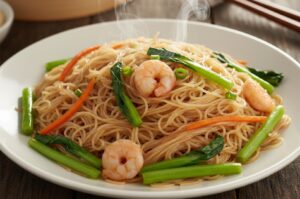
Across Southeast Asia, from bustling hawker centers to family kitchens, the sizzle of rice vermicelli noodles hitting a hot wok is a universal comfort. Few dishes capture the spirit of Asian noodle culture as well as fried bee hoon. This stir fry, made with thin rice noodles, delivers a tasty meal any time of the…
-
The Silk of the East: A Deep Dive into Bee Hoon and the Art of Rice Vermicelli
Eda Wong | February 5, 2026
Across the bustling kitchens of Southeast Asia, one humble ingredient has woven itself into the fabric of countless beloved dishes. Bee hoon, the delicate rice vermicelli that transforms from brittle strands into silky noodles, represents centuries of culinary tradition and innovation. Whether you’ve savored Singapore noodles in a hawker center or encountered fried bee hoon…
-
The Eternal Hearth: A Journey Through the Soul of Indian Foods Vegetarian Traditions
Dio Asahi | February 3, 2026
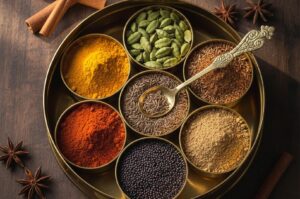
In the vibrant tapestry of global gastronomy, few cultures have elevated the plant-based plate to an art form quite like India. While much of the world has recently turned toward meat alternatives for health or environmental reasons, Indian cuisine has been centered on the vegetable for millennia. This isn’t merely a dietary choice; it is…
-
The Essence of Jeju Citron Tea: A Distinctive Profile of Yuja Tea in Korea
Dio Asahi | January 31, 2026
Imagine sitting in a quiet, sun-drenched teahouse overlooking the dramatic volcanic coastline of Jeju Island. The steam rising from your cup carries an aroma that is at once familiar and yet entirely new—a version of Korean citron tea, or yuja cha, that tastes of sea salt, volcanic soil, and generations of island tradition. As you…
-
Korean Citron Tea: Health Benefits and Wellness Secrets
Eat Drink Asia Team | January 29, 2026
As the seasons change and a chill enters the air, many of us seek out comforting rituals to support our well-being. Imagine wrapping your hands around a steaming cup of Korean citron tea—also known as yuja-cha—its bright, citrus aroma soothing and revitalizing with every sip. More than just a winter treat, Korean citron tea is…
-
When the Izakaya Becomes the Plan: Izakaya Singapore Top Picks for After-Work Reset
Dio Asahi | January 28, 2026
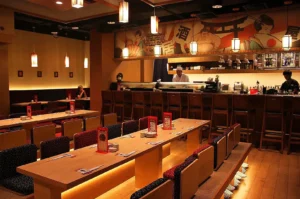
January 28, 2026 | Dio Asahi Last updated: October 12, 2026 As you step behind the humble noren curtain, you’re greeted by glowing lanterns, sizzling charcoal-grilled skewers, and warm welcomes. This is izakaya, Japan’s casual pub, a vibrant part of Singapore’s dining scene. More than just yakitori and sake, izakayas offer a lively setting for social…
-
Yuja Tea: Korea’s Traditional Citron Tea
Dio Asahi | January 27, 2026
The golden, aromatic steam rising from a cup of yuja tea carries centuries of Korean tradition and wellness wisdom. This caffeine-free citrus beverage has warmed Korean hearts through countless winters, offering both comfort and powerful health benefits in every sip. Made from the Korean citron known as yuja fruit, this simple Korean tea represents one…
-
The Global Phenomenon of Korean Instant Noodle: A Cultural and Culinary Journey
Eda Wong | January 24, 2026
In the high-octane streets of South Korea, where the “pali-pali” (hurry-hurry) culture defines the pace of life, one dish stands as the ultimate equalizer of speed and satisfaction: Korean ramyeon. While the world often uses the terms ramen and ramyeon interchangeably, the Korean version is a distinct entity. It is not merely a quick snack…
-
Traditional Ramyeon: The Soulful Heart of Korean Noodle Culture
Eat Drink Asia Team | January 20, 2026
In the bustling culinary landscape of South Korea, few comfort foods can match the satisfaction of a steaming bowl of ramyeon. While outside of Korea, “ramyeon” often brings to mind Korean instant noodles or instant ramen, true ramyeon Korean style refers to the artful, freshly prepared noodle soup enjoyed in homes and at local restaurants…
-
The Heart of the Korean Noodles: History and Texture
Eda Wong | January 17, 2026
In Korea, a bowl of noodles is far more than a simple dish; it is a cultural anchor that has weathered centuries of change. For generations, the length of the strand has symbolized a long and prosperous life, making Korean noodles a staple at birthdays, weddings, and the milestone 60th birthday celebration known as hwangap….