By Dio Asahi for Eat Drink Asia.
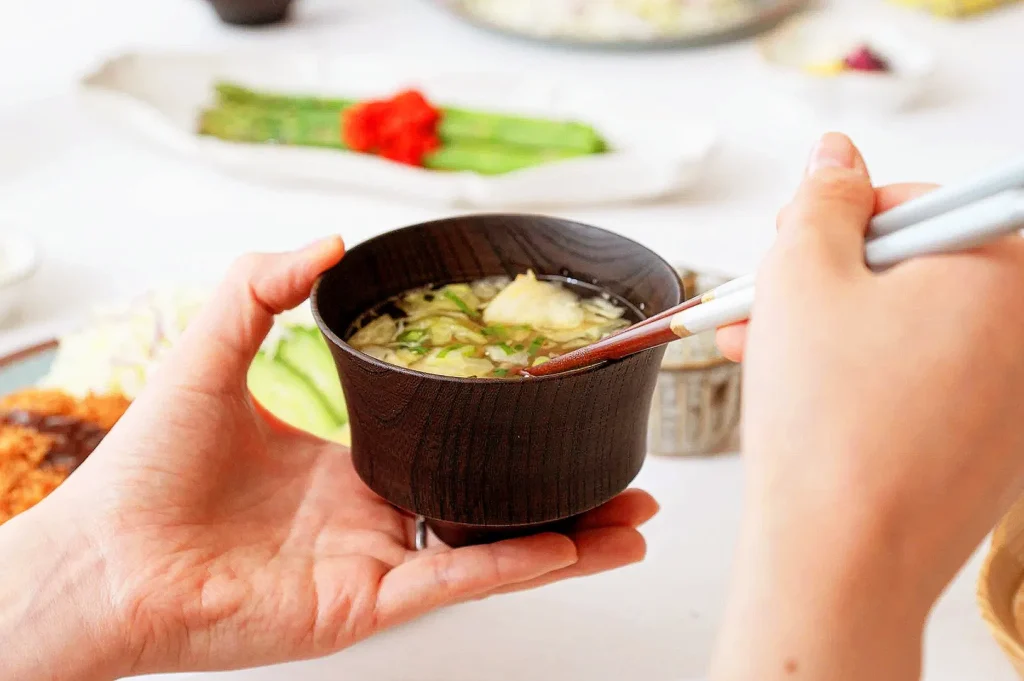
The shop is barely wider than a hallway. Seven stools, a counter worn smooth, and behind it a woman ladling soup into small ceramic bowls before anyone has ordered it. Steam lifts off the surface and fogs the window against the cold morning. The bowl reaches me warm in both hands, heavier than it looks. There’s a smell first — something salted, deep, almost like the sea remembered rather than tasted. Then the sip. Cloudy, gentle, faintly sweet under the salt. Outside, a train sighs into the station. Inside, nobody speaks yet.
What I’m holding is miso soup — 味噌汁, roughly “mee-so shiru.” At its simplest, it’s fermented soybean paste dissolved into dashi, a stock usually drawn from kombu seaweed and dried bonito flakes. That’s the whole architecture. The miso brings the salt and the funk, that living, fermented depth. The dashi brings the quieter thing underneath — a savoury base the Japanese call umami, which is less a flavour you name than one you feel settle in the back of the throat.
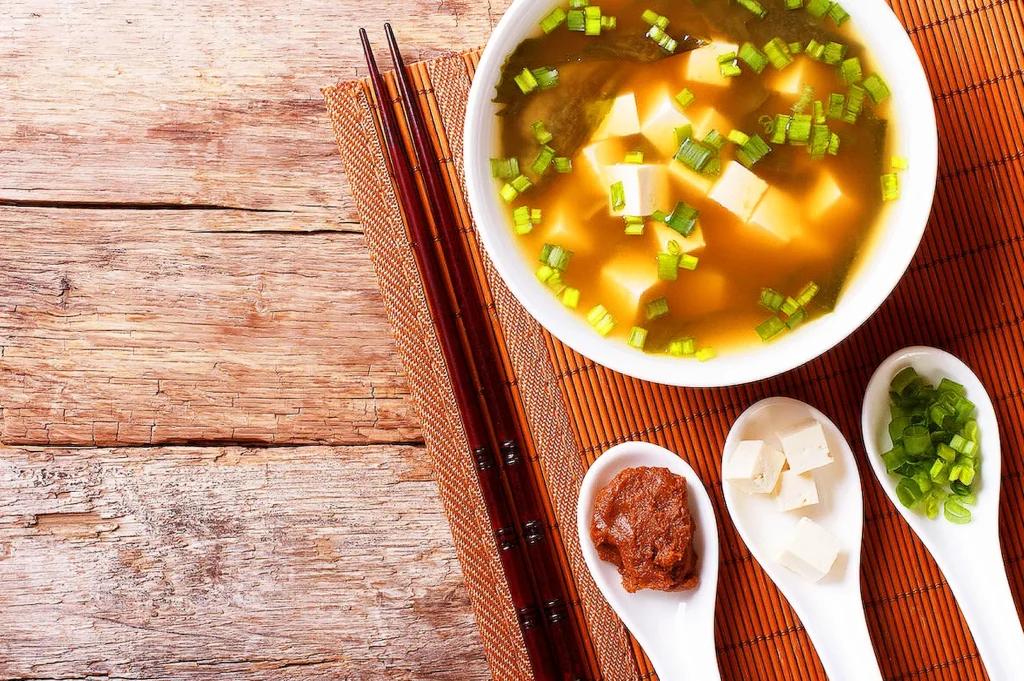
There’s often a little inside the broth. Cubes of soft tofu, a few slippery strands of wakame, sometimes sliced green onion floating on top. But the soup isn’t really about what’s in it. It’s about the liquid itself, and the way it arrives hot and unhurried, at the start of the day, without ceremony.
Watch a Tokyo breakfast shop at seven in the morning and you notice the rhythm before you notice the food. People arrive alone, mostly. They sit, they receive the bowl, they eat with a kind of practiced quiet. The soup is rarely the main dish — it comes beside rice, grilled fish, a raw egg. But it’s the first thing lifted, the first warmth of the morning. There’s an etiquette to it, too: you drink from the bowl, tilting it, rather than spooning. It signals something small and communal. Everyone here is doing the same thing at the same hour, in the same silence, before the city asks anything of them.
The craft hides in the timing. Dashi is warmed, but the miso is stirred in only at the end, off the strongest heat — never boiled. Boil it, and the miso turns flat and sour, the living quality cooked out of it. The woman behind the counter dissolves it through a small strainer with the back of a ladle, so no lumps remain, seconds before serving.
You can buy miso in a packet now. Tear, pour, add hot water, done. It’s not bad, and I understand why a tired morning reaches for it. But the packet version is a copy of a gesture, not the gesture itself, it is not what Eat Drink Asia stands for. The handmade bowl carries the memory of someone deciding not to let it boil — a small, deliberate act of care, repeated at dawn, for strangers.
I finished the bowl before I’d finished thinking about it. The woman was already ladling the next.
Some mornings ask for nothing more than that. Warmth, handed over. A quiet way of being fed.

Takoyaki: The Sizzling Heart of Japan Food Culture
Dio Asahi | January 3, 2026
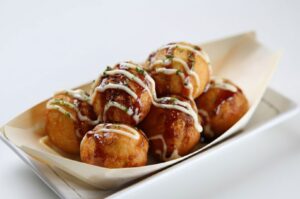
What is Takoyaki and Why Does it Matter in Japanese Food Culture? In the bright heart of Osaka, the sizzle of takoyaki batter signals one of Japan food culture’s most beloved street foods. Lines form at street stalls drawn by the delicious food aromas of sweet-savory sauce and bonito flakes dancing on golden spheres. Takoyaki,…
-
Everything You Need for a Flawless Bubble Tea Cake
Eda Wong | January 1, 2026
The global bubble tea phenomenon has evolved beyond drinks into the world of baking, creating one of the most exciting dessert trends of recent years. Bubble tea cake combines the beloved flavors of milk tea with the satisfying chew of boba pearls, all wrapped up in an adorable bubble tea cake that’s perfect for any…
-
Pad Thai Dish: Everything You Need to Know About the Rice Noodles That Make It Authentic
Eat Drink Asia Team | December 30, 2025
Pad Thai is more than just a staple of Thai Food; it’s a Global Phenomenon. From bustling street carts in Bangkok to high-end Thai Restaurants in New York, this iconic Pad Thai Dish has captured the hearts and palates of food lovers everywhere. The best Pad Thai rivals what you would find in a typical…
-
Thailand Food Pad Thai: Thailand’s Iconic Stir-Fried Noodle Dish
Eda Wong | December 27, 2025
Few dishes capture the essence of Thailand food culture like authentic Pad Thai. This beloved stir fried noodle dish is more than a meal-it’s a symbol of Thai identity, a perfect balance of sweet, savoury, and sour flavors, and a window into the soul of Thai cuisine. Whether you want to eat Pad Thai from…
-
Why Fish Curry is a Special Indian Cuisine
Dio Asahi | December 25, 2025
Along India’s vast and vibrant coastline, stretching over 7,500 kilometers, the sea offers its generous bounty to a cuisine renowned for its regional variations. Nowhere is the diversity of the Indian subcontinent more deliciously expressed than in a humble bowl of fish curry. Through this article, we’ll journey across India’s coasts and kitchens, exploring the…
-
Tikka Masala: The Story Behind One of the Most Iconic Dishes in India’s Food Cuisine
Eat Drink Asia Team | December 23, 2025
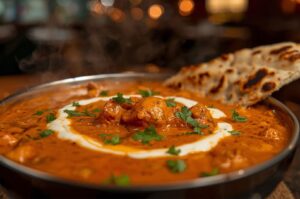
Ask anyone to name a famous Indian dish, and chances are “Tikka Masala” will be one of the first things they say. This creamy, vibrant, and aromatic curry has become a global symbol for the food cuisine in India, celebrated from street food stalls in Delhi to upscale Indian restaurants around the world. Its rich…
-
Cuisines in India: A Journey Through the Diverse Regional Food Traditions of the Subcontinent
Dio Asahi | December 20, 2025
Indian cuisine is celebrated for its spectacular diversity, bursting with flavors, regional traditions, and culinary innovations. From the spice-laden gravies of Northern Indian cuisine and tandoor-fresh breads, to coconut-laced Southern Indian cuisine, fragrant rice dishes in the East, and the robust, spicy curries and street food of the West, the foods of India reflect not…
-
Green Tea with Milk: A Tale of Two Teas from Taiwan and Thailand
Eda Wong | December 18, 2025
The simple combination of green tea with milk has sparked a culinary phenomenon across Asia, creating a diverse family of beverages that are both comforting and refreshing. While many countries have embraced this pairing, two nations stand out for their iconic and wildly different interpretations: Taiwan and Thailand. Each has cultivated a unique culture around…
-
The Emerald Journey: Exploring Asia’s Green Milk Tea Culture
Eat Drink Asia Team | December 16, 2025
A vibrant, emerald-hued wave is sweeping across Asia, delighting taste buds and defining modern café culture. From street-side stalls in Bangkok to chic tea houses in Taipei, green milk tea—sometimes simply called green tea with milk—has blossomed from a simple concept into a beloved, refreshing drink with countless regional interpretations and profound cultural significance. Whether…
-
Thai Green Milk Tea: The Complete Guide to Thailand’s Refreshing Emerald Delight
Eda Wong | December 13, 2025
Picture a tall glass filled with crushed ice, its emerald-green contents swirled with ribbons of creamy white milk—this is thai green milk tea, one of Southeast Asia’s most visually striking and refreshing drinks. Known locally as cha khiao nom yen, this popular drink has captured hearts across Asia and beyond with its distinctive pale green…