The bowl arrives before anything else does.
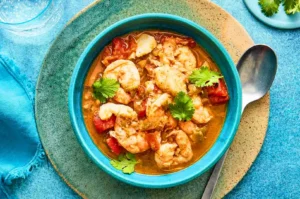
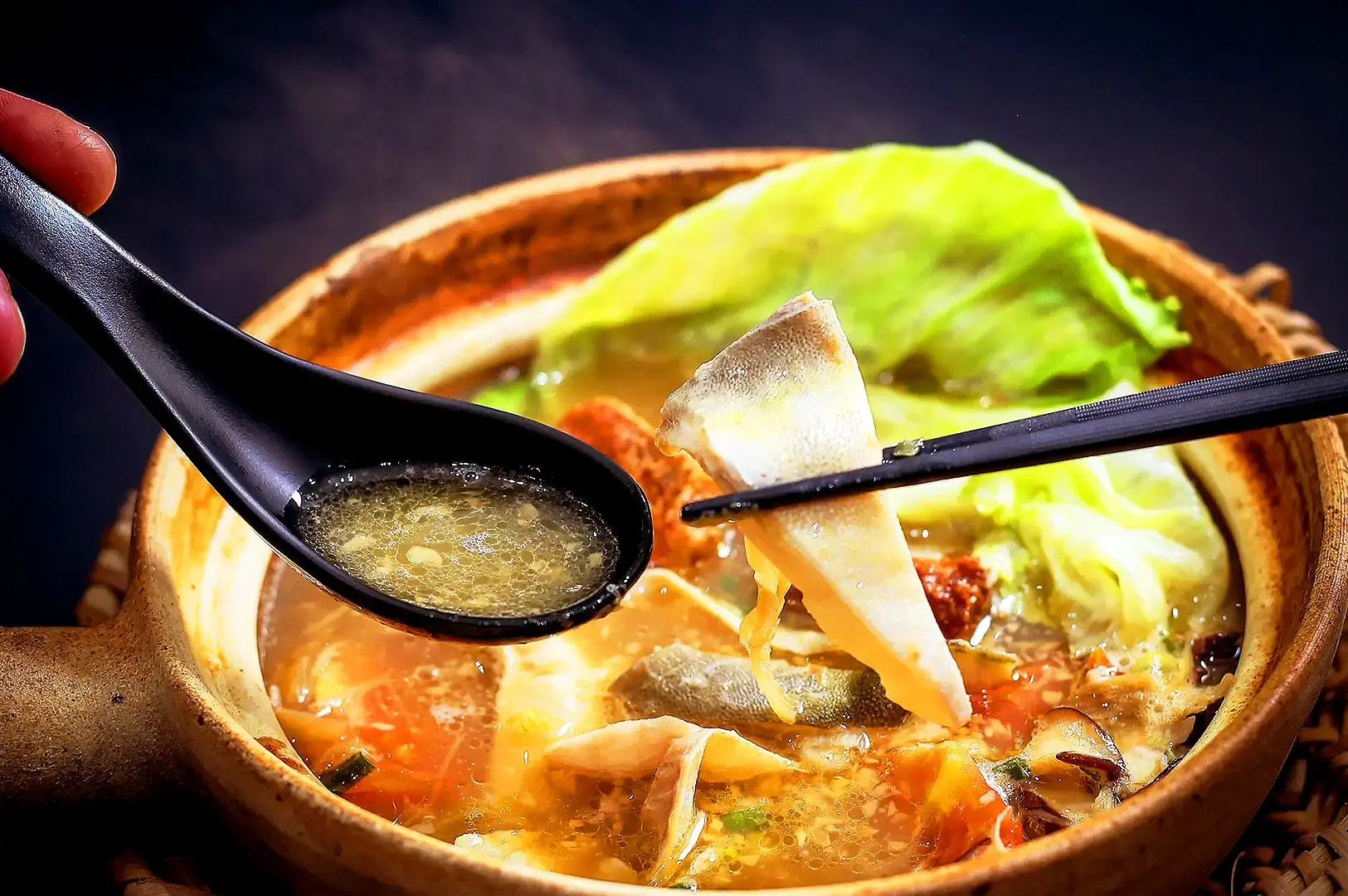
Steam lifts off it in slow ribbons, carrying the smell of ginger and something warmer underneath: the round, boozy note of hua tiao wine settling into fish. I lean in before I even pick up my spoon. The broth is pale gold and cloudy, thick enough that it clings a little to the sides of the bowl. Pieces of pomfret sit half-submerged, pale and generous.
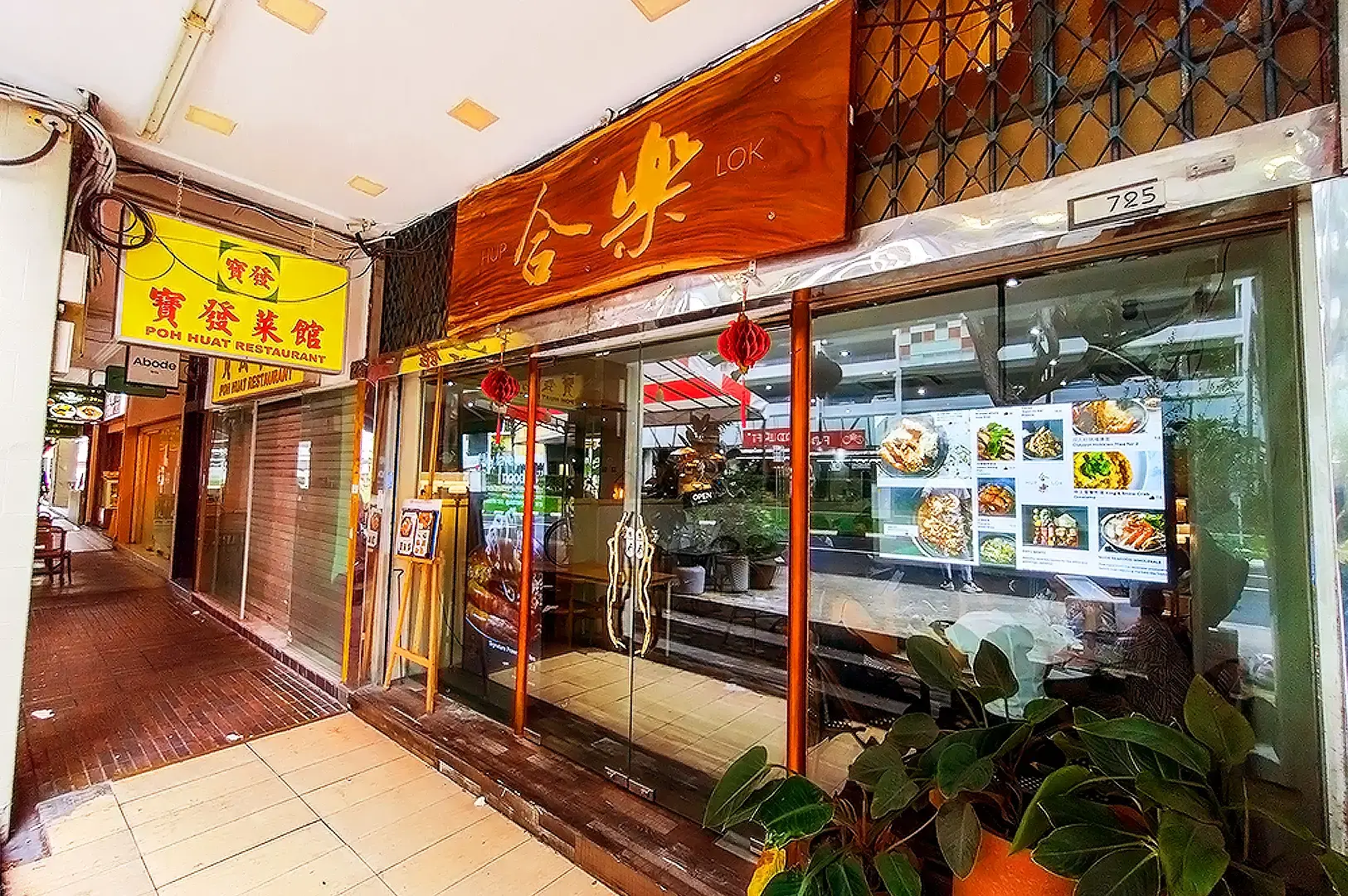
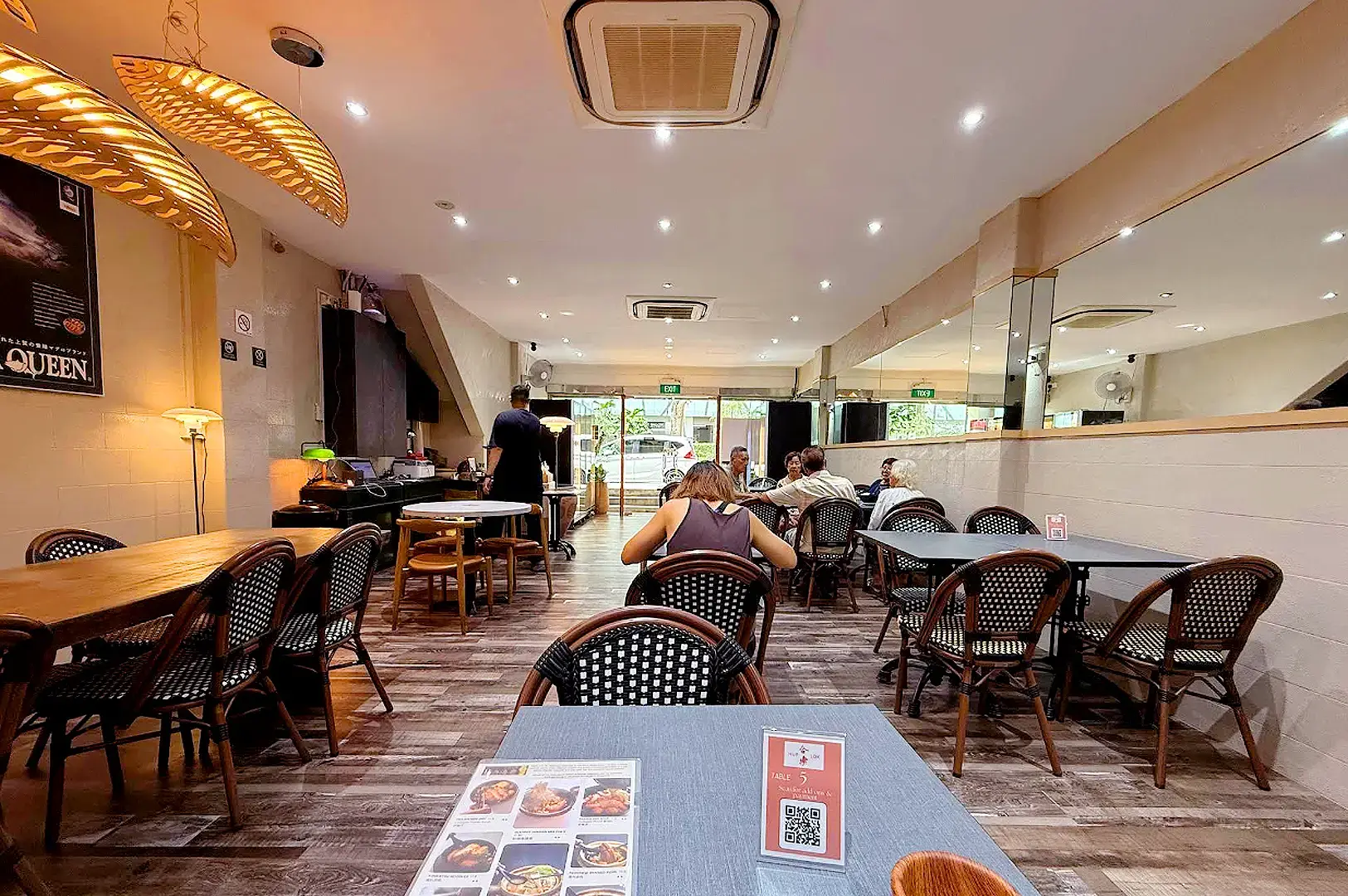
This is Grandpa’s Pomfret Soup at Hup Lok, a young restaurant tucked along 725 Havelock Road. The place opened in September 2025, which makes the whole thing a small contradiction. The room is new. The taste in the bowl is not.
Here, the menu features this signature dish, known for its tender fish slices and rich broth, which many gave positive reviews online. Which lead me here, experience the it myself.
What the Broth Carries
I eat the fish first, because you have to.
The soup keeps working even after it reaches the table, and the residual heat will carry on cooking the pomfret if you let it sit. So I go in early, while the flesh is still just barely set. It comes away in soft, meaty flakes: clean-tasting, without the muddiness that lesser fish soups sometimes hide behind. There’s a lot of it, too. This isn’t a bowl rationing its protein.
Then the broth.
It’s the kind of soup that looks like it should be heavy, but isn’t. There’s real body to it, a savoury weight that coats the tongue, and my first instinct is to assume milk. There isn’t any. That richness comes from fish bones: batang bones simmered down until the collagen loosens and thickens the liquid on its own. It’s a quiet lesson in how a broth earns its texture honestly, without a shortcut.
The rest of the bowl keeps it from turning one-note. Salted plums cut through with a soft, tart edge. Tomatoes add a rounder acidity. Shiitake and julienned ginger sit in the background, and the hua tiao wine ties everything together with that low, warming hum. It’s umami, but it’s also bright; which is exactly what a good teochew pomfret fish soup should be.
Tradition Without Pretending the Recipe Is Ancient
Here’s the part I keep turning over.
The recipe in front of me isn’t old. Chef Keeling built it during COVID, when kitchens were cooking for delivery boxes rather than dining rooms, and it later found a permanent home at Hup Lok. So this is not some family formula guarded through the decades, unchanged.
And yet the flavour vocabulary is older than the dish.
The owner, Hong Junchen, comes from a family that has worked in Singapore’s fish trade across three generations; his father started at street level before the trade grew into wholesale. Three generations in the trade, one restaurant to show for it. That connection to seafood is part of what sets traditional Chinese restaurants apart: the ingredients aren’t just components, but part of the cuisine’s history.
So the soup isn’t repeating an inherited recipe. It’s carrying something quieter forward: Teochew taste memory, seafood knowledge, the logic of how these flavours are supposed to sit together. That, to me, is what tradition actually is. Not a frozen thing. A remembered one.
Claypot Hokkien Mee: Abundance at the Same Table
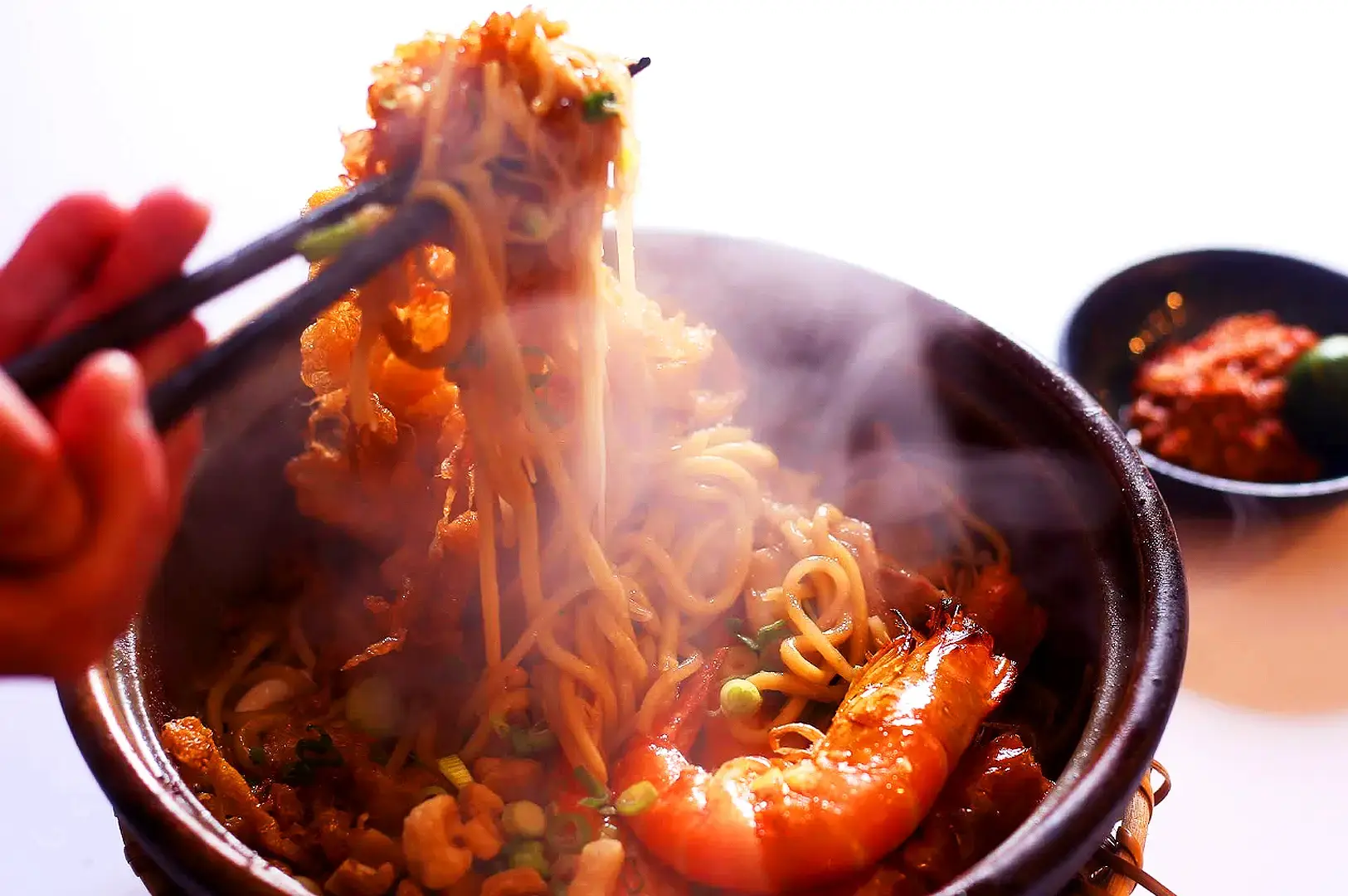
The Claypot Hokkien Mee arrives loud where the soup was gentle.
It comes still bubbling in its claypot, the heat trapped and hissing at the edges. This generous portions dish is perfect for sharing as a communal meal: noodles slick with a rich seafood sauce, studded with big Kami no Ebi prawns, slices of pork belly, and squid rings that hold their bite. A lacy omelette drapes over part of it. Crispy little cubes of lard are scattered through, and they crackle against the soft noodles.
There’s sambal on the side, spooned in for a tasty spike of heat, though it doesn’t try to run the show. The claypot keeps everything hot right down to the last strands. It’s the kind of dish you want to order and dig into with other people, shoulders leaning in.
Good as it is, it isn’t the centre. It’s the loud cousin at a table where the quiet one has more to say, adding just a bit of spice to the overall experience.
What Deserves to Continue
I come back to the fish soup.
By the end, the pomfret is gone and I’m just spooning up the last of the broth, still warm, still holding its body. Over time and years of tasting, I’ve noticed that what stays with me isn’t the technique or the collagen or any single ingredient. It’s the sense of nostalgia that someone decided these flavours were worth keeping alive and then simply kept cooking them.
That’s how food memory actually survives. Not through perfect replication of an old recipe. Through someone understanding the ingredients, trusting the taste and putting the bowl back on the table exactly what you expect from a place like Hup Lok.
Hup Lok does that. Quietly and well.

How to Make Dashimaki Tamago, the Japanese Rolled Omelette That Tastes Like Broth
Eat Drink Asia Team | October 22, 2026
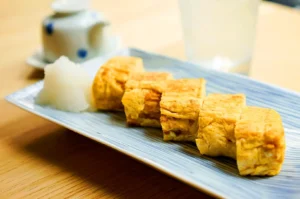
Dashimaki tamago is one of those dishes that looks quieter than it is. At first glance, it is just a rolled egg. Pale, soft, sliced neatly, often served beside steamed rice, miso soup, and grated daikon radish. But once you make it, you realise it is not really about eggs alone. It is about how…
-
The Lunch Hour Slows Down at Gochi-So Shokudo
Dio Asahi | October 21, 2026
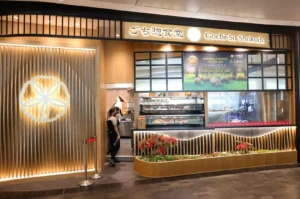
By Dio Asahi for Eat Drink Asia. It’s just past noon, and the lifts keep opening. Suits spill out, lanyards swinging, phones already halfway to their ears. But inside Gochi-So Shokudo, tucked into One Raffles Place, something else is happening. People are sitting down. Actually sitting. Chopsticks lifting, shoulders dropping a little, the room warm…
-
Kintamani Singapore Review: Can an All-You-Can-Eat Buffet Still Taste Like Indonesia?
Dio Asahi | October 20, 2026
I walked into Kintamani Singapore with one question in mind. Buffets ask food to wait. Rendang, sambal, grilled meats, and fried seafood all sit under heat while diners circle the spread. That is not necessarily kind to Indonesian dishes built around texture, reduction, chilli, coconut, and freshly cooked aromatics. So I was less interested in…

Pagi Sore Indonesian Restaurant Est 1989 Review: A Second-Generation Kitchen That Still Knows Its Own Voice
Eda Wong | October 17, 2026
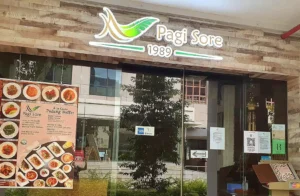
The first thing I noticed at Pagi Sore Indonesian Restaurant was the smell. Not the sharp, showy kind. Something slower: coconut milk, lemongrass, chilli, fried egg, and the deep warmth of spice paste drifting out from a wood-heavy dining room while Far East Square kept moving outside. I walked over on a Wednesday evening, just…
-
Best Fish Soup in Singapore: Bowls Where the Broth Is the Whole Point
Eat Drink Asia Team | October 15, 2026
I don’t remember when fish soup became my quiet meal. It just did. On days when I couldn’t decide what I wanted, when the weather turned grey, when I needed something warm that asked nothing of me, I’d end up hunched over a bowl, breathing in the steam before the first spoonful. I’ve eaten a…
-
The Clay Stove Heat Beneath a Lao Grilled River Fish
Eda Wong | October 14, 2026
By Eda Wong for Eat Drink Asia It’s late afternoon, and the river is the colour of weak tea. A woman crouches beside a small clay stove at the edge of the bank, feeding it slivers of charcoal. Smoke lifts, thin and grey, and drifts toward the water. On a bamboo skewer, a whole fish…
-
The National Dish of Indonesia Is Not One Plate: Why a Country of Islands Needs Many Icons
Dio Asahi | October 13, 2026
The first time someone asked me for the national dish of Indonesia, I answered nasi goreng without thinking. It seemed obvious: fried rice darkened with kecap manis, often topped with a fried egg, familiar from warungs and late-night street food stalls. That answer is not wrong. It is simply too small. Indonesian food is regional,…
-
Sapporo in a Bowl: Soup Curry by Ki-setsu Comes to Singapore
Eda Wong | October 12, 2026
Ask most Singaporeans to picture Japanese curry and a familiar image probably comes to mind: a plate of rice beneath thick brown gravy, perhaps with a breaded cutlet sliced neatly across the top. It is rich, sweet-edged, comforting and, by now, almost as recognisable as ramen or donburi. Head to the fourth floor of Fortune…
-
Meokja by Jungga Review: The Halal Korean Snack Table That Knows What It’s Doing
Eda Wong | October 10, 2026
I had not planned to eat at Meokja by Jungga. I was walking down North Bridge Road on a Tuesday, somewhere around the awkward hour between lunch and dinner, when I caught the smell of something frying and the low clatter of a kitchen working hard. I looked up, saw the sign, and my feet…
-
Seoul Bunsik Funan Review: The Comfort of Korean Street Food Without the Street
Eat Drink Asia Team | October 8, 2026
I have eaten ramyeon on a plastic stool in Seoul, close to midnight, with cold air biting at my ankles and the broth doing all the work of keeping me warm. Seoul Bunsik Funan is not that. This was a bright Tuesday afternoon, escalators humming behind me, the smell of mall air-con instead of street…