By Dio Asahi for Eat Drink Asia.
The lid comes off, and the steam rises first.
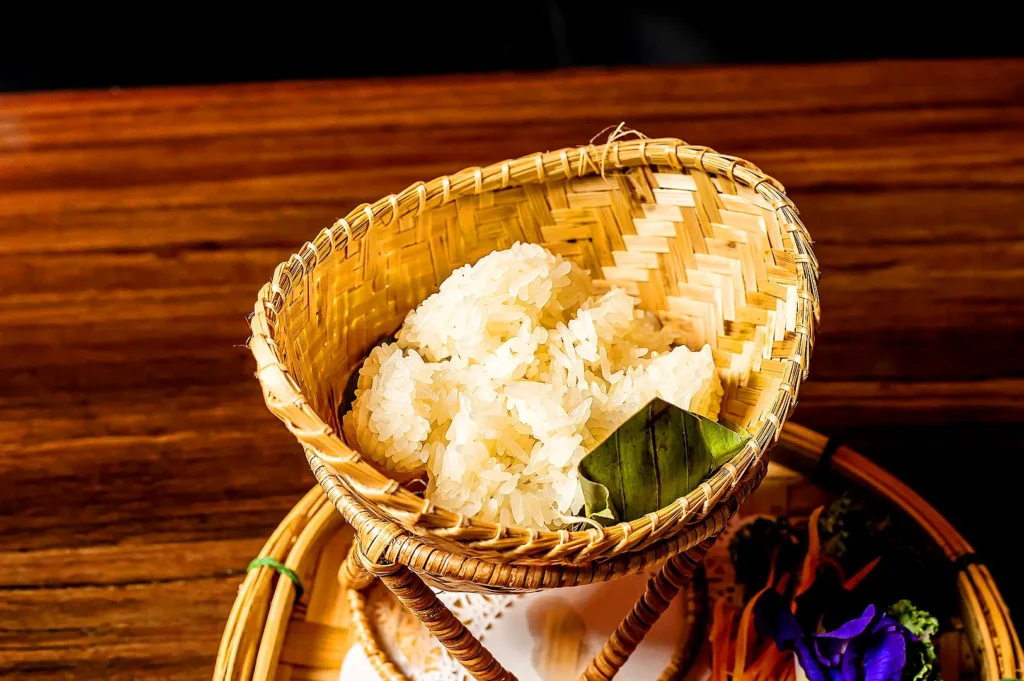
It’s a warm afternoon in Chiang Mai, and on the table sits a small woven bamboo basket, still holding the heat of the pot it came from. Someone’s grandmother lifts the top and sets it aside without looking. Inside, the sticky rice waits — pale, glossy, faintly sweet in smell. Fingers reach in, pinch off a lump, roll it once against the palm. Nobody uses a spoon. The rice holds its shape, warm and pliant, ready to dip into whatever sits beside it. The basket breathes gently, and the meal begins.
Chiang Mai’s food memory is impossible to separate from bowls of khao soi, the northern Thai curry noodle soup that turns coconut, chilli, and crisp noodles into something deeply local.
This basket is called a krathip — say it roughly as “gra-TEEP.” It’s a container woven from thin strips of bamboo, small enough to hold in two hands, made specifically for khao niao, the glutinous sticky rice of the north and northeast. The weaving isn’t decoration. The tight bamboo walls let the rice keep its warmth while letting just enough air pass through, so the grains stay soft and moist rather than turning to paste or drying out. The rice is steamed, not boiled — soaked for hours, then cooked over rising steam in a conical basket, then tipped warm into the krathip to rest. A lid keeps the heat in. The whole thing works the way it always has, without a single moving part.
In the north, a meal without khao niao feels unfinished. The krathip sits in the middle of the table, shared, passed, opened and closed as people eat. You take a little, then a little more, using the rice as both spoon and plate — pinching it, dipping it into nam prik, scooping up grilled meat or sour soup. There’s an unhurried rhythm to it. The basket asks you to slow down, to reach with your hands, to eat the way the people beside you are eating. It’s a communal object more than a personal one. One basket, many hands, the lid going back on between mouthfuls so the last grains stay as warm as the first.
You see the plastic tubs now, of course. Cheaper, lighter, easy to stack behind a stall or send out with a takeaway order. They do the job. But sticky rice sealed in plastic sweats and turns gummy, the grains clinging in a way the bamboo never allowed. The krathip lets the rice keep its dignity. That a woven basket still outperforms the convenient thing says something quiet about why certain old tools survive — not out of nostalgia, but because they simply work better at the thing they were made for.
The lid goes back on. The rice keeps its warmth a while longer, waiting for the next hand. Some objects hold food. This one holds a way of eating, too — and it has never needed to be anything more than what it is.

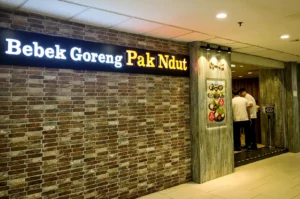
Bebek Goreng Pak Ndut and the Fried Duck That Makes Nasi Goreng Feel Too Polite
Eda Wong | August 22, 2026
The duck arrived and made a sound before I’d even touched it. Not the plate, the skin. When my fork pressed against it, there was a small, dry crackle, the kind you feel in your fingers before you hear it. That’s when I understood I wasn’t eating a soft meal. This was something with edges….
-
The Coconut Spoon That Shapes Nyonya Kueh Salat
Eda Wong | August 21, 2026
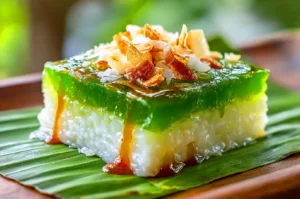
By Eda Wong for Eat Drink Asia. Steam curls up from a tray in the back of the kitchen, and the whole room smells green. Pandan, crushed and knotted, pushed through wet cloth until the leaves give up their colour. An auntie leans over the tray with a spoon carved from coconut shell, dark and…
-
Chicken Nasi Goreng Recipe: What Leftover Rice Becomes After the Wok Gets Serious
Dio Asahi | August 20, 2026
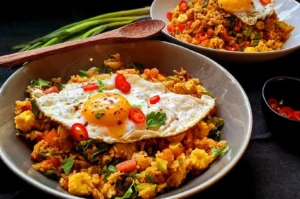
There’s a container of rice at the back of my fridge most weeks. Cold, a little hard, forgotten from a dinner two nights ago. Some people see that and think of waste. I see the start of something better. Because leftover rice doesn’t want to be reheated. It wants to be fried. And when it…
-
The First Ladle of Miso Soup in a Tokyo Breakfast Shop
Dio Asahi | August 19, 2026
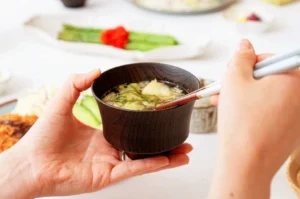
By Dio Asahi for Eat Drink Asia. The shop is barely wider than a hallway. Seven stools, a counter worn smooth, and behind it a woman ladling soup into small ceramic bowls before anyone has ordered it. Steam lifts off the surface and fogs the window against the cold morning. The bowl reaches me warm…
-
Chirashi Don Best Picks When Bowls Between the Sushi Counter and Lunch Are the Current Mood
Eat Drink Asia Team | August 18, 2026
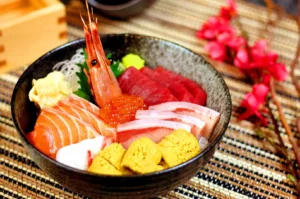
There’s a specific kind of hunger that a chirashi don answers. It’s not the hunger for a full sushi omakase, with its slow ceremony and its quiet counter watching. And it’s not the hunger for something thrown together and forgotten by three o’clock. It sits somewhere in between, fish and rice in one bowl, cool…
-
Kopi Through the Cloth: Why the Strain Matters
Eda Wong | August 17, 2026
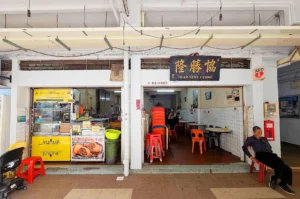
By Eda Wong for Eat Drink Asia. It is not yet seven, and the uncle at Heap Seng Leong has the pot going. He works the sock strainer over the tin cup with both hands, dipping and lifting, dipping and lifting, coaxing the coffee through the worn cloth. Steam rises between his fingers. The smell…
-
SBCD Korean Tofu House and the Comfort Logic of Bubbling Soondubu
Eda Wong | August 15, 2026
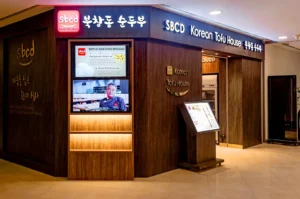
It was raining the afternoon I went. Not the polite kind, the sort that drums against the glass of Guoco Tower and makes you glad you’re already underground. I hadn’t planned on soondubu. I’d planned on something quick, something I could eat between the errands piling up in my head. But the rain does something…
-
The Knife Work at Hanashizuku Japanese Cuisine, Three Floors Above the Noise
Eda Wong | August 14, 2026
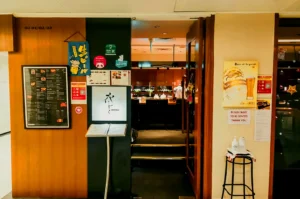
By Eda Wong for Eat Drink Asia. The lift doors open on a floor of Cuppage Plaza that has seen better decades. Peeling signage. A corridor that smells faintly of old carpet and cigarette smoke drifting from somewhere. Then a door slides shut behind me, and the noise falls away. Inside Hanashizuku Japanese Cuisine, the…
-
Todamgol Restaurant and the Comfort Logic Behind Famous Korean Foods
Dio Asahi | August 13, 2026
It was close to nine on a Friday when I finally found the door. Tanjong Pagar was doing its usual thing, full tables spilling onto five-foot ways, soju bottles catching the light, someone laughing too loudly two doors down. I almost walked past Todamgol. Then the smell reached me. Fermented, smoky, a little sharp. The…
-
The Same Grill, Three Decades On, at Kazu Sumiyaki Restaurant
Dio Asahi | August 12, 2026
By Dio Asahi for Eat Drink Asia. The lift opens on the fourth floor of Cuppage Plaza and the smoke finds me before the door does. Charcoal, dark and earthy, threaded through with something richer — fat meeting fire. I follow it down a narrow corridor, past shuttered shops and flickering signage, until I reach…