By Dio Asahi for Eat Drink Asia.
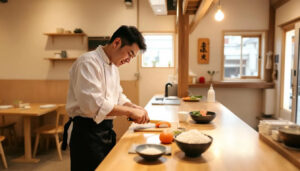
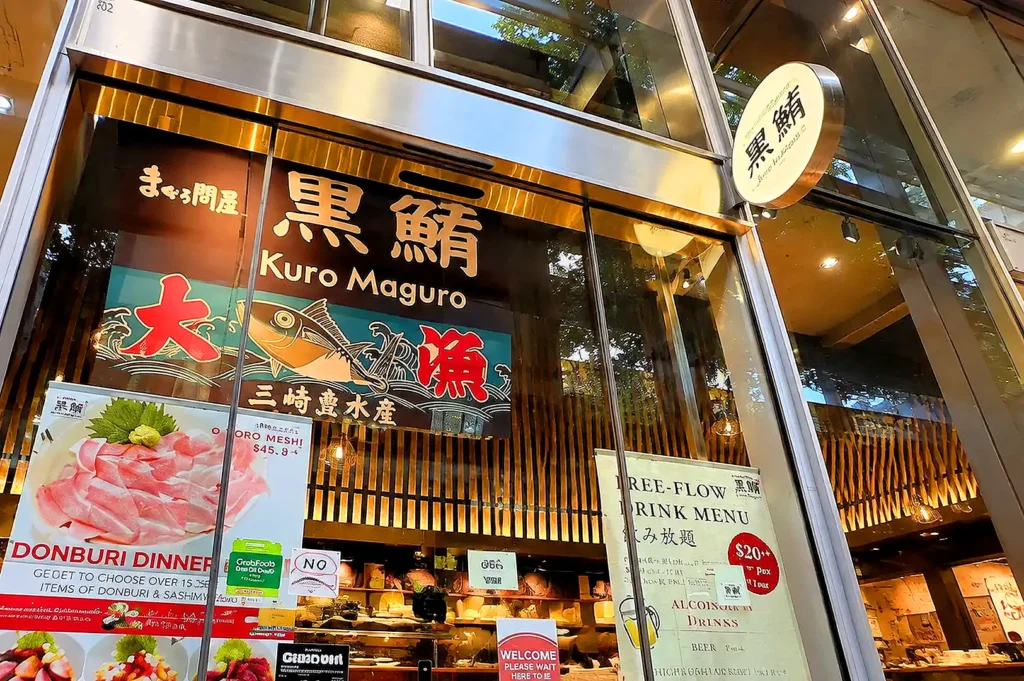
It’s a few minutes past noon at Guoco Tower, and the lunch crowd moves in lanyards and quick steps. Inside Kuro Maguro, the noise drops a little. At the counter, a man in a white apron draws his knife through a block of deep red tuna in one long stroke. He lifts the slice and lays it on rice without looking up. Beside me, an office worker sets her phone face down. She doesn’t seem to notice she’s done it.
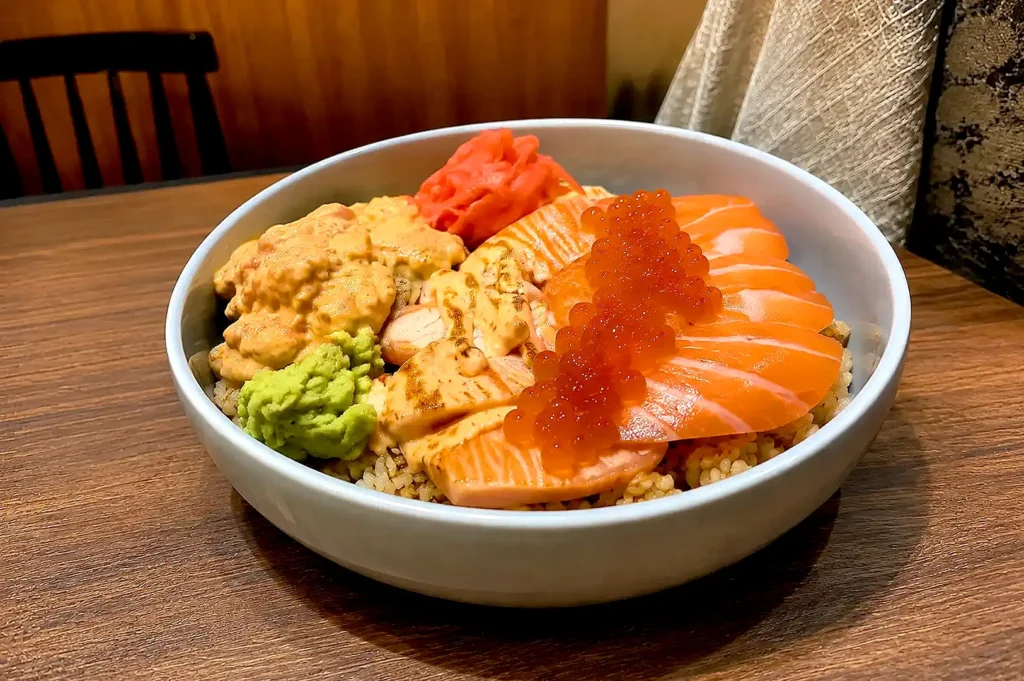
The bowl arrives plainly. The rice is still faintly warm, seasoned with vinegar so it tastes bright rather than sweet. Over it lies tuna in several shades. The leaner cuts, the akami, are a dark garnet color. They’re firm and clean, closer to the sea than to anything rich. The fattier slices are paler and marbled, and they soften almost as soon as they touch my tongue. I reach for the soy sauce out of habit, then put it back.
This is a chirashi don built around one fish. Some bowls carry salmon, ikura, or prawn, but those feel like guests. The tuna is the reason for the bowl. Kuro Maguro is connected to Megumi F&S, the group behind Maguro Donya, and that lineage shows in how the fish is handled. Each cut is sliced to show what that part of the tuna does: lean against fatty, firm against soft. Nothing is chopped small and hidden under sauce or mayonnaise.
Lunch in the CBD usually asks for speed. People eat between meetings, often from a takeaway box, sometimes at a desk with a spreadsheet still open. Omakase sits at the other end. It’s slow and costly, and it’s usually saved for evenings with time to spare. Kuro Maguro lands somewhere in between. The diners at this counter don’t want a performance. They want precision they can finish before the next call. That means a bowl, a seat, and a fish that’s been treated with care before they head back to the office.
For more bowls that fit that middle ground, our guide to scattered sushi offers a few other places to start.
There’s a tension in that. Singapore loves abundance. Our plates fill up with three meats, two vegetables, and a fried egg on top, just in case. A good meal often means a full one. Next to that, a bowl that leans on a single ingredient can look almost spare, even a little stubborn.
But I’ve come to think the restraint is the point. When there’s only one thing to pay attention to, you pay attention. You notice that the lean slice tastes faintly of iron. You notice that the fatty slice leaves a cool richness that lingers after the rice is gone. In a lunch hour built for distraction, that feels like a small, quiet discipline.
I eat the last of the akami slowly. The woman beside me has already left. Her bowl is empty except for a single grain stuck to the rim. Behind the counter, the chef is cutting again with the same long stroke.
Outside, the lift lobby is full of voices. For a few minutes, though, lunch was just rice, vinegar, and tuna. It was enough.

Japanese Sake: The Complete Guide to Japan’s Traditional Rice Wine
Dio Asahi | November 29, 2025
Japanese Sake: The Complete Guide to Japan’s Traditional Rice Wine While sake has been Japan’s national beverage for over a millennium, its popularity across Asia is at an all-time high. Rooted in Japan’s traditional brewing methods and centuries-old origins. It symbolizes Japan’s cultural heritage and craftsmanship. Understanding this complex brewed alcoholic beverage opens doors to…

Best Japanese Foods in Japan: The Must-Try Dishes
Eda Wong | November 27, 2025
Japan’s culinary world extends far beyond well-known sushi and ramen, revealing a rich variety of regional specialties cherished by locals. While many travelers stick to popular Japanese foods in tourist areas, authentic flavors are best discovered in neighborhood markets, family-run eateries, and seasonal menus reflecting centuries of Japanese cooking tradition. Understanding Japanese cuisine requires more…
-
Japanese Food in Japan: The Ultimate Guide to Authentic Culinary Experiences
Eat Drink Asia Team | November 25, 2025
Experiencing Japanese food in Japan is fundamentally different from eating Japanese cuisine anywhere else. While sushi restaurants and ramen shops have spread globally, the authentic flavors, techniques, and cultural context of Japanese food can only be fully appreciated in its homeland. From meticulously selecting ingredients at peak freshness to centuries-old traditions shaping every meal, eating…
-
Food in Japan: A Complete Guide to Japanese Cuisine and Culinary Culture
Eda Wong | November 22, 2025
The gentle steam rising from a bowl of miso soup carries more than just the earthy aroma of fermented soybeans-it carries centuries of Japanese culture and culinary wisdom. When you eat in Japan, you’re not simply consuming a meal; you’re participating in a ritual that connects you to the seasons, the land, and a philosophy…

Ramune Marble Soda: History and Cultural Meaning of Japan’s Iconic Marble Soda
Dio Asahi | November 20, 2025
Among Japan’s beloved fizzy drinks, none evoke nostalgia and uniqueness quite like Ramune marble soda. Instantly recognizable by its quirky Codd neck bottle and glass marble seal, Ramune soda is an essential part of Japanese summer, cherished by generations for its refreshing taste and signature pop sound. This marble soda remains a staple at summer…
-
Hokkaido’s Best Seafood Treasures: Beyond Sushi and Sashimi
Eat Drink Asia Team | November 18, 2025
When visiting Hokkaido, Japan’s northernmost island, food lovers are greeted with some of the most highly regarded seafood specialties in the world. Hokkaido is famous for its abundance of fresh seafood and rich fishing grounds, thanks to the surrounding Sea of Japan, Pacific Ocean, and Sea of Okhotsk. These nutrient-packed waters yield a wide range…
-
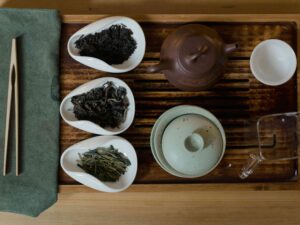
The Art of Asian Tea Ceremony Traditions: Ancient Rituals and Cultural Values Across Asia
Dio Asahi | November 15, 2025
A cup of tea, in many parts of Asia, represents far more than a beverage-it is a conduit to ancestral tradition, intellectual pursuit, and the cultivation of mindfulness. Asian tea ceremony traditions turn the act of drinking tea into a sophisticated art form, layered with symbolism, philosophy, and socio-cultural values. Each gesture, from scooping powdered…

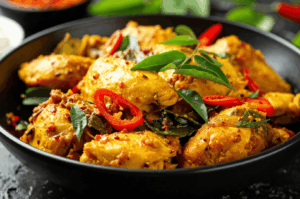
The Art of Slow-Cooked Curry Recipes: Time’s Magic in South Asian Cuisine
Eda Wong | November 13, 2025
Step into a South Asian kitchen, and the senses are instantly enveloped by the inviting aroma of food slowly simmering in a sturdy clay pot or heavy vessel. The allure is undeniable: in this space, slow-cooked curry recipes are a celebration of patient tradition, spices, and the richness of South Asian cuisine. Here, time and…
-
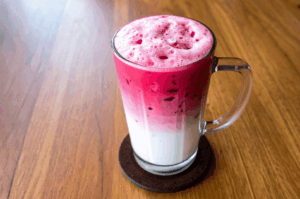
Bandung Drink Recipe: A Singaporean Rose Syrup Drink Tradition
Eat Drink Asia Team | November 11, 2025
Step into any night market or hawker centre in Singapore, and you’ll spot a vibrant, glowing glass filled with a cold, beautiful drink-Bandung. Known for its iconic blush-pink hue and refreshing taste, this rose syrup drink is an integral part of Singapore’s beverages scene and a cherished tradition in Southeast Asian gatherings. More than just…
-
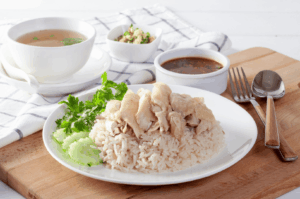
The Ultimate Hainanese Chicken Rice Recipe: A Deep Dive
Eda Wong | November 8, 2025
To wander through Singapore’s bustling hawker centres on a humid evening is to experience a symphony of sights, sounds, and smells. Among the many other dishes sizzling away, one plate stands out for its elegant simplicity: Hainanese Chicken Rice. It arrives without fanfare-gleaming slices of poached chicken over fragrant rice, flanked by a trio of…