By Dio Asahi for Eat Drink Asia.
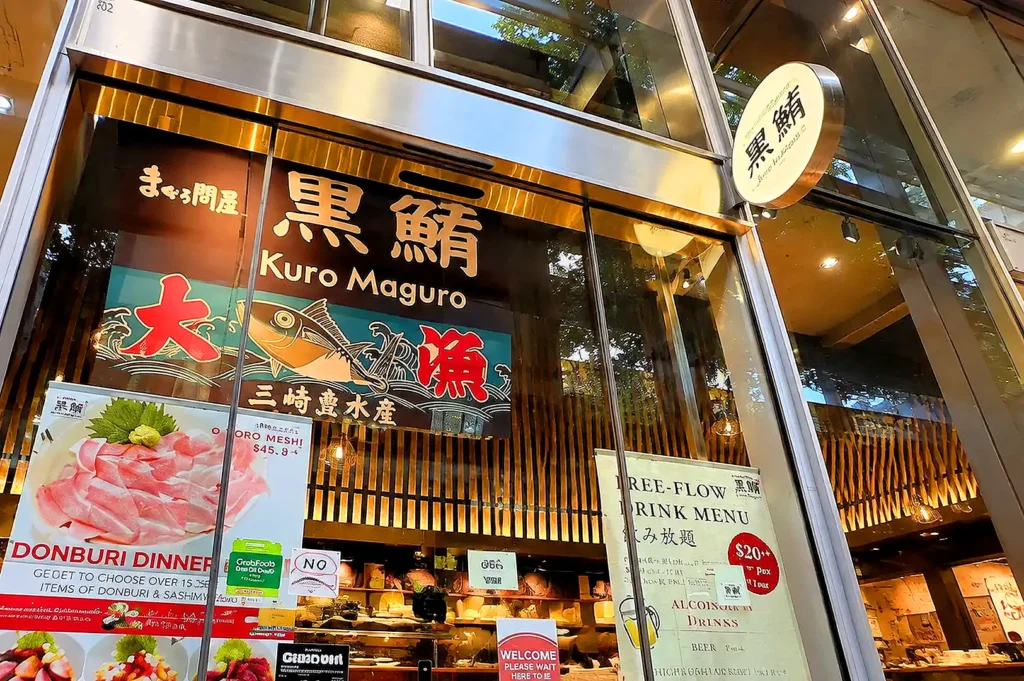
It’s a few minutes past noon at Guoco Tower, and the lunch crowd moves in lanyards and quick steps. Inside Kuro Maguro, the noise drops a little. At the counter, a man in a white apron draws his knife through a block of deep red tuna in one long stroke. He lifts the slice and lays it on rice without looking up. Beside me, an office worker sets her phone face down. She doesn’t seem to notice she’s done it.
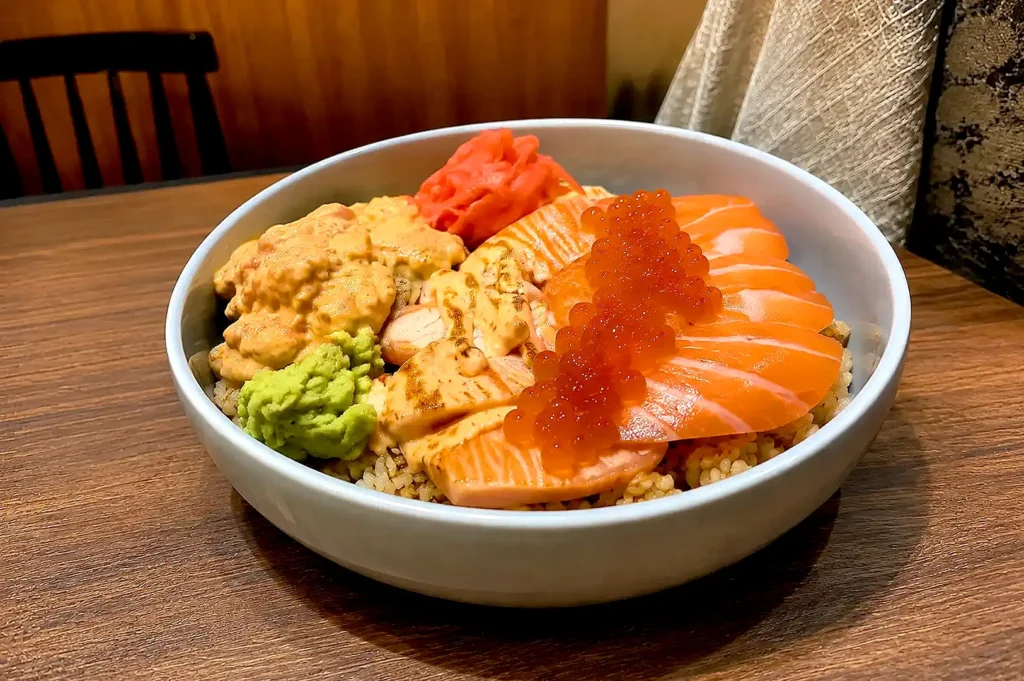
The bowl arrives plainly. The rice is still faintly warm, seasoned with vinegar so it tastes bright rather than sweet. Over it lies tuna in several shades. The leaner cuts, the akami, are a dark garnet color. They’re firm and clean, closer to the sea than to anything rich. The fattier slices are paler and marbled, and they soften almost as soon as they touch my tongue. I reach for the soy sauce out of habit, then put it back.
This is a chirashi don built around one fish. Some bowls carry salmon, ikura, or prawn, but those feel like guests. The tuna is the reason for the bowl. Kuro Maguro is connected to Megumi F&S, the group behind Maguro Donya, and that lineage shows in how the fish is handled. Each cut is sliced to show what that part of the tuna does: lean against fatty, firm against soft. Nothing is chopped small and hidden under sauce or mayonnaise.
Lunch in the CBD usually asks for speed. People eat between meetings, often from a takeaway box, sometimes at a desk with a spreadsheet still open. Omakase sits at the other end. It’s slow and costly, and it’s usually saved for evenings with time to spare. Kuro Maguro lands somewhere in between. The diners at this counter don’t want a performance. They want precision they can finish before the next call. That means a bowl, a seat, and a fish that’s been treated with care before they head back to the office.
For more bowls that fit that middle ground, our guide to scattered sushi offers a few other places to start.
There’s a tension in that. Singapore loves abundance. Our plates fill up with three meats, two vegetables, and a fried egg on top, just in case. A good meal often means a full one. Next to that, a bowl that leans on a single ingredient can look almost spare, even a little stubborn.
But I’ve come to think the restraint is the point. When there’s only one thing to pay attention to, you pay attention. You notice that the lean slice tastes faintly of iron. You notice that the fatty slice leaves a cool richness that lingers after the rice is gone. In a lunch hour built for distraction, that feels like a small, quiet discipline.
I eat the last of the akami slowly. The woman beside me has already left. Her bowl is empty except for a single grain stuck to the rim. Behind the counter, the chef is cutting again with the same long stroke.
Outside, the lift lobby is full of voices. For a few minutes, though, lunch was just rice, vinegar, and tuna. It was enough.

Cuisines in India: A Journey Through the Diverse Regional Food Traditions of the Subcontinent
Dio Asahi | December 20, 2025
Indian cuisine is celebrated for its spectacular diversity, bursting with flavors, regional traditions, and culinary innovations. From the spice-laden gravies of Northern Indian cuisine and tandoor-fresh breads, to coconut-laced Southern Indian cuisine, fragrant rice dishes in the East, and the robust, spicy curries and street food of the West, the foods of India reflect not…
-
Green Tea with Milk: A Tale of Two Teas from Taiwan and Thailand
Eda Wong | December 18, 2025
The simple combination of green tea with milk has sparked a culinary phenomenon across Asia, creating a diverse family of beverages that are both comforting and refreshing. While many countries have embraced this pairing, two nations stand out for their iconic and wildly different interpretations: Taiwan and Thailand. Each has cultivated a unique culture around…
-
The Emerald Journey: Exploring Asia’s Green Milk Tea Culture
Eat Drink Asia Team | December 16, 2025
A vibrant, emerald-hued wave is sweeping across Asia, delighting taste buds and defining modern café culture. From street-side stalls in Bangkok to chic tea houses in Taipei, green milk tea—sometimes simply called green tea with milk—has blossomed from a simple concept into a beloved, refreshing drink with countless regional interpretations and profound cultural significance. Whether…
-
Thai Green Milk Tea: The Complete Guide to Thailand’s Refreshing Emerald Delight
Eda Wong | December 13, 2025
Picture a tall glass filled with crushed ice, its emerald-green contents swirled with ribbons of creamy white milk—this is thai green milk tea, one of Southeast Asia’s most visually striking and refreshing drinks. Known locally as cha khiao nom yen, this popular drink has captured hearts across Asia and beyond with its distinctive pale green…

Best Thai Singapore: Discover the Art of Authentic Pad Thai
Dio Asahi | December 11, 2025
In Singapore, a city that celebrates a universe of flavors, the magnetic pull of Thai cuisine is undeniable. From bustling food courts to elegant dining rooms, the kingdom’s culinary ambassadors have firmly planted their flag. When considering the best Thai food, it’s impossible to overlook how integral Pad Thai is to the local Thai food…
-
Thai Cuisine in Singapore: Finding the Best Authentic Flavors
Eat Drink Asia Team | December 9, 2025
The unmistakable aroma of lemongrass, galangal, and fiery spices mingles with the bustling night air in Singapore, setting the stage for a dining experience that wakes the soul and tantalizes the senses. Thai cuisine in Singapore has become an essential part of the city’s culinary landscape, offering a complete blend of vibrant flavor, tangy notes,…
-
The Ultimate Guide to Thai Food: Flavors, Traditions, and Culinary Adventures
Dio Asahi | December 6, 2025
Thai cuisine is one of the world’s most beloved and complex culinary traditions, captivating food enthusiasts globally with its masterful balance of flavors and vibrant presentations. From bustling Bangkok street stalls to high-end international restaurants, Thai food has become a global phenomenon that evolves while maintaining its authentic roots. What sets Thai cuisine apart from…
-
How to Drink Sake: Your Guide to Enjoying Japanese Sake Wine
Eda Wong | December 5, 2025
As Japan’s national beverage, this traditional sake is present at celebrations, quiet dinners, and spiritual offerings, weaving itself into the very fabric of daily life and reflecting Japan’s deep-rooted cultural heritage. Yet, for many outside of Japan, it remains a delightful mystery. You might find yourself wondering, how do you drink sake properly to unlock…
-
What Is Sashimi? A Guide to Raw Fish, Sliced Raw Fish, and Japanese Seafood
Eat Drink Asia Team | December 3, 2025
Sashimi is one of the clearest ways to understand Japanese cuisine because there is very little to hide behind. At its simplest, sashimi is sliced raw fish or seafood served without sushi rice, usually with soy sauce, wasabi, and simple garnishes such as daikon radish. But the dish is not just “raw fish on a…

Understanding Sake Alcohol Content: A Complete Guide to ABV and Flavor
Eda Wong | December 2, 2025
When exploring Japanese sake, many wonder about its grades and complex flavors. Sake’s unique profile offers remarkable versatility, enjoyed in various serving styles and paired with diverse dishes. One fundamental aspect is sake alcohol content. Is sake stronger than wine? How does its alcohol by volume (ABV) compare to beer? The answer is nuanced. Understanding…