By Dio Asahi for Eat Drink Asia.
It’s mid-morning, and the cook doesn’t look up.
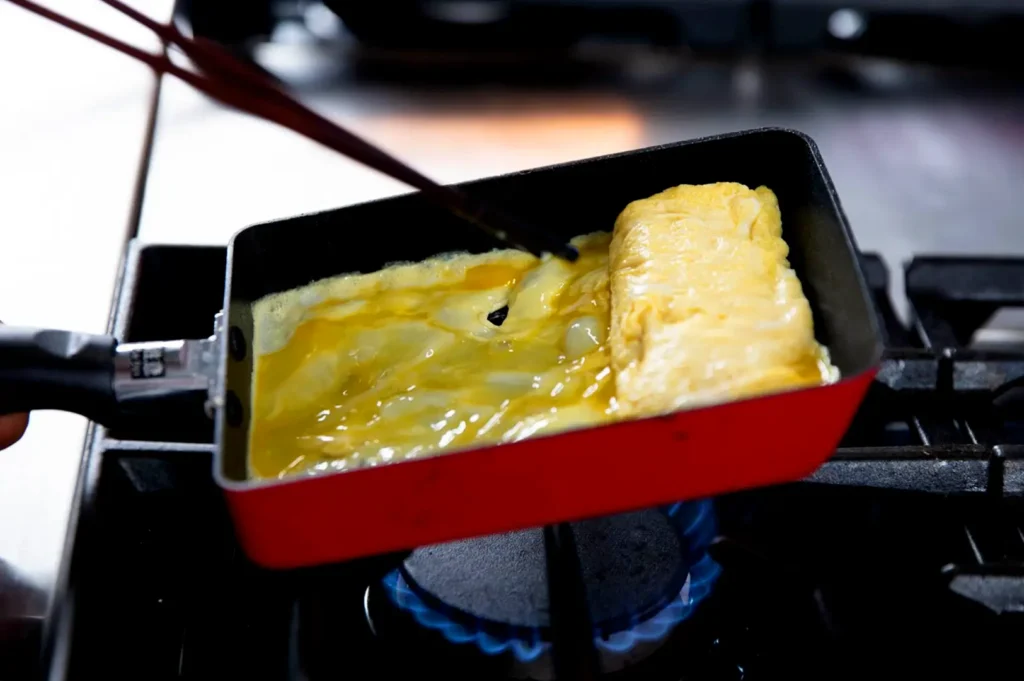
He stands over a rectangular pan, copper worn to a dull gold at the edges, and pours a thin skin of beaten egg across its surface. It hisses. Steam rises, warm and faintly sweet, and he tilts the pan just so, letting the egg find the corners. Before it fully sets, he folds. A chopstick lifts one edge, rolls it toward him in a single unhurried motion, then nudges the small log back to the far side. He pours again. Another layer. Another fold. The counter behind him is quiet. Somewhere, a knife works against a board.
This is tamagoyaki (tah-mah-go-YAH-ki), and up close, it’s less a dish than a slow accumulation.
Plainly, it’s rolled egg. But that description sells it short. Beaten egg, loosened with dashi, touched with sugar and sometimes a little soy, cooked not all at once but in layers — thin sheet upon thin sheet, each one folded into the last until a striped block builds up in the pan. The rectangular shape isn’t decoration. It’s what lets the roll keep its clean, right-angled form, layer stacking on layer until the cook can slice it into neat, banded pieces. Cut it open and you’ll see the rings, like the growth lines of something that took its time. The texture is soft, almost custard-like at the centre, holding just enough shape to lift with chopsticks.
To place tamagoyaki within the wider habits, ingredients, and rhythms of Japanese cuisine, see food in Japan.
There’s a patience in it I find hard to look away from.
The whole thing is built on timing you can’t rush. Too hot, and the egg browns and tears. Too cool, and the layers won’t set to fold. The cook reads the heat with his hands and eyes, not a timer — pour, wait, fold, pour, the rhythm so worn-in it looks like nothing. At a market counter, that economy of movement is its own kind of conversation. He doesn’t explain. You don’t ask. The pan does the talking, and you wait for it the way everyone before you waited. Tamagoyaki lives in bento boxes across the country, tucked beside rice and pickles, a small square of sweetness in a lunch packed by someone who cared. Watching it made is watching that care take shape in real time.
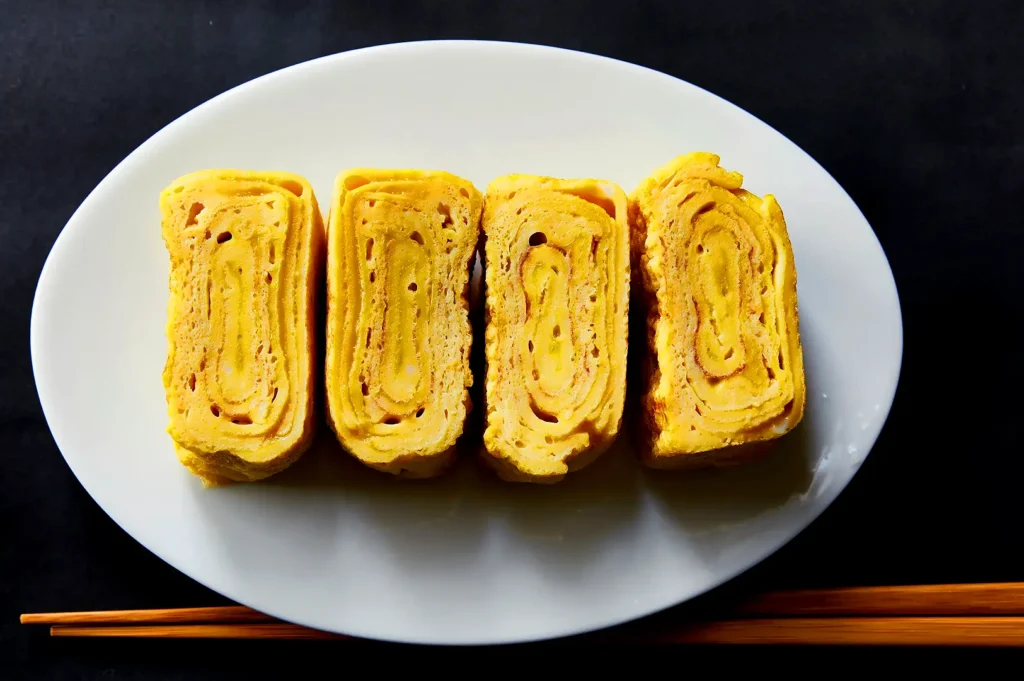
You can buy it already made, of course. Cut, sealed, stacked in every convenience store cold case, perfectly fine and perfectly forgettable. That’s the tension I keep turning over. The finished block looks nearly identical either way — neat, golden, photogenic. But the counter version carries something the packaged one can’t: the minutes it took, the folds you saw, the small heat still holding in it when it reaches you. The eye can’t tell them apart. The mouth, somehow, still can.
I took the last piece from the end of the roll, the one with the roughest edge.
It was warm, barely sweet, soft in a way that asked nothing of me. The cook had already started the next pan. And I understood, chewing, that I’d been given the plain end of something patient — and that plainness was the whole point.

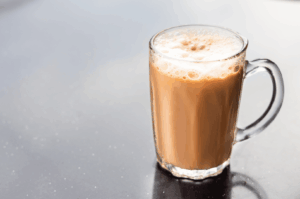
Teh Tarik Malaysia: The Art and Science Behind Iconic Pulled Tea
Eat Drink Asia Team | October 28, 2025
In Malaysia, ordering a cup of teh tarik is about so much more than just enjoying a hot drink. Teh tarik, literally translated as “pulled tea,” is Malaysia’s national beverage, famous for its sweet, creamy taste, frothy top, and the spectacular pulling technique seen in bustling mamak stalls and coffee shops across the country. A…
-
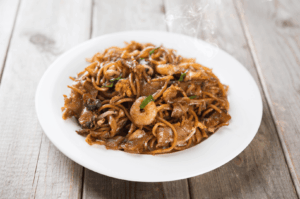
The Legendary Penang Char Kway Teow: A Culinary Journey
Dio Asahi | October 25, 2025
The air in Penang is thick with anticipation, carrying the sounds and smells of Malaysian street food being crafted with expert care. Your attention is captured by one of the many street vendors, a master standing before a seasoned wok glowing over an intense fire. The rhythmic clanging of metal on metal is the soundtrack…
-
Traditional Korean Sikhye: Sweet Rice Punch Through the Seasons
Eda Wong | October 23, 2025
In the vibrant world of Korean food, beyond the fiery spice of gochujang and the savoury comfort of bulgogi, lies a gentler, more subtle delight. Meet traditional Korean sikhye (식혜), a beloved Korean sweet rice punch that holds a special place in the nation’s heart. With its cloudy, amber hue and delicate sweetness, this drink…
-
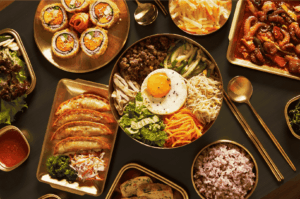
Authentic Jeonju Bibimbap: Why Korea’s Culinary Capital Makes It Best
Eat Drink Asia Team | October 21, 2025
Picture this: A steaming Korean rice bowl is placed before you in Jeonju, South Korea. Vibrant arcs of seasoned bean sprouts, glossy strips of Korean beef, a golden runny yolk resting atop perfectly cooked mixed rice, and a dollop of rich red bibimbap sauce invite you to mix it all together. As you stir, the…
-
Communal Dining Traditions in Asia: Shared Meals, Lasting Bonds, and Cultural Heritage
Dio Asahi | October 18, 2025
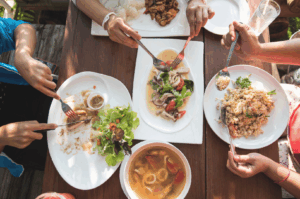
Imagine a dining table crowded with large platters of steaming food, the smell of spices in the air, small bowls arranged neatly around the shared table, and laughter echoing across the room. Across Asia, dining tables play a central role in communal dining traditions, serving as the focal point for etiquette, social interaction, and the…
-
Century-Old Dumpling Techniques: Ancient Wisdom in Modern Kitchens
Eda Wong | October 16, 2025
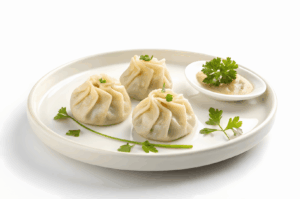
Her hands move in a blur, a dance of muscle memory refined over sixty years. In a small, steam-filled kitchen in Shanghai, an elderly woman transforms a humble circle of dumpling dough into a perfect, 20-pleat xiao long bao. Each pinch and fold is a syllable in a story passed down through generations-prime examples of…
-
Ca Phe Sua Da: The Cultural Phenomenon of Authentic Vietnamese Coffee
Eat Drink Asia Team | October 14, 2025
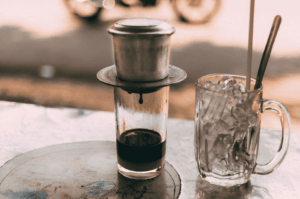
The dawn breaks over Hanoi, and the city awakens not to alarm clocks but to the clatter of tiny spoons and the metallic click of filters. The air fills with the dark, roasted aroma of authentic Vietnamese coffee drifting from bustling corners and sidewalk stalls. They are not rushing. Instead, they are waiting-waiting for the…
-
Cao Lầu Noodles: Hoi An’s Legendary Noodle Dish with Japanese Origins
Dio Asahi | October 11, 2025
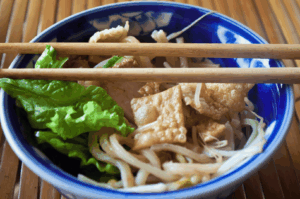
Imagine sitting on a low stool in a bustling alleyway of Hoi An’s ancient town. The warm, fragrant air is thick with the scent of sizzling marinated pork, fresh herbs, and the unmistakable aroma of fish sauce and fried rice crackers. In front of you, a bowl of Cao Lau noodles gleams, their golden brown…
-
Chinese Tea: 5,000-Year Tea Journey from Ancient Medicine to Global Beverage Phenomenon
Eda Wong | October 9, 2025
Every cup of tea enjoyed today, whether a brisk English breakfast or a delicate green tea in Tokyo, finds its lineage rooted in the heart of Chinese tea history. For nearly 5,000 years, the humble leaves of the Camellia sinensis tea plant have been cultivated, brewed, and cherished-first as ancient medicine in southern China, and…
-
The Complete Guide to Authentic Cantonese Dim Sum: Beyond Har Gow and Siu Mai
Eat Drink Asia Team | October 7, 2025
If you think eating dim sum is all about har gow and siu mai, think again. Authentic Cantonese dim sum is a dazzling showcase of Chinese culture, filled with an array of flavors, textures, and traditions that run much deeper than the classics. For both seasoned aficionados and first-time food explorers, venturing beyond the familiar…