The first person who taught me to eat with my teeth was a woman whose name I never learned.
Years ago, in a coffee shop in Ampang, we ended up sharing a table because every other seat was taken. Fans clacked overhead. A bowl of yong tau foo steamed between us. Before she ate, she pressed a fish ball with the tip of her chopstick.
It pushed back. She nodded.
I asked what she was checking. She shrugged. “If it doesn’t bounce, the soup can’t save it.” I’ve thought about that line ever since. Malaysian Chinese food often tells you something about its cooking process through texture before flavour fully arrives. Fish paste springs back. Bean sprouts snap. Noodles either cling properly to sauce or slump into a wet heap.
Malaysian Chinese Food: Why Texture Matters
Malaysian Chinese cuisine grew from several southern Chinese traditions, especially Hokkien, Cantonese, Hakka, Teochew, and Hainanese cooking. Early settlers brought techniques and dishes from China, but those traditions evolved in Malaysia and Singapore alongside tropical produce, seafood, spices, Malay cuisine, Indian food, and Peranakan cooking.
That exchange is central to Malaysian food culture. Coconut milk, curry leaves, chilli, local seafood, and Southeast Asian aromatics entered dishes that still relied on Chinese methods such as steaming, braising, poaching, stir-frying, and soup-making.
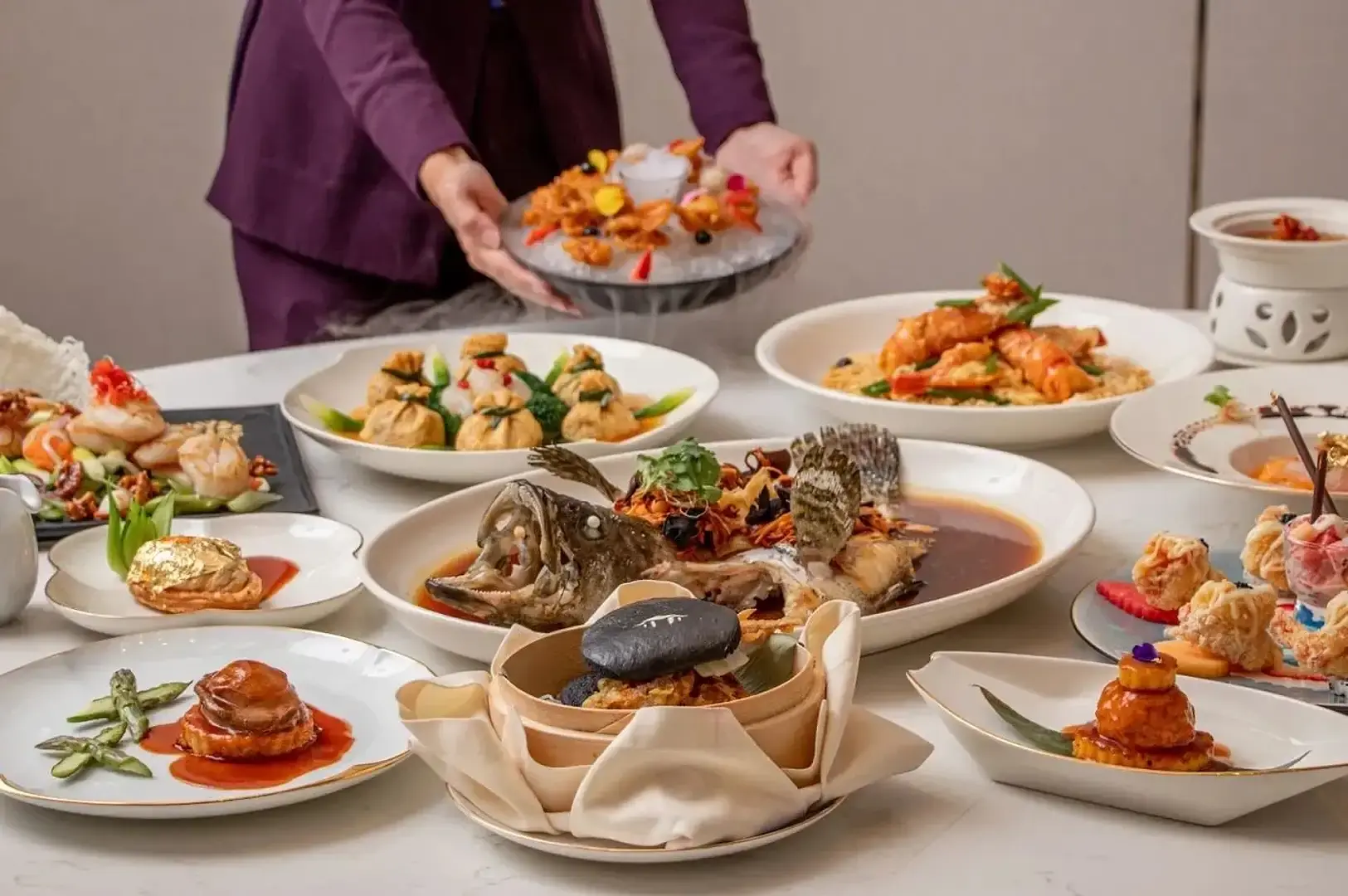
To explore those cooking traditions at the table, Eat Drink Asia selection of Chinese restaurants in Singapore spans dim sum craftsmanship and Peking duck.
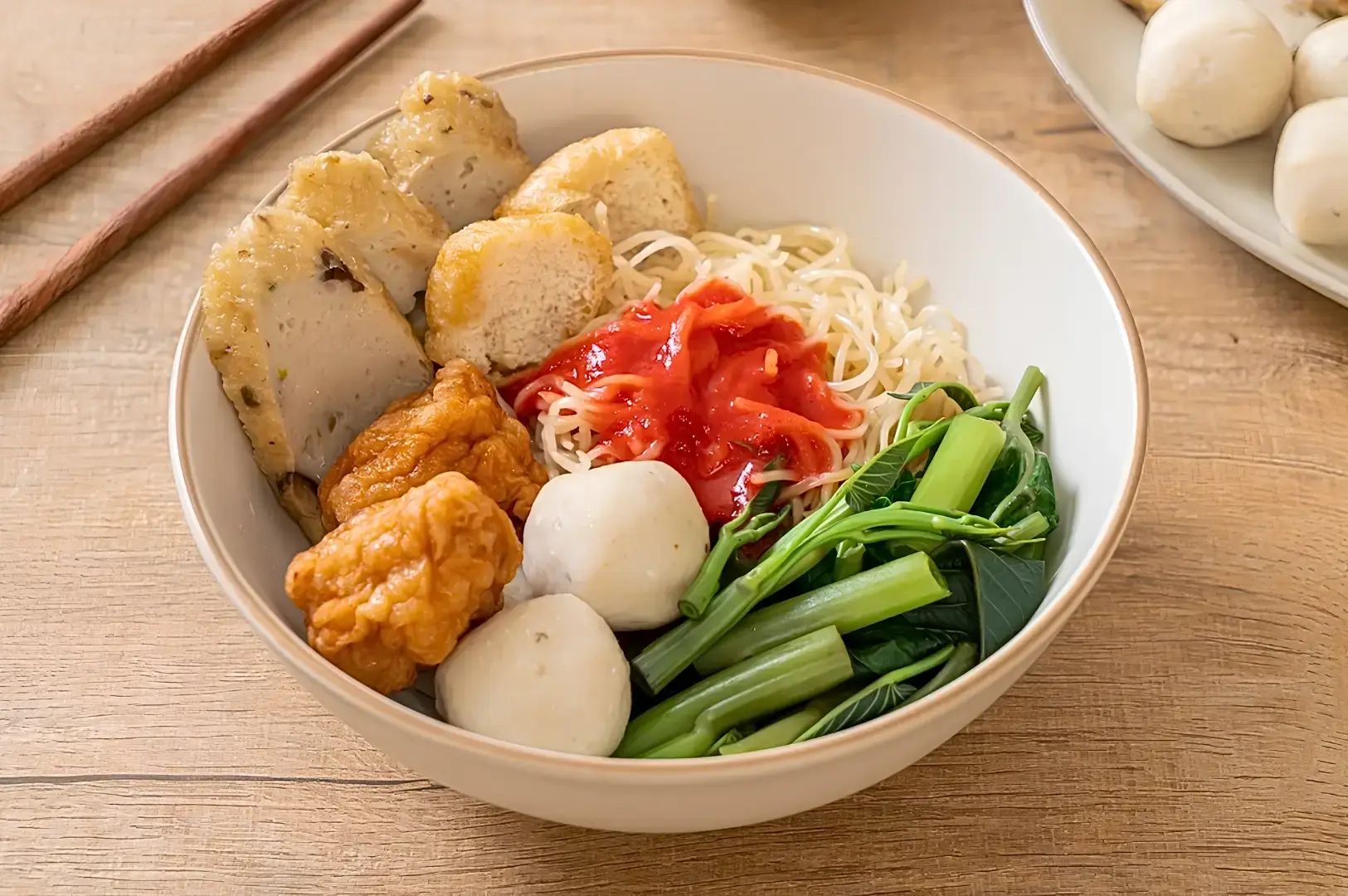
Yong Tau Foo: Fish Paste, Tofu, and Bitter Gourd
Yong tau foo has Hakka roots. The name originally refers to stuffed tofu, although across Malaysia and Singapore it now includes tofu, vegetables, fish balls, and other pieces that may be boiled, fried, braised, or served in clear soup. Traditional Hakka fillings often combine minced pork or ground pork with fish, while Cantonese and Teochew versions may rely more heavily on smooth fish paste.
What Good Yong Tau Foo Should Feel Like
Look for:
- Fish paste: springy and moist, not rubbery
- Tofu: soft enough to give around its filling
- Bitter gourd: tender but still structurally firm
- Eggplant: silky rather than saturated with oil
- Long beans or okra: cooked through while retaining some bite
For a plant-based extension of this texture-focused approach, explore the vegetarian dining options at Fortune Centre, where tofu and vegetables take centre stage.
EDA tip: Try the stuffed bitter gourd. If the vegetable still has structure while the filling remains springy, the cooking has probably been handled carefully.
Hainanese Chicken Rice: Tenderness Matters More Than Colour
I once sent back a plate ofHainanese chicken rice in Kuala Lumpur because the skin looked too pale. The uncle did not argue. He cut close to the bone, showed me the properly cooked chicken, and put the plate back down. I’ve been quietly embarrassed about it ever since.
Hainanese chicken rice has roots in Hainanese cooking, but versions in Malaysia and Singapore evolved considerably, including influence from Cantonese poached-chicken techniques.
Read the Chicken, Then the Rice
Good chicken should have:
- Tender, juicy meat
- Smooth skin rather than leathery skin
- Rice grains that remain distinct
- Enough chicken fat, garlic, and aromatics to perfume the white rice without making it greasy
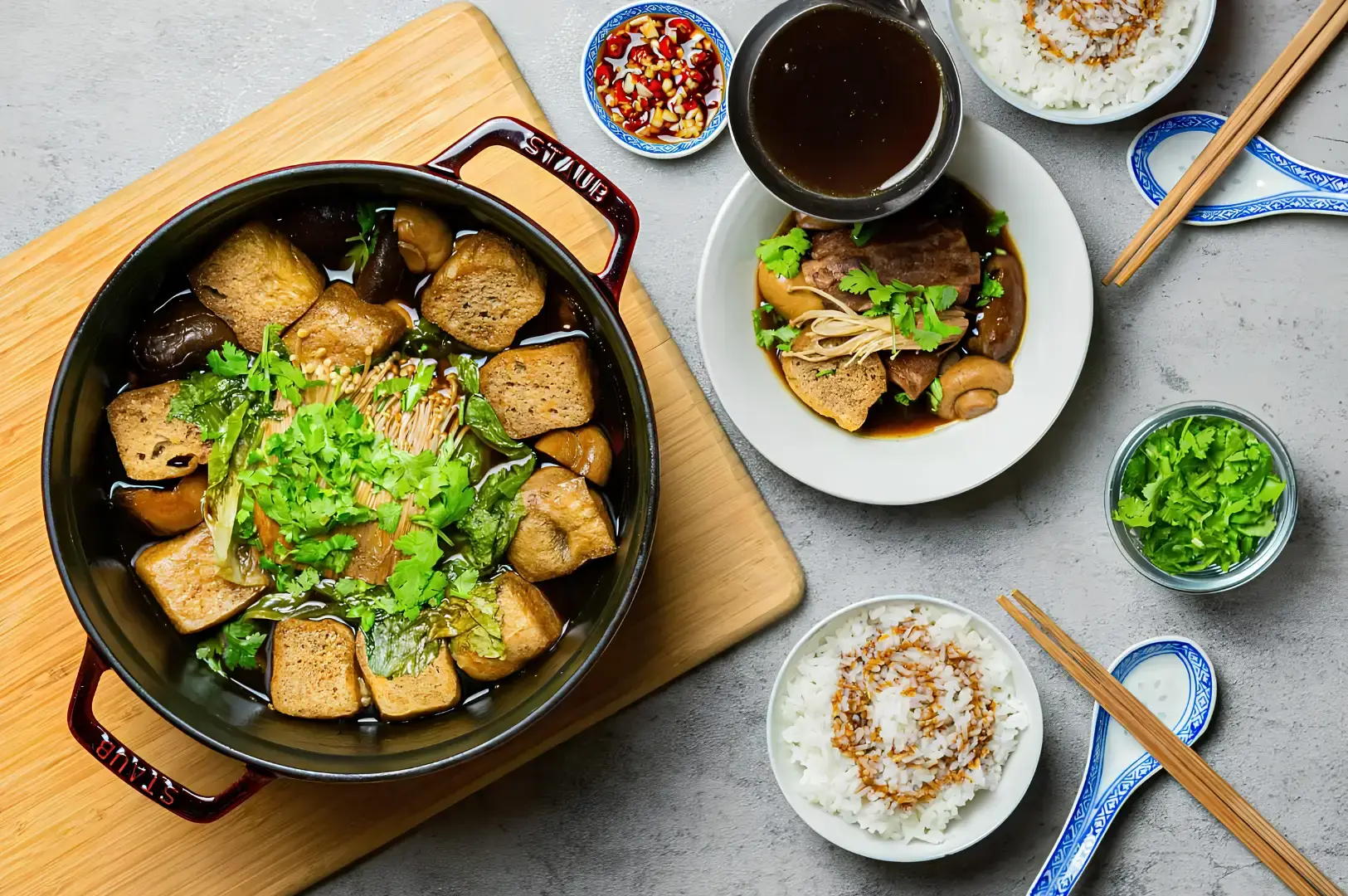
Bak Kut Teh: Pork Ribs Should Yield, Not Collapse
Bak kut teh literally means “meat bone tea”, although tea is normally drunk alongside the dish rather than added to the pork broth itself. Its variations also show how Chinese dishes change after migration.
Klang is strongly associated with a dark Hokkien-style bak kut teh, where soy sauce, herbs, and spices such as star anise, cinnamon, coriander, and sometimes fennel seeds contribute to a deep, medicinal aroma. Singapore today is better known for the lighter Teochew style, built around pork ribs, garlic, and white pepper.
Curry Mee: Malaysian Cuisine Built on Contrast
Curry mee shows particularly clearly how Malaysian Chinese cooking exists beside Malay cuisine and Indian food rather than apart from them. Many versions combine yellow noodles or bee hoon with broth enriched by coconut milk and spices, then add tofu puffs, seafood, chicken, cockles, bean sprouts, long beans, or herbs.
Curry leaves and chilli can perfume the broth, while tofu absorbs it. But the real lesson is texture.
Why Bean Sprouts and Long Beans Matter
Soft noodles need something to push against. Bean sprouts provide a wet crunch. Long beans offer firmer resistance. Seafood adds another texture again. Without those interruptions, coconut milk can make a bowl feel heavy surprisingly quickly.
I’ve eaten curry mee where every ingredient softened into the same texture. It was comforting for three spoonfuls. Then nothing changed. Good curry mee keeps giving your mouth something different to meet.
Hokkien Mee: One Name, Several Chinese Food Traditions
Hokkien mee is a useful reminder that the same name does not guarantee the same dish. I learned that in Penang after ordering Hokkien mee and expecting the dark noodles I knew from Kuala Lumpur. What arrived was soup. Neither version was wrong.
Kuala Lumpur
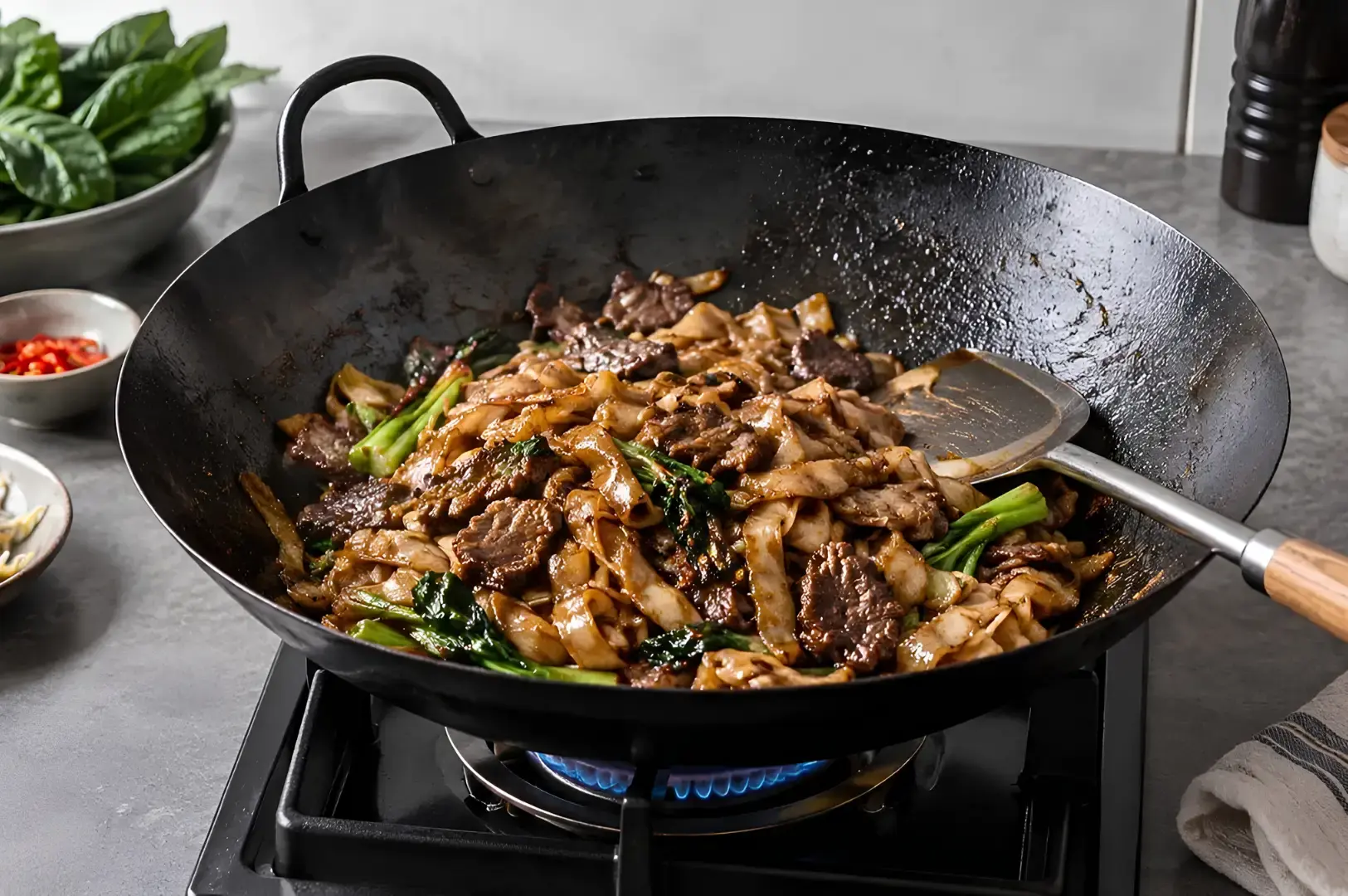
KL Hokkien mee uses thick yellow noodles coated in dark soy sauce and cooked over strong heat. Pork, seafood, cabbage, and crisp pork lard may appear alongside them. The noodles should feel chewy and slickly coated, not drowned in thin sauce.
Penang
In Penang, Hokkien mee generally refers to a prawn-rich noodle soup combining yellow noodles and rice vermicelli. Prawns, pork broth, egg, kangkung, fried shallots, and sambal are common components.
Singapore
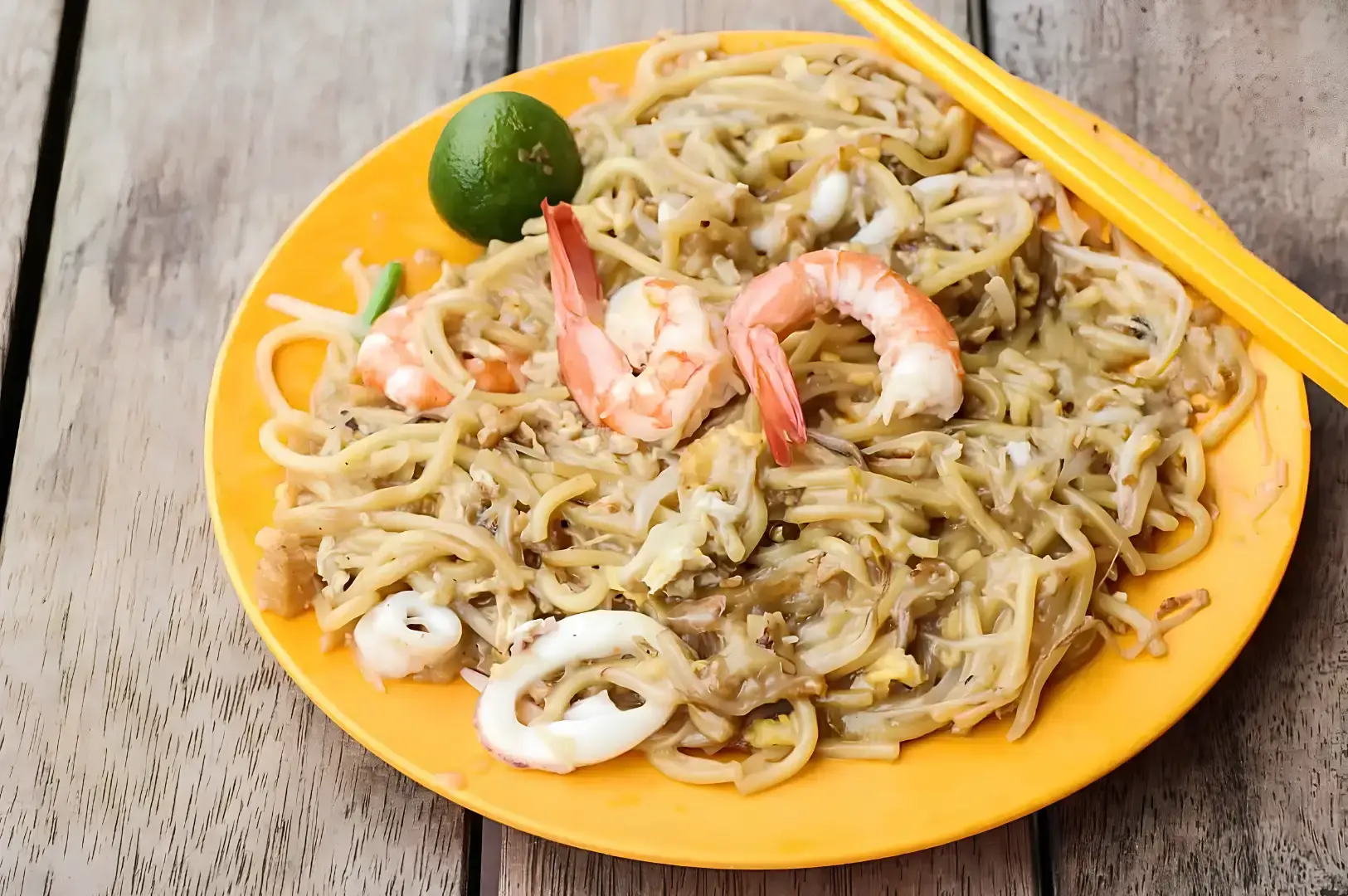
Singapore’s fried Hokkien prawn mee is different again. Yellow noodles and bee hoon are stir-fried and simmered with seafood-rich stock, creating a paler, moister plate commonly served with prawns, squid, and pork. That variation is part of Malaysian and Singaporean Chinese food history: dish names travel while local cooking continues to change them.
Wok Hei: Why the Cooking Process Changes Texture
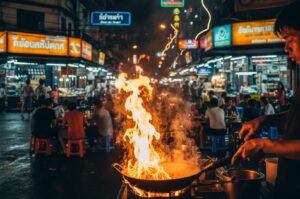
KL Hokkien mee is also useful for understanding wok hei, often translated as the “breath of the wok.” It is not simply a smoky taste. A hot wok, enough surface area, carefully managed oil, and controlled moisture let food fry rapidly rather than steam.
Overcrowd the wok and its temperature drops. Noodles release moisture, sauce loosens, and fried aromas become muted. That is why excellent ingredients cannot rescue poor heat management. Heat is part of the recipe.
Teochew Porridge: Rice Porridge Uses Softness Deliberately
Teochew porridge, or muay, is texturally different from thick Cantonese congee. Its rice grains soften while remaining recognisable, suspended in loose liquid rather than completely dissolving into a smooth paste. It is traditionally served with strongly flavoured side dishes such as salted fish, preserved vegetables, salted egg, braised pork, tofu, and greens.
Build Contrast Around the Bowl
The first time I built my own plate, I chose nearly everything braised.
Now I look for:
- Something salty or preserved
- Something crisp or stir-fried
- Something green
- One meat or fish dish with more resistance
- Soft rice porridge underneath it all
The mild porridge is not lacking flavour. It is creating room for everything around it.
Seremban Siew Pau: Fragrant Pastries That Should Crack
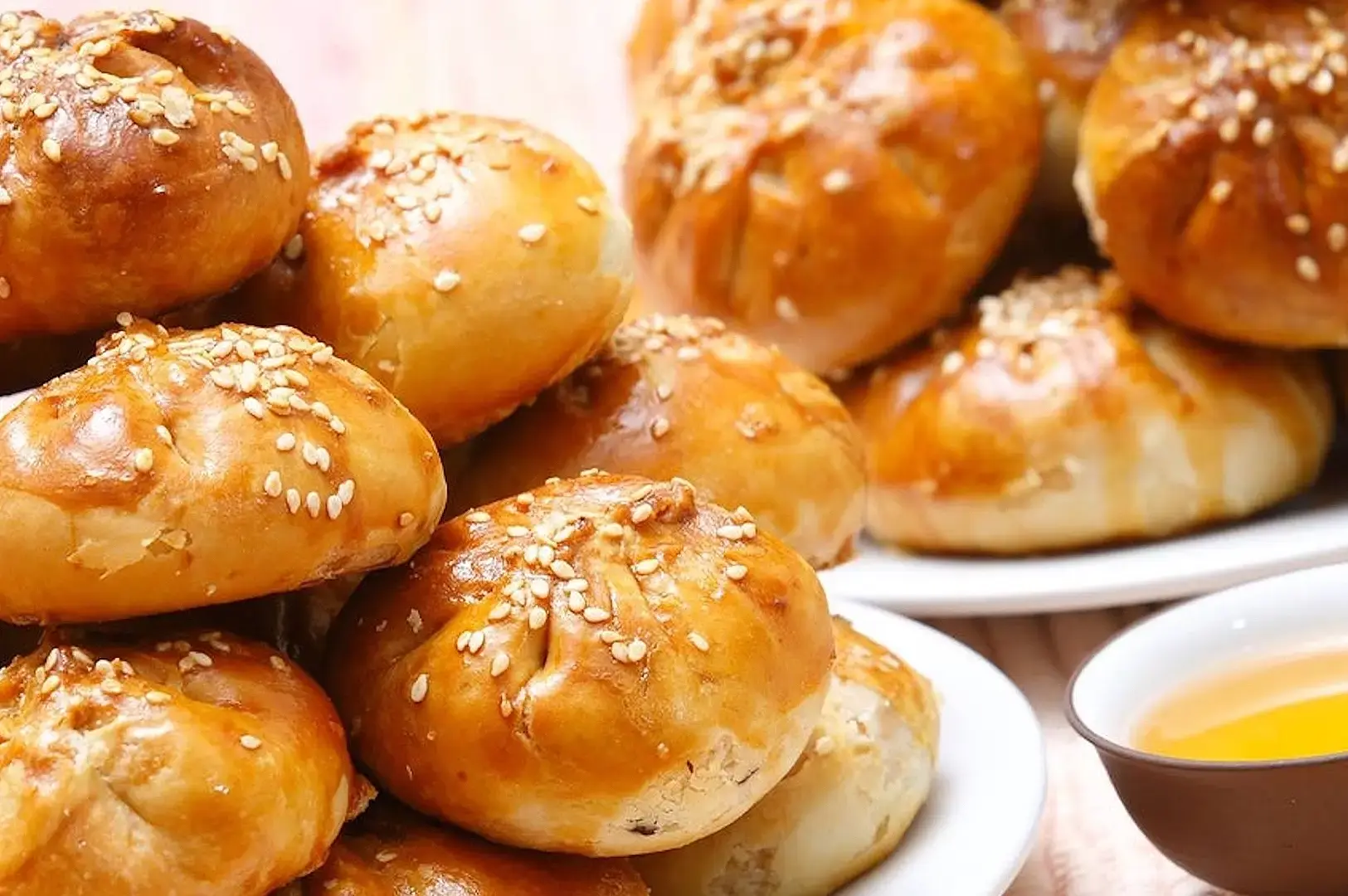
A good example pairs a flaky, fragrant pastry shell with moist, sweet-savoury char siu-style pork. Freshness is easy to read. The shell should fracture and send crumbs downward before your teeth reach the sticky meat filling. A shell that bends instead of cracking has usually lost some of what makes Seremban siew pau satisfying.
How to Read Malaysian Chinese Food at Hawker Stalls
You do not need specialist vocabulary to recognise good food.
Good Signs
- Fish paste looks moist and springs back
- Yellow noodles are coated rather than swimming
- Bean sprouts and long beans retain some crunch
- Fried shallots are added late enough to stay crisp
- Chicken looks juicy when sliced
- Tofu keeps its form without becoming tough
- Ingredients enter the wok or broth at different stages
Warning Signs
- Pre-sauced noodles sitting for long periods
- Fish balls that feel unusually hard
- Grey, limp vegetables
- Stale fried shallots
- Dry chicken beside greasy rice
- Stir-fried noodles that taste steamed instead of seared
Many flavour problems actually begin as texture or cooking problems. Your teeth often notice before your tongue does.
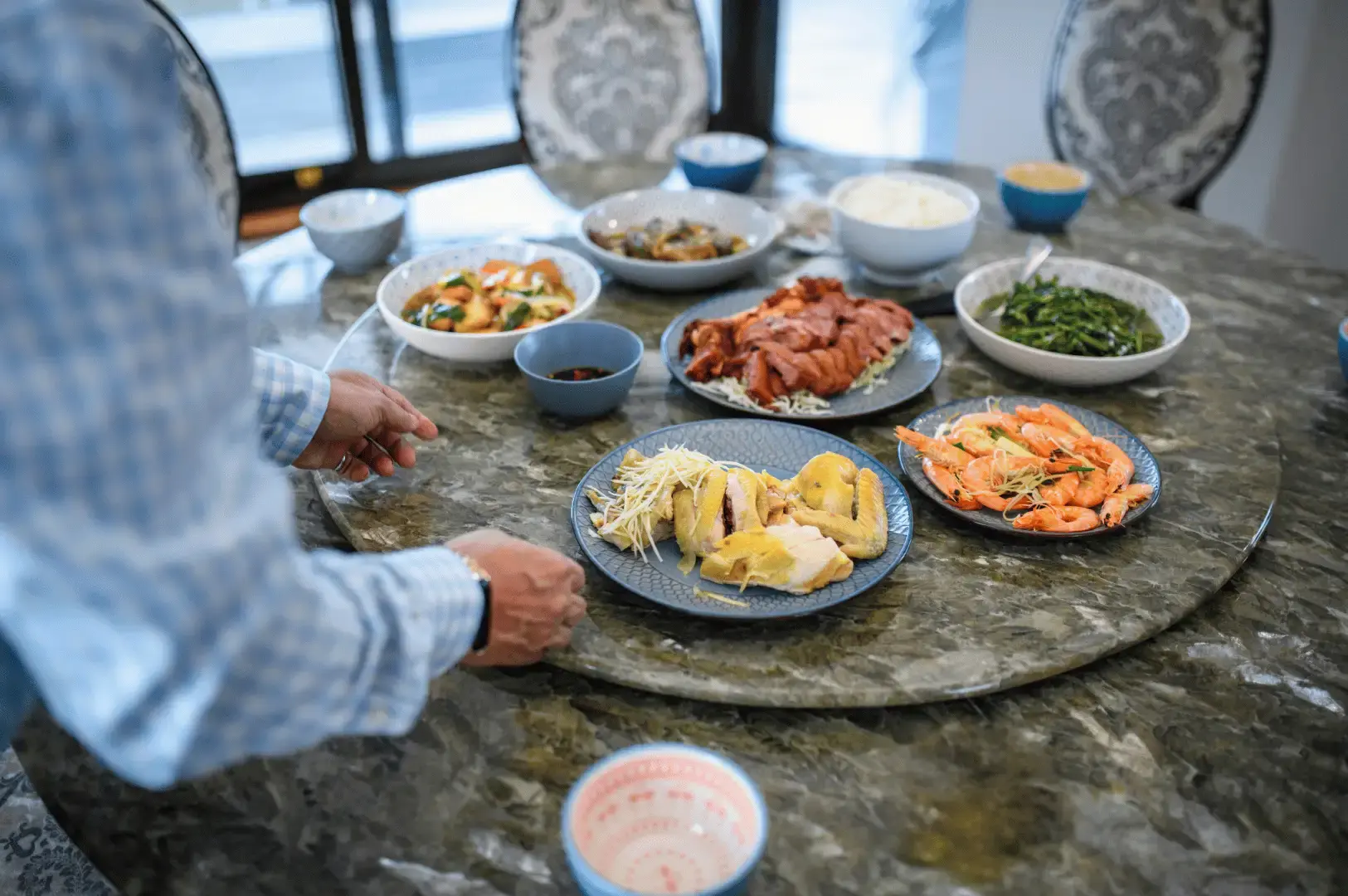
Malaysian Food Culture: Chinese, Malay, and Indian Food Share the Same Table
Malaysian Chinese cuisine did not develop in isolation. Hawker stalls and coffee shops placed Chinese dishes beside Malay food, Indian Muslim cooking, and snacks such as roti canai. Ingredients, habits, customers, and ideas moved through the same eating spaces.
That does not mean curry mee became “Indian” or Hokkien mee became “Malay.” It means Malaysian cuisine developed through proximity and exchange without erasing distinct culinary traditions. The same dynamic appears across Singapore’s hawker centres, where early Chinese cooking traditions evolved alongside Malay, Indian, Peranakan, and other local influences.
Eat With Your Teeth
You do not need to memorise Malaysian culture or culinary history before your next meal. Just slow down for the first bite. Press the fish ball. Pull gently at the pork rib. Listen to the bean sprout. Notice whether the noodle pushes back or collapses immediately.
Ask whether softness feels intentional. I still get it wrong sometimes. But every bowl teaches me a little more about the cooking behind it. Somewhere, I like to imagine that woman in Ampang is still pressing her chopstick into a fish ball before taking the first bite. And waiting for it to push back.

Crunch, Sweet, and Heat: The Irresistible Textures of Southeast Asian Snacks
Dio Asahi | February 17, 2026
In the humid, sticky heat of Southeast Asia, where your shirt clings to your back and the air is thick with the sharp scent of oxidising oil, there’s a particular clink that always gets me. It’s the sound of a metal spatula striking a wok, a rhythmic percussion that’s as familiar to me now as…
-
The Living Pantry: How Geography and Trade Shaped the Food in the Southeast Region
Eat Drink Asia Team | February 14, 2026
To understand the plate is to understand the map. If you were to trace the spice routes of the 15th century or follow the monsoon winds that carried merchant ships across the Indian Ocean, you would find yourself at the epicenter of the world’s most vibrant pantry. The food in the Southeast region of Asia…
-
A Symphony of Senses: Why Southeast Asian Food is the World’s Greatest Culinary Journey
Dio Asahi | February 12, 2026
If you were to stand at a busy intersection in Bangkok, Ho Chi Minh City, or Jakarta and close your eyes, your nose would tell you a story before your eyes ever could. There is a specific, intoxicating perfume that defines Southeast Asian food: the sharp tang of lime juice hitting a hot wok, the…
-
The Alchemy of the Wok: The Story of Singapore-Style Bee Hoon
Eda Wong | February 10, 2026
Across the humid evening air of Singapore, a rhythmic clatter echoes from hawker stalls to high-rise kitchens—the sound of a metal spatula against a seasoned wok. Within that intense heat, rice vermicelli noodles undergoes a profound transformation, absorbing the golden hues of curry powder, the savory depths of soy sauce, and the smoky “breath” of…
-
The Sizzle of the Wok: An Exploration of Fried Bee Hoon Across Southeast Asia
Eat Drink Asia Team | February 7, 2026
Across Southeast Asia, from bustling hawker centers to family kitchens, the sizzle of rice vermicelli noodles hitting a hot wok is a universal comfort. Few dishes capture the spirit of Asian noodle culture as well as fried bee hoon. This stir fry, made with thin rice noodles, delivers a tasty meal any time of the…
-
The Silk of the East: A Deep Dive into Bee Hoon and the Art of Rice Vermicelli
Eda Wong | February 5, 2026
Across the bustling kitchens of Southeast Asia, one humble ingredient has woven itself into the fabric of countless beloved dishes. Bee hoon, the delicate rice vermicelli that transforms from brittle strands into silky noodles, represents centuries of culinary tradition and innovation. Whether you’ve savored Singapore noodles in a hawker center or encountered fried bee hoon…
-
The Eternal Hearth: A Journey Through the Soul of Indian Foods Vegetarian Traditions
Dio Asahi | February 3, 2026
In the vibrant tapestry of global gastronomy, few cultures have elevated the plant-based plate to an art form quite like India. While much of the world has recently turned toward meat alternatives for health or environmental reasons, Indian cuisine has been centered on the vegetable for millennia. This isn’t merely a dietary choice; it is…
-
The Essence of Jeju Citron Tea: A Distinctive Profile of Yuja Tea in Korea
Dio Asahi | January 31, 2026
Imagine sitting in a quiet, sun-drenched teahouse overlooking the dramatic volcanic coastline of Jeju Island. The steam rising from your cup carries an aroma that is at once familiar and yet entirely new—a version of Korean citron tea, or yuja cha, that tastes of sea salt, volcanic soil, and generations of island tradition. As you…
-
Korean Citron Tea: Health Benefits and Wellness Secrets
Eat Drink Asia Team | January 29, 2026
As the seasons change and a chill enters the air, many of us seek out comforting rituals to support our well-being. Imagine wrapping your hands around a steaming cup of Korean citron tea—also known as yuja-cha—its bright, citrus aroma soothing and revitalizing with every sip. More than just a winter treat, Korean citron tea is…
-
When the Izakaya Becomes the Plan: Izakaya Singapore Top Picks for After-Work Reset
Dio Asahi | January 28, 2026
January 28, 2026 | Dio Asahi Last updated: October 12, 2026 As you step behind the humble noren curtain, you’re greeted by glowing lanterns, sizzling charcoal-grilled skewers, and warm welcomes. This is izakaya, Japan’s casual pub, a vibrant part of Singapore’s dining scene. More than just yakitori and sake, izakayas offer a lively setting for social…