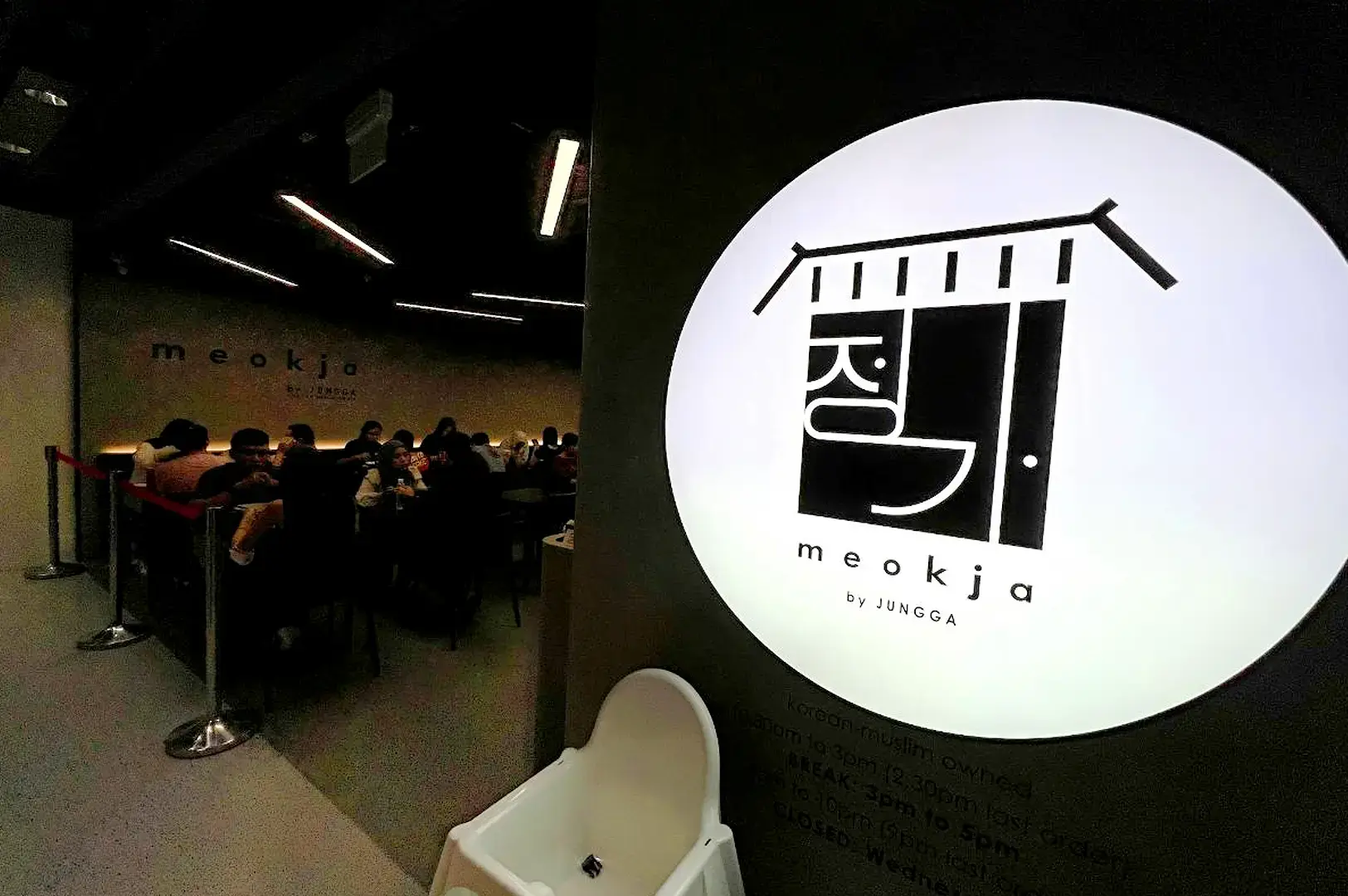
I had not planned to eat at Meokja by Jungga.
I was walking down North Bridge Road on a Tuesday, somewhere around the awkward hour between lunch and dinner, when I caught the smell of something frying and the low clatter of a kitchen working hard. I looked up, saw the sign, and my feet decided before my head did.
I had heard the name before: a Muslim-friendly Korean restaurant, Muslim-owned, the kind of eatery friends mentioned when halal Korean cravings came up. I went in hungry, not quite ready to review it. That is usually how the good ones find me.
First Impressions at Meokja by Jungga
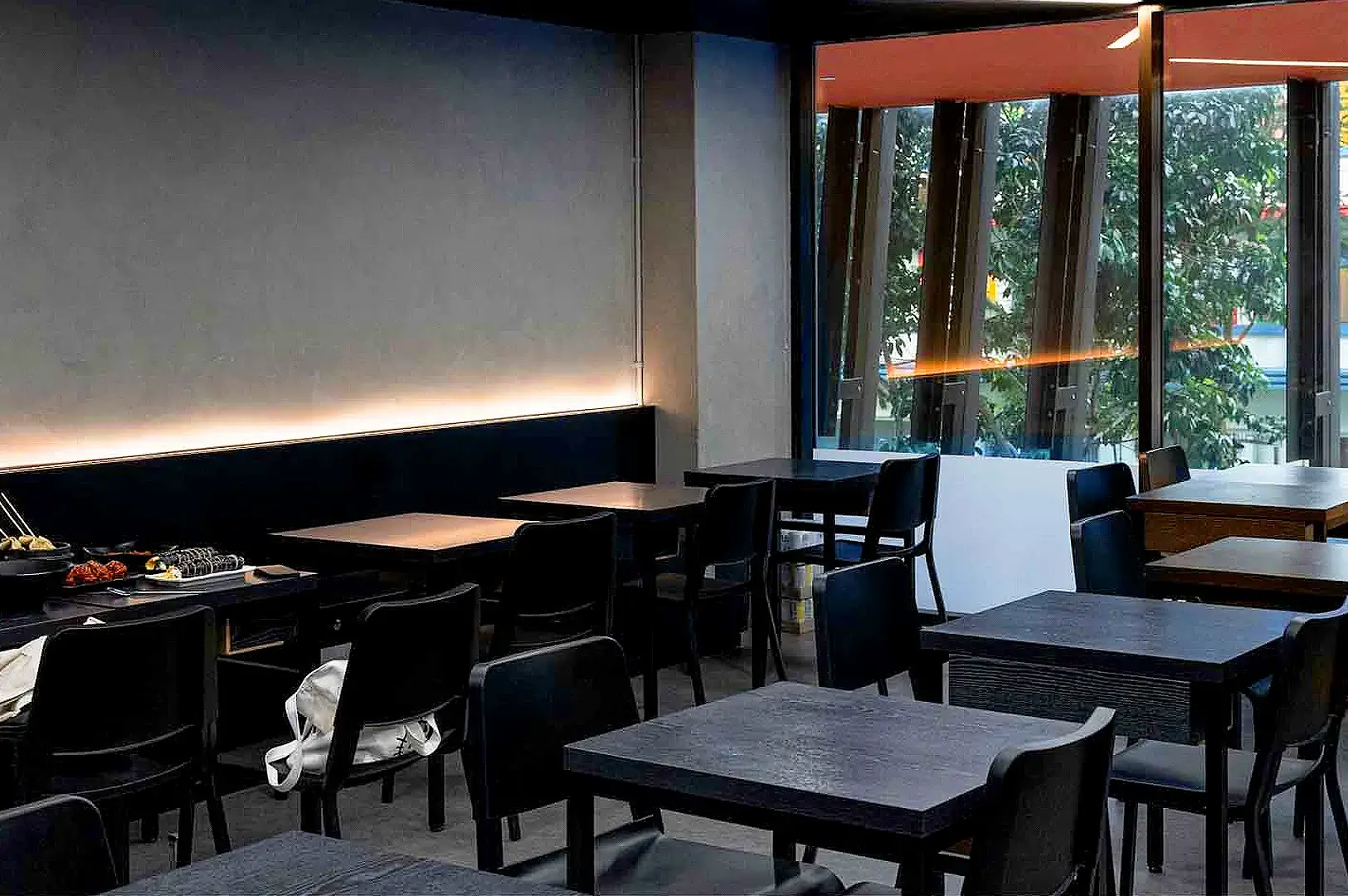
Meokja by Jungga sits at 785 North Bridge Road, #01-01, close enough to Bugis, Kampong Gelam, and Jalan Besar to work as an easy meal stop before or after a walk around the area. It is not a polished restaurant with soft lighting and long pauses between courses. It feels more like a compact Korean snack table that knows exactly what it is trying to do.
There is also a bit of history behind the room. Meokja by Jungga began as a home based business, later became known at GR.iD near 1 Selegie Road, Singapore 188306, then found its current North Bridge Road home. That journey matters because the place still feels personal, like a small team cooking with memory rather than a brand trying to look Korean.
Meokja by Jungga adds a Korean voice to Singapore’s wider halal dining scene, while Halal Restaurant in Singapore follows that same conversation through Indonesian food: https://eatdrinkasia.com/best-halal-nasi-padang-singapore/
What to Order First
The menu covers the right categories for this kind of meal: hot noodles, rice dishes, Korean street food, fried chicken, kimbap, fried food, drinks, and dessert. The danger is ordering like everything is a side dish, then realising too late that the table is too small.
For a first visit, I would build the meal around one noodle dish, one fried dish, one street-food item, and one lighter shareable plate. That gives you the best sense of what Meokja does well: rice, sauce, broth, crunch, and the kind of Muslim friendly Korean food that does not feel like a substitute.
A Smart First Order
- Jjajangmyeon for rich black bean sauce comfort
- Tangsuyuk for fried crunch and sweet and sour sauce
- Beef Bulgogi Kimbap for clean, shareable bites
- Eomuk Tang for clear broth and fish cakes
- Tteokbokki if you want the Korean street food hit
Jjajangmyeon: The Black Bean Bowl
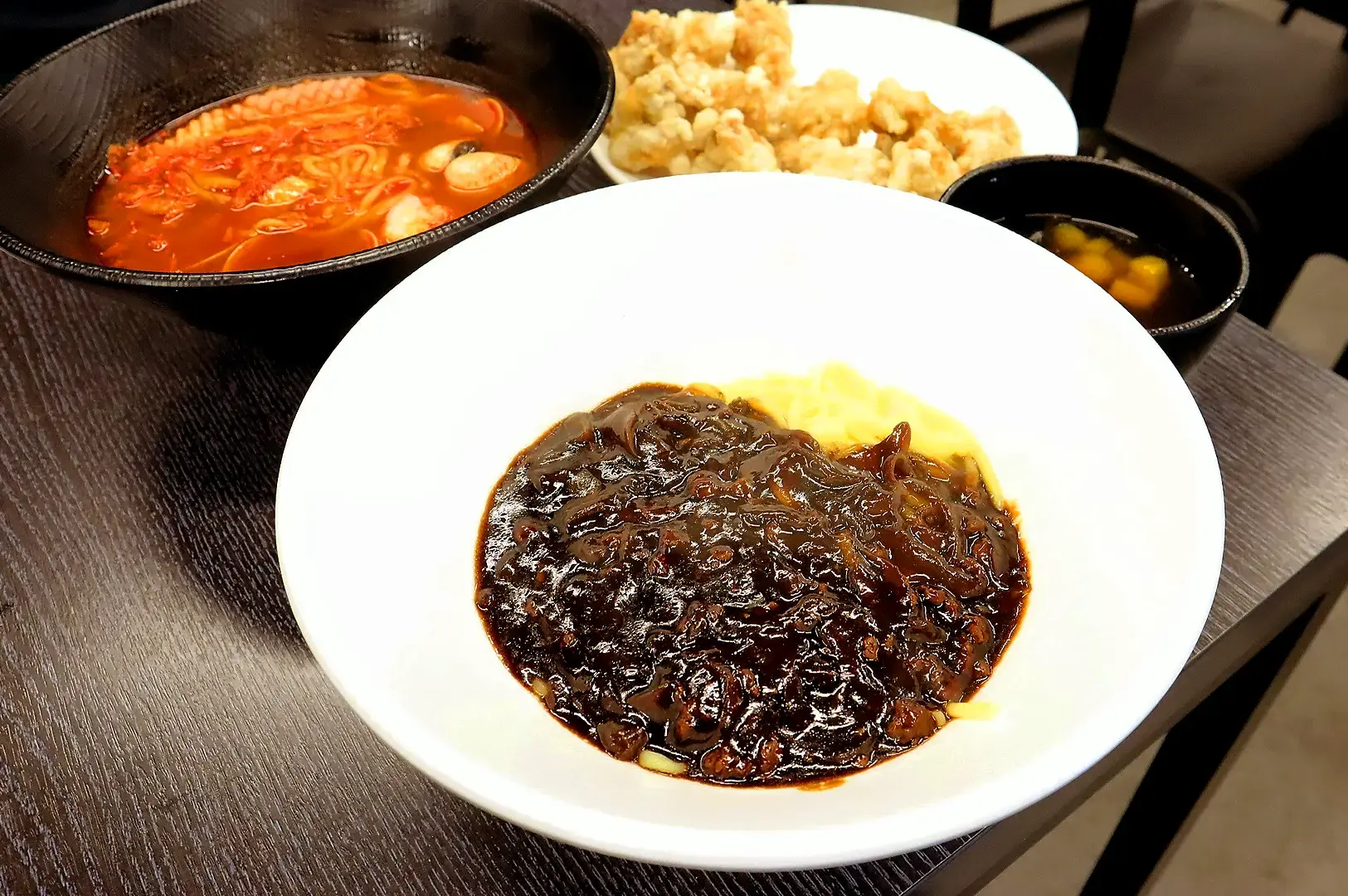
I started with the Jjajangmyeon, because it is one of the dishes people talk about, and I wanted to know if the talk held up.
It arrived properly dark: glossy black bean sauce over springy noodles, with minced beef folded through and caramelised onions cooked until soft and sweet. The first mouthful was thick and comforting. The sauce clung to every strand rather than sliding off, which is exactly what you want from this bowl.
The Jjajangmyeon leans sweet. That sweetness is not a flaw exactly. It gives the bowl its comfort-food softness, almost like caramel sitting inside the black bean sauce. I liked it. But if you prefer your jjajangmyeon darker, saltier, and more bitter-edged, this version may feel too gentle.
Still, I finished it slowly. Not because it surprised me, but because it settled into the meal with an easy heaviness. Some bowls shout. This one sits down beside you.
Tangsuyuk: The Fried Dish I Would Reorder
The Tangsuyuk was the dish I would order again without thinking twice.
If you are expecting the loud, fiery sweetness of yangnyeom chicken, this is not that. Tangsuyuk is the gentler Korean-Chinese cousin: battered, fried, and served with sweet and sour sauce that sits between comfort and restraint.
The batter was light and crisp at the edges where the sauce had not reached, then soft and glazed where it had. That contrast is the whole point of the dish, and Meokja gets it right.
It was not greasy. It was not heavy. Just crunch giving way to mild tang, again and again. If anything, I would’ve preferred a little extra dip on the side, because the sauce had that clean sweet-savoury pull that made the fried pieces too easy to keep eating.
Kimbap: Beef Bulgogi, Chicken Sausage, and the Cut That Matters
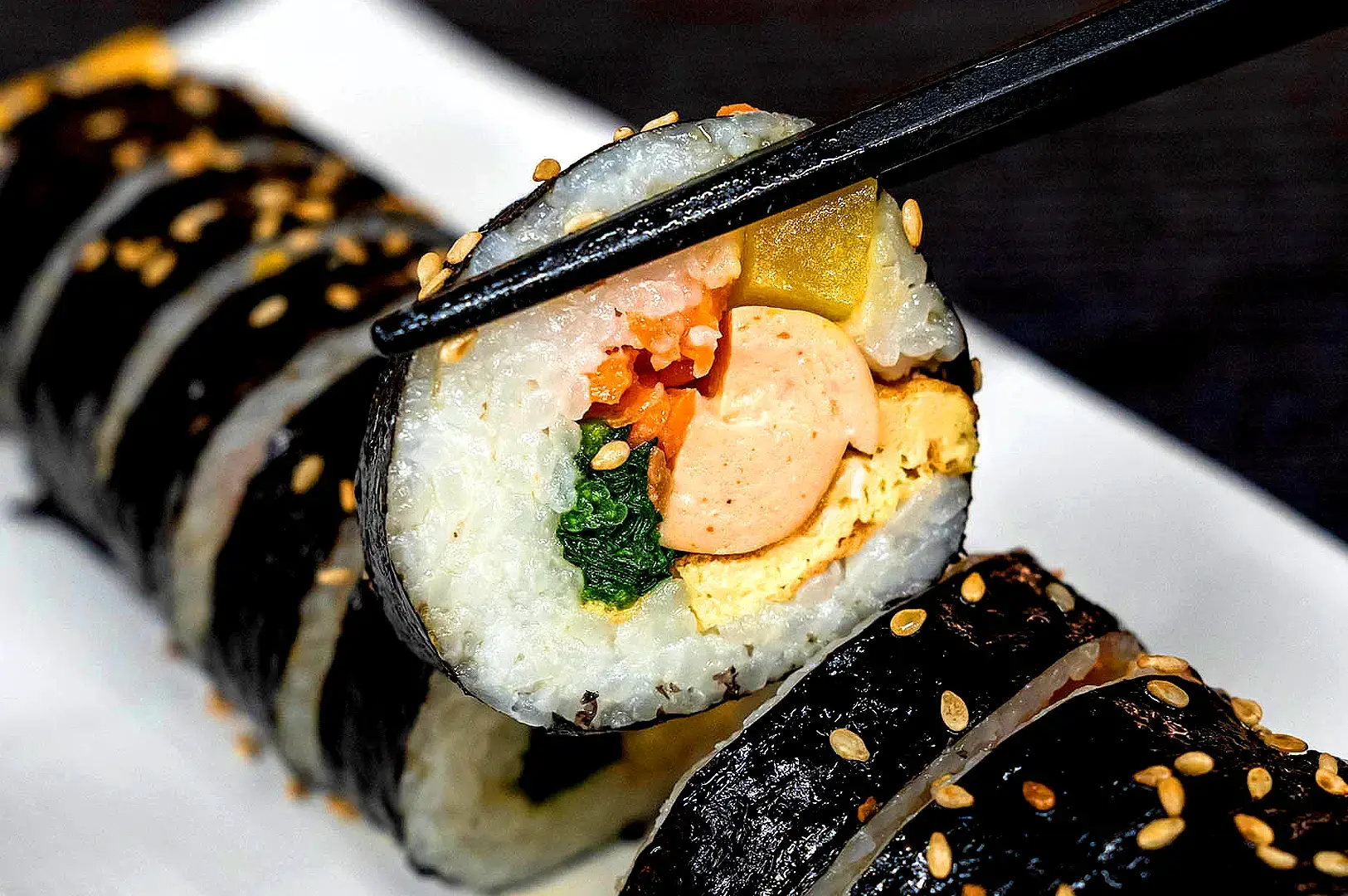
I could not do a Korean snack table without kimbap, so I ordered the Beef Bulgogi Kimbap.
Kimbap looks simple until it falls apart. It is a one-bite structure: cooked rice, seaweed, fillings, and seasoning held tightly enough to survive chopsticks. Too loose, and the round collapses. Too dry, and the rice crumbles before it reaches your mouth.
Mine held well. The rounds were compact without being packed hard, the rice was moist enough to stay together, and the beef bulgogi gave that savoury-sweet pull I wanted. The filling had sliced beef, fresh carrots, egg, and various vegetables, all tucked into a neat bite.
For something lighter on the wallet, the Chicken Sausage Kimbap is the easier everyday pick, especially if you like that salty-sweet comfort of a whole chicken sausage rolled with rice and vegetables. If you prefer something creamier, the tuna mayo style of kimbap is usually the safer comfort lane.
Tteokbokki and Eomuk Tang: The Korean Street Food Corner
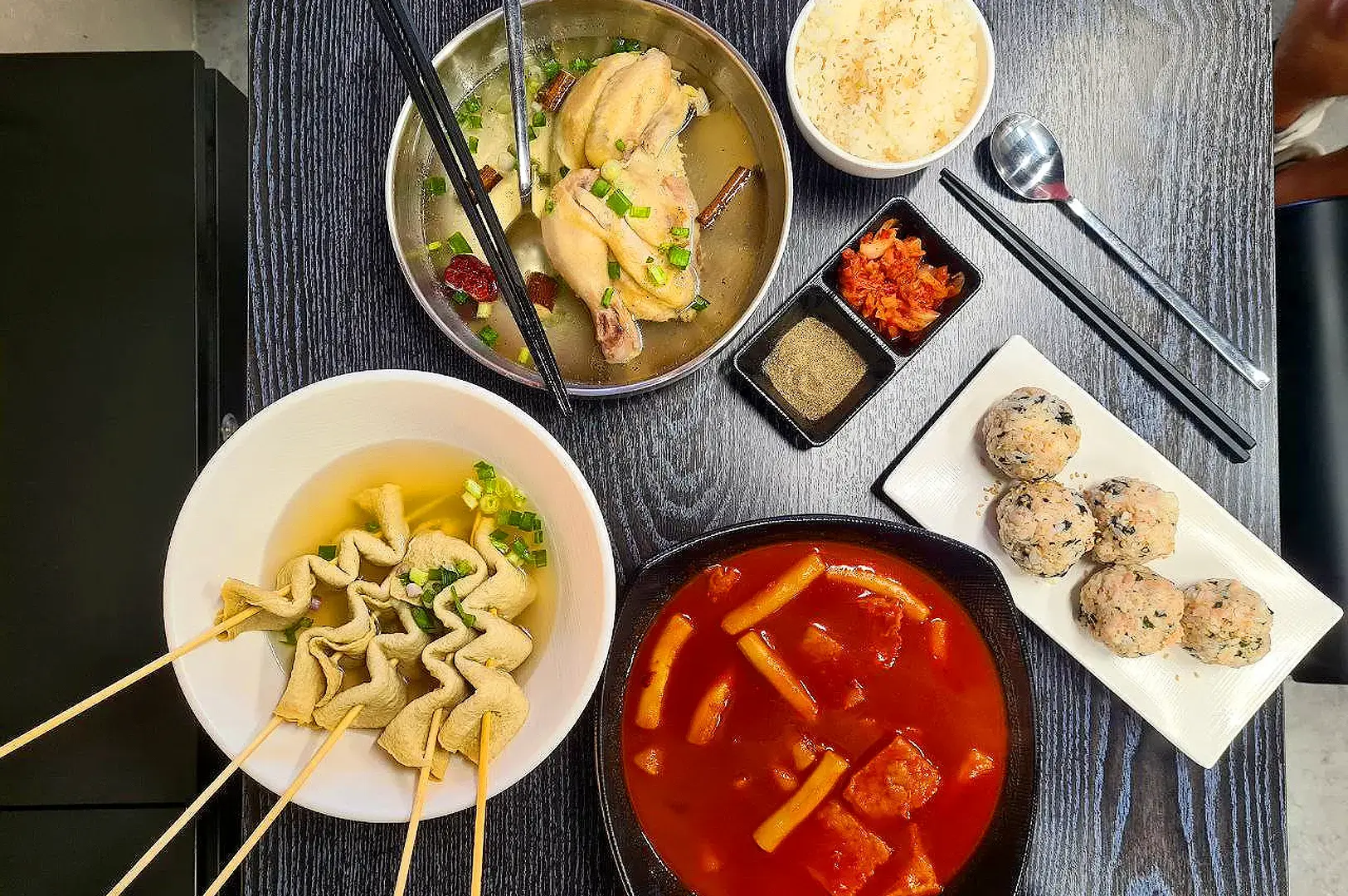
I ordered the Tteokbokki because you cannot write about a Korean street food table and skip it. The flavour was good: chewy rice cakes, fish cakes, and a spicy sauce with enough warmth to make you want rice or noodles to catch what was left. The texture had that satisfying bounce that makes tteokbokki feel more playful than serious.
The Eomuk Tang worked better for me. Fish cakes sat in a clear broth that reset the mouth between heavier bites. Nothing about it tried to impress, but that was its strength. It was clean, steady, and quietly comforting.
If you like deeper heat, look for dishes built around spicy broth or add-ons like cheese tteok, quail eggs, or boiled egg when available. But for me, the simple broth did enough. It is the dish I did not expect to remember, and it is the one that stayed with me.
For the bigger story behind why dishes like tteokbokki, kimbap, eomuk, and fried snacks work so well in motion, read Korean street food article from Eat Drink Asia.
Fried Chicken, Rice, and What to Save for Next Time
I did not order the fried chicken this round, mostly because the table was already fuller than one person needed. But it matters that Meokja has it on the menu, because fried chicken is part of the reason people gather around casual Korean meals in the first place.
Current listings include options such as YangNyeom Chikin, Beurinkle Chikin, and WangGalbi Chikin, alongside rice dishes and noodle bowls. That gives the restaurant enough range for repeat visits without losing its snack-table identity.
What I Would Try Next
- Yangnyeom chicken for sticky, spicy-sweet fried chicken
- Battered fried chicken with a house made sauce if I wanted crunch
- Bibimbap if I wanted rice topped with vegetables, egg, and sauce
- Bibim Guksu if I wanted cold noodles with spicy-savoury bite
- Rabokki if I wanted tteokbokki with ramyeon
- Hot Dog for a Korean street-food snack
- A rice bowl with fried egg, kimchi, and sauce if I wanted something simpler
Some menu items may shift, and I would check the current listing before going for more specific plates like blade steak, top blade steak, flower crab, shrimp, or various seafood dishes. But the idea is clear: Meokja is not trying to reinvent Korean food. It is trying to make halal Korean comfort feel complete, and that is more useful.
Bang for Your Buck
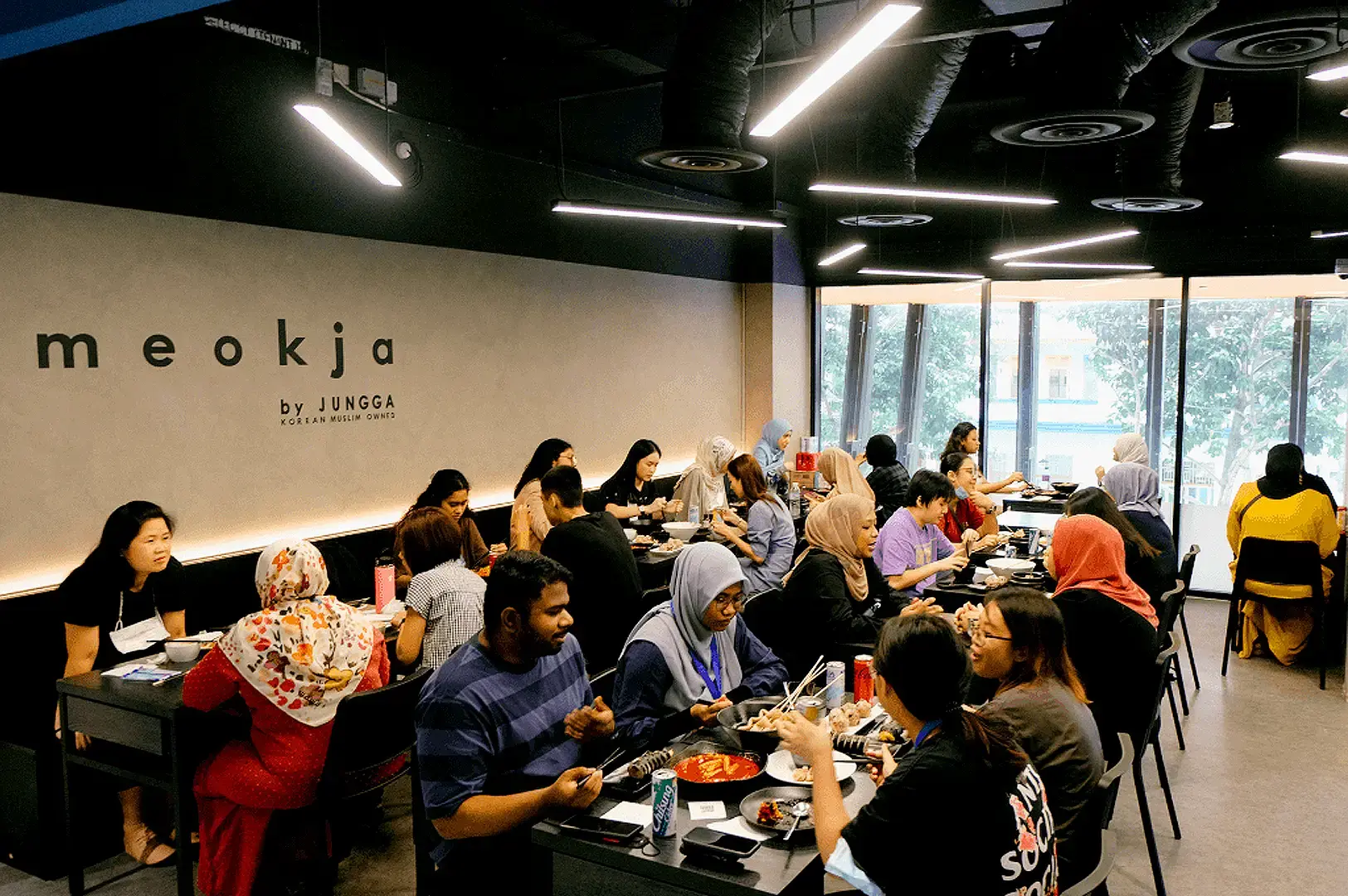
Most diners should expect to spend around S$15 to S$30 per person, depending on how much they share and whether they add fried chicken, noodles, drinks, or dessert.
The value depends on what you order. The Tangsuyuk felt worth returning for. The Jjajangmyeon was filling and comforting. The Eomuk Tang was simple but memorable. The Tteokbokki, while tasty, felt more like a side portion than a main event.
Before You Head Out
Meokja by Jungga is currently listed at 785 North Bridge Road, #01-01, Singapore 198753. It is most convenient for diners coming from Bugis, Kampong Gelam, or Jalan Besar.
Current online ordering information lists opening hours as 11:30am to 10pm from Saturday to Thursday, with last orders at 9:30pm. On Friday, the listed hours are 11am to 1pm and 3:30pm to 10pm, with a break in between.
Practical Tips
- Check hours before going, especially on Friday or Thu public-holiday weeks.
- Go off-peak if you dislike tight seating.
- Order to share because the menu works best across textures.
- Eat kimbap in-store if structure matters to you.
- Do not come for Korean barbecue because that is not the point here.
- Check current availability if you are visiting for specific dishes or combos.
Final K-Flavor Notes
I keep coming back to one thing about Meokja: it does not treat Muslim friendly Korean food like a compromise.
That matters. So often, a halal version of something can feel thinned out, adjusted, or made smaller in spirit. Here, it does not feel that way. The jjajangmyeon has depth. The tangsuyuk has crunch. The kimbap is rolled by someone who cares whether it holds. The eomuk broth has that quiet warmth that makes the heavier dishes easier to enjoy.
Come here if you want Muslim friendly Korean comfort food that feels specific rather than generic. Come if you are near Bugis, Kampong Gelam, or Jalan Besar and want noodles, fried dishes, kimbap, or street-food plates to share.

The Emerald Journey: Exploring Asia’s Green Milk Tea Culture
Eat Drink Asia Team | December 16, 2025
A vibrant, emerald-hued wave is sweeping across Asia, delighting taste buds and defining modern café culture. From street-side stalls in Bangkok to chic tea houses in Taipei, green milk tea—sometimes simply called green tea with milk—has blossomed from a simple concept into a beloved, refreshing drink with countless regional interpretations and profound cultural significance. Whether…
-
Thai Green Milk Tea: The Complete Guide to Thailand’s Refreshing Emerald Delight
Eda Wong | December 13, 2025
Picture a tall glass filled with crushed ice, its emerald-green contents swirled with ribbons of creamy white milk—this is thai green milk tea, one of Southeast Asia’s most visually striking and refreshing drinks. Known locally as cha khiao nom yen, this popular drink has captured hearts across Asia and beyond with its distinctive pale green…

Best Thai Singapore: Discover the Art of Authentic Pad Thai
Dio Asahi | December 11, 2025
In Singapore, a city that celebrates a universe of flavors, the magnetic pull of Thai cuisine is undeniable. From bustling food courts to elegant dining rooms, the kingdom’s culinary ambassadors have firmly planted their flag. When considering the best Thai food, it’s impossible to overlook how integral Pad Thai is to the local Thai food…
-
Thai Cuisine in Singapore: Finding the Best Authentic Flavors
Eat Drink Asia Team | December 9, 2025
The unmistakable aroma of lemongrass, galangal, and fiery spices mingles with the bustling night air in Singapore, setting the stage for a dining experience that wakes the soul and tantalizes the senses. Thai cuisine in Singapore has become an essential part of the city’s culinary landscape, offering a complete blend of vibrant flavor, tangy notes,…
-
The Ultimate Guide to Thai Food: Flavors, Traditions, and Culinary Adventures
Dio Asahi | December 6, 2025
Thai cuisine is one of the world’s most beloved and complex culinary traditions, captivating food enthusiasts globally with its masterful balance of flavors and vibrant presentations. From bustling Bangkok street stalls to high-end international restaurants, Thai food has become a global phenomenon that evolves while maintaining its authentic roots. What sets Thai cuisine apart from…
-
How to Drink Sake: Your Guide to Enjoying Japanese Sake Wine
Eda Wong | December 5, 2025
As Japan’s national beverage, this traditional sake is present at celebrations, quiet dinners, and spiritual offerings, weaving itself into the very fabric of daily life and reflecting Japan’s deep-rooted cultural heritage. Yet, for many outside of Japan, it remains a delightful mystery. You might find yourself wondering, how do you drink sake properly to unlock…
-
What Is Sashimi? A Guide to Raw Fish, Sliced Raw Fish, and Japanese Seafood
Eat Drink Asia Team | December 3, 2025
Sashimi is one of the clearest ways to understand Japanese cuisine because there is very little to hide behind. At its simplest, sashimi is sliced raw fish or seafood served without sushi rice, usually with soy sauce, wasabi, and simple garnishes such as daikon radish. But the dish is not just “raw fish on a…

Understanding Sake Alcohol Content: A Complete Guide to ABV and Flavor
Eda Wong | December 2, 2025
When exploring Japanese sake, many wonder about its grades and complex flavors. Sake’s unique profile offers remarkable versatility, enjoyed in various serving styles and paired with diverse dishes. One fundamental aspect is sake alcohol content. Is sake stronger than wine? How does its alcohol by volume (ABV) compare to beer? The answer is nuanced. Understanding…
-
Japanese Sake: The Complete Guide to Japan’s Traditional Rice Wine
Dio Asahi | November 29, 2025
Japanese Sake: The Complete Guide to Japan’s Traditional Rice Wine While sake has been Japan’s national beverage for over a millennium, its popularity across Asia is at an all-time high. Rooted in Japan’s traditional brewing methods and centuries-old origins. It symbolizes Japan’s cultural heritage and craftsmanship. Understanding this complex brewed alcoholic beverage opens doors to…

Best Japanese Foods in Japan: The Must-Try Dishes
Eda Wong | November 27, 2025
Japan’s culinary world extends far beyond well-known sushi and ramen, revealing a rich variety of regional specialties cherished by locals. While many travelers stick to popular Japanese foods in tourist areas, authentic flavors are best discovered in neighborhood markets, family-run eateries, and seasonal menus reflecting centuries of Japanese cooking tradition. Understanding Japanese cuisine requires more…