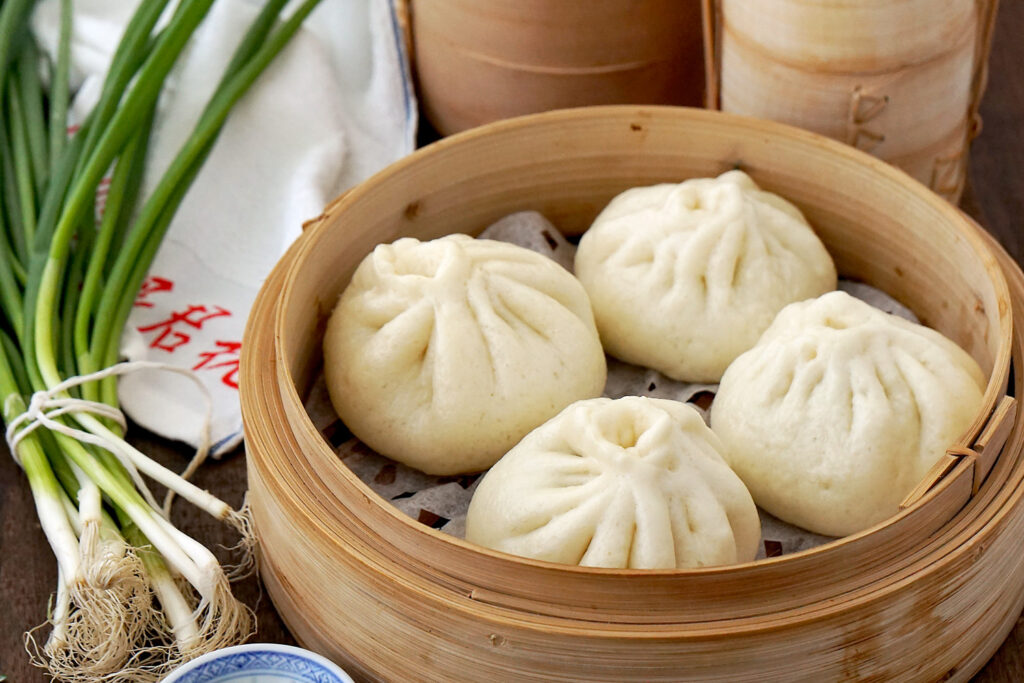
The first thing I noticed was the steam.
It rose in soft, continuous bursts from stacked bamboo baskets, drifting into the cold Beijing morning like breath made visible. The vendor lifted each lid with practiced rhythm, a quick tilt, a release of heat, then the faint scent of yeast, pork, and warm flour rolling outward. People moved in quietly, almost instinctively, drawn by that smell. I remember standing there with numb fingers, watching as hands reached for paper bags, each one quickly filled with plump, pale baozi that still trembled slightly from the heat. Someone bit into one beside me, and the sound, soft dough giving way, stayed with me longer than the cold.
The baozi itself is deceptively simple. A steamed bun made from wheat dough, filled with seasoned meat or vegetables. But in Beijing, it feels less like a dish and more like a daily rhythm. The ones I watched being made that morning were filled with minced pork, ginger, and Chinese chives, the juices just beginning to seep into the surrounding dough. Each bun was pleated quickly by hand, the folds gathered at the top like a quiet signature. There was no decoration, no attempt to elevate it beyond what it was. It existed in its most honest form, something meant to be eaten quickly, while still hot, on the way to somewhere else.
Discover more about Century-Old Dumpling Techniques here: https://eatdrinkasia.com/century-old-dumpling-techniques/
Baozi belongs to the rhythm of northern China, where wheat has long replaced rice as the staple. The technique of steaming dough stretches back centuries, shaped by both necessity and care. Unlike baked breads, baozi rely on moisture and timing, the balance between heat and fermentation that gives the dough its softness. The fillings shift with region and season, from pork and cabbage to sweet red bean, but the structure remains constant. In that way, baozi reflects something essential in Asian food traditions. Continuity does not depend on sameness. It depends on repetition. The act of folding, steaming, and sharing carries forward even as ingredients evolve.
What stayed with me was not just the taste, though it was quietly satisfying. The dough was soft but structured, the filling slightly sweet from the natural richness of the pork, the warmth spreading slowly through cold hands. It was the precision. The way each bun was folded without hesitation. The way the steam was managed, basket after basket, without waste. There was no sense of performance, no effort to present it as something extraordinary. And yet, everything about it was deliberate.
Standing there, I realised how easily something like baozi can be overlooked. It does not demand attention. It does not try to impress. But in that quiet exchange between vendor and customer, in the transfer of something warm and made by hand into waiting palms, there is a kind of continuity that feels increasingly rare.

The Clay Pot Rice Crust That Hong Kong Cooks Wait For
Eda Wong | May 29, 2026
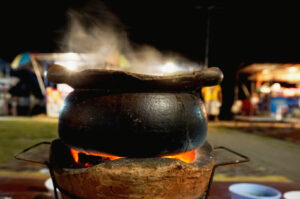
The December wind cuts sharply through the narrow alleys of Temple Street, but the ambient heat from the glowing charcoal stoves pushes the chill away. A cook stands before a long row of blackened clay pots, working with a rhythmic, almost meditative focus. Plumes of white steam rise into the night air, carrying the heavy,…
-
The Velvet Logic Behind a Chinese Eggplant Recipe: When ‘Eggplant Recipes Asian’ Means Silk
Eda Wong | May 28, 2026
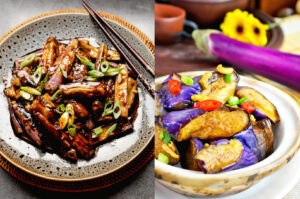
I vividly remember standing over my stove a few years ago, staring into a wok full of what can only be described as a greasy, grey disaster. When I first tried this dish at home, I assumed that tossing chopped eggplant into a hot pan with a generous glug of cooking oil would naturally yield…
-
Cambodia’s Prahok Pots and the Ferment Beneath the Meal
Dio Asahi | May 27, 2026
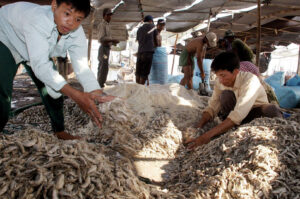
The afternoon heat in the outskirts of Phnom Penh settles like a thick blanket over the wooden stilt houses. Underneath the corrugated tin roof of an open-air kitchen, the air carries a heavy, sharp scent that instantly commands attention, a deeply pungent, earthen aroma of crushed fish and salt. An elderly woman sits on a…
-
Heat Has a Shape: Reading the Samyang Spicy Level Like a Flavour Map, Not a Dare
Eat Drink Asia Team | May 26, 2026
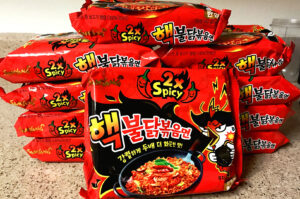
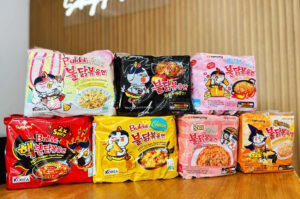
When we first tried the notorious Samyang 2x Spicy Buldak noodles, we treated it exactly how the internet told us to: like a dare. We boiled the noodles, poured in every last drop of the blood-red sauce, and braced ourselves. Within three bites, our palates were completely blown out. We could not taste the savoury…
-
313 Somerset Food Crawl: Spots That Turn ‘Quick Shopping Lunch’ Into a Full Day Plan
Eda Wong | May 23, 2026
Over the past three months, I have spent countless weekends navigating the energetic crowds of Orchard Road, determined to map out the ultimate dining itinerary. I must have visited over twenty different eateries in the area, hunting for those brilliant culinary experiences that elevate a standard shopping trip into a true celebration of flavours. Finding…
-
Benguet’s Pinikpikan and the Ethics of Mountain Broth
Eda Wong | May 22, 2026
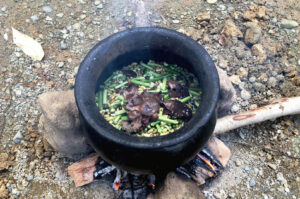
The mist in Benguet settles low over the pine-studded ridges, carrying the sharp, woody scent of a wood fire. In a quiet backyard in La Trinidad, a small gathering watches as a live chicken is prepared for the pot. The rhythm of a short, thick stick striking the bird’s wings and neck echoes softly, a…
-
The Quiet Trick Behind Loud Noodles: A Samyang Instant Noodle Recipe Built on Emulsion
Eda Wong | May 21, 2026
When I first tried making Samyang Buldak noodles at home, I expected the fiery heat but was surprised by the watery, separated red oil at the bottom of my bowl. I had boiled the noodles, drained them, and dumped the flavor packets on top, ending with a dry, clumpy mess that burned my throat without…
-
Taiwan’s Iron Egg and the Patience of Soy-Braised Time
Dio Asahi | May 20, 2026
The wind coming off the Tamsui River carries a sharp, saline chill, but the narrow lanes bordering the waterfront offer a different atmosphere entirely. Here, the air is thick with the heavy, sweet-savoury aroma of star anise, cassia bark, and boiling soy sauce. Behind a modest storefront, dark liquid bubbles in massive, dented metal vats….

Not Just ‘Fresh Fish’: The Best Omakase Singapore Has for Storytelling Courses & Seasonal Bites
Eat Drink Asia Team | May 19, 2026
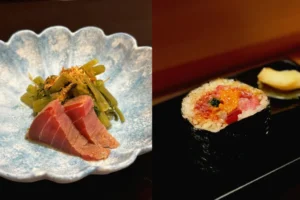
May 19, 2026 | Eat Drink Asia Team | Last Updated September 7, 2026 When you sit at an omakase counter, you’re paying for a culinary journey. A memorable omakase is more than fresh fish; it’s a delicate celebration of flavors. The best chefs act as storytellers, sequencing each bite to build anticipation and contrast, guiding…
-
Indonesian Traditional Food at Warong Nasi Pariaman: A Plate That Doesn’t Explain Itself—It Proves It
Dio Asahi | May 16, 2026
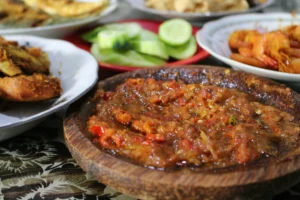
It’s always a little heartbreaking when a true culinary landmark decides to close its doors. Warong Nasi Pariaman, the iconic nasi padang spot at 738 North Bridge Road, served its final plates in January 2026. For decades, it stood as a testament to heritage, feeding generations of Singaporeans and becoming an essential part of the…