The first thing I noticed was the steam.
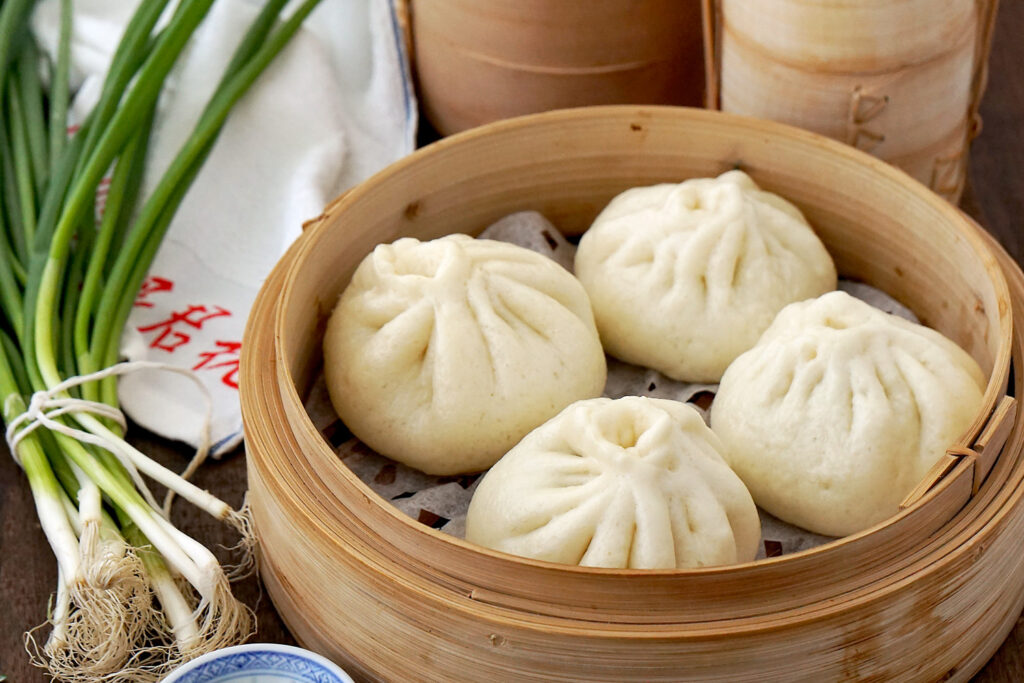
It rose in soft, continuous bursts from stacked bamboo baskets, drifting into the cold Beijing morning like breath made visible. The vendor lifted each lid with practiced rhythm, a quick tilt, a release of heat, then the faint scent of yeast, pork, and warm flour rolling outward. People moved in quietly, almost instinctively, drawn by that smell. I remember standing there with numb fingers, watching as hands reached for paper bags, each one quickly filled with plump, pale baozi that still trembled slightly from the heat. Someone bit into one beside me, and the sound, soft dough giving way, stayed with me longer than the cold.
The baozi itself is deceptively simple. A steamed bun made from wheat dough, filled with seasoned meat or vegetables. But in Beijing, it feels less like a dish and more like a daily rhythm. The ones I watched being made that morning were filled with minced pork, ginger, and Chinese chives, the juices just beginning to seep into the surrounding dough. Each bun was pleated quickly by hand, the folds gathered at the top like a quiet signature. There was no decoration, no attempt to elevate it beyond what it was. It existed in its most honest form, something meant to be eaten quickly, while still hot, on the way to somewhere else.
Discover more about Century-Old Dumpling Techniques here: https://eatdrinkasia.com/century-old-dumpling-techniques/
Baozi belongs to the rhythm of northern China, where wheat has long replaced rice as the staple. The technique of steaming dough stretches back centuries, shaped by both necessity and care. Unlike baked breads, baozi rely on moisture and timing, the balance between heat and fermentation that gives the dough its softness. The fillings shift with region and season, from pork and cabbage to sweet red bean, but the structure remains constant. In that way, baozi reflects something essential in Asian food traditions. Continuity does not depend on sameness. It depends on repetition. The act of folding, steaming, and sharing carries forward even as ingredients evolve.
What stayed with me was not just the taste, though it was quietly satisfying. The dough was soft but structured, the filling slightly sweet from the natural richness of the pork, the warmth spreading slowly through cold hands. It was the precision. The way each bun was folded without hesitation. The way the steam was managed, basket after basket, without waste. There was no sense of performance, no effort to present it as something extraordinary. And yet, everything about it was deliberate.
Standing there, I realised how easily something like baozi can be overlooked. It does not demand attention. It does not try to impress. But in that quiet exchange between vendor and customer, in the transfer of something warm and made by hand into waiting palms, there is a kind of continuity that feels increasingly rare.

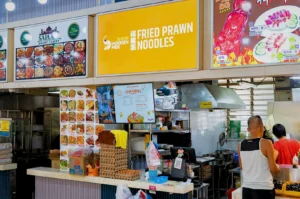
Shiok Hokkien Mee and the Pleasure of a Plate That Clings: Tiong Bahru Hokkien Mee at Midday
Eat Drink Asia Team | June 25, 2026
I have always believed that the true test of a neighbourhood’s food scene happens right in the middle of the day. When the midday hunger hits, you don’t want a tasting menu; you want a fast, flavourful culinary journey that hits the spot. That is exactly what led me, representing the Eat Drink Asia team,…
-
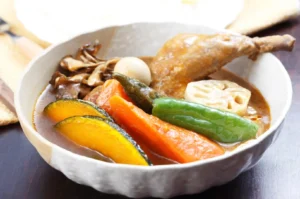
When Curry Learns to Breathe
Dio Asahi | June 24, 2026
The rain taps lightly against the glass of a quiet Japanese diner, turning the pavement outside a slick, silver grey. Inside, the bowl arrives with steam first, then colour: pumpkin orange, aubergine purple, and a dark curve of chicken set against a broth that looks too light to carry so much heat. The spoon touches…
-
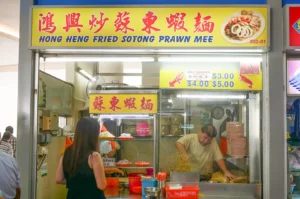
Hong Heng Fried Sotong Prawn Mee: Where Squid Turns Chewy, Broth Turns Glossy, and Time Turns Quiet
Eda Wong | June 23, 2026
There is something deeply comforting about a hawker centre right before the lunch rush hits. I visited Tiong Bahru Market on a Tuesday around 10:30 am, hoping to beat the infamous queue at Hong Heng Fried Sotong Prawn Mee. Even at that early hour, a line of six people had already formed, waiting quietly under…

Cuppage Plaza Food for People Who Hate Obvious Places: Restaurants That Feel Like a Detour Off Orchard
Dio Asahi | June 20, 2026
Orchard Road is a brilliant, trend-setting celebration of flavours, but its gleaming mega-malls can sometimes feel a bit predictable. If you are an urban food enthusiast seeking genuine culinary journeys rather than polished franchise menus, the true heart of the district lies slightly hidden. Cuppage Plaza is a fascinating, liminal space that operates almost like…
-
Makgeolli Bowls and the Soft Grain of Korean Rice Wine
Eda Wong | June 19, 2026
The monsoon rain drums a steady, heavy rhythm against the fogged windows of a narrow tavern in Jongno, muffling the chaotic pulse of the city outside. Inside, the air hangs warm, thick with the scent of toasted mung beans and a subtle, yeasty tang. A dented brass kettle tips forward, and a chalk-white, opaque liquid…
-
Kung Pao Chicken Sauce Is the Real Test: Why It Turns Glossy, Sharp, and Addictive
Eat Drink Asia Team | June 18, 2026
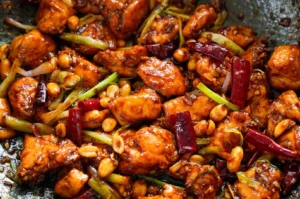
Kung pao chicken is often described by its main ingredients: diced chicken, dried chillies, peanuts, spring onions, and Sichuan peppercorns. But anyone who has cooked it at home knows the truth: the dish succeeds or fails because of the sauce. The sauce decides whether kung pao chicken tastes lively and balanced, or flat, sticky, and…
-
Jeju’s Seaweed Soup and the Memory of Birthday Tables
Dio Asahi | June 17, 2026
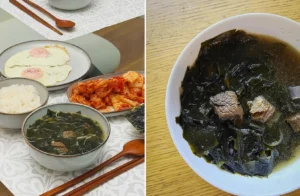
The sharp winter wind rattles the low stone walls of a Jeju Island kitchen, but inside, the air is thick with steam and the deeply marine scent of boiling kelp. An elderly woman stands by a bubbling steel pot, watching the dark green fronds swell and twist in the rolling water. She adds a splash…
-
Chicken Pao Recipe for People Who Respect Heat: Why Kung Pao Works Only When Timing Is Tight
Eda Wong | June 16, 2026
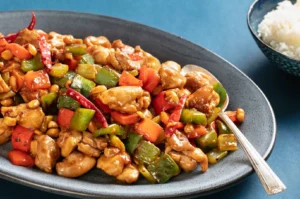
I remember my first attempt at cooking gong bao ji ding a few years ago. I wanted to recreate that authentic, trend-setting dish I had experienced at a traditional Sichuan restaurant, a meal that felt like a genuine celebration of flavours. I heated my wok until it was smoking, tossed in a handful of dried…
-
A Shu Yan Sichuan Cuisine Review Written in Pepper and Smoke: Chicken Pao That Wakes Up the Table
Dio Asahi | June 13, 2026
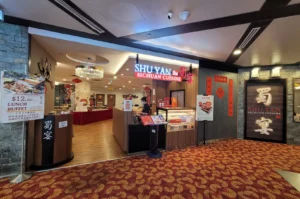
I used to think of authentic Sichuan food as a sheer test of endurance. For a long time, I assumed the goal was simply to survive the fiery onslaught of chillies rather than actually taste anything. But my recent culinary journey at Shu Yan Sichuan Cuisine completely rewired how I understand this region’s flavour map….
-
In Luang Prabang, Or Lam Carries the Taste of Sakhan
Eda Wong | June 12, 2026
The damp morning mist still clings to the teakwood houses of Luang Prabang as an elderly cook tends to a glowing charcoal brazier. Sparks jump lightly into the cool air, illuminating the blackened belly of an aluminium pot. Inside, a thick, dark liquid bubbles rhythmically, releasing an incredibly aromatic cloud of charred lemongrass, sweet Thai…