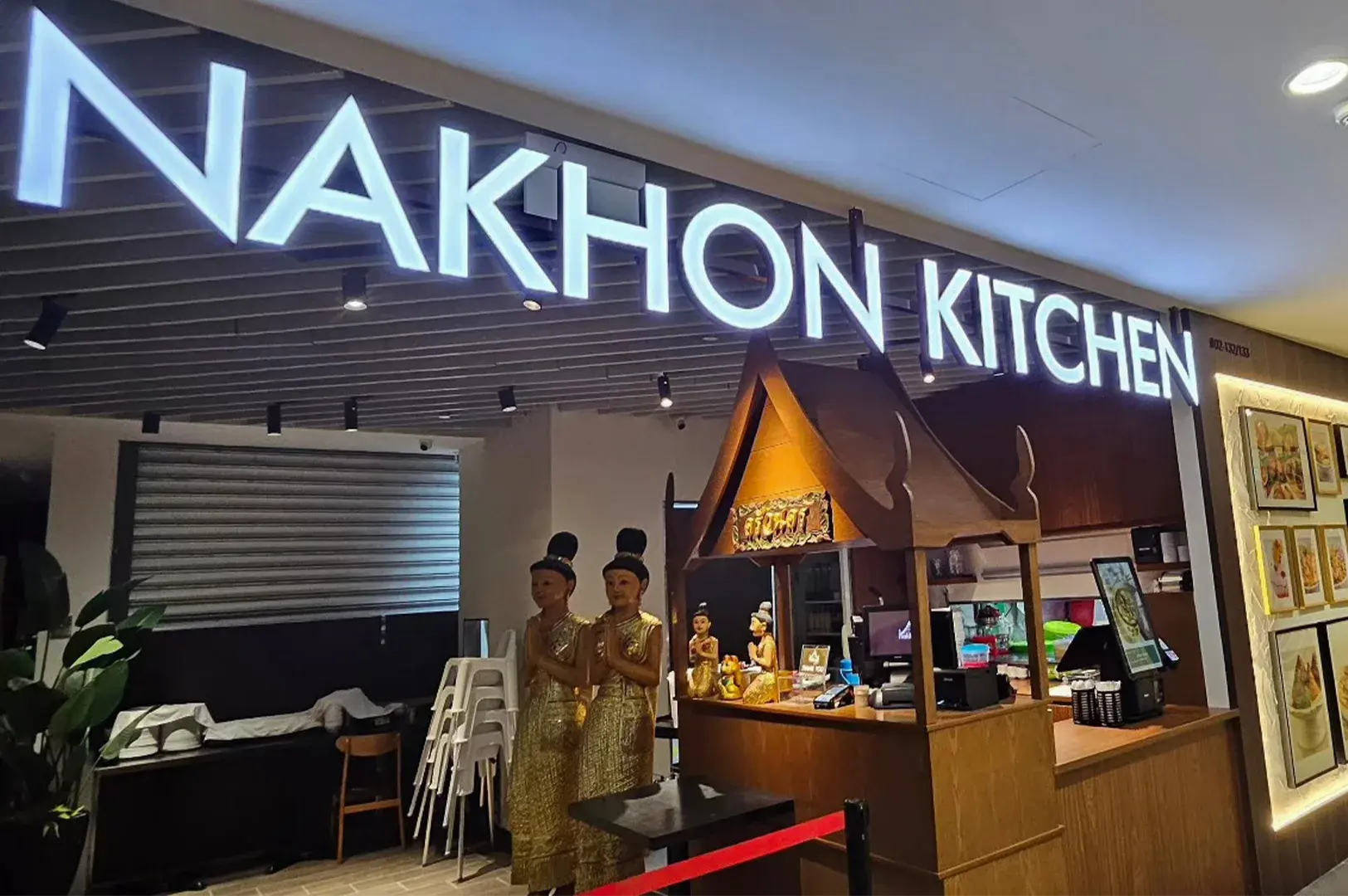
There’s a rite of passage for any food lover living in the East of Singapore, and it involves a queue. Specifically, the perpetually long, snaking queue outside Nakhon Kitchen in Bedok. I’d heard the legends for years: authentic Thai food, rock-bottom prices, and a wait time that tests your commitment. So, on a Tuesday evening around 7 pm, I decided to finally face the beast.
I was prepared for a battle, but the reality was a lesson in organised chaos. The line moved with surprising efficiency, a silent testament to the thousands who had stood here before me. The air was thick with the scent of lemongrass, frying garlic, and the distant, sweet smell of Thai iced tea. This wasn’t a fancy restaurant experience; it was a pilgrimage.
The Atmosphere: A True Kopitiam Experience at Nakhon Kitchen
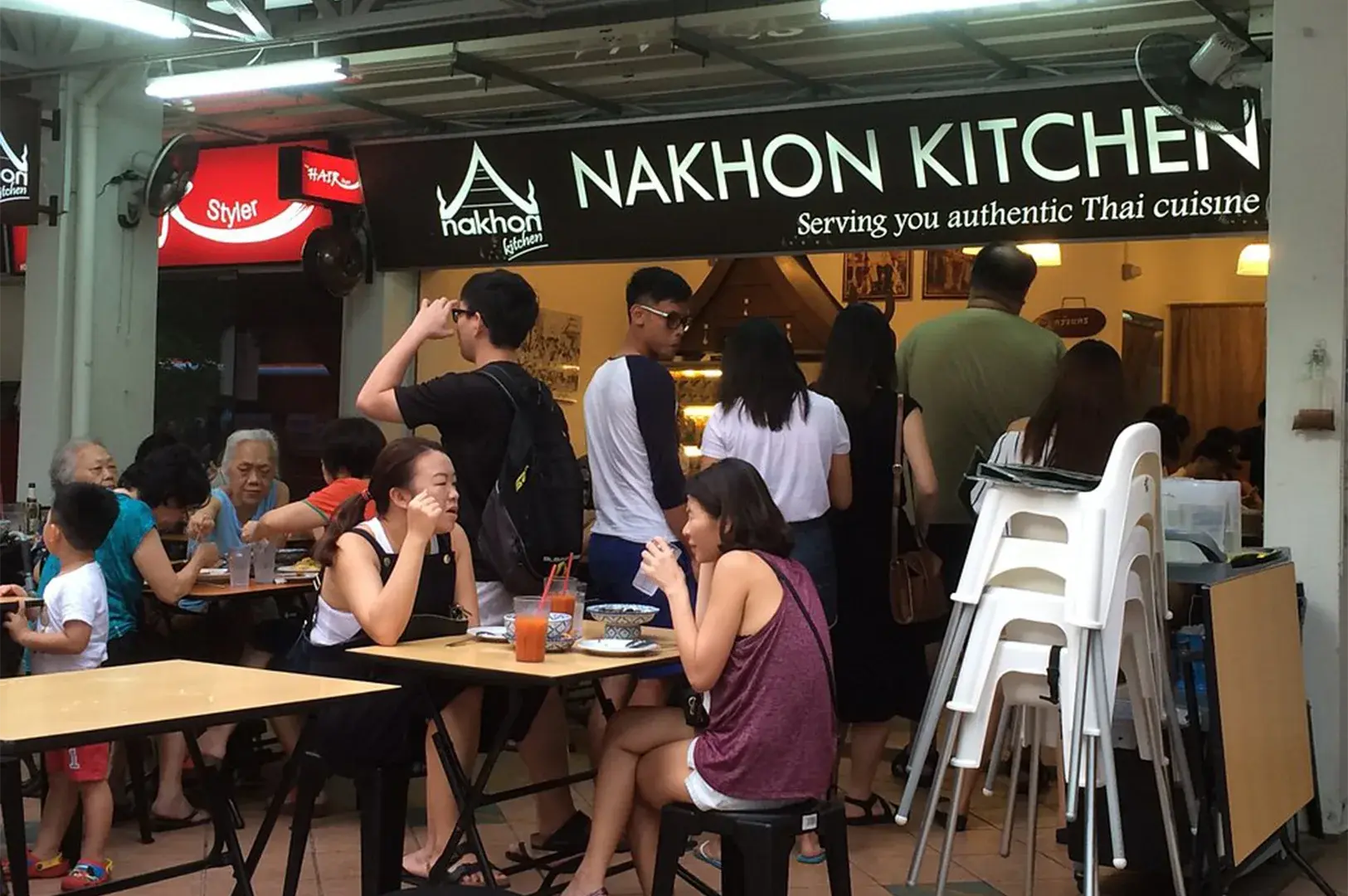
Let’s be clear: you don’t come to Nakhon Kitchen for ambience.
You come for cuisine, the kind that thrives under fluorescent lights and in tight quarters.
Tucked inside Yong Li Coffee Station, this kopitiam feels like a small but honest fragment of cuisine in the world where communal dining matters more than aesthetics.
What You Notice First
- Sound: Clanking plates. Wok burners roaring. The smoky breath of high-heat cooking rising into the air.
- Voices: Aunties debating dinner plans. Someone gesturing animatedly over a bowl of soup.
- Light: Bright, unforgiving, practical.
The lighting reveals everything:
- The gloss on stir-fried basil
- Chili oil shimmering over seafood
- Crushed peanuts scattered across a shredded mango salad
Nothing hides. There’s integrity in that.
Seating & Setting
Tables are packed tightly.
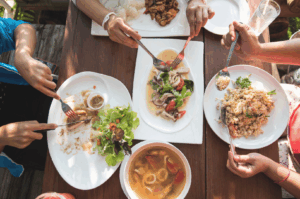
I remember sitting near the drinks stall, shoulder-to-shoulder with strangers, unintentionally studying their dishes before mine arrived.
The chairs are standard plastic, functional, familiar. They root you in this specific region of Singapore’s heartlands.
It’s crowded.
It’s loud.
It’s real.
And that realness reflects everyday food preparation, lived culinary practices, and traditions that continue to shape this corner of the world.
The Food: Punchy Thai Cuisine at Nakhon Kitchen
The laminated menu reads like a greatest-hits page of Thai cuisine. The strategy is simple: order broadly, sample the variety, and let the chefs demonstrate their rhythm.
Portions are modest. Prices are even smaller. It encourages sharing, a practical way for diners to explore multiple types of flavour profiles in one sitting.
Tom Yum Soup (Clear Seafood, $7)
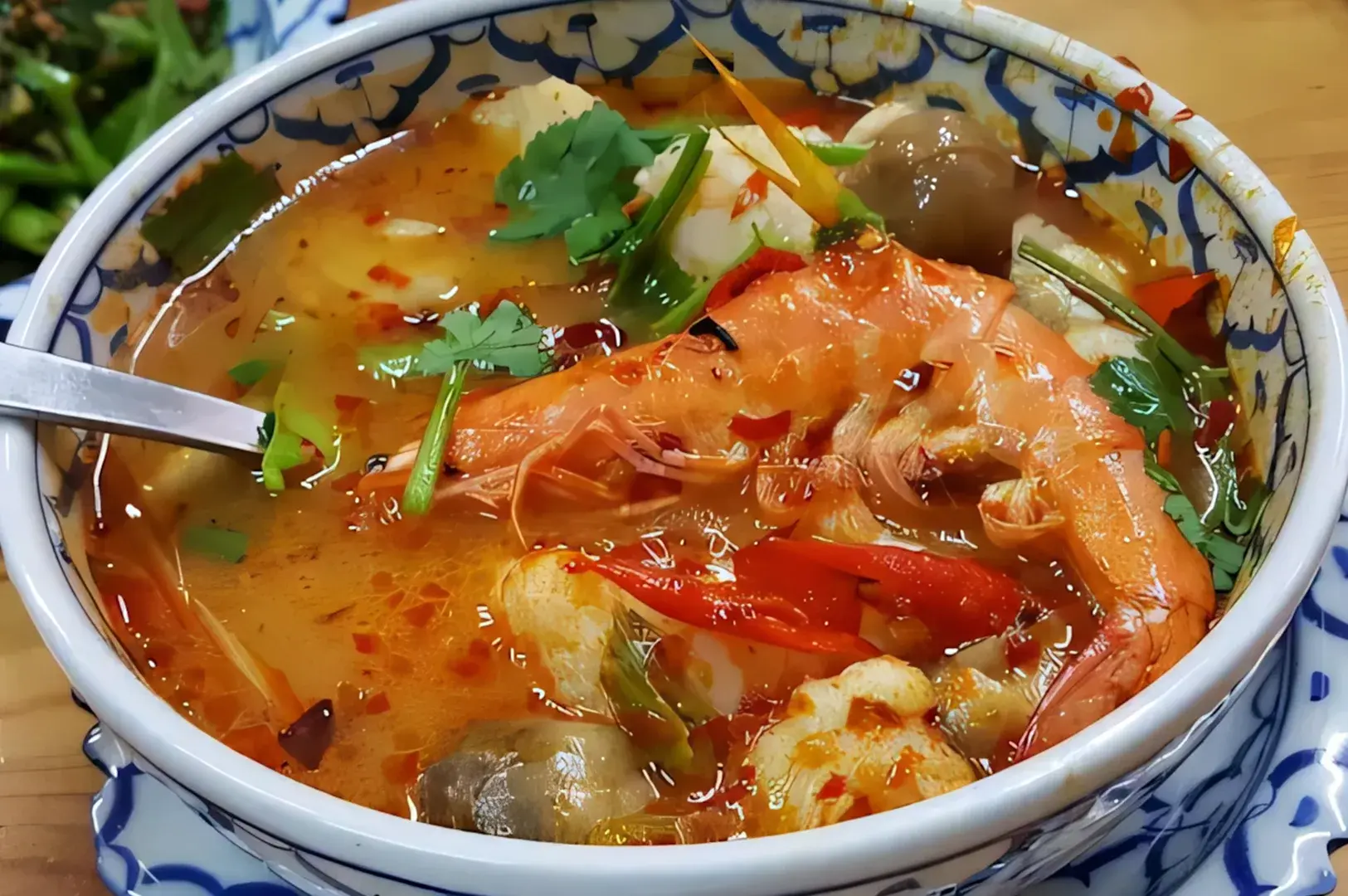
Served in a simple metal bowl, the surface shimmered with fragrant oils. Red chili seeds drifted like punctuation marks.
First sip: electric.
- Lime acidity sharp and clean
- Lemongrass and galangal aromatic, almost citrus-peel bitter
- Chili heat precise, not muddy
The shrimp snapped cleanly under the tooth. Squid was tender, not rubbery, a small but important indicator of disciplined cooking. At this price point, proper timing on seafood matters.
Tom Yum itself reflects regional trade history: chilies from the Americas, aromatics native to Southeast Asia, fish sauce shaped by fermentation traditions across coastal communities. It’s a bowl that tells you how ingredients travel across country and region, shaping culture through food.
Thai Green Curry Chicken ($9)
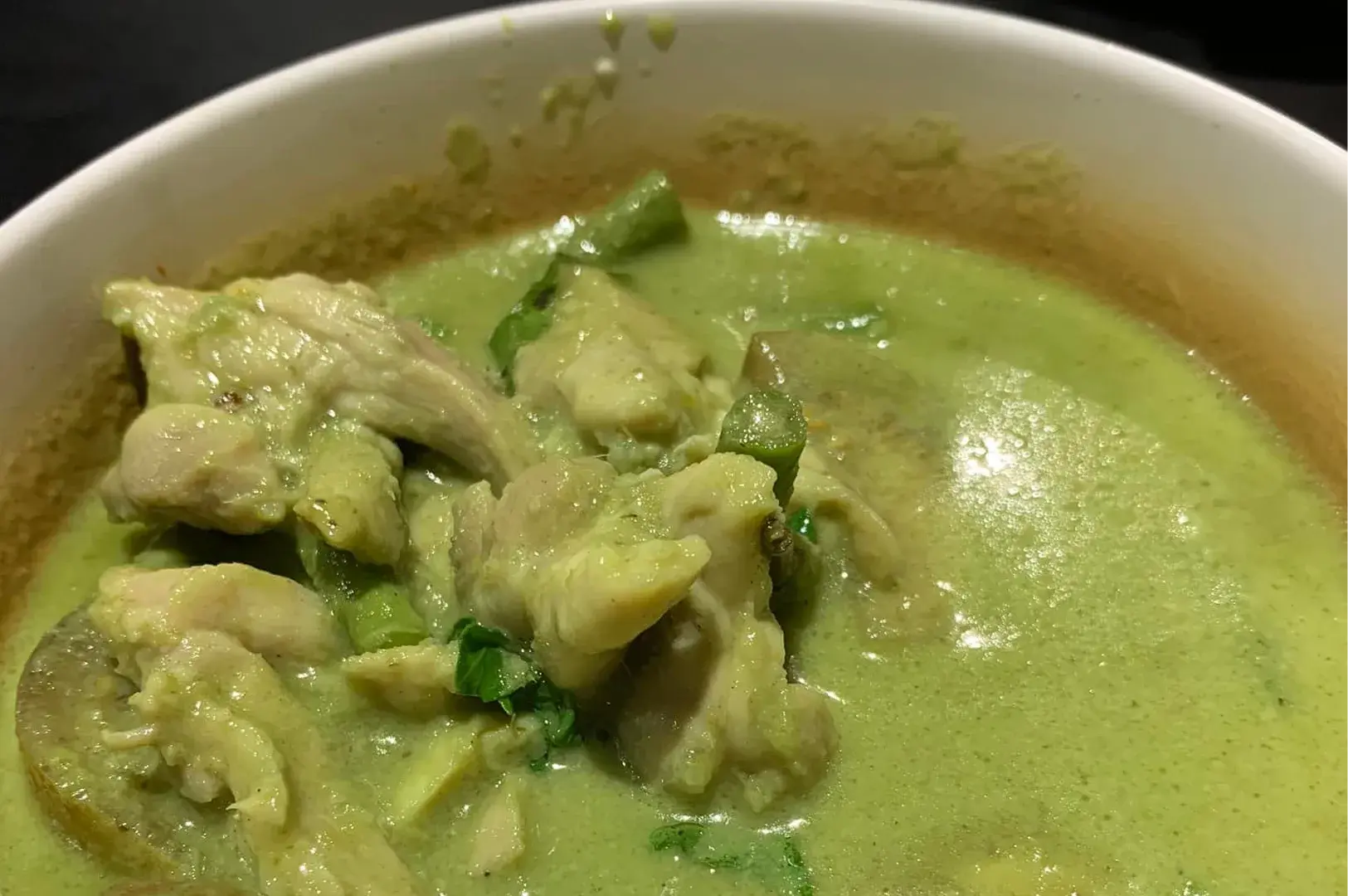
A pale green lagoon of coconut milk, thick and glossy. The aroma leaned sweet, basil-forward, almost floral.
Texture analysis:
- Curry body: creamy, coating, medium viscosity
- Chicken: tender, evenly sliced
- Eggplant: sponge-like, absorbing sauce effectively
It’s sweeter than versions I’ve logged in Chiang Mai, likely adjusted for local palate availability and preference, but that makes it broadly appealing. Spoon it over jasmine grains ($1), and the rice acts as a neutral carrier, moderating heat while absorbing fat.
This is where technique shows. Balancing coconut, chili paste, and basil requires restraint. It’s accessible Thai cuisine, tuned for Singapore’s multicultural diners.
Mango Salad ($6)
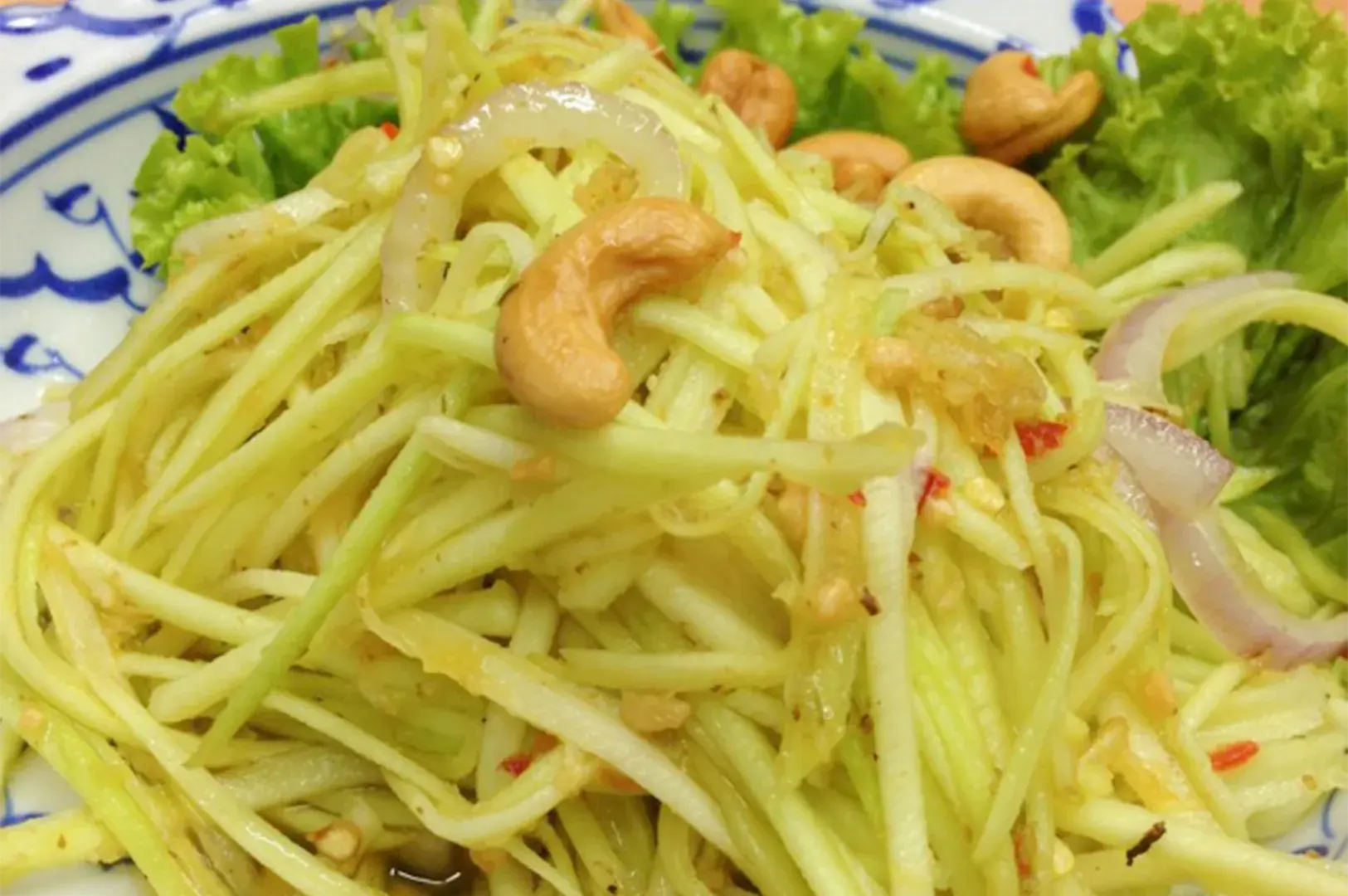
Visually striking, shredded green mango and carrot, generously topped with roasted peanuts.
Texture contrast:
- Crisp, fibrous mango
- Crunch from peanuts
- Dressing that moves between sour lime, palm sugar sweetness, and creeping chili heat
Every bite is bright, sharp, refreshing.
I remember pausing after the second forkful. The acidity reset my palate completely after the curry. Thai culinary practices prioritize this interplay, creamy next to crisp, rich next to raw. It’s thoughtful presentation rooted in balance.
Basil Pork ($7)
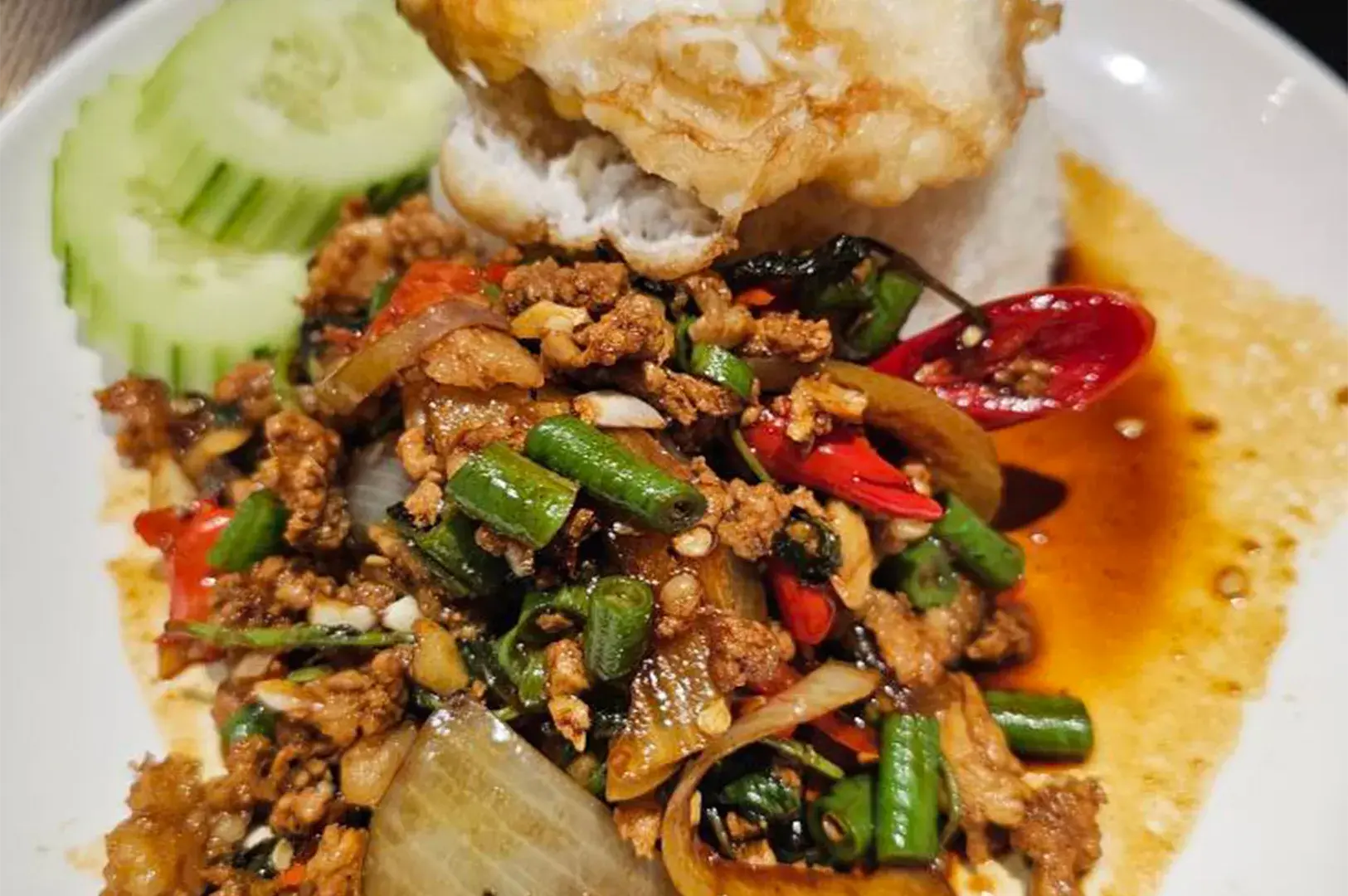
Fragrant with holy basil. Proper aroma release when it hit the table.
However:
- Slightly oily
- Lacked the dry, smoky char I associate with a textbook pad krapow
Still satisfying over rice. Imperfect, but honest. And honesty is a recurring feature of good everyday cooking.
The Service: Efficient Systems at Nakhon Kitchen
This operation runs like optimized code.
Orders are taken fast. Tables cleared faster. No excessive warmth, but no hostility either. The goal is throughput, maximize seating turnover without compromising core dishes.
Our four plates landed within 10 minutes. That speed matters when queues stretch outside. In high-volume environments, streamlined food preparation becomes a survival mechanism.
This isn’t leisurely dining. It’s functional. Eat well. Leave satisfied. Allow the next group of people to sit.
Operational Notes About Nakhon Kitchen
The Wait
- Tuesday evening: ~30 minutes
- Weekends: 45+ minutes
- Strategy: Arrive early or late
The Bill
Four dishes + two rice = under $30.
For this quality of Thai cuisine, that’s strong value in this region.
The Rules
- No reservations
- Walk-in only
- Entire group must be present
African Cuisine in the World
Stepping back from Thai cuisine, it’s worth examining how other regional cuisines express identity through similar principles.
African cuisine is not monolithic. It is deeply regional, shaped by climate, migration, and historic trade routes.
East African Cuisine
In east african cuisine, coastal regions like Kenya and Tanzania reflect Indian Ocean exchange. You see:
- Coconut-based stews
- Fragrant rice preparations
- Flatbreads influenced by centuries of maritime trade
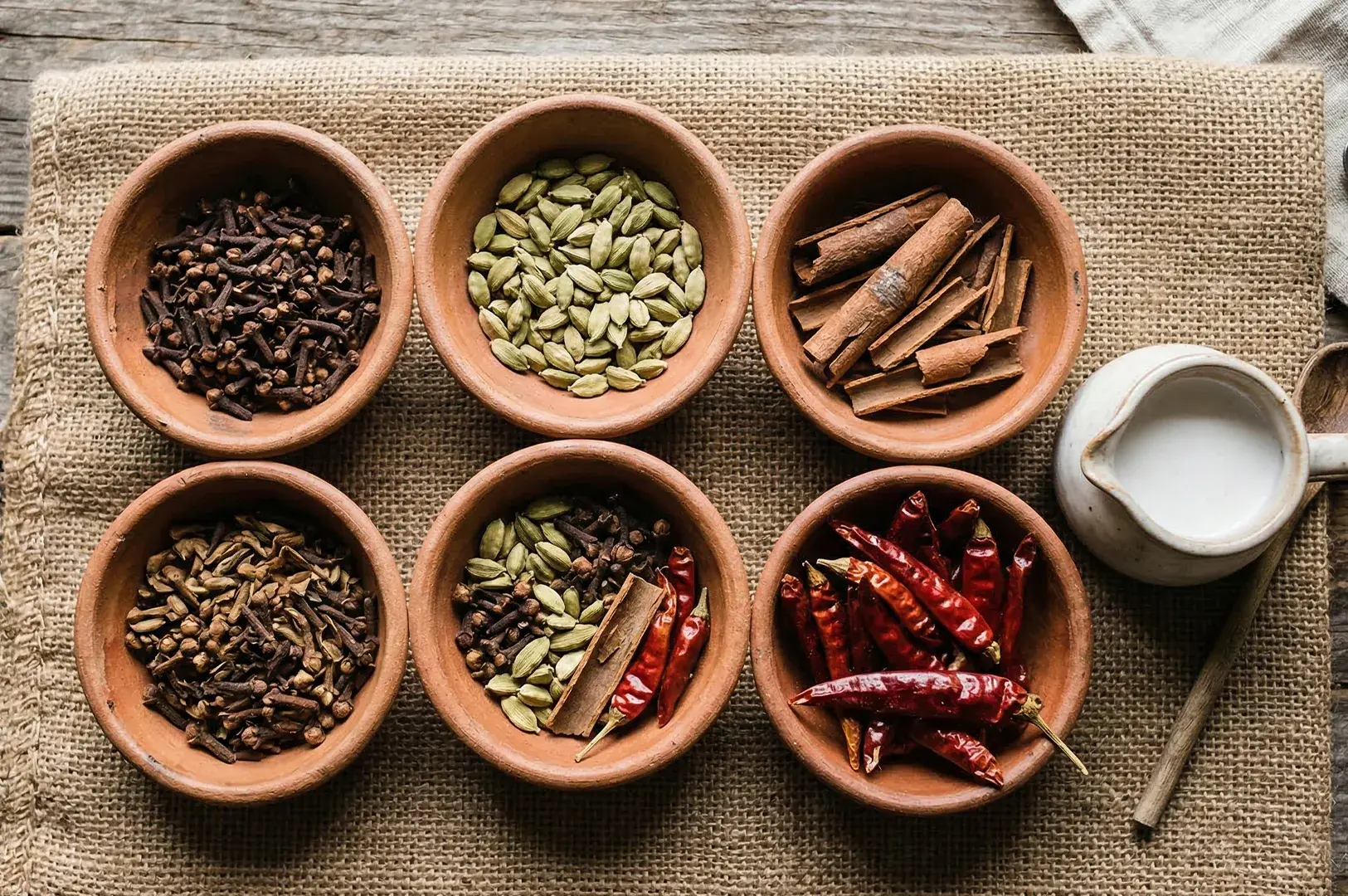
Spice integration here parallels aspects of Southeast Asian cooking, cardamom, clove, and cinnamon arrived through overlapping routes. The sensory profile often balances warmth and sweetness, similar to Thai curry structures.
Central African Cuisine
Central african cuisine leans heavily on starch staples, cassava, plantains, millet.
Key characteristics:
- Hearty stews
- Smoked proteins
- Groundnut (peanut) sauces
Texture dominates: thick, sustaining, built for energy density. These culinary practices prioritize sustenance and local availability over ornamentation.
West African Cuisine
West african cuisine is bold and layered. Think:
- Tomato-based stews
- Fermented locust beans
- Generous chili heat
- Ground peanuts for body and depth
Fermentation plays a structural role here, much like fish sauce in Southeast Asia. Across continents, societies independently developed techniques to preserve food, intensify umami, and extend shelf life.
These parallels reinforce how cuisine in the world evolves through necessity, adaptation, and movement of ingredients.
Indian Cuisine and Cross-Regional Trade
Indian cuisine offers another instructive comparison.
From north to south, the variety is staggering:
- Creamy kormas thickened with nuts and dairy
- South Indian coconut curries
- Fermented batters like dosa and idli
The fermentation of rice and lentils in dosa preparation mirrors Southeast Asian reliance on microbial transformation. Different country, similar solution.
Historically, Indian Ocean trade connected India, East Africa, and Southeast Asia. Spices, grains, and techniques traveled with merchants. Culinary borders blurred long before modern globalization.
Pattern Recognition and Why this Matters
Sitting at Nakhon Kitchen, under fluorescent lights, I’m reminded that even a humble kopitiam stall participates in a much larger story.
Every bowl of Tom Yum carries centuries of trade.
Every mango salad reflects balance principles found across african cuisine and indian cuisine.
Every shared table reflects how people gather around food to express culture.
To continue exploring cuisine is to map history through flavour.
As such, there are exquisite options like premium sashimi Singapore, where craftsmanship meets the finest seafood.
Analytical Summary: Is It Worth the Queue?
Absolutely, yes. But you have to know what you’re signing up for.
Nakhon Kitchen is not for a romantic first date or a quiet business dinner. It’s for when you and your friends have a serious, no-nonsense craving for authentic Thai flavours without wanting to burn a hole in your pocket. It’s loud, it’s crowded, and it’s a little chaotic.
The trade-off for the basic environment and the long queue is food that consistently delivers. The flavours are bold, punchy, and satisfyingly close to what you’d find on the streets of Bangkok. For the price you pay, the quality is exceptional. It’s a place that proves great food doesn’t need fancy decor, just a kitchen that understands the soul of its cuisine. I’ll definitely be back, but next time, I’m wearing comfortable shoes for the wait.

Authentic Jeonju Bibimbap: Why Korea’s Culinary Capital Makes It Best
Eat Drink Asia Team | October 21, 2025
Picture this: A steaming Korean rice bowl is placed before you in Jeonju, South Korea. Vibrant arcs of seasoned bean sprouts, glossy strips of Korean beef, a golden runny yolk resting atop perfectly cooked mixed rice, and a dollop of rich red bibimbap sauce invite you to mix it all together. As you stir, the…
-
Communal Dining Traditions in Asia: Shared Meals, Lasting Bonds, and Cultural Heritage
Dio Asahi | October 18, 2025
Imagine a dining table crowded with large platters of steaming food, the smell of spices in the air, small bowls arranged neatly around the shared table, and laughter echoing across the room. Across Asia, dining tables play a central role in communal dining traditions, serving as the focal point for etiquette, social interaction, and the…
-
Century-Old Dumpling Techniques: Ancient Wisdom in Modern Kitchens
Eda Wong | October 16, 2025
Her hands move in a blur, a dance of muscle memory refined over sixty years. In a small, steam-filled kitchen in Shanghai, an elderly woman transforms a humble circle of dumpling dough into a perfect, 20-pleat xiao long bao. Each pinch and fold is a syllable in a story passed down through generations-prime examples of…
-
Ca Phe Sua Da: The Cultural Phenomenon of Authentic Vietnamese Coffee
Eat Drink Asia Team | October 14, 2025
The dawn breaks over Hanoi, and the city awakens not to alarm clocks but to the clatter of tiny spoons and the metallic click of filters. The air fills with the dark, roasted aroma of authentic Vietnamese coffee drifting from bustling corners and sidewalk stalls. They are not rushing. Instead, they are waiting-waiting for the…
-
Cao Lầu Noodles: Hoi An’s Legendary Noodle Dish with Japanese Origins
Dio Asahi | October 11, 2025
Imagine sitting on a low stool in a bustling alleyway of Hoi An’s ancient town. The warm, fragrant air is thick with the scent of sizzling marinated pork, fresh herbs, and the unmistakable aroma of fish sauce and fried rice crackers. In front of you, a bowl of Cao Lau noodles gleams, their golden brown…
-
Chinese Tea: 5,000-Year Tea Journey from Ancient Medicine to Global Beverage Phenomenon
Eda Wong | October 9, 2025
Every cup of tea enjoyed today, whether a brisk English breakfast or a delicate green tea in Tokyo, finds its lineage rooted in the heart of Chinese tea history. For nearly 5,000 years, the humble leaves of the Camellia sinensis tea plant have been cultivated, brewed, and cherished-first as ancient medicine in southern China, and…
-
The Complete Guide to Authentic Cantonese Dim Sum: Beyond Har Gow and Siu Mai
Eat Drink Asia Team | October 7, 2025
If you think eating dim sum is all about har gow and siu mai, think again. Authentic Cantonese dim sum is a dazzling showcase of Chinese culture, filled with an array of flavors, textures, and traditions that run much deeper than the classics. For both seasoned aficionados and first-time food explorers, venturing beyond the familiar…
-
Traditional Indian Lassi: Cooling Yogurt Drinks for Every Season and Region
Eda Wong | October 4, 2025
On a sweltering Indian afternoon, there is no greater relief than a tall, chilled glass of traditional Indian lassi. From bustling city streets to quiet village homes, lassi is a beloved staple that offers a moment of pure, cooling bliss. Frothy, creamy, and deeply satisfying, this yogurt drink is more than just a refreshment; it’s…
-
Gujarati Thali Guide: Western India’s Plant-Based Feast
Dio Asahi | October 2, 2025
Imagine a large, gleaming steel plate arriving at your table, a vibrant constellation of small bowls each filled with colourful and fragrant preparations. In the centre, fluffy plain rice sits next to a pile of wafer-thin, ghee-brushed Indian bread. This isn’t just an Indian meal; it’s a traditional Gujarati thali, an immersive culinary journey through…
-
Butterfly Tea: Thailand’s Magical Color-Changing Drink
Eat Drink Asia Team | September 30, 2025
Imagine pouring a cup of butterfly tea-one that radiates the deep blue color of a twilight sky, shimmering with bright blue petals from the famous butterfly pea plant. The real enchantment begins when you stir in a squeeze of lemon juice or lime juice. In an instant, this blue flower tea transforms, shifting from dark…