The damp morning mist still clings to the teakwood houses of Luang Prabang as an elderly cook tends to a glowing charcoal brazier. Sparks jump lightly into the cool air, illuminating the blackened belly of an aluminium pot. Inside, a thick, dark liquid bubbles rhythmically, releasing an incredibly aromatic cloud of charred lemongrass, sweet Thai basil, and the sharp, earthy bite of wood smoke. She gently stirs the mixture with a long wooden spoon, coaxing the dense ingredients into a cohesive, bubbling mass. The heat radiating from the stove offers a quiet comfort against the morning chill, setting an unhurried, deliberate pace for the day’s culinary journey in this quiet Laotian town.
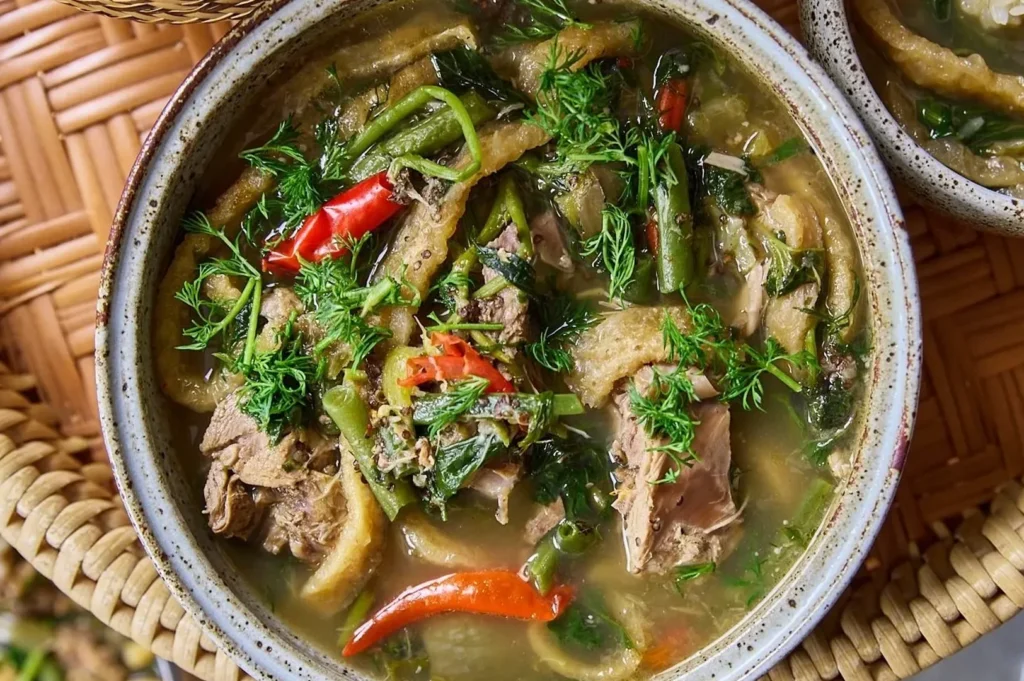
This slow-simmering cauldron holds or lam (pronounced aw-lam), a deeply complex, gently thickened Lao stew that acts as a celebration of flavours from the surrounding jungles. It is not a delicate broth, but rather a robust, heavily textured dish traditionally built on a foundation of buffalo skin, pounded sticky rice, and wild mushrooms. But the defining soul of this dish comes from a uniquely regional ingredient: sakhan (pronounced sah-kahn), a woody, fibrous vine often called forest pepper. Preparing sakhan requires a specific, preservation-focused craft ritual. The tough, knobbly stems are chopped into small, rough cylinders and tossed directly into the boiling stew. Diners do not swallow the wood; instead, they chew on the porous bark, extracting an intense, tingling spiciness that gently numbs the lips, much like Sichuan peppercorns but with a deeper, herbaceous resonance.
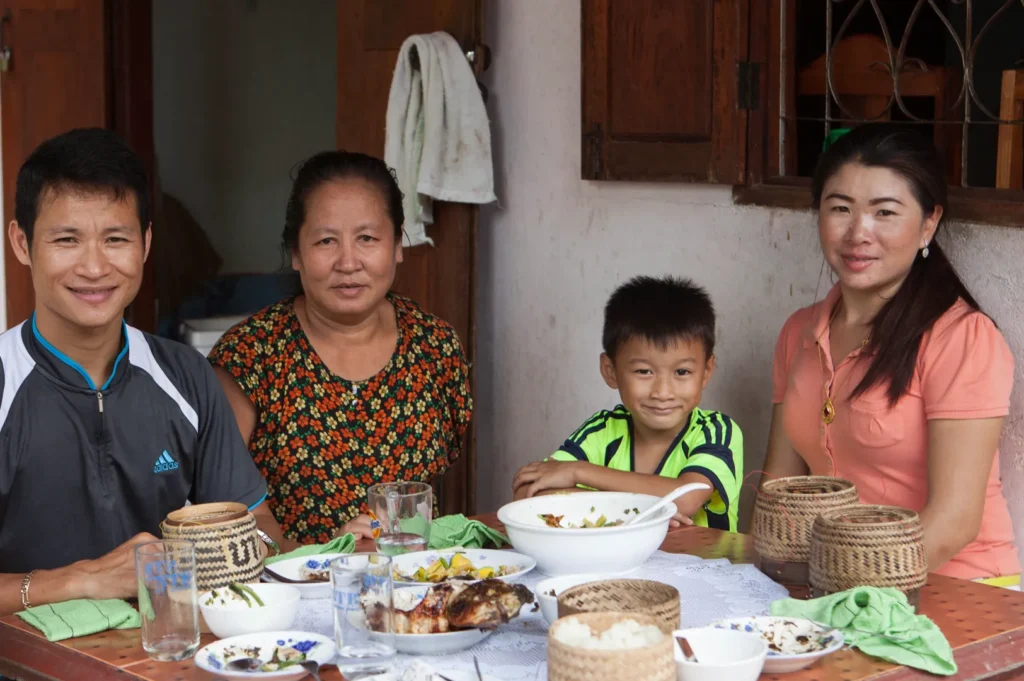
In the ancient capital, gathering around a bowl of or lam is one of the most fundamental shared experiences of local life. It reflects a profound, everyday connection to the Mekong River and the dense green mountains that cradle the city. The stew is rarely eaten alone. It demands the communal tearing of fresh, sticky rice, rolled by hand and dipped into the thick, dark gravy to soak up its earthy richness. Whether served at a quiet family dinner or prepared for a community gathering, this diverse pot of foraged vegetables and meats signals resourcefulness. It represents a way of eating that relies entirely on the immediate landscape, preserving a taste the world often overlooks in favour of more commercialised Southeast Asian curries.
What feels so vital about or lam right now is its stubborn refusal to yield to modern culinary convenience. As Eat Drink Asia highlights, the stew’s slow ritual is inseparable from its regional identity. In a time when fast-paced, trend-setting urban diets favour quick stir-fries and instant pastes, extracting the authentic, nuanced flavour of sakhan demands time-consuming effort. You cannot rush the breakdown of tough vines or the slow thickening of pounded rice. The stew requires a patient surrender to the slow boil. It stands as a quiet act of resistance, maintaining its regional identity by insisting that diners slow down, chew the fibrous bark, and actively engage with their meal rather than mindlessly consuming it.
Setting down an empty bowl, the residual tingling of the forest pepper lingers on the tongue long after the heat of the stew has faded. It is a lingering, visceral reminder of the landscape itself—a beautiful reflection of regional identity that remains deeply rooted in the soil and smoke of Luang Prabang.

The Silent Language of the Table: How Traditional Food in China Speaks Through Generations
Eda Wong | April 28, 2026
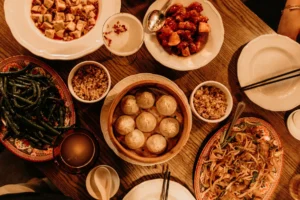
When I first tried to navigate a traditional Cantonese family dinner, I made a spectacularly embarrassing mistake. I sat down, looked at the sprawling, beautifully written menu, and confidently ordered an individual plate of sweet and sour pork just for myself. The table went completely quiet. My host gently nudged the menu back towards the…

The Golden Roux Revolution: Best Japanese Curry Singapore Spots That Redefine Comfort Food
Eat Drink Asia Team | April 25, 2026
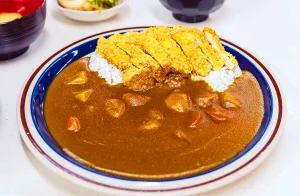
April 25, 2026 | Eat Drink Asia Team Last updated: October 15, 2026 We have always believed that a brilliant plate of Japanese curry is the ultimate culinary hug. Over the past eight months, we made it our personal mission to embark on a comprehensive curry journey across Singapore, hunting down the best Japanese curry…

Noodle Masterpieces: Celebrating the Craft
Eat Drink Asia Team | April 24, 2026
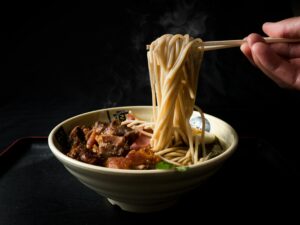
Noodles have a timeless place in the world of food, and Taste Our Traditions can attest that only few dishes are as universally loved. What makes a bowl of noodles truly stand out is not just the ingredients, but the artistry and skill behind their creation. Noodle-making is an ancient craft that demands patience, precision,…
-
Charcoal Smoke and Yakitori Evenings in Osaka
Eda Wong | April 24, 2026
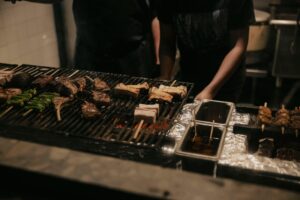
The first thing I noticed was the smoke. It didn’t rise all at once, but in thin, steady ribbons that curled upward from a narrow grill set just inches from the counter. The scent came first, warm and unmistakable, a mix of rendered chicken fat and binchōtan charcoal, clean but deeply present. Inside the small…
-
Cracking the Code of Telur Thai: Inside Egg Thai West Mall, a Kitchen That Tells a Story
Dio Asahi | April 23, 2026
I visited on a Tuesday around 7pm, completely exhausted from a long day of meetings and staring at screens. I wasn’t looking for a fancy culinary journey or a trend-setting dining experience. Honestly, I just wanted a quick, comforting meal that would hit the spot without emptying my wallet. That specific craving led me to…

Sanook Kitchen’s Thai Omelette Rice: A Heartland Answer to Singapore’s Thai Food Saturation
Eda Wong | April 21, 2026
If you live in Singapore, you know that finding Thai food is about as difficult as finding a humid day. We are spoiled for choice. From gritty hawker stalls serving fiery basil pork to upscale restaurants where a bowl of tom yum costs more than a taxi ride, the options are endless. But sometimes, you…
-
The Golden Fold: How Thailand’s Street-Side Omelette Became a Morning Ritual
Dio Asahi | April 18, 2026
Dawn breaks over Bangkok with a familiar symphony. Before the intense heat settles and the traffic swells into a steady roar, the city streets belong to the food vendors. Amid the clatter of metal tools and the hum of early commuters, one sound stands out: the furious, bubbling sizzle of eggs hitting smoking-hot oil. This…

Lesson I Didn’t Expect: How Fourgather’s Easy Asian Recipes Taught Me to Cook at Home
Eda Wong | April 16, 2026
For the longest time, I was convinced that cooking authentic Thai food at home was out of my league. I imagined complex pastes, hours of simmering, and a mountain of ingredients I couldn’t pronounce. I was happy to leave it to the experts. But a casual dinner at Fourgather, a stylish Thai eatery in Telok…
-
Between Aesthetic and Appetite: The Modern Food Blogger’s Dilemma
Eda Wong | April 15, 2026
In our first, would probably say, emotional editorial, I would like to open with how there is a particular kind of silence that happens before a dish is eaten now. Not the quiet of anticipation, but the pause of positioning, a hand hovering just above the plate, adjusting the angle of a bowl so the…
-
Chasing Flavor: How Fook Kin Taught Us to Cook Asian Cuisine Recipes the Right Way
Eat Drink Asia Team | April 14, 2026
For years, we told ourselves that truly great Asian cooking was a mystical art form, a craft reserved for seasoned hawker uncles or Michelin-starred chefs with decades of experience. Our own attempts at home often felt like pale imitations, lacking that deep, smoky flavour or that perfect textural contrast we craved. Then, we had dinner…