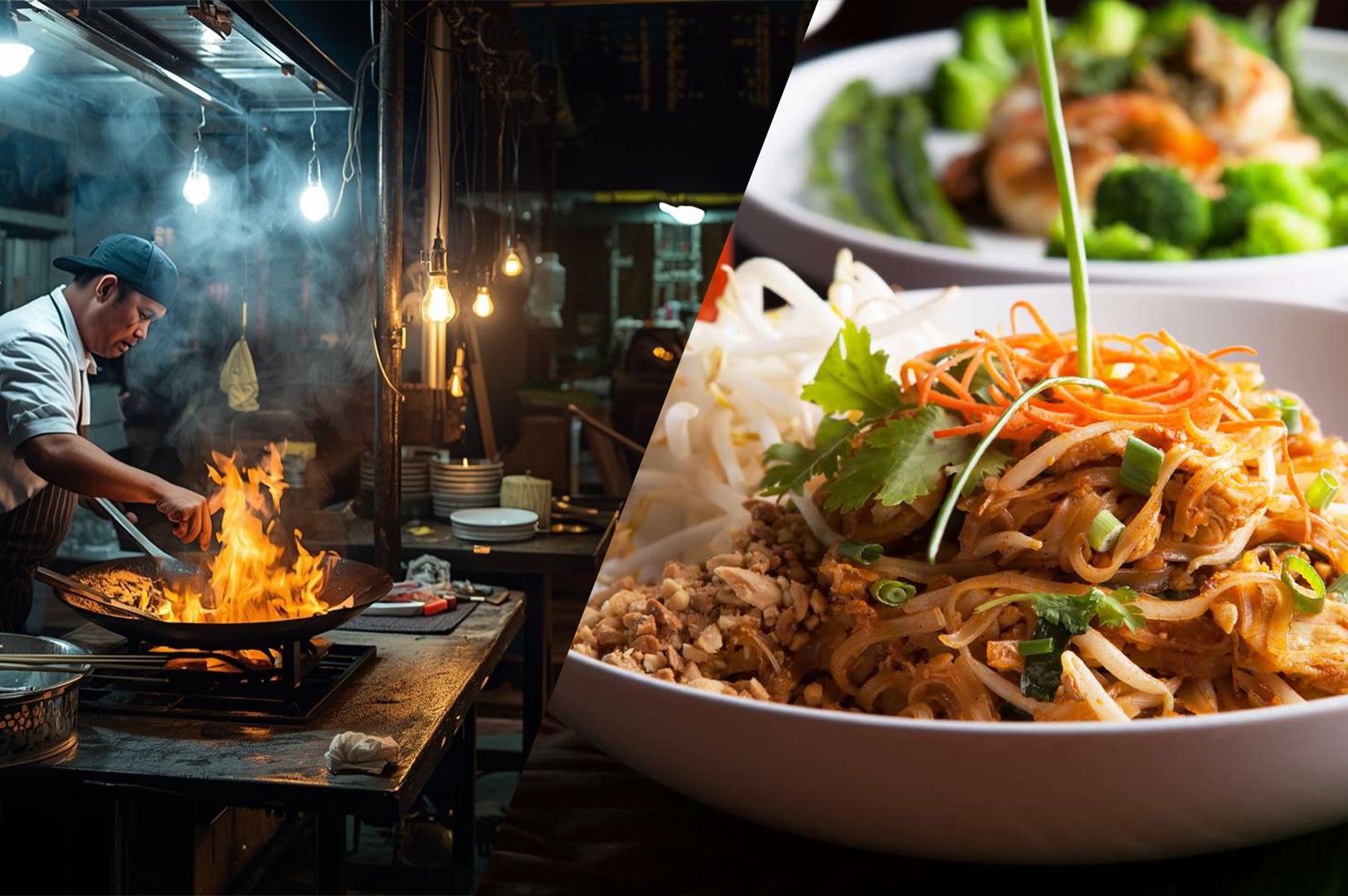
Pad Thai is more than just a staple of Thai Food; it’s a Global Phenomenon. From bustling street carts in Bangkok to high-end Thai Restaurants in New York, this iconic Pad Thai Dish has captured the hearts and palates of food lovers everywhere. The best Pad Thai rivals what you would find in a typical Thai restaurant, where authenticity and quality are paramount. Its unique harmony of Sweet, Sour, and Savory Flavors, combined with a delightful mix of textures, makes it an unforgettable culinary experience.
But what truly makes an Authentic Pad Thai Dish? While the tangy Pad Thai Sauce and fresh garnishes like Fresh Bean Sprouts, Roasted Peanuts, and Lime Wedges are crucial, the secret often lies in an overlooked component: the Noodles for Pad Thai. The specific type and preparation of the rice noodles are fundamental to the dish’s identity. This guide will take you on a deep dive into the world of the perfect noodles for Pad Thai, exploring why this single ingredient is the key to authenticity.
Understanding the Pad Thai Dish and Pad Thai Recipe
At its core, a Pad Thai Dish is a stir fry of Flat Rice Noodles that masterfully balances a complex flavor profile. It’s a symphony of ingredients working in concert. The Signature Pad Thai Sauce, typically a blend of Tamarind Paste or Tamarind Puree, Tamarind Concentrate, Fish Sauce, Palm Sugar or Light Brown Sugar, and Fresh Lime Juice, provides a sweet and tangy base. This is complemented by additions like Extra Firm Tofu, Sweet Preserved Radish, Bell Pepper, and Succulent Shrimp or Typically Chicken, as well as traditional dried shrimp, which adds depth of flavor, a distinctive seafood umami, and authenticity to the dish.
Fresh components like Mung Bean Sprouts, Garlic Chives, Green Onions, Fresh Cilantro, and Crushed Peanuts are tossed in at the end, providing a refreshing crunch that cuts through the richness of the stir fried veggies and noodles. Each ingredient has a role, but the Pad Thai Noodles are the Foundation that holds everything together.
The right noodles for Pad Thai will soak up the vibrant sauce without becoming mushy, maintaining a pleasant chewiness that is central to the experience. While there are regional variations of the Pad Thai Dish across Thailand—some sweeter, some spicier with chili flakes or cayenne pepper—the one constant in achieving an authentic Pad Thai is the use of Proper Thai Noodles.
The Star Ingredient: Noodles for Pad Thai and Pad Thai Noodles
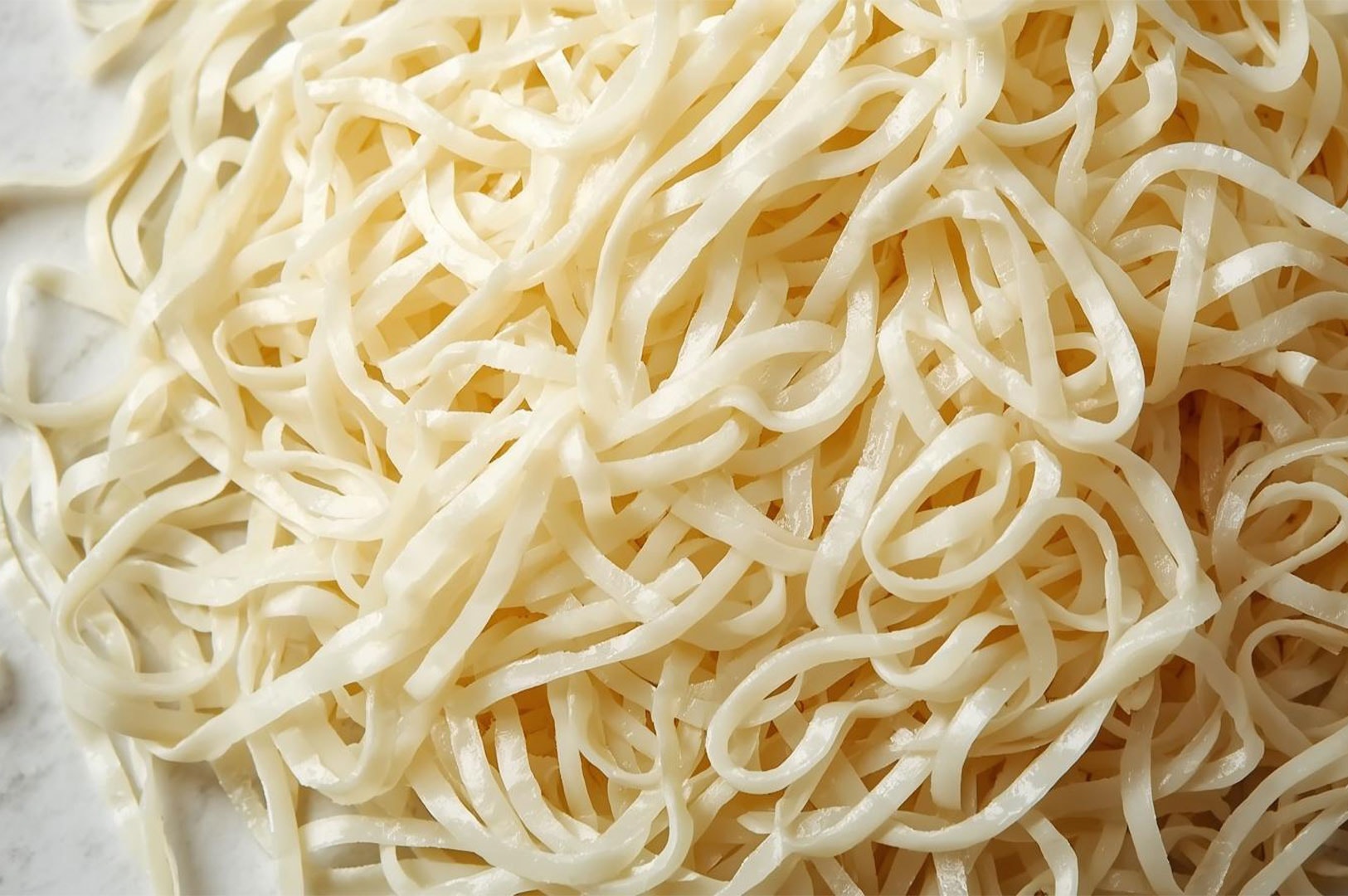
The traditional and undisputed champion noodles for Pad Thai is a specific type of Thai rice noodle known as Sen Lek, a popular variety of Pad Thai Noodles.
What are Sen Lek (Rice Noodles)?
Sen Lek are Flat Rice Noodles, typically 3-5 Millimeters in Width, often referred to as Rice Stick Noodles. They are translucent when cooked and possess a wonderfully soft yet chewy texture. Their ability to absorb flavors without falling apart in a hot wok over Medium High Heat is precisely why they are the go-to choice for these iconic stir-fried noodles.
How to Identify Authentic Pad Thai Noodles
When you’re shopping for the right noodles for Pad Thai, look for packages labeled “Rice Stick Noodles“or “Pad Thai Noodles.” Check the width; they should be flat and about the width of fettuccine, not as wide as Chinese fun noodles or as thin as vermicelli. The ingredients list should be simple, primarily consisting of Rice Flour and Water.
Fresh vs. Dried Rice Noodles
- Dried Rice Noodles: This is the most common and accessible option for an easy Pad Thai Recipe. Dried rice noodles have a long shelf life and, when prepared correctly, yield excellent results. They require Soaking Noodles Before Cooking to rehydrate them.
- Fresh Pad Thai Noodles: If you can find them at an Asian market, fresh rice noodles offer a superior texture.
Popular Brands and Storage
Several reliable brands, such as Erawan (Three Ladies Brand), are widely available in Asian grocery stores and online. When storing dried rice noodles, keep them in a cool, dry place like your pantry. Once opened, seal the package tightly in an Airtight Container to maintain freshness. Fresh noodles should be refrigerated and used within a few days.
Preparing the Perfect Noodles for Pad Thai Dish in an Authentic Pad Thai Recipe

The preparation of your noodles is just as important as the selection. How you treat your rice noodles before they even hit the hot wok will make or break your final dish.
A medium bowl is ideal for soaking the dried rice noodles before cooking, ensuring they soften evenly and are ready for stir-frying.
Once your noodles are drained and ready, a small bowl can be used to mix the Pad Thai sauce ingredients before adding them to the wok, allowing for a smooth and efficient cooking process.
Soaking Noodles Techniques for Dried Rice Noodles
The golden rule for preparing dried rice noodles is to Soak Noodles, Not Boil. Boiling them before stir frying will overcook them, leading to a mushy and broken mess in the pan.
- Cold Water Soak: For the best texture, soak the dried noodles in Cold Water or Room-Temperature Water for about 30-60 minutes, or until they are limp and pliable but still have a firm core. This slow rehydration process ensures the noodles cook evenly in the wok.
- Warm or Hot Water Soak (Quick Method): If you’re short on time, you can soak the noodles in Warm or Hot Water for about 15-20 minutes.
Common Mistakes to Avoid When You Make Pad Thai
- Using Boiling Water to Soak Noodles: This is the most frequent error. Boiling water will pre-cook the exterior of the noodles too quickly, leaving the inside hard and the outside gummy.
- Soaking for Too Long: Over-soaked noodles will break apart during stir fry. They should be flexible but not completely soft.
- Not Draining Properly: After soaking, make sure to Drain the Noodles Thoroughly. Excess water will steam the noodles in the wok instead of stir frying them, preventing them from absorbing the Pad Thai Sauce properly.
Cooking Pad Thai: Bringing It All Together in the Wok

Crafting Pad Thai represents a contemplative communion where Meticulously Curated Ingredients unite within the sanctuary of a sizzling wok. The essence of an authentic Pad Thai lies in the Artisanal Stir-Frying Ritual—a practice demanding both intense heat and fluid, meditative movements to ensure each component achieves its destined perfection.
Begin by warming a carefully measured portion of Peanut Oil within your wok over Medium-High Flame. When the oil begins its gentle shimmer, introduce Finely Chopped Shallots, allowing them to transform until they become translucent jewels, releasing their aromatic heritage.
With serene intention, add your chosen protein—whether it be Extra Firm Tofu, Succulent Shrimp, or Tender Chicken—stirring with purposeful movements until the ingredients achieve their perfect essence. Pour in Whisked Eggs and scramble them in the wok, creating a delicate scrambled egg before folding it back into harmonious union with your cooked protein, creating that distinctive Pad Thai texture.
With your vegetables and protein achieving perfect balance, introduce the soaked and drained Rice Noodles to this aromatic sanctuary. At this stage, add noodles to the wok and stir-fry these silken strands for approximately two minutes, ensuring their even integration with the assembled ingredients.
Now pour forth your meticulously crafted Pad Thai Sauce—a harmonious blend of fish sauce, soy sauce, brown sugar, tamarind paste, and a splash of fresh lime essence. Optionally, add dark soy sauce to enhance the color of the dish. If tamarind paste is unavailable, rice vinegar can be used as a substitute or as part of the sauce for flavor balance.
Complete this culinary meditation by adding Fresh Bean Sprouts, Precisely Chopped Green Onions, and a Generous Portion of Artisanally Crushed Peanuts. Perform a final, graceful toss, taste with mindful attention, and adjust the seasoning with additional fish sauce, soy sauce, or lime essence as your palate guides.
Serve immediately, adorned with additional Bean Sprouts, Lime Quarters, and More Crushed Peanuts for that authentic Pad Thai experience. For extra freshness and crunch, add more bean sprouts on top as a final garnish.
Easy and Best Pad Thai Recipes
Pad Thai emerges as a contemplative symphony of textures and flavors, where Silken Rice Noodles embrace vibrant vegetables in harmonious union with your chosen protein. The essence of any transcendent Pad Thai lies within the artisanal balance of its sauce, a carefully orchestrated blend that delivers the sacred trinity of Sweet, Sour, and Umami—notes that linger in memory long after the final bite.
For those seeking a more accessible path to Pad Thai mastery, certain refined compromises exist. Curated Pre-Made Sauces can honor time constraints, while thoughtfully selected pantry staples—Brown Sugar’s Earthy Sweetness, soy sauce’s fermented complexity—may stand as worthy substitutes when traditional elements remain elusive.
Whether your quest leads toward time-honored tradition or the practicality of a weeknight refuge, the essential wisdom remains constant: reverence for Flavor Balance and the integrity of each rice noodle strand. Through mindful attention to quality ingredients and patient technique, you can manifest Pad Thai that rivals the most revered Thai culinary temples—transforming your own kitchen into a sanctuary of authentic taste.
Alternative Noodles for Pad Thai Dish in a Gluten Free or Different Thai Diet
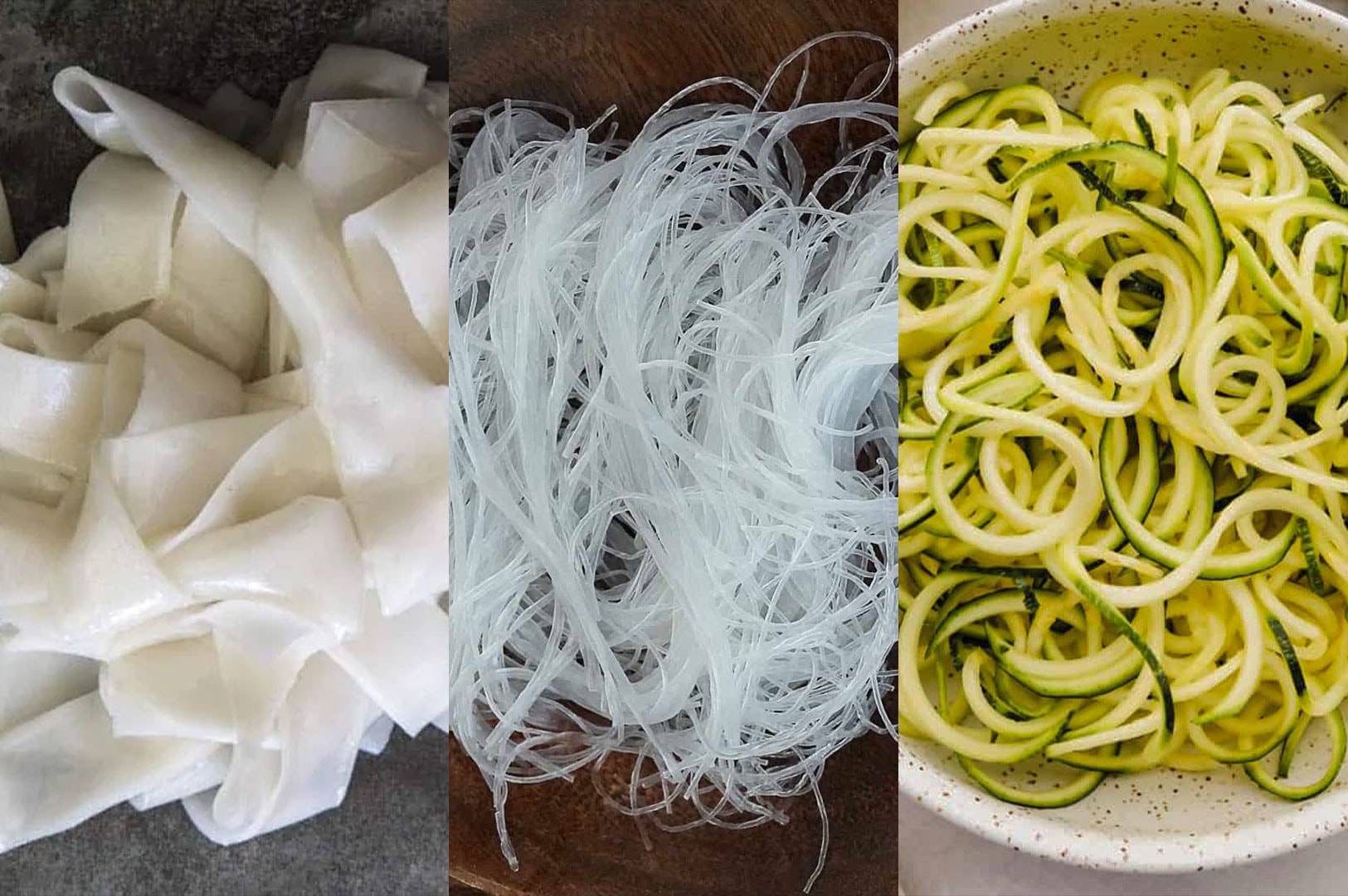
While Sen Lek are essential for an authentic Pad Thai, what if you can’t find them or have dietary restrictions? It is possible to make a tasty Pad Thai Dish with other noodles, but be aware that the final result will be different.
Gluten Free and Other Options
- Wider Rice Noodles (Sen Yai): These are traditionally used for dishes like Pad See Ew but can work in a pinch. They will create a softer, less chewy dish.
- Zucchini or Sweet Potato Noodles: For a low-carb, gluten free alternative, spiralized vegetables can be used. They won’t replicate the texture but will create a fresh, healthy take on the dish.
- Glass Noodles (Woon Sen): These thin, translucent noodles made from mung bean starch create a much lighter and springier version of the dish.
Conclusion: Make Pad Thai Like the Best Pad Thai Recipe
The journey to creating the perfect Pad Thai Dish is paved with attention to detail, and it starts with selecting and preparing the right noodles for Pad Thai. The chewy, absorbent, and delicate nature of Sen Lek Rice Noodles is not just a tradition; it is fundamental to the texture and flavor that has made this dish a global favorite.
Now that you understand the crucial role of the noodles, you’re one step closer to mastering this Thai classic. For a complete guide to making Pad Thai from start to finish, including the full authentic Pad Thai Recipe and cooking techniques, check out our detailed article: Thailand Food Pad Thai: Thailand’s Iconic Stir-Fried Noodle Dish. Serve Immediately for the Best Experience!

The Neighbourhood Restaurant Test: How to Spot Truly Authentic Cuisine Restaurants in Your Area
Eda Wong | March 31, 2026
A friend texted me last week: “I’m outside this new Vietnamese place. How do I know if it’s legit before I waste my money?” It’s a question I get often. We’ve all been there, drawn in by a cool sign, only to get a plate of sad, sweet, tourist-grade pad thai that tastes like ketchup….
-
Cuisine in the World Meets Singapore: Inside Nakhon Kitchen’s Cross-Cultural Magic
Dio Asahi | March 26, 2026
There’s a rite of passage for any food lover living in the East of Singapore, and it involves a queue. Specifically, the perpetually long, snaking queue outside Nakhon Kitchen in Bedok. I’d heard the legends for years: authentic Thai food, rock-bottom prices, and a wait time that tests your commitment. So, on a Tuesday evening…
-
The Spice Route Secrets: A Deep Dive into Malay Ethnic Food
Eda Wong | March 24, 2026
My first time ordering Nasi Padang in Geylang Serai was overwhelming, I randomly picked dishes and was shocked by a $20 bill due to premium beef rendang and squid. That taught me to always ask seafood prices and that Malay food is a complex, modular cuisine. Malay food is everywhere in Singapore, in hawker centres,…
-
The Shokunin Spirit: How Japan’s Craftsman Philosophy Lives Inside Singapore’s Most Disciplined Omakase Counter
Dio Asahi | March 21, 2026
The fire is not roaring; it is breathing. In a small, darkened workshop in Sakai, a swordsmith watches the colour of the steel with eyes that have tracked the same transformation for forty years. He does not look at a clock. He listens to the hum of the charcoal. He waits for the metal to…
-
The Evolution of the Plate: How History Transformed Iconic Malaysian Dishes
Eda Wong | March 19, 2026
I used to think I understood Malaysian food. As a Singaporean, it’s practically in my DNA, right? Nasi lemak for breakfast, a cheeky roti canai for supper – I thought I had it all figured out. Then I spent a week eating my way through Penang and Kuala Lumpur, and I realised I knew absolutely…
-
The Soul of the Table: An Educational Guide to the Role of Food in Malaysian Culture
Eat Drink Asia Team | March 17, 2026
We still remember our first collective Rumah Terbuka (Open House) experience in Kuala Lumpur.Standing at the doorway of a home during Hari Raya, we were utterly paralyzed by the sheer volume of people and the aroma of Malaysian cooking. There were aunties ladling beef rendang and tables groaning under the weight of colourful kuih. “Do…
-
Asian Food Comfort Trends: Why Broths and Bowls are Dominating Globally
Eda Wong | March 14, 2026
I still remember the first time I faced a “build-your-own” Mala Xiang Guo counter. I stood there, plastic tongs in hand, completely paralyzed by the mountain of choices. Lotus root? Kelp knots? three different types of tofu skin? My anxiety spiked. I panicked, grabbed way too much luncheon meat, and ended up with a $28…
-
The Fifth Element: A Masterclass on Umami in East Asian Cuisine
Dio Asahi | March 12, 2026
I’ll never forget the first time I made miso soup from scratch. Not the instant kind, but the “proper” way. I boiled water, dissolved miso paste, added tofu, and waited. It tasted flat, salty and cloudy but missing the deep, satisfying flavor I loved in Japanese restaurants. I thought maybe I needed better miso. Years…
-
Why My Quest Ended at Yummy Western (409 AMK)
Dio Asahi | March 10, 2026
There’s a specific magic to a late-night supper hunt in Singapore. It’s the ritual of chasing a craving through the humidity to find that one stall that hits the spot. For me, that meant a pilgrimage to Ang Mo Kio Avenue 10. I arrived at 10 PM on a Friday, just as the ‘supper soul’…
-
A Taste of Time: My Dinner at Guan Hoe Soon
Eda Wong | March 7, 2026
There’s something special about visiting a place that has seen decades of Singapore’s history unfold. Guan Hoe Soon, tucked away on Joo Chiat Road, holds the title of Singapore’s oldest Nyonya restaurant, and you can feel that heritage the moment you step inside. I’d heard about it for years, a place where recipes aren’t just…