The fire is not roaring; it is breathing. In a small, darkened workshop in Sakai, a swordsmith watches the colour of the steel with eyes that have tracked the same transformation for forty years. He does not look at a clock. He listens to the hum of the charcoal. He waits for the metal to reach a shade of red that exists only for a fleeting second—a colour that signals the precise moment when earth and fire are ready to yield to his hammer.
There is no audience here. There is no applause when the blade is quenched. There is only the artisan and the material, locked in a silent dialogue that will continue until his hands can no longer hold the tongs.
This is the essence of the shokunin (職人). To translate this word simply as “craftsman” is to strip it of its soul. In Japanese culture, a shokunin is not merely someone who makes things; they are someone who has surrendered their ego to the pursuit of mastery in a single, deepening discipline. It is a spiritual obligation to do one’s very best, not for profit or recognition, but for the sake of the craft itself.
The Weight of a Single Path
In a world obsessed with scaling, franchising, and “pivoting,” the shokunin philosophy stands as a quiet act of rebellion. It values depth over breadth. It chooses the infinite refinement of one thing over the mediocre production of many. It is the belief that if you polish a stone every day for fifty years, you will eventually see the universe reflected in it.
In the heart of Singapore, amidst the neon glare and hurried ambition of Orchard Road, this ancient spirit has found a sanctuary. It lives inside a modest, eight-seat counter at Cuppage Plaza known as Sushi Masa by Ki-setsu.
Finding Stillness in the City of Speed
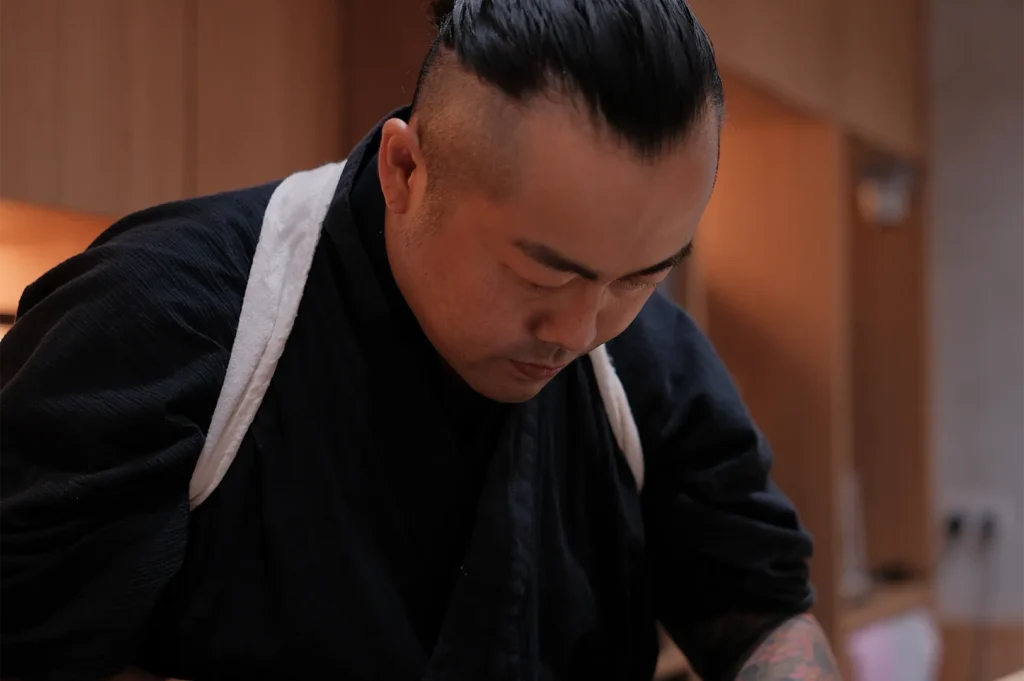
Cuppage Plaza is an anomaly in itself—a weathered, labyrinthine building that feels more like a portal to 1980s Tokyo than a mall in 2026 Singapore. It is here that Chef Masa from Sushi Masa by Ki-setsu has chosen to practise his craft. He is not a restaurateur in the modern sense; he is a custodian of the shokunin spirit.
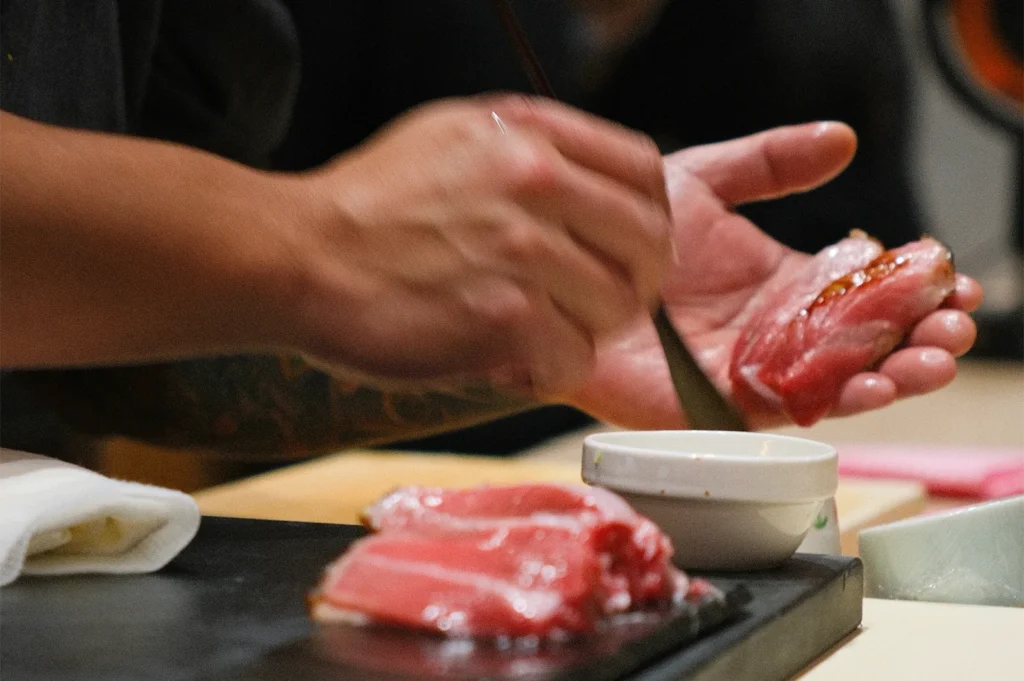
To dine here is not merely to eat; it is to witness a philosophy in motion. There are no sous chefs plating your nigiri. There is no expansion plan to open three more outlets by next year. There is only Chef Masa, standing behind the blonde wood counter, shaping rice and fish with the same meditative focus as the swordsmith in Sakai.
The Philosophy of the Solo Practitioner
Why does he refuse to delegate? In the shokunin tradition, the work cannot be separated from the worker. The warmth of the hands, the rhythm of the breathing, the precise pressure applied to the shari (sushi rice)—these are not technical steps; they are an extension of the chef’s own life force, or ki. To hand this over to another would be to dilute the spirit of the offering.
This refusal to scale is often baffling to the modern business mind. But for the shokunin, growth is measured vertically, not horizontally. The goal is not to serve more customers, but to serve the same number of customers better than yesterday. It is a relentless, internal competition where the only opponent is one’s previous self.
Ki-setsu: Listening to the Voice of Nature
The name of the counter, Ki-setsu, means “season.” But in the context of a Japanese omakase counter, seasonality is not just about using ingredients that are available; it is about submission to nature’s timeline.
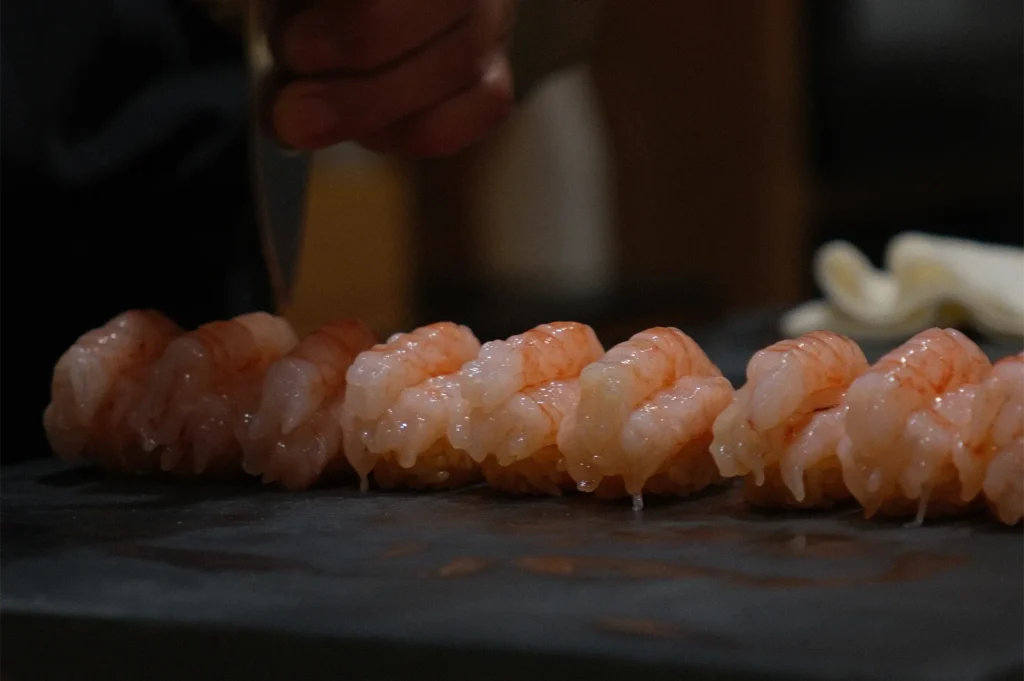
A master carpenter does not force wood to bend against its grain. Similarly, a sushi shokunin does not force flavour. They wait. They wait for the specific week when the sanma (Pacific saury) is fattiest. They wait for the winter chill that sweetens the uni.
This is the main reason for Sushi Masa by Ki-setsu not having a fixed menu. That’s why if you really want to taste the absolute peak of food Japan imports, where Toyosu’s daily catch, taste it on a surgical precision of an 8-seat counter.
The 72 Micro-Seasons of Japan
To understand the precision of this Japanese craftsman philosophy, one must look at the calendar. While the West observes four seasons, the traditional Japanese calendar recognises twenty-four major divisions (sekki), which are further split into seventy-two micro-seasons, or ko.
These micro-seasons last only about five days each. They have poetic names like “Earthworms Rise” (Mimizu izuru) or “First Peach Blossoms” (Momo hajimete saku). This hyper-specific awareness of time means that true omakase can never be industrialised. A factory cannot adjust its production line every five days. Only a human being, attuned to the subtle shifts in wind and temperature, can cook with this level of sensitivity.
At Sushi Masa by Ki-setsu, the menu is a mirror of these fleeting moments. What you eat today may not be there next week, not because it ran out, but because its moment has passed. The shokunin honours the ingredient by serving it only at its peak, and then letting it go.
Depth Over Abundance: A Different Kind of Care
In many Asian cultures, hospitality is defined by abundance. We show love through the overflowing banquet table, the extra scoop of rice, the constant refilling of tea. It is a beautiful, communal generosity.
The shokunin spirit offers a different, quieter form of care. It is the gift of subtraction.
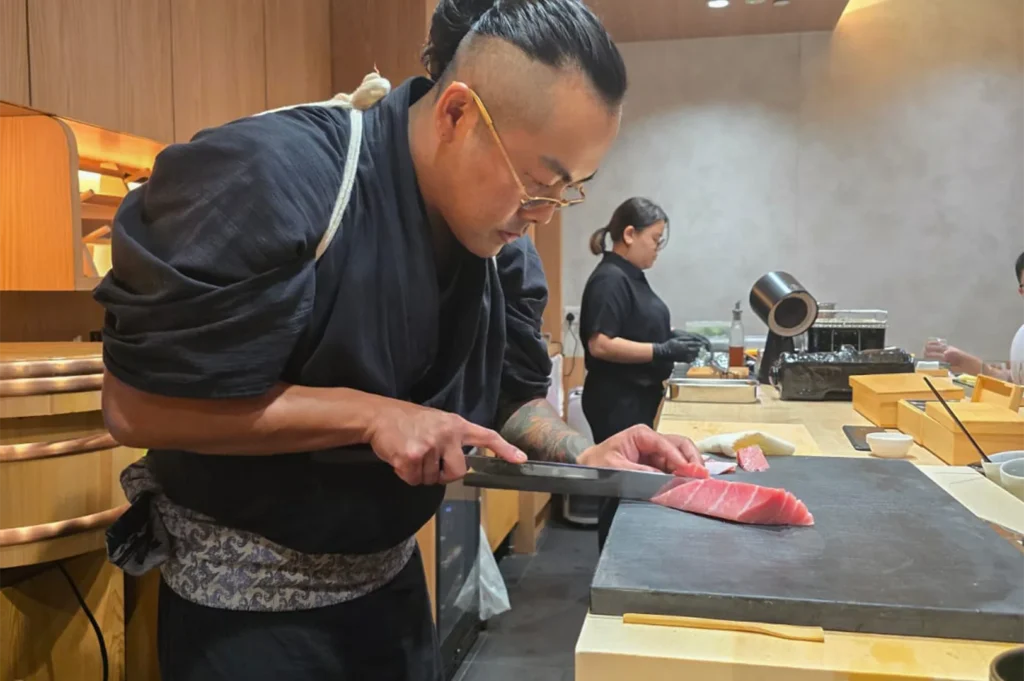
At an intimate Singapore omakase counter like this, you are not given volume; you are given attention. Total, undivided, absolute attention. When the chef places a single piece of sushi in front of you, the entire world shrinks to that one bite.
Currently, Sushi Masa by Ki-Setsu, offers a wide range of giving you the experience of a lifetime. For S$230 to S$320, you’re not going to taste luxury or exclusivity, but you will taste mastery, art, and precision. You’re going to taste what it’s like to know what intentionality is, and how nature can open your eyes through your taste buds.
The Quiet Anchor in a Fast World
Why does this matter to us in Singapore? We live in a city defined by speed, efficiency, and restless ambition. We are constantly looking for the next big thing, the newest opening, the faster route.
Places like Sushi Masa offer a necessary counterweight. They remind us that there is dignity in stillness. They teach us that true mastery takes time—a lifetime, in fact.
As you step out of Cuppage Plaza and back into the humid Singapore night, the noise of the city returns. But perhaps you carry a piece of that silence with you. You have tasted the shokunin spirit, and you understand that sometimes, the most profound way to move forward is to stand still, focus on one thing, and do it with all your heart.

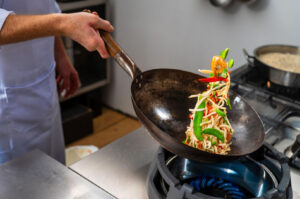
What the Wok Is Really Doing to the Vegetable: The Question Behind Every ‘Brinjal Recipe Chinese Style’
Dio Asahi | May 30, 2026
When I first tried cooking brinjal at home, I was completely convinced that all I needed was a hot pan, some oil, and a good recipe. I chopped the vibrant purple vegetable, threw it into a standard frying pan with a generous pour of oil, and waited for the magic to happen. Instead of the…
-
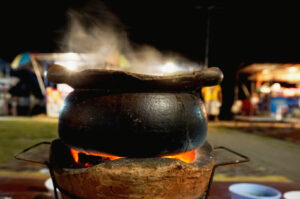
The Clay Pot Rice Crust That Hong Kong Cooks Wait For
Eda Wong | May 29, 2026
The December wind cuts sharply through the narrow alleys of Temple Street, but the ambient heat from the glowing charcoal stoves pushes the chill away. A cook stands before a long row of blackened clay pots, working with a rhythmic, almost meditative focus. Plumes of white steam rise into the night air, carrying the heavy,…
-
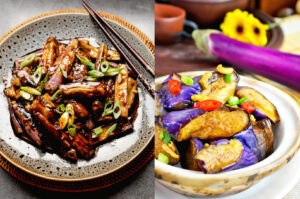
The Velvet Logic Behind a Chinese Eggplant Recipe: When ‘Eggplant Recipes Asian’ Means Silk
Eda Wong | May 28, 2026
I vividly remember standing over my stove a few years ago, staring into a wok full of what can only be described as a greasy, grey disaster. When I first tried this dish at home, I assumed that tossing chopped eggplant into a hot pan with a generous glug of cooking oil would naturally yield…
-
Cambodia’s Prahok Pots and the Ferment Beneath the Meal
Dio Asahi | May 27, 2026
The afternoon heat in the outskirts of Phnom Penh settles like a thick blanket over the wooden stilt houses. Underneath the corrugated tin roof of an open-air kitchen, the air carries a heavy, sharp scent that instantly commands attention, a deeply pungent, earthen aroma of crushed fish and salt. An elderly woman sits on a…
-
Heat Has a Shape: Reading the Samyang Spicy Level Like a Flavour Map, Not a Dare
Eat Drink Asia Team | May 26, 2026
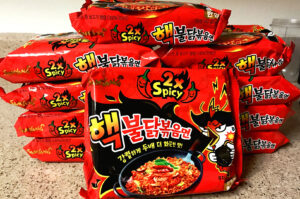
When we first tried the notorious Samyang 2x Spicy Buldak noodles, we treated it exactly how the internet told us to: like a dare. We boiled the noodles, poured in every last drop of the blood-red sauce, and braced ourselves. Within three bites, our palates were completely blown out. We could not taste the savoury…
-
313 Somerset Food Crawl: Spots That Turn ‘Quick Shopping Lunch’ Into a Full Day Plan
Eda Wong | May 23, 2026
Over the past three months, I have spent countless weekends navigating the energetic crowds of Orchard Road, determined to map out the ultimate dining itinerary. I must have visited over twenty different eateries in the area, hunting for those brilliant culinary experiences that elevate a standard shopping trip into a true celebration of flavours. Finding…
-
Benguet’s Pinikpikan and the Ethics of Mountain Broth
Eda Wong | May 22, 2026
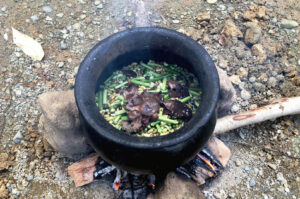
The mist in Benguet settles low over the pine-studded ridges, carrying the sharp, woody scent of a wood fire. In a quiet backyard in La Trinidad, a small gathering watches as a live chicken is prepared for the pot. The rhythm of a short, thick stick striking the bird’s wings and neck echoes softly, a…
-
The Quiet Trick Behind Loud Noodles: A Samyang Instant Noodle Recipe Built on Emulsion
Eda Wong | May 21, 2026
When I first tried making Samyang Buldak noodles at home, I expected the fiery heat but was surprised by the watery, separated red oil at the bottom of my bowl. I had boiled the noodles, drained them, and dumped the flavor packets on top, ending with a dry, clumpy mess that burned my throat without…
-
Taiwan’s Iron Egg and the Patience of Soy-Braised Time
Dio Asahi | May 20, 2026
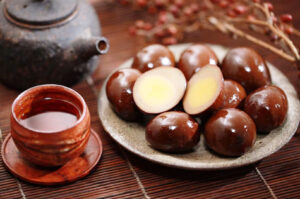
The wind coming off the Tamsui River carries a sharp, saline chill, but the narrow lanes bordering the waterfront offer a different atmosphere entirely. Here, the air is thick with the heavy, sweet-savoury aroma of star anise, cassia bark, and boiling soy sauce. Behind a modest storefront, dark liquid bubbles in massive, dented metal vats….

Not Just ‘Fresh Fish’: The Best Omakase Singapore Has for Storytelling Courses & Seasonal Bites
Eat Drink Asia Team | May 19, 2026
May 19, 2026 | Eat Drink Asia Team | Last Updated September 7, 2026 When you sit at an omakase counter, you’re paying for a culinary journey. A memorable omakase is more than fresh fish; it’s a delicate celebration of flavors. The best chefs act as storytellers, sequencing each bite to build anticipation and contrast, guiding…