The fire is not roaring; it is breathing. In a small, darkened workshop in Sakai, a swordsmith watches the colour of the steel with eyes that have tracked the same transformation for forty years. He does not look at a clock. He listens to the hum of the charcoal. He waits for the metal to reach a shade of red that exists only for a fleeting second—a colour that signals the precise moment when earth and fire are ready to yield to his hammer.
There is no audience here. There is no applause when the blade is quenched. There is only the artisan and the material, locked in a silent dialogue that will continue until his hands can no longer hold the tongs.
This is the essence of the shokunin (職人). To translate this word simply as “craftsman” is to strip it of its soul. In Japanese culture, a shokunin is not merely someone who makes things; they are someone who has surrendered their ego to the pursuit of mastery in a single, deepening discipline. It is a spiritual obligation to do one’s very best, not for profit or recognition, but for the sake of the craft itself.
The Weight of a Single Path
In a world obsessed with scaling, franchising, and “pivoting,” the shokunin philosophy stands as a quiet act of rebellion. It values depth over breadth. It chooses the infinite refinement of one thing over the mediocre production of many. It is the belief that if you polish a stone every day for fifty years, you will eventually see the universe reflected in it.
In the heart of Singapore, amidst the neon glare and hurried ambition of Orchard Road, this ancient spirit has found a sanctuary. It lives inside a modest, eight-seat counter at Cuppage Plaza known as Sushi Masa by Ki-setsu.
Finding Stillness in the City of Speed
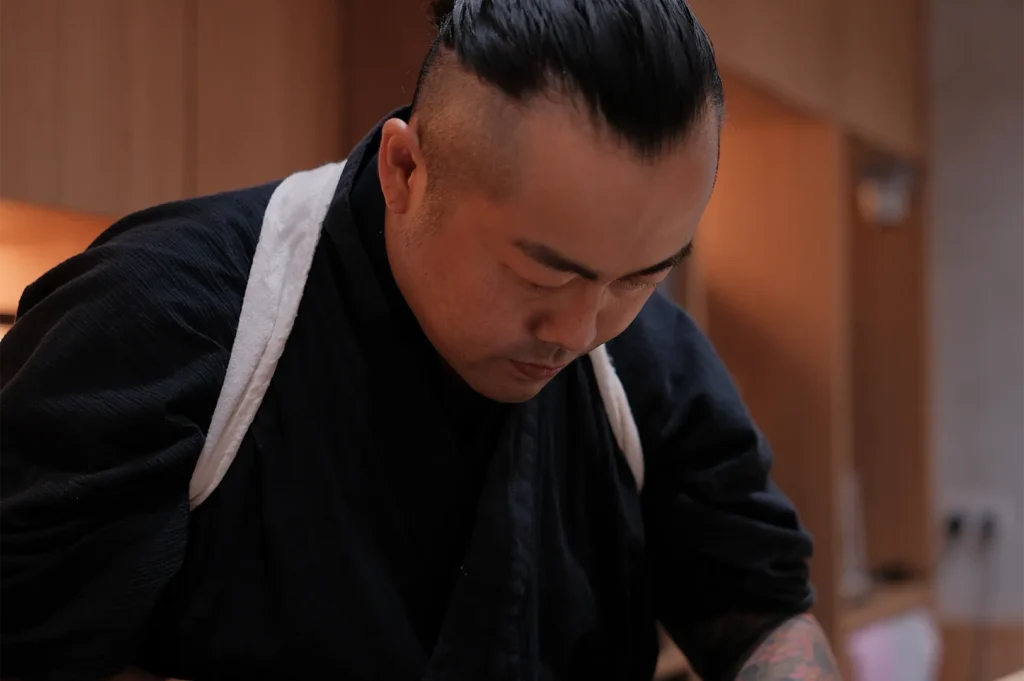
Cuppage Plaza is an anomaly in itself—a weathered, labyrinthine building that feels more like a portal to 1980s Tokyo than a mall in 2026 Singapore. It is here that Chef Masa from Sushi Masa by Ki-setsu has chosen to practise his craft. He is not a restaurateur in the modern sense; he is a custodian of the shokunin spirit.
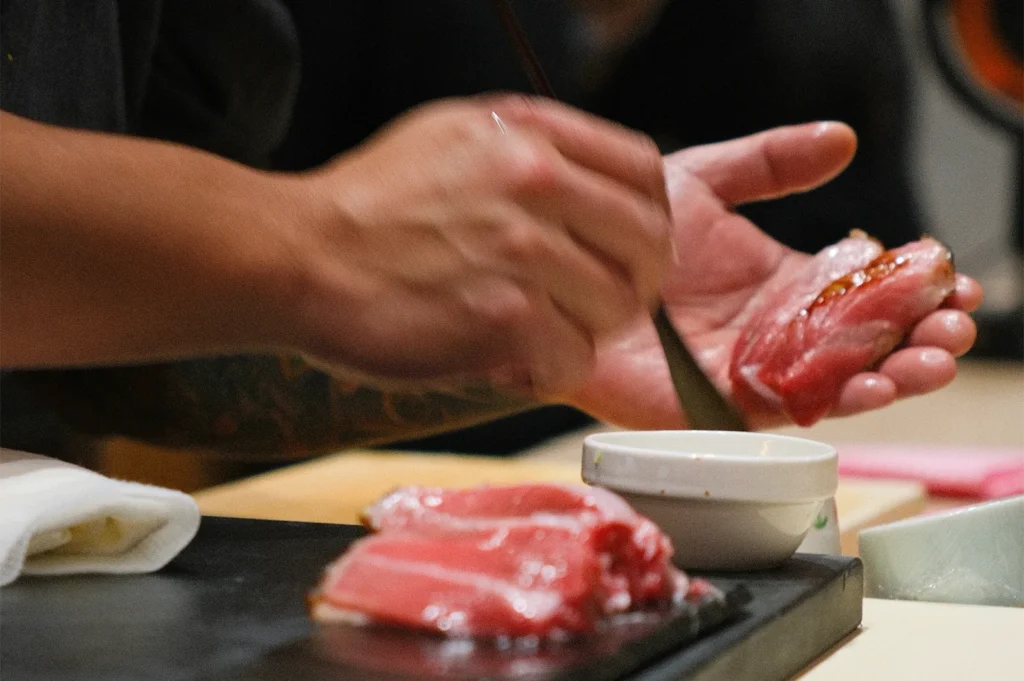
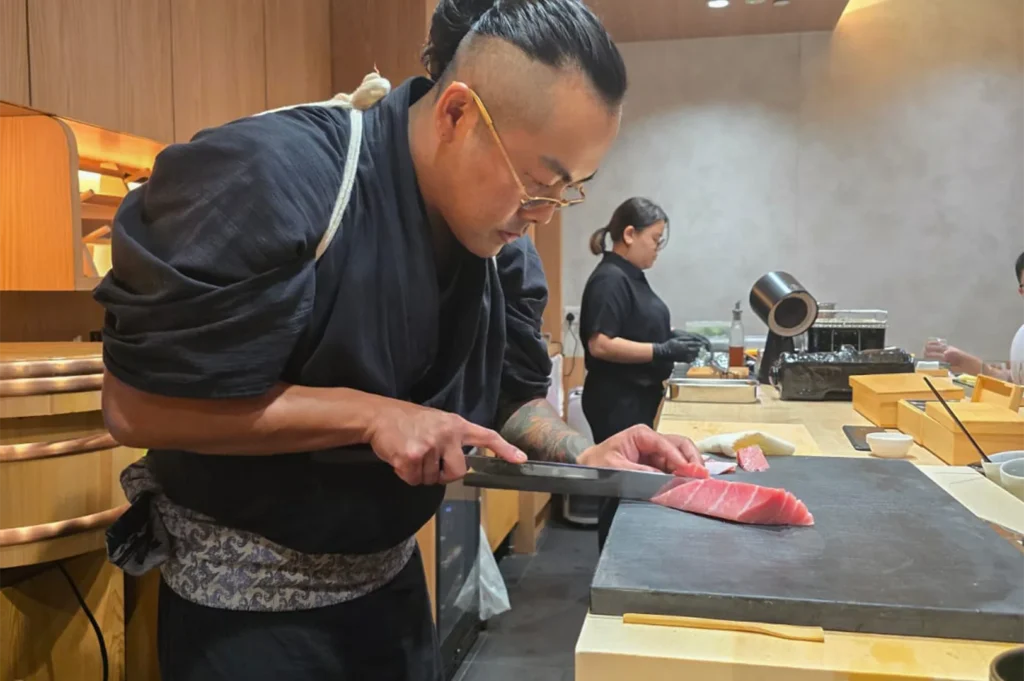
To dine here is not merely to eat; it is to witness a philosophy in motion. There are no sous chefs plating your nigiri. There is no expansion plan to open three more outlets by next year. There is only Chef Masa, standing behind the blonde wood counter, shaping rice and fish with the same meditative focus as the swordsmith in Sakai.
The Philosophy of the Solo Practitioner
Why does he refuse to delegate? In the shokunin tradition, the work cannot be separated from the worker. The warmth of the hands, the rhythm of the breathing, the precise pressure applied to the shari (sushi rice)—these are not technical steps; they are an extension of the chef’s own life force, or ki. To hand this over to another would be to dilute the spirit of the offering.
This refusal to scale is often baffling to the modern business mind. But for the shokunin, growth is measured vertically, not horizontally. The goal is not to serve more customers, but to serve the same number of customers better than yesterday. It is a relentless, internal competition where the only opponent is one’s previous self.
Ki-setsu: Listening to the Voice of Nature
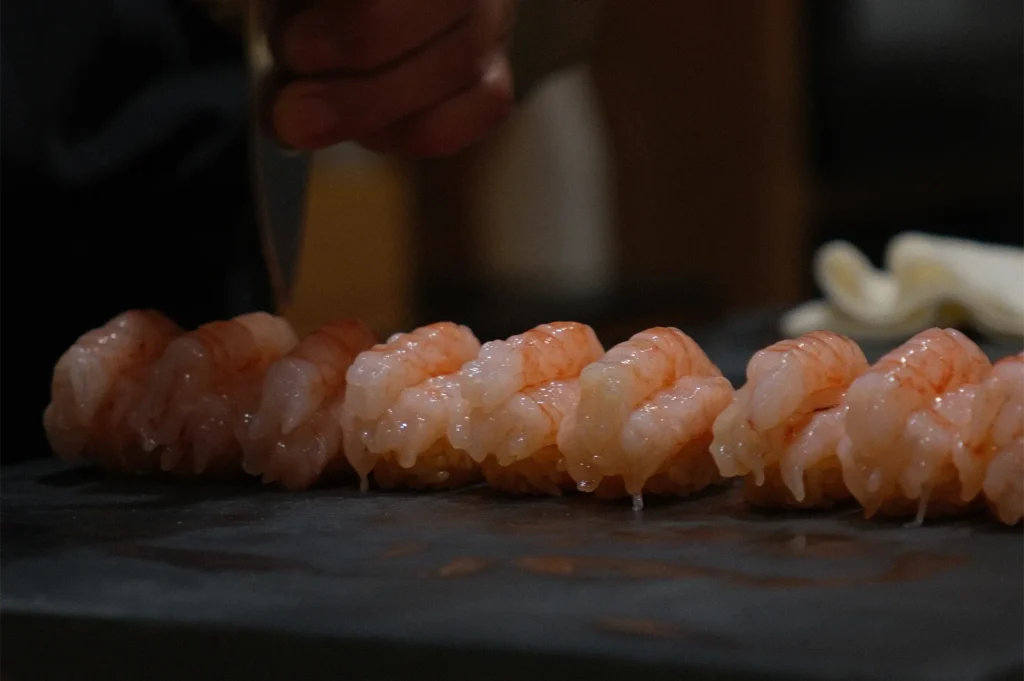
The name of the counter, Ki-setsu, means “season.” But in the context of a Japanese omakase counter, seasonality is not just about using ingredients that are available; it is about submission to nature’s timeline.
A master carpenter does not force wood to bend against its grain. Similarly, a sushi shokunin does not force flavour. They wait. They wait for the specific week when the sanma (Pacific saury) is fattiest. They wait for the winter chill that sweetens the uni.
This is the main reason for Sushi Masa by Ki-setsu not having a fixed menu. That’s why if you really want to taste the absolute peak of food Japan imports, where Toyosu’s daily catch, taste it on a surgical precision of an 8-seat counter.
The 72 Micro-Seasons of Japan
To understand the precision of this Japanese craftsman philosophy, one must look at the calendar. While the West observes four seasons, the traditional Japanese calendar recognises twenty-four major divisions (sekki), which are further split into seventy-two micro-seasons, or ko.
These micro-seasons last only about five days each. They have poetic names like “Earthworms Rise” (Mimizu izuru) or “First Peach Blossoms” (Momo hajimete saku). This hyper-specific awareness of time means that true omakase can never be industrialised. A factory cannot adjust its production line every five days. Only a human being, attuned to the subtle shifts in wind and temperature, can cook with this level of sensitivity.
At Sushi Masa by Ki-setsu, the menu is a mirror of these fleeting moments. What you eat today may not be there next week, not because it ran out, but because its moment has passed. The shokunin honours the ingredient by serving it only at its peak, and then letting it go.
Depth Over Abundance: A Different Kind of Care
In many Asian cultures, hospitality is defined by abundance. We show love through the overflowing banquet table, the extra scoop of rice, the constant refilling of tea. It is a beautiful, communal generosity.
The shokunin spirit offers a different, quieter form of care. It is the gift of subtraction.
At an intimate Singapore omakase counter like this, you are not given volume; you are given attention. Total, undivided, absolute attention. When the chef places a single piece of sushi in front of you, the entire world shrinks to that one bite.
Currently, Sushi Masa by Ki-Setsu, offers a wide range of giving you the experience of a lifetime. For S$230 to S$320, you’re not going to taste luxury or exclusivity, but you will taste mastery, art, and precision. You’re going to taste what it’s like to know what intentionality is, and how nature can open your eyes through your taste buds.
The Quiet Anchor in a Fast World
Why does this matter to us in Singapore? We live in a city defined by speed, efficiency, and restless ambition. We are constantly looking for the next big thing, the newest opening, the faster route.
Places like Sushi Masa offer a necessary counterweight. They remind us that there is dignity in stillness. They teach us that true mastery takes time—a lifetime, in fact.
As you step out of Cuppage Plaza and back into the humid Singapore night, the noise of the city returns. But perhaps you carry a piece of that silence with you. You have tasted the shokunin spirit, and you understand that sometimes, the most profound way to move forward is to stand still, focus on one thing, and do it with all your heart.

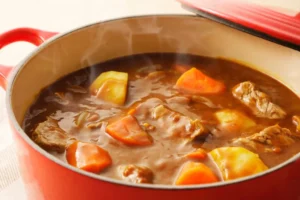
The Golden Roux Revolution: Best Japanese Curry Singapore Spots That Redefine Comfort Food
Eat Drink Asia Team | April 25, 2026
April 25, 2026 | Eat Drink Asia Team Last updated: September 17, 2026 We have always believed that a brilliant plate of Japanese curry is the ultimate culinary hug. Over the past eight months, we made it our personal mission to embark on a comprehensive culinary journey across Singapore, hunting down the absolute best bowls…

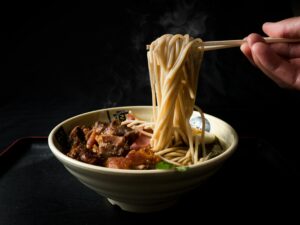
Noodle Masterpieces: Celebrating the Craft
Eat Drink Asia Team | April 24, 2026
Noodles have a timeless place in the world of food, and Taste Our Traditions can attest that only few dishes are as universally loved. What makes a bowl of noodles truly stand out is not just the ingredients, but the artistry and skill behind their creation. Noodle-making is an ancient craft that demands patience, precision,…
-
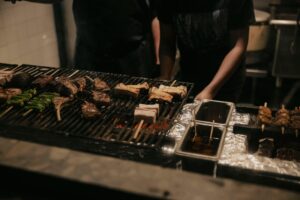
Charcoal Smoke and Yakitori Evenings in Osaka
Eda Wong | April 24, 2026
The first thing I noticed was the smoke. It didn’t rise all at once, but in thin, steady ribbons that curled upward from a narrow grill set just inches from the counter. The scent came first, warm and unmistakable, a mix of rendered chicken fat and binchōtan charcoal, clean but deeply present. Inside the small…
-
Cracking the Code of Telur Thai: Inside Egg Thai West Mall, a Kitchen That Tells a Story
Dio Asahi | April 23, 2026
I visited on a Tuesday around 7pm, completely exhausted from a long day of meetings and staring at screens. I wasn’t looking for a fancy culinary journey or a trend-setting dining experience. Honestly, I just wanted a quick, comforting meal that would hit the spot without emptying my wallet. That specific craving led me to…

Sanook Kitchen’s Thai Omelette Rice: A Heartland Answer to Singapore’s Thai Food Saturation
Eda Wong | April 21, 2026
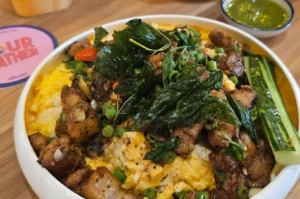
If you live in Singapore, you know that finding Thai food is about as difficult as finding a humid day. We are spoiled for choice. From gritty hawker stalls serving fiery basil pork to upscale restaurants where a bowl of tom yum costs more than a taxi ride, the options are endless. But sometimes, you…
-
The Golden Fold: How Thailand’s Street-Side Omelette Became a Morning Ritual
Dio Asahi | April 18, 2026
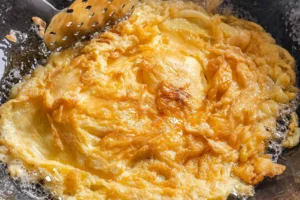
Dawn breaks over Bangkok with a familiar symphony. Before the intense heat settles and the traffic swells into a steady roar, the city streets belong to the food vendors. Amid the clatter of metal tools and the hum of early commuters, one sound stands out: the furious, bubbling sizzle of eggs hitting smoking-hot oil. This…

Lesson I Didn’t Expect: How Fourgather’s Easy Asian Recipes Taught Me to Cook at Home
Eda Wong | April 16, 2026
For the longest time, I was convinced that cooking authentic Thai food at home was out of my league. I imagined complex pastes, hours of simmering, and a mountain of ingredients I couldn’t pronounce. I was happy to leave it to the experts. But a casual dinner at Fourgather, a stylish Thai eatery in Telok…
-
Between Aesthetic and Appetite: The Modern Food Blogger’s Dilemma
Eda Wong | April 15, 2026
In our first, would probably say, emotional editorial, I would like to open with how there is a particular kind of silence that happens before a dish is eaten now. Not the quiet of anticipation, but the pause of positioning, a hand hovering just above the plate, adjusting the angle of a bowl so the…
-
Chasing Flavor: How Fook Kin Taught Us to Cook Asian Cuisine Recipes the Right Way
Eat Drink Asia Team | April 14, 2026
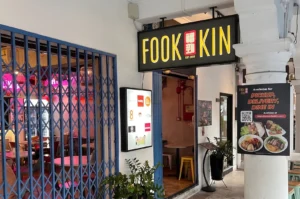
For years, we told ourselves that truly great Asian cooking was a mystical art form, a craft reserved for seasoned hawker uncles or Michelin-starred chefs with decades of experience. Our own attempts at home often felt like pale imitations, lacking that deep, smoky flavour or that perfect textural contrast we craved. Then, we had dinner…
-
Connecting Generations: How Asiatic Food Builds Family Bonds Across Time
Dio Asahi | April 11, 2026
Whenever I smell toasted sesame oil hitting a hot wok, I am instantly transported back to a tiny, bustling kitchen from my childhood. The air would be thick with the aroma of ginger, garlic, and slow-simmering soy sauce. Before a single word was spoken, the meal was already telling a story. For many of us,…