I’d spent the morning with kaya toast.
Crisp bread, cold butter, the clean snap of it between my teeth. Good, all of it. But by the time I’d walked a few streets over to New Bridge Road, my mouth wanted the opposite. Something warm. Something that gave way instead of shattering.
That’s how I ended up at Tiong Shian Porridge Centre, spoon in hand, waiting for a bowl of rice cooked down until it barely remembered being rice.
The steam reached me before the bowl did.
A Room That Doesn’t Perform
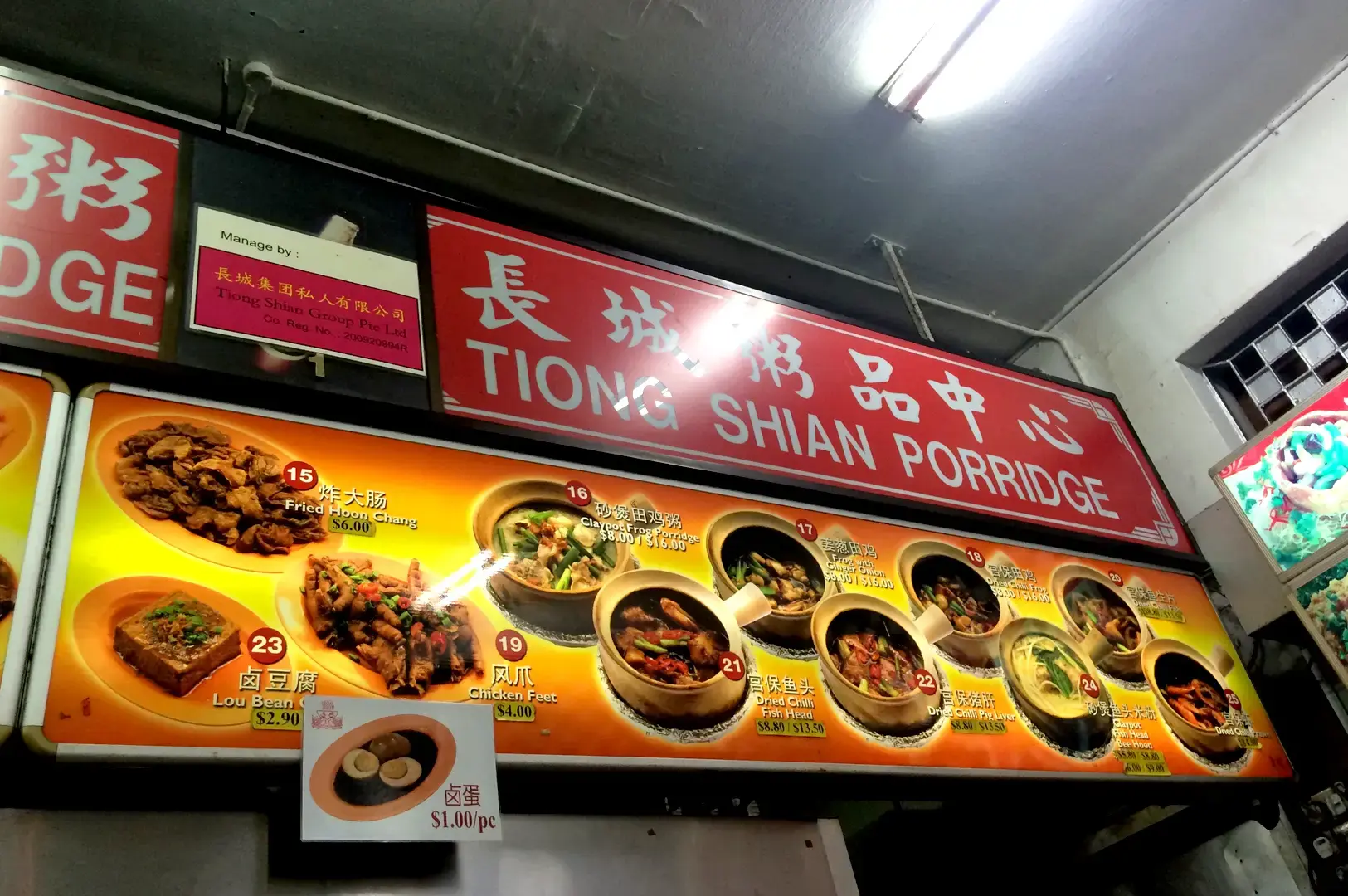
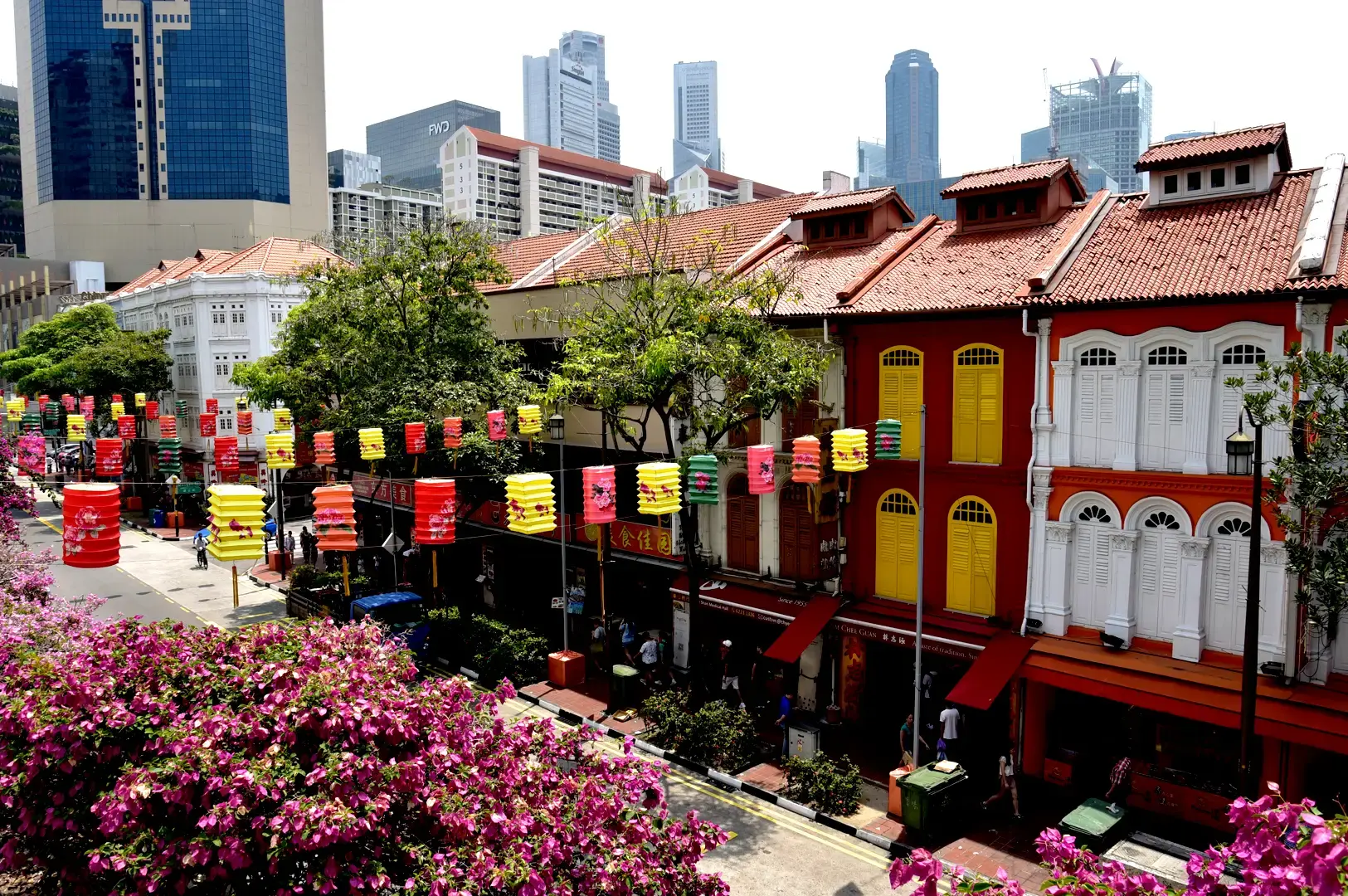
You’ll find Tiong Shian Porridge Centre sitting open-front along New Bridge Road, about four or five minutes on foot from Chinatown MRT. No frosted glass, no styled interior. Just an old coffeeshop that lets the street walk right up to its tables.
I came around late morning, past the breakfast rush but before the lunch crowd properly landed. Still, it wasn’t empty. A few tables of regular diners, an uncle reading his paper, the low clatter of claypot dishes meeting stove somewhere behind the counter.
Tiong Shian is one of the more savoury expressions of the Chinatown breakfast explained in our article neighbourhood’s morning table, making it a notable spot for breakfast at Chinatown.
Atmosphere and Comfort
- It’s warm inside. Not cosy-warm — working-warm, the kind that comes from steam and stoves and not much ventilation.
- On a hot day in Singapore, you feel it. I peeled off my outer layer within a minute of sitting down.
This isn’t a place built to charm you. The tables are close. The seating spills over into a second area when the front fills up. You sit where you can, and the food comes fast once you’ve paid.
I’ve learned not to hold that against a place. Some rooms spend their energy on lighting or décor. This one spends it on the pot, delivering comforting Chinese porridge and claypot dishes that draw customers from hawker centres all over the city.
If you prefer your morning meal in a cooler, more polished setting, explore our map of Singapore’s best cafés: https://eatdrinkasia.com/best-cafe-singapore-brunch-coffee-pastries/
The Bowl That Gives Way
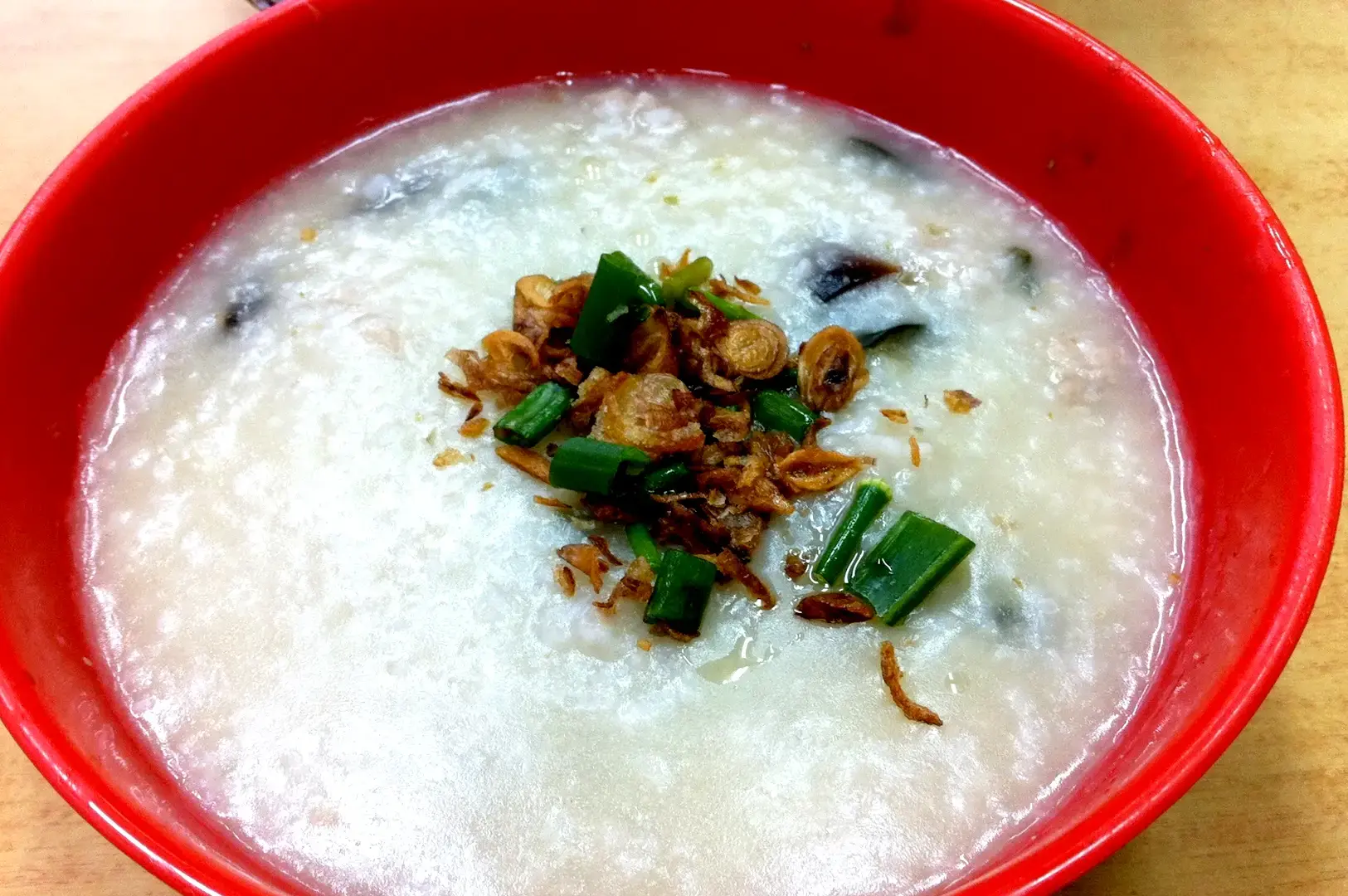
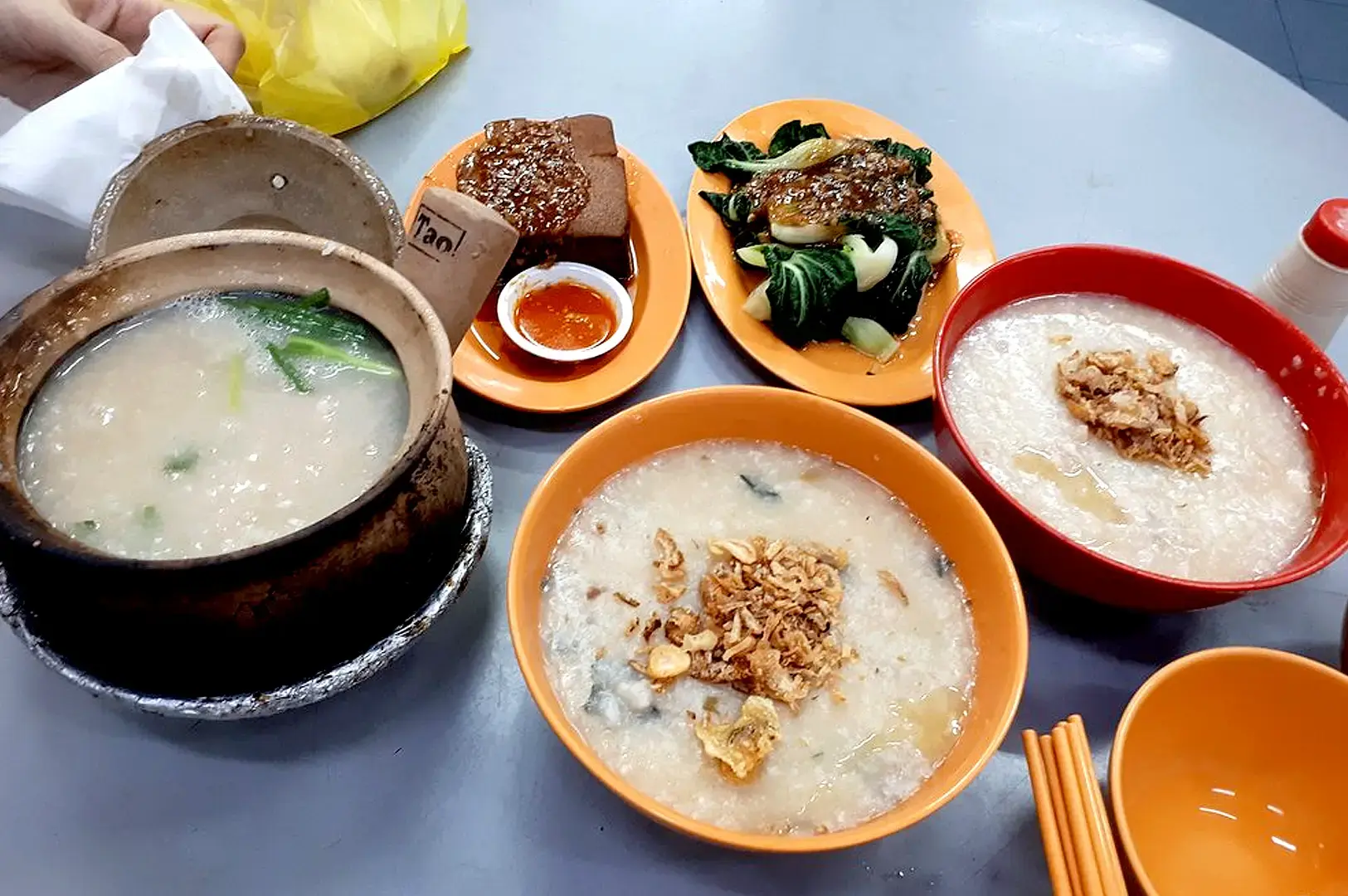
I ordered the Century Egg with Sliced Pork Porridge (S$9.50) first, because that felt like the honest place to start at Tiong Shian Porridge Centre.
It arrived quickly, steam curling off the top, scattered with fried shallots and thin green rings of fresh spring onions.
Texture and Flavor
- The rice porridge was smooth — not watery, not gluey, that careful middle ground where the rice has broken down completely but still holds a soft, comforting consistency.
- You could drag a spoon through it and it held a gentle shape for a second before settling back into its creamy embrace.
The century egg was folded in, dark and creamy, that particular deep savouriness it brings. The sliced pork was tender and generous enough that I wasn’t hunting for it. A little white pepper, a splash of soy from the table, and it came together beautifully.
This pork porridge is one of the favourite dishes here — a staple that many customers order again and again for its delicious, familiar taste.
This is the counterweight I’d been thinking about all morning.
Toast asks something of you — it snaps, it crumbles, you work at it. This porridge asks nothing. It gives way. It’s breakfast as recovery, the kind of bowl you’d want when you’re tired, sick, or just done with things that crunch. Plain enough to calm you. Savoury enough to matter.
I ate it slowly. There was no reason to rush, and the porridge didn’t want me to.
The Claypot That Widens the Story
Then I understood Tiong Shian is more than a sick-day bowl.
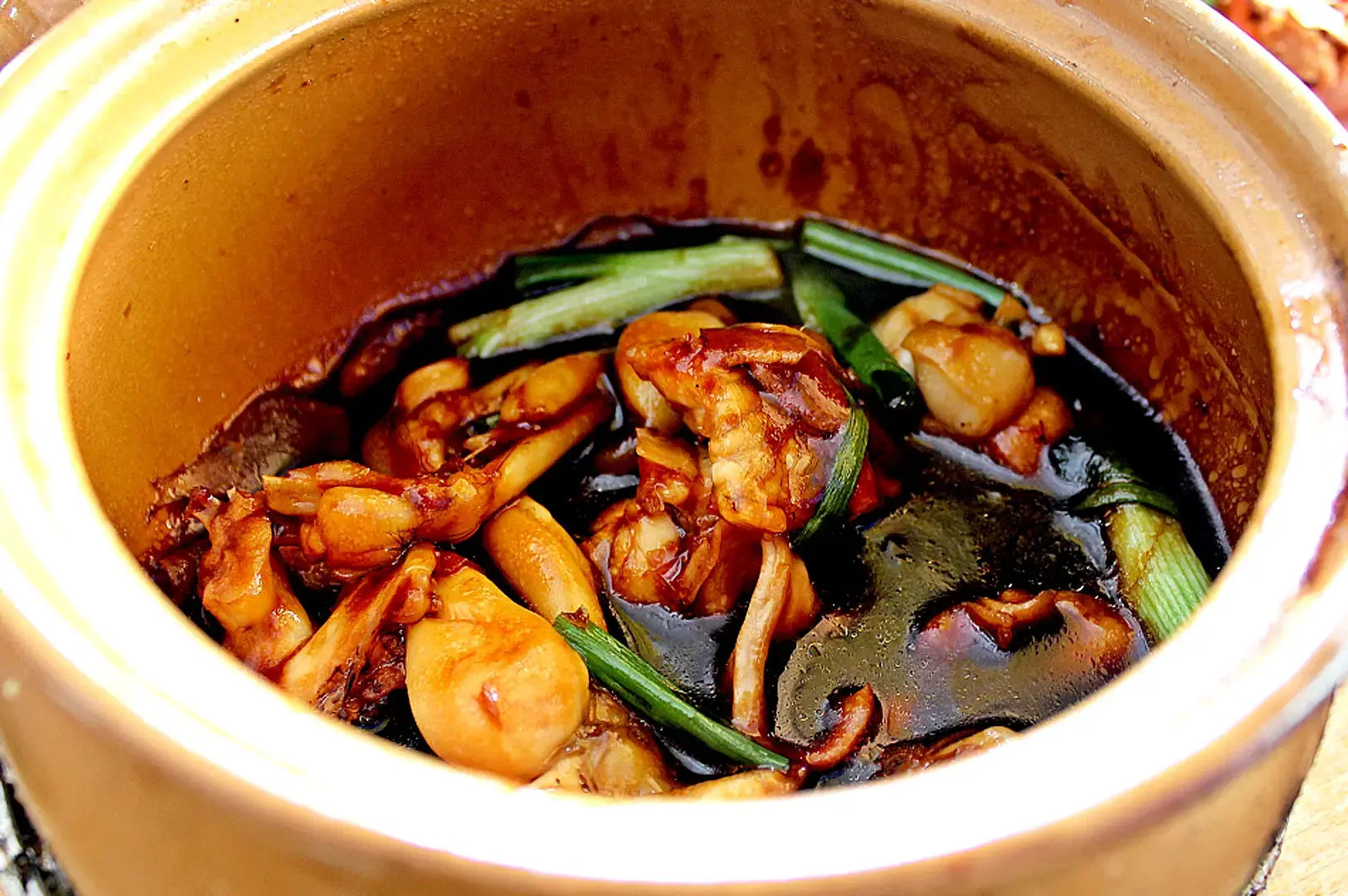
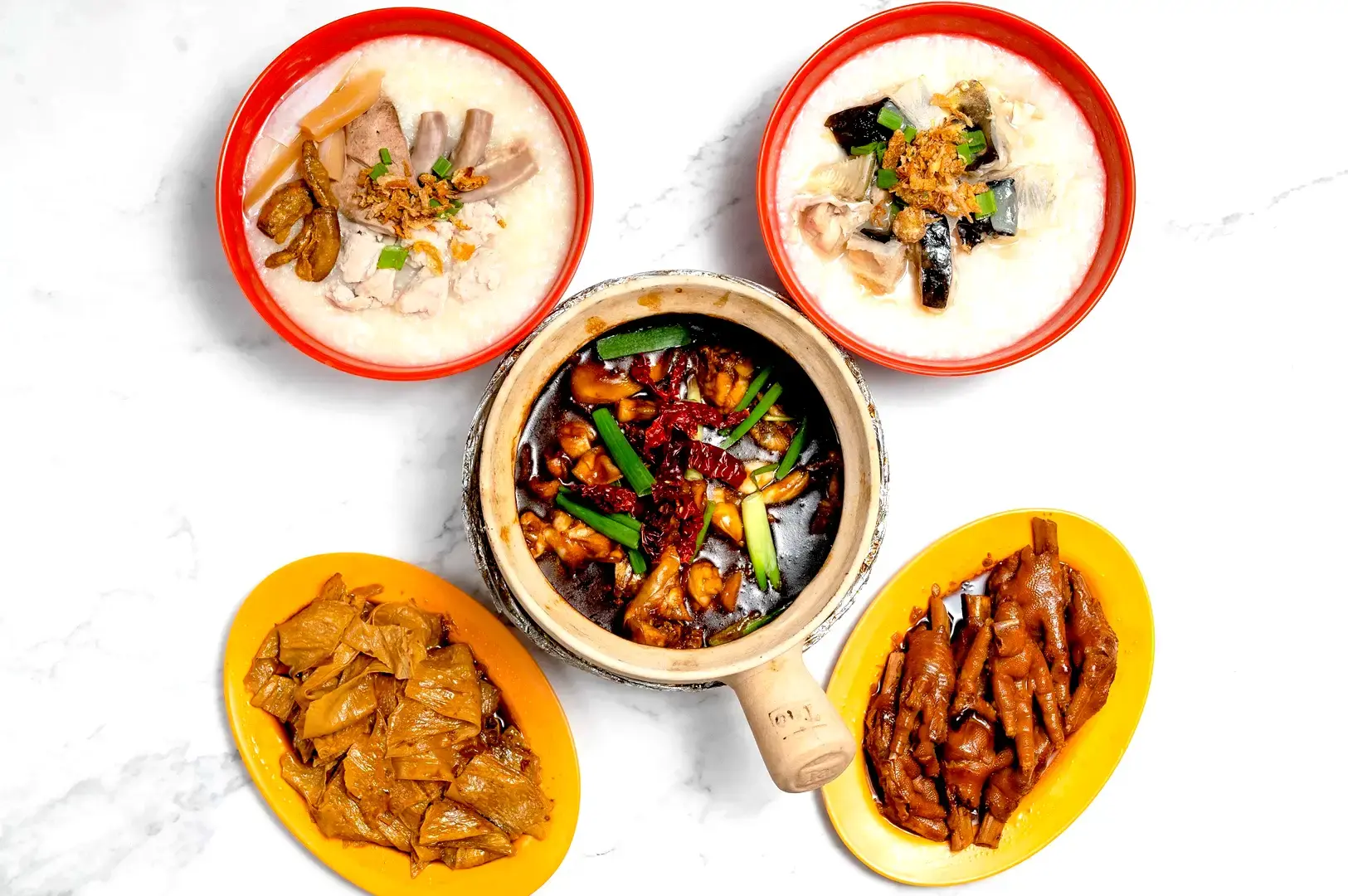
I ordered the Claypot Frog Porridge with Ginger, Spring Onion & Dried Chilli (S$13.50), and it arrived in its own pot, still whispering heat.
Aroma and Sauce
- The smell hit first — sharp ginger, the low warmth of dried chilli, dark sauce clinging thick to everything.
- The frog legs were tender, closer to chicken than you’d expect, soaking up that dark, delicious sauce.
And the sauce is the point. It’s rich and gingery and a little fiery, and it’s built to be spooned over plain porridge, which comes alongside as a soft, neutral canvas.
Eating Ritual
- Soft, plain porridge in one bowl.
- Dark, punchy claypot sauce in another.
- You move between them — a spoon of neutral warmth, then a spoon carrying ginger and chilli and frog.
- The plain porridge keeps the heat from overwhelming you.
- The claypot keeps the plain porridge from getting boring.
I hadn’t expected a porridge stop to give me something this savoury, this alive. It shifts the whole idea of the place — not just breakfast comfort, but supper comfort too, the kind of dish you’d order late at night when you want heat and softness at once.
If you’re squeamish about frog, I understand. But if you’re not, this claypot frog dish is one of the popular offerings that stays with you.
The Broth in Between
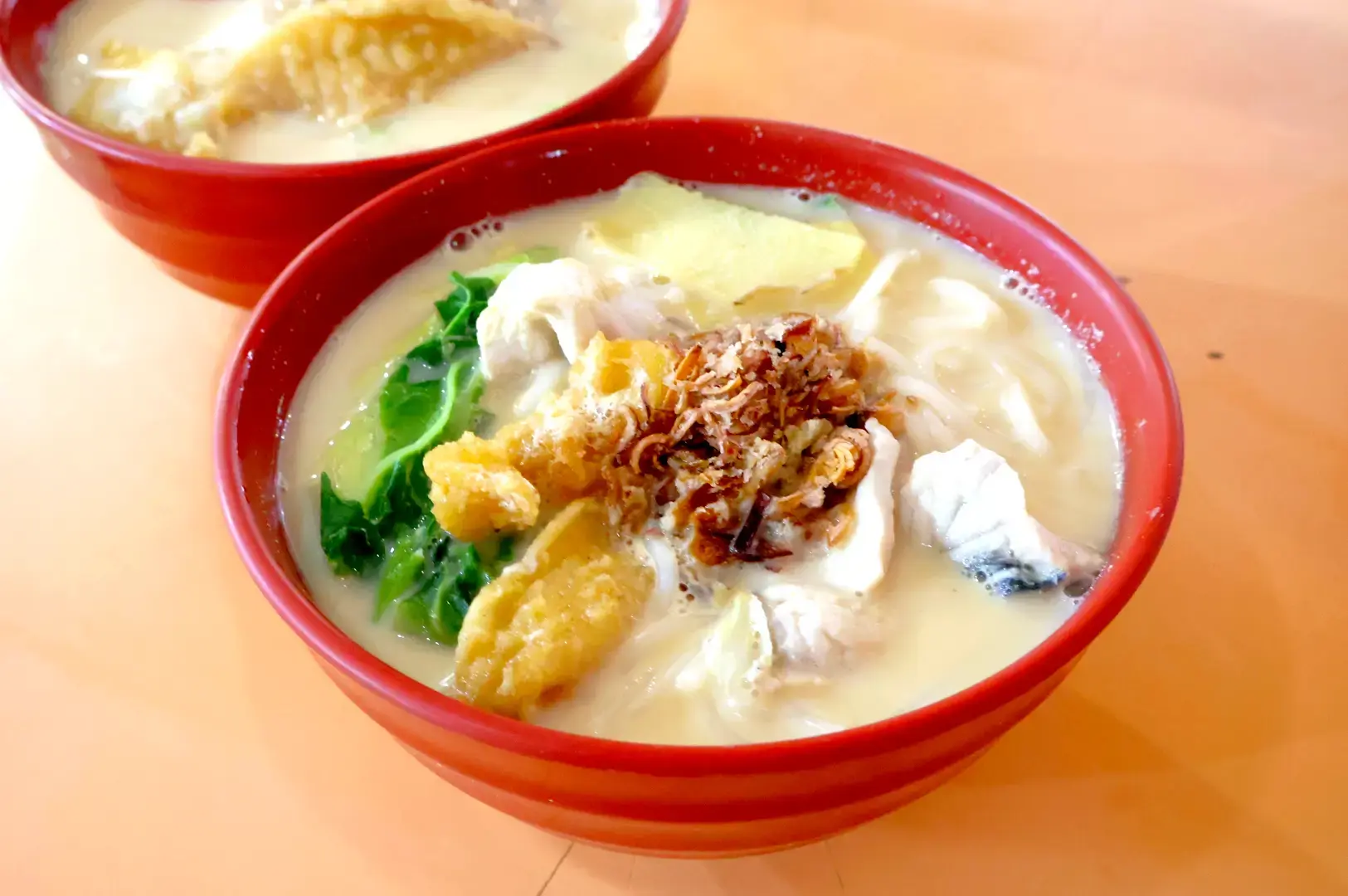
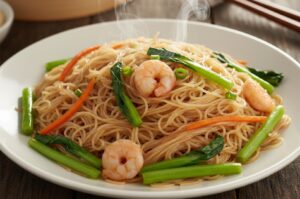
I had room for one more, so I tried the Claypot Fish Sliced Bee Hoon (S$13.50).
Ingredients and Taste
- The fish slices were soft and generous, cooked gently in a broth clouded with ginger.
- Vermicelli soaked it all up.
- It’s a milder thing than the frog claypot — clean, warming, the ginger doing quiet work rather than shouting.
It sits somewhere between the two porridges. Softer than the frog claypot, more substantial than the plain century egg bowl. On a rainy evening, I think this is what I’d reach for.
None of these dishes are trying to impress you with plating. They arrive in bowls and pots, steam-fogged, ready to be eaten rather than photographed. I found that honest.
The Service, Plainly
Let me be straight about this part.
My food came fast after I paid, which is what you want from a place like this. Nobody fussed. Nobody performed warmth they didn’t have.
But I’ll be honest — the warmth isn’t really here to begin with. The service is functional at best, and I’ve heard from others it can tip toward impatient or curt when the room is busy. Mine wasn’t cold, exactly. Just brisk. Transactional. You order, you pay, you eat, you go.
Wait Times and Portions
- The crowds change the rhythm.
- Porridge moves quickly.
- The claypot dishes take longer — I’ve read of half-hour waits at peak, though my off-peak visit was closer to fifteen minutes for the frog.
- If you come at supper rush, bring some patience.
- Portions: The porridge and frog claypot felt filling, worth the price.
- Some complaints about smaller side dishes — raw fish, fried intestine — feeling thin for what they cost.
- If you’re ordering add-ons, adjust your expectations.
What You Should Know
The practical bits are simple.
Tiong Shian Porridge Centre is at 265 New Bridge Road, in the Ann Kway Building, about four to five minutes from Chinatown MRT. Skip driving if you can — parking around here is a headache, and the MRT drops you close.
It’s walk-in only. No booking, no need for one. Expect to spend somewhere around S$10 to S$20 a person, more if you pile on frog, fish head, and side dishes.
Come outside the peak windows if you want the room calmer and the wait shorter. Late morning or early lunch is gentler than the late-night supper crush, though the supper crowd is part of this place’s whole character.
Who It’s For
I’d come back. Not for the room — the room is warm and smoky and doesn’t pretend otherwise. Not for the service, which won’t remember you.
I’d come back for the bowl.
If you love porridge — real, smooth, cooked-down rice porridge — and claypot dishes with ginger and dark sauce and steam, this is a place that takes those things seriously.
It suits:
- Solo diners who don’t need company from the staff.
- Anyone who’s just had crisp kaya toast somewhere in Chinatown and wants the soft opposite.
- Late-night eaters chasing claypot frog legs and heat.
It won’t suit everyone.
- If you want a quiet, cool café to linger in, this room moves too fast and runs too warm.
- If you’re put off by offal, frog, or a smoky open-front setting, you’ll be uncomfortable.
- If polished service matters to you, you won’t find it here.
The Quiet Comfort of a Simple Spoonful
But I keep coming back to the thing that struck me most.
Nobody here is trying to charm you. They’re trying to feed you.
The porridge is smooth because someone cooked it down properly. The frog sauce is dark and gingery because someone let it develop. The care is in the pot, not the performance.
I finished the last of the century egg porridge, scraped the claypot for the final bit of frog sauce, and sat for a moment in the heat.
Some meals want your camera. This one just wanted my spoon.
I gave it that, and I’d give it again.

Mastering the Art of Indian Dishes with Chicken
Eda Wong | February 19, 2026
The story of India’s culinary identity is deeply tied to its poultry dishes. I remember my first attempt at an Indian chicken recipe, failing to brown the onions properly left the dish hollow, missing its soul. The sound of mustard seeds popping in hot oil signals layers of flavor to come. The steam from the…
-
Crunch, Sweet, and Heat: The Irresistible Textures of Southeast Asian Snacks
Dio Asahi | February 17, 2026
In the humid, sticky heat of Southeast Asia, where your shirt clings to your back and the air is thick with the sharp scent of oxidising oil, there’s a particular clink that always gets me. It’s the sound of a metal spatula striking a wok, a rhythmic percussion that’s as familiar to me now as…
-
The Living Pantry: How Geography and Trade Shaped the Food in the Southeast Region
Eat Drink Asia Team | February 14, 2026
To understand the plate is to understand the map. If you were to trace the spice routes of the 15th century or follow the monsoon winds that carried merchant ships across the Indian Ocean, you would find yourself at the epicenter of the world’s most vibrant pantry. The food in the Southeast region of Asia…
-
A Symphony of Senses: Why Southeast Asian Food is the World’s Greatest Culinary Journey
Dio Asahi | February 12, 2026
If you were to stand at a busy intersection in Bangkok, Ho Chi Minh City, or Jakarta and close your eyes, your nose would tell you a story before your eyes ever could. There is a specific, intoxicating perfume that defines Southeast Asian food: the sharp tang of lime juice hitting a hot wok, the…
-
The Alchemy of the Wok: The Story of Singapore-Style Bee Hoon
Eda Wong | February 10, 2026
Across the humid evening air of Singapore, a rhythmic clatter echoes from hawker stalls to high-rise kitchens—the sound of a metal spatula against a seasoned wok. Within that intense heat, rice vermicelli noodles undergoes a profound transformation, absorbing the golden hues of curry powder, the savory depths of soy sauce, and the smoky “breath” of…
-
The Sizzle of the Wok: An Exploration of Fried Bee Hoon Across Southeast Asia
Eat Drink Asia Team | February 7, 2026
Across Southeast Asia, from bustling hawker centers to family kitchens, the sizzle of rice vermicelli noodles hitting a hot wok is a universal comfort. Few dishes capture the spirit of Asian noodle culture as well as fried bee hoon. This stir fry, made with thin rice noodles, delivers a tasty meal any time of the…
-
The Silk of the East: A Deep Dive into Bee Hoon and the Art of Rice Vermicelli
Eda Wong | February 5, 2026
Across the bustling kitchens of Southeast Asia, one humble ingredient has woven itself into the fabric of countless beloved dishes. Bee hoon, the delicate rice vermicelli that transforms from brittle strands into silky noodles, represents centuries of culinary tradition and innovation. Whether you’ve savored Singapore noodles in a hawker center or encountered fried bee hoon…
-
The Eternal Hearth: A Journey Through the Soul of Indian Foods Vegetarian Traditions
Dio Asahi | February 3, 2026
In the vibrant tapestry of global gastronomy, few cultures have elevated the plant-based plate to an art form quite like India. While much of the world has recently turned toward meat alternatives for health or environmental reasons, Indian cuisine has been centered on the vegetable for millennia. This isn’t merely a dietary choice; it is…
-
The Essence of Jeju Citron Tea: A Distinctive Profile of Yuja Tea in Korea
Dio Asahi | January 31, 2026
Imagine sitting in a quiet, sun-drenched teahouse overlooking the dramatic volcanic coastline of Jeju Island. The steam rising from your cup carries an aroma that is at once familiar and yet entirely new—a version of Korean citron tea, or yuja cha, that tastes of sea salt, volcanic soil, and generations of island tradition. As you…
-
Korean Citron Tea: Health Benefits and Wellness Secrets
Eat Drink Asia Team | January 29, 2026
As the seasons change and a chill enters the air, many of us seek out comforting rituals to support our well-being. Imagine wrapping your hands around a steaming cup of Korean citron tea—also known as yuja-cha—its bright, citrus aroma soothing and revitalizing with every sip. More than just a winter treat, Korean citron tea is…