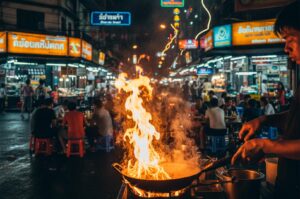
A wok sits over a low flame, and a handful of raw sticky rice slides across its dry surface. No oil, no water—nothing but heat and patience. The grains pale, then blush amber, then deepen toward the color of weak tea. Someone shakes the pan in a slow, even rhythm, listening as much as watching. The kitchen fills with a smell that is part popcorn, part roasted nut, part something older and harder to name. When the rice is ready, it goes into a stone mortar, still warm, and a pestle begins to turn it into coarse, fragrant dust.
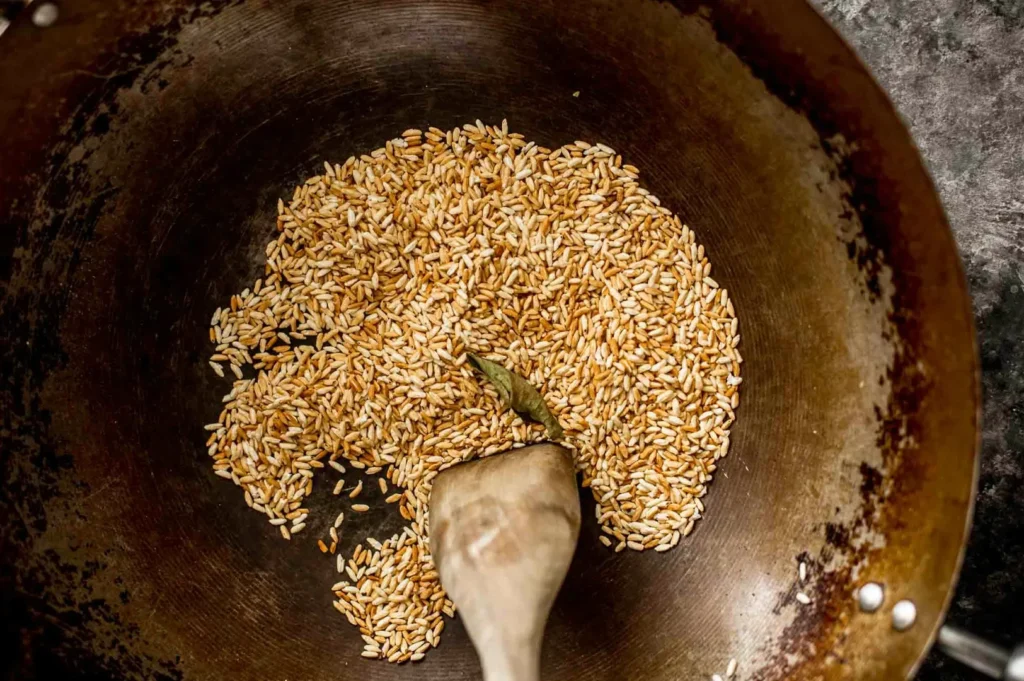
This dust is khâo khua (roughly khao koo-ah): toasted rice powder. In thailand food, it’s the kind of near-invisible seasoning that quietly decides whether a dish feels merely dressed or fully composed. The process is exactly what it sounds like: uncooked glutinous rice, dry-toasted until it browns and smells nutty, then ground while still warm so it keeps its aroma. The result is not flour. It is deliberately coarse, somewhere between fine sand and cracked pepper, with enough grit to register on the tongue.
In a dish like larb, the minced meat salad of the north and northeast, this powder does quiet structural work. It absorbs the loose liquid pooling at the bottom of the bowl, gives the lime and fish sauce something to cling to, and adds a toasted backbone beneath the bright, sour, chili-sharp surface. Without it, larb tastes thinner, wetter, less anchored.
You notice khâo khua most when it is missing. At a shared table, where bowls of larb sit beside sticky rice pressed into balls by hand, the powder is the reason a pinch of salad holds together on your fingers. It explains why the dish feels dry in the deliberate sense—not parched, but composed, each bite clinging rather than running. Cooks make it in small batches because it goes stale, losing the very nuttiness that justified the toasting. A jar kept too long turns flat and dull. So the grinding becomes part of the cooking rhythm itself, done close to the meal, often by whoever is already standing at the mortar pounding chilies.
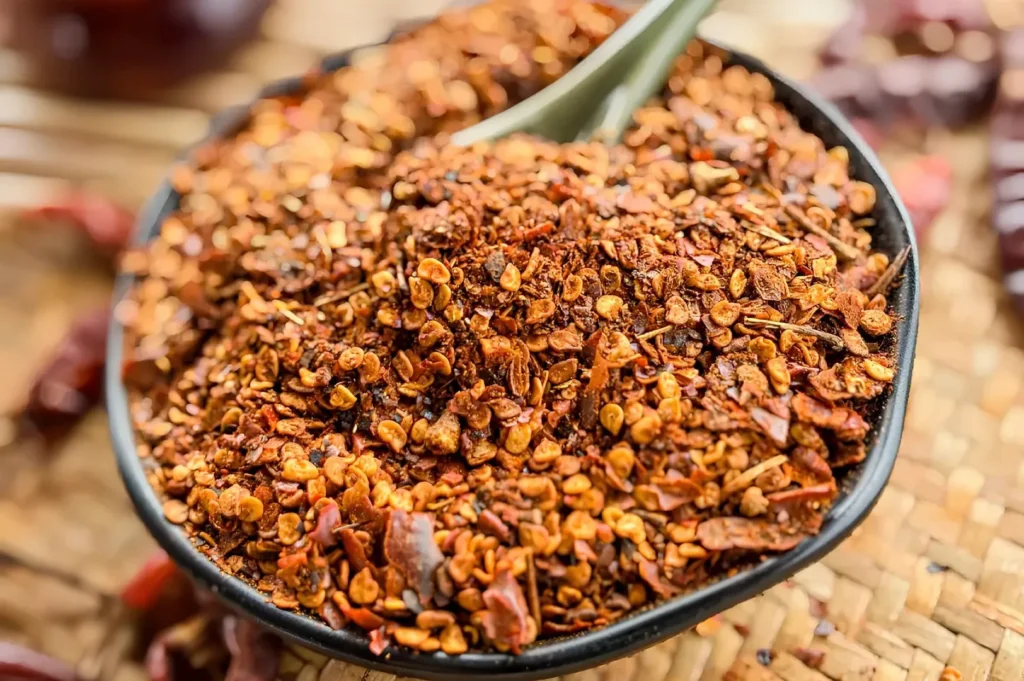
What feels worth noticing now is how easily this step disappears. Pre-ground rice powder sits on shelves, convenient and consistent, and it works well enough that many never toast their own. But fresh khâo khua carries a depth the packaged kind cannot hold, a warmth that fades within days of grinding. The tension is small but real: a few minutes of attention against a shortcut that costs almost nothing. The powder is nearly invisible in the bowl, yet it decides whether larb sings or merely sits.
I keep returning to that contradiction. The most essential element in the dish is the one you can barely see: a scatter of toasted dust that asks for patience and gives back texture, aroma, and the simple logic of dryness.

Crunch, Sweet, and Heat: The Irresistible Textures of Southeast Asian Snacks
Dio Asahi | February 17, 2026
In the humid, sticky heat of Southeast Asia, where your shirt clings to your back and the air is thick with the sharp scent of oxidising oil, there’s a particular clink that always gets me. It’s the sound of a metal spatula striking a wok, a rhythmic percussion that’s as familiar to me now as…
-
The Living Pantry: How Geography and Trade Shaped the Food in the Southeast Region
Eat Drink Asia Team | February 14, 2026
To understand the plate is to understand the map. If you were to trace the spice routes of the 15th century or follow the monsoon winds that carried merchant ships across the Indian Ocean, you would find yourself at the epicenter of the world’s most vibrant pantry. The food in the Southeast region of Asia…
-
A Symphony of Senses: Why Southeast Asian Food is the World’s Greatest Culinary Journey
Dio Asahi | February 12, 2026
If you were to stand at a busy intersection in Bangkok, Ho Chi Minh City, or Jakarta and close your eyes, your nose would tell you a story before your eyes ever could. There is a specific, intoxicating perfume that defines Southeast Asian food: the sharp tang of lime juice hitting a hot wok, the…
-
The Alchemy of the Wok: The Story of Singapore-Style Bee Hoon
Eda Wong | February 10, 2026
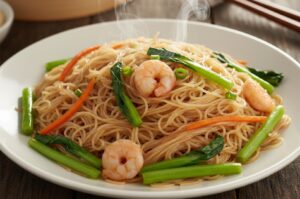
Across the humid evening air of Singapore, a rhythmic clatter echoes from hawker stalls to high-rise kitchens—the sound of a metal spatula against a seasoned wok. Within that intense heat, rice vermicelli noodles undergoes a profound transformation, absorbing the golden hues of curry powder, the savory depths of soy sauce, and the smoky “breath” of…
-
The Sizzle of the Wok: An Exploration of Fried Bee Hoon Across Southeast Asia
Eat Drink Asia Team | February 7, 2026
Across Southeast Asia, from bustling hawker centers to family kitchens, the sizzle of rice vermicelli noodles hitting a hot wok is a universal comfort. Few dishes capture the spirit of Asian noodle culture as well as fried bee hoon. This stir fry, made with thin rice noodles, delivers a tasty meal any time of the…
-
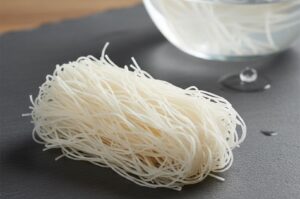
The Silk of the East: A Deep Dive into Bee Hoon and the Art of Rice Vermicelli
Eda Wong | February 5, 2026
Across the bustling kitchens of Southeast Asia, one humble ingredient has woven itself into the fabric of countless beloved dishes. Bee hoon, the delicate rice vermicelli that transforms from brittle strands into silky noodles, represents centuries of culinary tradition and innovation. Whether you’ve savored Singapore noodles in a hawker center or encountered fried bee hoon…
-
The Eternal Hearth: A Journey Through the Soul of Indian Foods Vegetarian Traditions
Dio Asahi | February 3, 2026
In the vibrant tapestry of global gastronomy, few cultures have elevated the plant-based plate to an art form quite like India. While much of the world has recently turned toward meat alternatives for health or environmental reasons, Indian cuisine has been centered on the vegetable for millennia. This isn’t merely a dietary choice; it is…
-
The Essence of Jeju Citron Tea: A Distinctive Profile of Yuja Tea in Korea
Dio Asahi | January 31, 2026
Imagine sitting in a quiet, sun-drenched teahouse overlooking the dramatic volcanic coastline of Jeju Island. The steam rising from your cup carries an aroma that is at once familiar and yet entirely new—a version of Korean citron tea, or yuja cha, that tastes of sea salt, volcanic soil, and generations of island tradition. As you…
-
Korean Citron Tea: Health Benefits and Wellness Secrets
Eat Drink Asia Team | January 29, 2026
As the seasons change and a chill enters the air, many of us seek out comforting rituals to support our well-being. Imagine wrapping your hands around a steaming cup of Korean citron tea—also known as yuja-cha—its bright, citrus aroma soothing and revitalizing with every sip. More than just a winter treat, Korean citron tea is…
-
When the Izakaya Becomes the Plan: Izakaya Singapore Top Picks for After-Work Reset
Dio Asahi | January 28, 2026
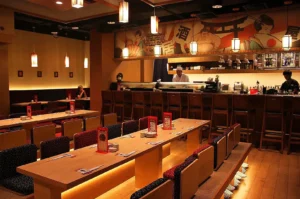
January 28, 2026 | Dio Asahi Last updated: September 14, 2026 As you step behind the humble noren curtain, you’re greeted by glowing lanterns, sizzling charcoal-grilled skewers, and warm welcomes. This is izakaya, Japan’s casual pub, a vibrant part of Singapore’s dining scene. More than just yakitori and sake, izakayas offer a lively setting for social…