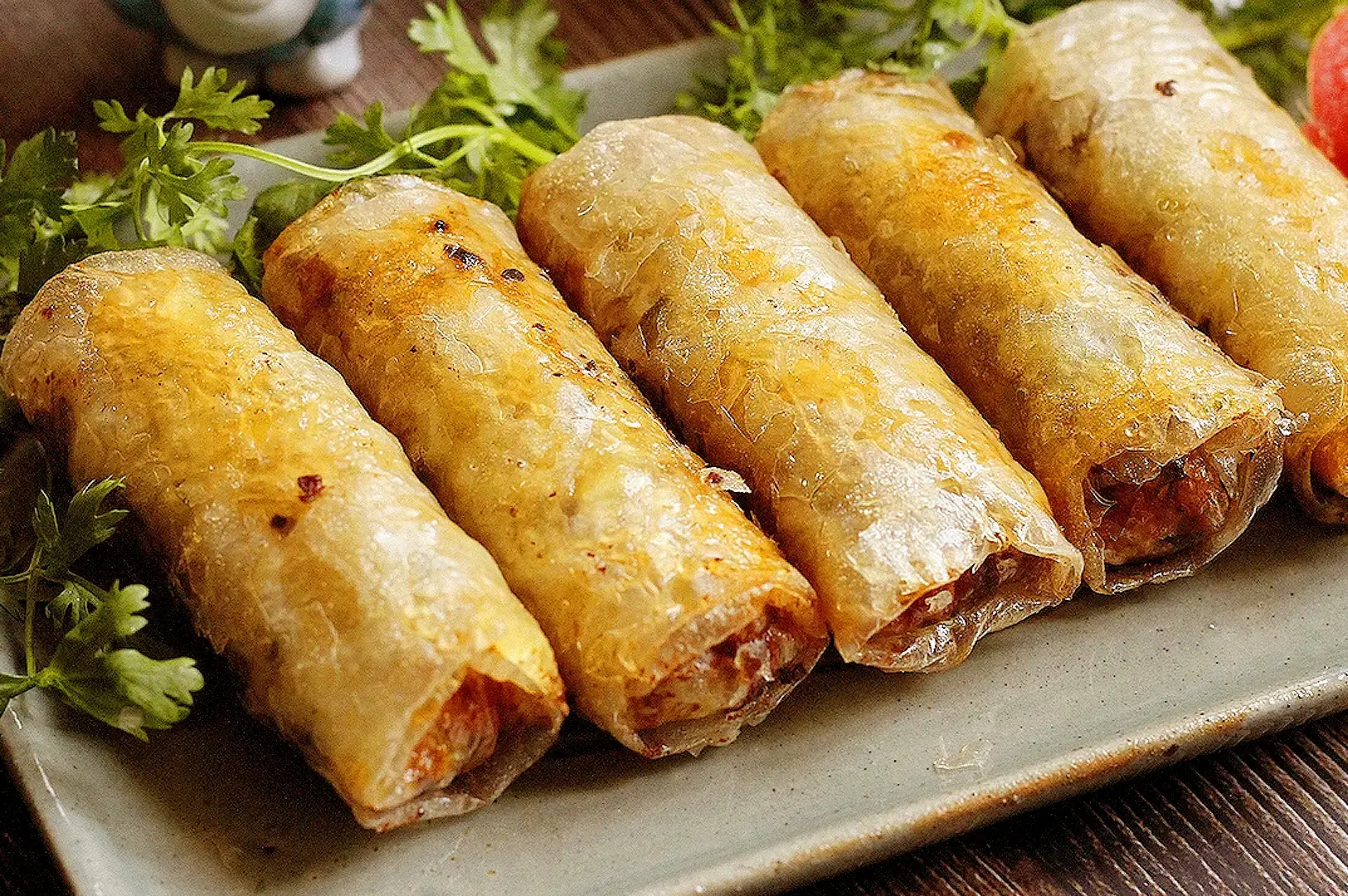
Fresh Vietnamese spring rolls, or gỏi cuốn, look delicate, but the recipe is really about control: barely softened rice paper, dry herbs, restrained noodles, clean protein, and a dipping sauce sharp enough to wake the whole thing up.
This is not the fried version, chả giò or nem rán. This is the cool, translucent, herb-heavy roll wrapped in softened rice paper and eaten soon after rolling. The kind that fails when the wrapper turns gummy, the herbs go limp, or the filling gets too ambitious.
The first batch I ever made looked like wet tissue paper. I soaked the rice paper until it went soft in the bowl, then watched the wrapper collapse as soon as I lifted it out. The noodles slid. The prawns escaped. I ate the failures standing over the sink, and they still tasted fine, because fresh spring rolls are forgiving that way.
But fine is not the same as right. Let me save you the sink-standing years.
Ingredients
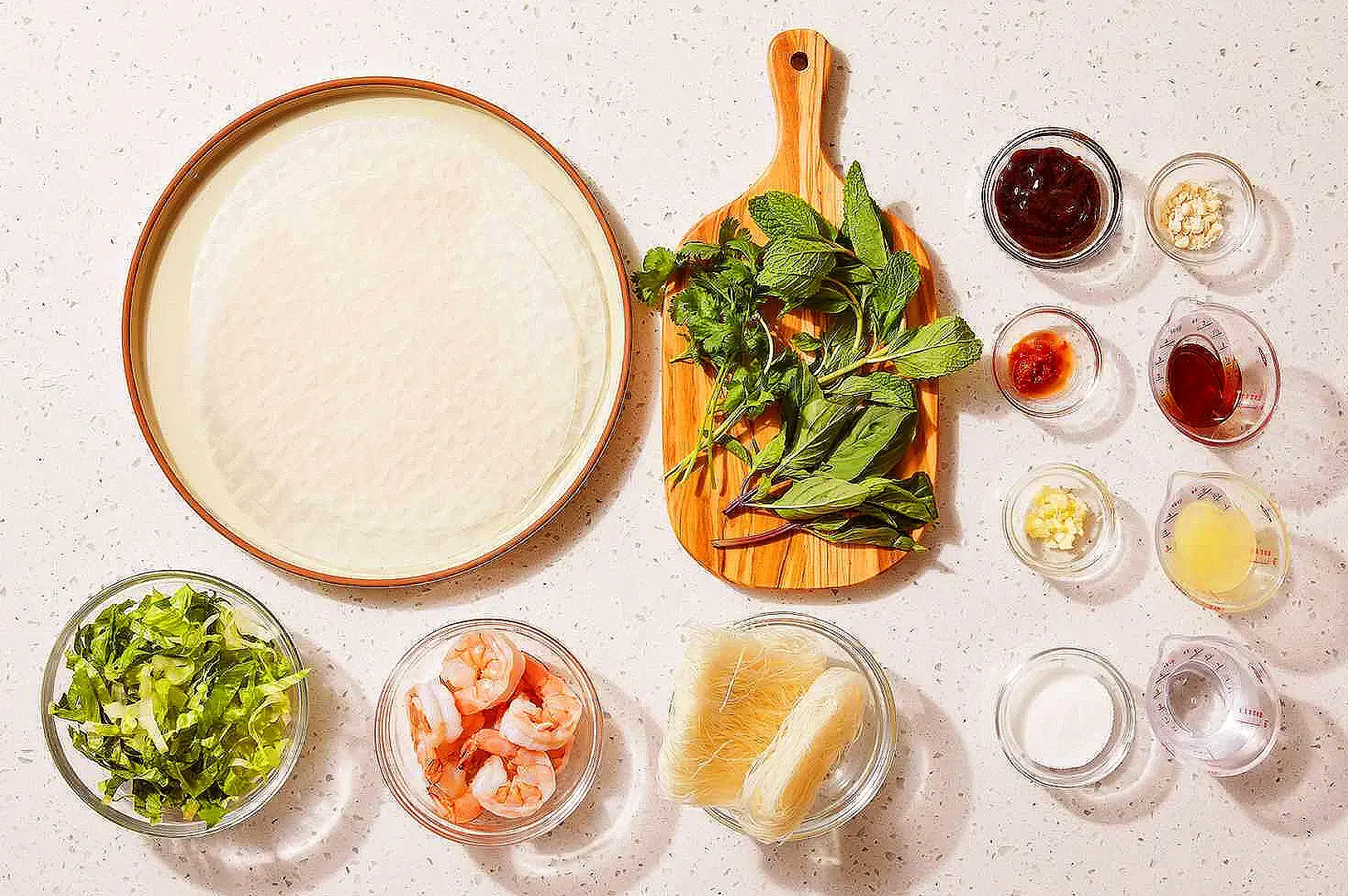
For 3 to 4 people, you will need:
- 12 to 16 sheets of rice paper wrappers, preferably Vietnamese bánh tráng from trusted rice paper brands
- 100g to 150g rice vermicelli noodles (thin rice sticks)
- 12 to 16 cooked medium-sized prawns, halved lengthwise for shrimp spring rolls
- 150g to 200g thinly sliced poached pork belly, cooked chicken, tofu, or fish
- 1 small head butter lettuce or green leaf lettuce, leaves separated and dried with a paper towel
- 1 cucumber, cut into thin strips
- 1 carrot, cut into thin strips
- 1 handful bean sprouts, optional
- 1 large handful fresh herbs such as mint, Thai basil, and coriander
- Optional Vietnamese herbs: perilla, fish mint, sawtooth coriander, Vietnamese coriander
For nước chấm dipping sauce:
- 3 tbsp fish sauce
- 3 tbsp lime juice or rice vinegar
- 2 tbsp sugar
- 4 to 5 tbsp water (warm water preferred for dissolving sugar)
- 1 garlic clove, finely chopped
- 1 small chilli, finely chopped
For peanut sauce (vietnamese peanut sauce):
- 3 tbsp hoisin sauce
- 2 tbsp crunchy or chunky peanut butter (or almond butter as an alternative)
- 2 to 4 tbsp warm water, to loosen the sauce to a dip-able consistency
- Crushed roasted peanuts, to finish
Realistically, expect to spend around S$18 to S$35 in Singapore, depending on your protein choice. Tofu or chicken keeps it lower. Prawns, pork belly, and imported herbs push it up. Rice paper wrappers are not usually the expensive part; fresh vegetables and protein are.
If you are making a tofu version, our Fortune Centre food guide has more vegetarian meal ideas for days when you want something lighter.
Before You Start
Prep everything before touching a single rice paper sheet. Rice paper waits badly, but fillings wait fine.
Cook the rice vermicelli noodles, drain them well, and let them cool completely. Warm rice noodles steam inside the rice paper rolls and make the wrapper sticky, ruining the delicate texture.
Cook and cool your protein too, whether that means prawns, pork belly, chicken, tofu, or fish.
Wash the fresh vegetables and herbs gently, then dry them properly with a damp paper towel or salad spinner. This is the step people rush. Wet herbs make a slippery, watered-down roll. The herbs should feel fresh and awake, not bruised or dripping.
Cut the vegetables into thin strips so they bend easily inside the roll, not stab through the rice paper. Keep everything in small bowls or piles on your rolling surface before you begin.
How to Make Vietnamese Spring Rolls (Gỏi Cuốn)
1. Cook the rice noodles
Soften the rice vermicelli noodles according to the packet instructions. Drain well, rinse if needed under cold water, and let the noodles cool. If they clump, loosen them gently with your fingers before rolling.
2. Prepare the protein
Poach prawns and pork belly if using the classic pairing. Slice the pork belly thinly and halve the prawns lengthwise so the pink side can show through the translucent rice paper. For tofu, use firm tofu and cut it into neat thin strips.
3. Wash and dry the fresh herbs
Mint, Thai basil, and coriander are the minimum I would use for authentic fresh Vietnamese spring rolls. Dry them well with a salad spinner or paper towel. The herbs are not garnish; they are the reason the roll tastes alive.
4. Make the dipping sauces
Mix the nước chấm dipping sauce until it tastes salty, sour, sweet, and hot at once. It should be slightly sharper than you think, because the mild roll will soften it.
For peanut sauce, stir hoisin sauce and peanut butter together, then loosen with warm water until dip-able. Finish with crushed roasted peanuts.
I usually serve both dipping sauces. Nước chấm wakes the roll up with its vibrant tang, while peanut-hoisin sauce makes it richer and gentler.
5. Dip one rice paper wrapper
Fill a shallow plate or tray with room-temperature or warm water. Dip one rice paper sheet for 2 to 3 seconds only. It should still feel slightly firm when you lift it out.
Lay it flat on a clean rolling surface such as a cutting board or large plate. Do not wait for it to become soft in the water. It will keep softening as you build the roll.
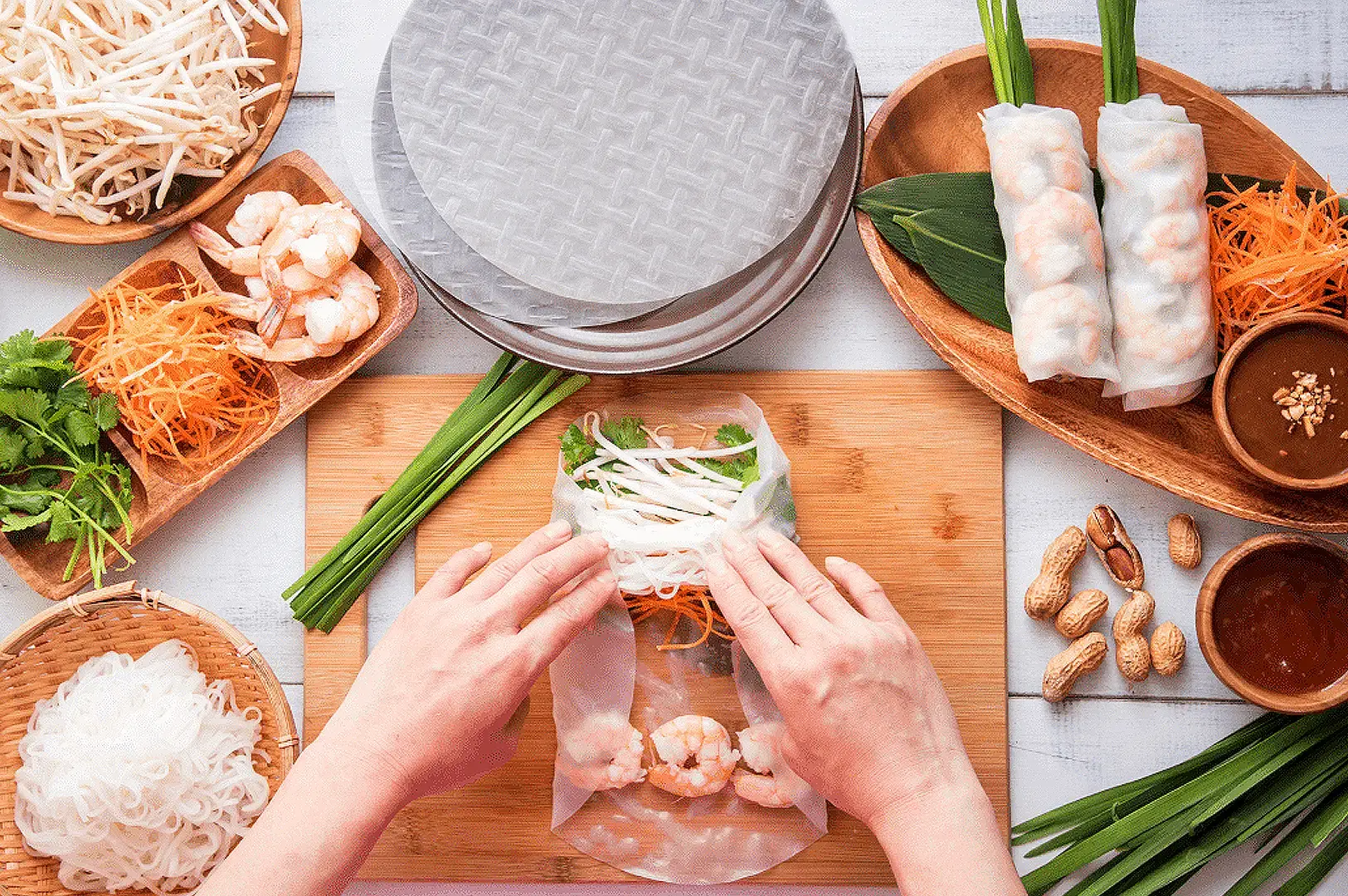
6. Layer the filling
Place a lettuce leaf first. This protects the wrapper from sharp vegetables and noodle clumps.
Add a small line of rice vermicelli noodles, then fresh herbs, then cucumber, shredded carrot, and bean sprouts if using. Keep everything horizontal and compact.
Place the prawns or pork belly near the far edge. If using prawns, place them pink-side down so they show through the translucent rice paper rolls once rolled.
7. Roll firmly but gently
Fold the bottom of the wrapper up over the filling. Tuck the left and right sides in. Then roll forward, tightening as you go.
Do not force it shut at the end. A good spring roll feels snug, not packed.
Work one wrapper at a time. Every time.
Dip Less Than Feels Right
The water bowl is where most fresh spring rolls fail.
Rice paper keeps hydrating after it leaves the water, so the wrapper should come out while it still feels too firm. Give it 30 to 60 seconds on the rolling surface while you arrange the filling, and it will soften on its own.
If it feels perfectly soft in the bowl, it is already over-soaked.
What Fresh Spring Rolls Should Taste Like
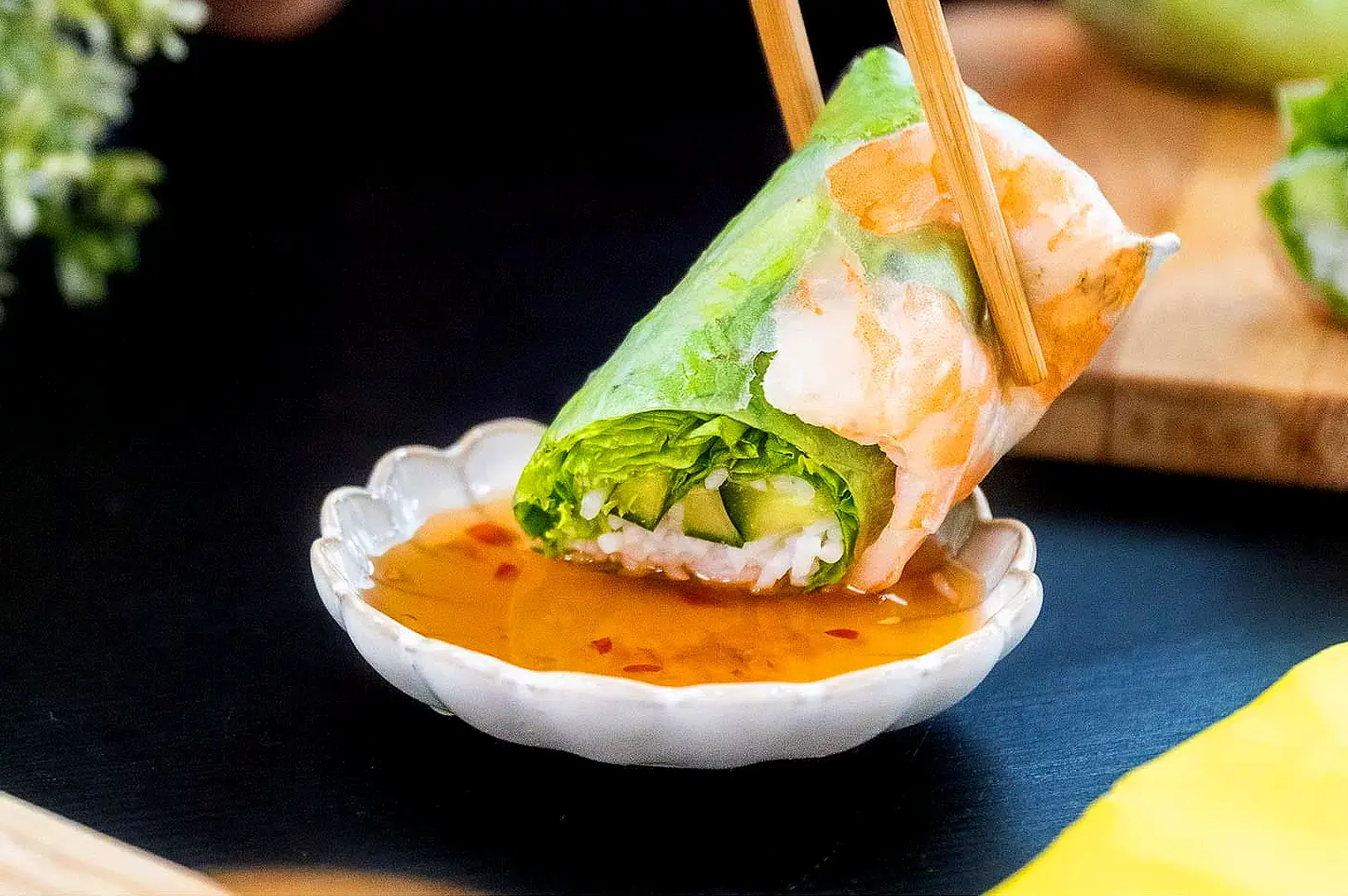
A good fresh Vietnamese spring roll should taste cool, clean, and balanced. The rice paper should be soft but not gummy. The lettuce should give structure, the rice vermicelli should soften the bite, and the fresh herbs should lift everything.
Skip the herbs and you are left with a cold noodle wrap. That is the heart of this authentic recipe.
For another lighter eating mood, our best cafe Singapore picks cover quieter places for brunch, pastries, and slow afternoon bites.
The Sauce Matters
The roll itself is mild, so the spring roll dipping sauce does the seasoning. You want contrast: fresh vegetables, soft rice noodles, clean protein, then a dip that brings salt, acid, sweetness, and heat.
Can You Make Fresh Vietnamese Spring Rolls Ahead?
Briefly, yes. Ideally, no. Rice paper rolls are best eaten soon after rolling because the wrapper can toughen and the fresh veggies can lose their snap.
To hold them briefly:
- Keep rolls slightly apart
- Place them seam-side down
- Cover with a lightly damp paper towel
- Use plastic wrap loosely if needed, but do not press it onto the rolls
Better for Hosting
Prepare the components ahead instead: spring roll wrappers, noodles, herbs, protein, all the vegetables, and sauces. Set out a large bowl of warm water and let guests roll their own.
This keeps the herbs fresher and makes the rolling technique easier for first-timers.
Peanut Dipping Sauce and Other Variations
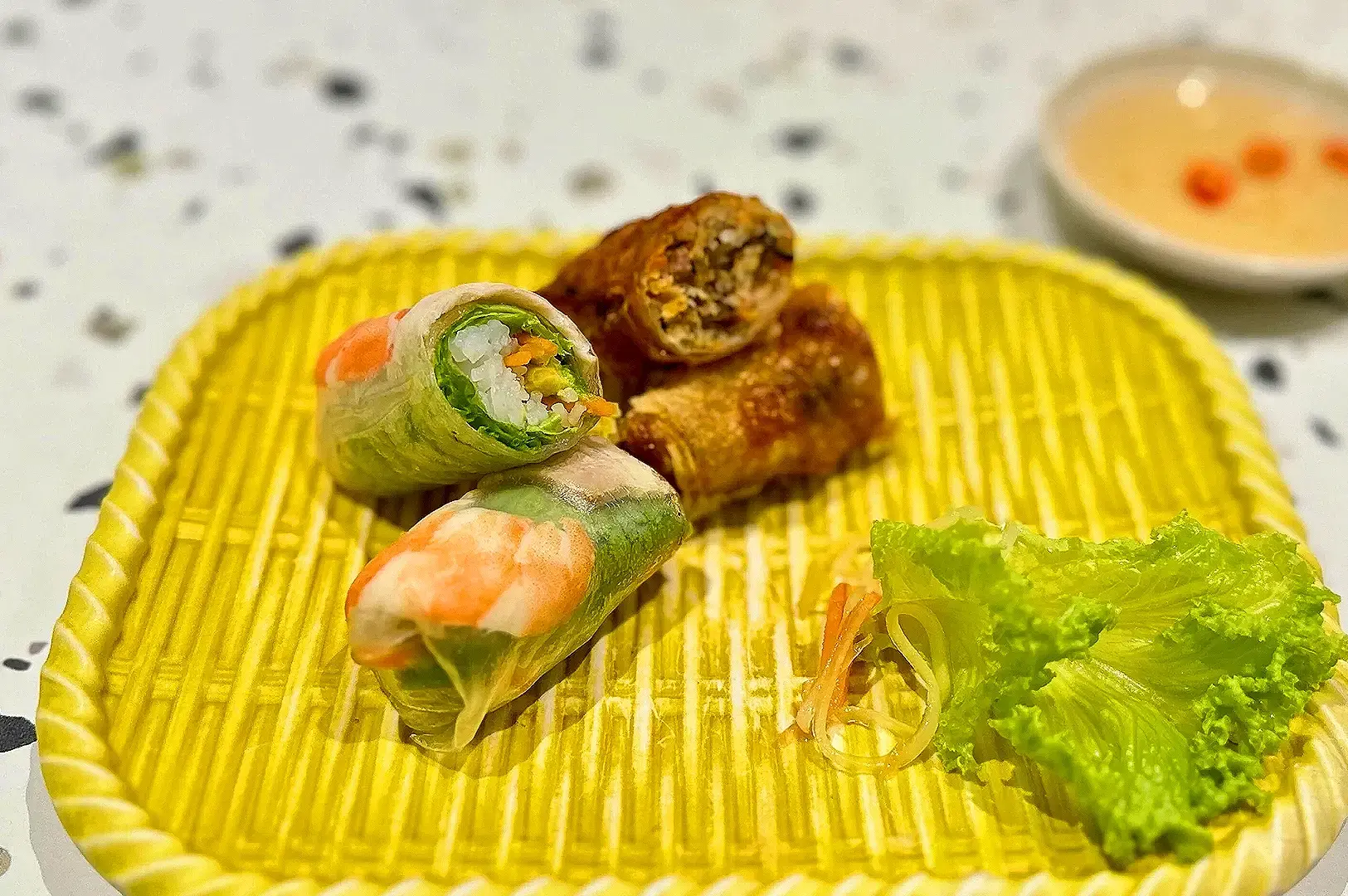
A simple peanut dipping sauce makes Vietnamese fresh spring rolls richer. Mix hoisin sauce with crunchy peanut butter, then loosen with warm water. Add a small splash of sesame oil for depth, or chilli for a spicy peanut sauce.
Fried Spring Rolls Are Different
Fried spring rolls use egg roll wrappers or rice sheets filled with ingredients like shrimp, mushrooms, and pork belly, then fried until crisp. They are warm and crunchy, while fresh spring rolls stay cool, soft, and herb-heavy.
Fresh rolls can also be made with tofu, prawns, shredded chicken, mango, cucumber, or other fresh vegetables. Different rice paper brands soften differently, so dip briefly, wait, then roll. That small pause is often what turns messy rolls into a perfect spring roll.
Beyond Perfection
The rolls I make now are not perfect. Some still lean crooked. A prawn slips out now and then.
But the herbs stay awake. That is the part I finally learned to care about: a roll can be plain in every other way and still taste alive if the mint, basil, and coriander are fresh enough to lift it.
Make a mess of your first few. Eat them over the sink if you have to. Then dip the next wrapper a little less, dry the herbs a little better, and roll a little looser.
Somewhere in there, it stops being a recipe and starts being a thing you know how to do.

Japanese Sake: The Complete Guide to Japan’s Traditional Rice Wine
Dio Asahi | November 29, 2025
Japanese Sake: The Complete Guide to Japan’s Traditional Rice Wine While sake has been Japan’s national beverage for over a millennium, its popularity across Asia is at an all-time high. Rooted in Japan’s traditional brewing methods and centuries-old origins. It symbolizes Japan’s cultural heritage and craftsmanship. Understanding this complex brewed alcoholic beverage opens doors to…

Best Japanese Foods in Japan: The Must-Try Dishes
Eda Wong | November 27, 2025
Japan’s culinary world extends far beyond well-known sushi and ramen, revealing a rich variety of regional specialties cherished by locals. While many travelers stick to popular Japanese foods in tourist areas, authentic flavors are best discovered in neighborhood markets, family-run eateries, and seasonal menus reflecting centuries of Japanese cooking tradition. Understanding Japanese cuisine requires more…
-
Japanese Food in Japan: The Ultimate Guide to Authentic Culinary Experiences
Eat Drink Asia Team | November 25, 2025
Experiencing Japanese food in Japan is fundamentally different from eating Japanese cuisine anywhere else. While sushi restaurants and ramen shops have spread globally, the authentic flavors, techniques, and cultural context of Japanese food can only be fully appreciated in its homeland. From meticulously selecting ingredients at peak freshness to centuries-old traditions shaping every meal, eating…
-
Food in Japan: A Complete Guide to Japanese Cuisine and Culinary Culture
Eda Wong | November 22, 2025
The gentle steam rising from a bowl of miso soup carries more than just the earthy aroma of fermented soybeans-it carries centuries of Japanese culture and culinary wisdom. When you eat in Japan, you’re not simply consuming a meal; you’re participating in a ritual that connects you to the seasons, the land, and a philosophy…

Ramune Marble Soda: History and Cultural Meaning of Japan’s Iconic Marble Soda
Dio Asahi | November 20, 2025
Among Japan’s beloved fizzy drinks, none evoke nostalgia and uniqueness quite like Ramune marble soda. Instantly recognizable by its quirky Codd neck bottle and glass marble seal, Ramune soda is an essential part of Japanese summer, cherished by generations for its refreshing taste and signature pop sound. This marble soda remains a staple at summer…
-
Hokkaido’s Best Seafood Treasures: Beyond Sushi and Sashimi
Eat Drink Asia Team | November 18, 2025
When visiting Hokkaido, Japan’s northernmost island, food lovers are greeted with some of the most highly regarded seafood specialties in the world. Hokkaido is famous for its abundance of fresh seafood and rich fishing grounds, thanks to the surrounding Sea of Japan, Pacific Ocean, and Sea of Okhotsk. These nutrient-packed waters yield a wide range…
-
The Art of Asian Tea Ceremony Traditions: Ancient Rituals and Cultural Values Across Asia
Dio Asahi | November 15, 2025
A cup of tea, in many parts of Asia, represents far more than a beverage-it is a conduit to ancestral tradition, intellectual pursuit, and the cultivation of mindfulness. Asian tea ceremony traditions turn the act of drinking tea into a sophisticated art form, layered with symbolism, philosophy, and socio-cultural values. Each gesture, from scooping powdered…

The Art of Slow-Cooked Curry Recipes: Time’s Magic in South Asian Cuisine
Eda Wong | November 13, 2025
Step into a South Asian kitchen, and the senses are instantly enveloped by the inviting aroma of food slowly simmering in a sturdy clay pot or heavy vessel. The allure is undeniable: in this space, slow-cooked curry recipes are a celebration of patient tradition, spices, and the richness of South Asian cuisine. Here, time and…
-
Bandung Drink Recipe: A Singaporean Rose Syrup Drink Tradition
Eat Drink Asia Team | November 11, 2025
Step into any night market or hawker centre in Singapore, and you’ll spot a vibrant, glowing glass filled with a cold, beautiful drink-Bandung. Known for its iconic blush-pink hue and refreshing taste, this rose syrup drink is an integral part of Singapore’s beverages scene and a cherished tradition in Southeast Asian gatherings. More than just…
-
The Ultimate Hainanese Chicken Rice Recipe: A Deep Dive
Eda Wong | November 8, 2025
To wander through Singapore’s bustling hawker centres on a humid evening is to experience a symphony of sights, sounds, and smells. Among the many other dishes sizzling away, one plate stands out for its elegant simplicity: Hainanese Chicken Rice. It arrives without fanfare-gleaming slices of poached chicken over fragrant rice, flanked by a trio of…