There are cities you can understand through maps, and then there are cities like Kuala Lumpur that only begin to make sense when you follow what people eat. Not what is recommended or ranked, but what is repeated. The same stall visited every week, the same dish ordered without hesitation, the same flavours that feel familiar before they are even tasted.
Kuala Lumpur does not announce itself loudly through its cuisine, even though a lot of people like people (https://klfoodadventures.mystrikingly.com/) does. It unfolds slowly, often in spaces that seem ordinary at first glance. A coffee shop beneath aging apartments, a roadside stall that appears only in the evening, a corner shop where the queue forms before the shutters fully open. These are not destinations in the traditional sense, but they are where the city reveals itself most honestly.
We begin to notice that KL cuisine is not defined by a single identity, but by its layering. Malay, Chinese, and Indian influences sit side by side, not in separation but in quiet negotiation. A dish may carry techniques and flavours from multiple traditions without needing to explain itself. It simply exists, shaped by the rhythms of the people who make it.
This is where the idea of specialty becomes more complex. In Kuala Lumpur, a specialty is rarely about exclusivity or refinement. It is about repetition and consistency, about doing one thing well enough that it becomes part of someone’s routine. A hawker preparing the same dish for decades is not just serving food, but maintaining something others rely on.
And yet, these recipes are not fixed. What we call tradition here is constantly shifting, often in ways that are subtle and undocumented. Ingredients change with availability, techniques adapt depending on who takes over, and flavours evolve quietly over time. These differences are not written down, but they are felt by those who return often enough to notice.
This is what makes KL’s food culture both resilient and fragile. It adapts without losing its core, but much of it exists without formal preservation. Recipes are passed through practice rather than instruction, and when a stall closes, what disappears is not just a dish, but a way of making it. What remains is memory, and even that shifts over time.
We see this clearly in how dishes are experienced rather than defined. A plate might be known for its balance, its timing, or the consistency of its preparation, rather than a fixed set of ingredients. The smallest decisions, when to add heat, when to stop, how long to wait, shape the final outcome. These are not easily translated, but they matter.
In many ways, Kuala Lumpur resists simplification. It does not fit neatly into categories designed for easy understanding. It asks for attention, for repeated visits, and for a willingness to accept that what you experience today may not be exactly the same tomorrow. That variability is not a flaw, but part of its identity.
We return not just for the food, but for the familiarity of the process. The act of ordering, the rhythm of waiting, the recognition between vendor and customer. These small interactions form a structure that holds the city together in ways that are easy to overlook.
If we try to define Kuala Lumpur’s cuisine too quickly, we miss what makes it meaningful. The city is not built on singular highlights, but on accumulation**. Small, repeated experiences that gradually shape how we understand it.**
Because in Kuala Lumpur, food is not just something you seek out. It is something you grow into.

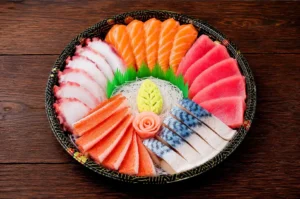
Fresh Sashimi Singapore: Places for Clean Cuts, Quiet Counters, and Fish That Still Feels Alive
Eda Wong | September 5, 2026
I didn’t grow up eating raw fish. For years, sashimi felt like something you learned to appreciate rather than something you loved. Cold, foreign, a little intimidating. Then one afternoon, at a quiet counter, a chef placed a single slice of chutoro in front of me and said nothing. I ate it. And I understood….
-
Pattaya Garden Restaurant and the Thai Meal That Knows How to Feed a Group
Eat Drink Asia Team | September 3, 2026
The rice came down first. A plain bowl, warm and steaming, set in the middle of the table before anything else. Then the green curry, in a bowl wide enough for four spoons to reach at once. And within a minute the table stopped being a set of individual meals and became one shared thing,…
-
At Keria Japanese Restaurant, the Meal Begins Before the First Bite
Dio Asahi | September 3, 2026
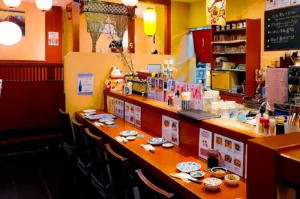
By Dio Asahi for Eat Drink Asia. The lift opens onto a corridor leading to the famed and hidden Cuppage Plaza food, and the building’s age shows in the flickering fluorescent light and the smell of old carpet. Then a sliding door pulls back, and Keria Japanese Restaurant asks you to slow down. Inside, it…
-
The Round Kaya Bun at Chin Mee Chin Confectionery, and the Mornings It Keeps
Eda Wong | September 2, 2026
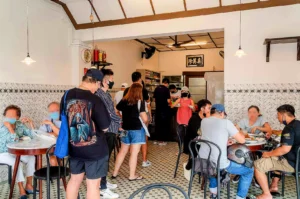
By Eda Wong for Eat Drink Asia. It’s not quite eight, and the pastel-blue shophouse is already awake. Kopi cups clink against saucers. A ceiling fan turns slow overhead. Someone folds a newspaper at a marble-topped table, and the man behind the counter moves without hurry, sliding buns across in a rhythm he’s clearly done…
-
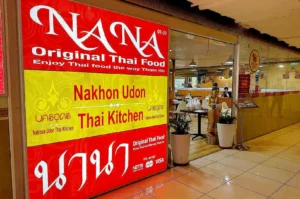
Nana Original Thai Food and the Thai Meal That Keeps Changing Its Accent
Eda Wong | September 1, 2026
The tom yum arrived first, and the first spoonful hit sour and hot at once, lime and chilli chasing each other down the throat. This classic Thai dish features a spicy sauce and aromatic herbs that awaken the taste buds straight away, setting the stage with its bold flavors. Then the pineapple rice came, sweet…
-
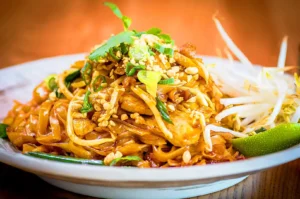
Pad Thai Recipe for People Who Know the Noodles Can’t Be an Afterthought
Dio Asahi | August 29, 2026
The first time I made Pad Thai, I ruined it before the wok was even hot. I’d left the noodles soaking while I answered a phone call. Ten minutes turned into forty. By the time I drained them, they were already soft, already surrendered. Everything I did in the pan after that was damage control….
-
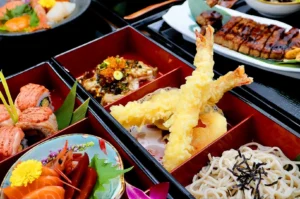
Best Japanese Restaurant Singapore: Places That Nail the “First Bite”
Eat Drink Asia Team | August 27, 2026
I built this list around a very specific feeling: that first bite where the room goes quiet for a second. I’ve tried enough Japanese restaurants in Singapore over the years to know that “best” does not always mean the most expensive, the rarest, or the hardest to book. Sometimes it is the warmth of the…
-
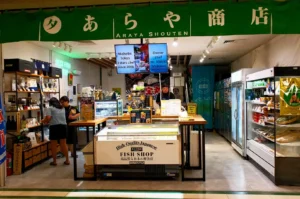
Not Just Seafood: How Araya Shouten Keeps Japanese Fishing Culture Alive in Singapore
Eat Drink Asia Team | August 26, 2026
Japanese cuisine has long been admired for its attention to seasonality, precision, and respect for ingredients. However, behind every piece of sashimi or carefully prepared seafood dish lies a story that begins far away from the dining table, often with fishermen, coastal communities, and generations of knowledge passed down through time. At Araya Shouten, seafood…
-
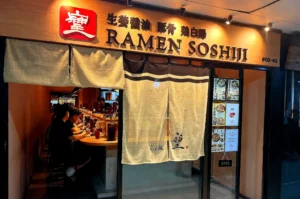
The Ginger Shoyu Ramen at Ramen Soshiji, Where Orchard Goes Quiet
Dio Asahi | August 26, 2026
By Dio Asahi for Eat Drink Asia. The lift opens on the third floor of Orchard Plaza, and for a second I don’t know which way to turn. The corridor is dim and still, the kind of quiet that feels almost accidental in this part of town. A few doors down, an unmarked entrance. Inside,…
-
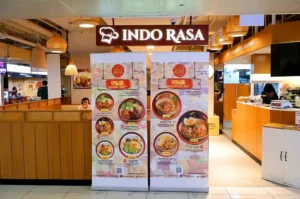
Indo Rasa Singapore and the Nasi Goreng That Measures a Kitchen’s Confidence
Eat Drink Asia Team | August 25, 2026
There’s a dish I order when I want to know a kitchen quickly. Not the specialty. Not the thing the menu is proud of. I order the fried rice. Because nasi goreng has nowhere to hide. It’s rice, chilli, chicken, egg, a few crackers, some cucumber. Everyone thinks they can make it. Most people can….