A friend texted me last week: “I’m outside this new Vietnamese place. How do I know if it’s legit before I waste my money?” It’s a question I get often. We’ve all been there, drawn in by a cool sign, only to get a plate of sad, sweet, tourist-grade pad thai that tastes like ketchup.
After years of hunting real neighbourhood spots and many disappointments, I’ve developed a mental checklist for authenticity. It’s not about being a food snob; it’s about wanting to taste something real.
Real talk: “Authenticity” isn’t about fancy décor or a chef’s grandma’s recipes. It’s about respect for technique, faithfulness to traditional flavours, and a connection to the culture. It ranges from deep traditional to community-adapted diaspora cooking. Avoid tourist-trap versions watered down for mass appeal. At its heart, authenticity honors the culinary heritage passed down through generations.
Here’s my guide to spotting the good stuff.
Quick Cheat Sheet: The 5-Minute Authenticity Test Across Different Cuisines
Before stepping into any of the many types of restaurants, from humble food trucks to polished fine dining establishments, pause and take a breath.
Authenticity leaves signals.
Whether you’re entering a neighbourhood coffee house, a bustling casual dining restaurant, or even a chef-driven fine dining establishment, these five checks rarely fail me.
The Clientele Check
Who’s eating there?
Are elders from that culture inside? Families sharing dishes family style? Workers eating quickly before returning to their shift?
In real community food restaurants, older diners guard memory. They know when broth has depth from bones simmered for hours, when fresh ingredients are respected, when something tastes right.
The Language Test
Listen carefully.
Are staff speaking their native language with each other or with regulars? In authentic casual dining restaurants or fast casual restaurants, language flows naturally across tables.
In contrast, many tourist-driven chain restaurants or larger fast food establishments feel linguistically neutral, efficient, but hollow.
Language carries lineage.
The Menu Scan
Is the menu focused, maybe even slightly messy?
A confident kitchen often has a limited menu, not a sprawling diverse menu designed to compete with everything from sushi to fried chicken to mongolian barbecue.
Specificity matters. “Isaan Thai.” “Cantonese BBQ.” “Regional Japanese cuisine.”
When dishes appear in their original script alongside English, it signals the kitchen cooks first for its own community.
The Smell Test
Close your eyes.
Do you catch toasted spices blooming in oil? The smoky breath of a wok? The sweet, tender aroma of slow cooked meats like braised beef or pulled pork surrendering to time?
Or does the dining room smell neutral, like a sanitized showroom?
In real kitchens, food preparation perfumes the air.
The Specials Board
Is there a handwritten board with unfamiliar dishes?
Seasonal items. Holiday foods. Things you don’t immediately recognize.
That’s where preservation often hides.
Test #1: The Crowd Tells You Everything (From Casual Dining to Fast Casual)
This rule has never failed me.
It works in casual dining restaurants, in fast casual restaurants, even in understated fine dining establishments that prioritize heritage over spectacle.
Look through the window.
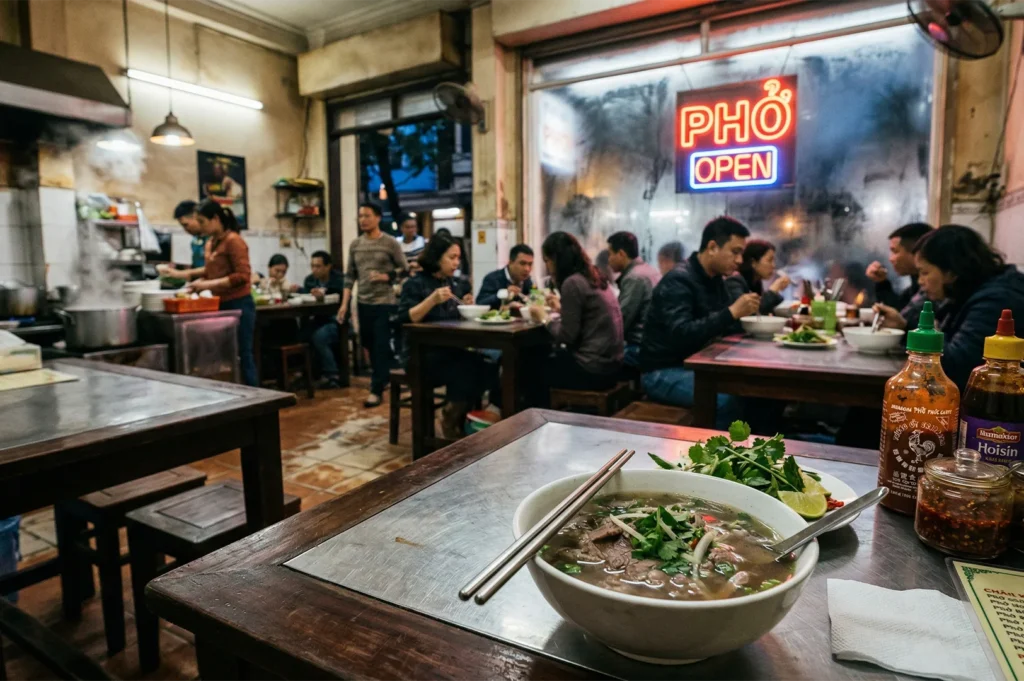
If a Sichuan restaurant at 7 PM is filled with families leaning over bowls slick with chili oil, steam fogging the glass, chopsticks clattering, you’re likely in the right place.
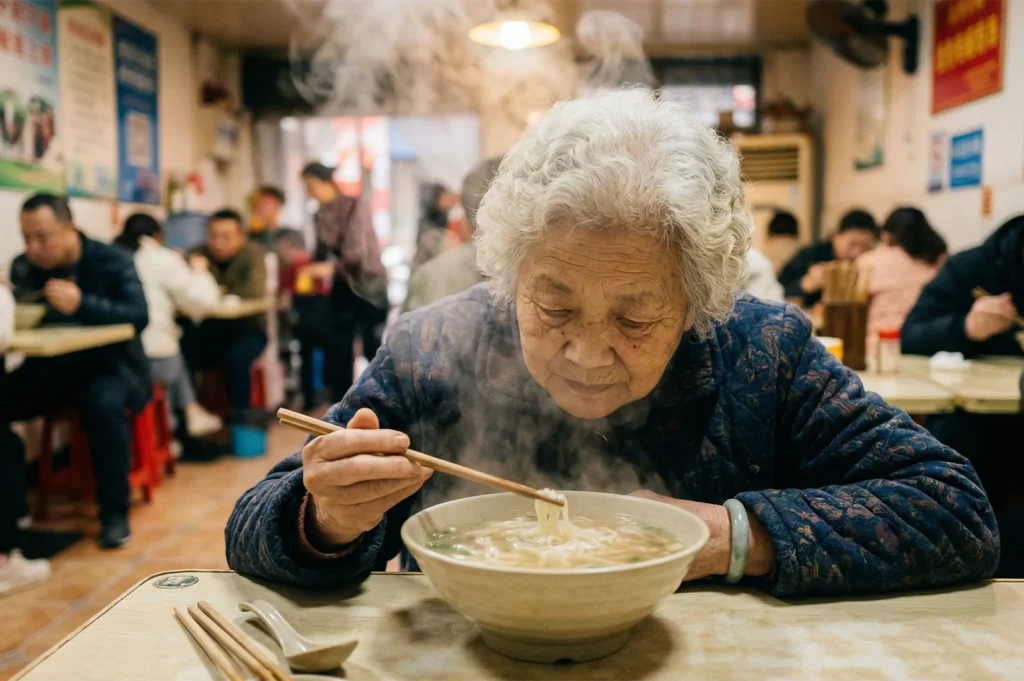
I call this the Grandma Rule.
Grandmothers have no patience for shortcuts. They can taste when high quality ingredients are replaced with diluted sauces. They know when technique has been softened for tourists.
I once found the best pho in my city this way. It wasn’t a glossy destination restaurant. It wasn’t trending on delivery apps like Uber Eats. It looked more like a quiet greasy spoon, with fewer tables than most modern fast casual restaurants.
But inside, elderly Vietnamese men hunched over bowls at 11 AM.
The broth carried star anise and charred ginger. The noodles were tender but resilient. The beef perfumed the surface with warmth.
That bowl tasted like inheritance.
No marketing strategy in the modern restaurant industry can fabricate that.
Test #2: The Menu Is a Map (For Casual Dining Restaurants & Fine Dining Restaurants)
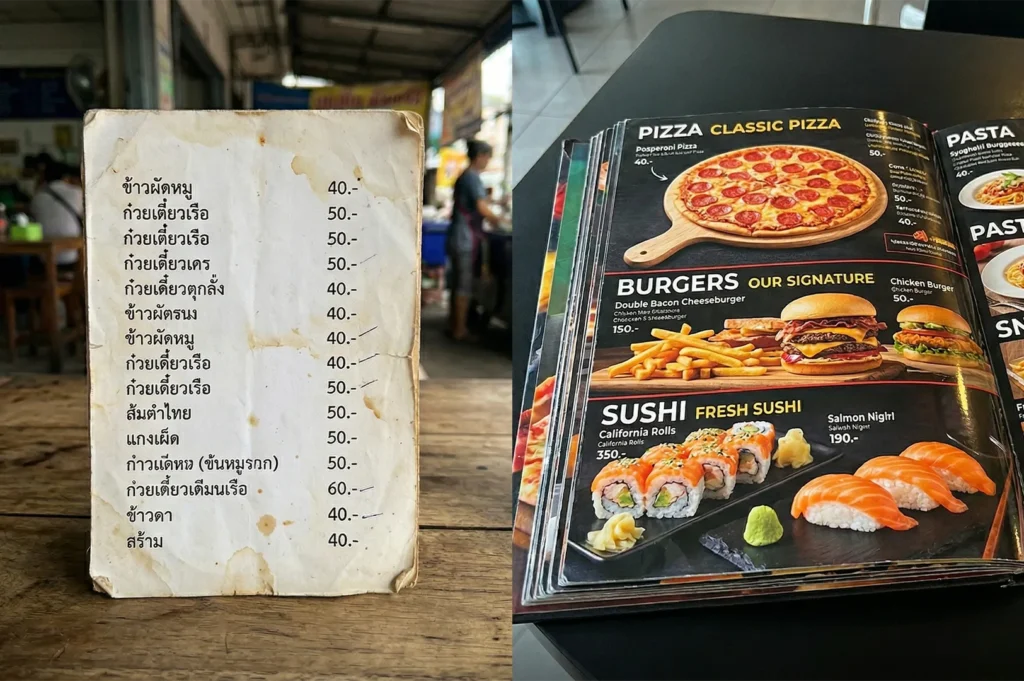
A menu is a mission statement.
Whether in a small sit down restaurant or a refined fine dining restaurant offering a fixed price tasting menu, authenticity reveals itself in focus.
Green Flags
- Focused or Limited Menu
Mastery requires repetition. A tight list of food items signals commitment to a specific cooking style, the kind refined over years, not improvised to chase trends. - Regional Specificity
Not just “Chinese food,” but “Teochew.”
Not just “Thai,” but “Southern Thai.”
Depth matters across different cuisines. Specificity signals cultural grounding, not generalisation. - Original Language
Native script alongside English suggests the restaurant cooks for insiders first, for those who already know what the dish should taste like. - Challenging Dishes
Offal. Bitter greens. Fermented sauces.
These are often the first to disappear in heavily standardized menus found in large chain restaurants. When they remain, it signals integrity.
Red Flags
- Overly Expansive, Glossy Menu
A laminated book offering sushi, pho, pad thai, burgers rivaling Burger King, and random Western pastas, all under one roof. - Too Many Different Cuisines at Once
No kitchen can master four different cuisines with equal depth and respect. - Standardized for Mass Appeal
When everything feels engineered to satisfy the broadest audience possible, it often reflects a survival business model borrowed from the fast food industry, not a commitment to preservation.
Test #3: The Staff Test (Service Style Reveals Intent)
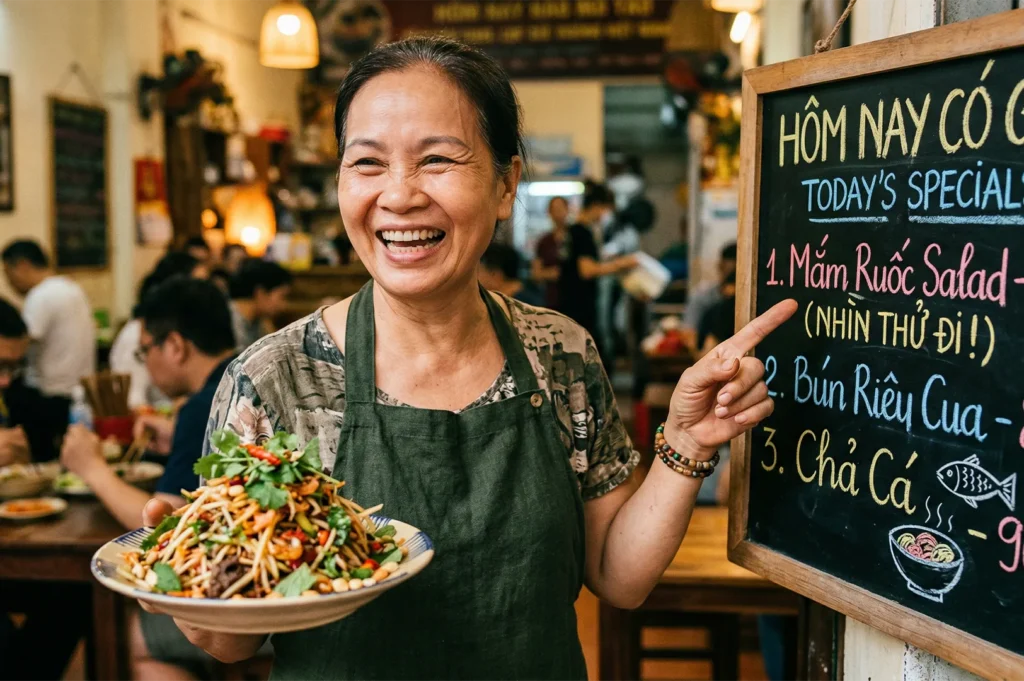
Observe the service style.
Is it counter service, common in traditional noodle bars?
Or full table service, expected in a full service restaurant?
Authenticity can exist in both.
Ask gently:
- “What do you eat after your shift?”
- “What’s your favourite dish here?”
If they recommend the safest crowd-pleaser, it may be polite. But if their eyes light up and they point to something less familiar, a sour stew, a fermented salad, trust that spark.
I learned this in a small Mexican place that wasn’t a theatrical theme restaurant with staged décor. During break, the cooks devoured tacos from their own kitchen.
When staff eat the food themselves, you’re safe.
Authenticity does not require theatrical exceptional service or an elaborate upscale atmosphere. It requires pride.
Test #4: Ambience (Casual Atmosphere vs Refined Decor)
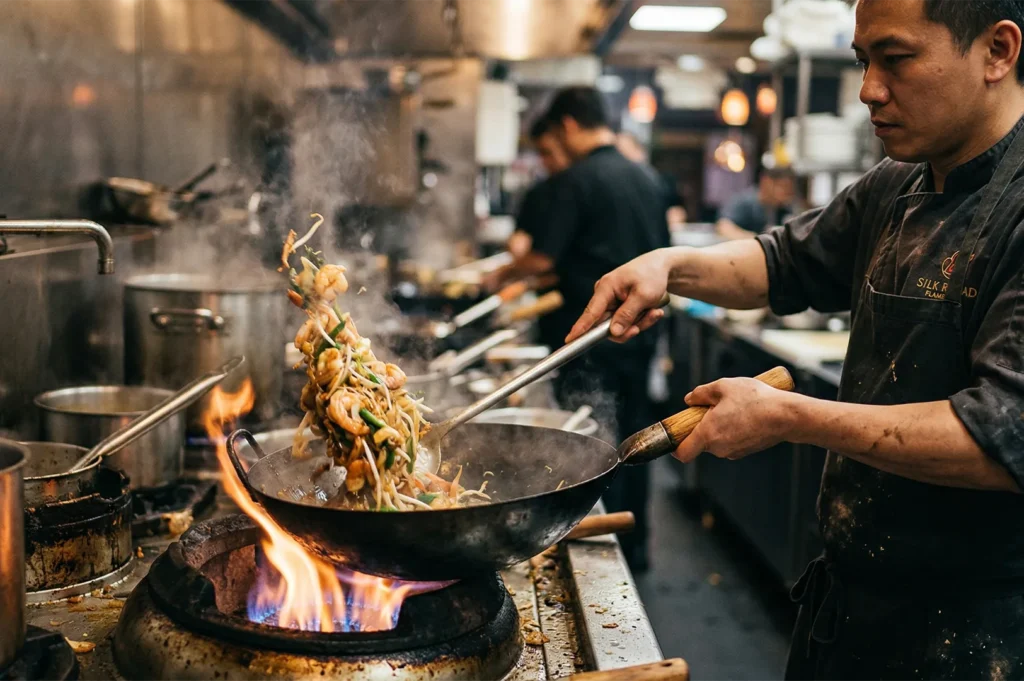
Truly authentic neighbourhood kitchens often prioritize flavour over fantasy.
Many real casual dining restaurants operate in a relaxed atmosphere, bright lights, functional tables, sometimes mismatched chairs. The effort goes into the stove, not into more refined decor.
In contrast, some places invest heavily in a polished dining experience, styled rattan, curated playlists, craft alcoholic beverages, creating a photogenic but hollow shell.
I once ignored every warning sign.
The space was beautiful. Concrete floors. Perfect lighting. A curated, almost gallery-like feel, like a lifestyle version of Southeast Asia.
But the pad thai arrived sticky and cloying, tasting of ketchup.
That was the day I remembered: décor does not make an exceptional dining experience. Memory does.
The Telltale Signs Across Types of Restaurants (From Food Truck to Fine Dining)
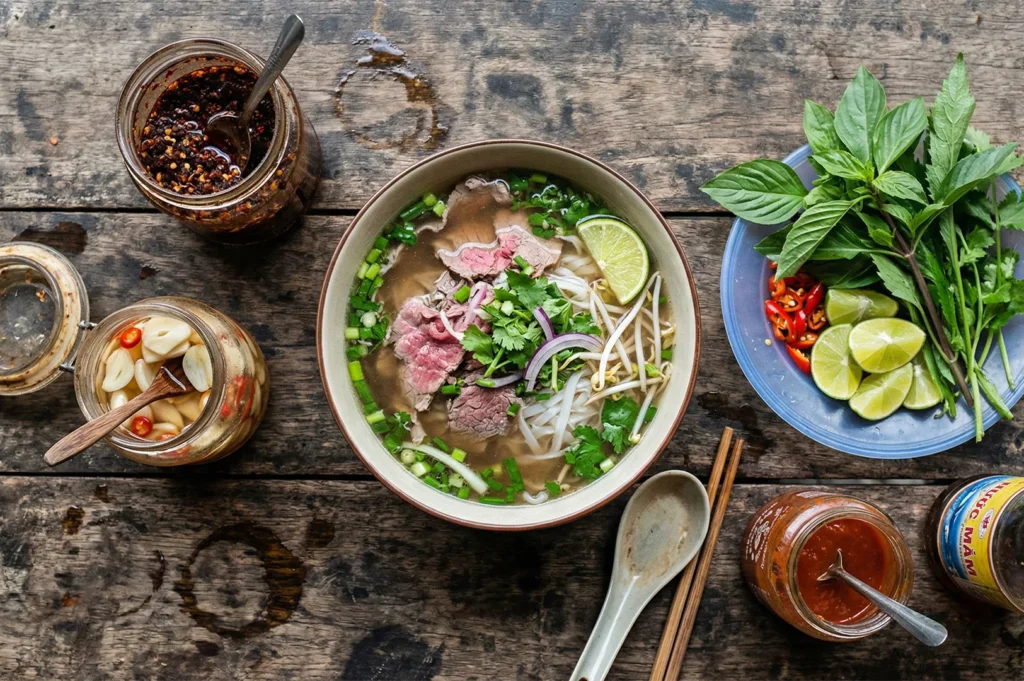
Whether you’re at a food truck, a modest coffee house, a fast casual restaurant, or a heritage-driven fine dining establishment, watch for these subtle signals.
Condiments on the Table
- Thai spots: fish sauce with chilies, sugar, vinegar, dried flakes.
- Pho houses: basil, bean sprouts, lime.
- Barbecue joints: house-made sauces beside trays of slow cooked meats.
House condiments show care in food preparation. Generic bottles suggest shortcuts.
Kitchen Equipment
Can you see technique?
- A roaring wok station.
- A tandoor oven.
- A comal for tortillas.
- Skilled handling of rice in Japanese cuisine, beyond just trendy sushi bars.
Tools reveal seriousness.
Community Signals
Is there a bulletin board with notices in another language? Holiday menus for Lunar New Year or Diwali?
Restaurants that function as community anchors, rather than operating purely as a high-volume food service business competing with quick service restaurants, delivery-only ghost restaurants, or delivery-driven virtual restaurants, preserve culture more faithfully.
Scale changes intention.
Large buffet style restaurants or brands with multiple locations rely on efficiency and consistency. That is their model.
Preservation requires intimacy.
Your 60-Second Walk-In Assessment (Fast Food to Fine Dining)
When entering any space, from fast food restaurants to refined fine dining establishments, run through this checklist:
[ ] The Crowd: Are elders from the culture eating here?
[ ] The Menu: Focused or wildly diverse?
[ ] The Language: Spoken naturally?
[ ] The Smell: Spices, herbs, broth in the air?
[ ] The Details: House condiments or generic bottles?
[ ] The Purpose: Does this kitchen cook for memory, or for market trends?
Authenticity isn’t about whether it’s fast food, fast casual, or a refined space for special occasions.
It’s about whether the kitchen is cooking for inheritance.
One Last Taste: Trust Your Gut, But Verify
At the end of the day, spotting an authentic restaurant is about cultural literacy. It’s about looking past the marketing and seeing the signs of a kitchen that cares about its craft.
Don’t be afraid to try something that feels a little unfamiliar. The best food experiences often lie just outside your comfort zone. If the food feels alive, layered, precise, and confident, you’re likely somewhere real. Use these tests as your guide, but also trust your instincts. A truly great neighbourhood restaurant has a certain energy. You’ll feel it the moment you walk in.
For more insights into exceptional Asian dining experiences, visit Eat Drink Asia.

Korean Street Food Is Built for Movement, Heat, and One-Handed Eating
Eda Wong | October 3, 2026
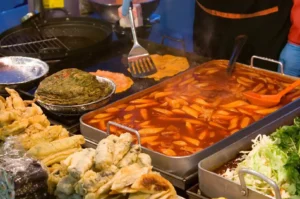
The first time I ate tteokbokki in Seoul, I burned my tongue standing up. It was late, the air was sharp with cold, and I had stopped at a small street food stall near a subway exit because the steam pulled me in. The woman handed me a paper cup of rice cakes in red…
-
Mrs Pho and the Bowl That Makes Somerset Feel Like a Vietnamese Family Table
Eat Drink Asia Team | October 1, 2026
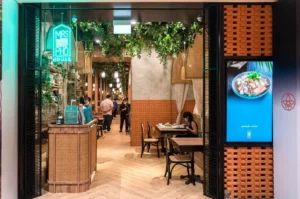
I wasn’t hungry when I walked into 313@somerset. I’d come for something else entirely; an errand, a shop I needed, the usual Orchard rush of people moving faster than the escalators. But somewhere on the first floor, past the noise, I caught the smell of star anise and beef bone, and my feet slowed down…
-
The Carving Knife at Colony, and the Way We Mark What Matters
Eda Wong | September 30, 2026
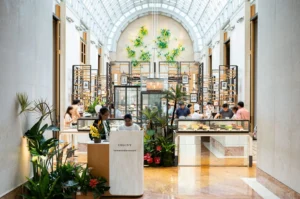
By Eda Wong for Eat Drink Asia. It’s late morning, and the light is doing most of the work. It pours through the high windows of Colony, at The Ritz-Carlton, Millenia Singapore, spilling across white tablecloths and the vintage prints on the walls. Marina Bay hums somewhere outside, but in here the room feels a…
-
Co Chung Vietnamese Restaurant and the Gỏi Cuốn That Makes Fresh Herbs Do the Work
Dio Asahi | September 29, 2026
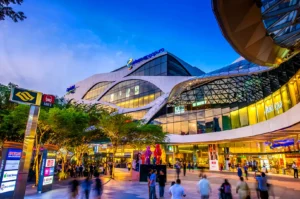
I found it by accident, the way you find most things in a mall basement. I’d come down to Plaza Singapura’s B2 for something else entirely, drifting past the usual food-court noise, when I caught the smell of star anise and beef bone coming from a corner. I followed it. And there it was —…
-
Vietnamese Spring Roll: The Recipe That Only Works When the Herbs Stay Awake
Eda Wong | September 26, 2026
Fresh Vietnamese spring rolls, or gỏi cuốn, look delicate, but the recipe is really about control: barely softened rice paper, dry herbs, restrained noodles, clean protein, and a dipping sauce sharp enough to wake the whole thing up. This is not the fried version, chả giò or nem rán. This is the cool, translucent, herb-heavy…
-
Best Steakhouse Singapore: From Fire-Kissed Icons to Old-School Beef Plates
Eat Drink Asia Team | September 24, 2026
I didn’t set out to write about steak. It started with a bad day and a craving for something that pushed back when I bit into it. One dinner turned into a habit, and over a couple of years I found myself at counters, coffeeshops, and dining rooms all over this island, chasing the same…
-
The Ice Counter at Carousel, and the Table Everyone Can Reach
Dio Asahi | September 23, 2026
By Dio Asahi for Eat Drink Asia. It’s a Saturday evening, and someone across the room is carrying a birthday cake. The candles are lit, the walk is careful, and a whole table turns to watch. Plates clink. A child laughs somewhere. The room at Carousel, inside Royal Plaza on Scotts, isn’t quiet — it…
-
Tiong Shian Porridge Centre Review: The Soft Counterweight to Chinatown’s Crisp Toast
Dio Asahi | September 22, 2026
I’d spent the morning with kaya toast. Crisp bread, cold butter, the clean snap of it between my teeth. Good, all of it. But by the time I’d walked a few streets over to New Bridge Road, my mouth wanted the opposite. Something warm. Something that gave way instead of shattering. That’s how I ended…
-
Tong Ah Eating House Review: A Chinatown Breakfast That Still Begins with Kaya Toast
Eda Wong | September 19, 2026
I almost walked past it. I’d been looking for the old triangular building, the red-and-white one you see in every photo of Keong Saik, the one that made Tong Ah feel like a landmark before you’d even ordered anything. But that’s not where it lives anymore. It’s a few doors down now, at 35 Keong…
-
Breakfast at Chinatown Singapore: How Migration Built the City’s Morning Table
Eat Drink Asia Team | September 17, 2026
The first time I ate breakfast in Chinatown, I got it wrong. I arrived at eleven, hungry and hopeful, and found the kopi stalls already turning toward lunch. The porridge uncle was packing up. The toast man had switched to slicing char siew. I ate a rushed plate of noodles standing near a pillar, sweating,…