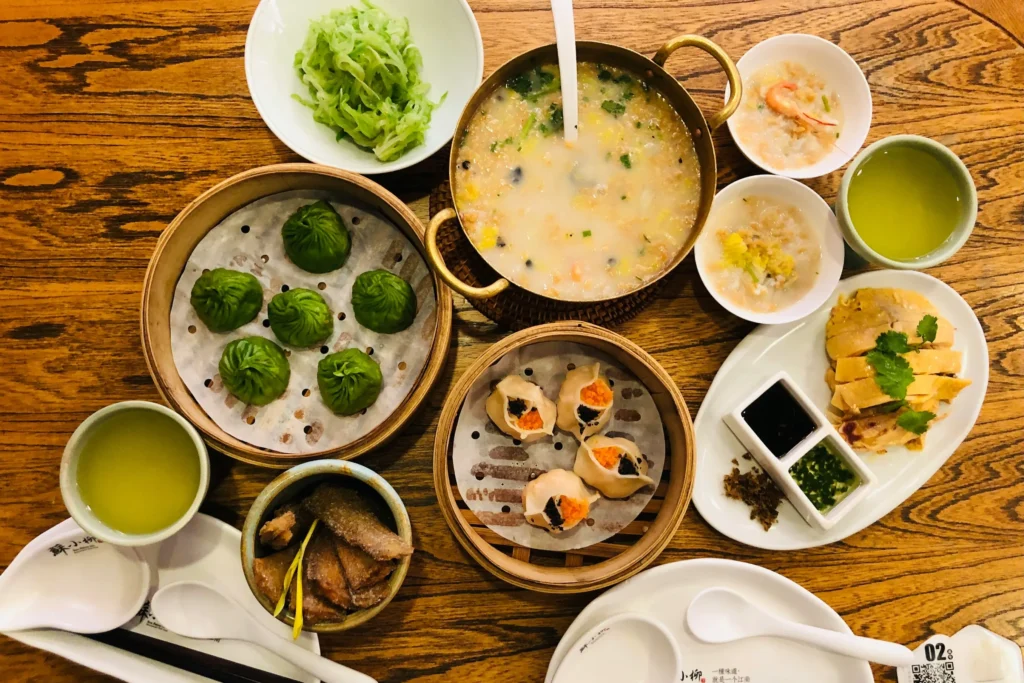
There is a common misconception that the most authentic culinary journeys involve loud, chaotic kitchens with massive wok flames and shouting chefs. I used to think the same thing until I started paying closer attention to the quieter corners of Asian cooking. I visited Din Tai Fung on a Tuesday around 2:30 pm, hoping to dodge the notorious Orchard Road lunch crowds. Walking into their Plaza Singapura outlet, I quickly remembered that famous food in China isn’t always loud. Sometimes, it is entirely about precision.
This restaurant chain is an absolute institution for food enthusiasts hunting for reliable, high-quality meals. You do not come here for a wild, unpredictable celebration of flavours. Instead, you come for the comforting guarantee that every single dumpling will taste exactly as brilliant as the last one. Here is my honest take on whether this iconic spot still holds its crown in Singapore’s incredibly saturated food scene.
A Clean, Efficient Culinary Engine Showcasing Famous Food in China and Chinese Cuisine
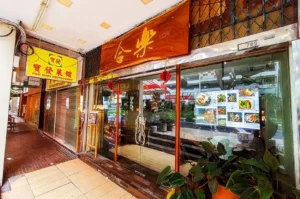
Plaza Singapura moves with a steady, almost predictable rhythm. Foot traffic flows in waves, and the restaurant sits right in the middle of it. At #02-32, the glass-enclosed kitchen immediately pulls you in. Chefs in white uniforms fold dough with measured precision, repeating the same motion again and again.
I remember standing there longer than I expected, watching trays of chinese dumplings take shape. Each fold identical. Each movement controlled. It felt less like performance and more like a system, one that reflects the discipline behind famous food in china.
Inside, the dining room is structured and calm. The air conditioning is strong, I reached for my jacket within minutes. Tables are spaced comfortably, making it ideal for sharing traditional dishes. If you want a quieter seat, ask for a corner table. It places you slightly outside the constant movement of staff carrying bamboo baskets and bowls of soup.
Chinese Dumplings, Minced Pork, and the Precision of Xiao Long Bao
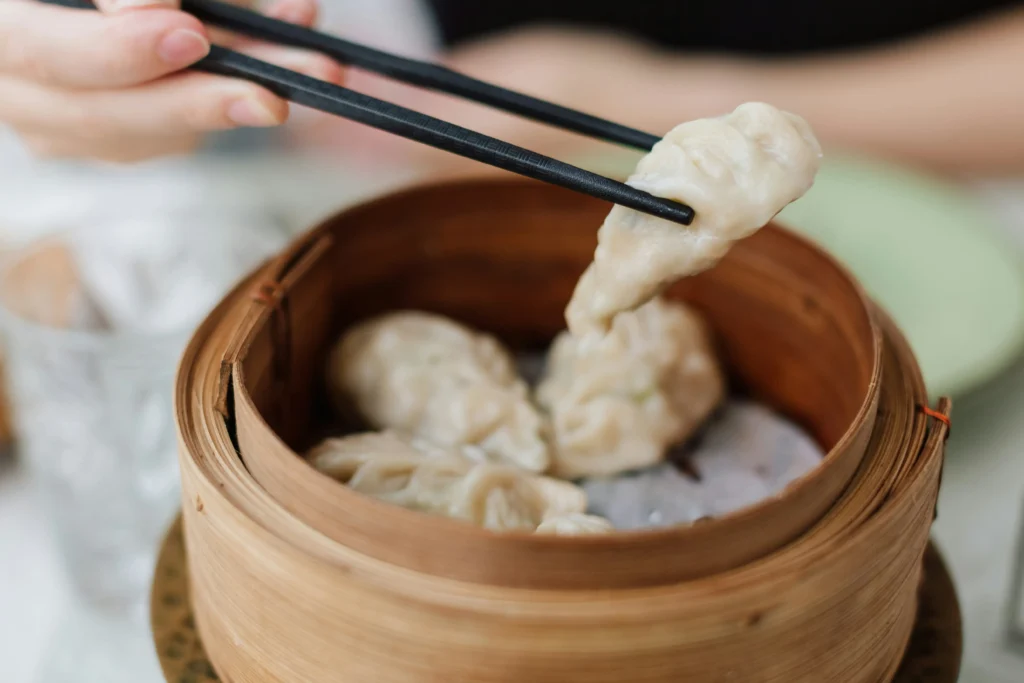
There is no real starting point here. You begin with xiao long bao.
When the lid lifts, steam rises in a dense wave carrying the scent of minced pork, ginger, and broth. These bite sized pieces are fragile but structured. The skin stretches slightly under the weight of the soup inside.
I remember holding one for a second too long. It trembled gently.
The first bite releases everything:
- A clean, rich pork broth
- Light soy sauce depth
- A sharp lift from black vinegar
It lands directly on the taste buds, precise, not overwhelming. That clarity defines many famous food in china dishes.
These dumplings trace back to shui jiao and regional dumplings across china, evolving into something more refined while preserving their roots in everyday chinese food.
Sesame Oil, Deep Fried Pork, and a Study in Texture
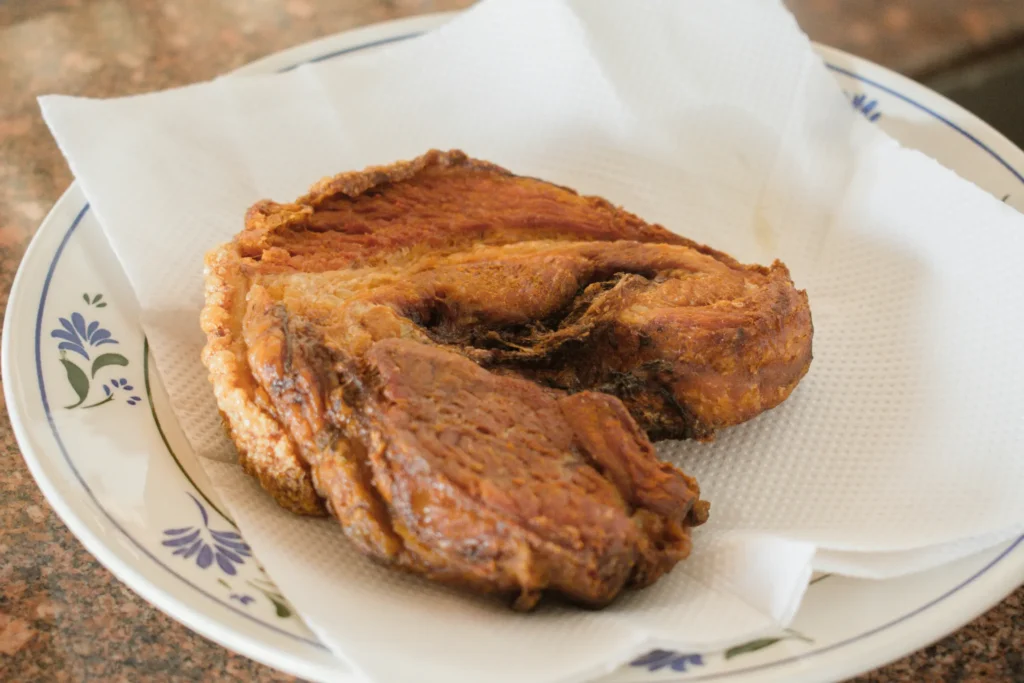
The Fried Rice with Pork Chop looks simple, but it is built on control.
The rice arrives loose and structured. Each grain is separate, lightly coated with sesame oil and soy sauce without excess.
The pork creates contrast:
- Crisp edges from deep fried preparation
- Tender interior
- Subtle warmth from five spice powder
I remember noticing how clean the texture felt. No oil pooling. No heaviness.
This is where chinese cuisine reveals itself. It is not about intensity. It is about execution.
Chicken Soup, Rice Wine, and Quiet Depth
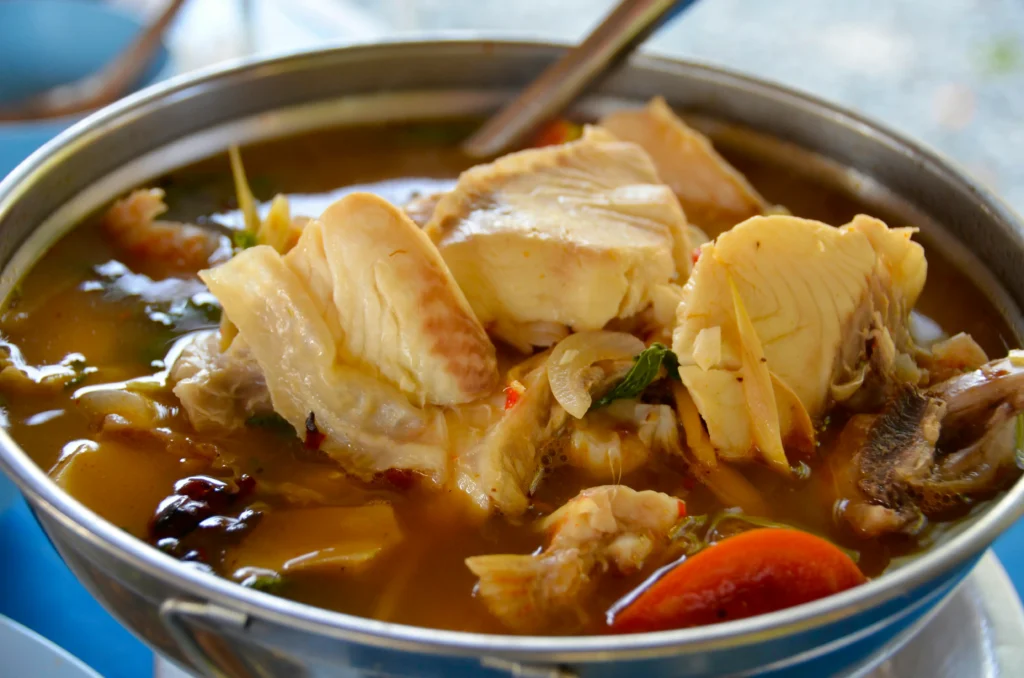
The chicken soup resets the meal completely.
The broth is clear, pale, and steady. No floating oil. No cloudiness.
The first sip is subtle:
- Gentle sweetness from the chicken
- Depth that suggests shaoxing wine
- Warmth that builds slowly
The meat separates easily, soft without collapsing.
I remember slowing down here. This is the quieter side of chinese cuisine, where clarity replaces boldness.
The Reality of Chinese Food Service in a High Volume System
Service operates like a loop.
Orders are placed digitally. Food arrives quickly. Staff move constantly.
On weekdays, the system feels smooth. On weekends, it changes. Queues stretch. The waiting area fills quickly.
There is also a practical layer. Small charges; water, drinks, service; add up.
Still, consistency remains. Among many restaurants, reliability becomes its own strength.
Beyond the Menu: Hot Pot, Bamboo Shoots, and Regional Chinese Cuisine
What Din Tai Fung presents is one branch of a much larger system.
It focuses on dumplings, noodles, rice, and soups; refined, controlled, and precise. But beyond this space, chinese cuisine expands dramatically across regions.
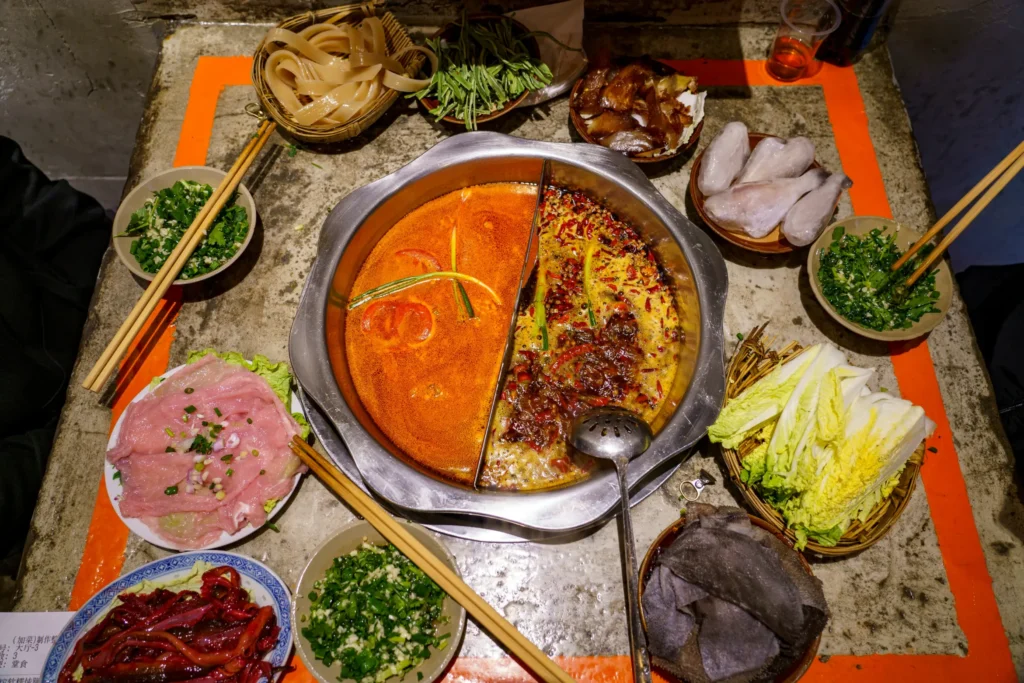
Hot Pot and Sichuan Province
In sichuan cuisine, hot pot operates on a completely different logic. A bubbling broth filled with chili oil and sichuan peppercorns sits at the center.
Diners cook:
- Thin slices of beef and pork
- Seafood like shrimp
- Fresh vegetables and noodles
The experience is intense; spicy, numbing, immediate. It contrasts sharply with the restraint found at Din Tai Fung.
Bamboo Shoots, Preservation, and Flavor Systems
In regions like yunnan province and fujian province, bamboo shoots appear frequently.
Their texture, firm and slightly crisp, cuts through heavier dishes. They are often paired with minced meat, stir fried preparations, or slow braises.
You also find pickled vegetables, preserved vegetables, and chinese sausage used with intention. These reflect a long history of preservation techniques within chinese culture.
The flavor becomes layered:
- Savory from sauces like oyster sauce
- Slightly sweet from cured meats
- Tangy from preserved elements
Peking Duck, Rice Wine, and Celebratory Food
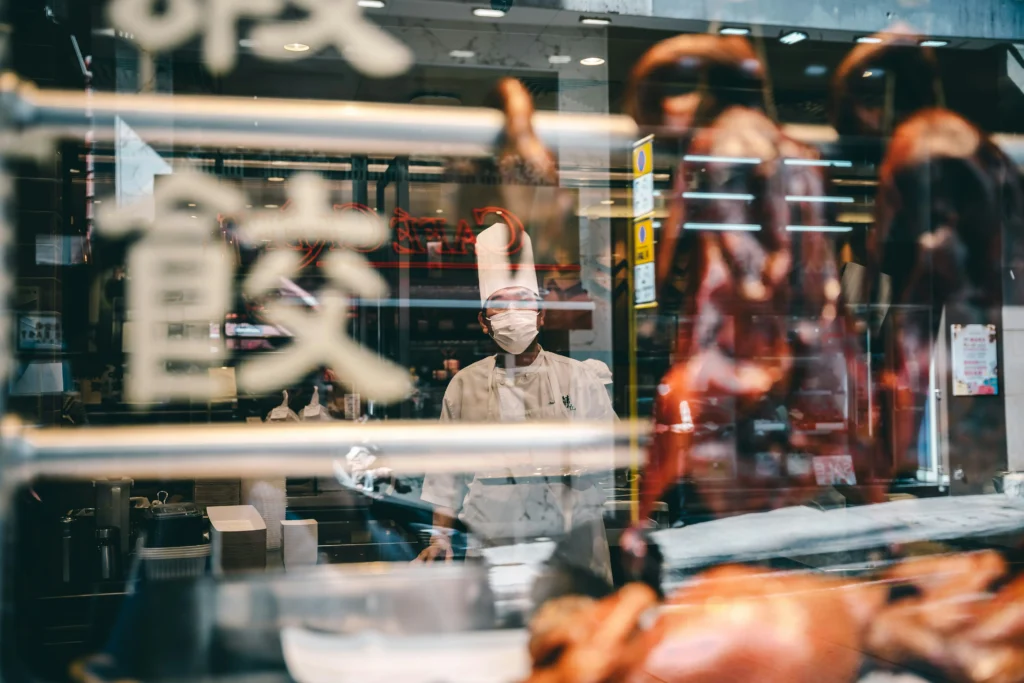
Some dishes sit outside everyday dining and move into celebration.
Peking duck is one of the most recognised examples of famous food in china.
- Crisp, lacquered crispy skin
- Tender duck meat
- Served with pancakes and hoisin sauce
It is often paired with rice wine like shaoxing wine, adding aroma and balance.
Unlike dumplings or fried rice, this is not everyday food. It reflects gatherings, year celebrations, and shared meals.
Hand Pulled Noodles, Street Food, and Everyday Systems
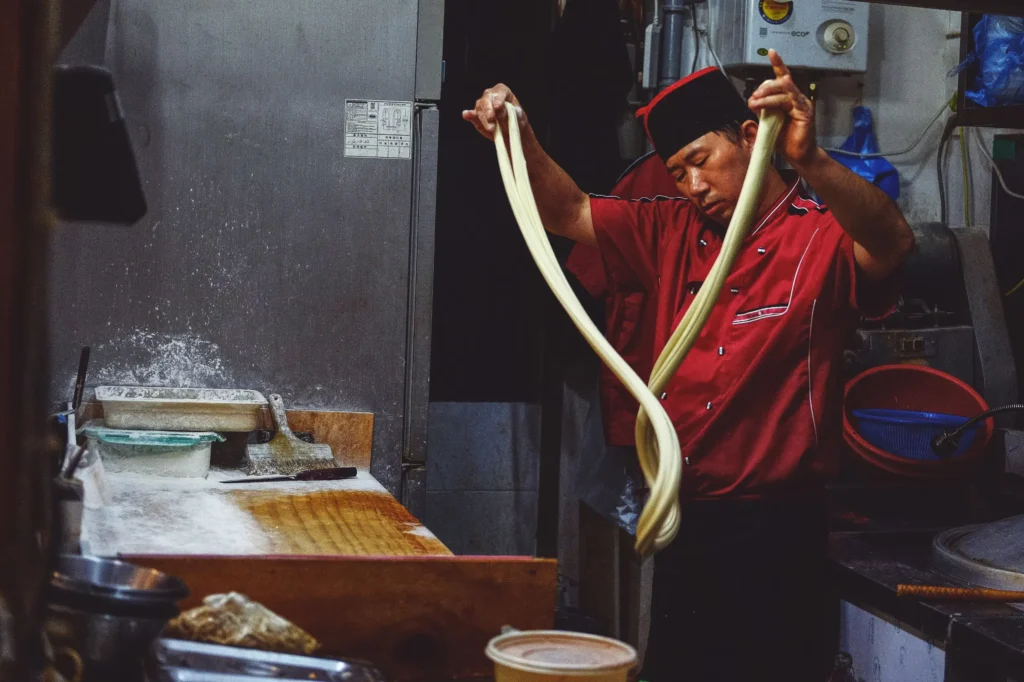
At the other end of the spectrum, everyday street food offers another perspective.
Hand pulled noodles are stretched and folded before being dropped into boiling water. The texture becomes elastic and slightly chewy.
You also see:
- Pan fried dumplings with crisp bases
- Bowls of noodle soup with beef or chicken
- Simple plates of fried fish or vegetables
This answers how traditional food in China Speaks through generations: These dishes rely on the same principles; balance, heat, and timing, but operate in faster, more informal environments.
To Eat or Drink? The Seal of Approval
Din Tai Fung remains a powerhouse in the local dining scene, and for good reason. It offers an interactive, globally influenced menu that never compromises on its core promise of precision. The flavours are exceptionally clean, the ingredients feel premium, and the execution is flawless.
This restaurant is best suited for families, Orchard Road shoppers needing a reliable refuel, and tourists wanting a safe, high-quality introduction to authentic Chinese dumplings. It is also a fantastic choice for mixed-age groups, thanks to a highly accessible menu that features great vegetarian options and universally loved comfort dishes.
It is probably less ideal if you are looking for a long, quiet, chef-led dining experience where you can linger over drinks for hours. The rapid table turnover and systematic efficiency are designed to feed the masses, not to provide a deeply intimate evening.
But if you want to taste the world of perfectly crafted Xiao Long Bao and impeccably balanced fried rice, this is still the gold standard. Din Tai Fung proves that you do not need loud, aggressive flavours to make a lasting impression. Sometimes, the quietest, most precise dishes are the ones you remember for days.
For those looking to complement their culinary exploration with a refined beverage experience, Tea Room by Ki-setsu offers a curated journey through Chinese tea in the heart of Singapore, perfectly bridging tradition and taste.

Tong Ah Eating House Review: A Chinatown Breakfast That Still Begins with Kaya Toast
Eda Wong | September 19, 2026
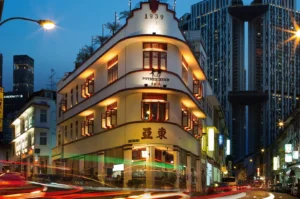
I almost walked past it. I’d been looking for the old triangular building, the red-and-white one you see in every photo of Keong Saik, the one that made Tong Ah feel like a landmark before you’d even ordered anything. But that’s not where it lives anymore. It’s a few doors down now, at 35 Keong…
-
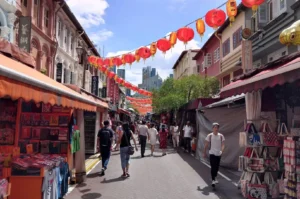
Breakfast at Chinatown Singapore: How Migration Built the City’s Morning Table
Eat Drink Asia Team | September 17, 2026
The first time I ate breakfast in Chinatown, I got it wrong. I arrived at eleven, hungry and hopeful, and found the kopi stalls already turning toward lunch. The porridge uncle was packing up. The toast man had switched to slicing char siew. I ate a rushed plate of noodles standing near a pillar, sweating,…
-
The Bitter Leaf Folded Into a Burmese Home Kitchen
Eda Wong | September 16, 2026
The oil is already hot when she reaches for the leaves. It’s late morning in a kitchen off a quiet lane, and a woman I’ve been watching stands over a blackened wok, tearing bitter gourd leaves by hand into a small heap. The garlic hits the oil first, sharp and loud. Then the leaves go…
-
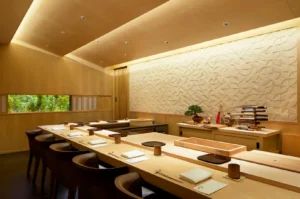
Best Sushi Singapore: From Premium Japanese Restaurants to Exclusive Deals from Affordable Sushi Trains
Dio Asahi | September 15, 2026
I’ve been eating sushi in this city for years now, from S$1.50 plates rolling past on a belt to omakase counters where the bill made me sit up straight. Somewhere along the way I stopped chasing “the best” and started noticing something else — that good sushi answers a mood, not a ranking. Some nights…
-
Al Mubin Restaurant and the Nasi Goreng Sambal Ayam That Has to Carry the Whole Plate
Eda Wong | September 12, 2026
It was close to eleven at night when I finally sat down. The kind of hour when you’re not really hungry so much as unsettled, when you want something warm in front of you more than you want a proper meal. Al Mubin’s food court at Block 407, Ang Mo Kio Avenue 10, was still…
-
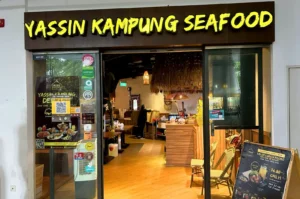
Yassin Kampung Admiralty Review: When Sambal Fried Rice Becomes the Whole Point
Eat Drink Asia Team | September 10, 2026
I ordered the sambal fried rice first, before I’d even properly read the menu. That’s usually a mistake at a place like this. Yassin Kampung @ Admiralty is the kind of restaurant that keeps trying to pull your attention elsewhere — toward stingray, toward crab, toward hotplates that arrive still hissing. But I’d come with…
-
The Bamboo Basket Holding Chiang Mai’s Sticky Rice
Dio Asahi | September 9, 2026
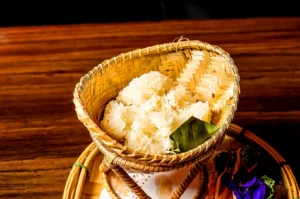
By Dio Asahi for Eat Drink Asia. The lid comes off, and the steam rises first. It’s a warm afternoon in Chiang Mai, and on the table sits a small woven bamboo basket, still holding the heat of the pot it came from. Someone’s grandmother lifts the top and sets it aside without looking. Inside,…
-
Sambal Fried Rice Recipe for People Who Know the Chilli Paste Does the Heavy Lifting
Dio Asahi | September 8, 2026
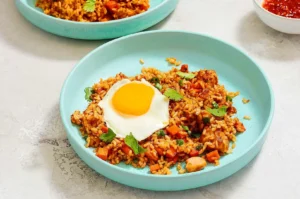
I used to add the rice too early. The oil would be hot, the sambal barely a minute in, and I’d tip in the cold rice because I was hungry and impatient. Every time, the same result: rice stained red but tasting of nothing much. Sharp. Raw. Flat where it should have been deep. It…
-
Hup Lok at Havelock Road: A Teochew Fish Soup Carrying Memory Forward
Eda Wong | September 8, 2026
The bowl arrives before anything else does. Steam lifts off it in slow ribbons, carrying the smell of ginger and something warmer underneath: the round, boozy note of hua tiao wine settling into fish. I lean in before I even pick up my spoon. The broth is pale gold and cloudy, thick enough that it…
-
Fresh Sashimi Singapore: Places for Clean Cuts, Quiet Counters, and Fish That Still Feels Alive
Eda Wong | September 5, 2026
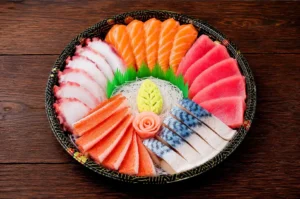
I didn’t grow up eating raw fish. For years, sashimi felt like something you learned to appreciate rather than something you loved. Cold, foreign, a little intimidating. Then one afternoon, at a quiet counter, a chef placed a single slice of chutoro in front of me and said nothing. I ate it. And I understood….