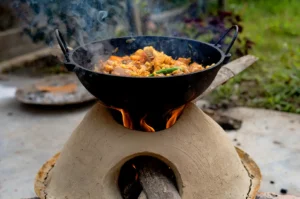
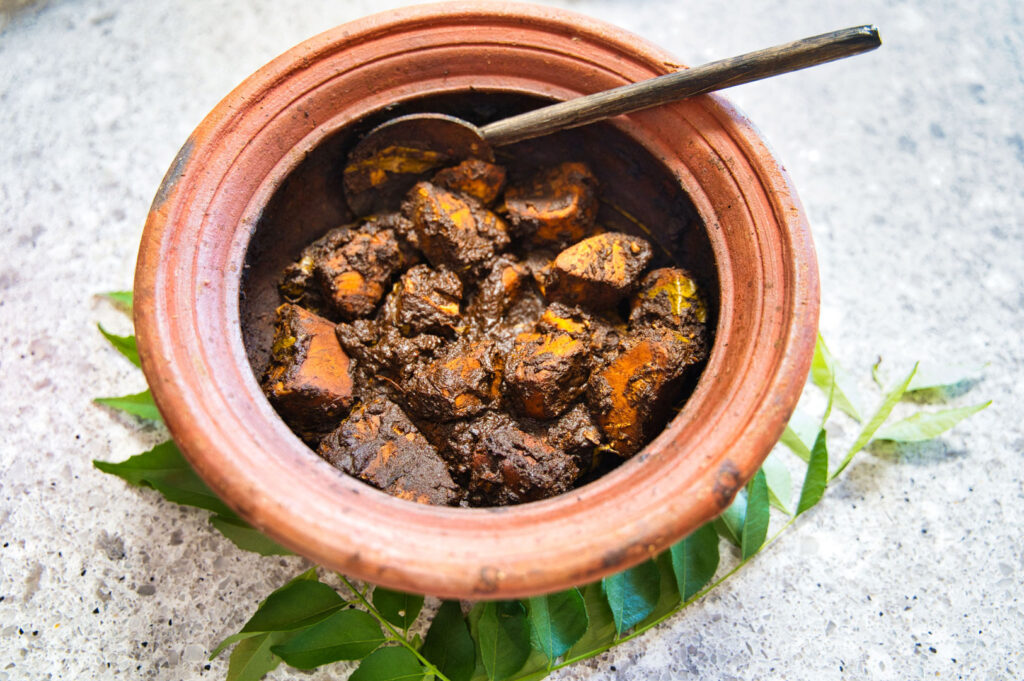
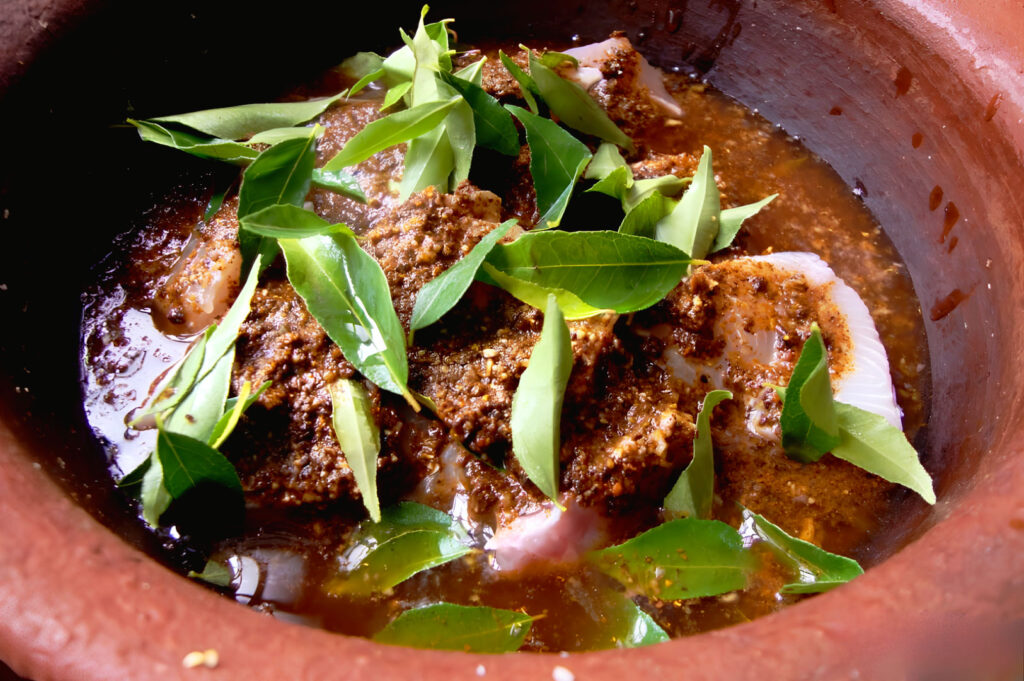
In the open-air kitchen of a coastal home in southern Sri Lanka, a low fire crackles under a wide, unglazed clay pot. The air is thick with the scent of roasted black pepper and something deeply, aggressively tart. A wooden spoon scrapes the bottom of the pot, turning cubes of firm yellowfin tuna until they are entirely coated in a thick, charcoal-colored paste. The heat is steady, slowly drawing the moisture from the fish, replacing it with a dense crust of spice. There is no rush here; the fire dictates the rhythm.
This is Ambul Thiyal, pronounced um-bool tee-yal, a foundational dish of Sri Lankan coastal cooking. Translated simply as “sour fish curry,” the name drastically undersells its complexity. The dish relies entirely on goraka, a sun-dried, deeply wrinkled fruit that imparts an intense, smoky sourness and a stark black hue to the sauce. To prepare it, cooks grind the goraka into a thick paste with roasted curry powder, black pepper, and cinnamon, vigorously massaging it into the tuna. As it cooks in the clay pot, the liquid evaporates, leaving the tuna dry, firm, and heavily crusted. The resulting texture is almost meaty, breaking apart in dense, intensely flavored flakes that vibrate with a sharp, earthy acidity.
In Sri Lanka, Ambul Thiyal is far more than a culinary preference; it is a masterclass in tropical ingenuity. Before refrigeration, coastal communities needed a method of tuna preservation that could withstand the island’s punishing humidity. The extreme acidity of the goraka, combined with the dry-cooking technique, naturally cures the fish, allowing it to sit safely at room temperature for days. Today, even with modern conveniences, the ritual remains unbroken. You will find it packed into tiffin boxes for long train journeys, served alongside milk rice during the Sinhalese New Year, or sitting quietly on a Tuesday lunch table. It signals a deep, pragmatic relationship with the ocean and the surrounding spice gardens.
In a global food culture that often prizes delicate, lightly seared seafood, Ambul Thiyal stands out for its absolute refusal to be mild. It is a dish of deliberate, concentrated intensity. It demands time and requires an intuitive understanding of how acid and spice can entirely transform a protein. Recognizing this method feels vital right now, as modern convenience increasingly strips our diets of such bold, time-honored preservation techniques. It is a reminder that some of the most profound flavors are born out of necessity, requiring nothing more than a clay pot, the right fruit, and patience.
The fire eventually burns down to white ash, and the clay pot is lifted from the hearth. Inside, the blackened tuna rests, completely transformed by the goraka and the heat. For cooks who love long-braised curry recipes, this dry-cooked preservation method offers a striking counterpoint, proof that depth can come from reduction as much as from simmering. It is a quiet testament to a coastal craft that endures, piece by spiced piece.

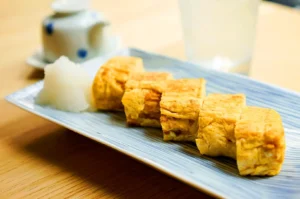
How to Make Dashimaki Tamago, the Japanese Rolled Omelette That Tastes Like Broth
Eat Drink Asia Team | October 22, 2026
Dashimaki tamago is one of those dishes that looks quieter than it is. At first glance, it is just a rolled egg. Pale, soft, sliced neatly, often served beside steamed rice, miso soup, and grated daikon radish. But once you make it, you realise it is not really about eggs alone. It is about how…
-
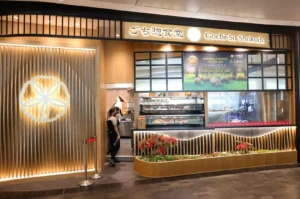
The Lunch Hour Slows Down at Gochi-So Shokudo
Dio Asahi | October 21, 2026
By Dio Asahi for Eat Drink Asia. It’s just past noon, and the lifts keep opening. Suits spill out, lanyards swinging, phones already halfway to their ears. But inside Gochi-So Shokudo, tucked into One Raffles Place, something else is happening. People are sitting down. Actually sitting. Chopsticks lifting, shoulders dropping a little, the room warm…
-
Kintamani Singapore Review: Can an All-You-Can-Eat Buffet Still Taste Like Indonesia?
Dio Asahi | October 20, 2026
I walked into Kintamani Singapore with one question in mind. Buffets ask food to wait. Rendang, sambal, grilled meats, and fried seafood all sit under heat while diners circle the spread. That is not necessarily kind to Indonesian dishes built around texture, reduction, chilli, coconut, and freshly cooked aromatics. So I was less interested in…

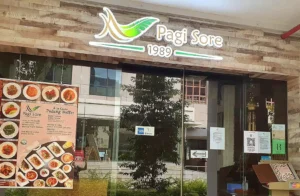
Pagi Sore Indonesian Restaurant Est 1989 Review: A Second-Generation Kitchen That Still Knows Its Own Voice
Eda Wong | October 17, 2026
The first thing I noticed at Pagi Sore Indonesian Restaurant was the smell. Not the sharp, showy kind. Something slower: coconut milk, lemongrass, chilli, fried egg, and the deep warmth of spice paste drifting out from a wood-heavy dining room while Far East Square kept moving outside. I walked over on a Wednesday evening, just…
-
Best Fish Soup in Singapore: Bowls Where the Broth Is the Whole Point
Eat Drink Asia Team | October 15, 2026
I don’t remember when fish soup became my quiet meal. It just did. On days when I couldn’t decide what I wanted, when the weather turned grey, when I needed something warm that asked nothing of me, I’d end up hunched over a bowl, breathing in the steam before the first spoonful. I’ve eaten a…
-
The Clay Stove Heat Beneath a Lao Grilled River Fish
Eda Wong | October 14, 2026
By Eda Wong for Eat Drink Asia It’s late afternoon, and the river is the colour of weak tea. A woman crouches beside a small clay stove at the edge of the bank, feeding it slivers of charcoal. Smoke lifts, thin and grey, and drifts toward the water. On a bamboo skewer, a whole fish…
-
The National Dish of Indonesia Is Not One Plate: Why a Country of Islands Needs Many Icons
Dio Asahi | October 13, 2026
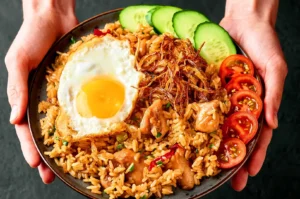
The first time someone asked me for the national dish of Indonesia, I answered nasi goreng without thinking. It seemed obvious: fried rice darkened with kecap manis, often topped with a fried egg, familiar from warungs and late-night street food stalls. That answer is not wrong. It is simply too small. Indonesian food is regional,…
-
Sapporo in a Bowl: Soup Curry by Ki-setsu Comes to Singapore
Eda Wong | October 12, 2026
Ask most Singaporeans to picture Japanese curry and a familiar image probably comes to mind: a plate of rice beneath thick brown gravy, perhaps with a breaded cutlet sliced neatly across the top. It is rich, sweet-edged, comforting and, by now, almost as recognisable as ramen or donburi. Head to the fourth floor of Fortune…
-
Meokja by Jungga Review: The Halal Korean Snack Table That Knows What It’s Doing
Eda Wong | October 10, 2026
I had not planned to eat at Meokja by Jungga. I was walking down North Bridge Road on a Tuesday, somewhere around the awkward hour between lunch and dinner, when I caught the smell of something frying and the low clatter of a kitchen working hard. I looked up, saw the sign, and my feet…
-
Seoul Bunsik Funan Review: The Comfort of Korean Street Food Without the Street
Eat Drink Asia Team | October 8, 2026
I have eaten ramyeon on a plastic stool in Seoul, close to midnight, with cold air biting at my ankles and the broth doing all the work of keeping me warm. Seoul Bunsik Funan is not that. This was a bright Tuesday afternoon, escalators humming behind me, the smell of mall air-con instead of street…