When I first really started digging into traditional Malaysian food, I made a classic rookie mistake. I was sitting at a crowded kopitiam in Kuala Lumpur, looking at a plate of nasi lemak, and I thought I understood exactly what it was supposed to be. I thought it was a fixed, rigid recipe, a museum piece passed down through generations without a single change.
I couldn’t have been more wrong.
In my experience, if you ask five different aunties how to make the perfect sambal for nasi lemak, you will get six different answers. They will debate the exact ratio of dried chillies to belacan (shrimp paste), the necessity of adding sugar, and whether the anchovies should be blended in or served on the side. That is when I realized something crucial: traditional Malaysian food is not preserved by staying unchanged. It survives because every table keeps negotiating what counts as familiar, proper, generous, and worth returning to.
If you are exploring traditional Malaysian food in Singapore, you might feel intimidated by the complex flavors, the vibrant colors, and the sheer variety of dishes. I have been there. But I am here to tell you that traditional Malaysian food is highly modular, welcoming, and deeply personal. Let us break down how to dive into this incredible cuisine without the stress.
What Counts as Traditional Malaysian Food?
People often ask me, what exactly counts as traditional Malaysian foods? Is it Malay, Chinese, Indian, or something else entirely?
The biggest misconception is thinking traditional Malaysian food is a fixed canon. In reality, Malaysian cuisine is a living, shifting melting pot, shaped by centuries of migration across Peninsular Malaysia and even East Malaysia. Malay, Chinese, Indian, Indonesian, and Thai influences don’t just sit side by side, they overlap, merge, and evolve.
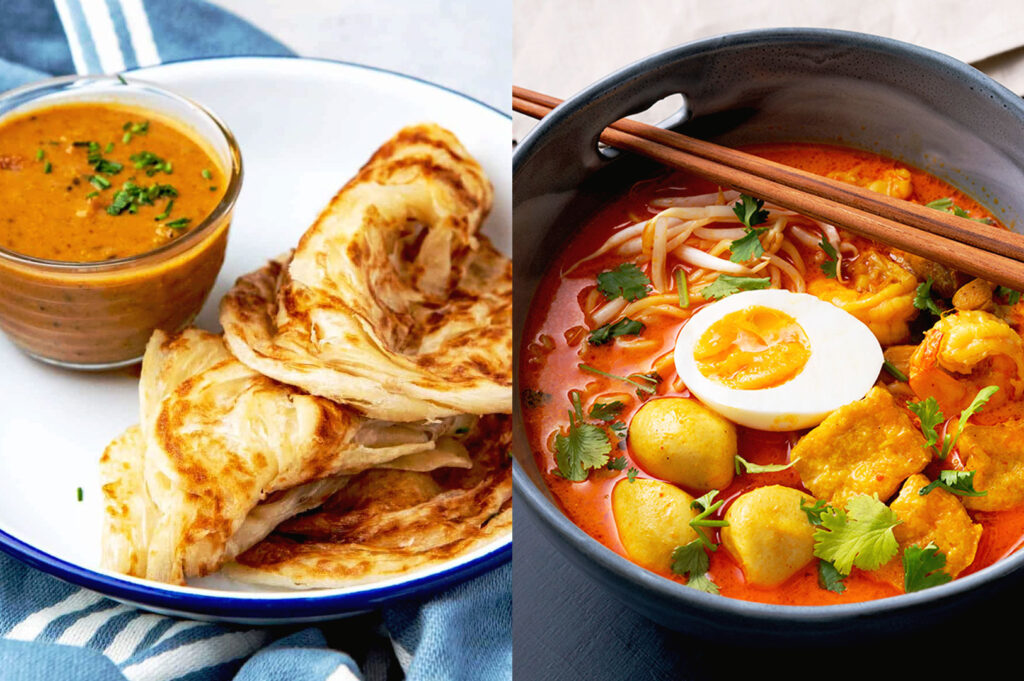
When you eat Malaysian dishes, you’re eating layered histories. Take roti canai, that flaky flatbread made from wheat flour, stretched and flipped until paper-thin before hitting a hot griddle. It’s rooted in Indian Muslim technique, but in Kuala Lumpur or any mamak stall, it becomes something distinctly Malaysian, crisp at the edges, soft at the center, dipped into a gentle chicken curry or dhal. Add a glass of teh tarik, pulled high and sweetened with condensed milk, and suddenly it’s not just a meal, it’s a breakfast dish woven into daily rhythm.
Then there’s laksa. Asking whether curry laksa or assam laksa is more “traditional” misses the point. Curry laksa, thick with coconut milk, filled with thick rice noodles, fried tofu, bean sprouts, and fish cakes, delivers richness. Assam laksa, sharper and brighter, layers tamarind acidity over flat rice noodles, fresh herbs, and fish. Both are pillars of Malaysian food culture, different expressions of the same culinary language.
How to Approach Malaysian Cuisine
When I first tried navigating Malaysian food, I remember standing in a crowded food court, overwhelmed by the sheer number of noodle dishes, rice plates, and deep fried snacks. What helped was breaking everything down into families.
Start with Rice: The Foundation of Malaysian Food
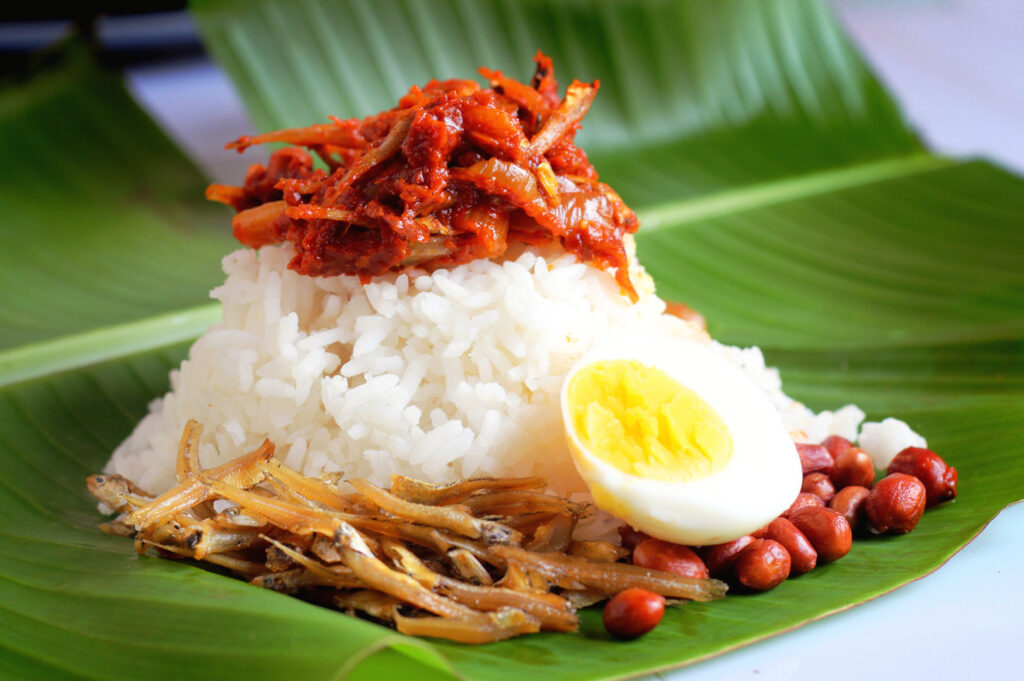
Rice is the anchor of most traditional Malaysian dishes, and nothing represents that better than nasi lemak, the national dish.
Picture this:
- Fragrant coconut rice cooked with pandan leaves
- A spoonful of sambal rich with shrimp paste and palm sugar
- Crunchy ikan bilis (fried anchovies) and roasted peanuts
- A hard boiled egg and cooling cucumber
That first bite; creamy, spicy, salty, slightly sweet, is the blueprint of balance in Malaysian cuisine. Add fried chicken or slow-cooked rendang, and it turns into something deeply satisfying.
Move to Noodles: Texture and Fire
Once you’re comfortable, move into the world of noodle dishes.
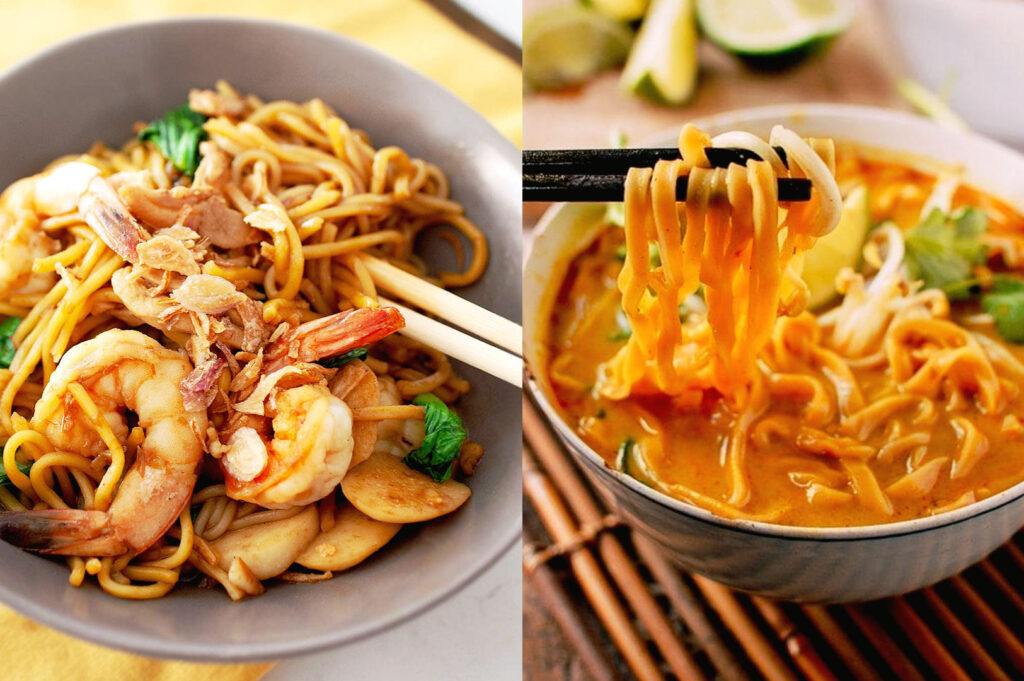
- Curry mee: a rich noodle soup with egg noodles swimming in coconut curry
- Hokkien mee: thick noodles coated in thick dark soy sauce, stir fried with pork, squid, and chinese sausage
- Char kway teow: smoky wide rice noodles tossed with prawns, eggs, and bean sprouts
- Assam laksa: tangy and herbal, a completely different rhythm from curry-based broths
What ties them together is technique; stir fried heat, the smoky breath of the wok, and the careful use of sauces like soy sauce, oyster sauce, and chili blends.
Explore Breads and Street Snacks
Malaysian eating doesn’t stop at rice and noodles.
At almost every mamak stall or roadside setup, you’ll find:
- Satay: skewers of meat grilled over charcoal, dipped in sweet peanut sauce
- Kuih: colorful desserts made from rice flour, coconut, and palm sugar
- Banana leaf meals: a traditional Malaysian dish where rice and mixed rice curries are served on a leaf
Eating from a banana leaf is tactile; you mix curry sauces, vegetables, and rice with your hand, building each bite. It changes how you experience flavor.
Common Mistakes to Avoid
I’ve made enough mistakes to know where things go wrong.
Mistaking Appearance for Authenticity
A place doesn’t need to look old to serve delicious food. What matters is balance:
- Does the coconut milk richness push against the sambal heat?
- Does the wok-char offset the sweetness of dark soy sauce?
That’s what defines traditional Malaysian foods, not décor.
Accepting Weak Curries and Flat Flavors
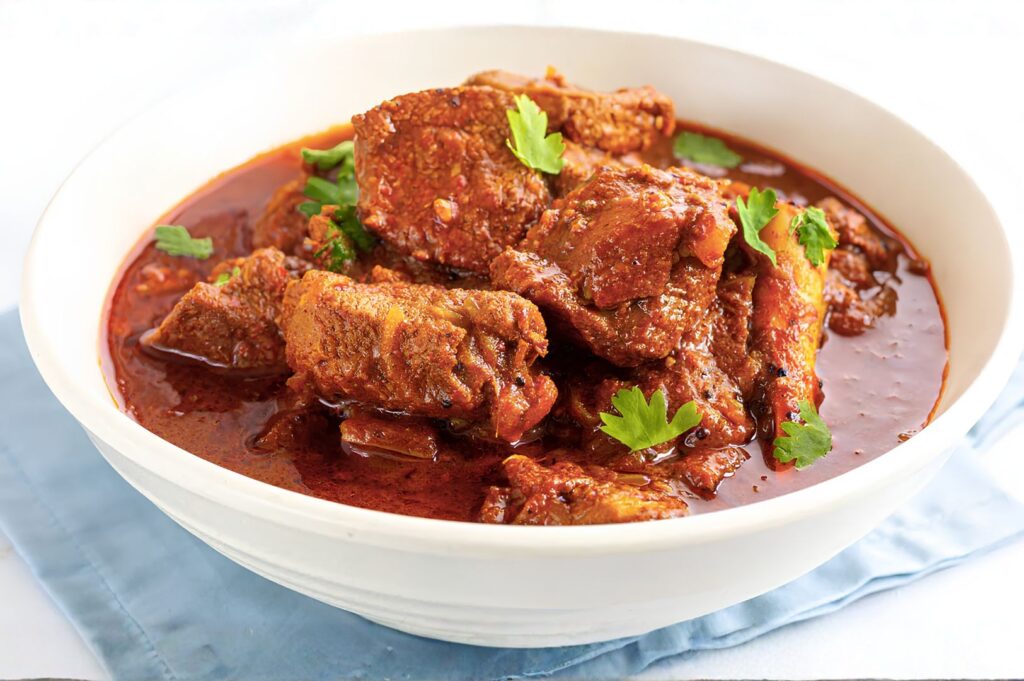
A proper chicken curry or mutton curry should feel slow cooked, thick, and layered.
If your rendang looks watery, something’s wrong. It should cling to the meat, dense with spices, almost dry at the edges. Sambal should carry depth from shrimp paste, not just raw chili or sugary palm sugar syrup.
Mixing Everything Immediately
I used to flood my plate the moment it arrived; sambal, curry, everything.
That’s not how it works.
Malaysian food is about building bites:
- a little rice
- a touch of sambal
- a piece of egg
- something crisp
Contrast is everything.
Street Food and Everyday Malaysian Eating
If you want to understand Malaysian food culture, step into a street food setting.
In Kuala Lumpur, almost every food court or roadside stall offers:
- bowls of noodle soup filled with fish balls, tofu, and herbs
- plates of hokkien char mee or curry mee
- grilled fish wrapped in banana leaf, infused with spices
There’s always fresh produce; bean sprouts, herbs, sometimes sweet corn, adding crunch and brightness.
Drinks matter too:
- freshly pressed fruit juices
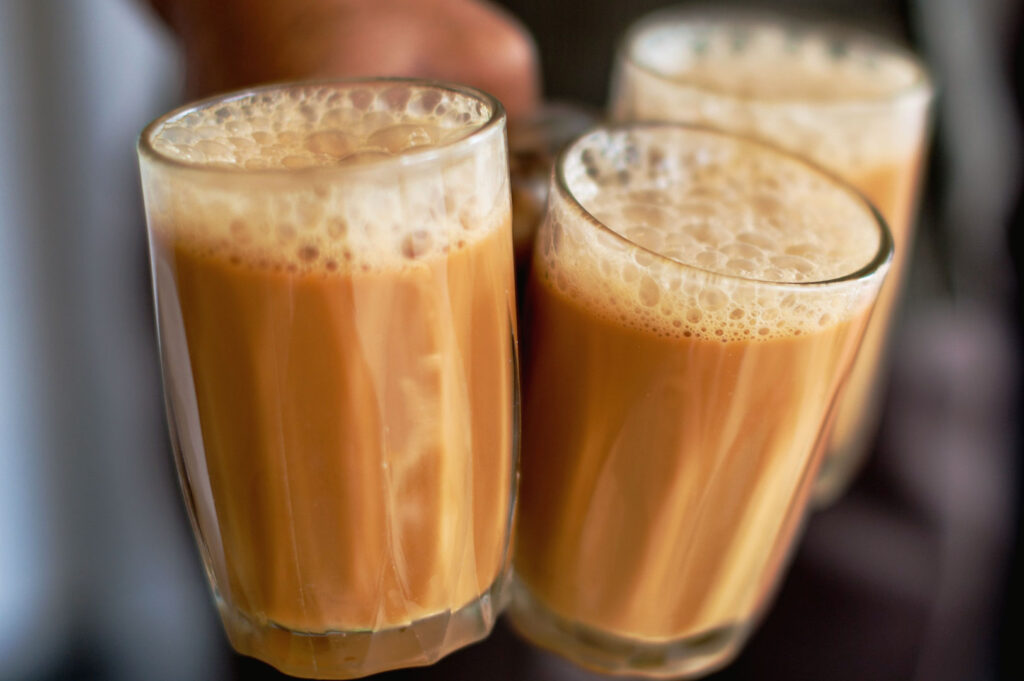
- frothy teh tarik
- even desserts like shaved ice
It’s not just about eating. It’s about standing shoulder to shoulder with strangers, sharing space, watching food move quickly from flame to plate.
The Role of Curry in Malaysian Cuisine
Curry sits at the heart of many Malaysian dishes.
At nasi kandar spots, you’ll see rice topped with multiple gravies, a kind of mixed rice system where each ladle adds another layer:
- chicken curry
- mutton curry
- vegetable stews
- fried items soaking up sauce
Then there are the noodle expressions:
- curry laksa with thick rice noodles and coconut richness
- curry mee with lighter broth and egg noodles
Both rely on spice pastes built from scratch; shallots, garlic, chili, and sometimes fermented elements, simmered until the oil separates and the aroma deepens.
That’s the difference. Real curry doesn’t just taste spicy. It feels structured, almost architectural in how flavors build.
FAQ: Practical Questions About Malaysian Food
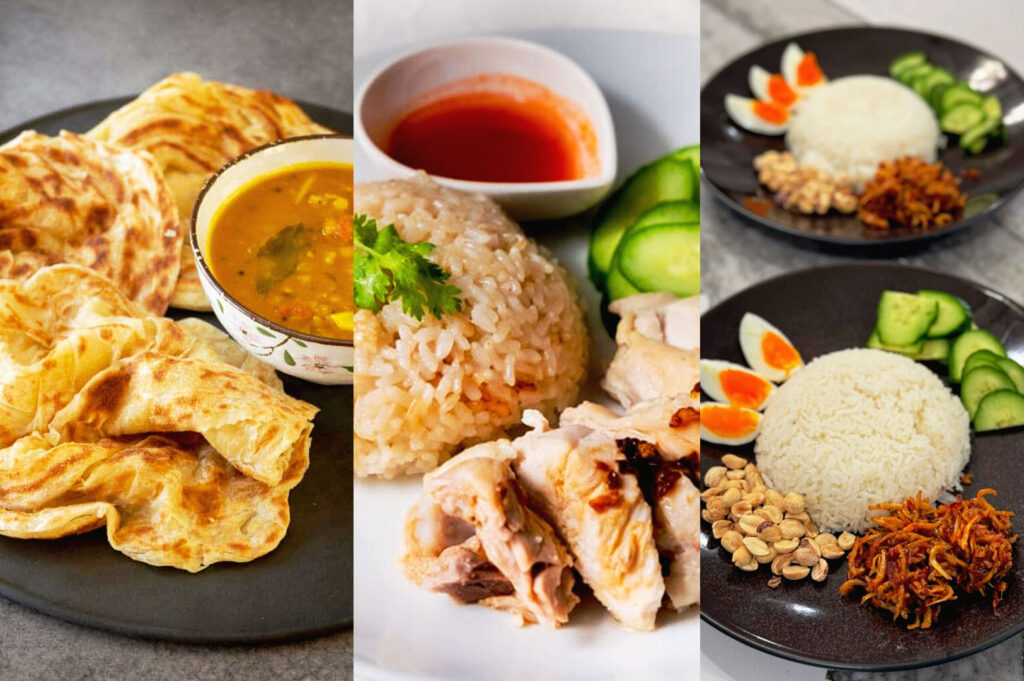
“I can’t handle spice. What should I eat?”
Start simple:
- roti canai with mild dhal
- hainanese chicken rice
- nasi lemak without sambal
You can always add heat later.
“Why does the same dish taste different everywhere?”
Because there is no single version.
A plate of hokkien mee in one part of Malaysia may lean sweeter with light soy sauce, while another uses heavier caramelized dark soy sauce. Recipes shift by region, family, and even individual cooks.
That variation is tradition.
“Is Malaysian food expensive in Singapore?”
Not really.
- Hawker: S$5–S$10
- Casual sit-down: S$15–S$30
You can have an equally meaningful meal at both levels.
Take a Seat at the Table
I hope this guide helps you realize that traditional Malaysian food is not a scary, rigid set of rules you have to perfectly memorize. It is a warm, ongoing conversation about flavor, family, and history.
The next time you sit down at a kopitiam, a hawker centre, or a nice restaurant, do not stress about whether you are eating it “right.” Order the nasi lemak, ask for an extra scoop of sambal on the side, order a hot teh tarik, and enjoy the beautiful, balanced chaos of the flavors. Many Somerset dishes beautifully showcase the diversity and depth of traditional Malaysian cuisine.
Traditional Malaysian food is meant to be debated, enjoyed, and shared. So grab a spoon, pull up a chair, and join the argument at the table. I promise you, it is the most delicious debate you will ever be a part of.
For those interested in a refined cultural experience, consider a curated journey through Chinese Tea in the heart of Singapore which beautifully complements the exploration of traditional flavors.

Shinjuku Restaurant, Where Cuppage Plaza Keeps Japanese Comfort Food Uncomplicated
Dio Asahi | October 27, 2026
I almost walked past Shinjuku Restaurant. That is easy to do in Cuppage Plaza. Step away from the polish of Orchard Road and the building feels older, quieter, and much less interested in catching your attention. Shinjuku sits on the ground floor at 5 Koek Road, behind a frontage that gives little away about the…
-
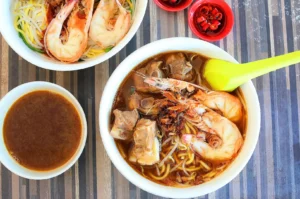
Prawn Mee in Singapore: Bowls Where the Broth Tastes Like Time
Eda Wong | October 24, 2026
I do not remember the first bowl of prawn mee I ever ate. But I remember the smell: that deep, roasted-shell darkness that fills a coffee shop before you have even sat down. My grandfather used to say you could tell a good prawn noodle stall from the doorway, just by breathing. Over the years,…
-
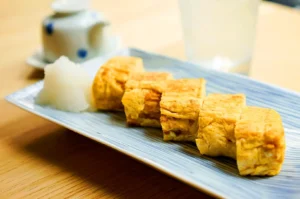
How to Make Dashimaki Tamago, the Japanese Rolled Omelette That Tastes Like Broth
Eat Drink Asia Team | October 22, 2026
Dashimaki tamago is one of those dishes that looks quieter than it is. At first glance, it is just a rolled egg. Pale, soft, sliced neatly, often served beside steamed rice, miso soup, and grated daikon radish. But once you make it, you realise it is not really about eggs alone. It is about how…
-
The Lunch Hour Slows Down at Gochi-So Shokudo
Dio Asahi | October 21, 2026
By Dio Asahi for Eat Drink Asia. It’s just past noon, and the lifts keep opening. Suits spill out, lanyards swinging, phones already halfway to their ears. But inside Gochi-So Shokudo, tucked into One Raffles Place, something else is happening. People are sitting down. Actually sitting. Chopsticks lifting, shoulders dropping a little, the room warm…
-
Kintamani Singapore Review: Can an All-You-Can-Eat Buffet Still Taste Like Indonesia?
Dio Asahi | October 20, 2026
I walked into Kintamani Singapore with one question in mind. Buffets ask food to wait. Rendang, sambal, grilled meats, and fried seafood all sit under heat while diners circle the spread. That is not necessarily kind to Indonesian dishes built around texture, reduction, chilli, coconut, and freshly cooked aromatics. So I was less interested in…

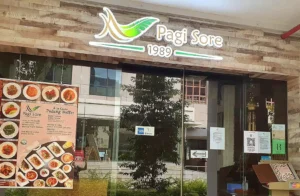
Pagi Sore Indonesian Restaurant Est 1989 Review: A Second-Generation Kitchen That Still Knows Its Own Voice
Eda Wong | October 17, 2026
The first thing I noticed at Pagi Sore Indonesian Restaurant was the smell. Not the sharp, showy kind. Something slower: coconut milk, lemongrass, chilli, fried egg, and the deep warmth of spice paste drifting out from a wood-heavy dining room while Far East Square kept moving outside. I walked over on a Wednesday evening, just…
-
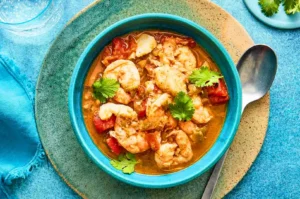
Best Fish Soup in Singapore: Bowls Where the Broth Is the Whole Point
Eat Drink Asia Team | October 15, 2026
I don’t remember when fish soup became my quiet meal. It just did. On days when I couldn’t decide what I wanted, when the weather turned grey, when I needed something warm that asked nothing of me, I’d end up hunched over a bowl, breathing in the steam before the first spoonful. I’ve eaten a…
-
The Clay Stove Heat Beneath a Lao Grilled River Fish
Eda Wong | October 14, 2026
By Eda Wong for Eat Drink Asia It’s late afternoon, and the river is the colour of weak tea. A woman crouches beside a small clay stove at the edge of the bank, feeding it slivers of charcoal. Smoke lifts, thin and grey, and drifts toward the water. On a bamboo skewer, a whole fish…
-
The National Dish of Indonesia Is Not One Plate: Why a Country of Islands Needs Many Icons
Dio Asahi | October 13, 2026
The first time someone asked me for the national dish of Indonesia, I answered nasi goreng without thinking. It seemed obvious: fried rice darkened with kecap manis, often topped with a fried egg, familiar from warungs and late-night street food stalls. That answer is not wrong. It is simply too small. Indonesian food is regional,…
-
Sapporo in a Bowl: Soup Curry by Ki-setsu Comes to Singapore
Eda Wong | October 12, 2026
Ask most Singaporeans to picture Japanese curry and a familiar image probably comes to mind: a plate of rice beneath thick brown gravy, perhaps with a breaded cutlet sliced neatly across the top. It is rich, sweet-edged, comforting and, by now, almost as recognisable as ramen or donburi. Head to the fourth floor of Fortune…