In the open-air kitchen of a coastal home in southern Sri Lanka, a low fire crackles under a wide, unglazed clay pot. The air is thick with the scent of roasted black pepper and something deeply, aggressively tart. A wooden spoon scrapes the bottom of the pot, turning cubes of firm yellowfin tuna until they are entirely coated in a thick, charcoal-colored paste. The heat is steady, slowly drawing the moisture from the fish, replacing it with a dense crust of spice. There is no rush here; the fire dictates the rhythm.
This is Ambul Thiyal, pronounced um-bool tee-yal, a foundational dish of Sri Lankan coastal cooking. Translated simply as “sour fish curry,” the name drastically undersells its complexity. The dish relies entirely on goraka, a sun-dried, deeply wrinkled fruit that imparts an intense, smoky sourness and a stark black hue to the sauce. To prepare it, cooks grind the goraka into a thick paste with roasted curry powder, black pepper, and cinnamon, vigorously massaging it into the tuna. As it cooks in the clay pot, the liquid evaporates, leaving the tuna dry, firm, and heavily crusted. The resulting texture is almost meaty, breaking apart in dense, intensely flavored flakes that vibrate with a sharp, earthy acidity.
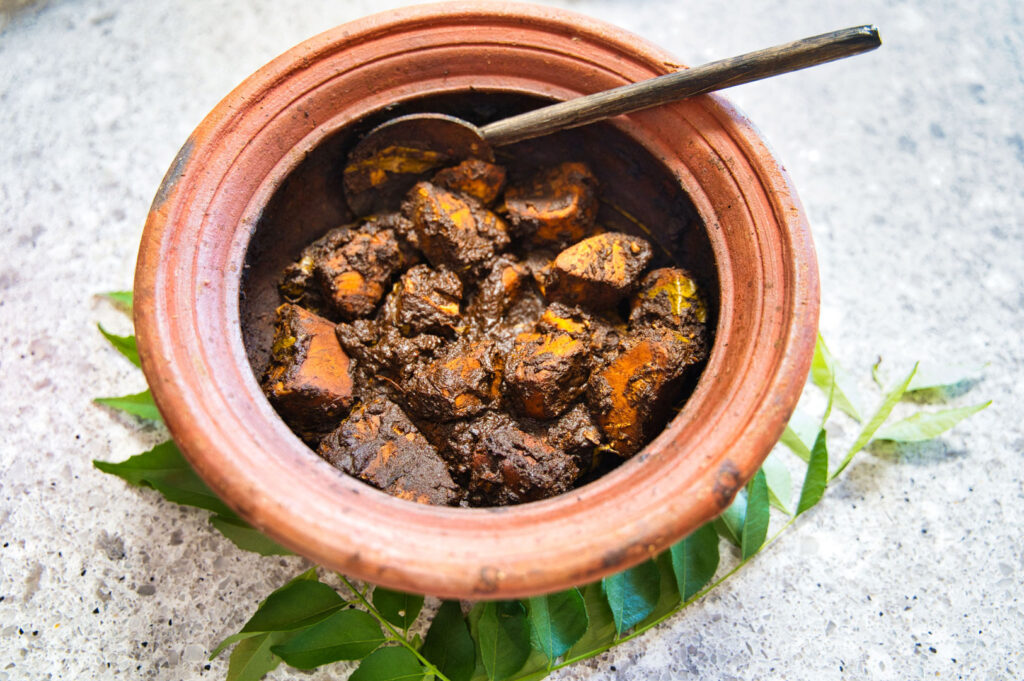
In Sri Lanka, Ambul Thiyal is far more than a culinary preference; it is a masterclass in tropical ingenuity. Before refrigeration, coastal communities needed a method of tuna preservation that could withstand the island’s punishing humidity. The extreme acidity of the goraka, combined with the dry-cooking technique, naturally cures the fish, allowing it to sit safely at room temperature for days. Today, even with modern conveniences, the ritual remains unbroken. You will find it packed into tiffin boxes for long train journeys, served alongside milk rice during the Sinhalese New Year, or sitting quietly on a Tuesday lunch table. It signals a deep, pragmatic relationship with the ocean and the surrounding spice gardens.
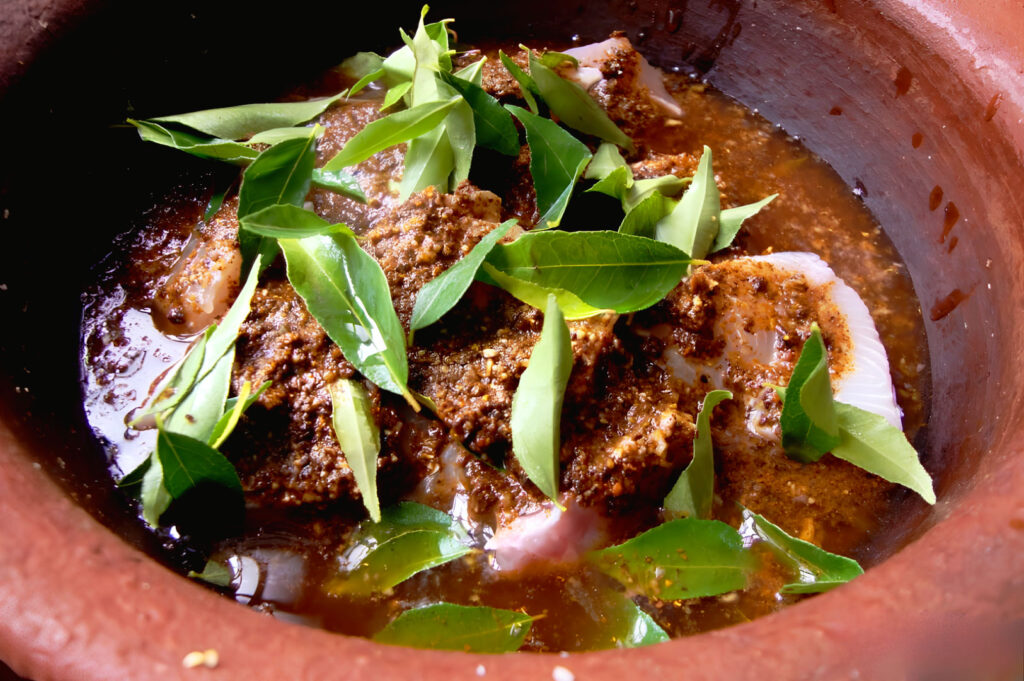
In a global food culture that often prizes delicate, lightly seared seafood, Ambul Thiyal stands out for its absolute refusal to be mild. It is a dish of deliberate, concentrated intensity. It demands time and requires an intuitive understanding of how acid and spice can entirely transform a protein. Recognizing this method feels vital right now, as modern convenience increasingly strips our diets of such bold, time-honored preservation techniques. It is a reminder that some of the most profound flavors are born out of necessity, requiring nothing more than a clay pot, the right fruit, and patience.
The fire eventually burns down to white ash, and the clay pot is lifted from the hearth. Inside, the blackened tuna rests, completely transformed by the goraka and the heat. For cooks who love long-braised curry recipes, this dry-cooked preservation method offers a striking counterpoint, proof that depth can come from reduction as much as from simmering. It is a quiet testament to a coastal craft that endures, piece by spiced piece.

The Last Turn of Tamagoyaki in a Tsukiji Pan
Dio Asahi | October 7, 2026
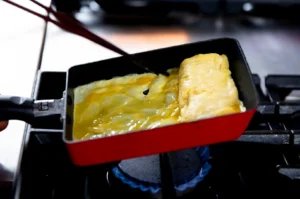
By Dio Asahi for Eat Drink Asia. It’s mid-morning, and the cook doesn’t look up. He stands over a rectangular pan, copper worn to a dull gold at the edges, and pours a thin skin of beaten egg across its surface. It hisses. Steam rises, warm and faintly sweet, and he tilts the pan just…
-
Seafood Restaurants in Singapore That Turn Crab Night Into a Full Table Ritual
Dio Asahi | October 6, 2026
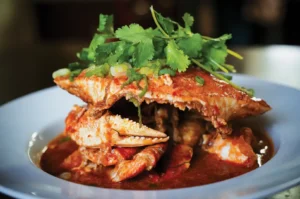
It always starts the same way for me. Someone lifts the lid off a plate of chilli crab, and the whole table leans in. Fingers reach before spoons do. Somebody tears the first piece of fried mantou, drags it through that sticky, sweet-savoury sauce, and the rest of us stop talking for a second. That…
-
Korean Street Food Is Built for Movement, Heat, and One-Handed Eating
Eda Wong | October 3, 2026
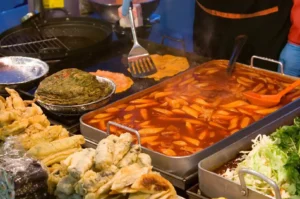
The first time I ate tteokbokki in Seoul, I burned my tongue standing up. It was late, the air was sharp with cold, and I had stopped at a small street food stall near a subway exit because the steam pulled me in. The woman handed me a paper cup of rice cakes in red…
-
Mrs Pho and the Bowl That Makes Somerset Feel Like a Vietnamese Family Table
Eat Drink Asia Team | October 1, 2026
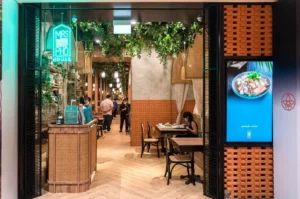
I wasn’t hungry when I walked into 313@somerset. I’d come for something else entirely; an errand, a shop I needed, the usual Orchard rush of people moving faster than the escalators. But somewhere on the first floor, past the noise, I caught the smell of star anise and beef bone, and my feet slowed down…
-
The Carving Knife at Colony, and the Way We Mark What Matters
Eda Wong | September 30, 2026
By Eda Wong for Eat Drink Asia. It’s late morning, and the light is doing most of the work. It pours through the high windows of Colony, at The Ritz-Carlton, Millenia Singapore, spilling across white tablecloths and the vintage prints on the walls. Marina Bay hums somewhere outside, but in here the room feels a…
-
Co Chung Vietnamese Restaurant and the Gỏi Cuốn That Makes Fresh Herbs Do the Work
Dio Asahi | September 29, 2026
I found it by accident, the way you find most things in a mall basement. I’d come down to Plaza Singapura’s B2 for something else entirely, drifting past the usual food-court noise, when I caught the smell of star anise and beef bone coming from a corner. I followed it. And there it was —…
-
Vietnamese Spring Roll: The Recipe That Only Works When the Herbs Stay Awake
Eda Wong | September 26, 2026
Fresh Vietnamese spring rolls, or gỏi cuốn, look delicate, but the recipe is really about control: barely softened rice paper, dry herbs, restrained noodles, clean protein, and a dipping sauce sharp enough to wake the whole thing up. This is not the fried version, chả giò or nem rán. This is the cool, translucent, herb-heavy…
-
Best Steakhouse Singapore: From Fire-Kissed Icons to Old-School Beef Plates
Eat Drink Asia Team | September 24, 2026
I didn’t set out to write about steak. It started with a bad day and a craving for something that pushed back when I bit into it. One dinner turned into a habit, and over a couple of years I found myself at counters, coffeeshops, and dining rooms all over this island, chasing the same…
-
The Ice Counter at Carousel, and the Table Everyone Can Reach
Dio Asahi | September 23, 2026
By Dio Asahi for Eat Drink Asia. It’s a Saturday evening, and someone across the room is carrying a birthday cake. The candles are lit, the walk is careful, and a whole table turns to watch. Plates clink. A child laughs somewhere. The room at Carousel, inside Royal Plaza on Scotts, isn’t quiet — it…
-
Tiong Shian Porridge Centre Review: The Soft Counterweight to Chinatown’s Crisp Toast
Dio Asahi | September 22, 2026
I’d spent the morning with kaya toast. Crisp bread, cold butter, the clean snap of it between my teeth. Good, all of it. But by the time I’d walked a few streets over to New Bridge Road, my mouth wanted the opposite. Something warm. Something that gave way instead of shattering. That’s how I ended…