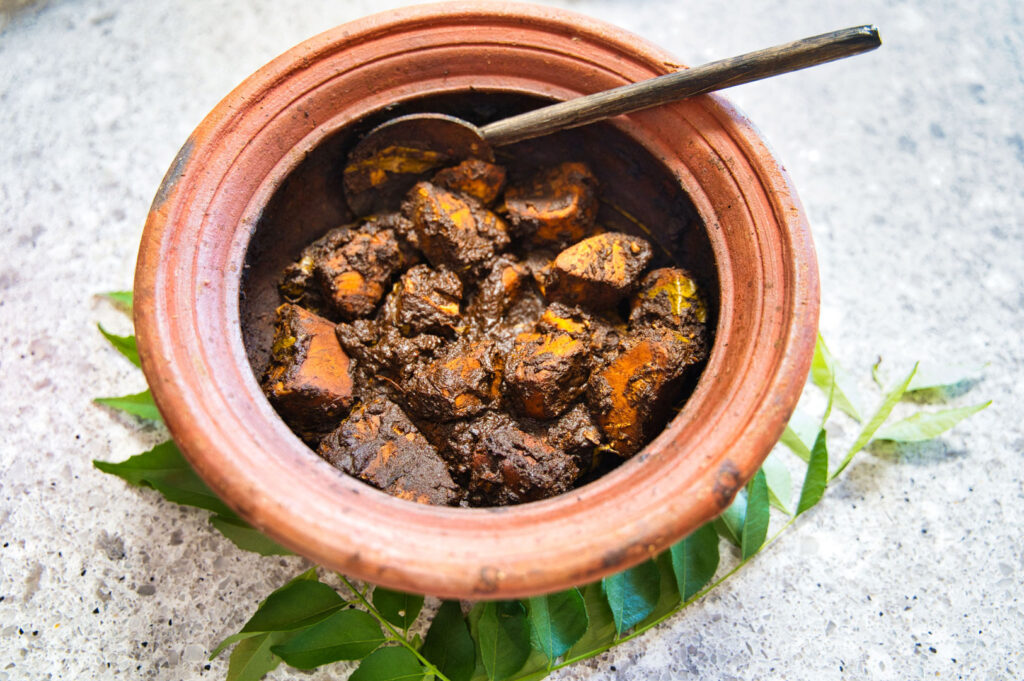
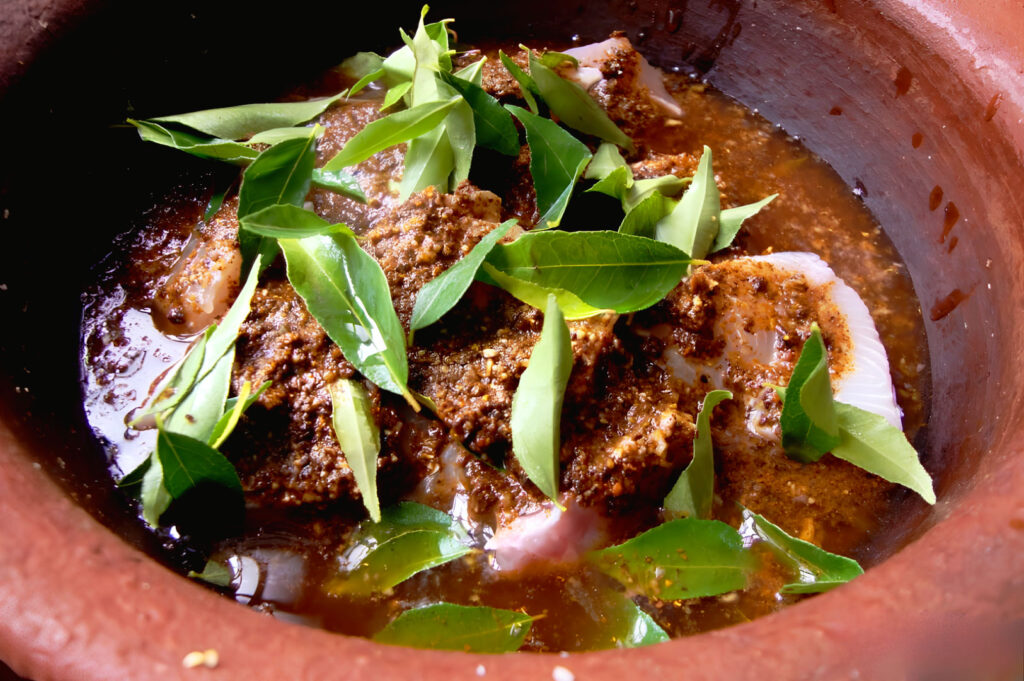
In the open-air kitchen of a coastal home in southern Sri Lanka, a low fire crackles under a wide, unglazed clay pot. The air is thick with the scent of roasted black pepper and something deeply, aggressively tart. A wooden spoon scrapes the bottom of the pot, turning cubes of firm yellowfin tuna until they are entirely coated in a thick, charcoal-colored paste. The heat is steady, slowly drawing the moisture from the fish, replacing it with a dense crust of spice. There is no rush here; the fire dictates the rhythm.
This is Ambul Thiyal, pronounced um-bool tee-yal, a foundational dish of Sri Lankan coastal cooking. Translated simply as “sour fish curry,” the name drastically undersells its complexity. The dish relies entirely on goraka, a sun-dried, deeply wrinkled fruit that imparts an intense, smoky sourness and a stark black hue to the sauce. To prepare it, cooks grind the goraka into a thick paste with roasted curry powder, black pepper, and cinnamon, vigorously massaging it into the tuna. As it cooks in the clay pot, the liquid evaporates, leaving the tuna dry, firm, and heavily crusted. The resulting texture is almost meaty, breaking apart in dense, intensely flavored flakes that vibrate with a sharp, earthy acidity.
In Sri Lanka, Ambul Thiyal is far more than a culinary preference; it is a masterclass in tropical ingenuity. Before refrigeration, coastal communities needed a method of tuna preservation that could withstand the island’s punishing humidity. The extreme acidity of the goraka, combined with the dry-cooking technique, naturally cures the fish, allowing it to sit safely at room temperature for days. Today, even with modern conveniences, the ritual remains unbroken. You will find it packed into tiffin boxes for long train journeys, served alongside milk rice during the Sinhalese New Year, or sitting quietly on a Tuesday lunch table. It signals a deep, pragmatic relationship with the ocean and the surrounding spice gardens.
In a global food culture that often prizes delicate, lightly seared seafood, Ambul Thiyal stands out for its absolute refusal to be mild. It is a dish of deliberate, concentrated intensity. It demands time and requires an intuitive understanding of how acid and spice can entirely transform a protein. Recognizing this method feels vital right now, as modern convenience increasingly strips our diets of such bold, time-honored preservation techniques. It is a reminder that some of the most profound flavors are born out of necessity, requiring nothing more than a clay pot, the right fruit, and patience.
The fire eventually burns down to white ash, and the clay pot is lifted from the hearth. Inside, the blackened tuna rests, completely transformed by the goraka and the heat. For cooks who love long-braised curry recipes, this dry-cooked preservation method offers a striking counterpoint, proof that depth can come from reduction as much as from simmering. It is a quiet testament to a coastal craft that endures, piece by spiced piece.

Banana Leaf Steam: Why Some Rice Smells Like Home
Eda Wong | July 10, 2026
Steam rises from the pot, and a woman lifts a banana leaf over the open flame, turning it once, twice, until its stiff green softens and the surface goes glossy and pliant. She wipes it down with a damp cloth, then spoons hot rice into its center while the grains still steam. The leaf releases…
-
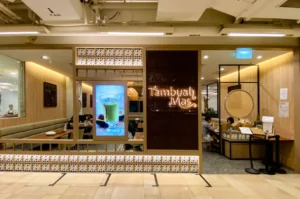
Tambuah Mas Paragon, Delivered: Unique Food Delivery Singapore With Old-School Comfort
Eda Wong | July 9, 2026
I ordered from Tambuah Mas on a rainy Sunday at around 6:15pm, mostly because I wasn’t in the mood to dress up and head into town, but I still wanted a proper meal. Not a sad one-bowl lunch. A real spread. That’s the thing about Tambuah Mas. It’s been around since 1981, serving Indonesian home-style…
-
Toasted Rice Powder: The Dust That Makes Larb Sing
Dio Asahi | July 8, 2026
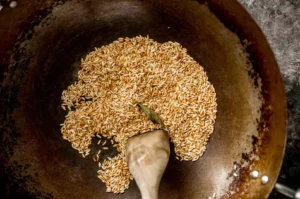
A wok sits over a low flame, and a handful of raw sticky rice slides across its dry surface. No oil, no water—nothing but heat and patience. The grains pale, then blush amber, then deepen toward the color of weak tea. Someone shakes the pan in a slow, even rhythm, listening as much as watching….
-
Ordering Lunch From Co Hai Banh Mi, and Finding Out the Definition of Good Food Delivery
Dio Asahi | July 7, 2026
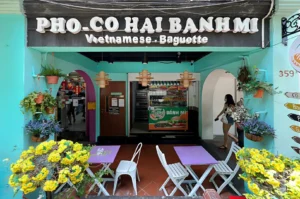
I ordered lunch from Co Hai Banh Mi & Phở Vietnamese Restaurant on a Thursday at 12:08pm, which is probably the worst and most honest time to test delivery food. It was raining lightly, the kind of Singapore lunch rain that makes every rider slower and every office worker hungrier. I had been thinking about…

Orchard Plaza Food: Hidden Japanese Restaurants and Local Eats Near Somerset
Eat Drink Asia Team | July 4, 2026
Orchard Plaza is one of those buildings we kept walking past before we properly understood it. From the street, it looks more like an office block than a dinner plan. But over repeated visits, usually after work or during odd lunch windows, we’ve found that the real charm sits behind lift doors, quiet corridors, and…
-
Salted Egg, Properly Treated: Sauce, Not Shortcut
Eda Wong | July 3, 2026
By Eda Wong for Eat Drink Asia. The wok station is already hot when the cook lowers the flame. In the narrow back of a Singapore zi char kitchen, the air smells of butter, curry leaves, and the faint mineral edge of salted duck egg. A metal spatula presses cooked yolks through oil until they…
-
Fish Sauce at the Table: The Quiet Work of Fish Sauce
Dio Asahi | July 1, 2026
At a narrow lunch table in Bangkok, the bottle arrives before the rice has stopped steaming. It is clear glass, refilled many times, its plastic cap slightly stained from years of fingers and heat. Beside it sits a small bowl of sliced chillies floating in amber liquid, the cut edges pale and sharp. Someone nudges…
-
Eat 3 Bowls Bendemeer Review: A Taiwanese Comfort Food That Delivers
Eda Wong | June 30, 2026
I ordered Eat 3 Bowls @ Bendemeer on a Thursday at about 11:45am, which is my favourite test window for delivery food. It’s close enough to lunch for the kitchen to be in rhythm, but not so late that every rider in the neighbourhood is already fighting the office crowd. By 12:25pm, the bag was…
-
ABC Hokkien Mee After Renovation: What to Expect When the Woks Return
Dio Asahi | June 27, 2026
When I first walked past a hawker centre undergoing major renovations, the absolute silence unsettled me. The usual rhythmic scrape of metal spatulas against cast-iron woks was gone, replaced by the hum of construction. It made me realise just how much our culinary journeys are tied to the physical spaces we eat in. Right now,…
-
Claypot Rice Crusts: Listening for the First Crackle
Eda Wong | June 26, 2026
The narrow alleyway in Yau Ma Tei smells of charcoal and dark soy sauce, a thick coastal humidity pressing against the glow of the stoves. An elderly cook stands before a row of blackened sand-clay pots, a long metal tong in his right hand. He does not watch the flames; he listens to them. There…