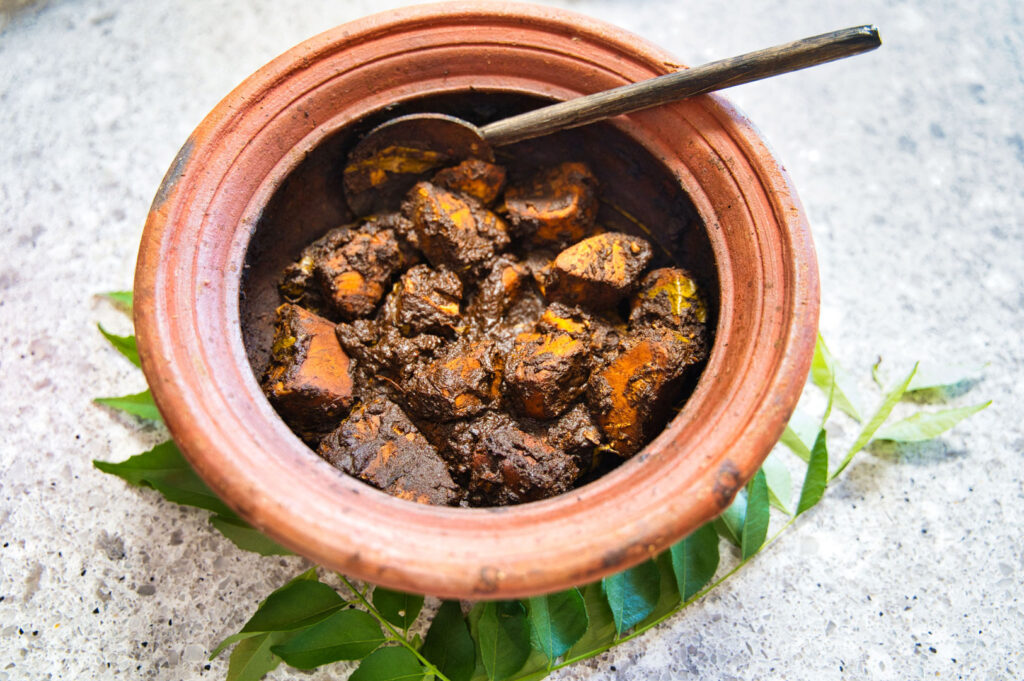
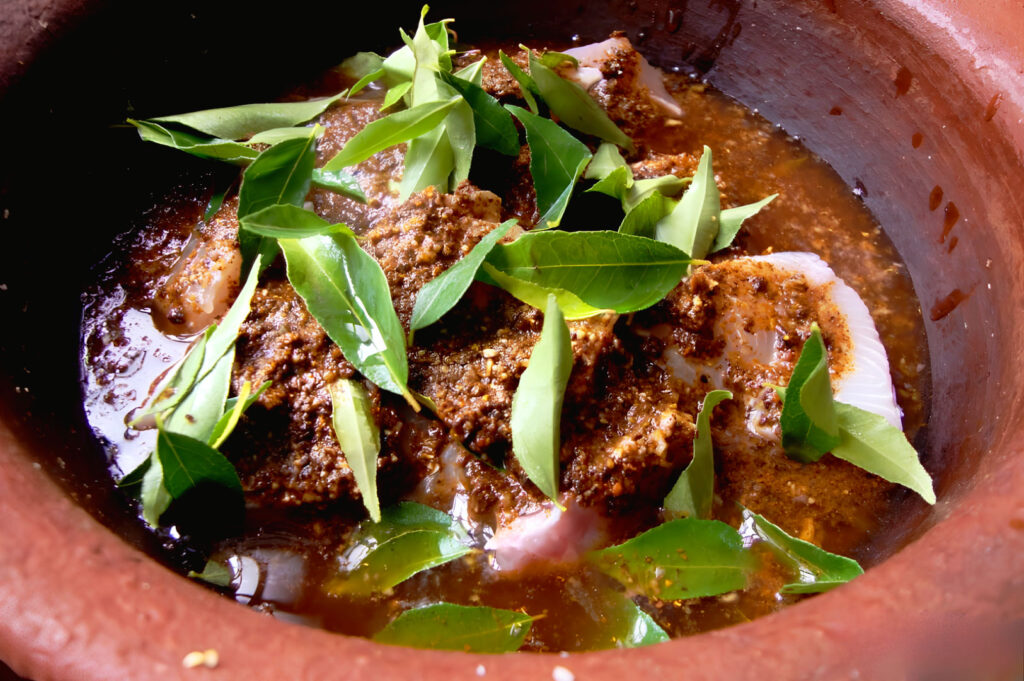
In the open-air kitchen of a coastal home in southern Sri Lanka, a low fire crackles under a wide, unglazed clay pot. The air is thick with the scent of roasted black pepper and something deeply, aggressively tart. A wooden spoon scrapes the bottom of the pot, turning cubes of firm yellowfin tuna until they are entirely coated in a thick, charcoal-colored paste. The heat is steady, slowly drawing the moisture from the fish, replacing it with a dense crust of spice. There is no rush here; the fire dictates the rhythm.
This is Ambul Thiyal, pronounced um-bool tee-yal, a foundational dish of Sri Lankan coastal cooking. Translated simply as “sour fish curry,” the name drastically undersells its complexity. The dish relies entirely on goraka, a sun-dried, deeply wrinkled fruit that imparts an intense, smoky sourness and a stark black hue to the sauce. To prepare it, cooks grind the goraka into a thick paste with roasted curry powder, black pepper, and cinnamon, vigorously massaging it into the tuna. As it cooks in the clay pot, the liquid evaporates, leaving the tuna dry, firm, and heavily crusted. The resulting texture is almost meaty, breaking apart in dense, intensely flavored flakes that vibrate with a sharp, earthy acidity.
In Sri Lanka, Ambul Thiyal is far more than a culinary preference; it is a masterclass in tropical ingenuity. Before refrigeration, coastal communities needed a method of tuna preservation that could withstand the island’s punishing humidity. The extreme acidity of the goraka, combined with the dry-cooking technique, naturally cures the fish, allowing it to sit safely at room temperature for days. Today, even with modern conveniences, the ritual remains unbroken. You will find it packed into tiffin boxes for long train journeys, served alongside milk rice during the Sinhalese New Year, or sitting quietly on a Tuesday lunch table. It signals a deep, pragmatic relationship with the ocean and the surrounding spice gardens.
In a global food culture that often prizes delicate, lightly seared seafood, Ambul Thiyal stands out for its absolute refusal to be mild. It is a dish of deliberate, concentrated intensity. It demands time and requires an intuitive understanding of how acid and spice can entirely transform a protein. Recognizing this method feels vital right now, as modern convenience increasingly strips our diets of such bold, time-honored preservation techniques. It is a reminder that some of the most profound flavors are born out of necessity, requiring nothing more than a clay pot, the right fruit, and patience.
The fire eventually burns down to white ash, and the clay pot is lifted from the hearth. Inside, the blackened tuna rests, completely transformed by the goraka and the heat. For cooks who love long-braised curry recipes, this dry-cooked preservation method offers a striking counterpoint, proof that depth can come from reduction as much as from simmering. It is a quiet testament to a coastal craft that endures, piece by spiced piece.

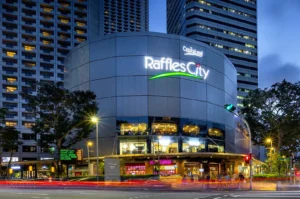
Raffles Place Food Has the Restaurants That Understand the CBD Lunch Rush
Eda Wong | August 8, 2026
I used to think lunch in the CBD was a lost cause. You get an hour, maybe less. The lift takes ten minutes just to reach the ground floor. By the time you’ve queued, ordered, and found a corner to eat in, you’re already checking the clock. For a while, I gave up and just…
-
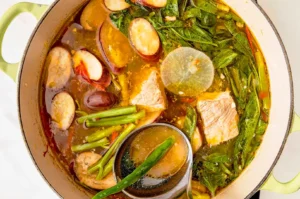
The Tamarind Sourness Inside a Filipino Sinigang Pot
Eda Wong | August 7, 2026
By Eda Wong for Eat Drink Asia. The pot has been going for a while now, and the whole kitchen knows it. Steam curls up from the surface, carrying that sharp-sour smell that reaches you before anything else. It’s not a gentle aroma. It pricks at the back of your throat a little, makes your…
-
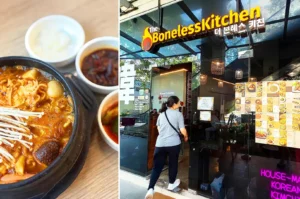
Vegetarian Asian Dishes at The Boneless Kitchen: A Korean Meal Built on Kimchi, Rice, and Restraint
Dio Asahi | August 6, 2026
I didn’t expect to find Korean comfort food in an office building near Tai Seng. But there I was, on a Wednesday a little past 7pm, standing outside The Commerze @ Irving wondering if I’d read the address wrong. This isn’t the part of Singapore you go to for dinner. It’s the part you leave…
-
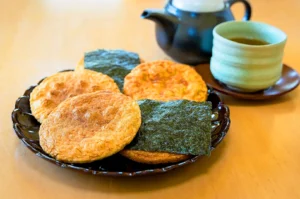
The Soy Glaze on Kyoto’s Forgotten Rice Crackers
Dio Asahi | August 5, 2026
By Dio Asahi for Eat Drink Asia. The old man works close to the coals, and the smell reaches me before I see what he’s doing. Soy meeting heat. That dark, caramel-edged smell that tightens something in your chest. His brush moves in short strokes across a rack of rice crackers, back and forth, patient….
-
Vegetarian Laksa Without the Usual Seafood Shadow: Asian Vegetarian Recipes Begin With the Broth
Eat Drink Asia Team | August 4, 2026
The first vegetarian laksa I made tasted like coconut soup with chilli, not laksa. I thought I was doing it right, stirring paste into warm coconut milk with tofu puffs. It looked the part but lacked depth. Seafood usually provides that depth, prawn shells, dried shrimp, fish cake sweetness. I learned that depth can’t be…
-
A Bowl Built by Hand at Hi Noodle, Three Floors Below Somerset
Eda Wong | July 31, 2026
The escalator carries me down to Basement 3, past the lunch noise of 313 Somerset, and the air changes somewhere along the way. Less mall, more kitchen. The smell finds me first — chilli, vinegar, something warm and sharp that cuts through the perfume of the shops above. Hi Noodle sits there, plain and bright….
-
An Asian Vegetarian Meal at Herbivore Japanese Vegetarian Restaurant: When Japanese Comfort Food Learns a New Body
Eda Wong | July 30, 2026
I didn’t grow up eating eel. But I grew up watching my grandmother turn one thing into another — gluten into “duck,” beancurd skin into “fish,” mushrooms into something that tasted of the sea without ever touching it. Buddhist vegetarian cooking does that. It doesn’t pretend so much as it remembers, building familiar shapes out…
-
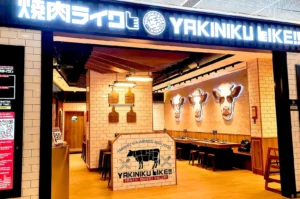
A Table for One, and a Grill That Belongs to You in Yakiniku Like
Dio Asahi | July 29, 2026
The grill glows orange in front of me before the meat arrives. It’s a small thing, set into the counter at my single seat, and it hums faintly under the chatter of the room. No flame. No charcoal. Just a low electric warmth I can feel rising toward my face. A plate comes. Thin slices…
-
Best Buffet Singapore: Where Hotel Buffets Turn Abundance Into Order
Dio Asahi | July 28, 2026
I used to think buffets were about greed. Pile the plate high, go back for thirds, leave feeling like you got your money’s worth. That was the whole game, or so I believed. After years of exploring this city’s hotel buffets, I learned the good ones focus on order. They transform a wall of food…
-
STR TAO Taiwan Cuisine and the Comfort of a Menu That’s Too Big to Be Lazy: Food Places Nearby
Eat Drink Asia Team | July 25, 2026
It was the kind of evening where you don’t want to think too hard about dinner. I’d been walking up East Coast Road, the air still thick from an afternoon shower, when I ducked into a coffeeshop just to sit down. The Bullion Hawker Bar. And tucked among the usual suspects — wanton mee, Hokkien…