The cart glows at the edge of the lane just as the heat of the day finally loosens. A woman fans the coals with a flattened piece of cardboard, and the embers brighten orange under a row of skewers. Fat slides off the pork, hits the charcoal, and hisses upward in a thin curl of smoke. She turns each stick with two fingers, never looking, her hand moving in a steady rhythm I can almost set a clock to. The air thickens with woodsmoke and caramelizing sugar, and a small line forms without anyone seeming to organize it.
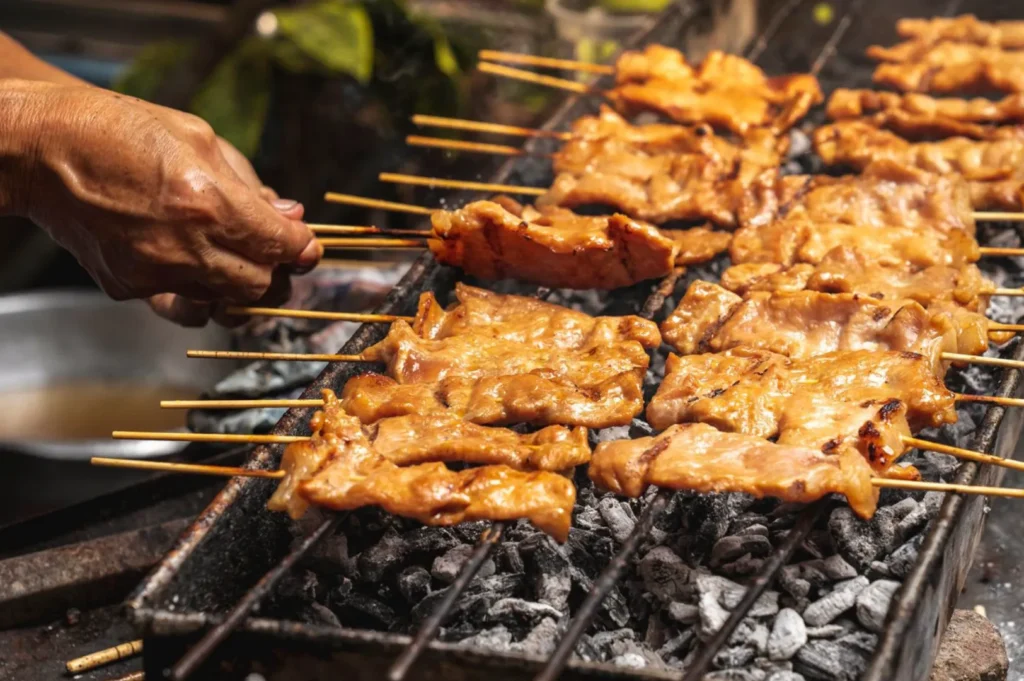
Thai street vendor grilling moo ping pork skewers over charcoal with bamboo sticks and wood smoke
What she is making is moo ping, pronounced roughly moo-ping: thin strips of pork threaded onto bamboo, marinated in a mix that usually leans on garlic, coriander root, fish sauce, and a touch of palm sugar, then grilled over charcoal until the edges char and the center stays tender. The bamboo skewers are soaked in water first, so they hold the meat without burning through. The marinade’s sugar is what gives the surface its dark, sticky lacquer, but it is also what makes the grilling unforgiving. Too much heat and the sugar blackens before the pork cooks; too little and the fat never renders. The whole thing lives or dies on heat control.
That control is the real craft here, and it is almost invisible. The vendor reads her grill like a map, knowing which corner runs hotter and which edge stays gentle, sliding skewers across zones without measuring anything. She turns each one at the precise moment the fat begins to weep, not before. It is muscle memory built over years, the kind of knowledge that never gets written down. In the early evening, the grill becomes a small fixed point in the neighborhood’s routine: students on the way home, motorbike riders pausing at the curb, families buying a handful of skewers before drifting into the night market. People eat standing, talking, the sticky rice passed in plastic bags. Nobody hurries the fire.
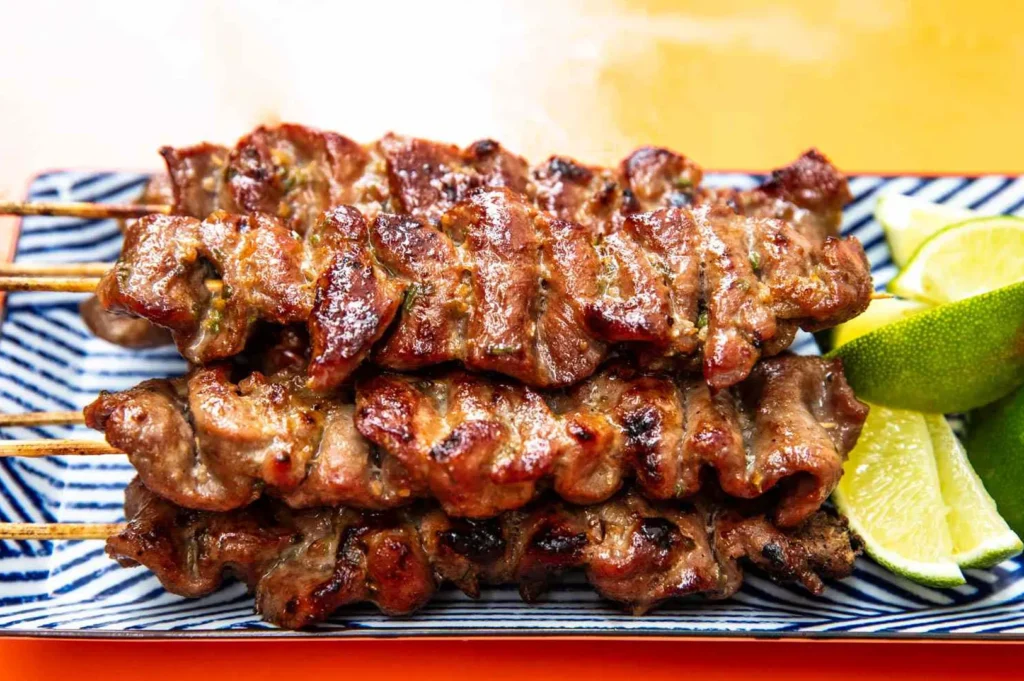
Grilled moo ping pork skewers with smoky char, bamboo sticks, and fresh lime wedges
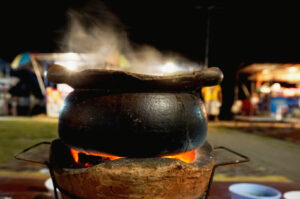
What feels worth noticing now is how quietly this slow patience is being edged out. Gas burners are easier, cleaner, faster, and they spare the vendor the daily labor of coaxing charcoal to the right temperature. They also flatten the flavor, removing the smoke that gives moo ping its depth and the heat-reading skill that makes each batch slightly different. The convenience is real. So is the loss. A few stalls away, khao soi simmers in a metal pot—coconut curry and soft noodles under a brittle crown—another Chiang Mai staple that depends on patient heat. A skewer pulled off charcoal carries a char that gas cannot fake, and the hand that knows when to turn it is becoming rarer.
I keep returning to that turning hand. It asks for nothing, explains nothing, and yet it holds the whole thing together—a small fluency in fire and timing that a city builds quietly, one evening at a time.

PappaRich SG and the Comfort of Malaysian Staple Food: A Restaurant Review in Familiar Flavours
Dio Asahi | June 6, 2026
There is a very specific kind of exhaustion that hits you right before a flight or just after you land. You are dragging your suitcase, staring blankly at the departure boards, and suddenly, you realize you are starving. But you don’t want just any food. You want something warm, familiar, and deeply comforting. I felt…
-
Sri Lanka’s Ambul Thiyal and the Sourness of Goraka
Eda Wong | June 5, 2026
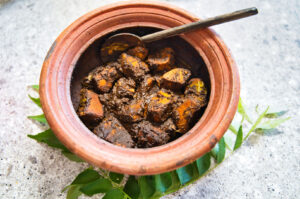
In the open-air kitchen of a coastal home in southern Sri Lanka, a low fire crackles under a wide, unglazed clay pot. The air is thick with the scent of roasted black pepper and something deeply, aggressively tart. A wooden spoon scrapes the bottom of the pot, turning cubes of firm yellowfin tuna until they…
-
Traditional Malaysian Foods Aren’t a Museum: They’re a Living Argument at the Table
Eda Wong | June 4, 2026
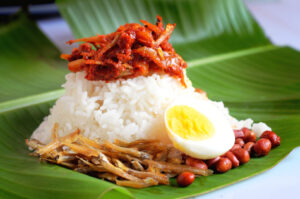
When I first really started digging into traditional Malaysian food, I made a classic rookie mistake. I was sitting at a crowded kopitiam in Kuala Lumpur, looking at a plate of nasi lemak, and I thought I understood exactly what it was supposed to be. I thought it was a fixed, rigid recipe, a museum…
-
In Gifu, Hoba Miso Warms Slowly Over Magnolia Leaves
Dio Asahi | June 3, 2026
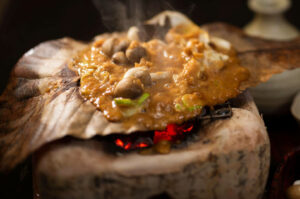
Frost clings to the wooden window frames in the highlands of Gifu. Inside, the air is thick with the scent of woodsmoke and fermented soybeans. On the table, a small ceramic charcoal grill known as a shichirin radiates a gentle, localized heat. Resting directly above the glowing embers is a large, brittle brown leaf holding…
-
The Stir Fried Egg Plant That Taught Me Restraint at Si Chuan Dou Hua Restaurant
Eat Drink Asia Team | June 2, 2026
I’ve always had a love-hate relationship with Sichuan food. Usually, you walk into a spot, order your food, and spend the rest of the night sweating through your shirt, chugging ice water, and wondering why you did this to yourself. But when I visited Si Chuan Dou Hua Restaurant on a Tuesday around 7 pm,…
-
What the Wok Is Really Doing to the Vegetable: The Question Behind Every ‘Brinjal Recipe Chinese Style’
Dio Asahi | May 30, 2026
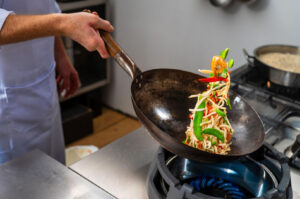
When I first tried cooking brinjal at home, I was completely convinced that all I needed was a hot pan, some oil, and a good recipe. I chopped the vibrant purple vegetable, threw it into a standard frying pan with a generous pour of oil, and waited for the magic to happen. Instead of the…
-
The Clay Pot Rice Crust That Hong Kong Cooks Wait For
Eda Wong | May 29, 2026
The December wind cuts sharply through the narrow alleys of Temple Street, but the ambient heat from the glowing charcoal stoves pushes the chill away. A cook stands before a long row of blackened clay pots, working with a rhythmic, almost meditative focus. Plumes of white steam rise into the night air, carrying the heavy,…
-
The Velvet Logic Behind a Chinese Eggplant Recipe: When ‘Eggplant Recipes Asian’ Means Silk
Eda Wong | May 28, 2026
I vividly remember standing over my stove a few years ago, staring into a wok full of what can only be described as a greasy, grey disaster. When I first tried this dish at home, I assumed that tossing chopped eggplant into a hot pan with a generous glug of cooking oil would naturally yield…
-
Cambodia’s Prahok Pots and the Ferment Beneath the Meal
Dio Asahi | May 27, 2026
The afternoon heat in the outskirts of Phnom Penh settles like a thick blanket over the wooden stilt houses. Underneath the corrugated tin roof of an open-air kitchen, the air carries a heavy, sharp scent that instantly commands attention, a deeply pungent, earthen aroma of crushed fish and salt. An elderly woman sits on a…
-
Heat Has a Shape: Reading the Samyang Spicy Level Like a Flavour Map, Not a Dare
Eat Drink Asia Team | May 26, 2026
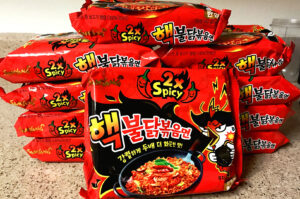
When we first tried the notorious Samyang 2x Spicy Buldak noodles, we treated it exactly how the internet told us to: like a dare. We boiled the noodles, poured in every last drop of the blood-red sauce, and braced ourselves. Within three bites, our palates were completely blown out. We could not taste the savoury…