The duck arrived and made a sound before I’d even touched it.
Not the plate, the skin. When my fork pressed against it, there was a small, dry crackle, the kind you feel in your fingers before you hear it. That’s when I understood I wasn’t eating a soft meal. This was something with edges.
I’d come to Bebek Goreng Pak Ndut half-expecting comfort. I think I’d been carrying the memory of nasi goreng in my head, that warm, smoky, rounded plate of fried rice slicked with kecap manis, an egg sliding on top, everything folded into itself. Gentle food. Food that asks nothing of you.
This wasn’t that.
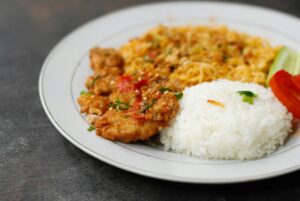
The duck leg sat on the rice, browned and blistered, a little battered-looking. Beside it, a spoonful of dark red chilli. And I remember thinking, before I’d taken a bite, that the whole plate looked like it had opinions.
Inside Lucky Plaza on a Loud Afternoon: A Halal Indonesian Restaurant Experience
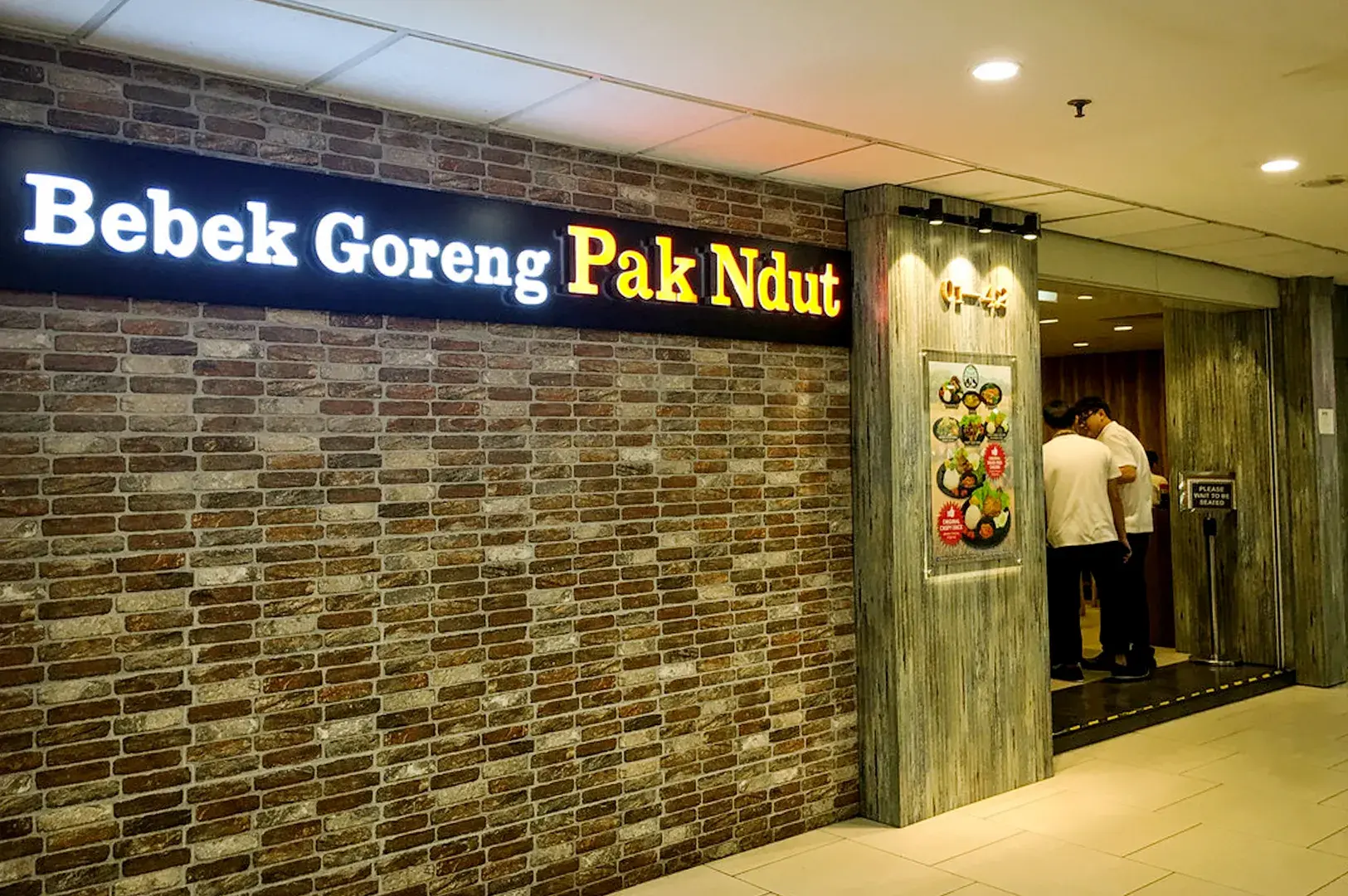
You find Bebek Goreng Pak Ndut on the ground floor of Lucky Plaza, at 304 Orchard Road, tucked into the kind of mall that never quite settles.
Lucky Plaza doesn’t do calm. It’s six floors of movement — money changers, phone shops, remittance queues, families carrying plastic bags heavy with weekend groceries. On the day I went, the corridors smelled of fried things and floor cleaner, and somewhere a radio was playing. It’s the opposite of the polished Orchard outside its doors.
The restaurant matches its surroundings. You order and pay at the counter first, then a staff member points you to a seat. No ceremony. It’s functional in the way that busy places have to be:
- Tables close together
- Trays cleared fast
- The hum of people who came for delicious meals and not to linger
First Impressions
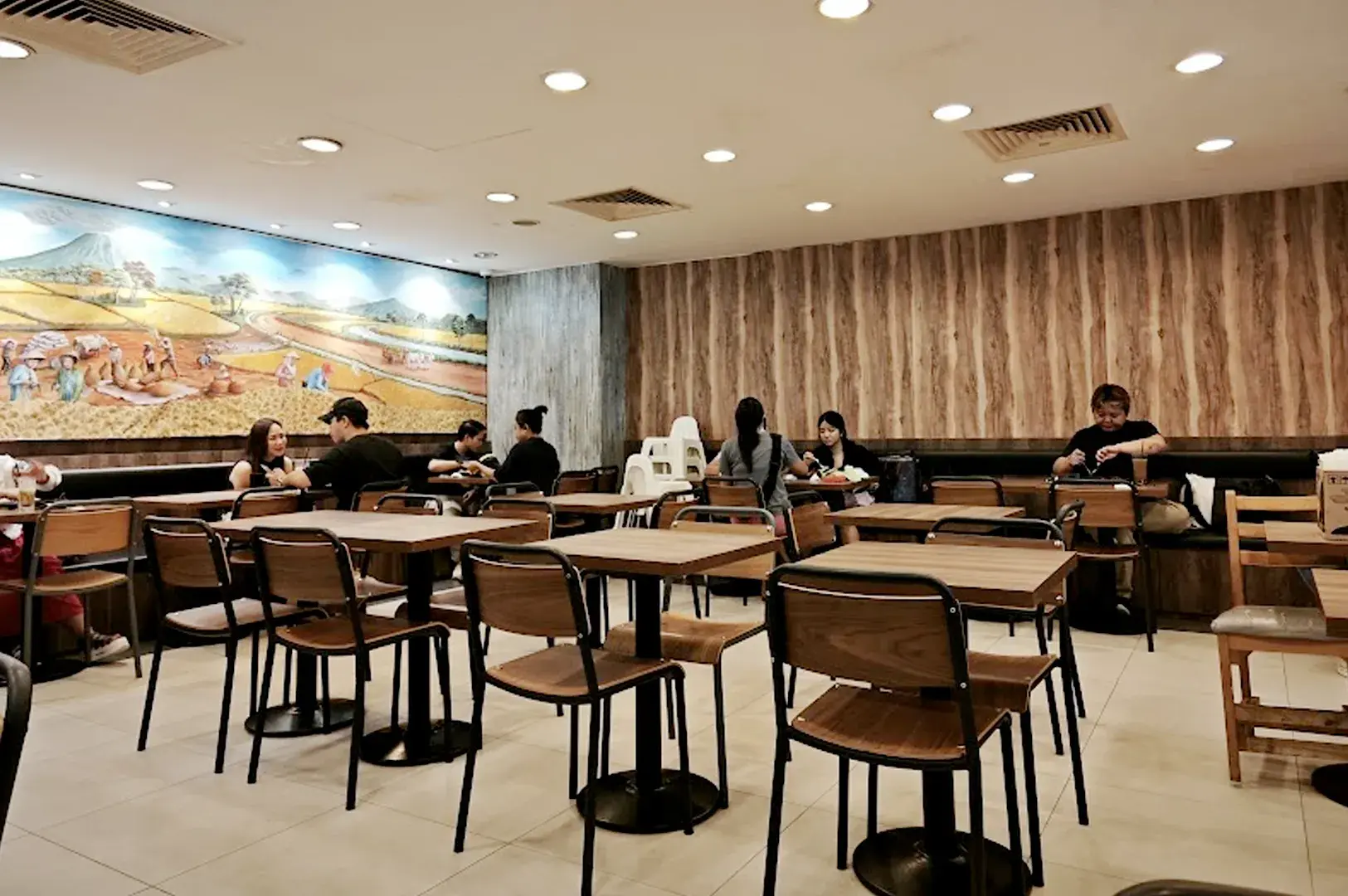
I’d been warned that Sunday lunch turns into a scrum, with a queue spilling past the entrance. I believe it. Even on my quieter visit, the room filled quickly, and I could feel how tight it would get with a weekend crowd pressing in.
If you want space to breathe, come off-peak. If you don’t mind the noise, the noise is part of it.
The whole place is MUIS halal-certified, which matters here. Fried duck done halal isn’t easy to find, and it’s a big reason Bebek Goreng Pak Ndut has the following it does among food lovers seeking authentic Indonesian cuisine. For those who enjoy the lively, bustling atmosphere of plaza dining, a guide to cuppage plaza food is worth checking out.
The Duck Is the Whole Argument: Original Crispy Fried Duck and More
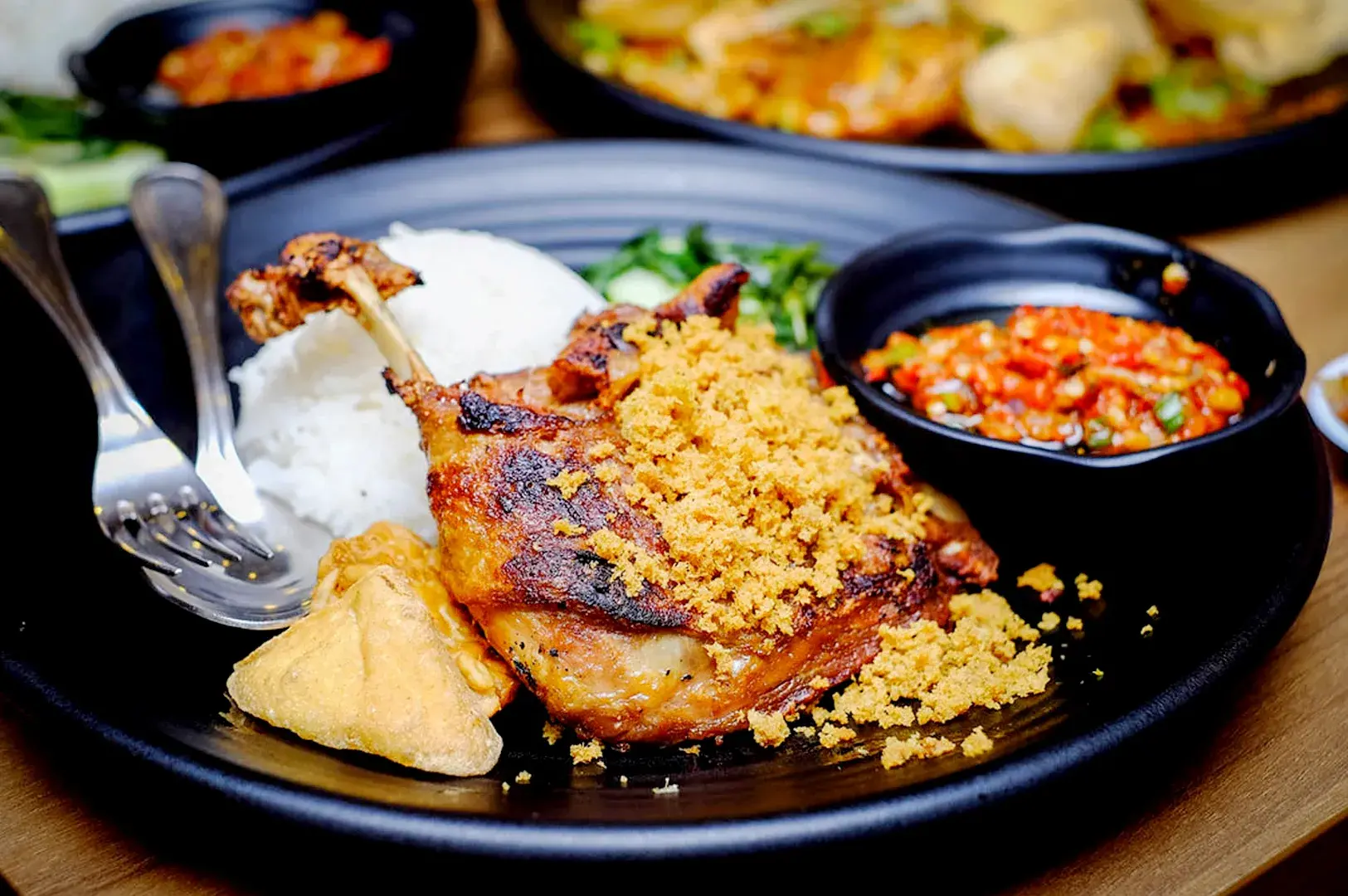
I ordered the Bebek Goreng Original + Nasi ($10.90), the signature dish featuring traditional deep fried duck marinated for twenty-four hours in a savory blend of secret spices. This marinade imbues the duck meat with a rich and aromatic flavor that’s unmistakably authentic.
First Bite: Crispy Duck Skin and Tender Meat
The first bite was all skin — crisp, salty, deeply browned to a golden brown with a crispy finish, almost dry at the edges where the oil had done its work. The crispy duck skin crackled under my fork, a sensory invitation to dive deeper.
The Meat
Underneath, the meat was darker than chicken, a reddish brown, and more tender than I expected from something fried this hard. The flesh close to the bone stayed moist, carrying that rich flavor from the 24-hour marinade. There was almost no gaminess, just the mouth-watering dish that is original crispy fried duck done right.
Here’s the thing I kept coming back to: the duck demands attention. You tear at the skin, find the meat, navigate around the shape of the bird. The pleasure is in the effort, in the contrast between crisp and tender, in the salt catching the back of your throat.
Nasi Goreng Comforts You. This Duck Wakes You Up
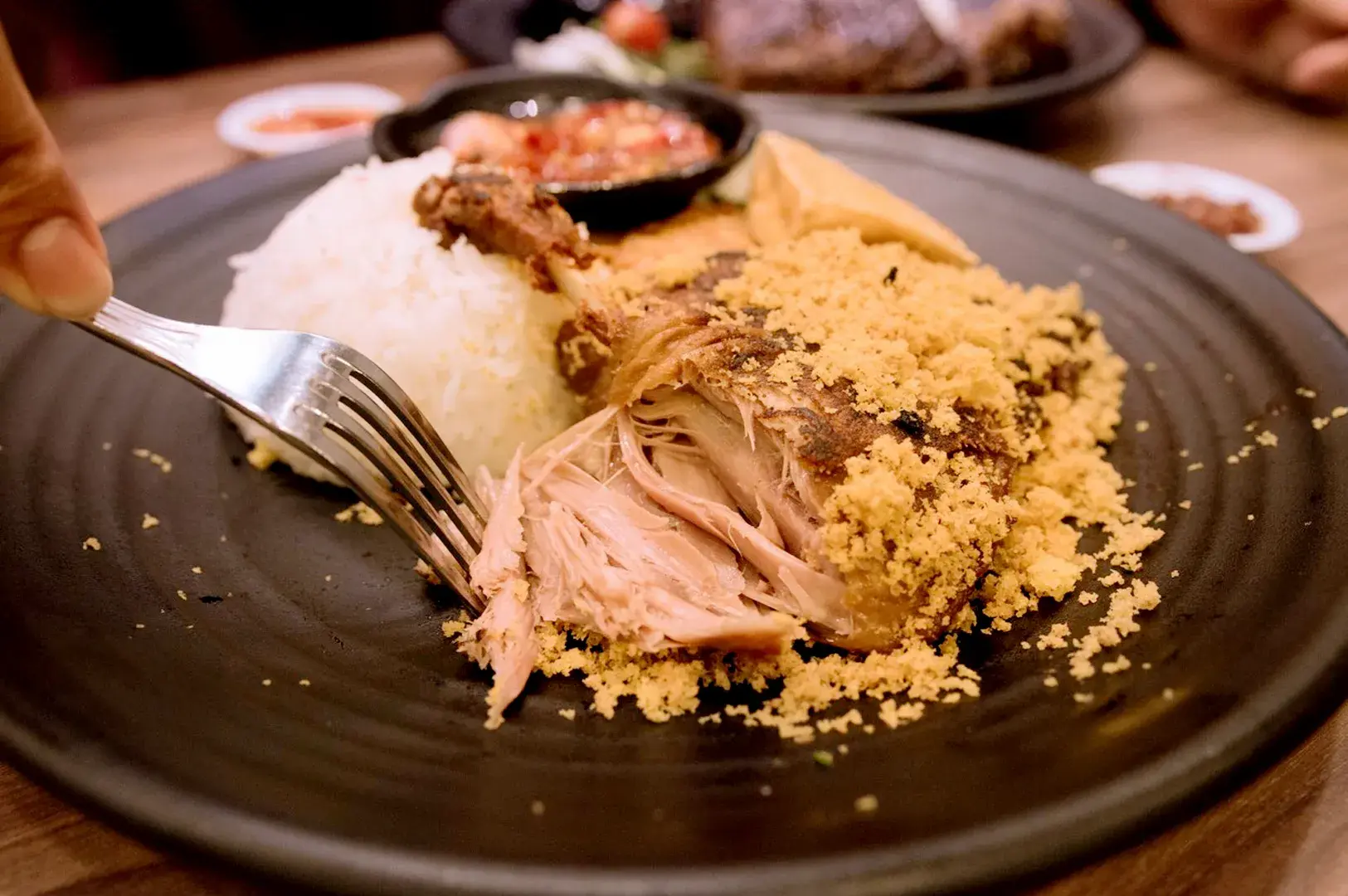
They also do a Bebek Goreng Remuk + Nasi ($10.90), a smashed fried chicken style dish where the duck is shredded before frying. The menu warns it may come with “a little bit of soft bone,” and I appreciated that honesty. This is not refined, boneless eating. This is a famous street food experience, a fresh and exciting concept for those who want the full bebek goreng experience.
If that idea bothers you, the remuk isn’t for you. If it sounds like the good part, you already know.
For those interested, Eat Drink Asia features a detailed nasi goreng recipe that captures the authentic flavors of this beloved Indonesian fried rice dish.
Sambal, the Second Main Character: Spice Levels and Signature Original Chili
I want to be clear that the chili here is not a garnish. It’s an argument.
The sambal comes in a range:
- Sweet chili sauce
- Green sambal
- Belacan chili
- Sangan
- Signature original chili (marked as the hottest)
I asked for the original, and I’ll be honest, it humbled me a little. It’s not the kind of heat that shows off. It builds. A spoonful smeared across the rice and the duck, and suddenly the whole plate changes temperature. The salt from the skin, the sweetness deep in the meat, the plain rice underneath — the sambal pulls all of it into focus.
Warm broth soothes. This chilli does the opposite. It sharpens.
If you’re spice-shy, ask for the sweet or green chili instead, or keep the original on the side and dip rather than drown. But if heat is what you came for, the original chili is the reason to be here. It’s the thing I’d come back for on its own.
The Rice and Sides: Fried Egg Tofu, Tahu Telur, and More
The rice, by comparison, is quiet. Plain, warm, a little soft — and it needs to be. It’s the calm surface the duck and sambal fight over.
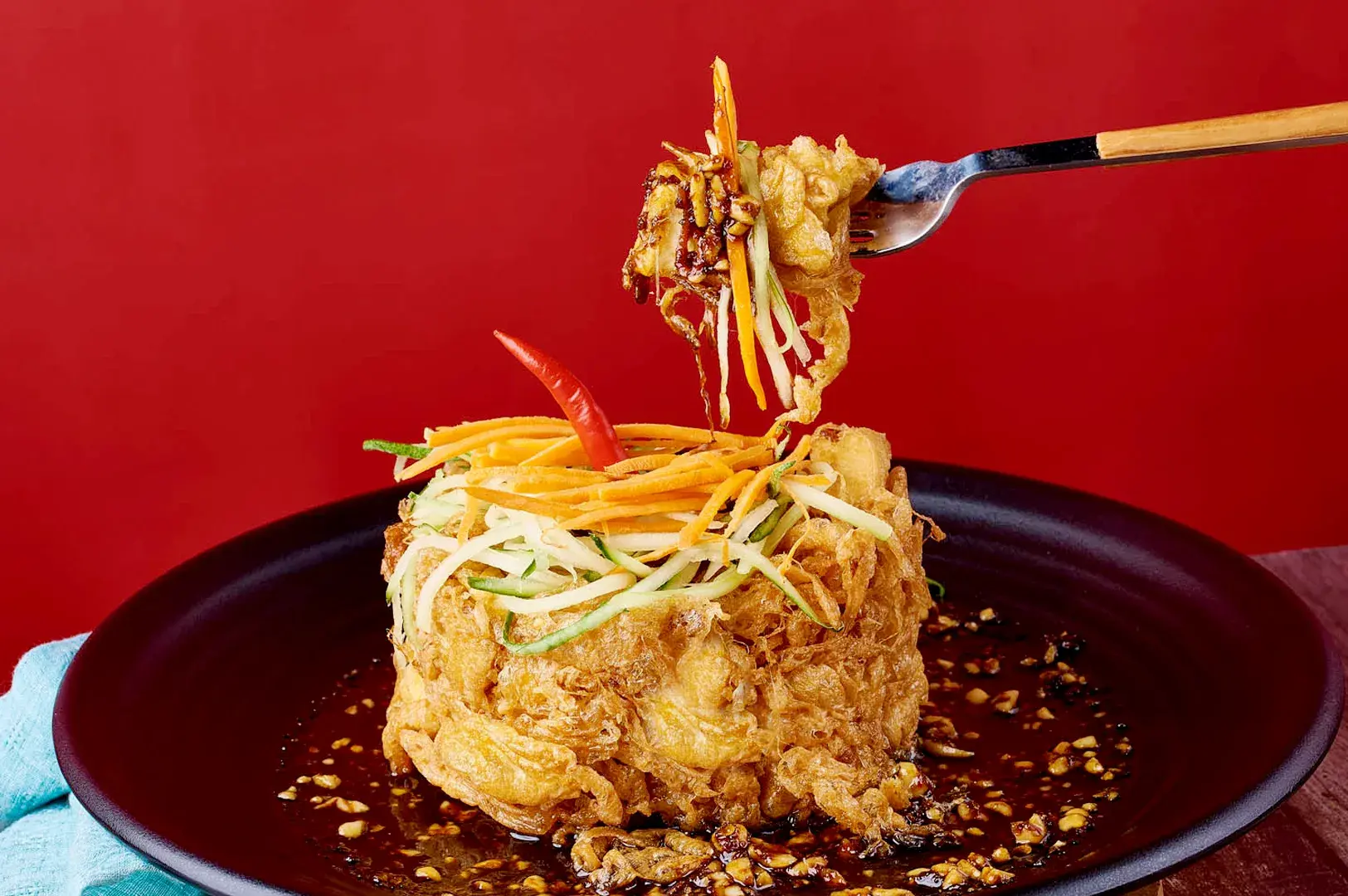
There’s also fried egg tofu (known locally as tahu telur) and cubed tofu on the plate, topped with a spicy sweet sauce that balances the heat of the sambal. These sides, along with a small salad, sound like afterthoughts but aren’t. The cool crunch of the raw vegetables and the mild tofu give your mouth somewhere to rest between the heat and richness.
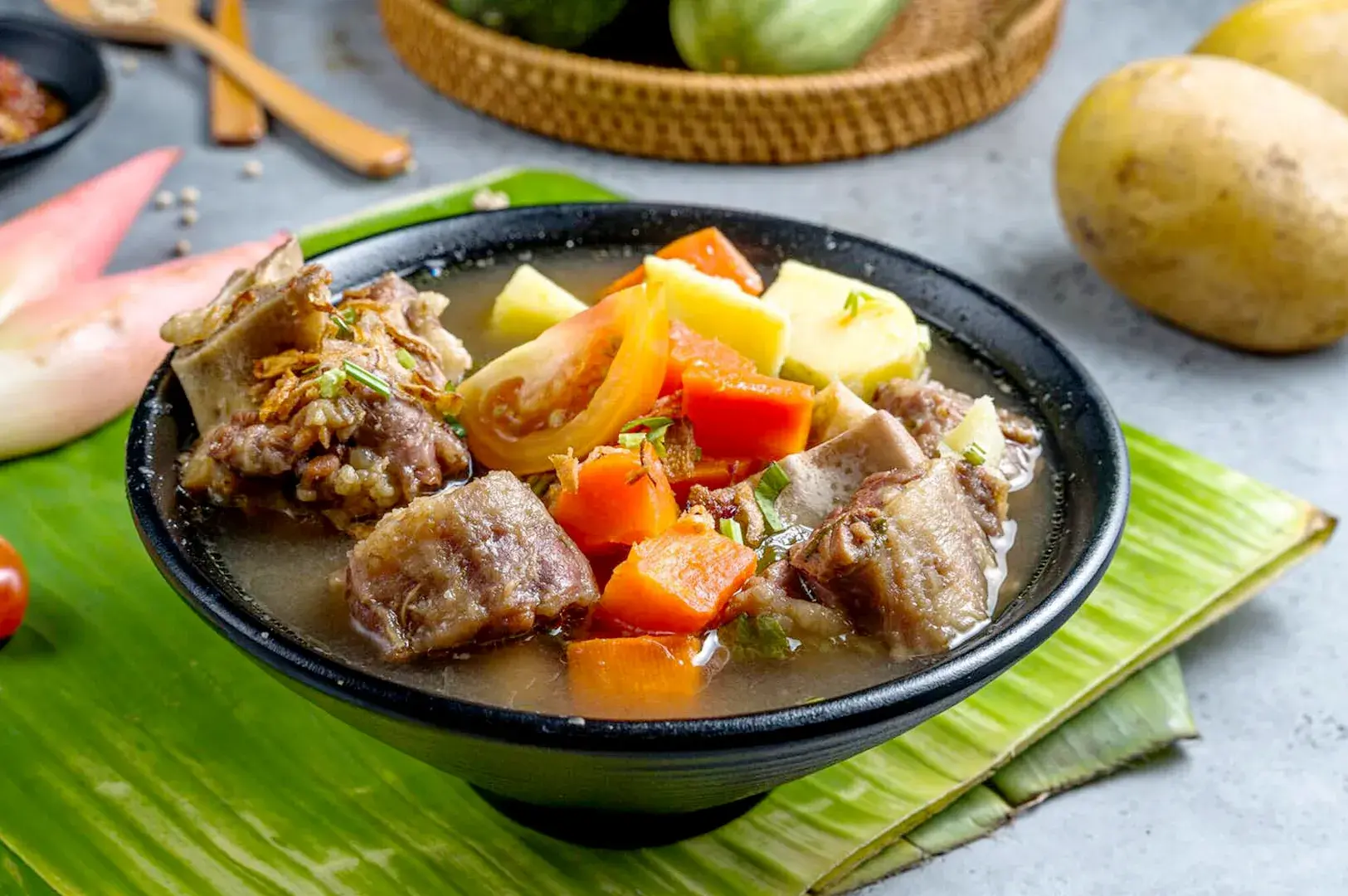
I ordered a hearty oxtail soup (Sop Buntut) ($9.90) too, partly for contrast. It’s a clear vegetable soup with beef bones simmered for hours to extract a rich and aromatic flavor, tender meat falling off the bone, gentle and rounded where the duck was jagged. After a few bites of sambal-slicked duck, the soup felt like an exhale. If you’re sharing a table, I’d get one to pass around. It’s the soft counterpoint the meal quietly needs.
Ordering, Waiting, Paying: A Humble Indonesian Restaurant with Affordable Prices
The restaurant runs daily, 11am to 9:30pm, and it’s a short walk from Orchard MRT. I noticed the service was efficient rather than warm. Nobody fussed over me. On a busy day, I’d expect it to feel even more hurried. But I didn’t come for tenderness from the staff. I came for it from the duck.
The practical side is easy to explain because there isn’t much to it. You queue at the counter, order, pay, and sit where they tell you. Then, in my experience, the food comes fast — which matters more than it sounds, because deep fried duck skin waits for no one.
Eat it Hot, Eat it Soon
The crackle fades if it sits. Which is also why I wouldn’t order this for delivery. I understand the temptation — it’s on the apps, it’s convenient. But the whole point of this meal is that first dry snap of the skin, and a plastic container full of steam will soften it into something ordinary. This is a dine-in dish. The crispness is the story.
Most rice sets sit around $8.90 to $10.90, so a plate and a drink keeps you close to ten dollars. Add a soup or a side and you’re looking at fifteen to twenty per person. Affordable for Orchard, though not what I’d call cheap once the table fills up.
Who Should Sit Down Here
Some meals make you reach for your phone. This one made me reach for more rice.
Bebek Goreng Pak Ndut isn’t trying to be pretty.
- The plate looks rough.
- The room is loud.
- The bones are real.
- The oil is real.
- The chilli genuinely burns..
If you want quiet, refined dining, this isn’t it. If you want boneless meat, gentle spice, low oil, or a calm table, you’ll be uncomfortable here in more ways than one. The bebek goreng pak ndut lucky plaza experience is deliberately unpolished, and that’s the point of it.

Noodle Masterpieces: Celebrating the Craft
Eat Drink Asia Team | April 24, 2026
Noodles have a timeless place in the world of food, and Taste Our Traditions can attest that only few dishes are as universally loved. What makes a bowl of noodles truly stand out is not just the ingredients, but the artistry and skill behind their creation. Noodle-making is an ancient craft that demands patience, precision,…

Charcoal Smoke and Yakitori Evenings in Osaka
Eda Wong | April 24, 2026
The first thing I noticed was the smoke. It didn’t rise all at once, but in thin, steady ribbons that curled upward from a narrow grill set just inches from the counter. The scent came first, warm and unmistakable, a mix of rendered chicken fat and binchōtan charcoal, clean but deeply present. Inside the small…
-
Cracking the Code of Telur Thai: Inside Egg Thai West Mall, a Kitchen That Tells a Story
Dio Asahi | April 23, 2026
I visited on a Tuesday around 7pm, completely exhausted from a long day of meetings and staring at screens. I wasn’t looking for a fancy culinary journey or a trend-setting dining experience. Honestly, I just wanted a quick, comforting meal that would hit the spot without emptying my wallet. That specific craving led me to…

Sanook Kitchen’s Thai Omelette Rice: A Heartland Answer to Singapore’s Thai Food Saturation
Eda Wong | April 21, 2026
If you live in Singapore, you know that finding Thai food is about as difficult as finding a humid day. We are spoiled for choice. From gritty hawker stalls serving fiery basil pork to upscale restaurants where a bowl of tom yum costs more than a taxi ride, the options are endless. But sometimes, you…
-
The Golden Fold: How Thailand’s Street-Side Omelette Became a Morning Ritual
Dio Asahi | April 18, 2026
Dawn breaks over Bangkok with a familiar symphony. Before the intense heat settles and the traffic swells into a steady roar, the city streets belong to the food vendors. Amid the clatter of metal tools and the hum of early commuters, one sound stands out: the furious, bubbling sizzle of eggs hitting smoking-hot oil. This…

Lesson I Didn’t Expect: How Fourgather’s Easy Asian Recipes Taught Me to Cook at Home
Eda Wong | April 16, 2026
For the longest time, I was convinced that cooking authentic Thai food at home was out of my league. I imagined complex pastes, hours of simmering, and a mountain of ingredients I couldn’t pronounce. I was happy to leave it to the experts. But a casual dinner at Fourgather, a stylish Thai eatery in Telok…
-
Between Aesthetic and Appetite: The Modern Food Blogger’s Dilemma
Eda Wong | April 15, 2026
In our first, would probably say, emotional editorial, I would like to open with how there is a particular kind of silence that happens before a dish is eaten now. Not the quiet of anticipation, but the pause of positioning, a hand hovering just above the plate, adjusting the angle of a bowl so the…
-
Chasing Flavor: How Fook Kin Taught Us to Cook Asian Cuisine Recipes the Right Way
Eat Drink Asia Team | April 14, 2026
For years, we told ourselves that truly great Asian cooking was a mystical art form, a craft reserved for seasoned hawker uncles or Michelin-starred chefs with decades of experience. Our own attempts at home often felt like pale imitations, lacking that deep, smoky flavour or that perfect textural contrast we craved. Then, we had dinner…
-
Connecting Generations: How Asiatic Food Builds Family Bonds Across Time
Dio Asahi | April 11, 2026
Whenever I smell toasted sesame oil hitting a hot wok, I am instantly transported back to a tiny, bustling kitchen from my childhood. The air would be thick with the aroma of ginger, garlic, and slow-simmering soy sauce. Before a single word was spoken, the meal was already telling a story. For many of us,…
-
A Comprehensive Resource for Oriental Foods Recipes for the Modern Home Cook
Eda Wong | April 10, 2026
For years, I thought cooking Asian food at home required something mystical. My stir-fries were soggy, lacking that smoky breath of the wok. My fried rice was inconsistent, sometimes clumpy, other times dry. My sauces tasted flat, missing the balance of savory, sweet, and tangy flavors I craved. I assumed restaurants had secrets I’d never…