The mist in Benguet settles low over the pine-studded ridges, carrying the sharp, woody scent of a wood fire. In a quiet backyard in La Trinidad, a small gathering watches as a live chicken is prepared for the pot. The rhythm of a short, thick stick striking the bird’s wings and neck echoes softly, a rhythmic thwack, thwack that feels unsettling to an outsider, yet intensely purposeful to those standing around the hearth. Smoke billows from the charred logs, stinging the eyes, while the mountain air bites at our collars. This is the prelude to a meal that demands you look at exactly where your food comes from, stripping away the sterile convenience of a supermarket aisle.
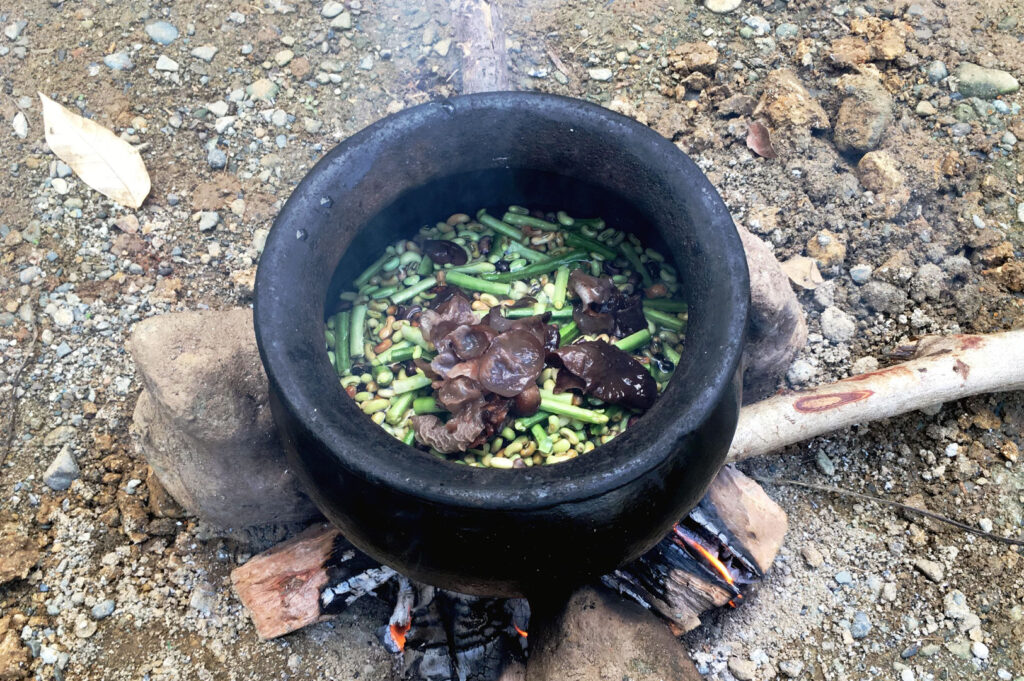
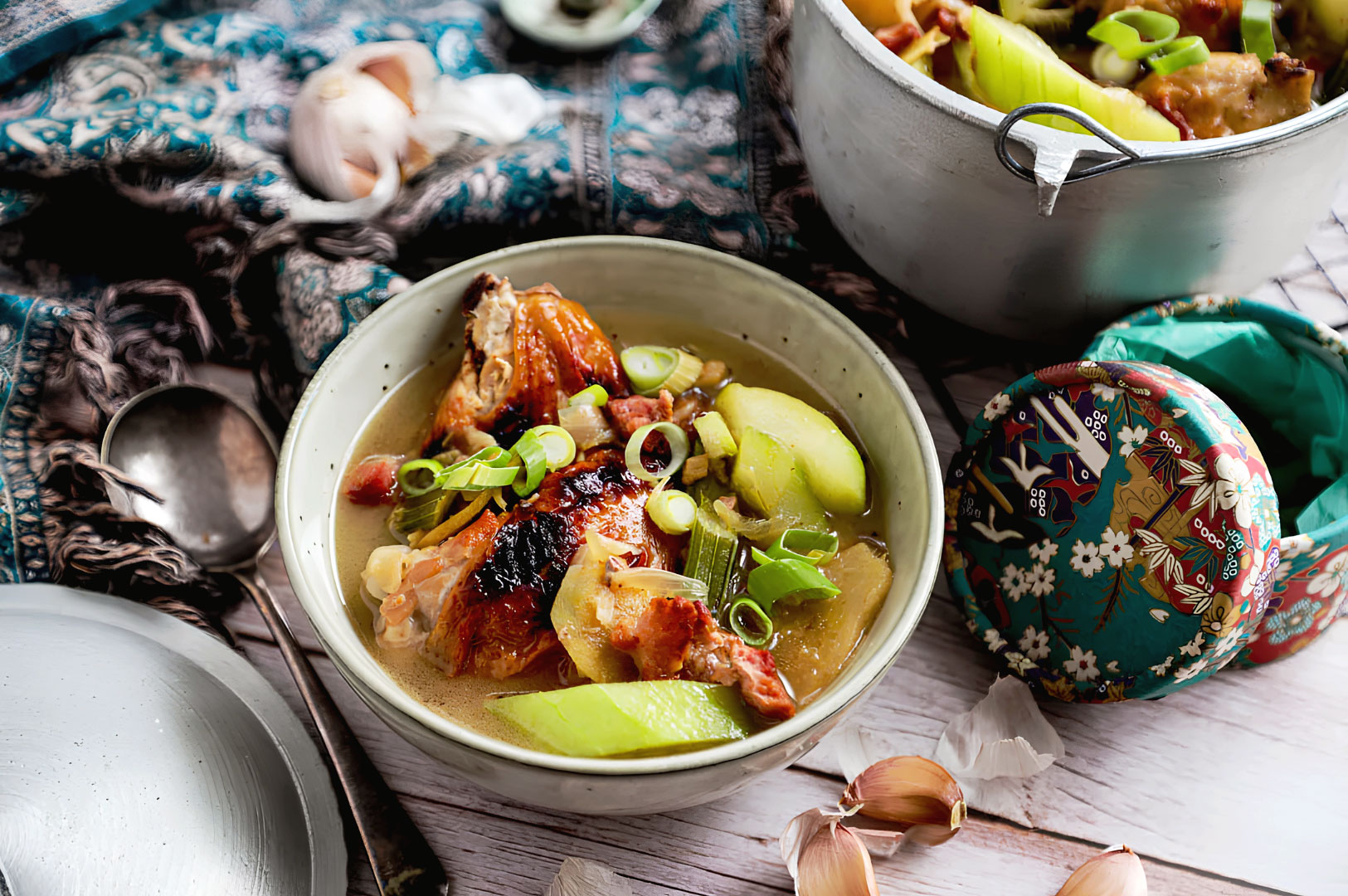
This is pinikpikan (pronounced pee-nik-pee-kan), the signature chicken soup of the Cordillera mountains in the northern Philippines. At its core, it is a broth made from a chicken that has been lightly beaten with a stick before being butchered. The striking causes blood to coagulate just beneath the skin, tenderising the meat and giving it a distinct, dark bruising that enriches the final soup. After the bird is prepared, its feathers are burned off over an open flame, lending the skin a smoky, charred flavour. It is then boiled slowly in a soot-stained pot with chunks of etag, a salt-cured, air-dried pork that acts as the broth’s salty, umami-laden spine. No elaborate spices are added; the flavour relies entirely on the quality of the meat, the wood smoke, and the slow, rolling boil.
For the Igorot people, pinikpikan is far more than a recipe; it is a vessel for communal care and spiritual consultation. Historically, the ritual of reading the chicken’s bile sac or liver before cooking dictated the timing of harvests, marriages, or travels. Today, even when stripped of formal divination, the act of making the broth remains an exercise in gathering. It signals a homecoming, a celebration, or an offering of comfort to a grieving neighbour. The soup is served in deep bowls, passed from hand to hand around a fire. It is a shared experience that reinforces social bonds, demanding that the community pause, gather the necessary firewood, and participate in the heavy, necessary work of feeding one another.
In an era where urban diners increasingly crave authentic, global culinary influences, pinikpikan presents a profound tension between aesthetic appetite and ethical reality. As with so much of what we explore at Eat Drink Asia, the dish asks us to look past trends and sit with the realities that make a tradition meaningful.
Modern food culture champions nose-to-tail eating, yet often recoils at the visceral reality of traditional butchery. This mountain broth challenges the sanitised, plastic-wrapped detachment of city dining. It forces a confrontation with the sacrifice required for sustenance. To eat this dish is to acknowledge the animal’s life, the specific hands that prepared it, and the deep cultural significance embedded in the preparation. It is a brilliant, uncompromising celebration of flavours born from necessity and respect, rather than industrial efficiency.
Holding a warm bowl of the dark, smoky broth, the cold mountain wind feels suddenly manageable. The soup tastes of salt, pine smoke, and survival. It is a quiet reminder that the most sustaining meals are rarely the easiest to witness, but they are often the most honest.

Pattaya Garden Restaurant and the Thai Meal That Knows How to Feed a Group
Eat Drink Asia Team | September 3, 2026
The rice came down first. A plain bowl, warm and steaming, set in the middle of the table before anything else. Then the green curry, in a bowl wide enough for four spoons to reach at once. And within a minute the table stopped being a set of individual meals and became one shared thing,…
-
At Keria Japanese Restaurant, the Meal Begins Before the First Bite
Dio Asahi | September 3, 2026
By Dio Asahi for Eat Drink Asia. The lift opens onto a corridor leading to the famed and hidden Cuppage Plaza food, and the building’s age shows in the flickering fluorescent light and the smell of old carpet. Then a sliding door pulls back, and Keria Japanese Restaurant asks you to slow down. Inside, it…
-
The Round Kaya Bun at Chin Mee Chin Confectionery, and the Mornings It Keeps
Eda Wong | September 2, 2026
By Eda Wong for Eat Drink Asia. It’s not quite eight, and the pastel-blue shophouse is already awake. Kopi cups clink against saucers. A ceiling fan turns slow overhead. Someone folds a newspaper at a marble-topped table, and the man behind the counter moves without hurry, sliding buns across in a rhythm he’s clearly done…
-
Nana Original Thai Food and the Thai Meal That Keeps Changing Its Accent
Eda Wong | September 1, 2026
The tom yum arrived first, and the first spoonful hit sour and hot at once, lime and chilli chasing each other down the throat. This classic Thai dish features a spicy sauce and aromatic herbs that awaken the taste buds straight away, setting the stage with its bold flavors. Then the pineapple rice came, sweet…
-
Pad Thai Recipe for People Who Know the Noodles Can’t Be an Afterthought
Dio Asahi | August 29, 2026
The first time I made Pad Thai, I ruined it before the wok was even hot. I’d left the noodles soaking while I answered a phone call. Ten minutes turned into forty. By the time I drained them, they were already soft, already surrendered. Everything I did in the pan after that was damage control….
-
Best Japanese Restaurant Singapore: Places That Nail the “First Bite”
Eat Drink Asia Team | August 27, 2026
I built this list around a very specific feeling: that first bite where the room goes quiet for a second. I’ve tried enough Japanese restaurants in Singapore over the years to know that “best” does not always mean the most expensive, the rarest, or the hardest to book. Sometimes it is the warmth of the…
-
Not Just Seafood: How Araya Shouten Keeps Japanese Fishing Culture Alive in Singapore
Eat Drink Asia Team | August 26, 2026
Japanese cuisine has long been admired for its attention to seasonality, precision, and respect for ingredients. However, behind every piece of sashimi or carefully prepared seafood dish lies a story that begins far away from the dining table, often with fishermen, coastal communities, and generations of knowledge passed down through time. At Araya Shouten, seafood…
-
The Ginger Shoyu Ramen at Ramen Soshiji, Where Orchard Goes Quiet
Dio Asahi | August 26, 2026
By Dio Asahi for Eat Drink Asia. The lift opens on the third floor of Orchard Plaza, and for a second I don’t know which way to turn. The corridor is dim and still, the kind of quiet that feels almost accidental in this part of town. A few doors down, an unmarked entrance. Inside,…
-
Indo Rasa Singapore and the Nasi Goreng That Measures a Kitchen’s Confidence
Eat Drink Asia Team | August 25, 2026
There’s a dish I order when I want to know a kitchen quickly. Not the specialty. Not the thing the menu is proud of. I order the fried rice. Because nasi goreng has nowhere to hide. It’s rice, chilli, chicken, egg, a few crackers, some cucumber. Everyone thinks they can make it. Most people can….
-
Bebek Goreng Pak Ndut and the Fried Duck That Makes Nasi Goreng Feel Too Polite
Eda Wong | August 22, 2026
The duck arrived and made a sound before I’d even touched it. Not the plate, the skin. When my fork pressed against it, there was a small, dry crackle, the kind you feel in your fingers before you hear it. That’s when I understood I wasn’t eating a soft meal. This was something with edges….