The mist in Benguet settles low over the pine-studded ridges, carrying the sharp, woody scent of a wood fire. In a quiet backyard in La Trinidad, a small gathering watches as a live chicken is prepared for the pot. The rhythm of a short, thick stick striking the bird’s wings and neck echoes softly, a rhythmic thwack, thwack that feels unsettling to an outsider, yet intensely purposeful to those standing around the hearth. Smoke billows from the charred logs, stinging the eyes, while the mountain air bites at our collars. This is the prelude to a meal that demands you look at exactly where your food comes from, stripping away the sterile convenience of a supermarket aisle.
This is pinikpikan (pronounced pee-nik-pee-kan), the signature chicken soup of the Cordillera mountains in the northern Philippines. At its core, it is a broth made from a chicken that has been lightly beaten with a stick before being butchered. The striking causes blood to coagulate just beneath the skin, tenderising the meat and giving it a distinct, dark bruising that enriches the final soup. After the bird is prepared, its feathers are burned off over an open flame, lending the skin a smoky, charred flavour. It is then boiled slowly in a soot-stained pot with chunks of etag, a salt-cured, air-dried pork that acts as the broth’s salty, umami-laden spine. No elaborate spices are added; the flavour relies entirely on the quality of the meat, the wood smoke, and the slow, rolling boil.
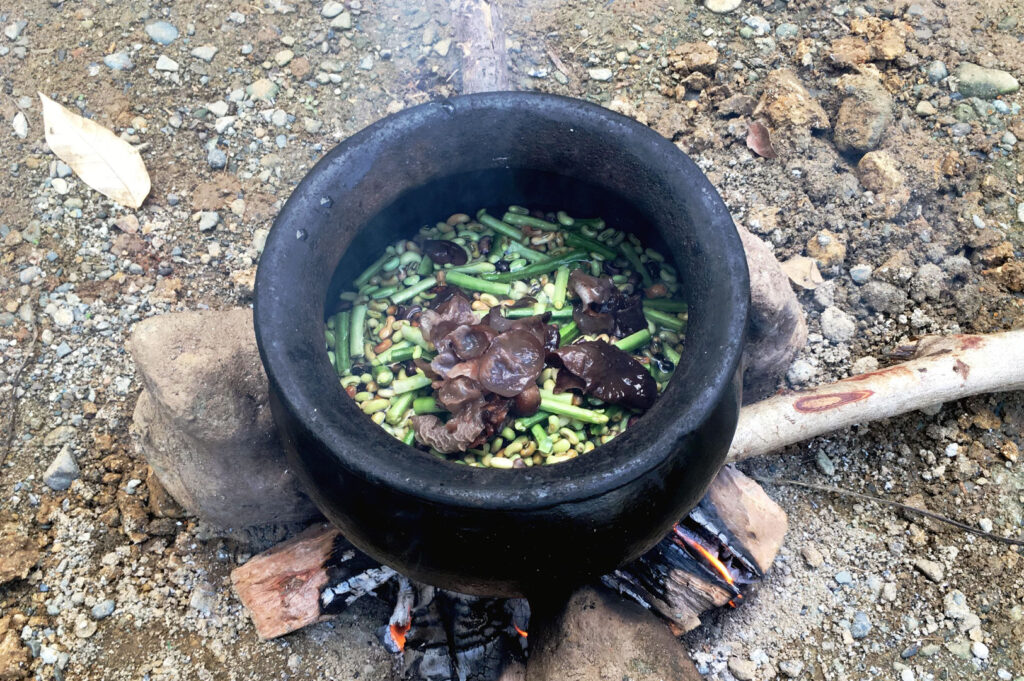
For the Igorot people, pinikpikan is far more than a recipe; it is a vessel for communal care and spiritual consultation. Historically, the ritual of reading the chicken’s bile sac or liver before cooking dictated the timing of harvests, marriages, or travels. Today, even when stripped of formal divination, the act of making the broth remains an exercise in gathering. It signals a homecoming, a celebration, or an offering of comfort to a grieving neighbour. The soup is served in deep bowls, passed from hand to hand around a fire. It is a shared experience that reinforces social bonds, demanding that the community pause, gather the necessary firewood, and participate in the heavy, necessary work of feeding one another.
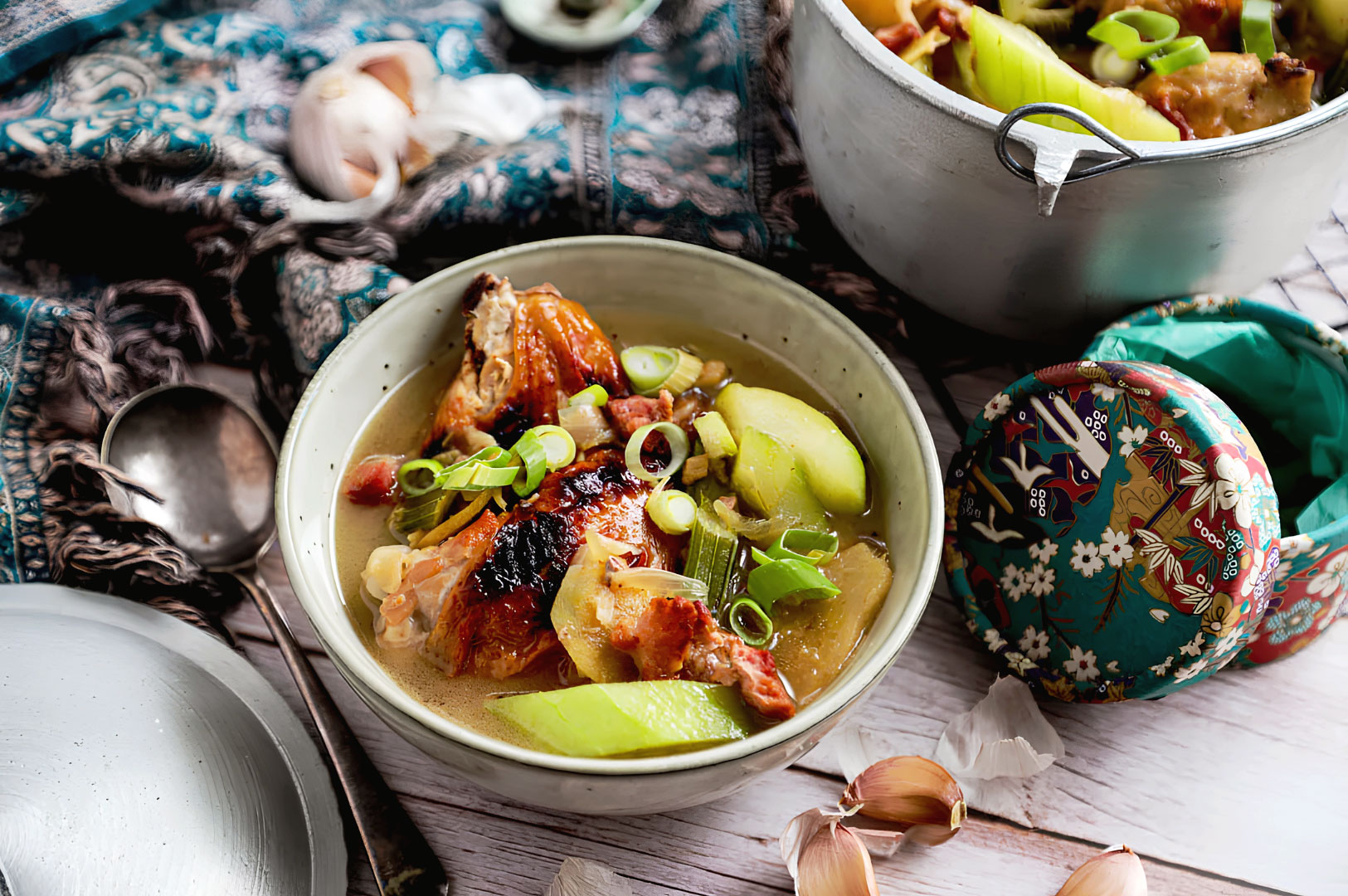
In an era where urban diners increasingly crave authentic, global culinary influences, pinikpikan presents a profound tension between aesthetic appetite and ethical reality. As with so much of what we explore at Eat Drink Asia, the dish asks us to look past trends and sit with the realities that make a tradition meaningful.
Modern food culture champions nose-to-tail eating, yet often recoils at the visceral reality of traditional butchery. This mountain broth challenges the sanitised, plastic-wrapped detachment of city dining. It forces a confrontation with the sacrifice required for sustenance. To eat this dish is to acknowledge the animal’s life, the specific hands that prepared it, and the deep cultural significance embedded in the preparation. It is a brilliant, uncompromising celebration of flavours born from necessity and respect, rather than industrial efficiency.
Holding a warm bowl of the dark, smoky broth, the cold mountain wind feels suddenly manageable. The soup tastes of salt, pine smoke, and survival. It is a quiet reminder that the most sustaining meals are rarely the easiest to witness, but they are often the most honest.

The Malayan Council, Reviewed: Local Food in Malaysia, Plated Like a Memory
Eat Drink Asia Team | June 11, 2026
Our Eat Drink Asia team spends a lot of time debating what makes a truly unforgettable meal. The team has previously published articles exploring the redefinition of comfort food. That is exactly what led me to The Malayan Council at 71 Bussorah Street. I visited on a Friday around 7:30 pm, just as the weekend…

Sushi in Singapore: Why There Is a Style for Every Budget
Eda Wong | June 11, 2026
Few Japanese dishes have travelled as successfully across Asia as sushi. What began as a culinary tradition deeply rooted in Japan has evolved into something remarkably diverse in Singapore. Today, sushi in Singapore can mean many different things. It can be a quick lunch grabbed from a conveyor belt restaurant, a carefully curated omakase meal…
-
The Quiet Pull of Lahpet in Myanmar’s Tea Leaf Salad
Dio Asahi | June 10, 2026
The afternoon humidity presses against the open-air teahouse in downtown Yangon, where the sharp clatter of a silver spoon against ceramic cuts through the low hum of conversation. A small plate sits in the centre of a low plastic table, holding a dense, dark green cluster that smells faintly of damp earth and sharp lime….
-
Dining at Suntec: The Restaurants That Feel Like Different Cities in One Mall
Eda Wong | June 9, 2026
Over the past six months, I’ve navigated the sprawling, sometimes disorientating corridors of Suntec City more times than I can count. What started as a simple quest to find decent spots for post-meeting lunches quickly turned into a genuine culinary journey. I have tried over a dozen venues within this massive complex, and I’ve found…
-
PappaRich SG and the Comfort of Malaysian Staple Food: A Restaurant Review in Familiar Flavours
Dio Asahi | June 6, 2026
There is a very specific kind of exhaustion that hits you right before a flight or just after you land. You are dragging your suitcase, staring blankly at the departure boards, and suddenly, you realize you are starving. But you don’t want just any food. You want something warm, familiar, and deeply comforting. I felt…
-
Sri Lanka’s Ambul Thiyal and the Sourness of Goraka
Eda Wong | June 5, 2026
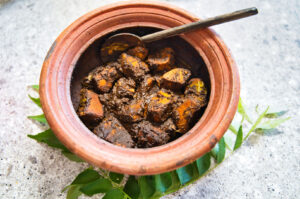
In the open-air kitchen of a coastal home in southern Sri Lanka, a low fire crackles under a wide, unglazed clay pot. The air is thick with the scent of roasted black pepper and something deeply, aggressively tart. A wooden spoon scrapes the bottom of the pot, turning cubes of firm yellowfin tuna until they…
-
Traditional Malaysian Foods Aren’t a Museum: They’re a Living Argument at the Table
Eda Wong | June 4, 2026
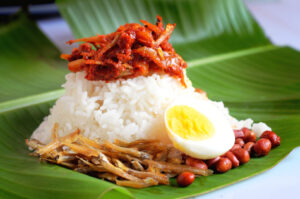
When I first really started digging into traditional Malaysian food, I made a classic rookie mistake. I was sitting at a crowded kopitiam in Kuala Lumpur, looking at a plate of nasi lemak, and I thought I understood exactly what it was supposed to be. I thought it was a fixed, rigid recipe, a museum…
-
In Gifu, Hoba Miso Warms Slowly Over Magnolia Leaves
Dio Asahi | June 3, 2026
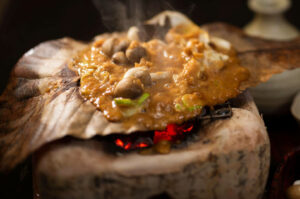
Frost clings to the wooden window frames in the highlands of Gifu. Inside, the air is thick with the scent of woodsmoke and fermented soybeans. On the table, a small ceramic charcoal grill known as a shichirin radiates a gentle, localized heat. Resting directly above the glowing embers is a large, brittle brown leaf holding…
-
The Stir Fried Egg Plant That Taught Me Restraint at Si Chuan Dou Hua Restaurant
Eat Drink Asia Team | June 2, 2026
I’ve always had a love-hate relationship with Sichuan food. Usually, you walk into a spot, order your food, and spend the rest of the night sweating through your shirt, chugging ice water, and wondering why you did this to yourself. But when I visited Si Chuan Dou Hua Restaurant on a Tuesday around 7 pm,…
-
What the Wok Is Really Doing to the Vegetable: The Question Behind Every ‘Brinjal Recipe Chinese Style’
Dio Asahi | May 30, 2026
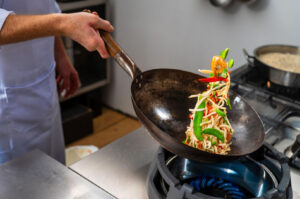
When I first tried cooking brinjal at home, I was completely convinced that all I needed was a hot pan, some oil, and a good recipe. I chopped the vibrant purple vegetable, threw it into a standard frying pan with a generous pour of oil, and waited for the magic to happen. Instead of the…