The December wind cuts sharply through the narrow alleys of Temple Street, but the ambient heat from the glowing charcoal stoves pushes the chill away. A cook stands before a long row of blackened clay pots, working with a rhythmic, almost meditative focus. Plumes of white steam rise into the night air, carrying the heavy, sweet aroma of cured pork fat, dark soy sauce, and wood smoke. As the cook periodically lifts the lids, a fierce, crackling hiss erupts from the porous clay. They are not just cooking rice; they are carefully managing a delicate, high-stakes balance of heat and time, listening closely to the sizzle to know exactly when the moisture has vanished.
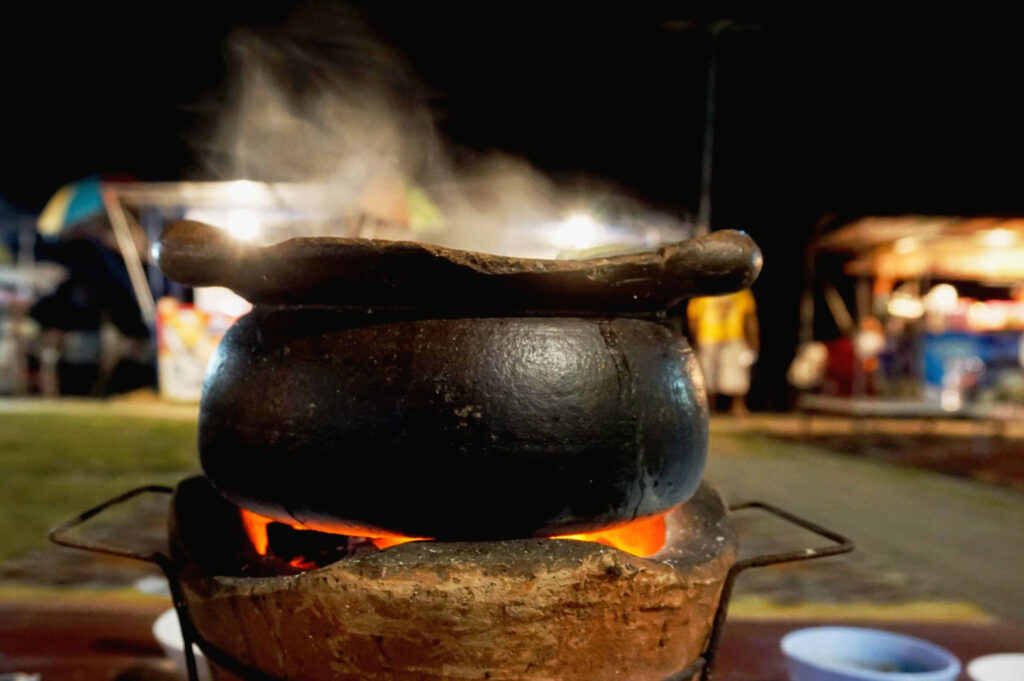
This is bo zai fan, Hong Kong’s traditional winter clay pot rice. While the surface is adorned with rich ingredients—waxed duck, Chinese sausage, or marinated spare ribs—the true soul of the dish lies buried at the bottom. The ultimate prize is fan zeu, the golden, scorched rice crust that forms where the grains meet the intensely hot clay. Creating this crust is an exacting craft. As the rice absorbs the savoury drippings from the meat above, the cook must continually rotate the heavy, unglazed pot over the open flame. The goal is to aggressively toast the rice against the curved walls without letting it cross the line into bitter ash. It yields a thin, glass-like layer of caramelised starch that snaps sharply between your teeth.
In a city defined by its frantic pace, the arrival of clay pot rice season signals a collective, deliberate pause. It is a quintessential winter ritual, a shared experience where diners huddle around wobbly folding tables in thick coats, waiting thirty minutes or more for a single bowl. Eating it requires its own careful etiquette. You must first lift away the tender, sauce-soaked rice and meats, gently scraping the sides of the bowl to unearth the hidden crust. Sharing a pot with friends means negotiating who gets the largest shard of that intensely flavourful, crispy foundation. It is a celebration of flavours that turns a simple grain into a profound, warming comfort against the damp urban winter.
What makes the scorched crust so compelling today is its stubborn defiance of modern convenience. In a culinary landscape increasingly dominated by automated rice cookers and rapid food delivery, genuine fan zeu cannot be shortcut. It demands an open flame, a seasoned pot, and a cook willing to stand in the smoke, listening to the rice hiss. Electric cookers yield soft, predictable uniformity, but the clay pot offers a beautiful, calculated imperfection. It is a bold reminder that some of the most satisfying textures are born from the very edges of burning, requiring human intuition rather than a simple timer.
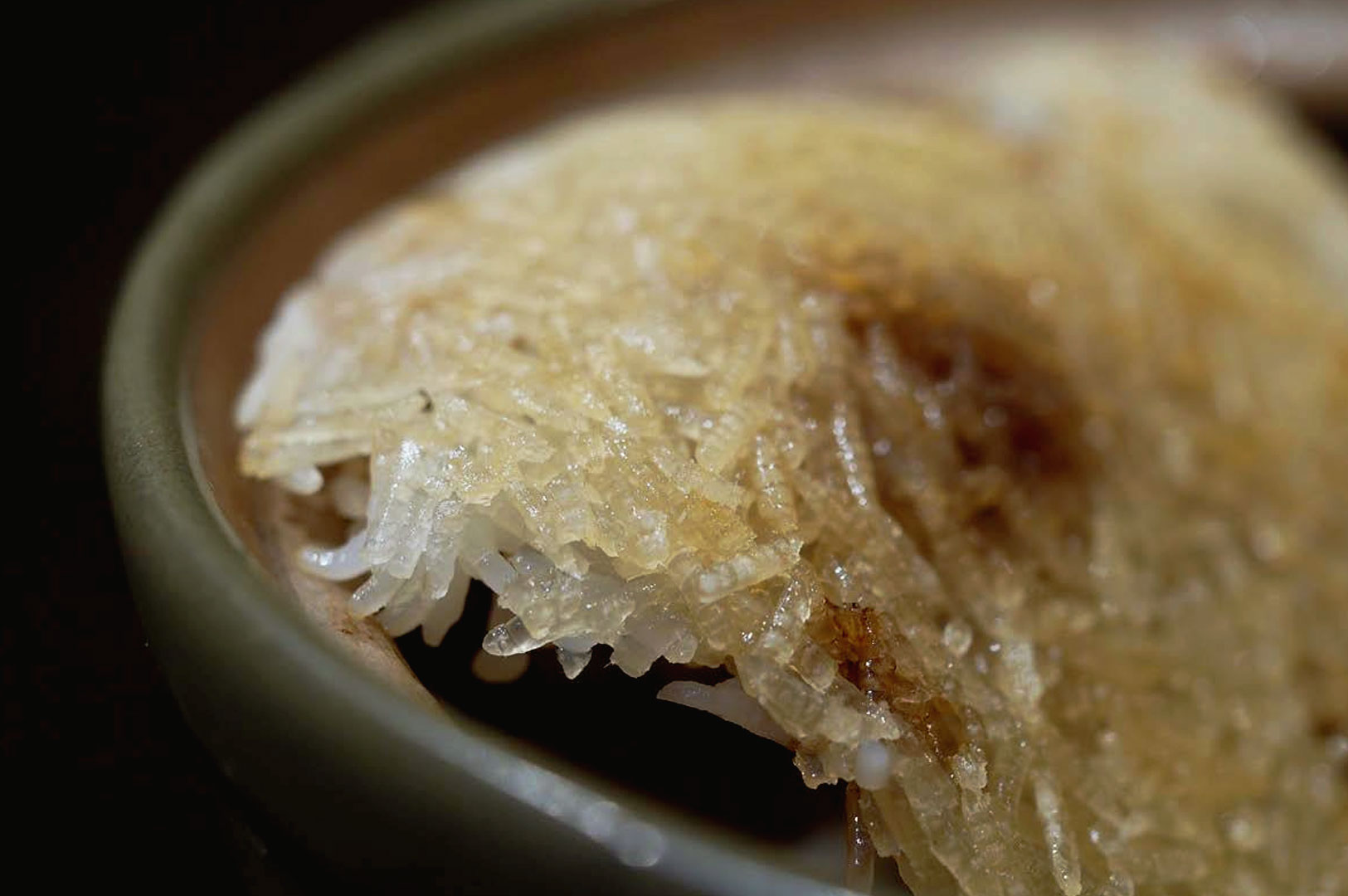
Prying the final piece of golden crust from the bottom of the cooling pot, the effort feels entirely justified. It tastes of roasted earth, rendered fat, and the specific, smoky chill of a Hong Kong winter. It is a quiet testament to the enduring value of patience.
For anyone chasing that same comfort at home, even the most searched-for Hainanese chicken rice cooking instructions can’t replace the practiced ear of a cook listening for the rice to hiss.

Famous Food in China Isn’t Loud: Din Tai Fung’s Dumplings and the Power of Precision
Dio Asahi | May 5, 2026
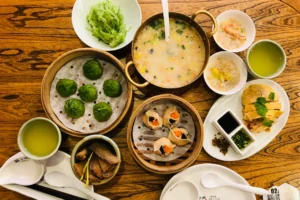
There is a common misconception that the most authentic culinary journeys involve loud, chaotic kitchens with massive wok flames and shouting chefs. I used to think the same thing until I started paying closer attention to the quieter corners of Asian cooking. I visited Din Tai Fung on a Tuesday around 2:30 pm, hoping to…
-
The Morning Steam of Baozi Along a Beijing Street
Eda Wong | May 2, 2026
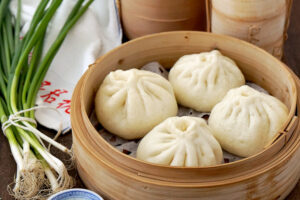
The first thing I noticed was the steam. It rose in soft, continuous bursts from stacked bamboo baskets, drifting into the cold Beijing morning like breath made visible. The vendor lifted each lid with practiced rhythm, a quick tilt, a release of heat, then the faint scent of yeast, pork, and warm flour rolling outward….
-
Moo Ping and the Structure of Thai Grilled Street Meat
Dio Asahi | April 30, 2026
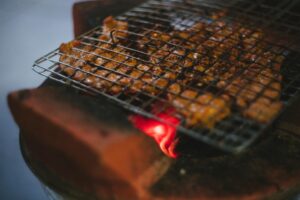
The first thing I noticed was the smoke, thin, controlled, rising steadily from a charcoal grill along a Bangkok street. Skewers of pork turned in a quiet rhythm, fat dripping and hissing as it met the heat. The air carried layers of scent: sweet palm sugar, garlic, and a faint fermented depth beneath it. I…
-
Where Kuala Lumpur Actually Begins: Reading the City Through Its Food
Eat Drink Asia Team | April 30, 2026
There are cities you can understand through maps, and then there are cities like Kuala Lumpur that only begin to make sense when you follow what people eat. Not what is recommended or ranked, but what is repeated. The same stall visited every week, the same dish ordered without hesitation, the same flavours that feel…
-
The Silent Language of the Table: How Traditional Food in China Speaks Through Generations
Eda Wong | April 28, 2026
When I first tried to navigate a traditional Cantonese family dinner, I made a spectacularly embarrassing mistake. I sat down, looked at the sprawling, beautifully written menu, and confidently ordered an individual plate of sweet and sour pork just for myself. The table went completely quiet. My host gently nudged the menu back towards the…

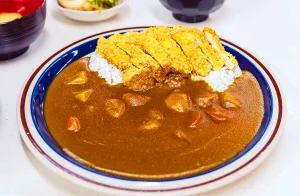
The Golden Roux Revolution: Best Japanese Curry Singapore Spots That Redefine Comfort Food
Eat Drink Asia Team | April 25, 2026
April 25, 2026 | Eat Drink Asia Team Last updated: October 15, 2026 We have always believed that a brilliant plate of Japanese curry is the ultimate culinary hug. Over the past eight months, we made it our personal mission to embark on a comprehensive curry journey across Singapore, hunting down the best Japanese curry…

Noodle Masterpieces: Celebrating the Craft
Eat Drink Asia Team | April 24, 2026
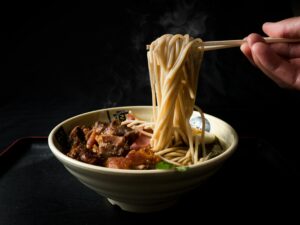
Noodles have a timeless place in the world of food, and Taste Our Traditions can attest that only few dishes are as universally loved. What makes a bowl of noodles truly stand out is not just the ingredients, but the artistry and skill behind their creation. Noodle-making is an ancient craft that demands patience, precision,…
-
Charcoal Smoke and Yakitori Evenings in Osaka
Eda Wong | April 24, 2026
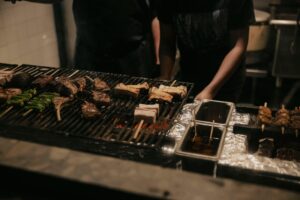
The first thing I noticed was the smoke. It didn’t rise all at once, but in thin, steady ribbons that curled upward from a narrow grill set just inches from the counter. The scent came first, warm and unmistakable, a mix of rendered chicken fat and binchōtan charcoal, clean but deeply present. Inside the small…
-
Cracking the Code of Telur Thai: Inside Egg Thai West Mall, a Kitchen That Tells a Story
Dio Asahi | April 23, 2026
I visited on a Tuesday around 7pm, completely exhausted from a long day of meetings and staring at screens. I wasn’t looking for a fancy culinary journey or a trend-setting dining experience. Honestly, I just wanted a quick, comforting meal that would hit the spot without emptying my wallet. That specific craving led me to…

Sanook Kitchen’s Thai Omelette Rice: A Heartland Answer to Singapore’s Thai Food Saturation
Eda Wong | April 21, 2026
If you live in Singapore, you know that finding Thai food is about as difficult as finding a humid day. We are spoiled for choice. From gritty hawker stalls serving fiery basil pork to upscale restaurants where a bowl of tom yum costs more than a taxi ride, the options are endless. But sometimes, you…