By Eda Wong for Eat Drink Asia.
Steam curls up from a tray in the back of the kitchen, and the whole room smells green. Pandan, crushed and knotted, pushed through wet cloth until the leaves give up their colour. An auntie leans over the tray with a spoon carved from coconut shell, dark and worn smooth at the edges from years of the same motion. She pours the custard slowly, tilting the spoon so the pale jade batter runs across the rice without breaking it. She doesn’t rush. The rice below has already set, packed tight and glossy. Her hand moves like she’s done this ten thousand times, because she has.
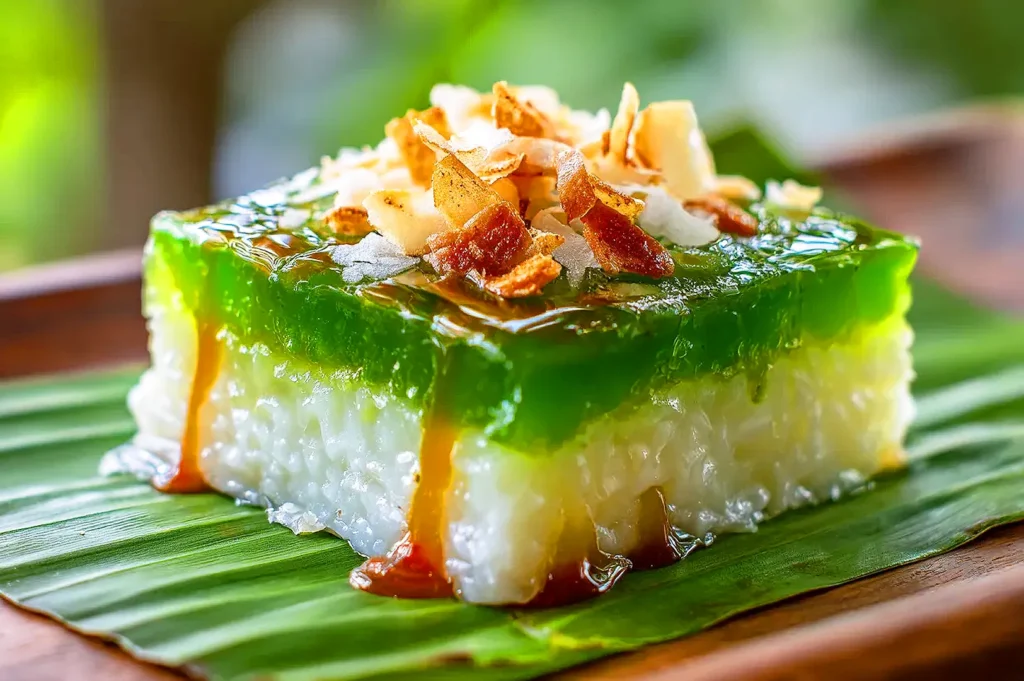
What she’s making is kueh salat, said roughly “kweh sah-lat,” a two-layered Peranakan steamed cake. The base is glutinous rice, cooked with coconut milk until each grain sits close against the next, firm enough to hold. On top goes the custard — pandan and coconut and egg, steamed until it just sets, soft but not loose. The colours matter: white rice below, that deep pandan green above.
The coconut spoon is the quiet hero here. Metal scrapes and cuts; a coconut-shell spoon is gentle. It lets the custard slide over the rice in thin, even layers, so the two halves meet cleanly instead of bleeding into each other. Pour too fast, or too hot, and the layers muddy. The custard has to go on warm and unhurried, one patient ladle at a time.
You learn this in a home kitchen, not a class.
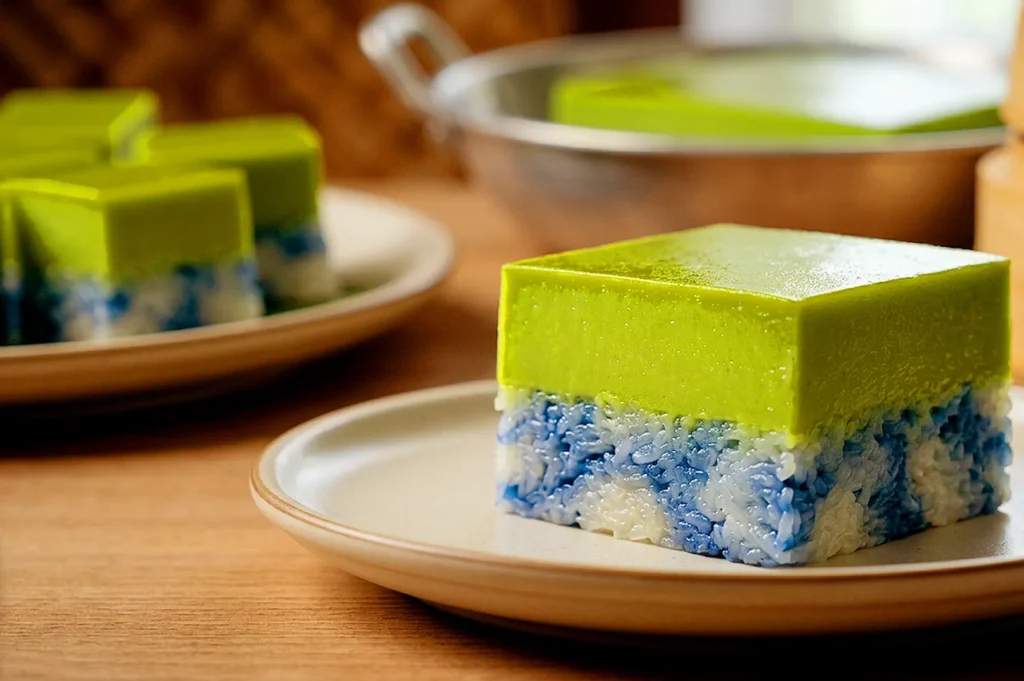
Kueh like this was made for occasions — weddings, Lunar New Year, prayers, the long afternoons before a gathering. In Peranakan households, it was the women who held this knowledge. Mothers and grandmothers and aunties, hands stained pandan-green, passing down not recipes on paper but the feel of a thing. How firm the rice should press. How the custard should wobble when it’s ready. Knowledge kept in muscle and memory, taught by standing beside someone at the stove until your hands knew it too.
There’s a shortcut now, and I understand why people reach for it. Premix packets, powdered pandan, custard that sets from a sachet and hot water. It saves an afternoon. It works, mostly.
If you’re curious, we wrote up a simple bandung drink recipe too — another bright, familiar shortcut from the same pantry of sweet comforts.
But the handmade custard layer is where kueh salat holds its soul. Real pandan, squeezed by hand. Coconut milk that turns the top rich instead of merely sweet. The spoon, tilting, laying it down slow. You can taste the difference between something poured with care and something stirred from a box. One tastes like effort. The other tastes like Tuesday.
The auntie sets the tray back into the steamer and wipes the coconut spoon on her apron. She’ll use it again tomorrow, and the day after.
Some tools outlast the hands that hold them. This one carries every layer it has ever poured.

Noodle Masterpieces: Celebrating the Craft
Eat Drink Asia Team | April 24, 2026
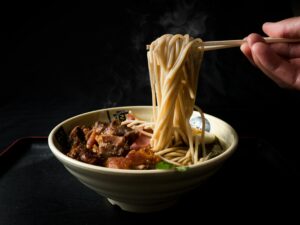
Noodles have a timeless place in the world of food, and Taste Our Traditions can attest that only few dishes are as universally loved. What makes a bowl of noodles truly stand out is not just the ingredients, but the artistry and skill behind their creation. Noodle-making is an ancient craft that demands patience, precision,…

Charcoal Smoke and Yakitori Evenings in Osaka
Eda Wong | April 24, 2026
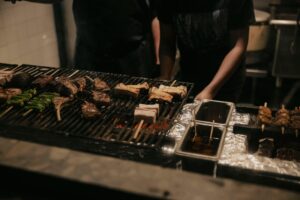
The first thing I noticed was the smoke. It didn’t rise all at once, but in thin, steady ribbons that curled upward from a narrow grill set just inches from the counter. The scent came first, warm and unmistakable, a mix of rendered chicken fat and binchōtan charcoal, clean but deeply present. Inside the small…
-
Cracking the Code of Telur Thai: Inside Egg Thai West Mall, a Kitchen That Tells a Story
Dio Asahi | April 23, 2026
I visited on a Tuesday around 7pm, completely exhausted from a long day of meetings and staring at screens. I wasn’t looking for a fancy culinary journey or a trend-setting dining experience. Honestly, I just wanted a quick, comforting meal that would hit the spot without emptying my wallet. That specific craving led me to…

Sanook Kitchen’s Thai Omelette Rice: A Heartland Answer to Singapore’s Thai Food Saturation
Eda Wong | April 21, 2026
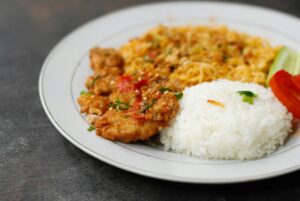
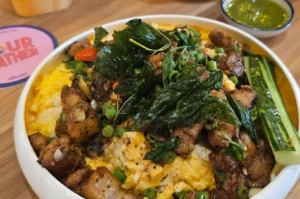
If you live in Singapore, you know that finding Thai food is about as difficult as finding a humid day. We are spoiled for choice. From gritty hawker stalls serving fiery basil pork to upscale restaurants where a bowl of tom yum costs more than a taxi ride, the options are endless. But sometimes, you…
-
The Golden Fold: How Thailand’s Street-Side Omelette Became a Morning Ritual
Dio Asahi | April 18, 2026
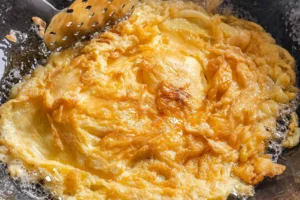
Dawn breaks over Bangkok with a familiar symphony. Before the intense heat settles and the traffic swells into a steady roar, the city streets belong to the food vendors. Amid the clatter of metal tools and the hum of early commuters, one sound stands out: the furious, bubbling sizzle of eggs hitting smoking-hot oil. This…

Lesson I Didn’t Expect: How Fourgather’s Easy Asian Recipes Taught Me to Cook at Home
Eda Wong | April 16, 2026
For the longest time, I was convinced that cooking authentic Thai food at home was out of my league. I imagined complex pastes, hours of simmering, and a mountain of ingredients I couldn’t pronounce. I was happy to leave it to the experts. But a casual dinner at Fourgather, a stylish Thai eatery in Telok…
-
Between Aesthetic and Appetite: The Modern Food Blogger’s Dilemma
Eda Wong | April 15, 2026
In our first, would probably say, emotional editorial, I would like to open with how there is a particular kind of silence that happens before a dish is eaten now. Not the quiet of anticipation, but the pause of positioning, a hand hovering just above the plate, adjusting the angle of a bowl so the…
-
Chasing Flavor: How Fook Kin Taught Us to Cook Asian Cuisine Recipes the Right Way
Eat Drink Asia Team | April 14, 2026
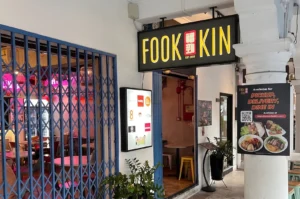
For years, we told ourselves that truly great Asian cooking was a mystical art form, a craft reserved for seasoned hawker uncles or Michelin-starred chefs with decades of experience. Our own attempts at home often felt like pale imitations, lacking that deep, smoky flavour or that perfect textural contrast we craved. Then, we had dinner…
-
Connecting Generations: How Asiatic Food Builds Family Bonds Across Time
Dio Asahi | April 11, 2026
Whenever I smell toasted sesame oil hitting a hot wok, I am instantly transported back to a tiny, bustling kitchen from my childhood. The air would be thick with the aroma of ginger, garlic, and slow-simmering soy sauce. Before a single word was spoken, the meal was already telling a story. For many of us,…
-
A Comprehensive Resource for Oriental Foods Recipes for the Modern Home Cook
Eda Wong | April 10, 2026
For years, I thought cooking Asian food at home required something mystical. My stir-fries were soggy, lacking that smoky breath of the wok. My fried rice was inconsistent, sometimes clumpy, other times dry. My sauces tasted flat, missing the balance of savory, sweet, and tangy flavors I craved. I assumed restaurants had secrets I’d never…