The pour I’d come back for doesn’t sit still. Selling Sunset arrives as pale beer beneath a cap of dark foam, which gradually settles through the glass. The colour changes while you wait for your food, turning a simple drink into something worth watching.
That small piece of theatre captures what makes Craft Beer by Ki-setsu interesting. The draught selection is short, but the bar has its own house blends and a Japanese kitchen serving more than standard drinking snacks. The question is whether those details justify a visit, especially when the bar opens for only two hours each evening. For me, Ki-setsu offers an alternative in craft beer Singapore as it is built around Japanese food pairings rather than an extensive tap list.
A Beer Bar Built Around Dinner
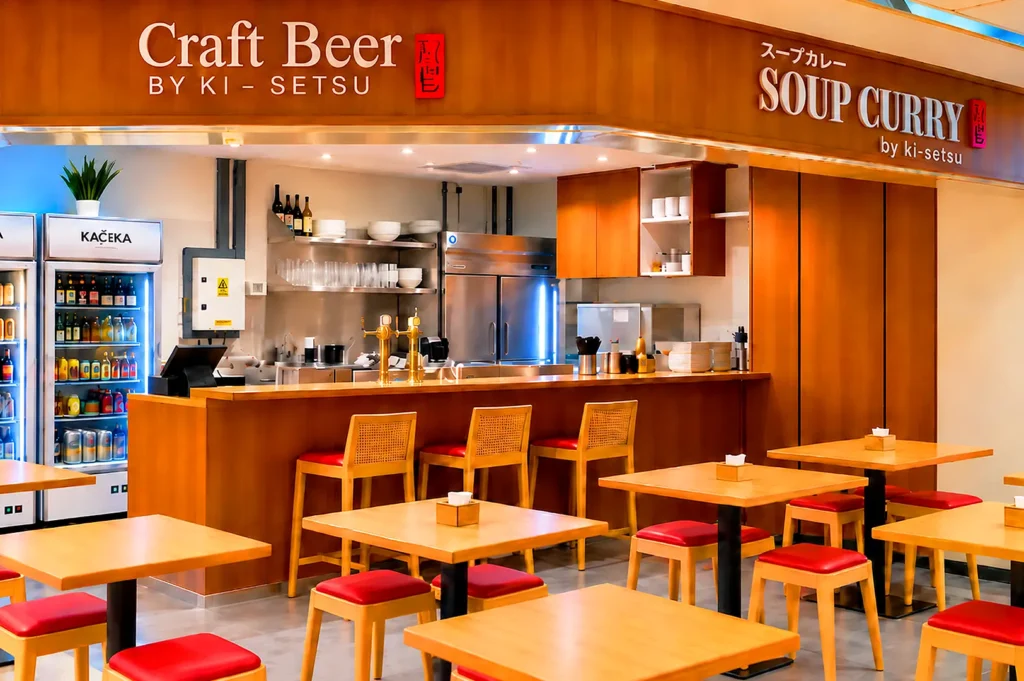
Craft Beer by Ki-setsu opened on 8 October 2026 at Fortune Centre, sharing a Japanese kitchen with Soup Curry by Ki-setsu. It belongs to the Ki-setsu Group, which also operates Sushi Masa, Tea Room, and Daizu. Rather than operating as a conventional taproom, it combines a focused beer programme with Hokkaido soup curry and izakaya dishes.
The Room and Drinks Selection
The space seats 50 people, plus two at the bar, making it reasonably accommodating for smaller groups. However, its walk-in-only policy means larger parties cannot guarantee a table. The arrangement feels more suited to a planned dinner with drinks than an extended drinking session.
Two Suntory draught lines produce four menu pours, supported by 14 bottled lines representing six countries by brand origin. The menu includes Singaporean and Vietnamese craft beers alongside alcohol-free options. It is a modest selection, but the suggested food pairings give the drinks programme a clearer purpose.
What We Would Order Again
Selling Sunset: The House Pour Worth Watching
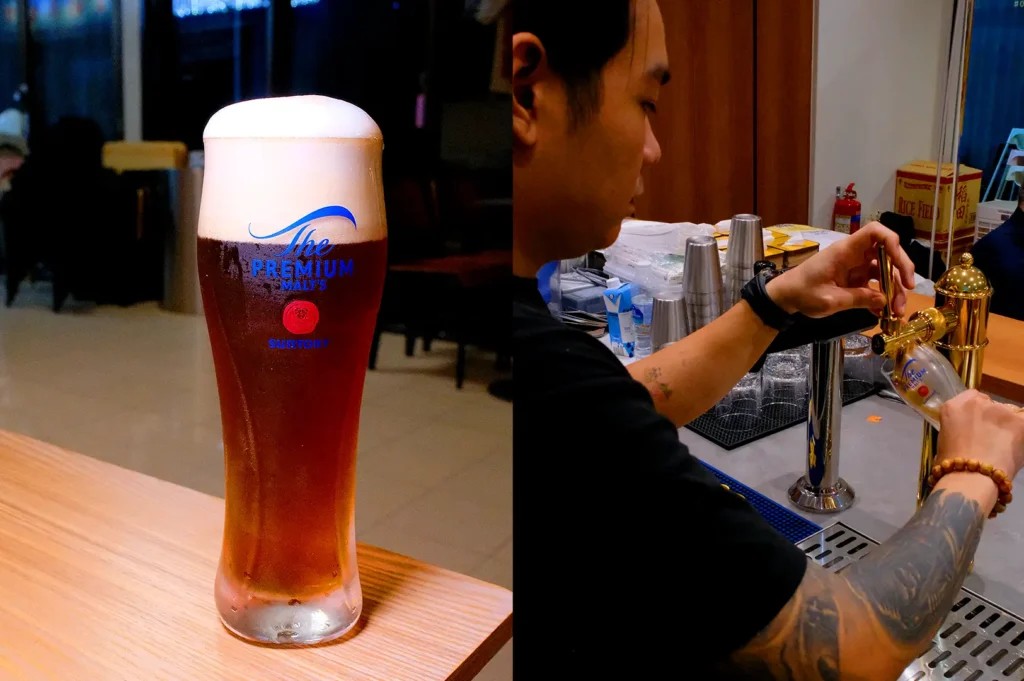
Of the draught options, Selling Sunset (S$8.80) is the most distinctive starting point. The bar combines Suntory’s The Premium Malt’s Pilsner and The Black in two house blends, with Amber using equal proportions. Selling Sunset instead uses 70% pale and 30% dark beer, with the darker portion forming the foam.
Watching that layer descend adds a little theatre before the first sip. Both blends are Ki-setsu creations rather than official Suntory products, and the listed happy-hour prices apply throughout the trading window. For something more straightforward, The Premium Malt’s Pilsner starts at S$7.80, though Selling Sunset is the more memorable choice.
Kani Cream Croquette with Yellow Van Pale Ale
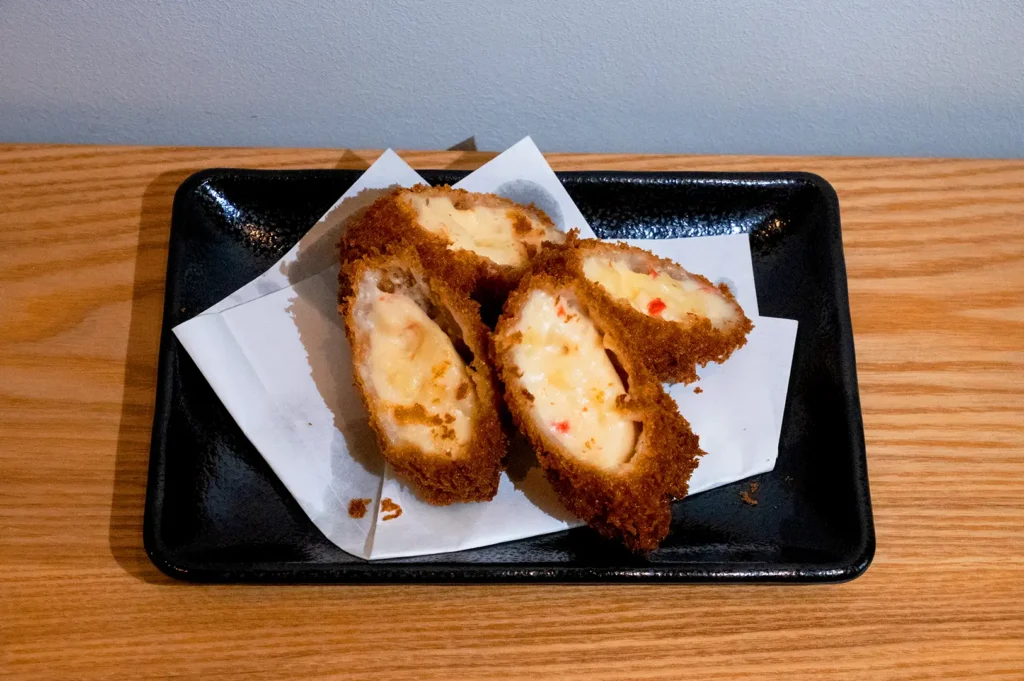
The Kani Cream Croquette consists of three panko-coated pieces filled with a creamy crab-stick mixture. Its appeal lies in the contrast between the golden, crunchy exterior and the soft filling, which makes each bite feel satisfyingly rich. The menu recommends Yellow Van Pale Ale, a 4.8% beer from Singapore’s The 1925 Brewing Co.
The pairing makes sense because a moderately bitter pale ale can cut through the richness of fried food. The same beer is suggested with Renkon Fish Cake, combining soft fish cake with crisp lotus root. Between the two, I would favour the croquettes for their stronger contrast between coating and filling.
Fukushima Mehikari Karaage with Marlow’s Mellow Pomelo IPA
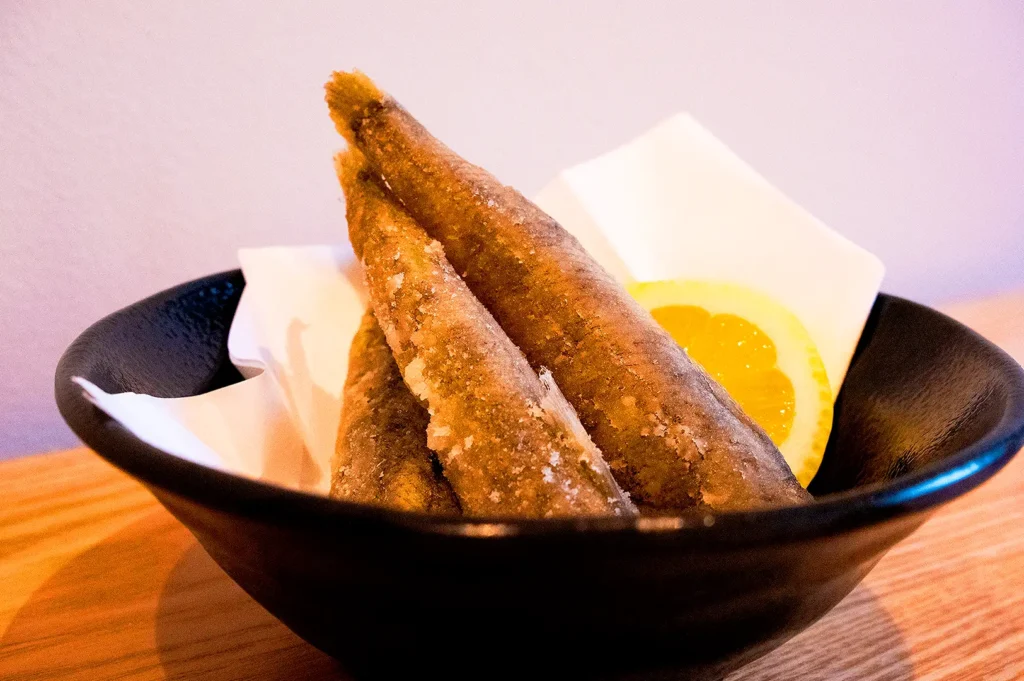
The Fukushima Mehikari Karaage is one of the more unusual items on the menu. Three small whole greeneye fish are lightly floured, fried, and served with lemon, offering a delicate crunch rather than the heavy coating of conventional bar snacks. Their straightforward preparation allows the fish itself to remain the focus.
The suggested pairing is Marlow’s Mellow Pomelo IPA, a 5.8% Vietnamese beer from Heart of Darkness. There is an appealing citrus connection between the lemon garnish and the beer’s pomelo character, while IPA bitterness can balance the fried seafood. This is the combination I would point a curious friend toward because it feels different from what a typical neighbourhood beer bar offers.
Where the Experience Falls Short
The biggest limitation is the two-hour operating window. Craft Beer by Ki-setsu opens Monday to Saturday from 7:30pm to 9:30pm, with food last orders at 9pm. Arriving at 8:45pm leaves little time for a relaxed dinner, particularly if you want to explore several pairings.
The walk-in-only policy creates another inconvenience for groups. Fifty seats may sound generous, but there is no guarantee of space before travelling to Fortune Centre. That uncertainty makes spontaneous visits less appealing when several people need to coordinate.
A Smaller Beer Selection
Two taps and a modest bottled range cannot compete with specialist bars offering extensive rotating draught lists. Experienced craft beer drinkers may find the selection limited, particularly after trying the house blends. The published pairings are also recommendations rather than guarantees of how every combination will taste.
The restaurant’s strength is its kitchen, especially the opportunity to pair Japanese dishes with a focused selection of beers. That gives the experience a clearer identity than its tap count might suggest. Anyone primarily interested in exploring numerous beer styles may prefer a dedicated craft beer bar guide.
Who Will Enjoy Craft Beer by Ki-setsu?
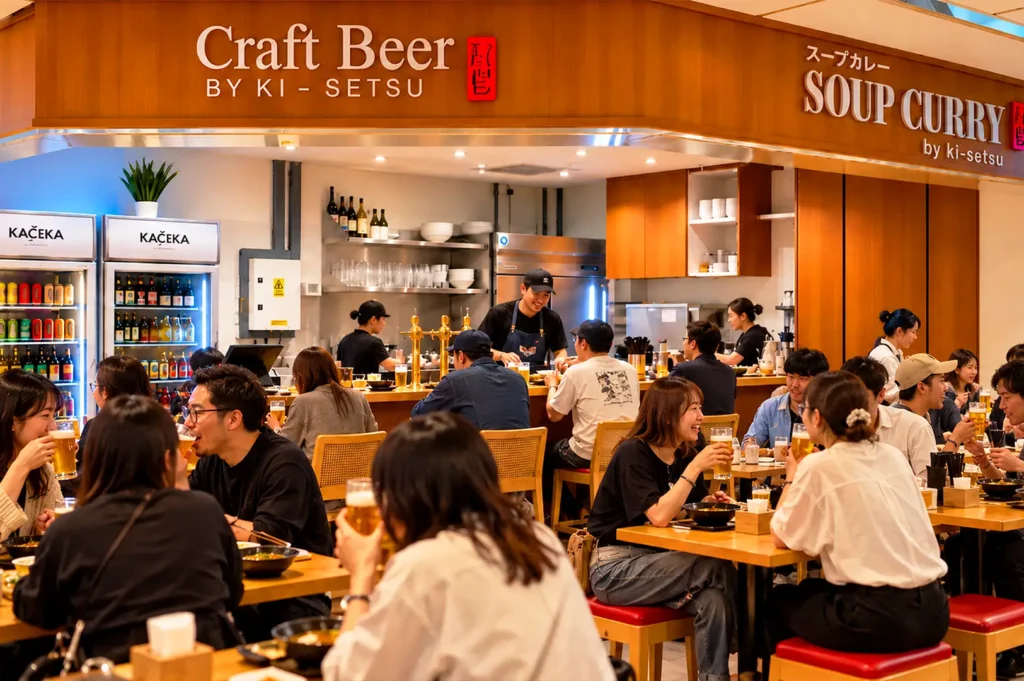
Ki-setsu makes sense for friends who want proper Japanese food alongside their drinks. One person can order soup curry while others share fried fish, croquettes, or chicken dishes, and alcohol-free bottles make the menu more accommodating. It is less suitable for late-night drinking, extensive beer exploration, or large gatherings requiring guaranteed reservations.
Practical Details
Address: #04-19 Fortune Centre, 190 Middle Road, Singapore 188979
Nearest MRT: Bencoolen, approximately 5 minutes on foot
Opening Hours: Monday to Saturday, 7:30pm to 9:30pm; closed Sunday
Food Last Orders: 9pm
Reservations: Walk-in only
Charges: 10% service charge; not GST-registered
Estimated Spend: Approximately S$17 to S$21 for a beer and one side dish, before the 10% service charge.
These details make Ki-setsu better suited to an intentionally planned evening than a last-minute visit. Bottled beer availability and individual menu prices may change between visits. Check the latest information before heading down, particularly if you are interested in a specific pairing.
The Kitchen Gives This Beer Bar Its Identity
Craft Beer by Ki-setsu is not trying to win through the number of taps. Its appeal is having a focused beer selection alongside Japanese izakaya food and Hokkaido soup curry, allowing drinks and dinner to feel connected. My preferred order would begin with Selling Sunset, followed by Fukushima Mehikari Karaage.
Dream Alone Pale Ale would be worth considering alongside the tsukune, assuming it remains available. The short operating hours are genuinely inconvenient, and serious craft beer enthusiasts may want more variety. Still, the concept gives diners a clear reason to visit: the kitchen is the reason to come, and the short hours are the reason to plan.

Traditional Korean Sikhye: Sweet Rice Punch Through the Seasons
Eda Wong | October 23, 2025
In the vibrant world of Korean food, beyond the fiery spice of gochujang and the savoury comfort of bulgogi, lies a gentler, more subtle delight. Meet traditional Korean sikhye (식혜), a beloved Korean sweet rice punch that holds a special place in the nation’s heart. With its cloudy, amber hue and delicate sweetness, this drink…
-
Authentic Jeonju Bibimbap: Why Korea’s Culinary Capital Makes It Best
Eat Drink Asia Team | October 21, 2025
Picture this: A steaming Korean rice bowl is placed before you in Jeonju, South Korea. Vibrant arcs of seasoned bean sprouts, glossy strips of Korean beef, a golden runny yolk resting atop perfectly cooked mixed rice, and a dollop of rich red bibimbap sauce invite you to mix it all together. As you stir, the…
-
Communal Dining Traditions in Asia: Shared Meals, Lasting Bonds, and Cultural Heritage
Dio Asahi | October 18, 2025
Imagine a dining table crowded with large platters of steaming food, the smell of spices in the air, small bowls arranged neatly around the shared table, and laughter echoing across the room. Across Asia, dining tables play a central role in communal dining traditions, serving as the focal point for etiquette, social interaction, and the…
-
Century-Old Dumpling Techniques: Ancient Wisdom in Modern Kitchens
Eda Wong | October 16, 2025
Her hands move in a blur, a dance of muscle memory refined over sixty years. In a small, steam-filled kitchen in Shanghai, an elderly woman transforms a humble circle of dumpling dough into a perfect, 20-pleat xiao long bao. Each pinch and fold is a syllable in a story passed down through generations-prime examples of…
-
Ca Phe Sua Da: The Cultural Phenomenon of Authentic Vietnamese Coffee
Eat Drink Asia Team | October 14, 2025
The dawn breaks over Hanoi, and the city awakens not to alarm clocks but to the clatter of tiny spoons and the metallic click of filters. The air fills with the dark, roasted aroma of authentic Vietnamese coffee drifting from bustling corners and sidewalk stalls. They are not rushing. Instead, they are waiting-waiting for the…
-
Cao Lầu Noodles: Hoi An’s Legendary Noodle Dish with Japanese Origins
Dio Asahi | October 11, 2025
Imagine sitting on a low stool in a bustling alleyway of Hoi An’s ancient town. The warm, fragrant air is thick with the scent of sizzling marinated pork, fresh herbs, and the unmistakable aroma of fish sauce and fried rice crackers. In front of you, a bowl of Cao Lau noodles gleams, their golden brown…
-
Chinese Tea: 5,000-Year Tea Journey from Ancient Medicine to Global Beverage Phenomenon
Eda Wong | October 9, 2025
Every cup of tea enjoyed today, whether a brisk English breakfast or a delicate green tea in Tokyo, finds its lineage rooted in the heart of Chinese tea history. For nearly 5,000 years, the humble leaves of the Camellia sinensis tea plant have been cultivated, brewed, and cherished-first as ancient medicine in southern China, and…
-
The Complete Guide to Authentic Cantonese Dim Sum: Beyond Har Gow and Siu Mai
Eat Drink Asia Team | October 7, 2025
If you think eating dim sum is all about har gow and siu mai, think again. Authentic Cantonese dim sum is a dazzling showcase of Chinese culture, filled with an array of flavors, textures, and traditions that run much deeper than the classics. For both seasoned aficionados and first-time food explorers, venturing beyond the familiar…
-
Traditional Indian Lassi: Cooling Yogurt Drinks for Every Season and Region
Eda Wong | October 4, 2025
On a sweltering Indian afternoon, there is no greater relief than a tall, chilled glass of traditional Indian lassi. From bustling city streets to quiet village homes, lassi is a beloved staple that offers a moment of pure, cooling bliss. Frothy, creamy, and deeply satisfying, this yogurt drink is more than just a refreshment; it’s…
-
Gujarati Thali Guide: Western India’s Plant-Based Feast
Dio Asahi | October 2, 2025
Imagine a large, gleaming steel plate arriving at your table, a vibrant constellation of small bowls each filled with colourful and fragrant preparations. In the centre, fluffy plain rice sits next to a pile of wafer-thin, ghee-brushed Indian bread. This isn’t just an Indian meal; it’s a traditional Gujarati thali, an immersive culinary journey through…