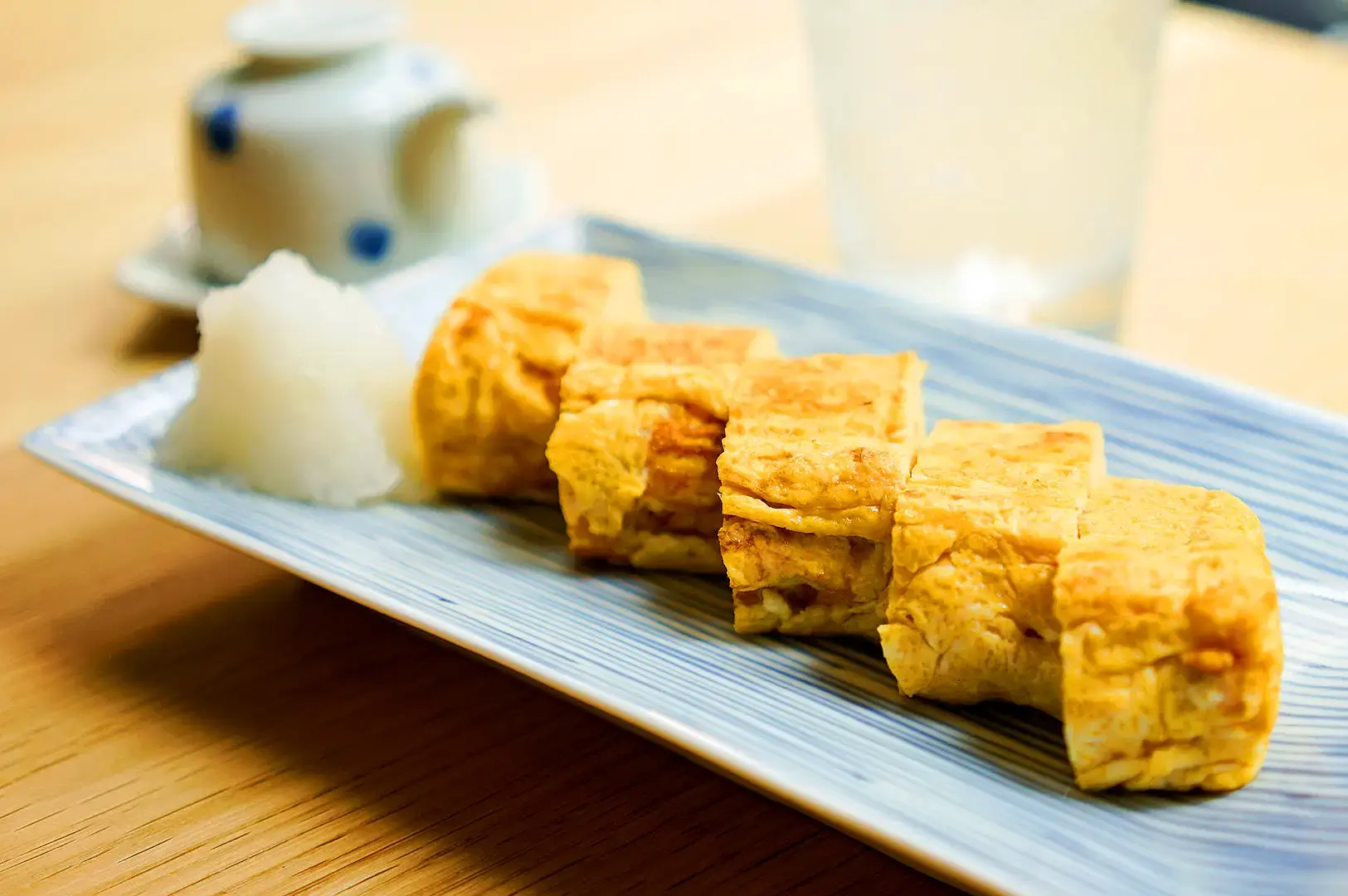
Dashimaki tamago is one of those dishes that looks quieter than it is.
At first glance, it is just a rolled egg. Pale, soft, sliced neatly, often served beside steamed rice, miso soup, and grated daikon radish. But once you make it, you realise it is not really about eggs alone. It is about how broth changes texture, how medium heat asks for patience, and how a thin layer of egg can become something tender enough to feel almost custardy.
If you love Japanese food, this is one of the best small dishes to practise at home because it shows how Japanese cuisine can turn simple ingredients into something delicate, savoury, and deeply comforting.
Dashimaki Recipe at a Glance
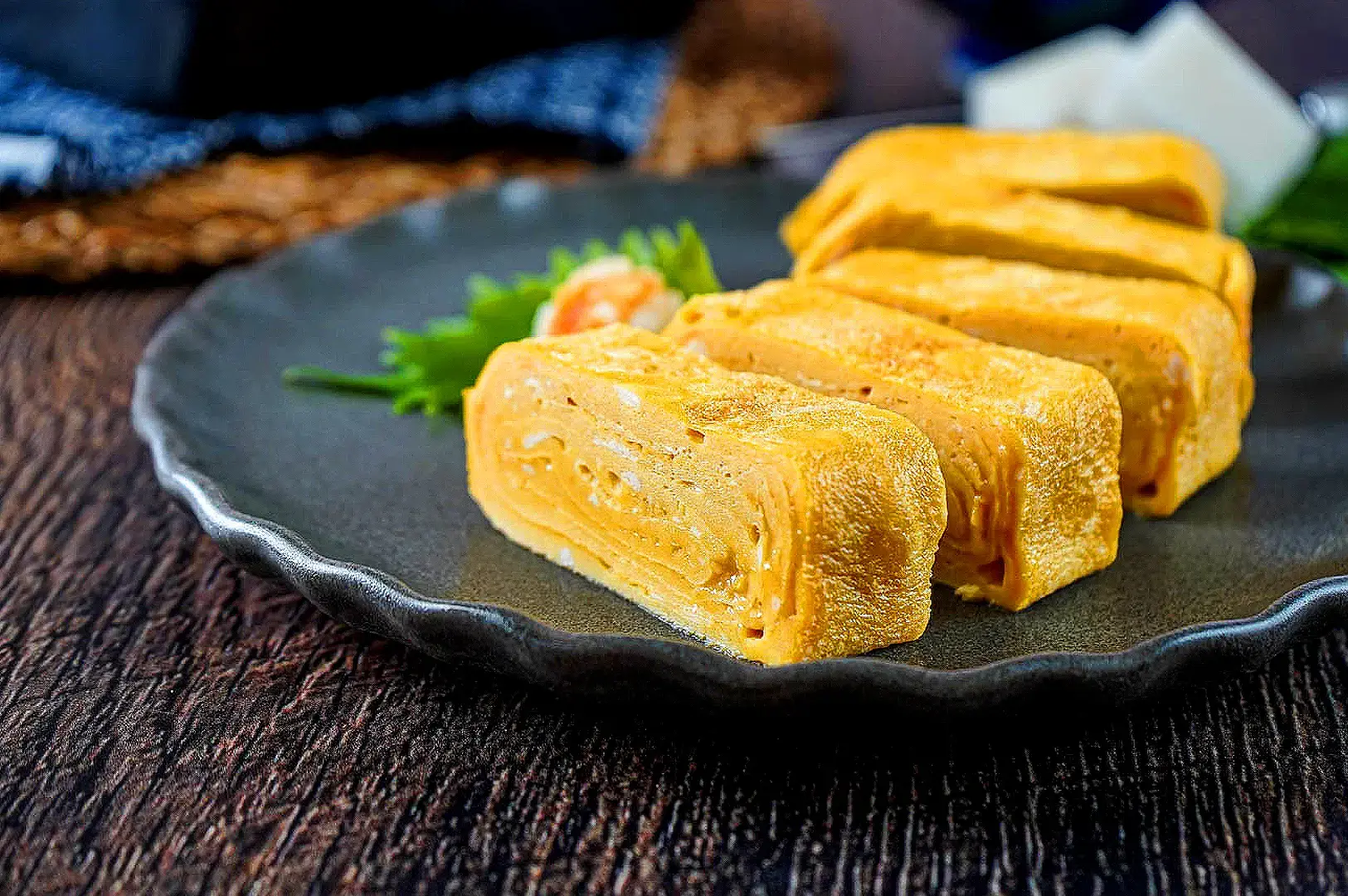
Dashimaki tamago is a Japanese rolled omelette made with eggs and dashi stock. It behaves differently from a western omelette because the egg mixture contains more liquid. That dashi gives the finished rolled omelette its soft, savoury, almost custardy texture.
Time, Yield, and Difficulty
- Prep time: 10 minutes
- Cook time: 10 to 15 minutes
- Total time: 20 to 25 minutes
- Serves: 2
- Difficulty: Medium, mostly because of the rolling
- Best pan: Rectangular tamagoyaki pan, but a small nonstick pan or round pan works
The goal is not a dry, firm omelette. The goal is soft layers that hold together just enough while still tasting like Japanese soup stock.
What Is Dashimaki Tamago Japanese Rolled Omelette?
Dashimaki tamago, sometimes written as dashi maki tamago, is a Japanese rolled omelette. Beaten eggs are mixed with dashi stock, light soy sauce, mirin, granulated sugar, and salt, then cooked one thin layer at a time. Each egg layer is rolled into the last until all the egg mixture becomes one soft log.
It is often confused with tamagoyaki, but they are not exactly the same. Tamagoyaki usually has little or no dashi, so it is firmer and easier to roll. Dashimaki tamago carries more dashi mixture, which makes it softer, juicier, and more delicate. Atsuyaki tamago tends to be thicker, sweeter, and firmer, which is why it holds up better in bento boxes and sushi restaurants.
For the restaurant side of that same quiet precision, Eat Drink Asia’s piece on best omakase Singapore shows how small Japanese courses turn restraint into storytelling.
Ingredients for Dashimaki Tamago
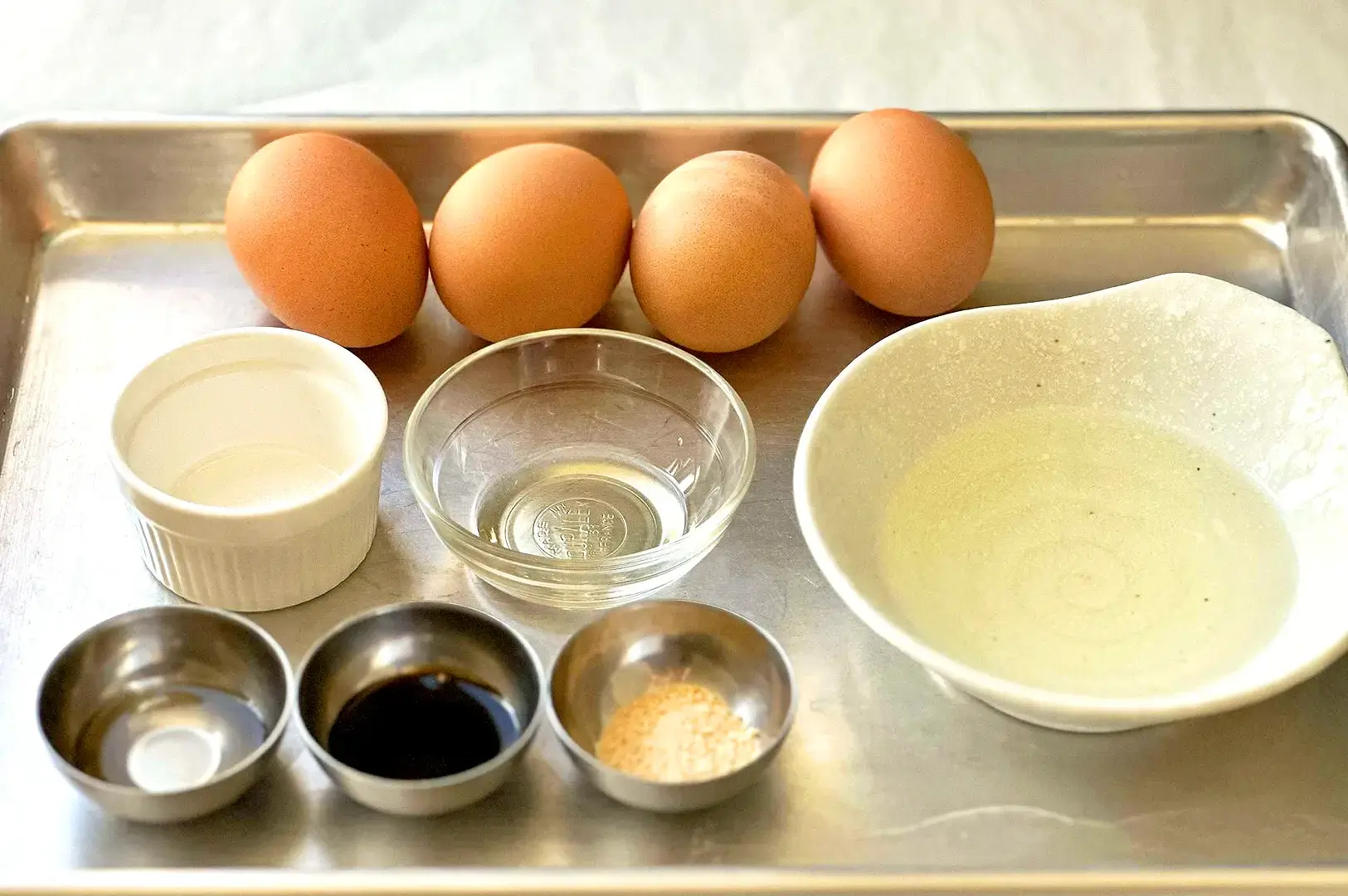
This is the basic recipe I would hand to someone trying to make dashimaki tamago for the first time. It has enough dashi to taste clearly, but not so much that the roll fights you at every turn.
For the Egg Mixture
- 3 large eggs
- 45 to 60 ml dashi stock
- 1 tsp light soy sauce, usukuchi soy sauce if you have it
- 1 tsp mirin
- 1 to 2 tsp granulated sugar, to taste
- Pinch of salt
- Vegetable oil, for the pan
To Serve
- Grated daikon radish
- A small splash of soy sauce
- Steamed rice, miso soup, or pickles
For dashi, homemade awase dashi made with kombu and bonito flakes gives the cleanest flavour. Instant dashi powder is honest weekday cooking. Use about 1 tsp instant dashi powder to 240 ml hot water, then measure only what you need. Do not add too much soy sauce. If you only have regular Japanese soy sauce instead of white soy sauce or usukuchi, use it lightly so the omelette stays pale.
Equipment You Need
A tamagoyaki pan makes the roll neater, but it is not required. A rectangular tamagoyaki pan or square pan gives the most even shape. A copper tamagoyaki pan conducts heat beautifully, but it is expensive and less forgiving. For most home cooks, a nonstick rectangle pan is easier.
Best Beginner Setup
- Rectangular tamagoyaki pan, square pan, or small round frying pan
- Chopsticks or a thin spatula
- Folded paper towel
- Separate bowl for seasoning
- Measuring cup with a spout
- Bamboo mat or bamboo sushi mat
- Optional wooden lid if you already use one for rolling
The folded paper towel matters more than it looks. Dip it in vegetable oil and keep the oil soaked paper towel beside the stove. You will use the oiled paper towel to lightly grease the pan between layers. A thin film of oil keeps the roll moving without making it greasy.
How to Make Dashimaki Tamago
1. Mix the Dashi Seasoning
In a separate bowl, combine the dashi stock, soy sauce, mirin, sugar, and salt. Stir until the sugar dissolves. Taste before adding it to the eggs. It should be savoury, lightly sweet, and balanced, not aggressively salty.
2. Beat the Eggs Gently
Crack the eggs into a bowl and cut through the yolks and egg whites with chopsticks. Do not whip. Too much air creates air bubbles and uneven layers. This is not a soufflé. Add the dashi mixture and stir gently. For a smoother dashimaki tamago recipe, strain the beaten eggs into a measuring cup. It catches stubborn strands of egg whites and makes repeated pouring easier.
3. Heat and Oil the Frying Pan
Set the frying pan over medium heat. Dip the folded paper towel in vegetable oil and wipe the pan with a thin, even layer. The pan is ready when a drop of egg makes a gentle sizzling sound. No sound means the pan is too cold. Angry crackling means the cooking temperature is too high.
4. Pour the First Thin Layer
Pour in just enough egg mixture to cover the base. Tilt the pan so the egg runs into every corner and fills the empty space. If bubbles rise, pop them with chopsticks.
5. Start Rolling While the Egg Is Still Soft
Start rolling from the far side toward you. Use chopsticks, a spatula, or a wooden lid if that is how you learned from tamagoyaki recipes. The first roll may look a little wrinkled, but that is fine. It will become the centre of the rolled egg and disappear inside later layers.
6. Re-Oil, Pour, and Repeat
Slide the roll back to the far end of the pan. Wipe the exposed pan with the oiled paper towel, then lift the roll slightly and pour another thin layer of egg underneath it. This fresh egg acts like glue between the old cooked egg and the new layer.
Repeat until you use all the egg mixture: roll, move, oil, pour. Roll, move, oil, pour. Rhythm matters more than speed.
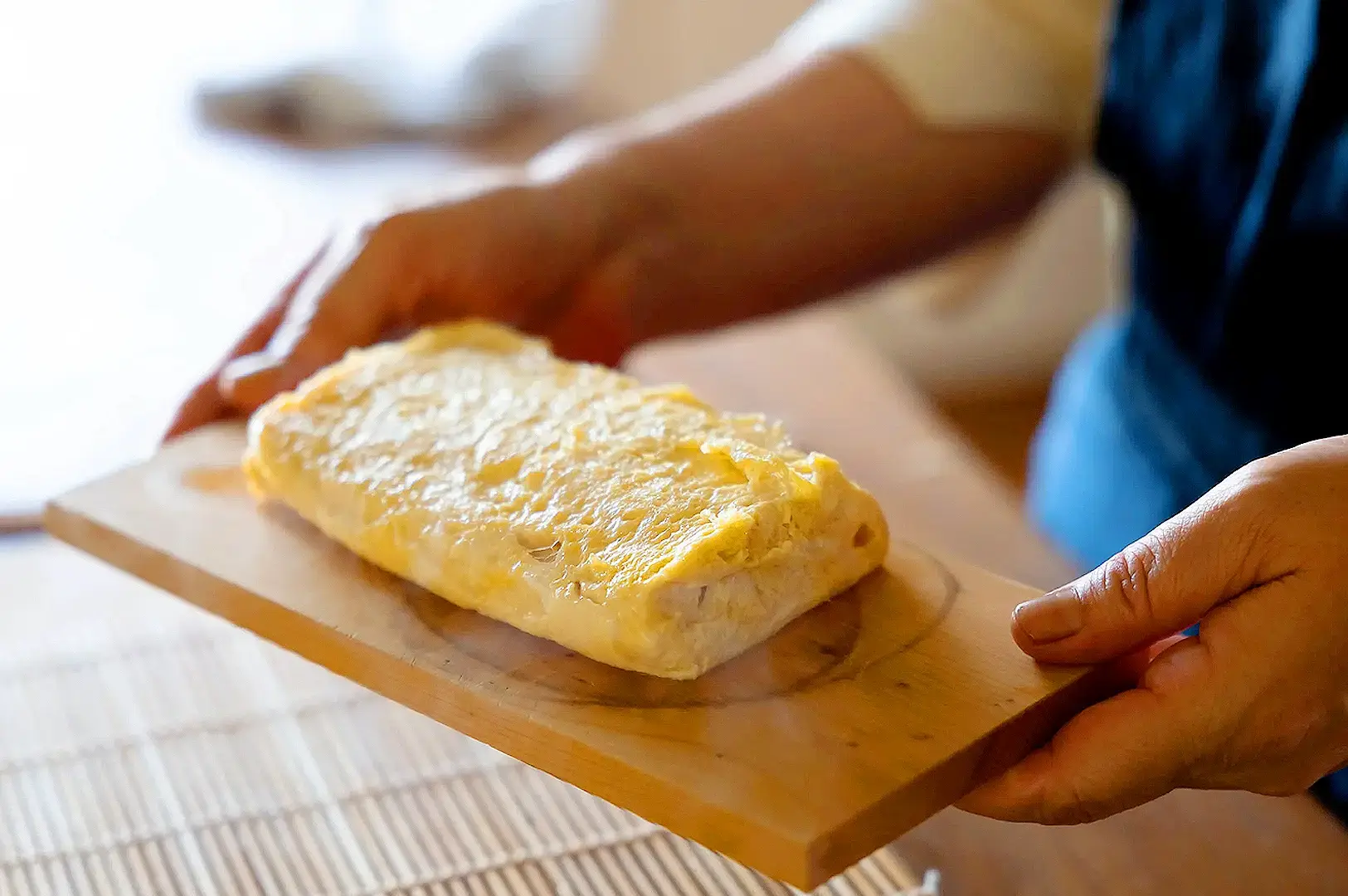
7. Shape It While Hot
When the omelette is done, transfer it to a sushi mat or bamboo mat. Wrap and press gently for about five minutes. This helps turn a wobbly home roll into a cleaner log. Do not squeeze too hard. Too much pressure pushes out the dashi.
8. Slice and Serve
Slice the dashimaki into thick pieces while warm. Serve with grated daikon, grated daikon radish, and just a dash of soy sauce. Dashimaki is best eaten right away. The same dashi that makes it tender can weep out if it sits too long.
How Much Dashi Stock Should You Use?
For beginners, start with 45 ml dashi for 3 eggs. This gives you enough broth flavour without making the Japanese rolled omelette too fragile.
Dashi Levels by Skill
- Beginner: 3 eggs plus 45 ml dashi
- Confident home cook: 3 eggs plus 60 ml dashi
- Soft restaurant-style attempt: 3 eggs plus 80 to 100 ml dashi
Every extra splash of dashi makes the omelette more delicious and less obedient. That is the trade. A delicious dashimaki tamago recipe is not about forcing restaurant softness on the first try. It is about building enough control to handle more broth later.
What to Serve with Dashimaki Tamago and Miso Soup
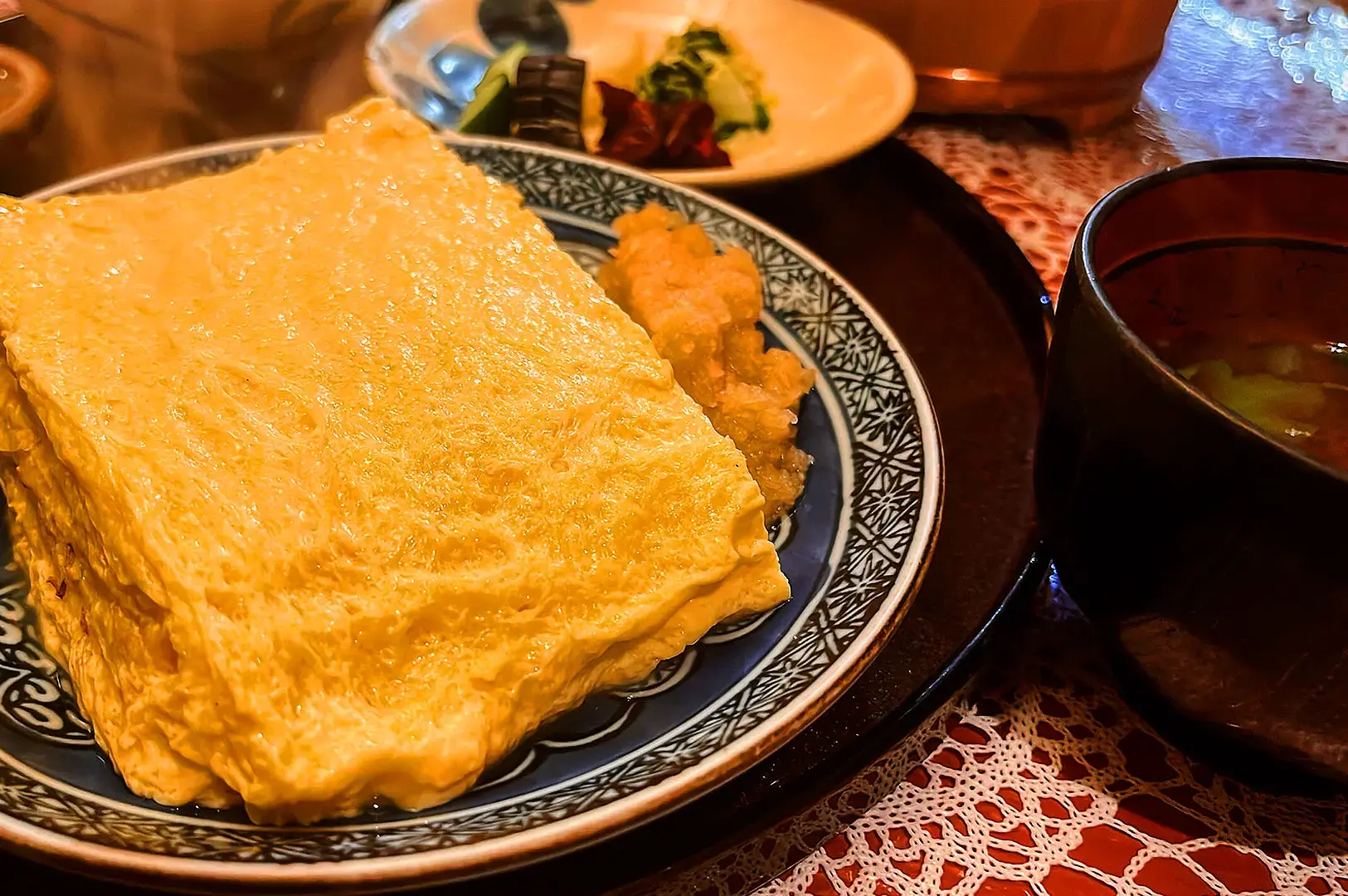
At home, dashimaki works beautifully as part of a Japanese breakfast. I like it beside steamed rice, miso soup, pickles, and maybe grilled fish. The aroma is quiet but comforting: warm egg, bonito, soy, and the clean steam of rice.
This is where the dish starts to make sense as Japanese food. The same dashi that seasons the rolled egg can also sit beneath miso soup and other Japanese dishes. Learning dashimaki is really learning how Japanese cuisine uses stock to season food that does not look like soup.
If dashimaki feels like the quiet side of Japanese comfort, izakaya Singapore guide shows how small plates carry that same relaxed rhythm into dinner.
Cost, Shopping Notes, and Recipe Ratings
Dashimaki is a cheap dish to love. Eggs, dashi, soy sauce, mirin, sugar, and oil are modest ingredients, and each batch uses only small amounts. You do not need a copper pan, white soy sauce, or restaurant tools for your first try.
If you are buying equipment, start with a basic nonstick tamagoyaki pan. A copper tamagoyaki pan can come later, once you know you enjoy the rhythm. If you are reading recipe ratings before cooking, check whether the recipe creator uses a beginner dashi ratio or a restaurant-style one. Some dark instructions from glossy videos make the process look effortless, but a high-dashi roll takes practice.
Before You Cook
Before you make dashimaki tamago, remember what the dish is asking from you. Not speed. Not force. Not a perfect restaurant shape on the first attempt. It asks for medium heat, thin layers, and attention. It asks you to trust the half cooked surface, to keep the oiled paper towel nearby, and to use all the egg mixture slowly rather than flooding the pan.
Start with 45 ml dashi. Keep the layers thin. Let the rhythm teach your hands. The good roll is closer than you think.

Ramune Marble Soda: History and Cultural Meaning of Japan’s Iconic Marble Soda
Dio Asahi | November 20, 2025
Among Japan’s beloved fizzy drinks, none evoke nostalgia and uniqueness quite like Ramune marble soda. Instantly recognizable by its quirky Codd neck bottle and glass marble seal, Ramune soda is an essential part of Japanese summer, cherished by generations for its refreshing taste and signature pop sound. This marble soda remains a staple at summer…
-
Hokkaido’s Best Seafood Treasures: Beyond Sushi and Sashimi
Eat Drink Asia Team | November 18, 2025
When visiting Hokkaido, Japan’s northernmost island, food lovers are greeted with some of the most highly regarded seafood specialties in the world. Hokkaido is famous for its abundance of fresh seafood and rich fishing grounds, thanks to the surrounding Sea of Japan, Pacific Ocean, and Sea of Okhotsk. These nutrient-packed waters yield a wide range…
-
The Art of Asian Tea Ceremony Traditions: Ancient Rituals and Cultural Values Across Asia
Dio Asahi | November 15, 2025
A cup of tea, in many parts of Asia, represents far more than a beverage-it is a conduit to ancestral tradition, intellectual pursuit, and the cultivation of mindfulness. Asian tea ceremony traditions turn the act of drinking tea into a sophisticated art form, layered with symbolism, philosophy, and socio-cultural values. Each gesture, from scooping powdered…

The Art of Slow-Cooked Curry Recipes: Time’s Magic in South Asian Cuisine
Eda Wong | November 13, 2025
Step into a South Asian kitchen, and the senses are instantly enveloped by the inviting aroma of food slowly simmering in a sturdy clay pot or heavy vessel. The allure is undeniable: in this space, slow-cooked curry recipes are a celebration of patient tradition, spices, and the richness of South Asian cuisine. Here, time and…
-
Bandung Drink Recipe: A Singaporean Rose Syrup Drink Tradition
Eat Drink Asia Team | November 11, 2025
Step into any night market or hawker centre in Singapore, and you’ll spot a vibrant, glowing glass filled with a cold, beautiful drink-Bandung. Known for its iconic blush-pink hue and refreshing taste, this rose syrup drink is an integral part of Singapore’s beverages scene and a cherished tradition in Southeast Asian gatherings. More than just…
-
The Ultimate Hainanese Chicken Rice Recipe: A Deep Dive
Eda Wong | November 8, 2025
To wander through Singapore’s bustling hawker centres on a humid evening is to experience a symphony of sights, sounds, and smells. Among the many other dishes sizzling away, one plate stands out for its elegant simplicity: Hainanese Chicken Rice. It arrives without fanfare-gleaming slices of poached chicken over fragrant rice, flanked by a trio of…
-
Bubble Tea Origins: How Taiwan Created a Global Beverage Phenomenon
Dio Asahi | November 6, 2025
From Taipei to New York, a single drink has captured the world’s taste buds: bubble tea. This beverage, known as pearl milk tea or boba tea, and also known as boba in many regions, is celebrated for its delightful combination of sweet, creamy tea and signature chewy tapioca pearls. What began as a novel creation…
-
A Food Lover’s Guide to the Taiwanese Oyster Omelet
Eat Drink Asia Team | November 4, 2025
As twilight descends upon Taipei City, a vibrant energy pulses through its streets. This is the hour of the night markets, bustling hubs of community, commerce, and some of the world’s most incredible street food. Amidst the steam from soup dumplings and the sizzle of Taiwanese fried chicken, one iconic dish reigns supreme: the Taiwanese…
-
Jamu: Indonesian Herbal Medicine for Modern Well-Being
Dio Asahi | November 1, 2025
Across the Indonesian archipelago, a vibrant tradition of herbal healing has flourished for centuries. This is jamu, a cornerstone of Indonesian cultural heritage and a sophisticated system of traditional herbal medicine. Far more than just a refreshing drink, jamu represents a philosophy of balance, a deep connection to nature, and a form of indigenous medicine…
-
Padang Beef Rendang: The Complex Process Behind Indonesia’s Most Famous Dish
Eda Wong | October 30, 2025
This post may contain affiliate links. For full transparency, this article may contain affiliate links. To call Padang beef rendang simply a dish is to miss the soul of Indonesian cuisine. This legendary slow-cooked dry curry, a centerpiece of both festive tables and humble meals, has earned its fame as one of the world’s most…