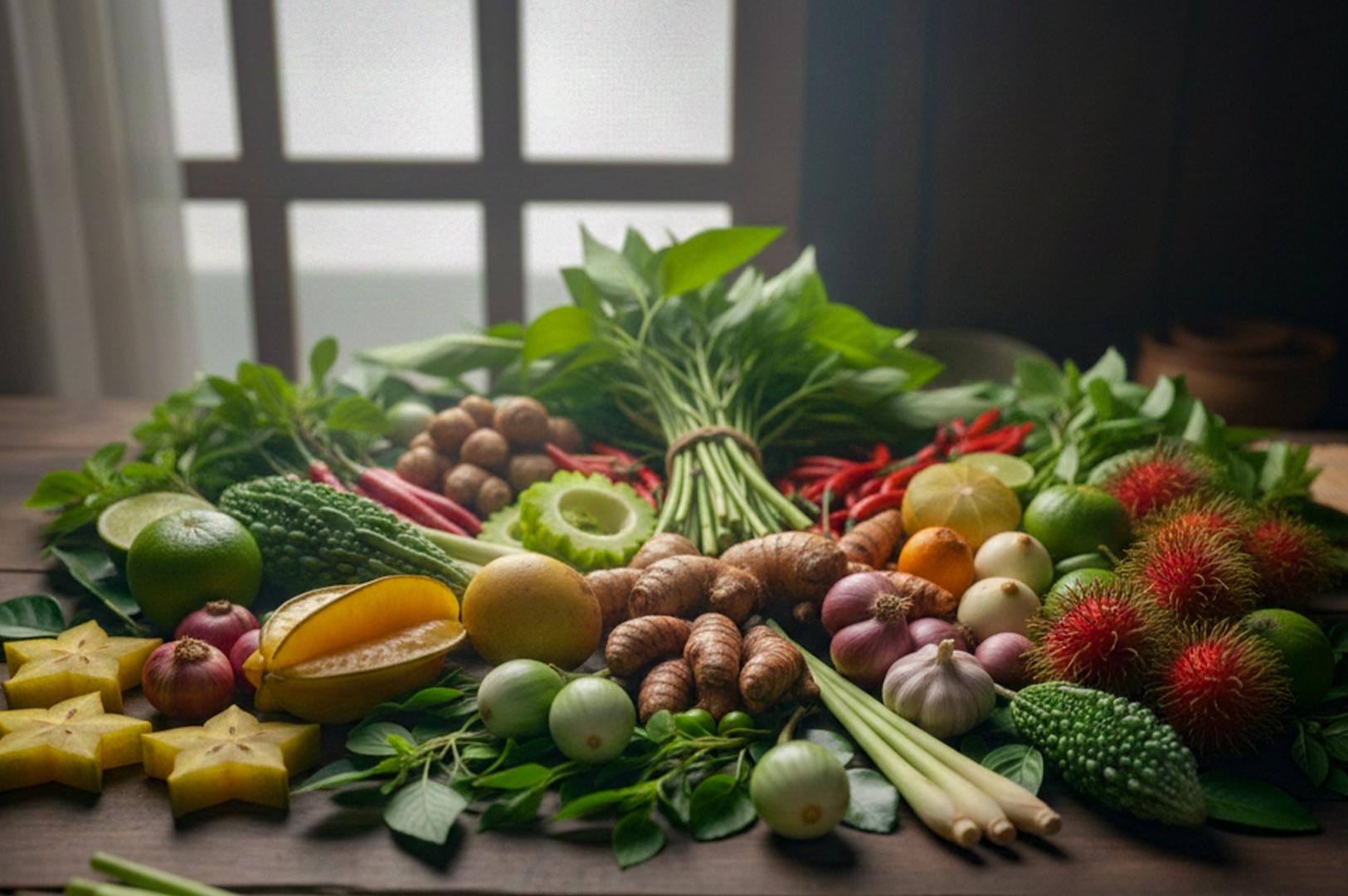
To understand the plate is to understand the map. If you were to trace the spice routes of the 15th century or follow the monsoon winds that carried merchant ships across the Indian Ocean, you would find yourself at the epicenter of the world’s most vibrant pantry. The food in the Southeast region of Asia is not a monolith; it is a living, breathing map of human movement, environmental adaptation, and the relentless pursuit of flavor.
Southeast Asia sits at a geographical crossroads. To the west lies the Indian subcontinent, to the north, the vast expanse of China, and all around it, the fertile, volcanic soil of the archipelago and the silt-rich deltas of the Mekong and Irrawaddy rivers. This unique positioning created a harmonious blend of indigenous ingredients and foreign influences that transformed the region into a global culinary powerhouse. Whether it is the umami flavors of a fermented paste or the brightness of fresh herbs, every bite tells a story of survival, trade, and Southern hospitality.
The Engineering of the National Dish: Rice as a Cultural Foundation
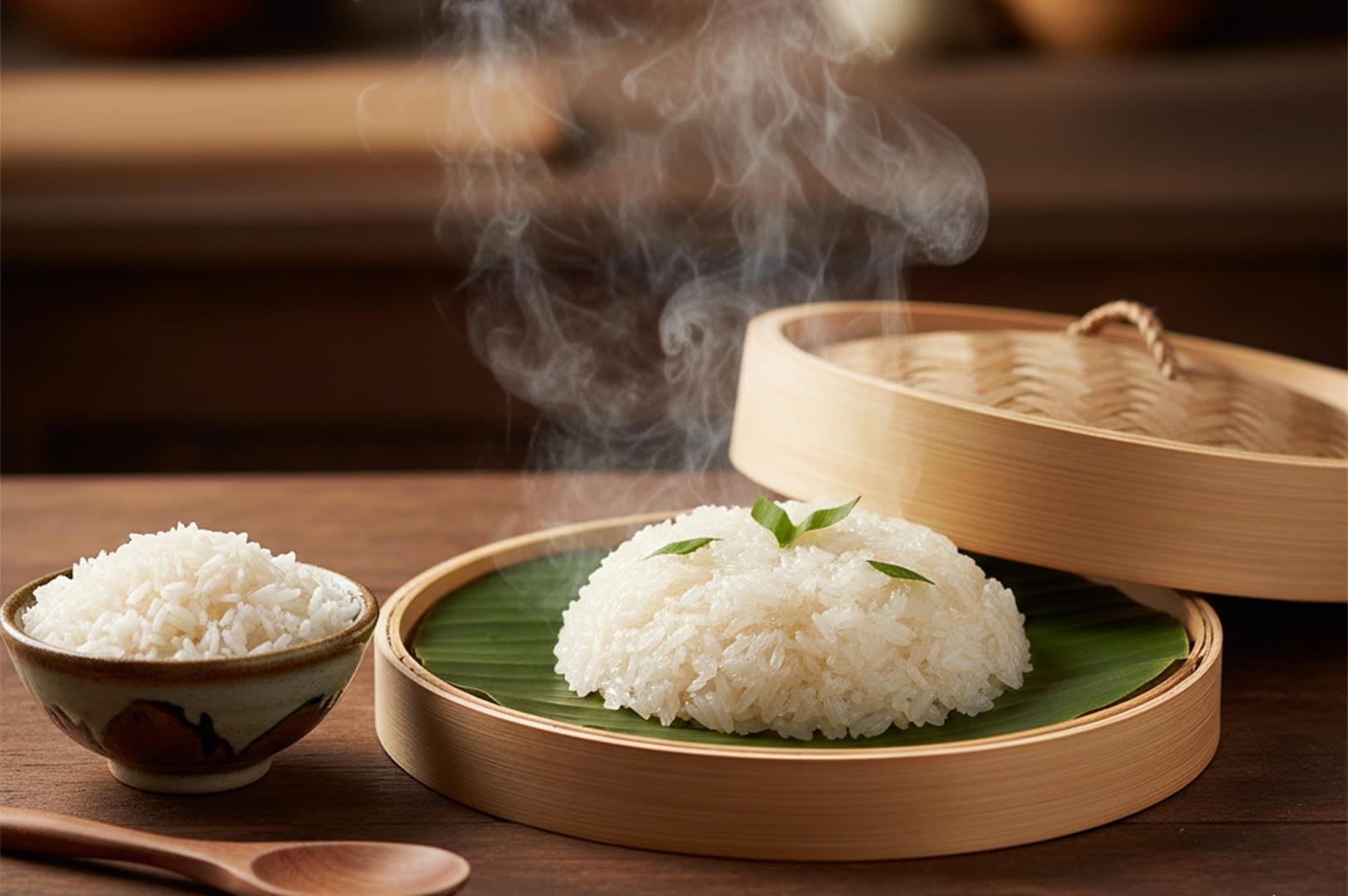
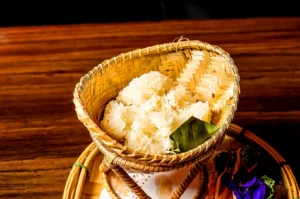
At the heart of every meal in Southeast Asia is rice. It is more than a Southern staple; it is the very soul of the region. The geography of the “Rice Bowl” deltas allowed for the cultivation of diverse varieties, from the long-grain jasmine of Thailand to the sticky rice (glutinous rice) favored in the mountainous highlands of Laos.
Rice, fresh herbs, coconut milk, and bold flavors characterize Southeast Asian cuisine.
While steamed rice is the baseline, the innovation of the rice noodle allowed for the birth of many a national dish. This was largely an influence from East Asia, yet the Southeast Asian interpretation took a sharp turn toward the aromatic. Flat rice noodles became the canvas for the smoky “breath of the wok,” while rice paper became a delicate vessel for fresh food. The use of palm sugar in traditional dishes like Pad Thai and Som Tum is essential for balancing sweet, sour, and umami flavors, contributing to the region’s distinctive taste profile.
Hainanese Chicken Rice: A Lesson in Migration
In Singapore and Malaysia, Hainanese Chicken Rice represents a pinnacle of culinary migration. This rice dish features grains sautéed in ginger and chicken fat before being steamed, served alongside poached chicken so tender it barely requires a knife. It is a testament to how Chinese techniques were refined by the local ingredients of the Southeast.
From the Deep South to the Mekong: A Shared Love of Frying
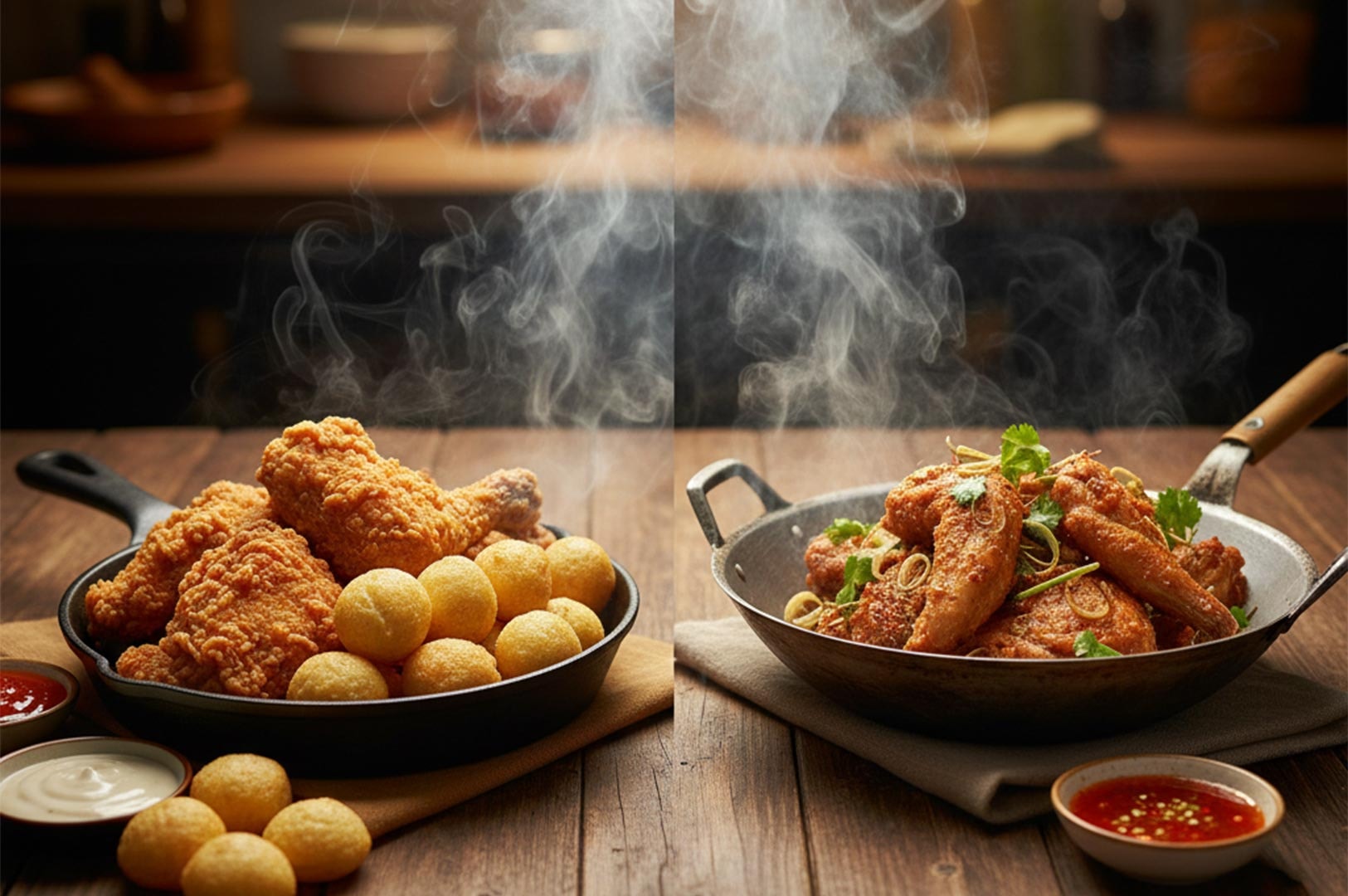
An interesting parallel exists between the food in the Southeast region of Asia and the traditional flavors of Southern Louisiana, South Carolina, and the Deep South of the United States. While thousands of miles apart, both regions rely on a history of trade influences and a profound respect for the deep fryer. In the Deep South, ‘soul food’ is a traditional style of Southern cuisine rooted in African American heritage, with dishes like collard greens and gumbo serving as staples.
- Collard greens are a staple in Southern soul food, typically slow-cooked with smoked meats and served as a side dish.
- Classic Southern side dishes, such as hush puppies, are often served alongside fried fish or barbecue, highlighting the region’s love for hearty accompaniments.
- Barbecue traditions in the Southeastern United States also vary regionally, with styles including vinegar-based, dry rub, and beef brisket.
Fried Chicken and Southern Styles
In the bustling night markets of Bangkok or Manila, the scent of fried chicken marinated in lemongrass and coriander seeds wafts through the air—a Southern styles treat that rivals any bird found in the American South. Both cultures understand that fried food provides a satisfying crunch that complements a hearty stew or a spicy noodle soup.
Fried Green Tomatoes and Tangy Echoes
While fried green tomatoes are a quintessential American side, the Southeast Asian palate shares that love for tart, firm fruit. In this region, shredded unripe papaya or green mango serves a similar purpose—providing a sharp, acidic crunch that cuts through the richness of a southern feast.
The Spice Trade: Green Curry and the Coconut Revolution
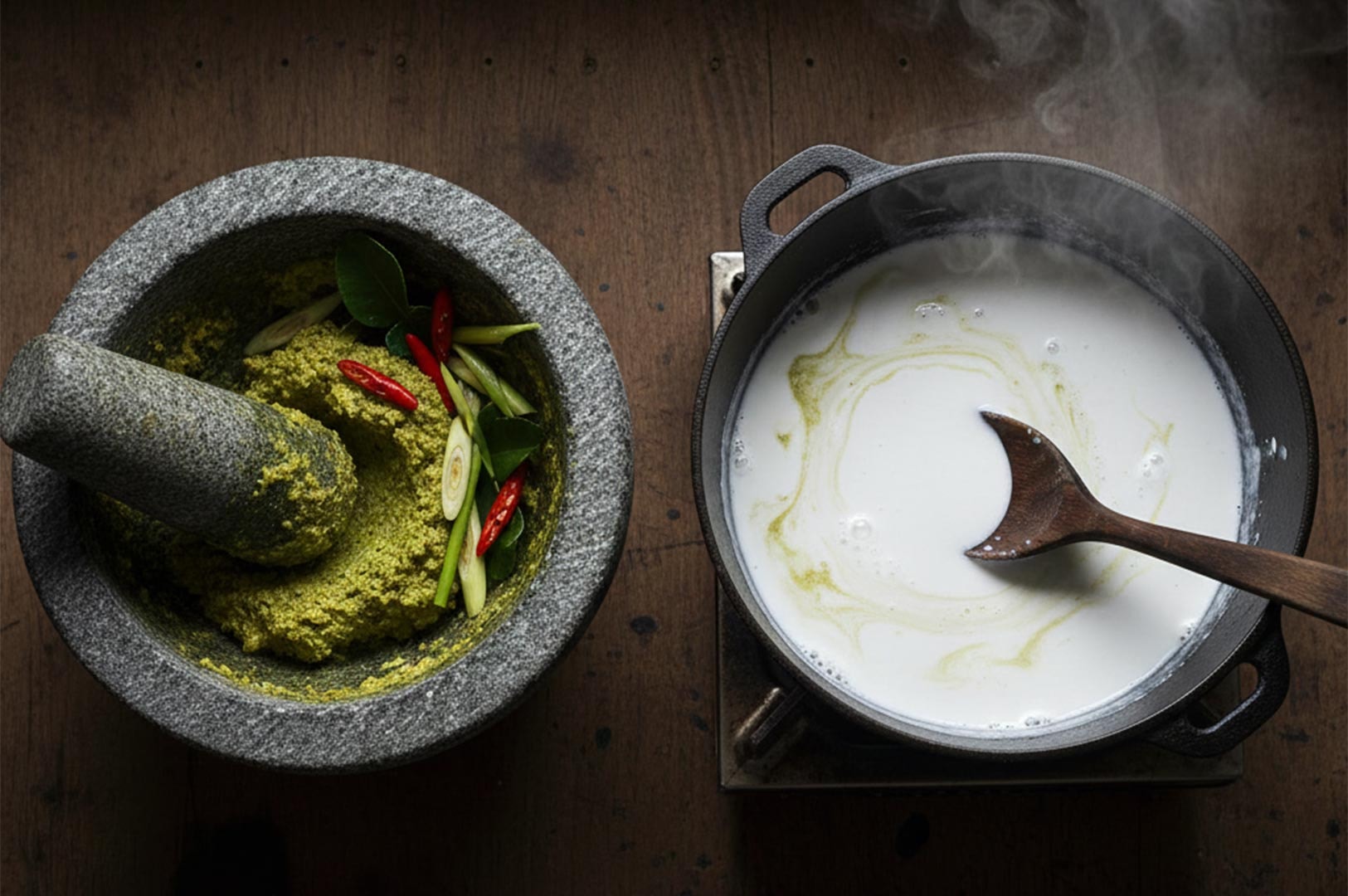
Geography did not just provide the soil; it provided the path. For centuries, Southeast Asia was the “Spice Islands,” drawing traders from the Middle East and India. The introduction of dried, bold spices—like coriander and turmeric—merged with the local abundance of coconut milk.
Green Curry: The Vibrant Balance
This fusion birthed Green Curry, a vibrant Thai creation using fresh green chilies and kaffir lime leaves. Without the cooling properties of coconut milk, the aggressive use of bird’s eye chilies in Thai cuisine would be unbearable.
Fish Amok: The Cambodian Masterpiece
In Cambodia, this coconut-herb relationship culminates in Fish Amok. This traditional dish features white fish steamed in a silken coconut egg custard, flavored with a curry paste of lemongrass and turmeric. It represents the subtler side of the Southeast Asian palate.
Street Food Icons: Pad Thai and the Wok’s Power
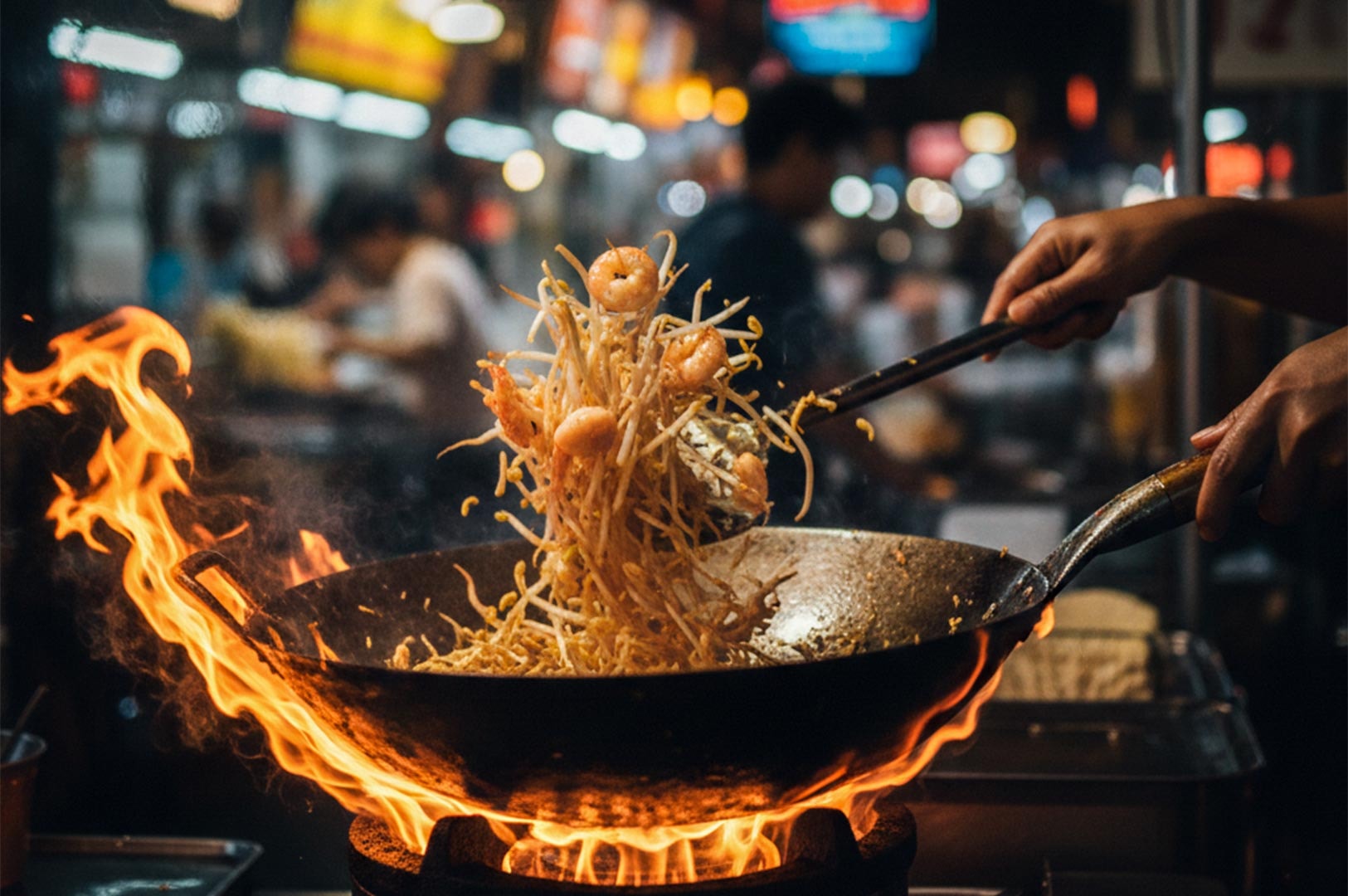
To witness the full culinary exploration of the region, one must step into the heat of the street food scene. This is where the dish originated for many of our modern favorites. Stir fried rice noodles, for example, are a staple of street food culture in the southeast region, featured in beloved dishes like Char Kway Teow and expertly prepared at bustling hawker centers.
Southeast Asia offers a rich tapestry of must-try foods that reflect the diverse cultures of the region. The experience of enjoying food in Southeast Asia is often as important as the dish itself, with communal dining and local culture playing a central role in every meal.
Pad Thai: The Global Ambassador
Pad Thai is a famous Thai dish that combines rice noodles with tamarind sauce, eggs, and various proteins, embodying the region’s philosophy. Stir fried noodles, bean sprouts, crushed peanuts, and a squeeze of lime juice are classic, while regional variations may include soy sauce or sweet soy sauce (kecap manis) as key components to enhance the dish’s authentic flavor. It is a masterful scramble that balances every taste bud simultaneously.
Fried Catfish and Saltwater Fish
Along the Mekong, fried catfish is a common sight, often served with a pungent dipping sauce of fish sauce and chilies. Whether dealing with freshwater or saltwater fish, the technique remains the same: high heat and bold aromatics to create a smoky aroma.
Chili Crab and the Maritime Heritage
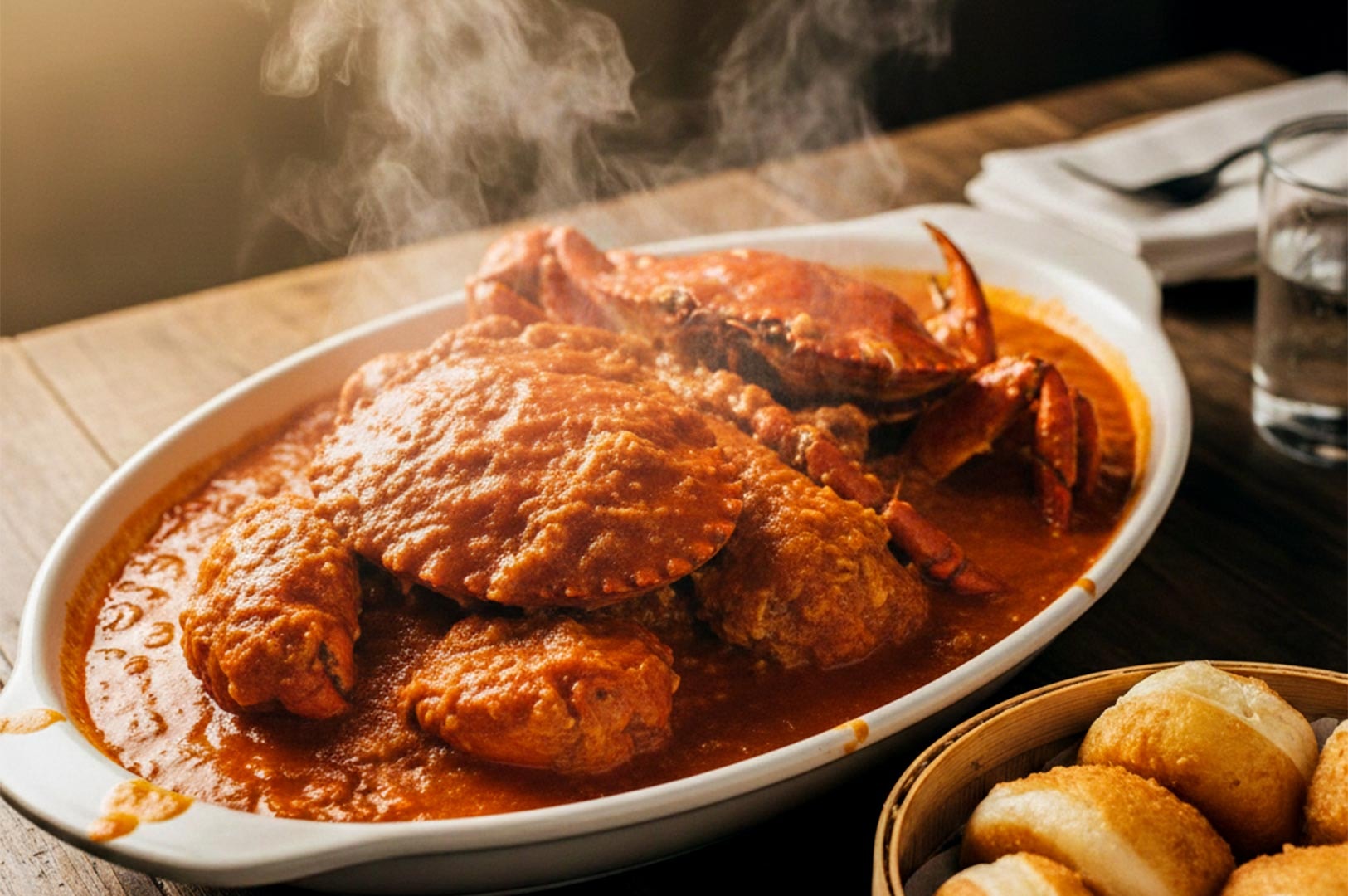
In the island nations like Singapore, the ocean dictates the menu. Chili Crab is perhaps the most iconic dish of the maritime Southeast. This Singaporean cuisine staple features mud crabs stir-fried in a thick, sweet, and savory tomato-and-chili-based sauce, often thickened with egg. Chili Crab is a dish from Singapore featuring whole crab in a chili-tomato sauce. It is a messy, communal southern feast that requires plenty of mantou (steamed buns) to soak up every drop of the umami flavors.
- Laksa is a spicy noodle soup popular in Malaysia and Singapore, known for its rich coconut broth.
- Pickled vegetables are often served as an accompaniment to seafood dishes in the region.
Mango Sticky Rice: The Sweet Conclusion
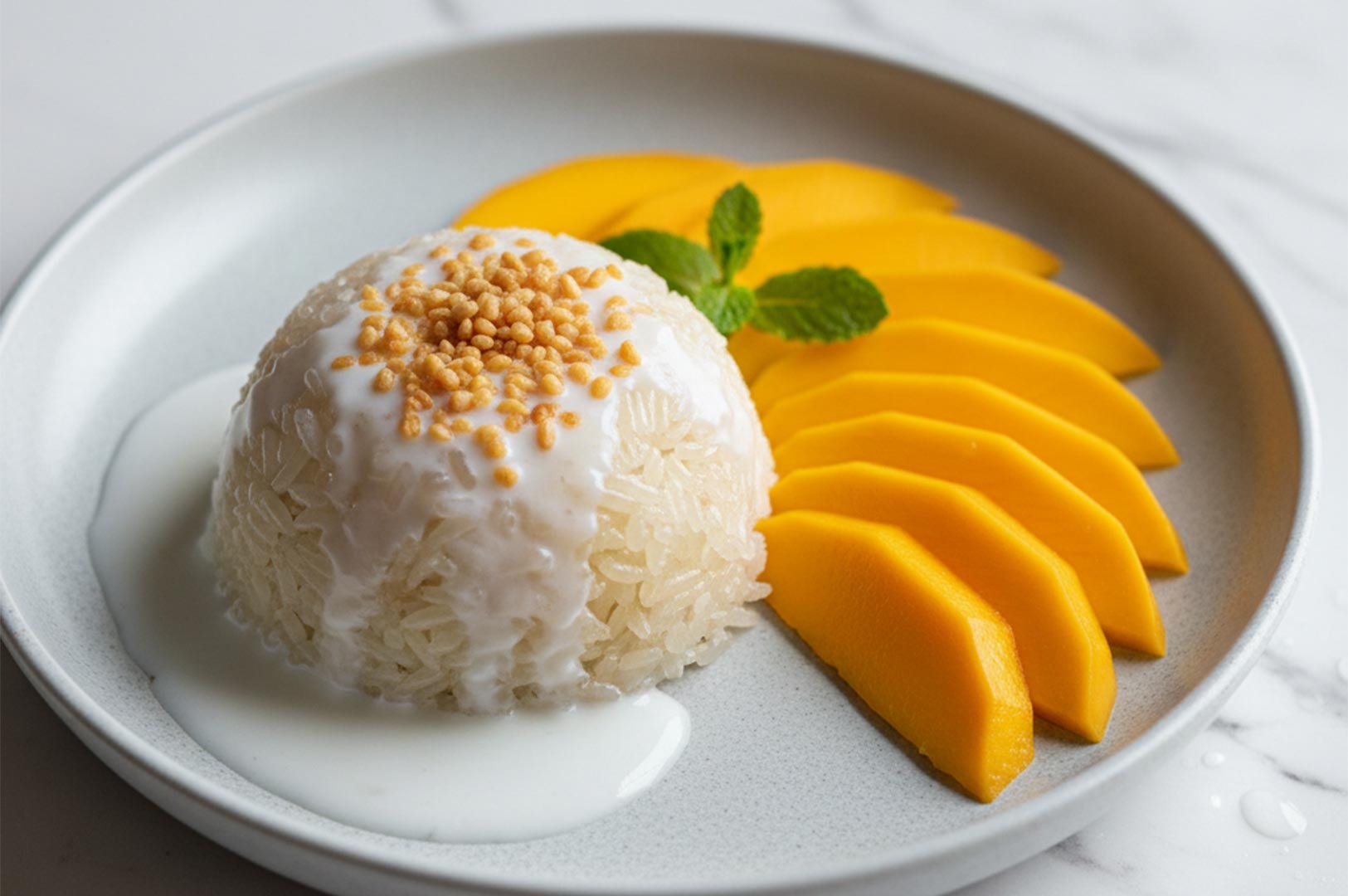
No culinary journey through the Southeast is complete without acknowledging the brilliance of its desserts.
Mango sticky rice is a beloved Thai dessert made with sticky rice, coconut milk, and ripe mango slices. Sliced bananas are also commonly used as a topping or filling in classic Southeast Asian desserts, such as banana pudding and Malaysian roti pisang, enhancing both flavor and presentation. Sweetened condensed milk is a common ingredient in Southeast Asian desserts. Mango sticky rice is the undisputed champion, a simple yet perfect combination of warm, salted coconut milk, sticky rice, and ripe mangoes. It captures the essence of the tropics in a single bowl, often finished with a drizzle of sweetened condensed milk.
A Legacy Written in Flavor
The food in the Southeast region is a testament to resilience. It has survived colonization, war, and globalization to emerge as one of the most beloved delicious cuisines on earth. It is a cuisine that respects the old—the grandmother’s shrimp paste recipe—while embracing the new.
From the first sip of a Tom Yum broth to the last bite of fried tempeh, the experience is a reminder that we are all products of our environment and our history. If you find yourself captivated by these regional stories, you can continue your exploration by reading A Symphony of Senses: Why Southeast Asian Food is the World’s Greatest Culinary Journey, where we dive deeper into the specific sensory experiences of the street markets.
Take a Bite of the Southeast
Why wait for a plane ticket? Visit your local international market, pick up some fresh herbs, a bottle of quality fish sauce, and a bag of jasmine rice. Start with a simple fried rice or a quick stir fried noodles dish, and bring a piece of the Southeast into your own home tonight.

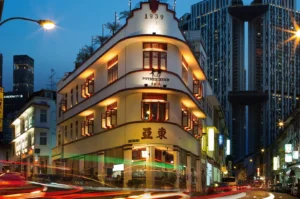
Tong Ah Eating House Review: A Chinatown Breakfast That Still Begins with Kaya Toast
Eda Wong | September 19, 2026
I almost walked past it. I’d been looking for the old triangular building, the red-and-white one you see in every photo of Keong Saik, the one that made Tong Ah feel like a landmark before you’d even ordered anything. But that’s not where it lives anymore. It’s a few doors down now, at 35 Keong…
-
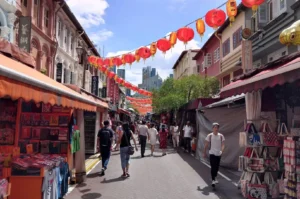
Breakfast at Chinatown Singapore: How Migration Built the City’s Morning Table
Eat Drink Asia Team | September 17, 2026
The first time I ate breakfast in Chinatown, I got it wrong. I arrived at eleven, hungry and hopeful, and found the kopi stalls already turning toward lunch. The porridge uncle was packing up. The toast man had switched to slicing char siew. I ate a rushed plate of noodles standing near a pillar, sweating,…
-
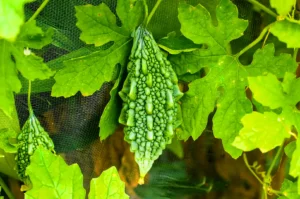
The Bitter Leaf Folded Into a Burmese Home Kitchen
Eda Wong | September 16, 2026
The oil is already hot when she reaches for the leaves. It’s late morning in a kitchen off a quiet lane, and a woman I’ve been watching stands over a blackened wok, tearing bitter gourd leaves by hand into a small heap. The garlic hits the oil first, sharp and loud. Then the leaves go…
-
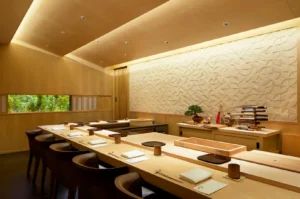
Best Sushi Singapore: From Premium Japanese Restaurants to Exclusive Deals from Affordable Sushi Trains
Dio Asahi | September 15, 2026
I’ve been eating sushi in this city for years now, from S$1.50 plates rolling past on a belt to omakase counters where the bill made me sit up straight. Somewhere along the way I stopped chasing “the best” and started noticing something else — that good sushi answers a mood, not a ranking. Some nights…
-
Al Mubin Restaurant and the Nasi Goreng Sambal Ayam That Has to Carry the Whole Plate
Eda Wong | September 12, 2026
It was close to eleven at night when I finally sat down. The kind of hour when you’re not really hungry so much as unsettled, when you want something warm in front of you more than you want a proper meal. Al Mubin’s food court at Block 407, Ang Mo Kio Avenue 10, was still…
-
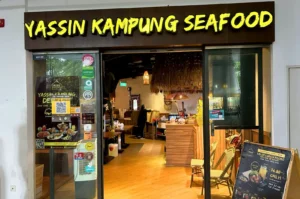
Yassin Kampung Admiralty Review: When Sambal Fried Rice Becomes the Whole Point
Eat Drink Asia Team | September 10, 2026
I ordered the sambal fried rice first, before I’d even properly read the menu. That’s usually a mistake at a place like this. Yassin Kampung @ Admiralty is the kind of restaurant that keeps trying to pull your attention elsewhere — toward stingray, toward crab, toward hotplates that arrive still hissing. But I’d come with…
-
The Bamboo Basket Holding Chiang Mai’s Sticky Rice
Dio Asahi | September 9, 2026
By Dio Asahi for Eat Drink Asia. The lid comes off, and the steam rises first. It’s a warm afternoon in Chiang Mai, and on the table sits a small woven bamboo basket, still holding the heat of the pot it came from. Someone’s grandmother lifts the top and sets it aside without looking. Inside,…
-
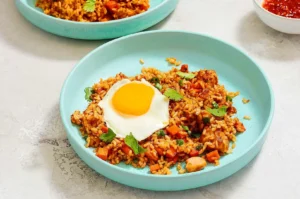
Sambal Fried Rice Recipe for People Who Know the Chilli Paste Does the Heavy Lifting
Dio Asahi | September 8, 2026
I used to add the rice too early. The oil would be hot, the sambal barely a minute in, and I’d tip in the cold rice because I was hungry and impatient. Every time, the same result: rice stained red but tasting of nothing much. Sharp. Raw. Flat where it should have been deep. It…
-
Hup Lok at Havelock Road: A Teochew Fish Soup Carrying Memory Forward
Eda Wong | September 8, 2026
The bowl arrives before anything else does. Steam lifts off it in slow ribbons, carrying the smell of ginger and something warmer underneath: the round, boozy note of hua tiao wine settling into fish. I lean in before I even pick up my spoon. The broth is pale gold and cloudy, thick enough that it…
-
Fresh Sashimi Singapore: Places for Clean Cuts, Quiet Counters, and Fish That Still Feels Alive
Eda Wong | September 5, 2026
I didn’t grow up eating raw fish. For years, sashimi felt like something you learned to appreciate rather than something you loved. Cold, foreign, a little intimidating. Then one afternoon, at a quiet counter, a chef placed a single slice of chutoro in front of me and said nothing. I ate it. And I understood….