By Eda Wong for Eat Drink Asia.
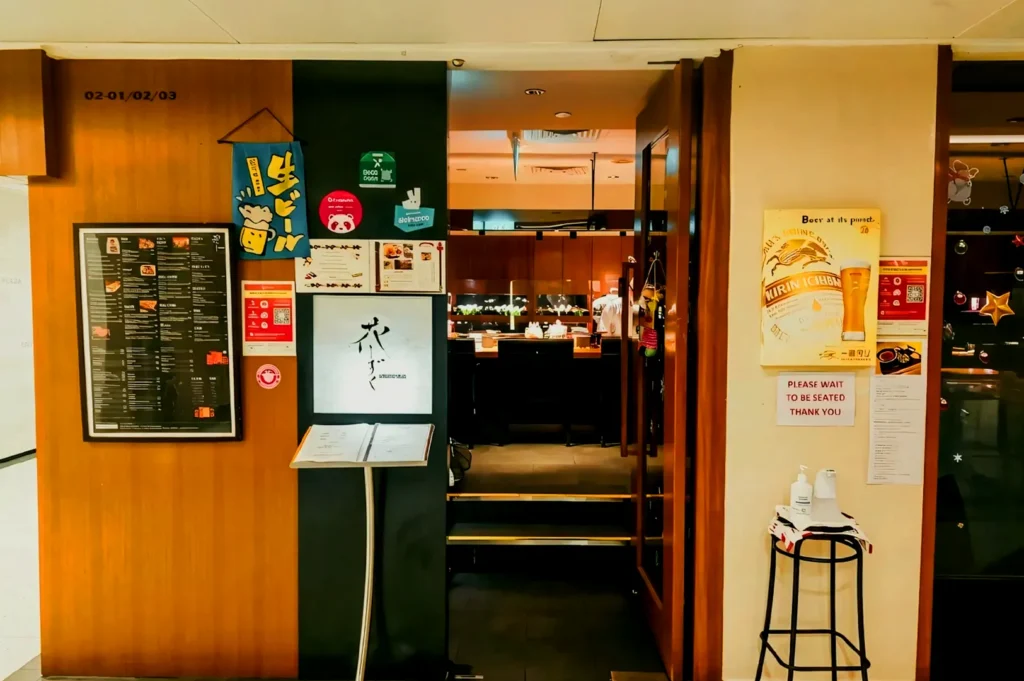
The lift doors open on a floor of Cuppage Plaza that has seen better decades. Peeling signage. A corridor that smells faintly of old carpet and cigarette smoke drifting from somewhere. Then a door slides shut behind me, and the noise falls away.
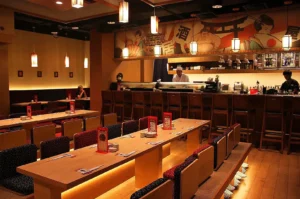
Inside Hanashizuku Japanese Cuisine, the room is warm and low-lit. The izakaya clatter of the building — the shouting, the beer glasses, the laughter — doesn’t reach here. It’s quiet enough that I can hear the knife.
Chef Steven Lee stands behind the counter, and I take a seat where I can watch. He doesn’t look up much. He has been doing this for twenty-eight years, and it shows in the economy of his hands. No wasted motion. The blade moves through a block of tuna in a single unhurried pull, and the slice falls away clean, thick, its edge catching the light.
The sashimi moriawase arrives without ceremony. Fatty tuna. Salmon. A few seasonal cuts I don’t recognise, arranged simply on the plate. The fish came in from Toyosu, flown over on a rhythm the kitchen keeps but never advertises. You can smell it before you taste it — not fishy, but clean, almost like cold seawater. That smell tells you more than any menu could.
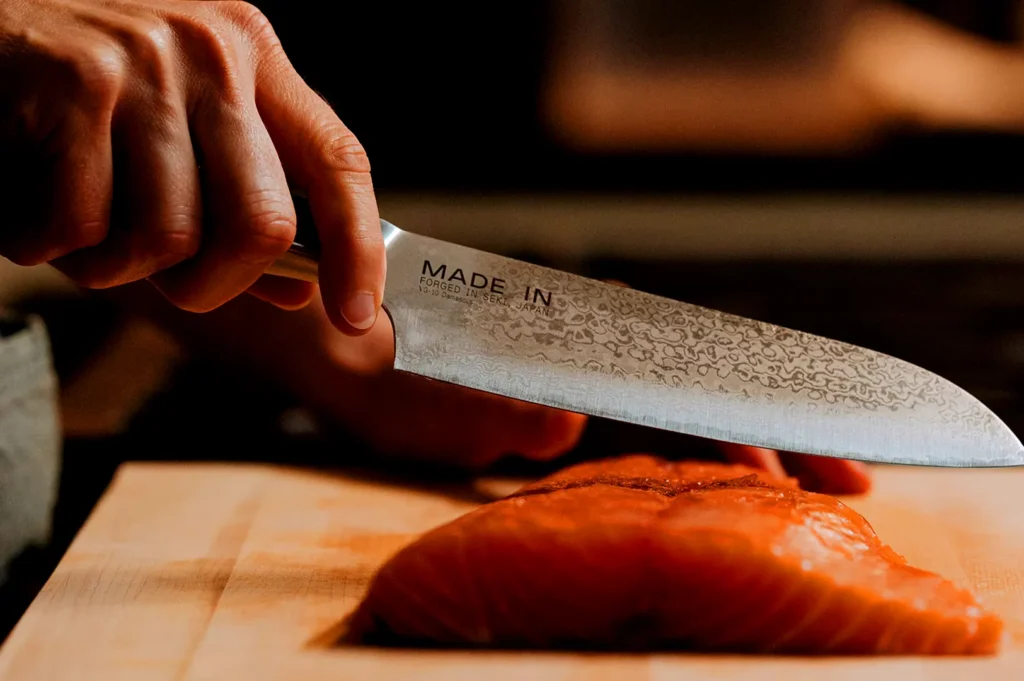
For Eat Drink Asia, this is sashimi at its most honest: Toyosu-fresh cuts that taste like clean seawater.
I take a piece of the tuna. It’s buttery in the way people overuse that word, but here it earns it — soft, giving, dissolving somewhere at the back of the tongue before I’ve decided what to do with it. The salmon is thick, cool, faintly sweet. I slow down. There’s no reason to rush a plate someone spent nearly three decades learning to cut.
What stays with me isn’t the fish, exactly. It’s the quiet. The way a counter like this asks you to pay attention.
There’s a ritual to it that the izakayas outside don’t have. Out there, food is fuel for the evening — loud, communal, fast. Here, it’s something closer to watching. The chef cuts. You eat. Neither of you says much. It’s an old rhythm, and it survives in a corner of a building that doesn’t look like it should hold something so careful.
That’s the part I keep turning over. Hanashizuku sits three floors above a stairwell that hasn’t been renovated in years, in a plaza most people walk past. And inside, a man who has cut fish for twenty-eight years does it the same way he always has, whether the room is full or empty.
There’s a kind of honesty in that mismatch. The setting makes no promises. It doesn’t try to charm you before the food does. Which means the knife has to speak for itself — and it does.
I finish the last slice. Chef Lee is already preparing the next order, the same pull of the blade, the same clean fall of fish.
Outside, the noise waits. In here, for a little while longer, there is only the counter, and the quiet, and the sound of a knife that knows exactly what it’s doing.

The Alchemy of the Wok: The Story of Singapore-Style Bee Hoon
Eda Wong | February 10, 2026
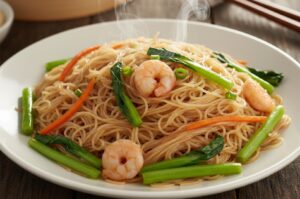
Across the humid evening air of Singapore, a rhythmic clatter echoes from hawker stalls to high-rise kitchens—the sound of a metal spatula against a seasoned wok. Within that intense heat, rice vermicelli noodles undergoes a profound transformation, absorbing the golden hues of curry powder, the savory depths of soy sauce, and the smoky “breath” of…
-
The Sizzle of the Wok: An Exploration of Fried Bee Hoon Across Southeast Asia
Eat Drink Asia Team | February 7, 2026
Across Southeast Asia, from bustling hawker centers to family kitchens, the sizzle of rice vermicelli noodles hitting a hot wok is a universal comfort. Few dishes capture the spirit of Asian noodle culture as well as fried bee hoon. This stir fry, made with thin rice noodles, delivers a tasty meal any time of the…
-
The Silk of the East: A Deep Dive into Bee Hoon and the Art of Rice Vermicelli
Eda Wong | February 5, 2026
Across the bustling kitchens of Southeast Asia, one humble ingredient has woven itself into the fabric of countless beloved dishes. Bee hoon, the delicate rice vermicelli that transforms from brittle strands into silky noodles, represents centuries of culinary tradition and innovation. Whether you’ve savored Singapore noodles in a hawker center or encountered fried bee hoon…
-
The Eternal Hearth: A Journey Through the Soul of Indian Foods Vegetarian Traditions
Dio Asahi | February 3, 2026
In the vibrant tapestry of global gastronomy, few cultures have elevated the plant-based plate to an art form quite like India. While much of the world has recently turned toward meat alternatives for health or environmental reasons, Indian cuisine has been centered on the vegetable for millennia. This isn’t merely a dietary choice; it is…
-
The Essence of Jeju Citron Tea: A Distinctive Profile of Yuja Tea in Korea
Dio Asahi | January 31, 2026
Imagine sitting in a quiet, sun-drenched teahouse overlooking the dramatic volcanic coastline of Jeju Island. The steam rising from your cup carries an aroma that is at once familiar and yet entirely new—a version of Korean citron tea, or yuja cha, that tastes of sea salt, volcanic soil, and generations of island tradition. As you…
-
Korean Citron Tea: Health Benefits and Wellness Secrets
Eat Drink Asia Team | January 29, 2026
As the seasons change and a chill enters the air, many of us seek out comforting rituals to support our well-being. Imagine wrapping your hands around a steaming cup of Korean citron tea—also known as yuja-cha—its bright, citrus aroma soothing and revitalizing with every sip. More than just a winter treat, Korean citron tea is…
-
When the Izakaya Becomes the Plan: Izakaya Singapore Top Picks for After-Work Reset
Dio Asahi | January 28, 2026
January 28, 2026 | Dio Asahi Last updated: September 14, 2026 As you step behind the humble noren curtain, you’re greeted by glowing lanterns, sizzling charcoal-grilled skewers, and warm welcomes. This is izakaya, Japan’s casual pub, a vibrant part of Singapore’s dining scene. More than just yakitori and sake, izakayas offer a lively setting for social…
-
Yuja Tea: Korea’s Traditional Citron Tea
Dio Asahi | January 27, 2026
The golden, aromatic steam rising from a cup of yuja tea carries centuries of Korean tradition and wellness wisdom. This caffeine-free citrus beverage has warmed Korean hearts through countless winters, offering both comfort and powerful health benefits in every sip. Made from the Korean citron known as yuja fruit, this simple Korean tea represents one…
-
The Global Phenomenon of Korean Instant Noodle: A Cultural and Culinary Journey
Eda Wong | January 24, 2026
In the high-octane streets of South Korea, where the “pali-pali” (hurry-hurry) culture defines the pace of life, one dish stands as the ultimate equalizer of speed and satisfaction: Korean ramyeon. While the world often uses the terms ramen and ramyeon interchangeably, the Korean version is a distinct entity. It is not merely a quick snack…
-
Traditional Ramyeon: The Soulful Heart of Korean Noodle Culture
Eat Drink Asia Team | January 20, 2026
In the bustling culinary landscape of South Korea, few comfort foods can match the satisfaction of a steaming bowl of ramyeon. While outside of Korea, “ramyeon” often brings to mind Korean instant noodles or instant ramen, true ramyeon Korean style refers to the artful, freshly prepared noodle soup enjoyed in homes and at local restaurants…