By Eda Wong for Eat Drink Asia.
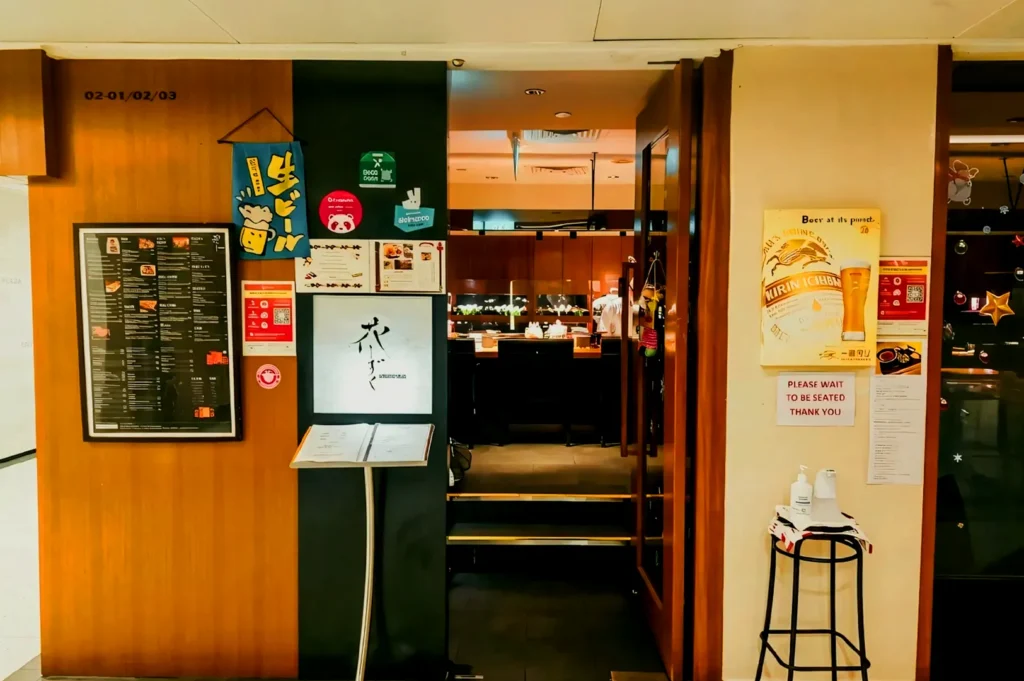
The lift doors open on a floor of Cuppage Plaza that has seen better decades. Peeling signage. A corridor that smells faintly of old carpet and cigarette smoke drifting from somewhere. Then a door slides shut behind me, and the noise falls away.
Inside Hanashizuku Japanese Cuisine, the room is warm and low-lit. The izakaya clatter of the building — the shouting, the beer glasses, the laughter — doesn’t reach here. It’s quiet enough that I can hear the knife.
Chef Steven Lee stands behind the counter, and I take a seat where I can watch. He doesn’t look up much. He has been doing this for twenty-eight years, and it shows in the economy of his hands. No wasted motion. The blade moves through a block of tuna in a single unhurried pull, and the slice falls away clean, thick, its edge catching the light.
The sashimi moriawase arrives without ceremony. Fatty tuna. Salmon. A few seasonal cuts I don’t recognise, arranged simply on the plate. The fish came in from Toyosu, flown over on a rhythm the kitchen keeps but never advertises. You can smell it before you taste it — not fishy, but clean, almost like cold seawater. That smell tells you more than any menu could.
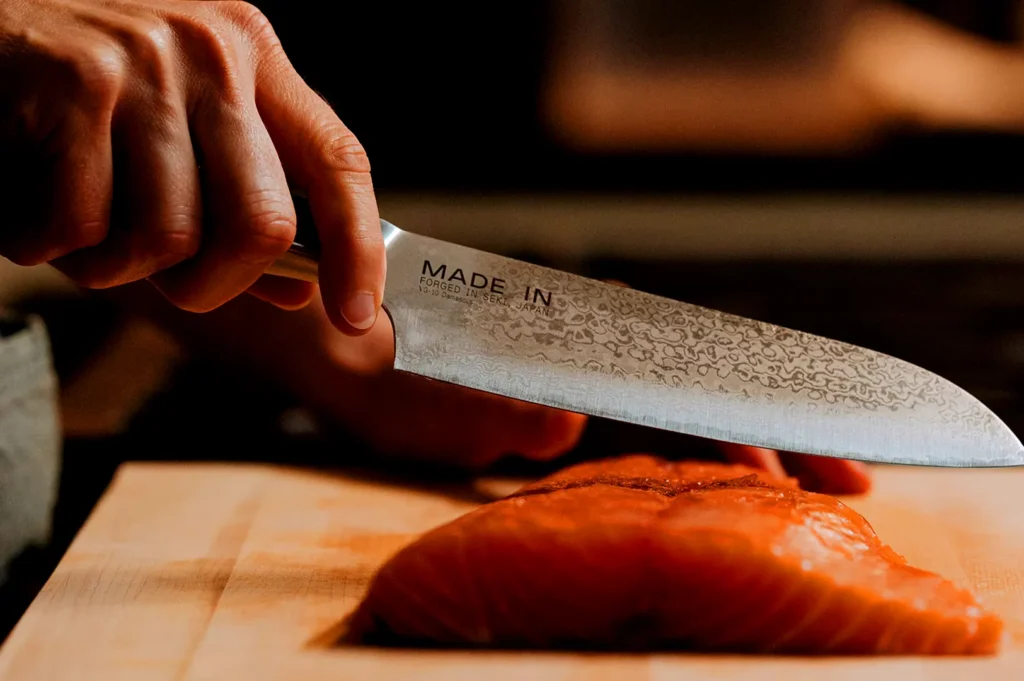
For Eat Drink Asia, this is sashimi at its most honest: Toyosu-fresh cuts that taste like clean seawater.
I take a piece of the tuna. It’s buttery in the way people overuse that word, but here it earns it — soft, giving, dissolving somewhere at the back of the tongue before I’ve decided what to do with it. The salmon is thick, cool, faintly sweet. I slow down. There’s no reason to rush a plate someone spent nearly three decades learning to cut.
What stays with me isn’t the fish, exactly. It’s the quiet. The way a counter like this asks you to pay attention.
There’s a ritual to it that the izakayas outside don’t have. Out there, food is fuel for the evening — loud, communal, fast. Here, it’s something closer to watching. The chef cuts. You eat. Neither of you says much. It’s an old rhythm, and it survives in a corner of a building that doesn’t look like it should hold something so careful.
That’s the part I keep turning over. Hanashizuku sits three floors above a stairwell that hasn’t been renovated in years, in a plaza most people walk past. And inside, a man who has cut fish for twenty-eight years does it the same way he always has, whether the room is full or empty.
There’s a kind of honesty in that mismatch. The setting makes no promises. It doesn’t try to charm you before the food does. Which means the knife has to speak for itself — and it does.
I finish the last slice. Chef Lee is already preparing the next order, the same pull of the blade, the same clean fall of fish.
Outside, the noise waits. In here, for a little while longer, there is only the counter, and the quiet, and the sound of a knife that knows exactly what it’s doing.

The Heart of the Korean Noodles: History and Texture
Eda Wong | January 17, 2026
In Korea, a bowl of noodles is far more than a simple dish; it is a cultural anchor that has weathered centuries of change. For generations, the length of the strand has symbolized a long and prosperous life, making Korean noodles a staple at birthdays, weddings, and the milestone 60th birthday celebration known as hwangap….
-
Preserving the ‘Big Bowl’ Tradition with Pen Cai Delivery in the Age of Doorstep Dining
Eat Drink Asia Team | January 15, 2026
Modern Festive Menu: Bringing the Big Bowl Home There is a special, undeniable magic to the Chinese New Year reunion dinner. For many families, Chinese New Year 2026 is another chance to gather loved ones at the table and celebrate with a glorious pen cai—sometimes called the “big bowl feast”—overflowing with premium ingredients and festive…
-
Sencha: Traditions, Flavors, and the Essence of Japanese Tea
Eat Drink Asia Team | January 15, 2026
When people around the world think of Japanese tea, images of tranquil tea ceremonies in small rooms or frothy bowls of matcha often come to mind. Yet, the reality of tea drinking in Japan is much broader, woven deeply into the culture and daily habits. For the vast majority, sencha is the beloved tea that…
-
The Best Restaurants Tokyo Are Rarely the Ones You Plan For
Eda Wong | January 12, 2026
Tokyo, Japan’s capital, does not reward urgency. It rewards return. On my first visit, I chased what everyone told me were the best restaurants Tokyo had to offer. I spent weeks highlighting maps, bookmarking digital “must-eat” lists, and refreshing reservation pages until my eyes blurred. I thought that by conquering the top-tier establishments, I would…
-
Japan and Food: Culinary Harmony – The Deep Connection Between Japanese Food and Culture
Eat Drink Asia Team | January 11, 2026
When it comes to Japan and food, the two are intertwined in ways that captivate taste buds and awaken the senses. Japanese cuisine stands as one of the world’s most revered traditions—more than nourishing meals, it is an art reflecting centuries of philosophy and a window into Japanese culture itself. Every bowl of miso soup,…
-
The Verdant Cup: A Celebration of Green Tea in Japan
Eda Wong | January 10, 2026
In Japan, green tea is much more than a beverage. It marks a moment of pause, hospitality, and tradition. The story of green tea in Japan weaves through centuries of culture, artistry, and daily life—bridging ancient rituals like the Japanese tea ceremony to everyday meals enjoyed at home. The origins and beginning of Japanese tea…
-
Japanese Green Tea from Japan: The Story of Matcha
Dio Asahi | January 8, 2026
On a misty April morning in Kyoto, I knelt on tatami in a small tea room outside Uji, Japan. The host, dressed in kimono, moved with quiet skill as she scooped matcha powder into a ceramic bowl. The air was filled with the aroma of aged wood mixed with the grassy scent of high quality…
-
Takoyaki: The Sizzling Heart of Japan Food Culture
Dio Asahi | January 3, 2026
What is Takoyaki and Why Does it Matter in Japanese Food Culture? In the bright heart of Osaka, the sizzle of takoyaki batter signals one of Japan food culture’s most beloved street foods. Lines form at street stalls drawn by the delicious food aromas of sweet-savory sauce and bonito flakes dancing on golden spheres. Takoyaki,…
-
Everything You Need for a Flawless Bubble Tea Cake
Eda Wong | January 1, 2026
The global bubble tea phenomenon has evolved beyond drinks into the world of baking, creating one of the most exciting dessert trends of recent years. Bubble tea cake combines the beloved flavors of milk tea with the satisfying chew of boba pearls, all wrapped up in an adorable bubble tea cake that’s perfect for any…
-
Pad Thai Dish: Everything You Need to Know About the Rice Noodles That Make It Authentic
Eat Drink Asia Team | December 30, 2025
Pad Thai is more than just a staple of Thai Food; it’s a Global Phenomenon. From bustling street carts in Bangkok to high-end Thai Restaurants in New York, this iconic Pad Thai Dish has captured the hearts and palates of food lovers everywhere. The best Pad Thai rivals what you would find in a typical…