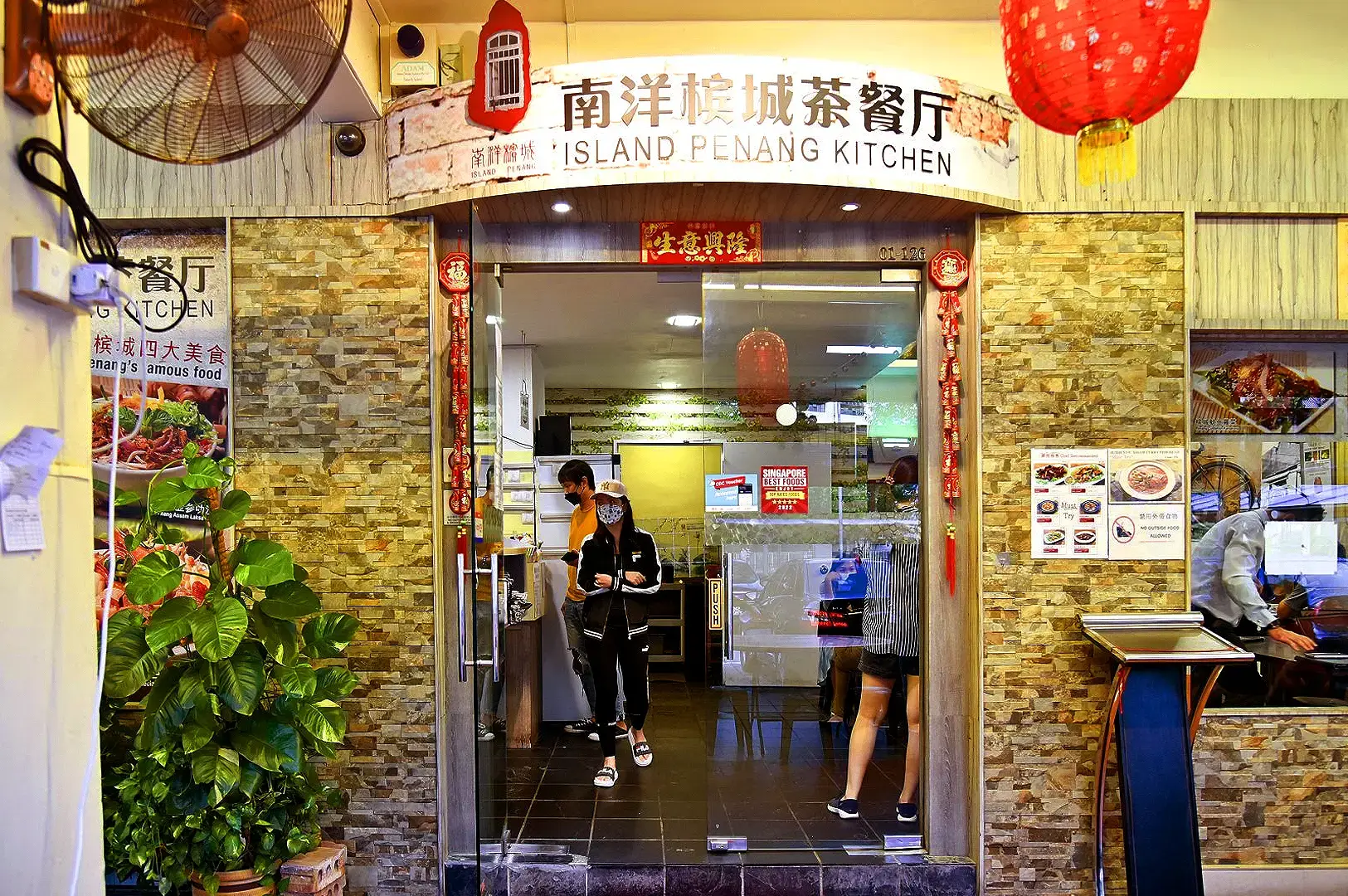
I smelled the wok before I found the door. It drifted across the void deck of Block 721, past bicycles chained to railings and an uncle reading the papers on a stone bench. Burnt soy, pork lard, and that faint scorched edge you only get from a pan pushed past polite heat.
Then, a few steps closer, something sharper cut through it. Sour, fishy, almost floral. Tamarind. That is Island Penang Kitchen in two breaths: wok smoke on one side, assam laksa sourness on the other, and a plain neighbourhood table somewhere in between.
This is not a polished destination restaurant. It is a Clementi West place for people craving Penang food, prawns, tangy broth, savoury noodles, pork lard, and quick service without needing to travel across Singapore.
First Impressions at Island Penang Kitchen
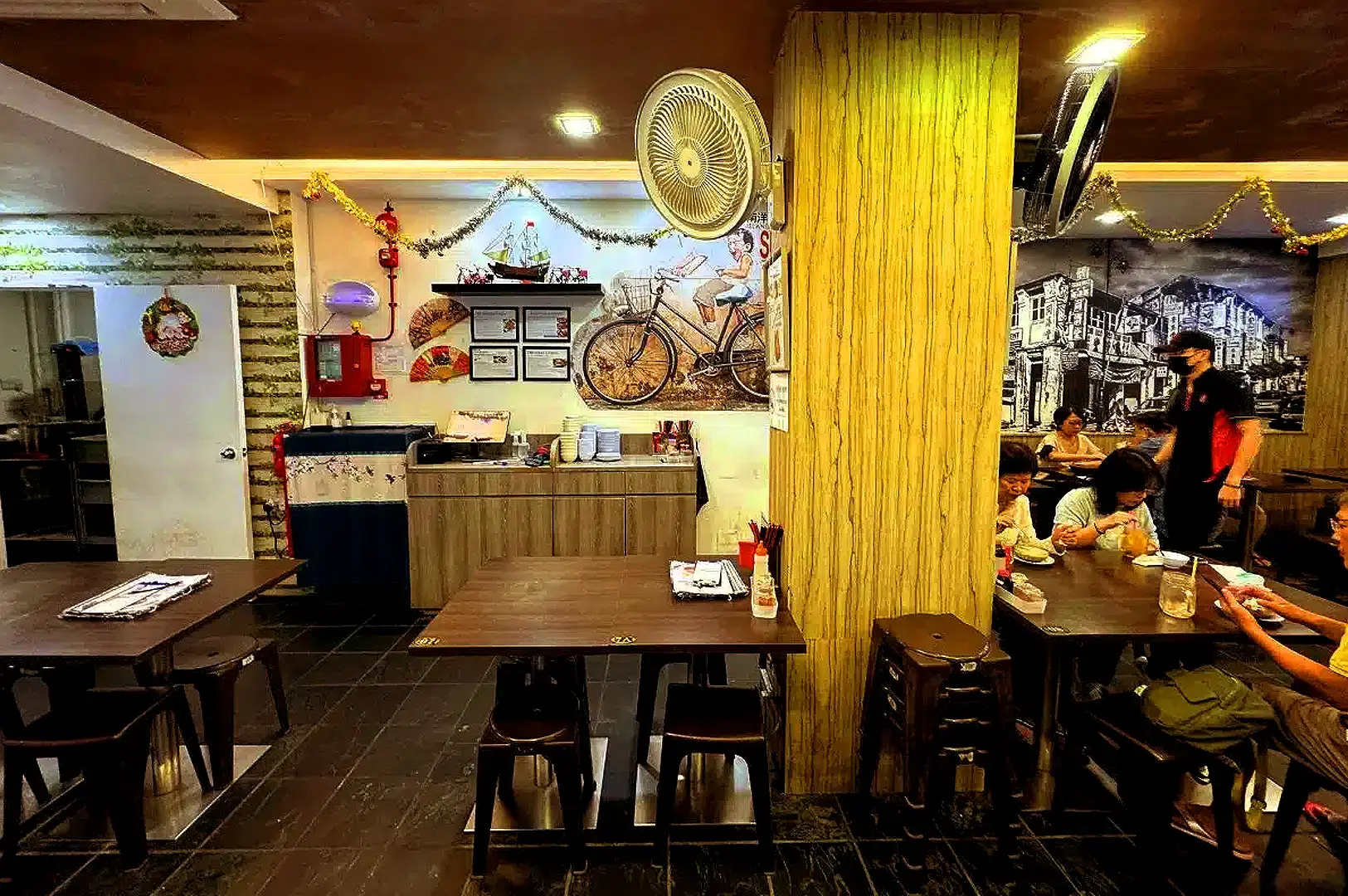
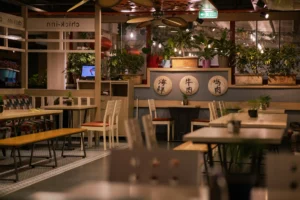
I visited on a Thursday, arriving around 11:35am. That turned out to be the right time. By noon, a short queue had formed at the entrance, and by 12:30pm, every table inside was taken. The room is simple: dark tables, tiled floors, ceiling fans turning slowly under the air-conditioning. It is clean and bright, and it does not pretend to be anything grander than a neighbourhood restaurant.
The Room and the Crowd
The walls do most of the talking. Penang street scenes are painted across them, including a version of the famous children-on-a-bicycle mural. It is not subtle, but I did not mind. It felt less like decoration and more like someone saying where they are from.
There is some outdoor seating too, but on a humid day, I would choose indoors. Around me were families, office workers, and an older couple who ordered without opening the menu. That told me more than any sign could.
What I Ordered at Island Penang
The menu covers many of the dishes diners expect from a Penang-style restaurant in Singapore: char kway teow, Penang Hokkien Mee, assam laksa, rojak-style plates, fried items, soups, vegetables, and noodle dishes.
For this visit, I focused on the food that seemed to explain the kitchen best:
- Penang Char Kway Teow
- Penang Hokkien Prawn Noodle
- Penang Assam Laksa
- Jiu Hu Eng Chai
That gave me a useful spread: smoke, broth, sourness, chew, crunch, and one good look at where the kitchen feels most confident.
Penang Food Benchmark: Char Kway Teow
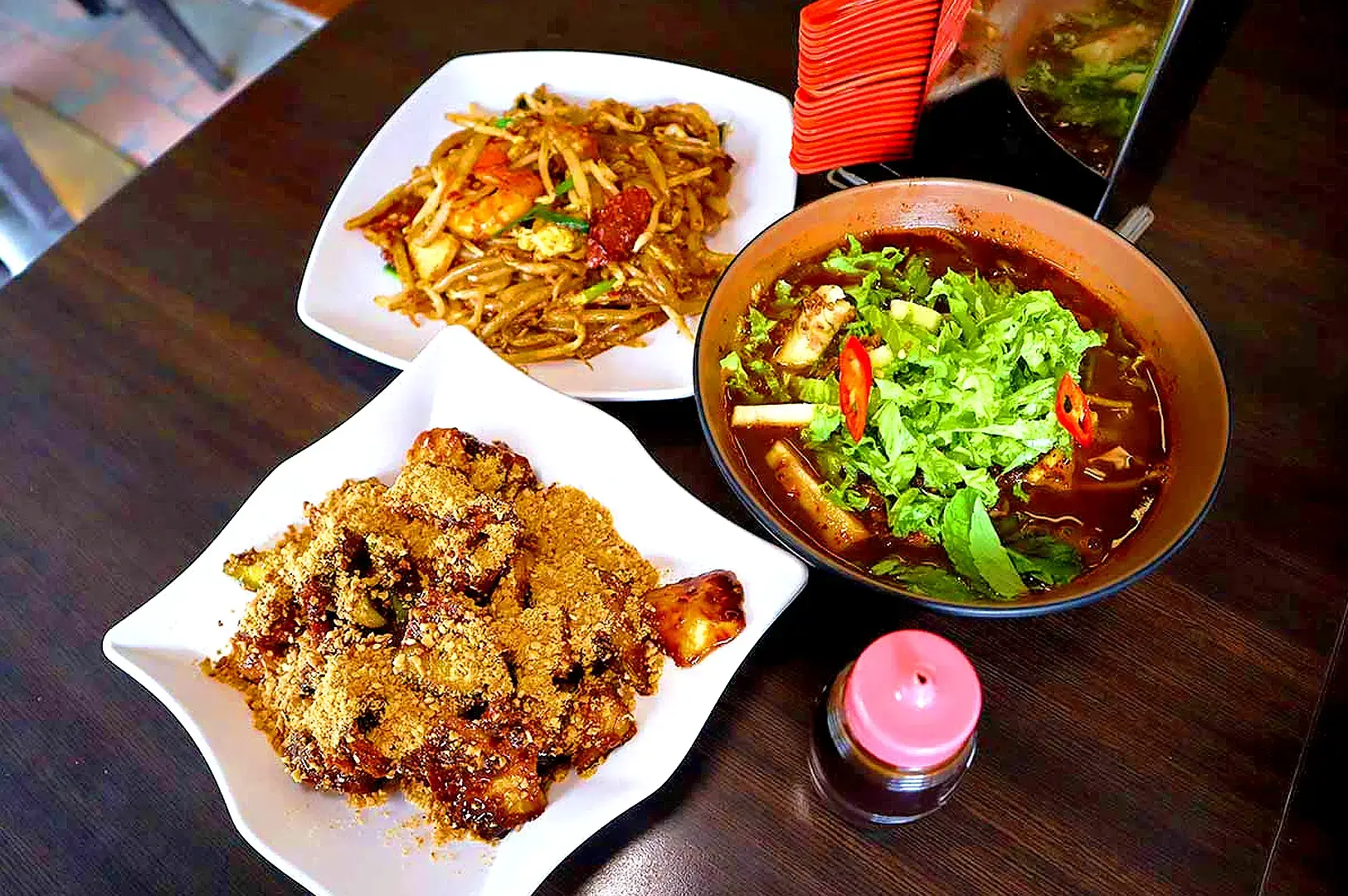
Char Kway Teow arrived glossy and dark, the flat rice noodles lacquered in soy but not drowning in sauce. There were slivers of lap cheong, prawns, bean sprouts, and egg folded through while still loose. Some of the egg clung to the noodles like a soft sauce.
The first mouthful was smoky. Not overwhelming, not bitter, just a low char under the soy and lard. The lap cheong gave sweet little bursts, the bean sprouts still snapped, and the noodles had that slippery chew that makes you chase one more forkful.
What Worked
The wok hei was there, especially at the start. It softened as the plate cooled, but that is normal with char kway teow. This dish is built for immediacy.
My advice is simple: eat this first. Let the soup wait. Let the side dishes wait. This is the plate that wants your attention while steam is still rising.
Penang Kitchen Hokkien Mee: Prawn Broth That Takes Its Time
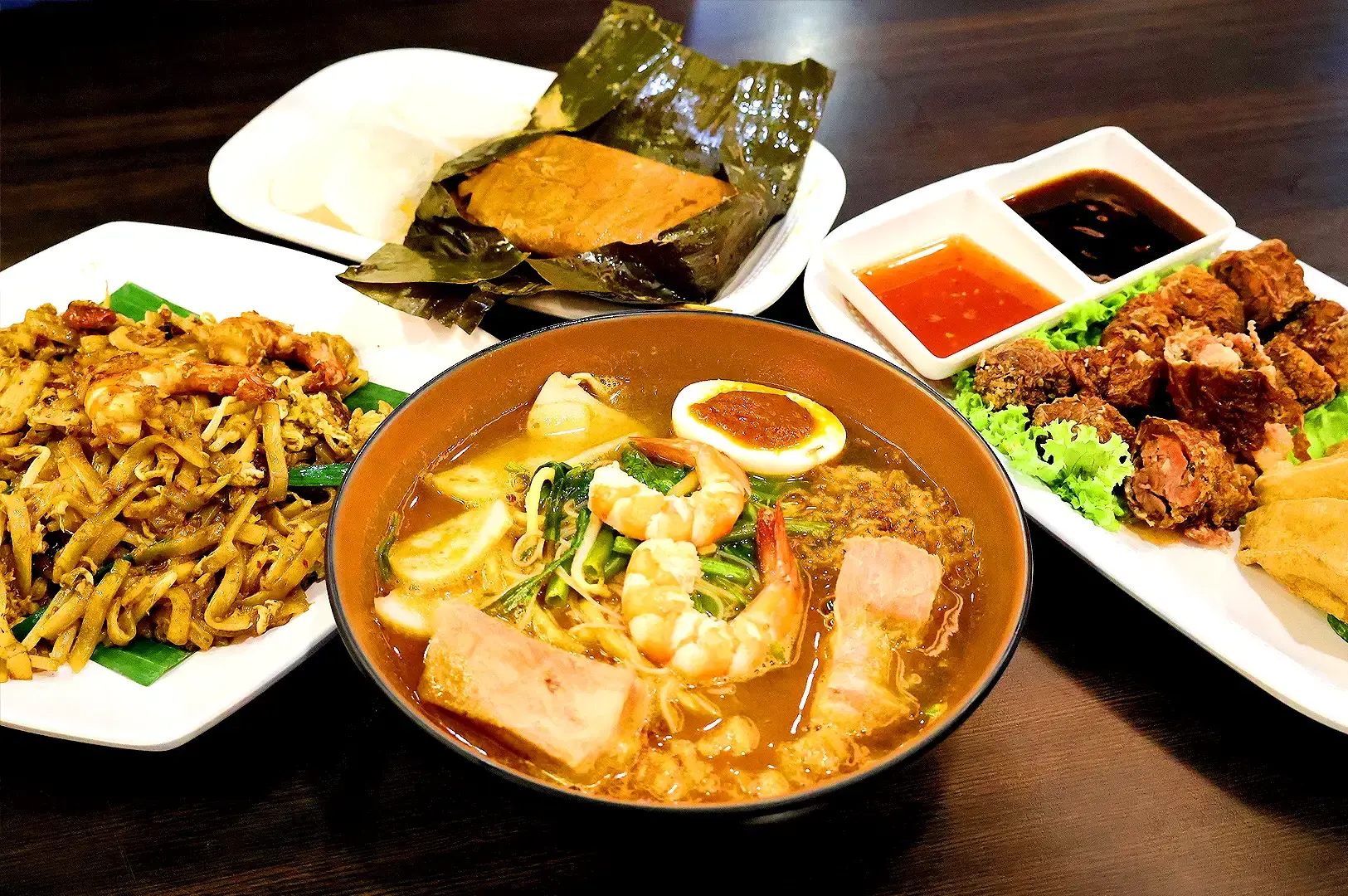
Next came the Penang Hokkien Prawn Noodle, the kind of bowl often understood as Penang Hokkien Mee rather than the dark fried Hokkien mee many Singapore diners may picture first.
The broth was a deep rusty red, with a thin sheen of chilli oil on top. It smelled strongly of prawn heads and shells, the kind of stock that tastes like it has given up its sweetness slowly. The first sip came in stages: sweet, then briny, then warm with a mild, steady spice.
The Toppings
The toppings were generous enough. There was half an egg, kang kong, prawns, lean pork slices, a pork rib, and pig skin. The rib pulled from the bone easily with chopsticks. The pig skin stayed firmer, with a gentle chew that played well against the softer meat.
Penang Assam Laksa: Not Ordinary Bee Hoon
The Penang Assam Laksa arrived looking almost murky, with a greyish-brown broth flecked with minced fish. On top were slivers of cucumber, onion, pineapple, torn mint leaves, and a dark smear of prawn paste on the side.
I stirred the paste in and took a sip. Sour first, then sweet, then a slow heat at the back of my throat. The fish gave the broth body, and the mint lifted everything just when it started to feel heavy.
What Could Be Sharper
I was glad to see the proper Penang-style laksa noodles: thick, slippery, and almost translucent rather than ordinary thick bee hoon. They were bouncy and slick, carrying the broth well.
But I will be honest. I wanted the assam laksa a touch more sour. This dish lives or dies by its acid, and mine sat just below the sharpness I remember from Penang. Some diners have made similar comments about wanting more sourness or more fish in the broth, and I understand why.
Jiu Hu Eng Chai: The Texture Surprise
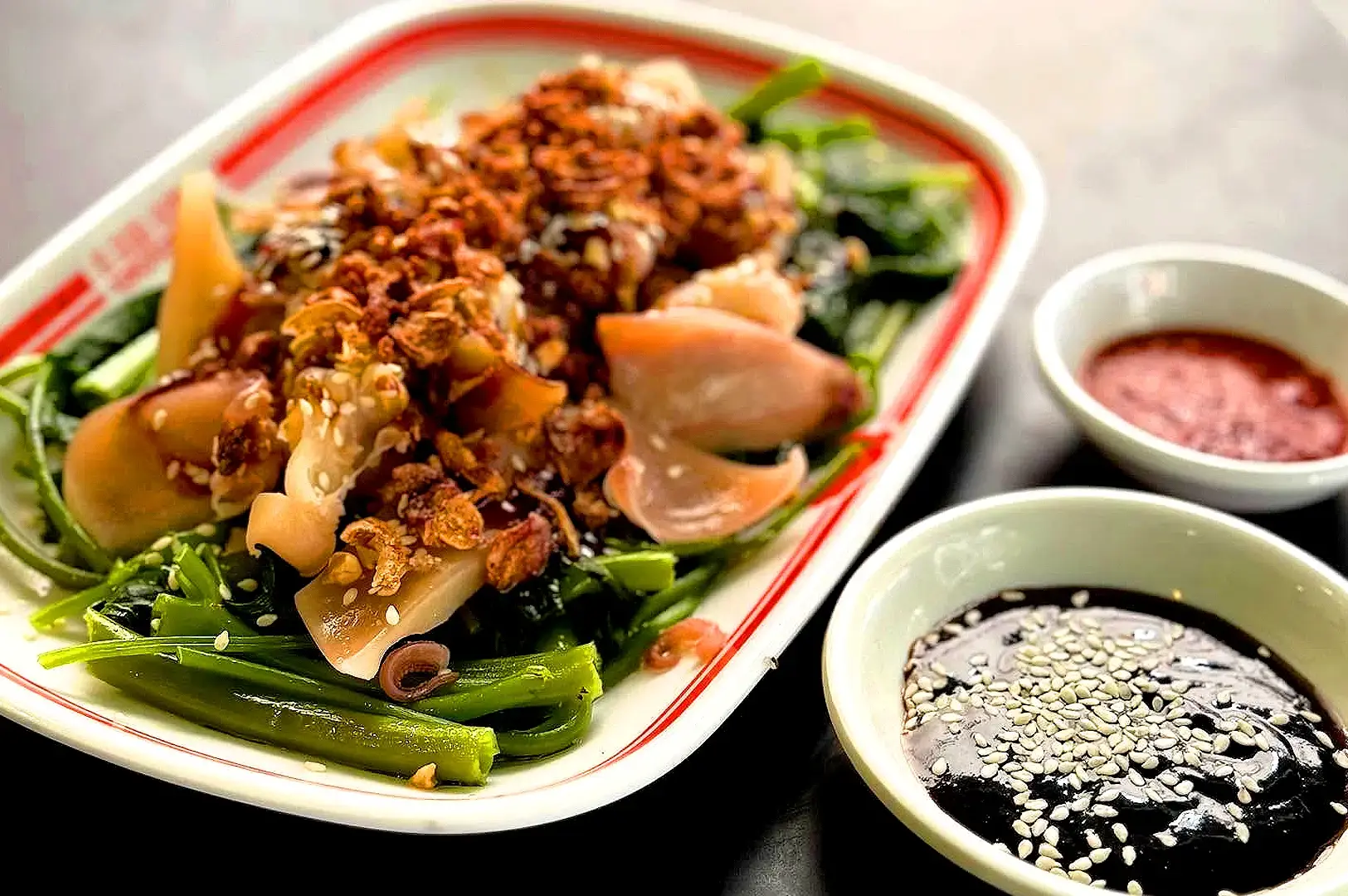
I nearly did not order the Jiu Hu Eng Chai. I am glad I did. It is a plate of blanched cuttlefish and water spinach tossed in a thick, sweet, reddish sauce and finished with crushed peanuts. It looks humble, almost like an appetizer or afterthought on the menu.
The cuttlefish was chewy without turning rubbery, slightly springy under the teeth. The water spinach stayed crisp and green. The peanuts added crunch, while the sauce tied everything together with sticky sweetness and a faint savoury edge.
Why It Deserves Space
Every bite gave me contrast: chew, crunch, sauce, freshness. After the smoke of char kway teow and the tangy sourness of assam laksa, this plate brought the meal back to texture. It is not the loudest order, but it is one I would repeat. If you are wanting something lighter between heavier noodles, this is a good choice.
That interplay of springy cuttlefish, crisp greens, and crushed peanuts brings the craft behind Malaysian Chinese food into focus.
Not Everything Lands
The fried meats seem to be where things wobble. Diners have mentioned fried items coming out dry or overdone, and the Butter Salted Egg Chicken has drawn mixed comments. The sauce may get the flavour right, but chicken chunks can turn hard if they are fried too long.
If it’s the vegetable-led side of the meal that interests you, Fortune Centre’s vegetarian diningoptions offer another direction for your next casual lunch.
Island Penang and the Rojak Question
If you want to build a fuller Penang meal, rojak is worth considering on another visit. It fits the Island Penang rhythm because Penang-style eating is rarely just about one main dish. It is about sweet, spicy, tangy, savoury, crunchy, and soft things eaten in conversation with one another.
That is why a plate of rojak makes sense here as a bridge between the sharper assam laksa and the heavier wok-fried noodles. It is not necessary if you are dining alone, but for a family table, it gives everyone something easy to pick at while the bigger dishes arrive.
Quick, Not Chatty
Service here is efficient. I ordered at the table, the food came steadily, and the bill was easy to settle. But it is not warm in a memorable way. Nobody asked how the laksa was or offered suggestions. When the room filled, staff moved quickly between tables with their heads down.
What to Expect
- Fast table turnover
- Straightforward ordering
- Minimal small talk
- Food arriving steadily when the kitchen is not overwhelmed
- A busier, noisier room during peak lunch
Finding the Kitchen
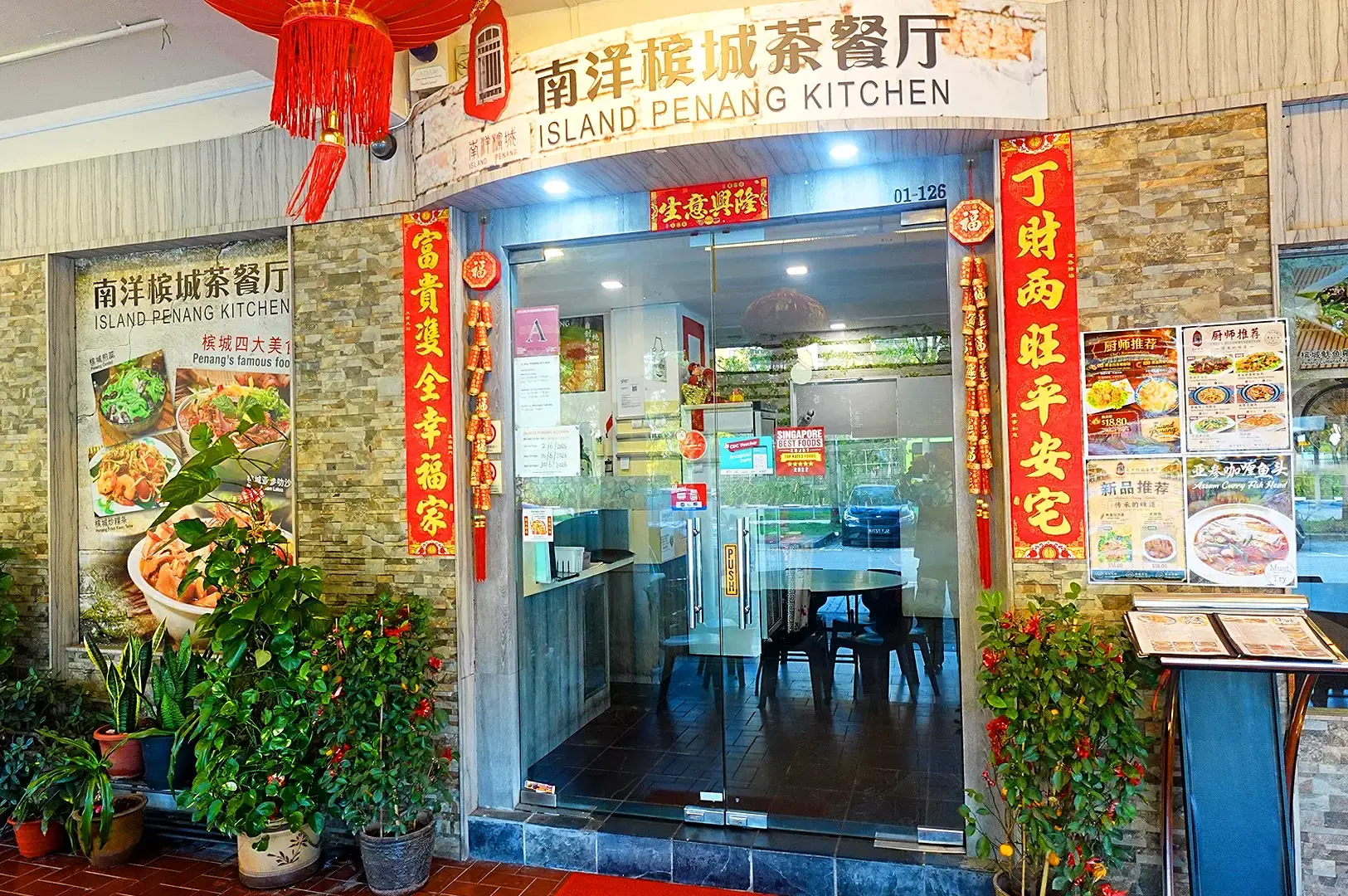
Island Penang Kitchen is located at 721 Clementi West Street 2, #01-126, Singapore 120721. It sits in a neighbourhood block rather than a mall, which is part of the appeal and part of the inconvenience.
Before You Go
- Nearest MRT: Clementi MRT, then a short bus ride or longer walk
- Best for: Families, west-side diners, Penang food cravings, casual lunches
- Less ideal for: Romantic dinners, long chats at peak hour, polished service
- Spend: Around S$15 to S$25 per person, depending on how much you share
- Booking: Expect walk-in dining rather than a reservation-led experience
- Best timing: Before 11:45am for lunch, or after 1:30pm
Opening hours can vary across listings, so check the restaurant’s latest page or call ahead before making a special trip, especially on Tuesdays or public holidays.
The Unpolished Charm
Island Penang Kitchen is not polished, and it does not try to be. If you are after a quiet date night, attentive service, or a restaurant that softens every edge for comfort, this probably is not your table.
And if you measure every plate against your favourite George Town stall in Malaysia, some dishes may feel gentler than you want. But if you love noodles, if you are feeding a family, or if you are in the west and craving Penang food without crossing Singapore, it makes a lot of sense.
The best dishes here are not about refinement. They are about contrast: smoke clinging to char kway teow, prawn broth warming slowly, tamarind pulling the palate awake, and cuttlefish snapping back under the teeth.

Not Just ‘Fresh Fish’: The Best Omakase Singapore Has for Storytelling Courses & Seasonal Bites
Eat Drink Asia Team | May 19, 2026
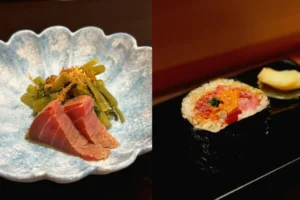
May 19, 2026 | Eat Drink Asia Team | Last Updated September 29, 2026 When you sit at an omakase counter, you’re paying for a culinary journey. A memorable omakase is more than fresh fish; it’s a delicate celebration of flavors. The best chefs act as storytellers, sequencing each bite to build anticipation and contrast, guiding…
-
Indonesian Traditional Food at Warong Nasi Pariaman: A Plate That Doesn’t Explain Itself—It Proves It
Dio Asahi | May 16, 2026
It’s always a little heartbreaking when a true culinary landmark decides to close its doors. Warong Nasi Pariaman, the iconic nasi padang spot at 738 North Bridge Road, served its final plates in January 2026. For decades, it stood as a testament to heritage, feeding generations of Singaporeans and becoming an essential part of the…
-
Indonesian Dishes, the IndoChili Way: A Restaurant Review Written in Smoke and Sweet Soy
Eda Wong | May 14, 2026
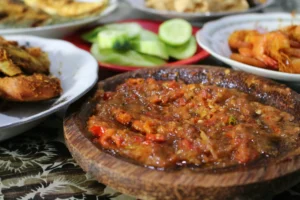
There are evenings when only a very specific type of comfort food will do. I wasn’t craving a standard bowl of noodles or a generic curry. I wanted that unmistakable, deeply fragrant balance of charcoal smoke and sticky sweet soy sauce that defines authentic Indonesian cooking. Finding that perfect harmony in Singapore without sitting outside…
-
The Sweet Darkness of Kecap Manis: The Flavour That Makes Food in Indonesia Feel Like Home
Dio Asahi | May 12, 2026
When I first tried to cook authentic Indonesian nasi goreng at home, I was incredibly confident. I had my wok smoking hot, my garlic and shallots perfectly fragrant, and a generous splash of regular soy sauce ready to go. But when I took that first bite, my heart sank. It tasted flat, salty, and entirely…

Fortune Centre Food Guide: Vegetarian Finds, Quick Lunches, and Hidden Dinner Spots
Eda Wong | May 9, 2026
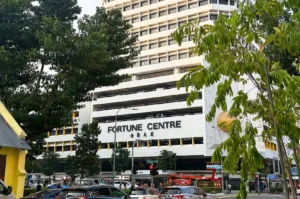
May 9, 2026 | Eda Wong | Last Updated: November 10, 2026 I have spent the last six months navigating the tight corridors and bustling walkways of Fortune Centre, determined to map out the Fortune Centre food scene beyond its best-known stalls. I’ve tried all of these famous stalls, sampling everything from intricate plant-based creations to…
-
Types of Chinese Food Hidden in Plain Sight: Imperial Treasure, Reviewed Through Their Orders
Eat Drink Asia Team | May 7, 2026
For a long time, many viewed Chinese food as one giant, delicious monolith, characterized by intense heat, heavy sauces, and wok-tossed brilliance. However, as more time is spent exploring Singapore’s incredible dining scene, it becomes clear that true culinary mastery often whispers rather than shouts. To demonstrate this to visitors, a table at Imperial Treasure…
-
Famous Food in China Isn’t Loud: Din Tai Fung’s Dumplings and the Power of Precision
Dio Asahi | May 5, 2026
There is a common misconception that the most authentic culinary journeys involve loud, chaotic kitchens with massive wok flames and shouting chefs. I used to think the same thing until I started paying closer attention to the quieter corners of Asian cooking. I visited Din Tai Fung on a Tuesday around 2:30 pm, hoping to…
-
The Morning Steam of Baozi Along a Beijing Street
Eda Wong | May 2, 2026
The first thing I noticed was the steam. It rose in soft, continuous bursts from stacked bamboo baskets, drifting into the cold Beijing morning like breath made visible. The vendor lifted each lid with practiced rhythm, a quick tilt, a release of heat, then the faint scent of yeast, pork, and warm flour rolling outward….
-
Moo Ping and the Structure of Thai Grilled Street Meat
Dio Asahi | April 30, 2026
The first thing I noticed was the smoke, thin, controlled, rising steadily from a charcoal grill along a Bangkok street. Skewers of pork turned in a quiet rhythm, fat dripping and hissing as it met the heat. The air carried layers of scent: sweet palm sugar, garlic, and a faint fermented depth beneath it. I…
-
Where Kuala Lumpur Actually Begins: Reading the City Through Its Food
Eat Drink Asia Team | April 30, 2026
There are cities you can understand through maps, and then there are cities like Kuala Lumpur that only begin to make sense when you follow what people eat. Not what is recommended or ranked, but what is repeated. The same stall visited every week, the same dish ordered without hesitation, the same flavours that feel…