The sharp winter wind rattles the low stone walls of a Jeju Island kitchen, but inside, the air is thick with steam and the deeply marine scent of boiling kelp. An elderly woman stands by a bubbling steel pot, watching the dark green fronds swell and twist in the rolling water. She adds a splash of toasted sesame oil, and the liquid hisses, sending up a rich, nutty aroma that temporarily masks the salt air. She is not rushing. She carefully adjusts the flame, allowing the broth to simmer until it turns a milky, opaque jade. It is a slow, methodical morning rhythm, a quiet act of preparation that fills the room with warmth.
This is miyeok-guk (pronounced mee-yuhk-gook), the traditional Korean seaweed soup. At its core, the dish is an exercise in extracting profound depth from minimalist ingredients. While mainland versions often rely on a heavy beef broth, the Jeju iteration draws its power straight from the surrounding ocean, frequently incorporating fresh abalone, sea urchin, or delicate white fish. The true craft, however, lies in the preparation of the kelp itself. Before water ever touches the pot, the dried seaweed is soaked until soft, then aggressively kneaded by hand and sautéed in sesame oil and minced garlic. This crucial friction releases the seaweed’s natural starches, transforming what could be a thin, watery liquid into a velvety, substantial broth that coats the spoon.
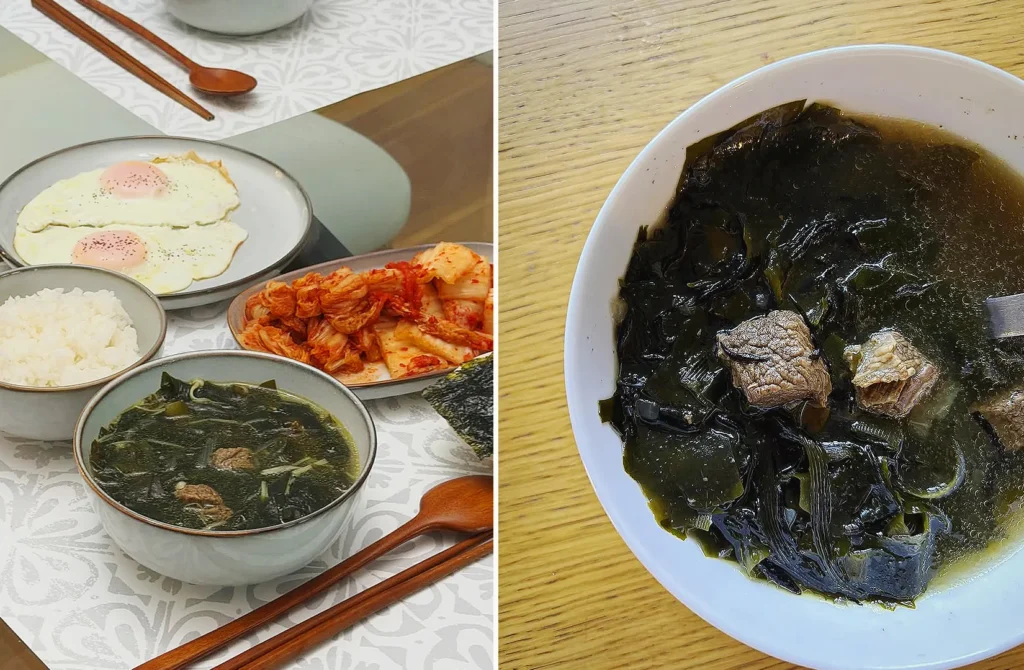
Across the Korean peninsula, this simple soup carries a massive cultural weight. In its quietly Asiatic way; ritualistic, elemental, and rooted in place, it links the body to ancestry through taste. It is the mandatory birthday breakfast, a culinary journey repeated every year to honour the exact meal a mother consumes for postpartum recovery. Waking up to a bowl of miyeok-guk signals care; it is an edible reminder of birth, sacrifice, and shared lineage. In the coastal villages of Jeju, where the female free divers known as haenyeo harvest the kelp directly from the cold currents, the soup feels even more tethered to the environment. Serving it is an act of deep familial devotion, a celebration of flavours that grounds the individual within their immediate community.
What makes this traditional preparation so compelling today is its quiet defiance of the instant food era. Supermarket shelves are currently lined with freeze-dried, microwaveable packets of seaweed soup that promise the taste of home in three minutes. Yet, those thin, uniform broths completely lack the heavy, oily emulsion that only comes from physically kneading the kelp and coaxing out its depth over a low, persistent flame. The authentic soup demands tactile interaction and patience. It reminds us that convenience cannot replicate the specific texture and emotional resonance born from deliberate human effort.
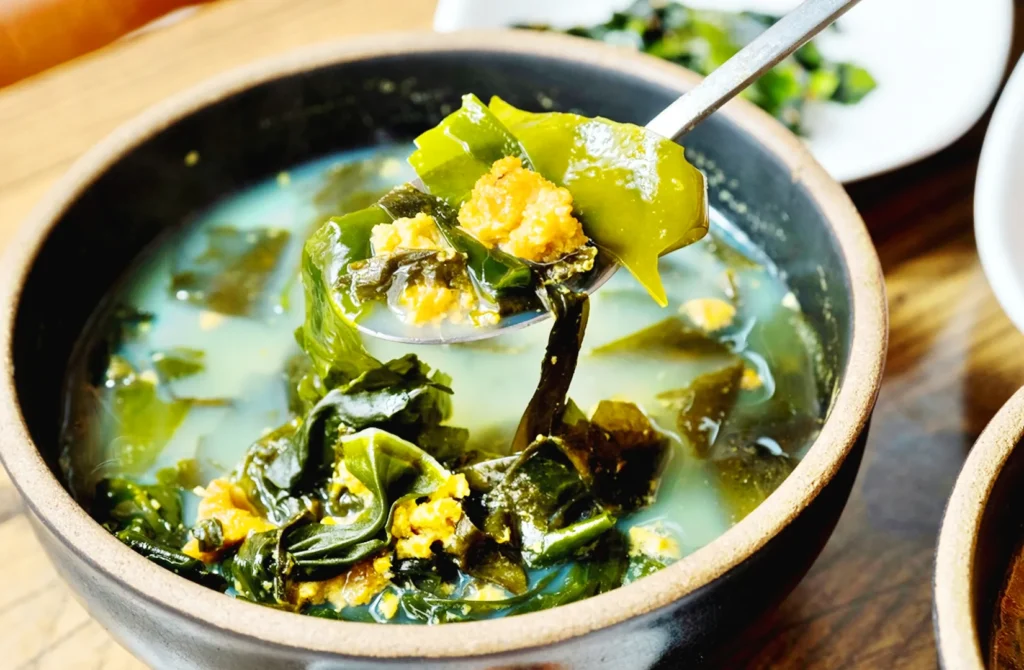
Taking a slow sip of the hot, opaque broth, the taste of the island is immediate. It is savoury, oceanic, and deeply grounding. It remains a profound reminder that our most meaningful food rituals are often the simplest ones, woven quietly into the fabric of our everyday lives.

The Malayan Council, Reviewed: Local Food in Malaysia, Plated Like a Memory
Eat Drink Asia Team | June 11, 2026
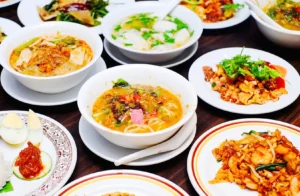
Our Eat Drink Asia team spends a lot of time debating what makes a truly unforgettable meal. The team has previously published articles exploring the redefinition of comfort food. That is exactly what led me to The Malayan Council at 71 Bussorah Street. I visited on a Friday around 7:30 pm, just as the weekend…

Sushi in Singapore: Why There Is a Style for Every Budget
Eda Wong | June 11, 2026
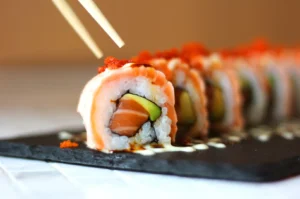
Few Japanese dishes have travelled as successfully across Asia as sushi. What began as a culinary tradition deeply rooted in Japan has evolved into something remarkably diverse in Singapore. Today, sushi in Singapore can mean many different things. It can be a quick lunch grabbed from a conveyor belt restaurant, a carefully curated omakase meal…
-
The Quiet Pull of Lahpet in Myanmar’s Tea Leaf Salad
Dio Asahi | June 10, 2026
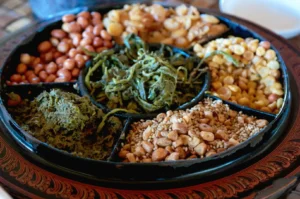
The afternoon humidity presses against the open-air teahouse in downtown Yangon, where the sharp clatter of a silver spoon against ceramic cuts through the low hum of conversation. A small plate sits in the centre of a low plastic table, holding a dense, dark green cluster that smells faintly of damp earth and sharp lime….
-
Dining at Suntec: The Restaurants That Feel Like Different Cities in One Mall
Eda Wong | June 9, 2026
Over the past six months, I’ve navigated the sprawling, sometimes disorientating corridors of Suntec City more times than I can count. What started as a simple quest to find decent spots for post-meeting lunches quickly turned into a genuine culinary journey. I have tried over a dozen venues within this massive complex, and I’ve found…
-
PappaRich SG and the Comfort of Malaysian Staple Food: A Restaurant Review in Familiar Flavours
Dio Asahi | June 6, 2026
There is a very specific kind of exhaustion that hits you right before a flight or just after you land. You are dragging your suitcase, staring blankly at the departure boards, and suddenly, you realize you are starving. But you don’t want just any food. You want something warm, familiar, and deeply comforting. I felt…
-
Sri Lanka’s Ambul Thiyal and the Sourness of Goraka
Eda Wong | June 5, 2026
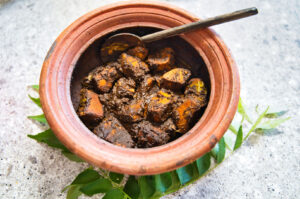
In the open-air kitchen of a coastal home in southern Sri Lanka, a low fire crackles under a wide, unglazed clay pot. The air is thick with the scent of roasted black pepper and something deeply, aggressively tart. A wooden spoon scrapes the bottom of the pot, turning cubes of firm yellowfin tuna until they…
-
Traditional Malaysian Foods Aren’t a Museum: They’re a Living Argument at the Table
Eda Wong | June 4, 2026
When I first really started digging into traditional Malaysian food, I made a classic rookie mistake. I was sitting at a crowded kopitiam in Kuala Lumpur, looking at a plate of nasi lemak, and I thought I understood exactly what it was supposed to be. I thought it was a fixed, rigid recipe, a museum…
-
In Gifu, Hoba Miso Warms Slowly Over Magnolia Leaves
Dio Asahi | June 3, 2026
Frost clings to the wooden window frames in the highlands of Gifu. Inside, the air is thick with the scent of woodsmoke and fermented soybeans. On the table, a small ceramic charcoal grill known as a shichirin radiates a gentle, localized heat. Resting directly above the glowing embers is a large, brittle brown leaf holding…
-
The Stir Fried Egg Plant That Taught Me Restraint at Si Chuan Dou Hua Restaurant
Eat Drink Asia Team | June 2, 2026
I’ve always had a love-hate relationship with Sichuan food. Usually, you walk into a spot, order your food, and spend the rest of the night sweating through your shirt, chugging ice water, and wondering why you did this to yourself. But when I visited Si Chuan Dou Hua Restaurant on a Tuesday around 7 pm,…
-
What the Wok Is Really Doing to the Vegetable: The Question Behind Every ‘Brinjal Recipe Chinese Style’
Dio Asahi | May 30, 2026
When I first tried cooking brinjal at home, I was completely convinced that all I needed was a hot pan, some oil, and a good recipe. I chopped the vibrant purple vegetable, threw it into a standard frying pan with a generous pour of oil, and waited for the magic to happen. Instead of the…